Tuesday, 30 April 2013

Romance Novel Plot 101


The beautiful month of May will be the romance month on this blog. We decided to introduce you into the topic in the gentlest way possible.

Have you ever wondered how these romantic books are written? Here you have four fool-proof, failure-proof, completely viable and quite ingenious plot outlines for anything romantic, with  pictures. Yes, the outlines are deliberately biased, ironic and very schematic - let us hope they are also fun! 

ROMANCE NOVEL PLOT 101

OR
everything you would like to know about romance but you are afraid to ask.

ENJOY!

Text by Rameau (mostly), pictures by Anachronist via Google search. Mostly. All rights reserved.

1.Historical:

She's a good girl, he's a duke.
He is a good boy she's a whore.
She has money, he needs a wife. Or the other way round.
Oh, no, did he compromise you?
Poor girl, you must marry him. Poor guy here is the bride.
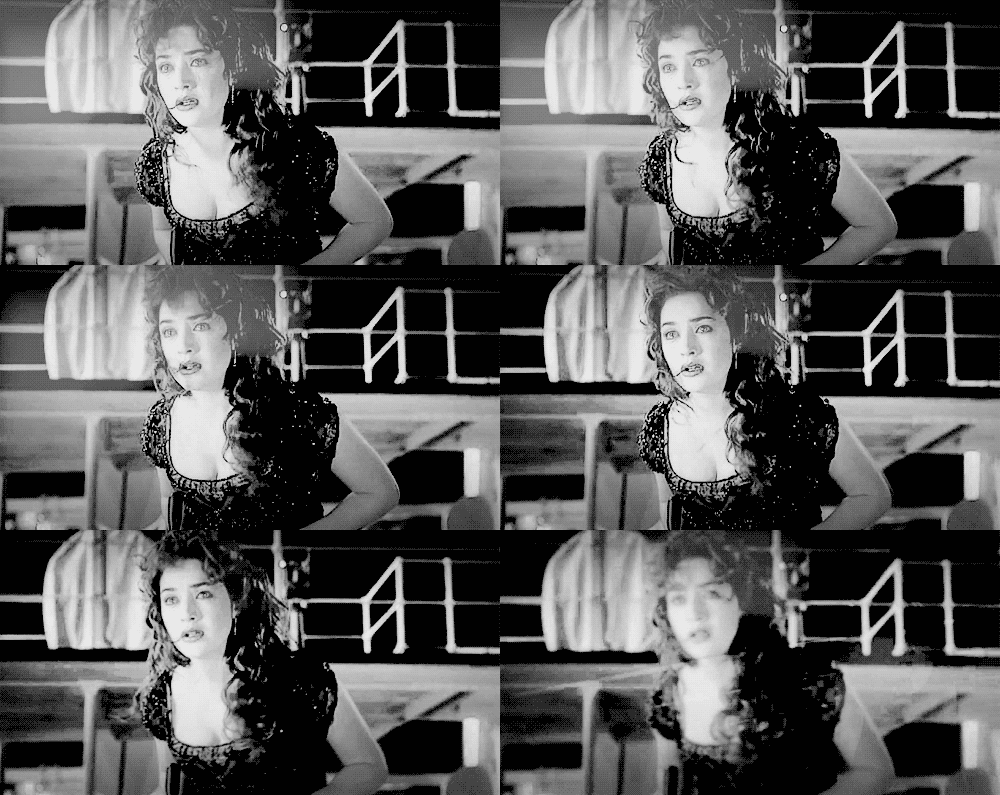


...and lie together as he has his wicked way with you.

Noble cock cures her reluctance,
just in time for the mistress to saunter in.
Poor girl, you love him, don't you?
Run to your family, your aunt, his mother, a distant childhood confidant.


Nothing will hide your humiliation and shame.
Not when he comes running after you,
for he loves you too.
And that noble cock gave you a viscount on the way. YAY!


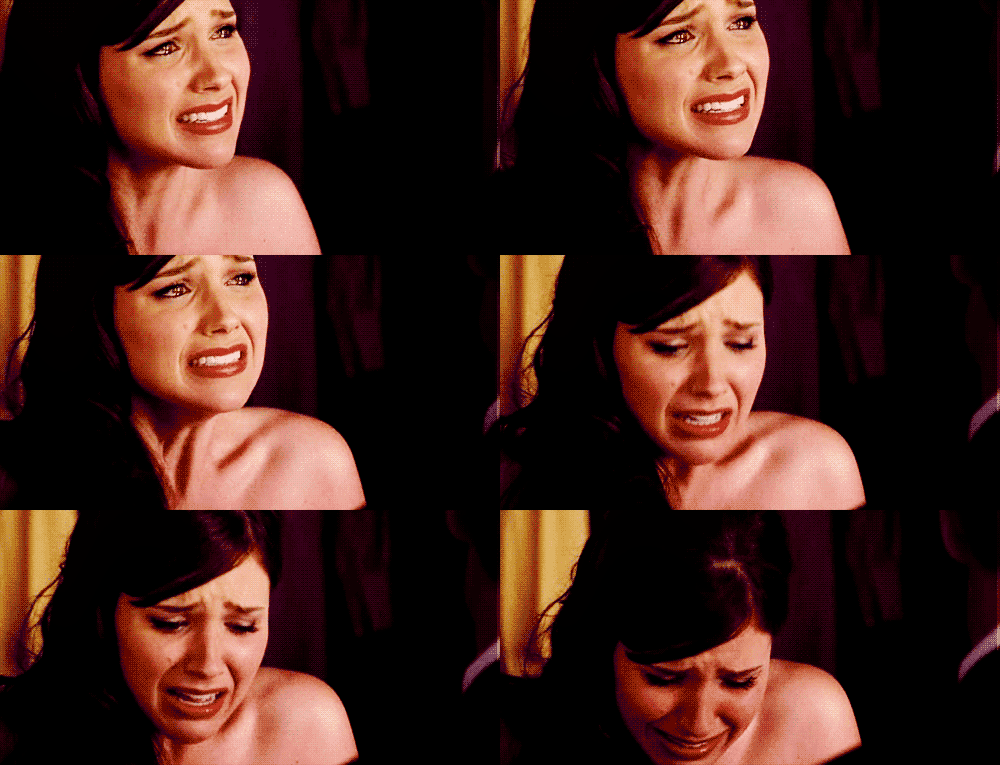
2. Contemporary:


She's over men, he's never been into them...
well, other than technically. (See part 4.)

No, he is not ready, his problem is commitment.
She has a cat, a puppy, triplets or all five.
She doesn't have the time, to mend an unbroken... thing.
But they need each other. Fling it is.
Hot and passionate but temporary.


Magic cock, distant relative to Noble cock,
it too cures all ills.
Instantly she wants more.
In the present day, her pesky job,
friends or family,
they'll talk her into marriageable mood.

For a modern woman wants to be a wife,
For a modern man,
always wants what he's denied,
be it commitment, love, or a new babe.
Or a new car. Red preferably.


Er.... babe as in baby not an 18 year old nanny on the side.
Unless, that's how the story started!
Who can say 'no' to a young, plump nanny?


3.Paranormal:

Independent woman needs no man.
Alpha male needs no woman. And yet...and yet...


They somehow land in the same bed and he turns the woman into a female, and sprinkles her with insta lust.
Yes. They're a match made,
in a magicians hat.

Sense it makes not,
but let's kill a few rivaling packs...
Er... maim, to maim is better than to kill.
The damage is more pleasing to the eye.

Let's maim a few villains,
for they will find their fated mates
in their own books of the same series,

soon to be bought in your nearest library.

P.S. Do not forget, that supernatural cock works its magic too!

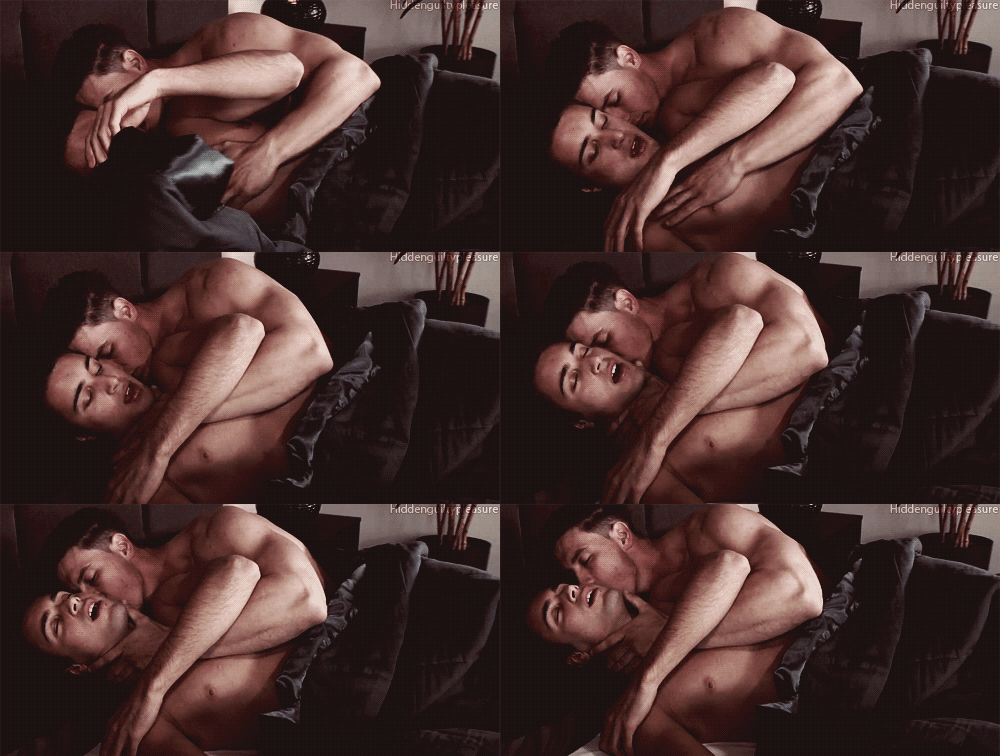
 4. M/M

A boy meets boy.
He's gay, he's not gay.

He's in the closet, he's gay for you.
They kiss, they clasp hands... and more.
They talk, they have sex.
They walk, they have sex.

They're happy, because double cock wins them all! Have I mentioned sex already? Yeah...


And they lived happily ever after :)

Monday, 29 April 2013

Review: A Short History of Nuclear Folly by Rudolph Herzog

Synopsis:
In the spirit of Dr. Strangelove and The Atomic Café, a blackly sardonic people’s history of atomic blunders and near-misses revealing the hushed-up and forgotten episodes in which the great powers gambled with catastrophe. Rudolph Herzog, the acclaimed author of Dead Funny, presents a devastating account of history’s most irresponsible uses of nuclear technology. From the rarely discussed nightmare of “Broken Arrows” (40 nuclear weapons lost during the Cold War) to “Operation Plowshare” (a proposal to use nuclear bombs for large engineering projects, such as a the construction of a second Panama Canal using 300 H-Bombs) . . . Herzog focuses in on long-forgotten nuclear projects that nearly led to disaster.

Translated by Jefferson Chase.


"The problem, both in the West and behind the Iron Curtain, was a lack of imagination. No one was able to picture the worst-case scenario."

That was fun. Slightly preachy, but it comes with the territory of stating the obvious about dire things that threaten life on earth. Also, the author—or translator—likes to use the word ironically quite a lot which makes things a lot less ironic. This could have been an intentional choice considering the subject matter.

Herzog starts with a short personal history and an explanation. This book isn’t about the most well known nuclear events in our history—Hiroshima and Nagasaki are mentioned in passing only—but about the lesser known chain(s) of events that led humanity to where we are now.

He talks about German scientists who were high currency in the nuclear game between superpowers before and after World War II. He talks about centrifuges, disasters and cleanups, the myth of tactical nuclear weapons, one man’s obsession, and nuclear tests in Australia as well as in Alaska. He talks about inhumane tests done in the name of medical science. The evolution of nuclear power and lost nuclear warheads are mentioned as well.

But what I found most fascinating weren’t the obvious problems with nuclear power—there’s waste, lots of it, and its half-life is 80 million years—or the ethical questions that come with it, nor was I particularly enthusiastic to read about the doomsday machines. No, it was the pacemakers.

Nuclear powered pacemakers. No need for battery changes!

Tiny problem is what happens after you’re dead. How do the authorities keep track of those plutonium batteries and do they end up in cemeteries or perhaps burning the back of an unfortunate orderly carrying a bin bag to trash. Oh, wait, that was the other interesting story. What happens when a company, a hospital acts responsibly but the government authorities do not? Four people die and hundreds suffer from radiation poisoning. And the death toll is relatively low thanks to an enterprising physicist.

I am somewhat familiar with the subject but people who hated sciences in school shouldn’t be afraid to read this book. There are a very few technical details and those that remain in the book are only there to further illustrate the historical context of each nuclear folly.

Because this book is more about the history and human stupidity when it comes to taking responsibility for scientific breakthroughs and how they're applied. This book is about the dangers of letting military prioritise between human lives, nature, and fleeting glory in battle. Or worse than that, not even a victory in an actual battle, just a show of strength.

To learn from your mistakes or the mistakes of others, you must first study history.

Saturday, 27 April 2013

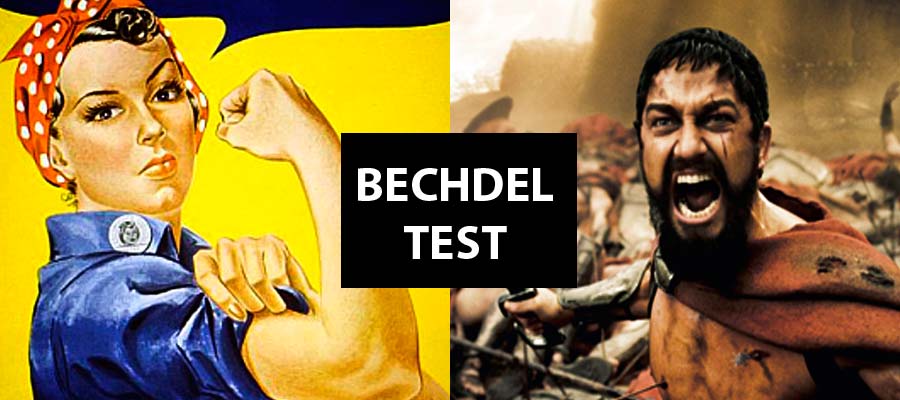
How to pass the Bechdel test and why it is IMPORTANT at all


The Bechdel test or Bechdel/Wallace test was developed by Liz Wallace and became widely known after Alison Bechdel featured it in her comic Dykes to Watch Out For.

The Bechdel test is a test of female characterisation in movies. Passing the Bechdel test requires that the movie (or media):

  • has at least two women characters;
  • who talk to each other at some point;
  • about something other than a man or men

Of course passing or failing the test is not an ironclad guarantee of well-rounded, feminist, characterisation or a great, interesting movie; however it is indicative of the problems of token women characters that are plaguing the film industry. A vast amount of geeky media fails the test although you have to admit the criteria cannot be called exorbitant. Just a minute or two of small talk between two chicks, no guys mentioned - is it such a big deal? Is it?

Now, I am really not a proponent of limiting yourself to shows/movies that pass the test; if you did so you'd be cutting out a lot of otherwise-worthy entertainment. Indeed I admit a fair number of top-notch works have legitimate reasons for including no women (e.g. The Name of the Rose, a not exactly great movie but based on a brilliant book by Umberto Eco which was set in a medieval monastery), or with no conversations at all, or having only one or two characters.

A movie can easily pass the Bechdel Test and still be incredibly misogynistic. Conversely, it's also possible for a story to fail the test and still be strongly feminist in other ways, and there's nothing necessarily wrong with that. What's a problem is that it becomes a pattern — when so many movies fail the test, while very few show male characters whose lives seem to revolve around women, that says uncomfortable things about the way Hollywood handles gender. There are also lesser-known variations of the rule, such as the Race Bechdel Test, in which two characters of colour talk about anything other than the white leads and the Reverse Bechdel Test, with the roles of men and women swapped.

Now you might be surprised if you consult the list of famous films that failed the original test miserably.

1. Run Lola Run
2-4. The Entire Lord of the Rings Trilogy
5-7. The Original Star Wars Trilogy
8. Avatar
9. Harry Potter and the Deathly Hallows: Part II
10. The Social Network
11. Matrix
12. Inception
13. Eternal Sunshine of the Spotless Mind
14.Shrek
15. Princess Bride
16. Sex and the City
17. The Avengers
18. The Hunt for Red October

Quite a list, isn't it? If you want to know more or if you want to check whether your fav movie would pass the test without actually rewatching it, please visit http://bechdeltest.com/ where movies are listed and assessed properly. You can comment there as well. :)


Some people MIGHT get twitchy at the idea that more female protagonists would be a positive step in cinema. Shouldn't cinema be just about art and good films telling interesting stories? No, it shouldn't -  here’s a few reasons why I think the Bechdel test is important, and what it can tell you:

1. You don’t notice it until you have it pointed out…

…and then you can’t stop. It’s amazing how the relative absence of women in film is so normal, so acceptable and so widely spread it can barely be noticed.

Think about it this way – how weird would a reverse Bechdel world be? Most movies only have one male character and if he gets any dialogue at all with a rare second male character, it will inevitably be about women. Challenge of the day: have you ever seen that film? Think, and think hard, and if you come up with a title please comment. If you can name one, what kind of film is it? Is it making a point, or aimed at a particular demographic – or is the lack of testosterone entirely by accident, because no one is paying attention.

2. “Women aren’t interesting enough to deserve more time in a movie...”

…is a very short-sighted fallacy. While cinema can’t – shouldn’t – rebuild the world as an equal-opportunities utopia, a great many test-failing stories seem to arise through laziness and ignorance. This can’t be simply pigeonholed as a “feminist issue”. If you’re only telling stories about men, you’re ignoring 50% of the ideas, thoughts, and experiences in the world. That’s a whole lot of movies not being made. Not a big deal, really?

3. It demonstrates the lack of good, strong female protagonists so the lack of good, strong female models

And, connected to that...

4. Film shapes popular culture and popular perception of male and female gender far more efficiently than school, any piece of legislation or government policy.

If you think the way women are treated nowadays matters and should be improved/changed you simply cannot neglect such a powerful tool as pop culture entertainment. As much as film is a product of a culture where women are dull accessories with nothing to say or do, it reproduces this culture. If you learn most of your information about a world outside your so-called comfortable, contemporary  existence through cinema how are you to know how realistic say City of God or Das Boot is? But when you happen to discuss street kids or submarine operators, those vivid images come to your mind. If you want to change the way men perceive and treat women start with the entertainment. 

5. It says a lot about the industry and the world we live in.

Why is it so difficult for a movie to pass such a simple test? Is it because most scriptwriters, directors and producers are male? And therefore inclined to write from their personal experience?  Even assuming they’ve managed to name two women, perhaps their understanding of what women are interested in is limited? I am inclined to think this must be the case. Maybe women are traditionally a rarer cinema-going demographic precisely because of a lack of realistic women on screen? Why would Hollywood willingly shut off a source of income otherwise?


If you are a writer or a scriptwriter: do you have two well-developed female characters in your books/scripts ? Are they important enough to the plot that they need to meet and talk? Do they have enough to say beyond just discussing the men in their lives? It’s cheating to stick in a token scene just to pass – their contribution must be as real and measurable as the men in your scenario. Is it worth the effort though? I think 'yes' every time I hear or watch news about home violence, worse treatment of women at work, physical, sexual and psychological abuse of women and related issues. If something can be done, let's do it damnit.


Sources:

Friday, 26 April 2013

Review: Rome 03: The Eagle of the Twelfth by M.C. Scott

Book info:
Form: hardback
Genre: historical fiction (ancient Roman Empire)
Target audience: adults

Synopsis:

Demalion of Macedon accompanies Sebastos Panthera, a Roman spy, to Parthia but their mission is soon concluded. Then he is made to join the Twelfth Legion, notorious for its ill fortune, always facing the harshest of postings, the toughest of campaigns, the most vicious of opponents. Additionally, the Legion is also given a very bad, inexperienced commander - a politician not a soldier.

However, amid all of the violence and savagery of his life as a legionary, Demalion realizes he has discovered a vocation - as a soldier and a leader of men. He is made a centurion and has come to love the Twelfth and all the bloody-minded, dark-hearted soldiers he calls his brothers. One of them, a young, beautiful Greek called Heraclides with a nickname of Tears, becomes even somebody closer than that.

When Demalion thinks he has found a place in the world, all that he cares about is ripped from him. First his Legion is defeated by the Parthians due to the supreme ignorance and ineptitude of his commander - they have to retreat in shame, just happy to be alive. Then they are ordered to quench the brutal Judaean uprising and  the Hebrew army inflicts humiliating defeat upon the legion - not only decimating their ranks, but taking away their soul, the eagle, the symbol of their pride and identity.

There is one final chance to save the legion's honour - to steal back the eagle. To do that, Demalion and his fellow legionary scout called Horgias must go undercover into Jerusalem, into the very heart of their enemy - where discovery will mean the worst of deaths. Will they survive a mission which resembles very closely a suicide?

What I liked:

I haven't read a good historical fiction set in the times of Roman Empire for a long time so when awesome Mel from Mel's Random Reviews sent me this one I was overjoyed. It is  the thrid and final installment of a series but you can read it as a standalone without any problems. I found it original and interesting mainly because it depicts Roman wars with Parthia, a relatively less known campaing which took place in the first century A.D. during the reign of Nero. Well, I suppose most of people have heard of Nero, his poems and antics which led to the burning of Rome and persecution of first Christians, but few heard about his wars.

Parthia roughly corresponds to the western half of Khorasan region in northeastern Iran. It bordered Media on the west, Hyrcania on the north west, Margiana on the north east, and Aria on the south east. I really enjoyed the fact that it was a completely new setting, as far from Rome and Nero's corrupt court as it could only be.

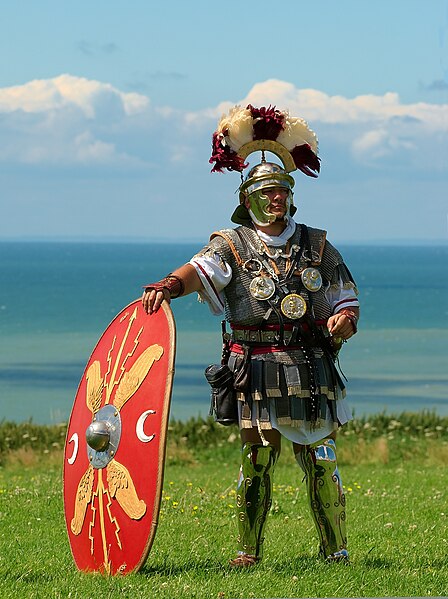
A centurion of Roman army
Most of the action is described directly from Demalions’s perspective and there is a real sense that he is right in the midst of these frenetic, bloody encounters. I was really surprised when I found out that the author is actually a woman - Scott perfectly captures the chaos of each engagement as well as the emotions that a soldier must have experienced. Demalion's attitudes toward constant training and bloodshed evolve and he becomes far more comfortable on the battlefield. The initial fear of being in a life threatening situation never disappears but he also learns the raw elation of surviving. After a while he feels most alive when surrounded by chaos of the battle and death.The relationships between soldiers are tight and any losses are horrible.

I also liked very much the character of Sebastos Abdes Pantera, also called the Leopard. He was a spy extraordinaire who never revealed more than he should about himself and his missions, often surprising poor Demalion and not always in a good way but also arousing grudging respect. I really regretted we weren't shown the whole world from his POV at least once. In fact I would be perfectly happy if Pantera was given a series on his own. For him I might read the first two parts which, as far as I know, tell his previous adventures as a spy and pupil of Seneca.

What I didn't like:

The whole novel is set among the Roman soldiers; I certainly understand that there weren't many places for women in such a company but really in this book there is only ONE female character, Hypatia, introduced very late, in the second part of the book, and never properly presented, acting as a prop. I am really disappointed. 

Apart from that I wish I could find out more about the final fate of Pantera.

Final verdict:

If you like really good historical fiction books I recommend you this one. It captures not just the epic scale of Rome’s legions, but its core, its heart, its very essence;  it strives to show what made the men behind the armour tick. It is also a page-turning military history but notably without women.

Thursday, 25 April 2013

Rameau's Review Archive: Unclaimed (Turner #2) Courtney Milan

Rameau's ramblings: This will be listed under second opinions, but technically this is the first opinion and the review that got Anachronist reading historical romance. Go me!

Originally posted on Goodreads September 20th 2011.

Synopsis: 
Her only hope for survival...
Handsome, wealthy and respected, Sir Mark Turner is the most sought-after bachelor in all of London and he's known far and wide for his irreproachable character. But behind his virtuous reputation lies a passionate nature he keeps carefully in check...until he meets the beautiful Jessica Farleigh, the woman he's waited for all his life.
Is to ruin the man she loves...
But Jessica is a courtesan, not the genteel lady Sir Mark believes. Desperate to be free of a life she despises, she seizes her chance when Mark's enemies make her an offer she can't refuse--seduce Mark and tarnish his good name, and a princely sum will be hers. Yet as she comes to know the man she's sworn to destroy, Jessica will be forced to choose between the future she needs and the love she knows is impossible.


Unclaimed (Turner, #2)Unclaimed by Courtney Milan

Why should you read this?

Because it's a historical romance of two people coming together and surpassing social and personal obstacles. You need more convincing do you?

Let's see. There's a virgin, there's a seduction, and there's a defamation that'll separate the two lovers. Not sold yet?

Well, he's the one with an untarnished reputation and virtue to protect, and she's the experienced lover who'll teach him to know better.

That did it, oh, good. Just in case...

Sir Mark has written a book about chastity and to his disbelief it's taken a life of its own. He's become the darling of the public and an unwilling role model for men in search of new challenges. He's also become the target of envy and resentment. Someone wants to see Sir Mark's good name in the gutter and they're willing to pay for it.

Enters Jessica, the experienced courtesan who longs for freedom. She doesn't want to sell her body to survive anymore. All she needs is enough money to break free and make a quiet life of her own far away from the city. She grabs the opportunity with both hands and prepares for one last tryst.

Sir Mark is immediately attracted to the mysterious widow Jessica pretends to be, but he's not ready to succumb to her charms quite so easily. After all he's battled his yearnings for nearly thirty years and there have been other temptations. Nothing quite like this though.

What follows is a delicious tale of two people circling and trying to outsmart each other. It's a seduction in the best sense of the word. It's a seduction of the mind as well as the body and the erotica is far from gratuitous. It's actually earned.

It isn't until near the end when the reader has all but abandoned hope for Sir Mark and Jessica that they do come together and admit the extent of their feelings for each other. After all, there's more than love involved; there's respect and dignity to consider.

Milan's writing is solid as she slowly guides the couple together. She takes her time introducing the characters and explaining just what makes them so unique especially considering the setting. Milan doesn't skirt around sex scenes, because she's afraid to write them, she simply ensures they fit in with the plot - questionable word choices and all.

Yes, an actual plot in a romance novel, can you imagine? So, what are you waiting for? Go, read, and enjoy the slow burn.

I received a copy of this book from the publisher through NetGalley.


Wednesday, 24 April 2013

Review: Sins and Needles (The Artists Trilogy 01) by Karina Halle


Synopsis


Some children get Lego blocks and Barbie dolls to play with, some get locks and skeleton keys. And scars. Ellie Watt has never known another life – just that of con scams and stealing. Her parents, a set of almost model white trash grifters, taught her how to break and enter and cheat before she was taught to read and write and then they left her to fend for herself. Small wonder she cannot trust anybody, always ready to pull a fast one. Small wonder she lives and breathes illegal tending to dangerous. Small wonder she never stays long in one place. Small wonder she takes drugs to calm her nerves. Will it ever end?

After another not quite successful scam, involving an aggressive Ukrainian looking for a virgin bride on the Internet, Ellie flees to her home town, Palm Valley. She is broke, desperate, tired and she hopes for a fresh start; she finds poverty, an uncle with financial troubles, unwilling to take her in, and an old high school friend she once betrayed – Camden McQueen. Camden, previously a goth freak now a surprisingly hunky man with a sternum ring and great musculature, is a local tattoo artist and a musician – successful and apparently rather well-heeled. Ellie finds out that he is also still quite taken with her and she can recognize a meal ticket opportunity when it presents itself. They catch up on the latest news, date, and have sex; then Ellie decides to rob him – if somebody is keeping a safe full of money at home and showing it to people with such a reputation as hers he is begging for it, right?

The robbery proves to be one of her bigger mistakes. Camden has always understood Ellie better than anybody and seen through her clearly. Now, as he catches her red-handed, the burgling attempt properly recorded, he holds her life and future in his hands. What will he make her do?
What I liked:

I admit it – I have a thing for flawed heroines and Ellie is the right mixture of bad-ass cool and disarming vulnerability - a great character with a distinct voice and a good story to tell. Despite her many, many flaws and problems you want to give her your support and a second chance after a while because let’s face it, she is not a completely heartless b***h, not really. The fact that the narration jumps in time forward and backward, showing the glimpses of Ellie’s childhood, elicits further  sympathy for the main lead and once you feel for her, everything jumps into place and is swinging.

The pace of narration was vigorous and dynamic enough to keep me interested, the narrative voice of Ellie – quite believable. Overall it was a very pleasant, light read but for the ending…

What I didn't like:

Let me start with a quote:

„Fuck, Ellie. I’ve never hated being so right in all my life. You’re a con artist. A liar. A thief. An unredeemable soul. You can’t be reformed. You can’t be saved. You’ll die trying to make the world pay for what it did to you. And you’ll die alone.” 

Those are the words of an angry, bitter Camden, tricked by lovely Ellie one time too often. Completely understandable from his POV. Still, before the book ends he forgives her completely. He says:

"I hate you, Ellie Watt," he whispered, lips coming closer to mine, "because I still love you after all these years.”


I found that change of heart a bit too swift but the series has just begun so I might change my mind as well. Or not. It is always a problem with dysfunctional relationship - you must be very careful not to cross certain lines. For example your flawed characters cannot be redeemed too quickly or they lose the 'reality' gloss. Which is very bad for any fictional character which wants to stay believable and interesting.

Connected to that train of thought (and being rather vague in order not to spoil anything): once upon a time Ellie's parents made a crucial mistake and she had to pay for it very dearly. Then Ellie makes the same crucial mistake and...she will have to pay for it very dearly. Is she really supposed to be an intelligent con artist, as presented at the beginning? Yes, I know, the series is in progress and all that jazz...I'll have to wait and see.

...and then I died at 28, ha ha.


Finally you should be warned that the book ends with one big cliffhanger. If you don’t like such tricks then wait a bit – the second part is bound to be released this year and you’ll be able to sate your curiosity.

Final verdict:

A nice beginning of a new series which might or might not continue in an interesting way. I just hope the second part won’t end with a cliffhanger and will explain some stupid decisions taken by Ellie in her past.

Tuesday, 23 April 2013

Rameau's Review Archive: The Corn Maiden and Other Nightmares by Joyce Carol Oates

Rameau's ramblings: This was the first Joyce Carol Oates novel I ever read.

First posted on Goodreads November 6th 2011.

Synopsis:
Marissa is a beautiful, sweet, but slow 11-year-old. Judah, an older girl from the same school, has led Marissa to a secluded basement. Remaining an unaware hostage for days, Marissa grows weak as Judah prepares to sacrifice her to the Indian legend, the Corn Maiden. 
 

The Corn Maiden and Other NightmaresThe Corn Maiden and Other Nightmares by Joyce Carol Oates


First of all, if you don't like nightmares and don't want to be scared and repulsed by the horrors ordinary people do, don't read this. Since I'm one of the slightly skewed people who enjoy reading about the darker side of the human nature, I actually enjoyed the book and most of the short stories within.

I got lost in the pain and desperation Marissa's mother felt when she found her daughter missing and her world unravelling under the scrutiny of the authorities and the public. I felt the confusion as the innocent teacher agreed to help the police only to find himself in the centre of a witch-hunt. And I even found a sliver of understanding and the pity for the kidnapper.

All this happened within the first short story and more was to come with the others thanks to Oates' writing. She managed to keep me turning the pages even when I was annoyed with her choices both for the characters and the effective writing. Somehow Oates managed to make third limited past tense seem more immediate and gripping than most authors manage with first person present tense.

The Corn Maiden and Other Nightmares is an acquired taste, and since this is my first encounter with Joyce Carol Oates' work, I can only assume the same goes for the rest of her work. It's going to take a while for me to explore this theory further though.

I received an Advanced Readers Copy from the publisher through NetGalley.


View all my reviews

Monday, 22 April 2013

Review: Children of Scarabaeus (Scarabeus #2) by Sara Creasy


Synopsis:
The crib is everywhere . . .

Edie Sha'nim believes she and her bodyguard lover, Finn, could find refuge from the tyranny of the Crib empire by fleeing to the Fringe worlds. But Edie's extraordinary cypherteck ability to manipulate the ecology of evolving planets makes her far too valuable for the empire to lose. Recaptured and forced to cooperate--or else she will watch Finn die--Edie is shocked to discover the Crib's new breed of cypherteck: children. She cannot stand by while the oppressors enslave the innocent, nor can she resist the lure of Scarabaeus, the first world she tried to save, when researchers discover what appears to be an evolving intelligence.

But escape--for Edie, for Finn, and for the exploited young--will require the ultimate sacrifice . . . and a shocking act of rebellion.


This didn’t start how I imagined it would. The confusion could have been avoided had I read the blurb for the second book, but I didn’t and I had a expectations of where Edie and Finn were going. They took a small detour to two different planets instead. Not that this is a bad thing but I had hoped to see more of the Fringe, which we never got to do.

The book starts with Edie and Finn on the run. They need to find the neuroxin, a kind of toxin that keeps Edie alive. After ensuring her continued existence, Edie, Finn, and Cat head towards the Fringe. They’re captured relatively quickly and brought back to Natesa who is still fixated on using Edie to further her own goals. Only she’s not using Edie alone. There are other children, talented like Edie, being manipulated to do their duty to Crib Colonial Unit. There’s politics, there’s human suffering, and there’s foreign intelligence. What more could you ask for?

This isn’t a trilogy, this is a story told in two parts. And just like the Song, the Children of Scarabaeus starts slowly. The first forty and fifty pages weren’t the problem for me, the struggle came later when Creasy decided to deepen the characterisations and relationships. For a while it felt incongruous with the rest of the story as logical as the development was. Instead of talking to each other, both Edie and Finn kept their secrets until it was too late to say anything. But then, luckily, the plot took over and the adventure continued.

Edie returns to Scarabaeus to finish what she started years ago and to save a handful of lives on the side. She and Finn talk, and disagree, but neither is a match for the planet. We get to see another side of Scarabaeus, barren but just as deadly as the megabiosis of the first book was.

In some ways the world building in the Scarabaues books seems superficial, but I love the subtlety of it. It feels like the books only scratched the surface of a bigger world, and not only because we never get to see the Fringe worlds. I want more of everything. More of CCU, Fringe, politics, and war. Sadly, I don’t know if I ever get it.

Friday, 19 April 2013

Review: Dare You To by Katie McGarry


I got the ARC of this novel from the publisher via Netgalley free of charge – thank you very much! Of course that fact didn’t influence my review in any way.

Synopsis:

Beth Risk is…a risky girl. Small wonder – she lives with a mother addicted to drugs who constantly chooses bad guys and never hesitates to bring them home. The acquaintance with Beth means only one thing: shame and troubles. The girl herself seems to follow the steps of her only parent - she has already slept with different guys who dumped her in no time. She drinks  and smokes pot. What’s more, Beth feels responsible for her mom and sometimes intervenes when a particularly nasty boyfriend  hurts her. She seems unaware that it should be completely the other way round – mothers are here to protect their kids. Dysfunctional doesn’t even starts to cover their relationship.

One night Ryan Stone tries to pick Beth up in a Taco Bell joint. It was a dare between him and his buddies – chat that strange chick up, although she has ‘mean’ written all over her face, and make her give you her name and phone number. Ryan loses and he hates losing so he decides to try and try again – especially when Beth moves to his home town and happens to be related to one of local baseball heroes, Scott Risk.

Ryan is a high school baseball star – an excellent player, a boy from a good family every father would like to greet as his daughter’s boyfriend. When he falls for Beth, though, he meets a wall of distrust and worry. Will he be able to overcome it? Will Beth allow him to do so?

What I liked:

I am very happy to inform you that, in my humble opinion the second part was better than Pushing the Limits. Firstly I liked its heroine, Beth, far more than Echo - she was more edgy, more conflicted and dark. Secondly I liked the pacing – especially the fact that the romance between Beth and Ryan developed slowly and we were given the opportunity to know them before they actually hooked up.

I also liked how the feelings between Beth and Ryan influenced their lives – especially Ryan’s family life, not so perfect as it seemed at the very beginning.

What I didn’t like:

Firstly I might repeat my main grievance from the previous book: the chapters narrated by Ryan sometimes read as narrated by a girl. Not by Beth, fortunately, but by a girl nevertheless. They were better than Noah’s chapters from the previous part but still not persuasive enough.

The author kept Beth’s silent admirer and companion, Isaiah, from the first book and created something almost like a love triangle. Keeping him was fine, love triangle – not so much. That ‘almost’ word saved the novel but honestly, how many times a girl must say ‘I love you like a FRIEND’ so the boy gets the message? Especially that from the sneak peek included at the end of the ARC I know Isaiah is going to have a book on his own and he is going to fall in love with a different girl. How it is supposed to work? No idea.

Some fragments of the novel felt a bit overlong – I admit I did skim over such scenes as girls’ bonding and adjusting to new school or arguing with friends over some trust issues or baseball-speak of Ryan.
I mentioned earlier that I liked Beth…yes I did, most of the time. Still there were moments when she felt too clean and almost too innocent for such an experienced character.

Final verdict:

A nice YA romance (sic!) which I requested on a whim and started reading without expecting anything good at all. It proved to be quite decently written, with interesting characterization and characters which made sense. I hope the third part will be even better although I am not a big Isaiah fan.

Thursday, 18 April 2013

Review: Nothing Lasts Forever (Die Hard #1) by Roderick Throp

Synopsis:
This bestseller was the basis for the blockbuster film "Die Hard" starring Bruce Willis. 

High atop a Los Angeles skyscraper, an office Christmas party turns into a deadly cage-match between a lone New York City cop and a gang of international terrorists. Every action fan knows it could only be the explosive big-screen blockbuster Die Hard. But before Bruce Willis blew away audiences as unstoppable hero John McClane, author Roderick Thorp knocked out thriller readers with the bestseller that started it all.

A dozen heavily armed terrorists have taken hostages, issued demands, and promised bloodshed all according to plan. But they haven't counted on a death-defying, one-man cavalry with no shoes, no backup, and no intention of going down easily. As hot-headed cops swarm outside, and cold-blooded killers wield machine guns and rocket launchers inside, the stage is set for the ultimate showdown between anti-hero and uber-villains. Merry Christmas to all, and to all a good fight to the death. Ho ho ho! 


I grew up watching action films with my Dad just as I grew up reading Harlequin novels with my Mum. Until I got older and broke out of the predetermined genre preferences, Bruce Willis, Arnold Schwarzenegger, Sylvester Stallone and Mel Gibson—before his descend to cray cray—were my childhood. Die Hard is one of those films I knew by heart and that has stood the test of time better than most. So, when I saw that the book that had inspired Die Hard was available on NetGalley I had to jump on it.

Nothing Lasts Forever was first published in 1979. Die Hard came out in 1988. The book focuses on Joseph Leland, a World War II veteran, retired cop, private detective, terrorism expert, and a security consultant, who just gave up flying his own place seven years earlier. Leland is divorced, widowed, and a grandfather of two. He never liked his son-in-law but has patched up his relationship with his daughter after he stopped drinking and is on his way to see her now. John McClane is a youngish married cop from New York on his way to see his estranged wife and two children for the Christmas. And he just happens to be afraid of flying. Both land in L.A., get a limo drive to a high rise and are in the middle of a phonecall when the shooting starts.

As I said, I knew the story going in. There wasn’t a slightest chance that Thorp might surprise me with a plot twist, brutality, or gore. What surprised me was how Thorp filled the pages between the action scenes. Where Bruce Willis fills the solitary scenes with muttering and talking to himself, Leland in the book recounts his personal history. He reminiscences the war as he maps out the empty floors between 32nd and 40th. He laments over his failed marriage, his slightly skewed priorities in life, and friends he’s lost in the war and since the war. And there’s no question of which war he’s talking about. These passages could have easily been mind-numbingly boring but they’re not. They give Leland the room to think and the reader the feeling of time passing. And unlike John McClane, Leland is markedly in pain. He’s weary, tired and struggling each step of the way.

For all the details that the filmmakers changed—characters, relationships, making the company a Japanese conglomerate instead of an American oil company called Klaxxon (I’ll give you a minute to let that sink in)—I was more surprised to see the things that they didn’t change. From bare feet to the safe full of money, from the people thrown out the building to the explosions aside from snapped necks and led poisonings, it’s all there.

This book really is the bare bones of the film.

The film improved on the pacing and mixed some things up, like the bazooka attack happening much earlier in the film than in the book, but it also took a few steps in the wrong direction. Die Hard is a sexist creation and I’m not just talking about the unnecessary scene with a bare-chested woman or the titty pictures plastered on a service tunnel wall. I’m talking about female terrorists. The book has several, the film has none.

The motives and over all causality in the book is much more complex than it is in the film. Aside from the brothers, what motivates the terrorists and Hans Gruber especially is pure greed where as in the book Little Tony the Red has ideological objections to Klaxxon’s dealings in Chile. As the book focuses on Leland alone, it’s natural that the film adds to the character gallery—all additions men—and deepens a characterisation or two, but I would argue that what Al Powell does in the end of the book is far more complicated than any sob story told over the radio could ever be—and possibly worth an essay of its own.

For all their similarities Die Hard and Nothing Lasts Forever are two different creations that work well in their own mediums despite their flaws.


I received a copy of this book from the publisher through NetGalley.

Wednesday, 17 April 2013

Rameau's Review Archive: Song of Scarabaeus (Scarabaeus #1) by Sara Creasy

Rameau's Ramblings: This was one of our Scoundrel reads for Blodeuedd's blog and thus doesn't only qualify as a second opinion but as a third.

Originally posted on Goodreads on February 14th 2013.


Synopsis:
Trained since childhood in advanced biocyph seed technology by the all-powerful Crib empire, Edie's mission is to terraform alien worlds while her masters bleed the outlawed Fringe populations dry. When renegade mercenaries kidnap Edie, she's not entirely sure it's a bad thing . . . until they leash her to a bodyguard, Finn—a former freedom fighter-turned-slave, beaten down but never broken. If Edie strays from Finn's side, he dies. If she doesn't cooperate, the pirates will kill them both.

But Edie's abilities far surpass anything her enemies imagine. And now, with Finn as her only ally as the merciless Crib closes in, she'll have to prove it or die on the site of her only failure . . . a world called Scarabaeus.

Cover art by Christian McGrath. 


Song of Scarabaeus (Scarabaeus, #1)Song of Scarabaeus by Sara Creasy


It’s really difficult for me to improve on what’s been said about this book already. Just go look at Anachronist’s or AH’s reviews and you can consider yourself fully informed.

For me, the difficulties in the beginning of the book weren’t due to the language fitting for science fiction. I could adjust well enough to cyphs, tecks and streams, but I objected to the undefined acronym jargon. Throw BRAT’s and CCU’s at me all you want but tell me what they mean—Biocyph Retroviral Automated Terraformer and Crib Colonial Unit respectively by the way. It’s one of the first Finnish lessons about analytic writing I remember from school: Define your acronyms. I imagine something similar has been taught to native English speakers around the globe.

I appreciate that Creasy was avoiding infodumping by revealing these critical details later within the story. I appreciated the full on immersion to the world-approach but I do think she took it a step too far with the acronyms. For everything else it worked just fine. The fresh angle on familiar scifi concepts such as terraforming and cyborgs as well as the limited third person voice from Edie’s point of view kept the story focused on the events and gave just enough clues about the other characters for me to fill in the rest. Active imagination does have its perks.

Being someone as close to anti-musical as it is possible for a human being to be, I loved Creasy likening coding to composing. Edie talks about making notes and creating harmonies like a true virtuoso would. It was just another aspect of interconnectedness this author utilised.

In her review, Anachronist mentions the episodic nature of the adventure. While I can see why she would, it didn’t bother me at all. It felt like the natural rhythm of someone who needs to rest between periods of extreme activity. She also mentions the romance being practically non-existent and it being a compliment, and I have to agree. What evolves between Edie and Finn feels organic and real, and the obstacles Creasy sets for them towards the end are enough to feed the UST (Unresolved Sexual Tension) hungry readers for a long time.


Tuesday, 16 April 2013

New Adult, Old Tricks

Teen and Young Adult Fiction
 (Photo credit: Blue Train Books)
Have you heard about that New Adult category of books, being created practically before our eyes? Other terms for it include: Upper YA, Crossover Fiction, and Mature YA. How did it start and what is it about? 

New-adult Fiction or post-adolescent literature was first proposed by St. Martin's Press in 2009. Allegedly St. Martin’s Press editors wanted to address the coming-of-age that also happens in a young person’s twenties.They wanted to consider stories about young adults who were still finding their way in building a life and figuring out what it exactly means. NA characters are often portrayed experiencing: college, living away from home for the first time, military deployment, apprenticeships, a first steady job, a first serious relationship, etc. Other common themes in NA are identity, sexuality, race, alcohol abuse, drug abuse, bullying, empowerment, familial struggles, loss of innocence, fear of failure, etc. - I suppose that list gets plots of most of the books, if not all of them, covered pretty thoroughly. Here you can find a list of most popular New Adult positions (fromGoodreads) and check just the first page, it is more than enough ;p.

Now you have to admit those topics aren’t exactly new so why publishers think we need a new category of books? That is the question and the answer is as old as the publishing business or perhaps even older – money.

 I still blame in the first place "Twilight", with the horribly skewed version of the alluring nectar of forbidden love it presented. I know, Twilight itself remains  firmly in the YA paranormal romance realm but it was a step toward the NA direction. Stephenie Meyer has achieved a lot, earned a lot and her mind-boggling success undoubtedly inspired other authors and the whole publishing world. For example an author I love to hate, hiding under the pen name of E.L. James, as her "50 Shades of Grey", a cheesy, kinky juggernaut, is so obviously modelled on Twilight. It spawned in turn "50 Shades"-themed bondage classes and single-handedly boosted the book industry (which should be nevertheless thoroughly ashamed of themselves). The book series once dominated the number one, two and three spots on the New York Times Bestseller List (New York Times, shame on you, your bestseller list doesn’t exist in my universe anymore). 50 Shades books are still not NA positions but the success of the series, like that of Twilight, definitely helped to create the NA phenomenon - it showed you can create a certain market niche and then make it brimful of curious readers. And line your pockets nicely in the process. It was too tempting not to try it.

So if you asked me what New Adult books are about I would say: in a nutshell it is about merging the former young adult themes with erotic fiction. In other words the publishers want to lure people who liked novels as children and teenagers, offering them something better-fitted to their more mature tastes. Buying and reading erotica? Some people would still consider it a social taboo. Buying and reading New Adult? Not a problem – it sounds almost posh, almost respectable, with that dashing, naughty flavor some appreciate so much, and it promises content that actually makes sense, a real plot in which those steamy moments are just inserted here and there like raisins in a bun. In fact, after having read some of New Adult positions I must admit I found these books a bit like the old Harlequin romances, just set in modern times, with younger characters, many of whom are in college, coming of age and often exploring their sexuality. Think Smut Fiction with some window dressing so it looks respectable and…kind of new, at least to me (I've never read those pesky Harlequin but I've heard STORIES).

Of course I am sure there will be plenty of fans and several book sellers who might disagree with such an assessment. They claim New Adult covers a wide range of themes and issues, not focusing solely on sex. That’s why some view New Adult fiction as only a category of literature—meaning, it gives readers general content expectations, but it does not dictate strict, genre-based criteria. Typically, a novel is considered NA if it encompasses the transition between adolescence—a life stage often depicted in Young Adult (YA) fiction—and true adulthood. The fact is that it rarely (if at all) avoids the description of sexual encounters so if you ask about the main difference between YA and NA here it is – the later features more hot scenes, often described in great detail and covering the whole gamut of preferences.

Let me also quote here the explanation offered by one of the NA authors, Cora Carmack, why this category/genre should exist at all. Carmack thinks we're only just now hearing the term "New Adult" because:

...the world is a very different place than it was when YA first became an accepted genre. It used to be that many people got jobs straight out of high school, and only some people went on to college. And usually those who did go to college were more financially and emotionally dependent. Now, it has become the norm to go to college, and for young adults to remain in contact or even dependent upon their parents for years after graduating high school. College is the new high school, and as such that "growing up" phase has been stretched to include a few extra awkward years.

Hmm… with all due respect that sounds like waffling to me. Authors have been writing about the transition from childhood to adulthood and those ‘extra awkward years’ like forever. Jane Austen, anybody? Some of her characters, like Anne Elliot from Persuasion, definitely prolonged their ‘forming years’ quite a bit. The Sorrows of Young Werther ? (damn that Goethe, he was good – have you noticed how he sneaked that ‘Young’ into his title?) Girl Interrupted? The Dangerous Liaisons? Maurice? Fanny Hill? Gosh, I can even quote here some stories straight from the Bible and they would most definitely qualify for being New Adult– for example the first part of the life of David who later became one of the most prominent kings of Israel. All of them share one basic feature: they present a newly emancipated person on the cusp of discovering themselves, where they fit into life, what allowances they will make, and how they relate to others. Unrequited love, forbidden love, friendship, committments, leaving your old family behind, real-life challenges - you get everything there as well.

Let's be honest and let me get to my point: those are marketing gurus who really need "New Adult" fiction to be a stand-alone category or genre, not readers. They want the millennials to believe it is a bespoke literature segment created to fit their unique needs. So what the content is hardly new and often presented in a very crude, sometimes even amazingly tacky voice? As long as you believe it is good and you are prepared to pay extra for the ‘novelty’ factor they are going to do cracking business.

Take into account the fact that this new category is intended to be marketed to mostly female readers ages 18 to 30. Quite coincidentally that particular age group is considered to be the most lucrative as it consists (but is not limited to) readers who are already active on the job market at least part-time so have a larger disposable income than, say, your average primary and secondary school student. They have money, they want to have fun and they don’t want to be limited in any way. Ready for harvest.

It reminds me of the term "teenager," which, crazy as it might seem now, didn't even exist until the mid-20th century. Today, teenagers are a consumer group worth about $200 billion. Youth became a sought-after commodity but it didn’t happen overnight, the whole process was rather an evolution than a revolution – it needed some generations to solidify. Today, with the digital publishing and the Internet connecting most of the world, it will be definitely something more dynamic.

Will marketers be able to pull the same trick with kinda-youth? It seems they're certainly going to try – compartmentalizing the market has never been a mistake so far. Before you go to your favourite library and shop for a New Adult novel ask yourself a question, though: what do I really need to read?

The idea of this essay was implanted in my silly brain by Bloddeued and Rameau helped me with the editing and supported me morally on Twitter - thank  you very much, girls, I owe you and you rock!


My sources:

Enhanced by Zemanta

Sunday, 14 April 2013

TV Series Discussion: House of Cards season one (chapters 1-13)

 photo ae334d5a-9e8e-4355-9b2d-a643fe91dd0d_zps50b1542a.jpg


A short synopsis and the cast list (from Wikipedia) so everybody knows what exactly we are talking about:

House of Cards is an American political drama series developed and produced by Beau Willimon. It is an adaptation of a previous BBC miniseries of the same name which is based on the novel by Michael Dobbs. The entire first season premiered on February 1, 2013, on the streaming service Netflix.

Main cast:


Kevin Spacey as U.S. Representative Francis "Frank" J. Underwood, a graduate of the fictional school "The Sentinel" (which is made to strongly resemble the real life school The Citadel, a military college) and Harvard Law School, a Democrat from South Carolina's 5th congressional district and the House Majority Whip. He often breaks the fourth wall to speak directly to the viewer. His name is derived from The Right Honourable Francis Urquhart MP, the protagonist of the BBC version and the novel version of House of Cards.

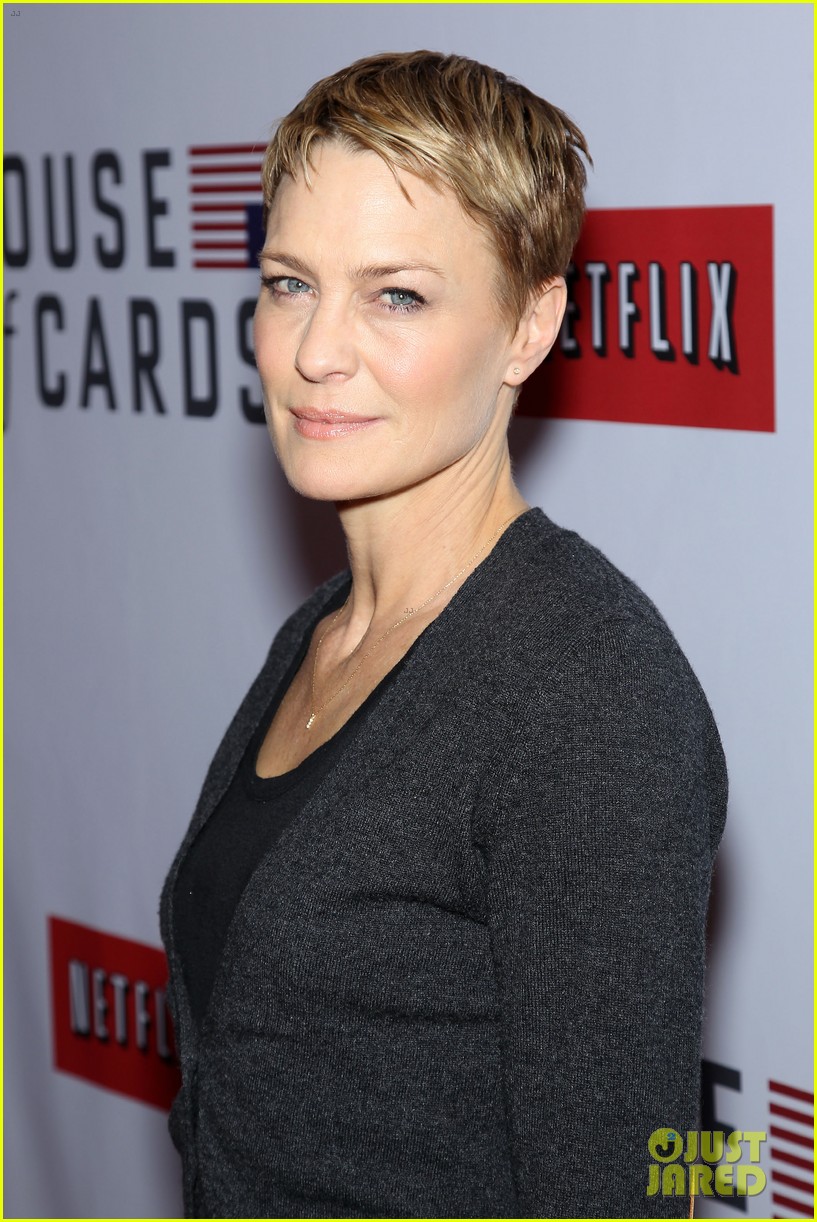
Robin Wright as Claire Underwood, Francis' wife. She runs the Clean Water Initiative, a non-profit that often gets mixed up in Frank's political scheming.

Kate Mara as Zoe Barnes, a reporter for The Washington Herald (later Slugline). Desperate for a break, she makes a deal with Frank for insider information.

Corey Stoll as U.S. Representative Peter Russo, a Democrat from Pennsylvania's 1st congressional district. Russo becomes loyal to Underwood after Underwood threatens to expose his alcohol and drug addiction.

Michael Kelly as Doug Stamper, Underwood's Chief of Staff, abettor and confidant.

Ana: Rameau, you introduced me to this series - where and when did you hear about it? What made you watch it?


Rameau: Rachel Maddow show. It was some time last year when I was watching the show for the 2012 election shenanigans and the commentary, when she mentioned Kevin Spacey’s remake of the 1990 British miniseries House of Cards coming out in early 2013. A curious being that I am, I researched the subject, found the books, and the original miniseries. Then I waited until the remake had come out and I waited a bit longer.


Ana: I see, so it wasn’t completely a spur-of-the-moment decision, like: ‘hey, there’s a new series about high -profile Washington politicians, let’s watch it!’ Because I have to admit I would never started the series if not for two things: Kevin Spacey and your recommendation. Now I think I definitely owe Rachel Maddow as well.
Who was your favourite character (and why Frank Underwood ;p) ?


Rameau: No, it wasn’t a spur-of-the-moment decision but the decision to watch the original, four part miniseries was. And you know me so well. I think I loved Frank Underwood because of how Kevin Spacey portrayed him. I loved his relationship with his wife—although I have my gripes too—and I loved the history they created for him. The character and the show reminded me of American Beauty in many ways and I can’t say that didn’t help to endear me to the character.

He is a kind of anti-hero though - a man who manipulates as he breathes and also somebody who perhaps never knew the meaning of the word ‘altruism’.

I’d go further than that. I’d say he’s closer to a villain than an anti-hero. He’s unapologetic and he gets what he wants and he wants power.

Still he can be your best bosom buddy - if it fits his goals at the moment.

Which would be villainous behaviour straight out of a Machiavellian handbook for politicians ;)

I was surprised how close and distant at the same time Frank was to Claire. On the one hand - sheesh, they say each other such things as the names of their extramarital interests, that was impressive. Nobody makes a row, nobody throws a fit of jealousy. On the other hand...when Claire needs Frank the most he just balks at helping her because it is not supporting his main objective. What do you think?

That’s the part I didn’t like of this incarnation of the show. In the BBC version it felt like Francis Urquhart’s wife was the brains behind the operation and he her hands, the puppet whose strings she pulled. Of course the length of that show didn’t allow them to develop her character fully and this could just be wishful thinking on my part, but I really wanted to see Claire being the kind of wife who truly is the master of the operation.

A Lady Macbeth, right?

Right. Instead they chose to develop her character in a different direction that takes her away from Frank and sets their desires and goals in a clashing course. In my version the non-profit would have been nothing more than a hobby for Claire and a convenient way to make connections outside the Congress.

How about you? What would you have changed about the show?

I would change Zoe Barnes. It really pissed me off that the one and only thinking female character (and I am speaking about the main cast here) was made into a journalistic prostitute. I did hope that her relationship with Frank would stay as it began. As it was, it seems a woman can make a career only if she has a man to support her (speaking in the most general terms).

I agree. It did stay the way it began in the BBC series but in that, Mattie Storin’s fate was quite different.

Then that boyfriend of hers was added and it made me even more confused - the series sometimes tended too much towards emotionally challenged YA drama.

It made me think they wanted to keep Kate Mara on the show but didn’t know what to do with her character. Probably because of what happened to Mattie.

What do you think of the little romance of Doug and that second prostitute, the one who doomed Russo? I did hope for something more here and got...nothing.

I hope they take it slow. I want to see it evolve, especially since she’s going to figure out what happened to Russo, but at the same time I’m afraid where they’ll take it next.

Do you think Frank will really become that vice-president or will his prize slip through his fingers again?

I hope he does. In the BBC series Urguhart did become the Prime Minister and I can’t really see what good it would do for Spacey and friends to repeat season one with having Frank start from scratch again. No. Underwood needs to rise and he needs to rise to the top before he falls.

If he falls.

I quite agree - failing again would bring a sense of anticlimax and it might be boring. Oh...we haven’t even touched the dialogue Frank leads with the viewer - a very personal dialogue. How did you feel about it?

I’m not a fan, but I understand why it’s done. He’s a villain and he needs to explain himself to the viewer because he never ever gets to explain all his motivations to anyone else. Which, wouldn’t be a problem had the writers handled his relationship with Claire differently.

If it showed anything clearly, it was the fact that Frank didn’t trust completely even his beloved prize wife. If you play Machiavelli, you are playing a game of solitaire.

True enough. I would have still preferred a power duo. Do you know what I find disappointing? The inescapable downfall after Claire finds out what really happened to Peter Russo.

You mean you are sure she will leave Frank if/when she finds out the truth? I don’t know. Perhaps. Still she seems to be such a cold-blooded, selfish woman. He might hold her on a very short leash.

No. Not leave him, but become utterly disillusioned, again, and start actively working against him. The more I think of this the more I think it goes against her characterisation. They’re going to try to turn her into a goody two-shoes.

Claire is definitely too weak to confront Frank and win. Another series without a single strong woman.

So are you in for the second season?

Right now I would say yes, I am. But give me a year and ask again. How about you?

It is a cautious yes as well. I like Kevin Spacey enough to give him a chance to say something more about those ugly politicians I love to hate. Perhaps it will pay off.

Enhanced by Zemanta