
Showing posts with label crime mystery. Show all posts

Monday, 5 August 2013

Lay Death At Her Door by Elizabeth Buhmann


I received a complimentary electronic copy of this book from the publisher in return for an honest review. That fact didn’t influence my review in any way.

Book info:
Genre: crime mystery, psychological thriller
Target audience: adults
Form: e-book, pdf 

Synopsis:

After being raped and witnessing a murder of her lover Kate Cranbrook, a 20-year-old college girl, sent a man to prison. The wrong man. She lied during the trial because it was the most convenient way out. She had to protect her secrets even if it meant committing perjury. She had learned during a difficult childhood in Kenya that sometimes you have to be mendacious and ruthless in order to survive and achieve your goals. Then, deeply traumatized, she lived in seclusion with her father for two decades, isolated, bored, afraid. Now she thinks she's had enough. She is 42 and she wants to put her life in order – keep her landscaping job, become more independent, find a nice man, marry, be happy. She is also given a splendid occasion - new evidence exonerates her victim. Unfortunately it also means that her role in the trial is being examined anew - the last thing she would wish.

 Kate tries to think of a good defence line; she claims that in the darkness and confusion she must have mistaken her attacker's identity. She is lying – again – but at least now she dares admit that truth to herself. Still the local community might never forgive her for putting an innocent man to prison for twenty years even if she is a white woman, he is a black man and they live in Virginia. Kate would like nothing better than to turn her back on the past, but she is trapped in an invisible stand-off with the real killer. What will it take to get rid of him?

Soon enough another dead body practically shows up on her doorstep. Kate comes to the realization that someone definitely wants to stir up the hornet's nest and draw the attention of local police to her shadowy past. Will anybody be able to see through her lies and help her before it's too late?

My impressions:

It was a story which grabs you with the first words and keeps you interested until you finishes it. It is a dark and twisted tale which I loved exploring. It presents an interesting, intelligent heroine, flawed to a great extend, who likes toying with the reader but also honestly recalls her own past mistakes because she feels her time is running out. Kate is a manipulative character, full of wit and ready to play on the sympathy of others. As the novel progresses, you starts to doubt her words but, at the same time, you are eager to find out the truth. The relationship with her father is increasingly disturbing and after a while, somewhere in the middle of the story, it simply becomes impossible to believe that all of the bits and pieces she told you will ever make sense. But they will, shockingly so, at the very end. Still it won’t be pleasant.

The character of Kate was constructed flawlessly. Firstly let me say how enjoyed a woman who is beautiful, cunning, rich and guess what? She doesn’t have a retinue of available men fawning on her and worshipping the ground beneath her feet. No love triangle, no love affair, nothing and not for the lack of trying, mind you, quite the contrary in fact. It was so refreshingly normal and right. Let me illustrate her situation with one quote. Kate comments bitterly on her friends' advice:

“Why don’t you marry, Kate? You could have anyone you wanted.”

I hate it when people say that. It isn’t true. No matter how beautiful you are, how intelligent and talented, no matter how accomplished, even if you have money, it is never true that you can have anyone you want. And the worst problem is that sometimes there simply isn’t anybody. In books and movies, there is always a likely man for the taking. In real life, there isn’t always.”


I instantly warmed to her after such words even if, from the very beginning, I was sure she hid too many dark secrets inside to be a truly innocent and decent girl. As the novel is written in a form of a diary or a memoir, the first person narration allows us to look deep inside Kate’s mind and find many shadowy wardrobes full of rattling skeletons. Although Kate tries her best to exonerate herself of what she's done, a completely understandable and a very human thing to do, nothing erases the stain that has been left on her - and she is completely aware of it. She used to be a thoughtless little brat who behaved as if she had every right to own the world. She's done things she's not proud of, all in the name of survival. She was selfish, ruthless and greedy. She lied a lot and she did it so skillfully that sometimes she almost believed in her own lies. Now she must reap what she has sown.

Final verdict:

This novel was a real pleasure to read; I started it just to get the taste of the narration and, after a short while, I couldn’t let it go. It kept me awake late at night because I simply had to reach the final page and find out what role Kate played in all this. I won’t forget this story and its heroine for a long time – I think it’s the highest praise any book can get. Thank you, Ms Buhman, for this great story! I would like you to continue!

Monday, 29 July 2013

Review: In The Woods (Dublin Murder Squad 01) by Tana French

Cover of "In the Woods"
Cover of In the Woods
Book info:
Form: pdf
Genre: crime mystery, contemporary fiction, psychological mystery
Target audience: adults

Synopsis (from Goodreads):
As dusk approaches a small Dublin suburb in the summer of 1984, mothers begin to call their children home. But on this warm evening, three children do not return from the dark and silent woods. When the police arrive, they find only one of them, a boy called Adam Ryan, gripping a tree trunk in terror, wearing blood-filled sneakers, and unable to recall a single detail of the previous hours.

Twenty years later, the found boy who changed his name into Rob Ryan, is now police detective on the Dublin Murder Squad. He keeps his past a secret because it is the most convenient for his career. He still doesn't remember anything but soon he will have to face the demons of his past. When a twelve-year-old girl is found murdered in the same woods, he and Detective Cassie Maddox—his partner and closest friend—find themselves investigating a case chillingly similar to the previous unsolved mystery. Now, with only snippets of long-buried memories to guide him, Ryan has the chance to uncover both the mystery of the case before him and that of his own shadowy past.

What I liked:

I am happy to say I liked a lot. Firstly the narrative voice of Tana French is completely captivating - atmospheric, funny, intelligent without being patronizing. Secondly the author managed to omit many template mistakes. Imagine yourself a book without a love triangle. Imagine a book in which two main characters, a young man and a young woman at the beginning of their career, simply befriend each other, without any sexual context, and continue that friendship almost to the very end. Imagine that Rob Ryan, the narrator, can be deliciously honest about his own shortcomings, saying something like this:

"What I am telling you, before you begin my story, is this - two things: I crave truth. And I lie."

There is also Cassie Maddox, who not only thinks and acts like an intelligent human being but also is a dropout psychology student so perfectly able to analyze herself and the others. If only those others listened to her and believed in her best intentions...

The friendship between her and Rob Ryan is at the heart of the story, interwoven with Rob's childhood trauma and the ongoing investigation concering a murder of a 12-year-old Katharine Devlin, an aspiring ballet dancer. I found that thread really refreshingly original. I was so pleased it wasn't the case of an insta-love or insta-lust but something far more mature and real, something beautiful and true. Of course the fact that their frienship is doomed from the beginning because Rob admits he destroys every relationship, sexual or otherwise, due to his childhood drama or maybe a flaw of his character, adds to it a dash of nostalgia. Let me quote him once again:

"And then, too, I had learned early to assume something dark and lethal hidden at the heart of anything I loved. When I couldn't find it, I responded, bewildered and wary, in the only way I knew how: by planting it there myself."

Well, I don't know about you but that quote I found simply heartrending. How not to like such a character?

Finally let me add that the attention to police procedural detail was exquisite. I was really surprised Ms. French hasn't worked as a cop herself.

What I didn't like:
This book won the Edgar Award for best debut novel but it doesn't mean it is perfect. Don’t read it for the mystery part. In fact I found the criminal puzzle the weakest as I was able to spot the main culprit without any problems somewhere in the middle of the investigation and I am not the brightest fictional crime solver around, even old, good Agatha Christie always managed to mess with my head (fortunately I loved every minute of it)

Also don't read it if you like everything nicely solved and explained in your books because plenty of questions will be left unanswered. If I were to choose an alternate title for this book (and yes, it is a bit spoilerish) could be: Complete Lack of Any Clear Explanation About What Really Happened In The Woods. It didn't bother me much; I admit that monsters living inside our heads are rarely exposed or explained and that's why they are more interesting and terrifying than any real creature you can meet. Those kids might have been taken by the Pooka or the slavers or the elves or Doctor Who - children disappear apparently for no reason all the time and some of the cases are never going to be solved. I am ok with that and if you share my outlook you'll be fine as well.

Also, as you might guess, do not expect any easy HEA anywhere. It is not a fairy tale.

Final verdict:
Go, read it!Enhanced by Zemanta

Wednesday, 17 July 2013

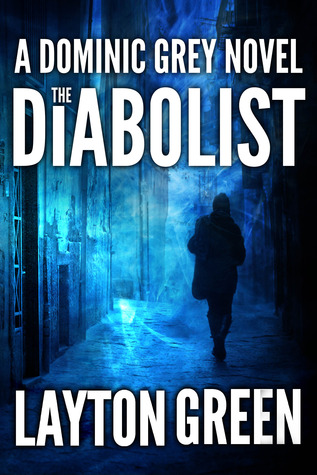
Review: The Diabolist by Layton Green (Dominic Grey 03)

Book info:
Form: e-book, pdf format
Genre: paranormal thriller\crime mystery
Target audience: adults


Synopsis (from Goodreads):

In this gripping thriller, the bizarre murder of a Satanic priest in San Francisco draws Dominic Grey and Viktor Radek, private investigators of cults, to the scene. Witnesses claim a robed figure, seemingly able to appear and disappear at will, set fire to the priest. When the leader of another Satanic cult in Paris dies under similar circumstances, the case only grows stranger… and more dangerous.

Convinced that a charismatic New Age prophet is behind the murders, the investigators undergo a perilous journey into the world of the occult as they try to penetrate the prophet’s inner circle. From the catacombs of Paris to London’s nefarious East End, from the haunted walls of York to a monastic fortress in the Sicilian wilderness, the case plunges Viktor and Grey into a vortex of black magic, ancient heresies, and the dark corners of their own pasts.

The Diabolist is a chilling novel that not only pulsates with action and suspense, but also mines a trove of fascinating historical, philosophical, and paranormal research to probe some of our closest held beliefs. From the opening pages to the astonishing conclusion, this latest installment in one of today’s most original new thriller series is not to be missed.

My impressions: 

It is my third review of a Dominic Grey book and, although the novel is a perfect standalone, I do recommed reading the previous installments. If you are interested here are my old reviews of The Summoner (01) and The Egyptian (02) posted on this blog.

All of them feature the Czech religious phenomenologist Viktor Radek and his resourceful colleague, Dominic Grey. Think Sherlock Holmes and Watson, but in the Grey series, Sherlock prefers absinthe to cocaine, and Watson is an expert in jujitsu and lock picking. First two novels were self-published and very well-received. Personally I concidered them one of my best indie finds when it comes to paranormal thrillers. Now the author got a publishing deal with Thomas & Mercer - I admit I was curious whether it made the next installment better or worse, with the author enjoying (hopefully) a professional editorial help.

The Diabologist is a novel about two things - the nature of belief, and the dichotomy of good versus evil. Yes, it's a rip-roaring, pulse-pounding adventure, but actually I loved the most parts dealing with philosophical divagations about the concept of evil, and how it's defined (or justified) within the bounds of faith and belief in our society. It all begins with the mysterious deaths of two prominent religious figures but do not let the adjective 'religious' fool you - one is the head of the House of Lucifer and the other of the Church of the Beast. Both are condemned as heretics by an unknown magus and burnt. It turns out the public perception of a 'Satanist' is just as troubled and diverse as that of a 'Christian' faith and our two protagonists must navigate that maze in order to find the culprit because a murder is still a murder even if the victim had a rather unsavoury (and fully deserved) reputation.

The best, absolutely best parts of this novels are closely connected to professor Victor Radek, a 60-year-old Czech gentleman who loves absinthe a bit too much for his own good and is a religious phenomenologist. Every time he entered the scene, either reminiscing about his past or dealing with the ugly present, the whole book got more intelligent and interesting. He had so many awesome things to say about so many topics: Alastair Crowley, Zoroastrianism, the cults of Satan and/or Lucifer, definition of good and evil, theodicy (so divagations how come evil exists in a world created by a God who is an epitome of goodness and fairness) and whether real magic, black or white, exists.

The parts narrated from the pov of Dominic Grey were not bad either (he is the kick-ass guy who used to live in Japan so small wonder) but here I can repeat practically everything I wrote before: time and again I caught myself wishing our sweet hero had a bit more sense of humour, that healthy irony and distance which make people, real or fictional, so likeable. Unfortunately in this novel Dominic sounded as dour and boring as in the previous ones; sometimes simply boring, from time to time even stupid but never ever funny. There wasn't any other character provided for the balance and I wonder why. Would it be so difficult to make our Dominic fall for a moderately cheeky, funny girl, full of ironic wit? And as I've already mentioned falling in love...Anka, the Romanian beauty by his side, was my biggest disappointment and, in my opinion, the weakest character of this installment. In fact I think she is the weakest female character written by Mr. Green so far - mind you the previous two were hardly great. My main complaint? Apart from other things Anka sounded simply artificial. I felt as if the author, not knowing what to do, gathered several incongruous traits, threw them in together, shaked a bit and hoped they would result in an interesting female. Unfortunately they didn't want to glue together.

Ok, so we have a girl from Romania, a homeless orphan to boot, who feels in the UK at home and speaks fluent, idiomatic English. She says it's because she was raised by English-speaking nuns in an orphanage until her super-powers kicked in and she was proclaimed a devil worshipper and thrown out. Oooo-kay. Still it was just an orphanage…and she never mentioned how many years she spent there.

Then allegedly she moved to a small town and found a post of a librarian (sic! without practically any education!). During that time she self-taught herself a lot about occultism and other paranormal abilities (because small-town libraries, Romanian or otherwise, have so many occult books on their shelves, right?). And, of course she polished her English (speaking and practising with whom, I pray? A butcher? A baker? A homeless drunkard for the lack of the candlestick maker?). Mind you Anka was very beautiful, simply stunning, even compared to those elegant, pampered London ladies (and I do beg the author to show me where he found such ladies in London) but, apart from one evil man called Simon (or Darius) Azar, nobody got interested in making use of exceptionally good appearances of that girl. No goody-goody stranger, no mafia, no neighbour pimp, no model agency, not even a hopeless romantic. Were they all completely blind?

Finally the ending. It was the silliest, most schematic and Dan Brown-esque part, especially with Anka being disqualified from the position of a Dominic's girlfriend because: a) she lied to a complete stranger about her role in a certain cult (how dared she, this stranger being Dominic himself!) b) she killed with a knife another character (not saying who because it would be a spoiler, let me just assure you he was one manipulative jerk) c) she was looking remarkably ugly during the act of killing d) she was manipulated, probably even coerced, by a sociopathic cult guru into having sex with certain individuals while being videotaped (how dared she!). *Le sigh*. Such sins cannot be forgiven, right?

Still I loved some of the settings - Paris catacombs! Sicily! Cambridge! London! The cover is nice as well - I love those blue walls and sidewalks.

Final verdict:

Despite unreal female character one of best occult thrillers I've read this year. If Dan Brown was able to write such a book he would crow about it for the eternity and award himself a medal. It was fast-paced and decently researched, fully enjoyable. Yes, it had flaws but find me a flawless book.
Enhanced by Zemanta

Wednesday, 13 March 2013

Rivers of London/ Midnight Riot (Peter Grant #1) by Ben Aaronovitch

Form: e-book, mobi format
Genre: Urban fantasy, crime mystery
Target audience: older YA and adults

Synopsis:

Peter Grant wants to become a real police officer but his plans seem to be thwarted even before his career starts for good. His superior, not impressed by Peter's efforts, plans to assign him to the Case Progression Unit, where the biggest threat he’ll face is a paper cut, a power failure or eternal boredom and a spare tyre around your belly. Still Peter feels his fate might change soon. First he sees and talks to a ghost. Then he gets under the wings of Detective Chief Inspector Thomas Nightingale, a one-man magical law and order enforcement squad. Not one moment too soon. As a wave of brutal and bizarre murders engulfs the city, Peter is plunged into a world where gods and goddesses mingle with mortals and a long-dead evil is making a comeback on a rising tide of magic. He won't be bored but will he survive?

What I liked:

“Fuck me, I thought. I can do magic.” 

The sense of humour of our dear Peter was impeccable although sometimes rather uncouth. Maybe it is so  because  he lives in London, a vibrant big city where you rub your elbows with strange and not necessary kind creatures from all over the world. Like all those pesky tourists. Anyway the level of geekiness, science and the dry British jokes aimed at practically everyone and everything, from African mothers and policemen to Polish kitchen aids and cockney blue collar workers, was really high.

“Conflict resolution,' said Nightingale. 'Is this what they teach at Hendon these days?'
'Yes, sir,' I said. 'But don't worry, they also teach us how to beat people with phone books and the ten best ways to plant evidence.” 


Anybody firmly rooted in pop-culture and modern world will like and appreciate the divagating of Peter, although, from time to time, sad, mean purists wearing unfashionable, square glasses might say the boy is a tad too misogynist/undereducated/violence-prone specimen of a Londoner. He doesn't know Latin or Greek after all and he got just those measly Cs while passing his Science A levels. Pathetic, isn't it? Hardly a role model for the younger generation.

“Carved above the lintel were the words SCIENTIA POTESTAS EST. Science points east, I wondered? Science is portentous, yes? Science protests too much. Scientific potatoes rule. Had I stumbled on the lair of dangerous plant geneticists?”

Ben Aaronovitch's love for London is big, wild and contagious. I can relate. It is a city I felt immediately at home so it was a big advantage that London plays an important role in this story, being treated with deference. It is way more than just a setting. You can't stay indifferent after reading such a passage:
A traditional Punch and Judy booth.
A traditional Punch and Judy booth. (Photo credit: Wikipedia)

"Being a seasoned Londoner, Martin gave the body the "London once-over" - a quick glance to determine whether this was a drunk, a crazy or a human being in distress. The fact that it was entirely possible for someone to be all three simultaneously is why good-Samaritanism in London is considered an extreme sport - like BASE jumping or crocodile wrestling."

A nice quote, isn't it? Perhaps you can say that about every big city and its inhabitants but I find it especially true for London for reason or reasons unknown. Perhaps it is a matter of the climate. Or the Punch and Judy show. Or the famous British tea more often than not superseded by fine Brazillian coffee. Yeah..

What I didn't like:

First let me tell you that I don't appreciate the double title of the book. Rivers of London made sense; why wasn't it good enough for the American editor? Search me. Maybe because they were at a loss what rivers of what London the author meant? Maybe at first glance they took this novel for one of quaint hydrology textbooks or a guide for the fans of riverspotting? (If you ask me riverspotting would make far more sense than trainspotting. At least a river is almost always there so you can 'spot' it as long as you want to. And take a picture. Just saying.)

When it comes to the adventures of darling Peter...the plot was hardly surprising or innovative. A good sense of humor is not a band aid you can slap over a pile of plot construction problems; a wise-cracking hero or not, when he repeats the steps of practically all other heroes, featured in similar books  you find yourself yawning after a moment or two. On the verge of his manhood he discovers he is a wizard? Just like Harry Potter only a bit later. He gets an older mentor? Albus Dumbledore, anyone? He gets into serious trouble and finds himself all on his lonesome? Yeah...

Also the water spirits or gods and godesses of Thames and its tributaries seemed ordinary, almost surprisingly normal. No, it wasn't exactly a pleasant surprise. Why introduce a bunch of supernatural characters when a bunch of ordinary Londoners would do as well if not actually better?

Finally one of my pet peeves when it comes to fantasy: time travelling. So you can do it without major consequences but in another dimension and it might take a vampire bite or two? Not persuaded, sorry.

Final verdict:

A very promising beginning of an urban fantasy series; still I hope the next book will be better. Because it can be better, right? 
Enhanced by Zemanta

Tuesday, 5 March 2013

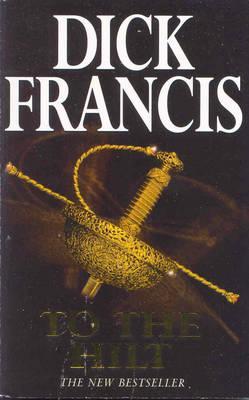
Review: To The Hilt by Dick Francis

Book info: 
Form: pdf
Genre: crime mystery, contemporary fiction
Target audience: more or less everyone who likes the genre

Synopsis
“Some are born weird, some achieve it, others have weirdness thrust upon them.” 

Alexander Kinloch, despite being a nephew of a Scottish earl, prefers living alone in a very modest hut in the middle of the mountains. He doesn't appreciate civilisation, just peace and quiet which allow him to paint. Unfortunately all good things come to an end. One day four backpackers find a way to his stony  lair. These are not normal tourists, though - shouting viciously "where is it?" they attack Al, beat him black and blue, demolish his abode and depart, leaving poor man barely alive. Who sent them? What were they really looking for? How could they be found again and brought to justice?

This event drags Al back to the 'normal' world - to his mother, a posh lady living comfortably in London, his ailing step-father, an owner of a local brewery who's recovering from a heart attack, his wife, Emily, left by Al after barely six months of marriage, and the hustle and bustle of everyday's business.

Each of these people have some serious troubles which seem to be connected to Alexander's unpleasant beating. Millions of pounds are missing from his stepfather's business. The earl struggles to protect his family's famous heirlooms. A valuable racehorse is under threat and Emily is the only person who can help and save it. When his stepfather names Alexander to be his power of attorney during the convalescence (instead of his daughter), an all-out family feud begins to boil over. Then comes the first ugly death and the end of all Alexander's doubts whether he actually should get mixed into all of this. For the honour of the Kinlochs he will face the strangers again ... up to the hilt...

What I liked:

The main character is another of Dick Francis's painters who has to find a solution to a crime before the baddies get him and his folk. Once again the characteristic was done splendidly. Al is a solitary excentric with a great sense of humour but rather poor social skills whose intelligence make him even more solitary among 'normal', ordinary people. His stolid, sometimes unexpectedly funny narration is the best part of the book and the more you find about Al the more you want to know.

Of course there was a racing event in the background and an embezzlement involved - two features so characteristic for Francis novels. Here also one of baddies, Al's step-sister, Patsy, drew my attention. It was a delightful woman, full of vices, greedy and rather beautiful who thrived organizing things. I loved the way the author developed her character from a vicious, overly jealous witch, hovering constantly over her weak daddy like a harpy, into...well, if I told you I would have to spoil you. :) Let me just say that Patsy, contrary to other baddies, will surprise you at the end. Personally I love such twists.

I loved the references to the legends of King Arthur: the golden 'chalice' which plenty of people desire to find, the sword (or rather its hilt) which needs protection, the 'damsel in distress' who needs rescuing and those women who are more like Morgan le Fay - independent, agressive, dangerous and cunning. It was all very well done, perfectly mixed with contemporary reality, and the main character served like a kind of 'adapter' for all the sides involved and, of course, a perfect knight. :) A feature to notice: Al doesn't have to be freakishly strong/gifted at martial arts or excessivelly agressive to be a formidable opponent.

What I didn't like:

I admit the mystery was a bit predictable and the main hero, despite some beatings and broken ribs, still a tad too lucky (and indeed, Mr. Francis likes having his heroes beaten up rather often ;P how very sadistic of him)... The ending I found overly sweet: a perfect fairy tale HEA for almost every 'white hat' around. Especially a certain scene made me laugh: when an elderly and very educated lady called Zoe found her portrait and was so taken with it that she abandoned instantly her 'sacred' quest for a rare and precious, historical artifact...well, undeniably some portraits can make a great effect on people but every infatuation has its limits.

Final verdict:

An author you can get addicted to. I would compare Francis novels to very comfortable slippers you love wearing when, after encountering all those wrong books in unexpected places, you are dead tired and sad. They are comfort reads. I will revisit these stories for sure and I might dig for some new ones to read soon.

Saturday, 1 December 2012

Review: Sleight of Hand (Bite Back series 01) by Mark Henwick

A copy of this novel for reviewing purposes was sent to me free of charge by the author via Blodeuedd - thank you very much !  That fact, of course,  didn't influence my review in any way. 

Book info:
Form: pdf
Genre: urban fantasy, paranormal fiction, crime mystery
Target audience: adults

Synopsis:

Amber Farrell is not your ordinary PI. She has been very well trained in one of the US Army super secret units. Unfortunately now the Army don’t want to have anything to do with her although they watch her carefully. She was a cop. Now most cops distrust her. All because of a bloody incident in the South American jungle. She was bitten by something strange and she survived against all odds; now she doesn’t know what to do with her life which is simply slipping out of her hands.

It is not a big secret what she is becoming: a vampire. However even as your average vampire aspirant she is still unusual. The whole process is taking her longer for one thing and she doesn’t seem to need a mentor. She can also identify other vampires by their coppery smell.

As a self-employed PI Amber is doing not very well, but soon she is given a very profitable job. Her new client is Jenniffer Kingslund, a rich local businesswoman with a bunch of problems of her own: normal and paranormal. All of them seem to revolve around one undeveloped location of Jennifer: Silver Hills. Will Amber be able to help her? What will it take?

What I liked:

You might say it is just another paranormal fiction series with a mixture of everyday life in a big American city (Denver) and different fantasy creatures like vamps and werewolves but it was highly readable.

The world building was interesting, especially concerning the Athanate or vampires. The author tried to outline their existence in a fresh way (if it is possible at all with vampires swamping popular literature) and I appreciated his efforts. The criminal mystery actually was overshadowed by that thread, at least for me.

Amber is a highly-trained woman but her proficiency in martial arts and using conventional weapons didn’t come from thin air. It is one of my pet peeves – a more or less ordinary chica is turned into a vampire and in the matter of seconds, practically as soon as she touches a sword, she becomes a warrior extraordinaire. Here at least the author gave his heroine a proper background, making her exploits far more believable.

Also I truly enjoyed the fact that this novel didn’t feature either insta-love between the main lead and, say, a devastatingly handsome vampire master (ugh!) or an ugly love triangle. Amber is a sensible girl who knows her priorities and keeps her desires in check, concerning both her male and female acquaintances. I hope the author will continue that course.

Finally some secondary characters like Bian, the Vietnamese vampiress who likes Goth girls, Tullah, Amber’s secretary and her mother were really nice to read about.

What I didn’t like:

The biggest problem I had concerned my relating or rather not relating to the main heroine, Amber Farrell. Don’t get me wrong – I like kick-ass women who never pull their punches and make a career on their own, without needing a strong man by their side, vampire or otherwise. Still…whenever I felt I finally knew what made her tick I was led astray by her actions again and again. Let me be more precise: Amber is not a badly-constructed character but she is neither here nor there, a work in progress.

Sometimes she acts like a straight adult woman, sometimes – like a young gung ho man from a Bond movie. She kisses both men and women. For some period of time she is a kind of live-in girlfriend of Jen but without fully realizing the implications of her status. She publicly dances with her for heavens’ sake and still she never bothers to ask herself what others might think of it. When her sister is angry at her she is simply surprised. Although she is half way into becoming a vampire she hates most of vampires and is afraid of her own future as one. Still she doesn’t look for the answers – not really, taking into account the fact that she is an investigator – and when it comes to werewolves she doesn’t have any trust issues or problems…

I understand that it is just the first part of a whole series. Perhaps with hindsight everything would have become perfectly reasonable but reading the first part I sometimes found myself wondering whether Amber is a she or a he or a person somewhere in between. I bet there might be several explanations of such a character construction. First: it was done deliberately by the author for reason or reasons unknown, to be revealed later. Second: male authors, even very good ones, sometimes have difficulties getting into a female mind and their heroines come across as tomboys at best, hermaphrodites in the middle, something misshapen a cat might drag in at worst. Creating a complex character is never easy. In my opinion the jury is out when it comes to Ms Farrell. Her background (a stint in special forces, another one as a cop) definitely would predestine her to be a bit less feminine than your ordinary vampire chick and it’s fine by me but I wish she found her inner core, spoke with herself and took a mature, informed decision about her preferences – rather sooner than later.

Cover art:

Nice but a bit misleading. I mean vampires are far more prominent than werewolves in this one so what is that doggy doing here?

Final verdict:

An interesting beginning of another urban fantasy series and a nice debut. I wish Amber and her author all the best!

Saturday, 17 November 2012

Review: The Daughter of Time (Inspector Alan Grant 05) by Josephine Tey

Book info:
Genre: historical crime story
Target audience: pretty much everybody interested in history
Form: paperback, 220 pages


Synopsis (from Goodreads): 

 In one of Tey's bestselling mystery novels ever, Scotland Yard Inspector Alan Grant, immobile in his hospital bed, is intrigued by a portrait of Richard III. Could such a sensitive face actually belong to one of history's most heinous villains—a king who killed his brother's children to secure his crown? Grant determines to find out once and for all what kind of man Richard was and who in fact killed the princes in the tower.

 What I liked: 

Yorkist king Richard III grew up at Middleham....
Yorkist king Richard III grew up at Middleham. "Middleham Castle". RichardIII.com . . Retrieved 2007-10-24 . (Photo credit: Wikipedia)
 This novel deals with Richard III and all the various permutations of the Yorkist, Lancastrian and Tudor factions in late medieval England. I wanted to read it for a really long time but I couldn’t find a decent copy. What can be said… this book could have been as boring as your average history lesson but it isn’t, mainly because it is written in a very compelling way. Ms Tey (a pseudonym of Elizabeth Mackintosh) certainly knew how to keep the attention of her readers while presenting convoluted schemes of the royal palace and a police inspector trying to kill the time while recovering in hospital because of a leg injury.

 While dying of boredom Alan Grant is presented with a portrait of England's King Richard III (reigned 1483-1485) and comes to the conclusion that a man so genteel-looking couldn't possibly be the ruthless murderer Shakespeare made him out to be because 'villains don't suffer, and that face is full of the most dreadful pain' (judge for yourself here). Certainly Shakespeare made Richard III into a character who we love to loathe. An ugly hunchback, sneaky, rotten to the core, Shakespeare's Richard is the seducer of widows, the betrayer of loyal friends and the killer of the young princes in the Tower of London. Was the bard right or maybe it was just convenient for him to paint Richard the blackest of black?

 Intrigued, Grant starts reading books concerning the appropriate period – from middle grade textbooks, full of pictures, simplifications and doodles drawn by bored pupils, to serious positions appropriate for university scholars. He is also helped by a young, rich history enthusiast from America, Brent Carradine, on a scholarship to study at the British Museum, who does more complicated source research. They findings are impressive and inspiring – I admit that after finishing The Daughter of Time, I spent several hours on line googling the authors and historians Tey mentions in her book, looking at different portraits of Richard III and his family. I gather it was the best thing about the book itself: it made me curious and inspired, it taught me a lot while entertaining. I love such books to no end.

 What I didn’t like: 

 It was a lovely book but hardly flawless. Though there are arguments, with which I agree wholeheartedly (and no, never believe a word of a historian, Ms Tey is here absolutely right), the main hook of her novel--that the most famous surviving portrait of Richard III shows the face of a man who could not possibly kill defenceless children of his brother--is flawed to say the least of it. Every portrait ever made has been the portrait of not one person, but at least two--of the sitter and of the artist--and the practice of reading a person's character through their portrait is an interesting one, though it must always be seen as very dubious if not completely futile from the psychological point of view.

There have been mass murderers whose faces were kind, innocent and fresh. There have been (and will always be) innocent people, such types who wouldn’t hurt a fly, who look as if they were born in a prison and released only because the guards were afraid for their lives. No serious policeman can trust their own judgment when it comes to assessing faces. I presented one such example in my essay Beautiful Beast.

 Apart from that I think the book could have done with slightly more individualized and characteristic dialogue, but really, that's a minor complaint.

 Final verdict:

 Despite its shortcomings it is a story I would recommend to every history nerd, especially if you like the War of Roses period and criminal riddles solved with great sense of humour. I am not surprised this book was voted number 4 out of 100 best mysteries of all time by Mystery Writers of America (www.mysterywriters.org) . If you want to read the history of Richard III presented from a less fictional perspective I recommend “Historic Doubts on the Life and Reign of King Richard the Third by Horace Walpole.

ETA: The latest news on Richard III: http://www.telegraph.co.uk/history/9681019/Scientists-to-reconstruct-Richard-IIIs-face.html
Enhanced by Zemanta

Tuesday, 5 June 2012

Review: Phantom by Jo Nesbo (Harry Hole 09)

Book info:
Form: Kindle format
Genre: thriller, crime mystery
Target audience: adults


"My name's Harry and I come from Hong Kong. Where is she?"

The man arched an eyebrow. "The Harry?"

"Since it has been one of Norway's least trendy names for the last fifty years, we can probably assume it is."


Synopsis:

After three years of more or less quiet and healthy life Harry Hole returns to Oslo from his exile in Hong-Kong. Of course  he starts having a lot of trouble immediately. Is it bad? Not necessarily – he loves it all: issues, being miserable, chasing after criminals, fighting his own demons and flesh-and-blood opponents as well, deduction and crime-solving, more issues, being more miserable, drinking Jim Beam… 

Anyway his main problem this time revolves around the premature and rather violent death of a young drug dealer and addict called Gusto Hanssen. He was shot – a crime like many others, the local cops don't care a fig about such victims. The problem is that Gusto was a partner in crime and a close friend of Oleg, the son of Harry's most serious love interest, Rakel. Oleg, now aged 18 and a drug fiend himself, is remanded in custody, accused of murdering his associate; the outlook for him is rather bleak as DNA tests show clearly he was present at the crime scene. That’s why Harry, although no longer a young, energetic police officer, wants to investigate that murder, apparently already solved, so much. He thinks he owes Oleg for not being there for him all those years. After all Harry has always been a kind of father-figure to the boy and he doesn’t feel like deserting him and his mother in dire straits. Soon Harry finds the whole case a real challenge – he is overwhelmed with the number of possible suspects; he needs more evidence and evidence is scarce. Is somebody actively hindering his investigation?

Before he faces the truth Harry will have to unravel the current drug-scene to find out who is the man with the nick of ‘Phantom’ both Gusto and Oleg were working for. He’ll find out there is a new synthetic drug around, called "violin", similar to heroin but far more potent, playing hellish havoc with Oslo's junkie population. His investigation will reveal police and local-government corruption and (nothing new, really) it will become increasingly dangerous to all interested parties. Will Hole outsmart his opponents and survive once again?

What I liked:

First let me tell you that I have read all Harry Hole novels available so far (here you can find all Nesbo's books in order if you are curious) and it seems to me ‘Phantom’ is one of the best, if not the best, of all. It is a great mix – an interesting detective story with acute social commentary on the downside of drug abuse and the clash between new wealth and old values. Even if you don’t live in Norway (I don’t) you can relate. Mind you the author never gets sentimental which is great.

Nesbo adopts an interesting handful of P.O.V.s, presenting not only Gusto's dying thoughts along with Harry's real-time hectic investigation but also some insight into the thoughts of a female rat (sic!). In fact the rat opens the whole novel and then resurfaces at the beginning of each of the novel's five sections. I am not sure a rat can think as coherently and clearly as it was written here but it was a nice, original idea anyway, adding to already a very dynamic narrative. And it was fun.

I'm usually not a person who can pick spot-on the identity of a murderer in a decent whodunit (I think I am too stupid or too lazy or both) so small wonder I missed nearly every clue and certainly did not see the ending coming (one big twist, believe me!). Still it was one heck of a ride, rollercoaster as usual, nothing less, which I enjoyed immensely. Be warned: this book is a compulsive page-turner, reading from time to time like Jason Bourne’s adventures.

However the biggest asset of this series is, in my humble opinion, the psychological veracity and dynamics of both baddies and protagonists. All of them are flawed, all of them have good and bad days, ups and downs, almost like in real life. The baddies tend to be smart, charming and handsome, you can’t help pitying some of them and our lonely ex-detective has to perform top notch to outsmart them in time. Harry also changes as he is plagued by bad memories and different ‘ghosts’ because, let’s face it, his ‘job’ is not easy and hardly ever done. It's only too normal that he breaks down regularly (who wouldn’t), drinking or taking drugs. It is also a reason why it is great to start reading about him from the very beginning although Phantom, like other parts featuring Hole, can be easily a stand-alone book. Still it is so very nice to find some of the plot themes from the previous books coming together.

What I didn’t like:

I admit the book was a tiny little bit overwritten. I was especially surprised that dying took poor Gusto so long. He was an addict on forced withdrawal, mortally wounded because shot more than once from a very close distance, lying in a horrible junkie den, bleeding heavily...and he actually managed to tell his part of the story to the very end in a lucid way. This was probably the weakest part of this book although I did see the point of Gusto’s narrative. Oh well, it is just a fictional story, isn’t it? Still a brave, motivated editor, not afraid of cutting out this or that, could have made this a tighter, more edgy novel.

My second complaint concerns Harry himself. Sometimes he acts as if he was immortal and he knew it (and his enemies not, ha ha, let surprise the b******ds one more time!). Unlike ordinary, mortal folk he doesn’t care much about his own health and safety: he goes to meetings with a possibly deadly outcome almost unprepared, he hardly ever eats or sleeps. After a while it starts being a bit silly. In ‘Phantom’ our brave ex-detective sews up his own partially cut throat and chin using a simple, non-sterilized needle and a black thread (don’t try that at home) and, instead of visiting a friendly doctor or at least a voluptuous nurse soon afterwards to have it done properly, he goes out to dig out a corpse from a grave. Hey mister, have you ever heard of sepsis? Oh, sorry, you are immortal, I forgot…Then he turns off half of the city’s power supply instantly and mind you, he does it with just one single phone call. A regular Superman, don’t you think? I almost crooned ‘my hero!’ I wish I could solve such mundane (and far less complicated) problems as a mistake in an invoice or an outstanding payment that way - one phone call and it is done. No such luck so far.

Finally I am not a big fan of the cover art - it seems too bland and generic. Not hearing anything about the book itself I would hardly glance at it and move on.

Final verdict:

Despite  minor shortcomings I liked this novel very much. Still I must warn you the author left deliberately some significant loose ends (it is, in fact, a steep, sharp cliffie, sharper than rat’s teeth, be warned). It is really hard to predict where Harry’s going from here but if there is a new book available next year, I am going to preorder it for sure. Just for the heck of it let me predict how the series will end. In other words…

How to kill Harry Hole?

It is really simple. No need of guns, sophisticated torture devices, madmen or poison. In fact the more obstacles you throw his way, the stronger Harry is. However, try keeping him satisfied and happy in a fluffy-warm, fully functional family straight from a soap opera for three months and he will wilt by the excess of happiness like a plant exposed too long to direct sunlight. He might kick the bucked even sooner, let’s say after a mere month, if his beloved Rakel and Oleg join him there - it’s enough Oleg whispers ‘dad’ every day and Rakel hugs him tightly. ;)

Friday, 6 April 2012

Review: The Lighthouse Keeper (Fyrvaktaren in the original version) by Camilla Läckberg

I had wanted to read something written by Camilla Läckberg for some time and finally I found one of her novels in the sales – as I needed some entertainment in hospital I decided this one would do ; p - it is always good to know that some people have it worse than you. To my utter surprise afterwards I found out there is no English translation available yet – even on Amazon.com all I could find was an audiobook in…Danish. Go figure. Still there are novels by Läckberg published in English and other languages as well so I decided to write a review anyway – you can get a taste of her style and then you might want to read her other books. Or not. 


Book info:
Form: paperback, 494 pages
Target audience: adults
Genre: crime mystery


Synopsis (from the site of the author )

 Police inspector Patrik Hedström has just returned to work after a lengthy sick leave. He has tried to have a good rest, while also looking after his wife Erica and their prematurely born twins. He barely has time to step inside the office before he is thrown into a new investigation. A man has been found murdered in his flat, shot through the back of his head. The victim is Mats Sverin, the local council’s financial director, a thoroughly friendly and well-liked person. Nobody has a bad word to say about him. Together with his colleagues, Patrik begins to map out Mats’s entire life, which contains more secrets than anyone could ever have suspected. 


Why was he in such a rush to leave Gothenburg to return to his home town of Fjällbacka? What part did he play in the project involving the old bath hotel being transformed into a spa? And is it pure coincidence that Mats’s childhood sweetheart Annie has also returned? They have not been in touch for several years, but now she and her son are living on the island of Gråskär outside of Fjällbacka – a place where her family has resided for generations. Even Gråskär has its share of secrets and is a place that has always been surrounded by sinister rumours. They say that the island is haunted by the dead and that they have something to tell the living…

 What I liked: 

 First of all Ms Läckberg mixes one storyline from the past with a few from the present. The storyline from the past takes place on a small, isolated island called Gråskär not far from Fjällbacka. According to the legend people who die on that tiny island with a lighthouse never really leave it. Plenty of characters will have to (or will want to) visit Gråskär during the narration – who will stay there forever?

 I liked the past storyline even better than the present ones – it had a great atmosphere of doom and gloom, with a dash of supernatural perfectly balanced with the harsh reality. The failed marriage of Emelie was such a great illustration of the famous saying: ‘be careful what you wish for…’ Its ending was something that left me a bit puzzled but, taking everything into account, perhaps it wasn’t such a strange outcome. I’m not sure how long I would suffer such a treatment Emelie got from her husband (24 hours? less?), small wonder she went…mad (?).

Of course you might argue that those were different times ( and you would be perfectly right - 19th century, no laughing matter when it comes to women's independence) but Lackberg shows in her book that even nowadays a lot of women feel they have to put up with abuse and violence no matter what. The criminal mystery happening in the present times was skillfully executed but I liked the most these everyday life details the author added to her narration here and there. They made the novel somehow more scary than any amount of gore or violence. One thing is sure: the author knows how to describe loneliness, despair and a sense of loss. Sometimes some tiny things like a cup of freshly brewed coffee who is left untouched because there was nobody to drink it sent real shivers down my spine. Overall the book ended in a really heartrending way.

 Finally I appreciated the occasional humorous remarks, especially when the author zinged her own partner (but in a very sympathetic way)! The translator provided enough info in the footnotes to make it understandable even for foreign readers – thank you very much, dear translator!

The cover is great. I love the colours.

 What I didn’t like: 

 Female characters; almost all of them (maybe apart from Viviane but she is not the main lead so we meet her just from time to time) were presented as victims who need rescuing, not survivors most women really are. It sounded a bit anachronistic. Also this book is not for people who want to improve their mood reading something cheerful and sweet. Like in real life a lot of bad things happen here sometimes without any reason – innocent people get murdered, different villains get away with their ugly deeds and children die prematurely in a car accident. If you are ok with such a bleak/realistic outlook, your inner Goth/pessimist will feel satisfied with this story. Just prepare some chocolate and one of these fluffy, cheesy, pinkish romances with improbable HEAs beforehand in case you feel overwhelmed by a bout of depression.

 Final verdict: 

A very nice, original crime mystery with some paranormal/psychological elements (but without vampires or werewolves) that enriches the whole whodunit aspect. If you feel you daily horror quota haven't been met lately do read this one.

I would like to thank rameau and Blodeuedd for their help in translating the title from Swedish.

Monday, 26 March 2012

Review: The Ethical Assasin by David Liss

Cover of "The Ethical Assassin: A Novel"
Cover of The Ethical Assassin: A Novel
Book info:
Form: paperback
Genre: criminal mystery, thriller, contemporary fiction
Target audience: adults
Pages: 327
Publisher: Ballantine Books

Synopsis:

Can murder be justified, even called the most sensible course of action in some circumstances? Is the life or animals always worth less than the life of human beings? Should cruelty, corruption and greed of big corporations and individuals be condoned just because there’s no better option? What are prisons really for? Young Lemuel Altick will have to find answers to those questions while earning college money as a door-to-door salesman of worthless encyclopedias.

One day, while trying to sell his wares to the inhabitants of a dingy trailer somewhere in rural Florida, Lem witnesses a double assassination. The perpetrator, Melford Kean, seems to be far from an ordinary ruthless thug, though. Instead of shooting the hapless witness along with the others he suggests a deal: stay quiet, don’t contact the police, and everything will be fine. It is one of these propositions you simply can’t refuse but it is hardly an end of Lem’s problems.

He finds himself drawn against his will into the realm of the assassin, a post-Marxist intellectual with whom he forms a kind of a friendship. Who Melford really is? A charming vegan sociopath, an eco-activist, or a lonely vigilante for social justice?  To unravel the mystery and save himself, Lem must descend deep into a bizarre world he never knew existed, where a group of desperate–and genuinely deranged–schemers have hatched a plan that will very likely keep Lem from leaving town alive.

What I liked:

  • The plot. I love when a mystery is skillfully done and this one was really refined and complex. It starts slowly - at first it seems nothing fits – we meet a bunch of unpleasant guys who do unpleasant things without even a shred of remorse. The more you read the clearer it gets, like a jigsaw puzzle which you try to assemble without looking at a model pic. I found it truly entertaining, intelligent and clever.
  • The lead characters. Lem is our usual ingénue who grows up while solving a mystery and saving his life but he is not one of these ‘too stupid to live’ boys/girls who must be led by a hand and constantly watched over by an older mentor. It is true that Melford shoves him towards the right direction from time to time but overall the boy can think and take decisions on his own, mainly because he has been forced to do so from his childhood. By the way the title assassin is a joy to read. Does he belong to white or black hats? His actions will make you change your mind more than once but you will enjoy reading about him.
  • The baddies. They are well-rounded, real-life criminals – those who are successful and skilled, evading the justice by exploring the holes in the system. I liked it very much how the author described mechanisms of different scams, the seamy underworld of an allegedly peaceful backwater town. It ringed true. Even the fact that they used such a foul language didn’t deter me – after all you can’t expect a hardened criminal to speak like the Queen of England or a news anchor.
  • The pace of narration. After first several chapters you’ll find yourself glued to this book. It is highly readable, as all Liss’s novels I’ve read so far.
  • Dark comedic undertones – I LOVE this kind of humour.
  • The death of the major villain. Dear me, it was a bit of justice I wouldn’t have imagined, not in a hundred years – horrible, disgusting, bloody but so right.
  • The cover - it fits the story.


What I didn’t like:

  • Female characters. It seems Mr. Liss has a problem here. Compared to two leads, mentioned above (Lem and Melford) the ladies are simply pale and insignificant. Chitra, the fellow encyclopedia peddler from India, is almost like a carton cut-out girl or a prop for Lem – pretty eye candy whose main role is similing, swooning and whispering ‘my hero’. Desiree, the young charge of B.B., a secondary male character, is better but it features in too few scenes to be really a significant player; there is more background to her actions, but she is not strong enough to stand on her own feet. Pity – I would enjoy more of her and generally more gender ballance for sure.
  • Sometimes the book sounded a bit too preachy but fortunately the author never overdid it.

Final verdict:

David Liss is mainly known as the author of Conspiracy of Paper series (if you can call it that) , three great historical fiction novels which I enjoyed very much. The Ethical Assassin shows that he can write contemporary fiction as well. I recommend this book to all those who like intricate mystery thrillers which focus not only on a simple ‘whodunnit’ but also on more serious issues like animal rights. It is perhaps not a work of pure genius but it will keep you intelligently entertained -  you won't regret the time spent with it. 

Monday, 12 March 2012

Review: The Traitor in the Tunnel (The Agency #03) by Y.S. Lee


Form: e-book, Kindle format
Genre: historical fiction
Target audience: YA


Synopsis:

Mary Quinn, now a fully fledged operative of the all-female secret Agency, is placed in the Buckingham Palace as a domestic servant to find who has been stealing different trinkets from one of the Queen Victoria’s parlours. If the task sounds easy, rest assured with Mary no assignment is as easy as it looks. When one of the Prince of Wales’s irresponsible young friends is killed in disgraceful circumstances Mary is, surprise, surprise, among few people to know the truth behind that incidents. Should the Queen hush things up or allow justice to take its course? Mary’s interest in this private matter soon becomes deeply personal: the alleged killer, a drug-addicted Chinese sailor, shares a name with her long-lost father. Could it be the same person?
Meanwhile, James Easton’s engineering firm is repairing the sewers beneath Buckingham Palace. Trouble is, there’s a tunnel that’s not on the plans. Its purpose is unclear but it seems to be very much in use. These overlapping puzzles offer a perfect opportunity for Mary and James to work together again… if they can still trust one another. This is Mary’s most personal case yet and she has everything to lose and plenty to gain.

What I liked:

This is one of few YA series that I really appreciate. Usually my main complaint is that the books are too short – I am that smitten. The writing style of Ms. Lee is highly readable, I swallowed this book in less than 24 hours. The pace of narration was great, neither too quick, not too slow, everything happening in the right order.

Of course the biggest asset was Mary Quinn herself. She’s never been one of these ‘too-stupid-to-live’ insipid girls and she’s grown up a lot. Now she faces several personal issues, trying to defeat demons of her past unleashed by a man whose name is the same as that of her long-lost Lascar father. She also falls more and more for James, still being unsure what his reaction might be when he finds out all her secrets. Last time he flinched hearing about Mary’s sad childhood and thievery – what will he say now?

Fortunately James Easton has changed too and for better – he is less sanctimonious, less prickly, more cooperative and eager to kiss Mary every opportunity he has. Their romance comes to a rather happy conclusion at the end but, hopefully, it is still not the end of their common adventures. They can't marry - not yet anyway and Mary has great plans for the future – with the silent support of the Queen Victoria they even seem realistic!

Finally this is also one of those historical series which has never made me wonder whether the author did her research job. It is very obvious she did. Victorian London, presented here, sounds real and plausible – perhaps some sights and smells would be difficult to tolerate but you would like to visit nevertheless. I am also glad that, in spite of the fact these books are clearly YA, the author never patronizes her readers, mentioning even delicate issues in an honest way. In the previous novel Mary had a small but significant chamber pot problem (how to relieve yourself when you are pretending to be a man and another man is present in the room?); in this one she is even pushed further as one of the villains tries to make her prostitute herself.


The cover art I find nice and appropriate.

What I didn’t like:

I must admit the main criminal puzzle was a little bit less intricate than usual, although still it featured an interesting twist or two. Also the baddies weren’t as interesting as previously. Fortunately the character development of the main heroine overshadowed these slight shortcomings. Oh and the book was too short of course. ;)

Final verdict:

A great novel for light recreational reading which can make you happy and bouncy – it is a YA position but  neither syrupy sweet nor depressing! If only there were more such books...


Saturday, 14 January 2012

Mini Review: The Quickie by James Patterson and Michael Ledwidge

Book info:


Form: e-book, pdf format
Genre: Detective story, crime mystery
Target audience: adults


Synopsis:

Lauren Stillwell, a homicide detective from New York, is happily married to a handsome finance advisor, Paul. One day she decides to surprise her husband, visiting him at work during lunchtime. She sees Paul going out with an unknown, tall, slim blonde. They enter a posh St Regis hotel and Lauren is left rethinking her marriage and her life from quite a new perspective – that of a cheated, ageing wife. She comes to some fateful conclusions. One of them is that Paul has stopped caring about her some time ago and she, being very busy, hardly noticed. The second one is that she needs some mood-boosting entertainment. Like a quickie or rather a one-night stand.

The same evening Lauren pretends she has missed her plane and invites a handsome bike-riding colleague from other department, Scott Thayer, to have a late dinner with her. Scott, calling himself the most eligible bachelor on the whole NYPD, has been flirting with Lauren at work for some time now, apparently rather smitten by the older woman’s looks and not ashamed of showing his admiration. Although Lauren hesitates till the last possible moment, the evening ends up with them both going to bed at his friends’ flat. However, when Lauren’s husband appears outside, things get complicated. Lauren watches both men having a fight on the street and disappearing after a while in Paul’s Toyota.

Next day Scott’s battered body is found in a Bronx fountain. The whole NY homicide department is looking for the culprit and Lauren is made the main investigator. What cheer. For starters she finds out that ‘the most eligible bachelor’ was married and had three kids, one of them barely an infant. Then she finds his gun and his badge in her garden shed. Everything indicates that Paul knew about their flirt and killed Scott in a fit of righteous jealousy. Why doesn’t he want to admit it, lying to his wife through his teeth all the time?

Lauren feels very bad about her role and the whole situation, especially after visiting the young widow and witnessing her grief. She is so depressed that she thinks about telling the truth to her partner, exposing Paul and herself, ending her career in shame, perhaps even committing suicide. Then her investigation takes quite a turn - she finds a huge stash of banknotes hidden in Scott’s locker and a DVD glued underneath his desk at his house, labeled ‘insurance’ – it seems that Scott, the raising star of the Anti-Drug Task Force, had more than one secret to hide…Lauren takes another fateful decision – to stand by her husband and cover for him to the bitter end, no matter what. Will she succeed? Will she ever manage to talk to him about the whole event at all? Will the truth set her free in any sense?

What I liked:

Although at first glance this book might seem just another novel about cops and thugs I admit it was very well-executed. The pace of narration kept you waiting for more but the heroine and the readers were given some breathers from time to time. Overall it was very pleasant to read. Lauren was a great character – funny, stubborn and definitely kick-ass, although she didn’t wield any katana and never donned leather pants. She simply never lacked the backbone, even when she was utterly disgusted with herself.

I liked the most the fact that neither Lauren nor her hubby and coworkers were without flaws and the reality around them changed constantly, like in a kaleidoscope. It proves that you don’t need all the supernatural background to make a book riveting. The ending was  satisfying although bitter-sweet and the amount of things Lauren discovered during her investigation I found really mind boggling. Not bad.

What I didn’t like:

Well, after reading such a book you will really think twice before trusting any man. Not exactly a cheerful or sensible conclusion but in my present state of mind one that, I admit, might save you a lot of trouble and pain. Some twists did seem a bit outlandish but overall I have no major complaints.

I don't like the cover, though. It would be more appropriate for erotica stuff and I think is misleading a potential customer.

Final verdict:

It is not a classic whodunit and not a classic cop novel either. I enjoyed it very much and I recommend it to fans of both genres and also those who would like to try something different

Tuesday, 20 September 2011

Mini review: Lana Halliday – a short story by Lulu Sullivan

Why I read it: I was contacted by the author - thank you very much! - and she asked me to read and review her short story; it was provided  free of charge in exchange for an impartial opinion. That fact, of course, didn't influence my review in any way and I wasn't compensated in any form for writing it.  As always the pleasure was mine.


Book info:


Form: e-book, pdf format
Title: Lana Halliday
Author: Lulu Sullivan
Genre: mystery, comedy, 
Target audience: pretty much everyone


Synopsis:

Lana Halliday meets her friend, Ronnie, for tea. He is recovering from a broken heart and, like any good friend, Lana lends her sympathetic ear to him and learns about the whole business in great detail.

Ronnie happened to be engaged to a delicate and elfish but rather mercenary girl called May. You might know her type - a girl every male around feels honour-bound to protect because she seems to be such a dainty, sweet, helpless little doll. Of course usually she is anything but. Clever May broke her engagement with Ronnie as soon as she found out no well-paid job was waiting for him despite having a rich, well-connected uncle. She also kept her engagement ring because it came with a huge, expensive diamond. To add insult to injury, she took the diamond out and had it set in a tiepin; then she gave it to her newest boyfriend, Peter Maddox Peters, a popular writer. Sweet, wasn't it?

Ronnie is being in dire straits now – he bought that diamond by fabricating a cheque with his uncle's signature (one zero more, one zero less, who cares?) and now he must face his anger unless he can reimburse him, which of course is not possible. Ronnie would love to have that diamond back, sell it and return the money but he is hardly a man equal to the task - his poor efforts lead to an incarceration. Our blonde Lana has to intervene, as she would do anything for a good friend wilting in jail…especially as she is enjoying every moment of it!

What I liked:

Lana Halliday was a girl after my own heart – clever, devious, not afraid of getting dirty, always there when her friend needs her the most. I like her fierce loyalty and recourcefulness.

The sense of humour – as always Ms Sullivan made me laugh. I do appreciate it more and more. Thank you!

The cover is nice!

What I didn’t like:

I know it sounds silly but this story was simply too short. I want a big fat book featuring Lana Halliday! Pretty please!


Final verdict:

If you like reading short stories with kick-ass heroines do go for it! If you prefer longer books - there is still Brightwing out there waiting for you!


Monday, 12 September 2011

Mini review: The Devil’s Company by David Liss

· Hardcover: 384 pages
· Publisher: Random House; First Edition edition (July 7, 2009)
· Language: English
· ISBN-10: 1400064198
· ISBN-13: 978-1400064199
· Genre: historical fiction, thriller
· Target audience: adults


Synopsis (partially from the back cover):

It is the third historical thriller featuring Benjamin Weaver (after A Spectacle of Corruption and A Conspiracy of Paper, reviewed by me not so long ago).

1722, London. Benjamin, still earning his living as a ruffian for hire, a thieftaker and a master of disguise, is forced to cooperate with a mysterious mastermind – a man named Cobb – nobody knows anything about. To keep unwilling Weaver in line, Cobb has bought a lot of debt notes belonging to Weaver’s ill uncle, Miguel, and two other close friends of his, practically holding their lives in the balance (and we speak about times when you could spend many years in a debtor's prison if you didn’t manage to pay your dues). To protect the people he cares about Weaver must stage a daring robber from the headquarters of the ruthless British East India Company. Although he manages to do so, it is just a thin end of the wedge. Next, he is ordered to work for that very company in a rather dubious capacity to find out the real reason of death of a certain Absalom Pepper – a closet inventor, a ladies’ man and much much more. Soon enough, against his better judgement, he gets involved in a dangerous game of secret plots, corporate rivalry and foreign spies. Navigating a labyrinth of greed and treachery he will get acquainted with a corporate life resembling very much that of our contemporary great companies.

What I liked:

The plot was as action-packed and full of twists and turns, as I like. I didn’t have one minute of boredom while reading this one.

Vivid period detail is rendered so it can actually make you interested in history, even if you didn’t like the subject or the era before. This time Mr. Liss provides some interesting glimpses into the Rules of the Fleet – a law-free area around Fleet Prisons where debtors could live free from arrest and clandestine marriages took place without banns or license. After reading about it if you ever visit that area in London you will never treat it as just another part of the city again.

The narrative voice of  our main hero never ceased to amuse me - Weaver has a biting, sarcastic wit, and he had me laughing at many places in the novel. Apart from that, once again the author did choose the right amount of archaisms to make the book era-believable but not to discourage contemporary readers.

What I didn’t like:

I know it is difficult to keep a series of novels based on the same formula on a high level it was started; small wonder the third part I found somehow lacking.

First of all, in this book we meet a Celia Glade who is supposed to be the next love interest of Benjamin. I did want more romance but now I suppose our main character fell in love again too early – to be honest I found Miss Celia one of the weakest female characters in Liss’s trilogy so far. Not only she doesn’t feature often enough to be close to a fully-fledged heroine you can relate to but she remains surprisingly two-dimensional to the very end, despite the fact that she is supposed to be a splendid actress and a mistress of disguise herself. I don’t say she is not amendable because undoubtedly she is (providing that the author plans a fourth book). I just wish we were given more proof of it.

I was also a bit disappointed that Mr. Liss neglected to explore the inner workings of the British East India Company in greater detail; I would love to read about it even if it meant a slightly bulkier book. I did enjoy his rants about the evils of big corporations and capitalism, though – a very contemporary topic and always close to my heart. Here, I end this section in a positive way - it means the book wasn't totally bad. :-)

Final verdict:

If you enjoy historical fiction with a strong background of conspiracy, economics, technological development and a tad of romance, and with much of the action taking place in 18th century London, this trilogy is for you. I admit I found the third part the weakest but, overall, I don’t regret buying and reading it. After two such brilliant installments you simply must read the third even if deep down you know it might be a tad worse.