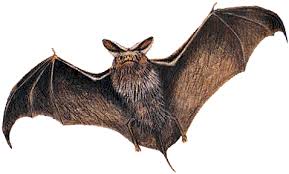
Showing posts with label vampires. Show all posts

Friday, 5 July 2013

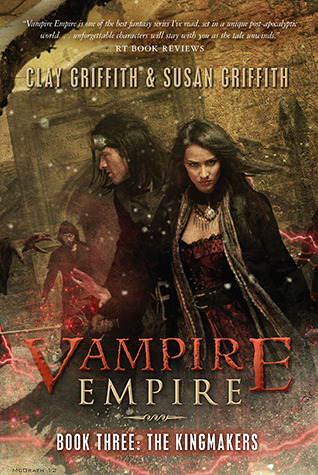
The Kingmakers (Vampire Empire #3) by Clay Griffith, Susan Griffith

Book info:
Form: pdf format, e-book
Genre: steampunk with vampires
Target audience: YA

Synopsis (from Goodreads):

The epic Vampire Empire trilogy rushes to a conclusion of honor and love, hatred and vengeance, sacrifice and loss. A war to the death. Empress Adele has launched a grand crusade against the vampire clans of the north. Prince Gareth, the vampire lord of Scotland, serves the Equatorian cause, fighting in the bloody trenches of France in his guise as the dashing Greyfriar. But the human armies are pinned down, battered by harsh weather and merciless attacks from vampire packs. To even the odds, Adele unleashes the power of her geomancy, a fearsome weapon capable of slaughtering vampires in vast numbers. However, the power she expends threatens her own life even as she questions the morality of such a weapon. As the war turns ever bloodier and Adele is threatened by betrayal, Gareth faces a terrible choice. Their only hope is a desperate strike against the lord of the vampire clans-Gareth's brother, Cesare. It is a gamble that could win the war or signal the final days of the Greyfriar.

My impressions:

It wasn't a bad ending of a series but also one which left me a bit disappointed and strangely detached. I would call it an ending of lost potential. Perhaps it's been too long between this one and part 2. Who knows.

My first carping: a big epic showdown should be anything but slow. This one was slow. I expected battles, strategy and wartime mayhem, a whirlwind of activity I got pages and pages devoted to single battles, Adele’s angst over the Greyfriar and the difficulties in their relationship. Pages and pages of the Greyfriar’s own angst – about everything not exactly connected to the ongoing war. I think everything that happened and everything anyone felt in this book had to be accompanied by a rather long winded internal monologue, sometimes but not always switching to a dialogue.

Many of these scenes weren’t bad – like Gareth visiting the King of Paris (a nice scene but also one that ended up pretty irrelevant so hardly mattered in the end), or Gareth cooking for Adele. Adele re-uniting with Morgana. Adele talking with Sanah. Anhalt sparring with Senator Clark. Senator Clark’s war in the US. They were all good scenes, albeit overly written with too much monologue, but they were great in their own right for character development and exploration and just plain fun with this world and these people who I enjoy. But they weren’t relevant to the plot – if they were removed the ending would be exactly the same as it was with them. It did seem as if glue, holding the whole novel together, was too weak or simply forgotten.

Gareth was just a bore, there was nothing to him except for his love for Adele. Adele was supposed to mature and become a kick-ass empress which she did to some extend but also she could be surprisingly annoying. I didn't understand why she kept questioning whether she should use her powers to kill the vampires despite the fact that 1) they were evil, most of them 2) they were responsible for millions of deaths and planned even more slaughter 3) they wanted to enslave humanity 4) they did nothing, literally nothing to persuade her and other humans otherwise. I suppose her defense of the vampires was meant to make her seem forgiving and compassionate but it just made her look like a dumb empress who wore her heart on her sleeve permanently, being the one and only person with super powers around enamoured with a real VAMPIRE who happened to be a decent guy and love her back.

Never mind that the future of humanity was in her hands, never mind that humans were dropping dead. None of that mattered if it hurt her centuries old lover (?). Everything seemed to fall into place too easily. Adele reads some doodles and realizes she's the most powerful geomancer in the world at a time when all seems lost. A little too deus ex machina for my taste. All of the planning went nowhere, Adele saves the day and Gareth is immune to her geomancy now and they will be together and all ugly baddies who count are just killed, killed, killed. It served them right perhaps but it was also boring. No subtlety, no wits and no scheming. No compromises either.

Final verdict:

I expected this series to be better. I wanted this series to be better. Unfortunately I was a bit delusional about my expectations. I liked the first book the best, the second was weak and the last one was just so-so.

Sunday, 19 May 2013

Review: Dead Ever After (Sookie Stackhouse 13) by Charlaine Harris

Genre: paranormal romance
Target audience: adults
Form: pdf, e-book


Synopsis:

Sookie is going to face  sharp, unexpected turns and twists of fate. Nothing new, right? Ok, perhaps nothing new for the faithful readers of the series but it is supposed to be new to her. You see, she will have to redefine her love life and her social status. She will have to face the music after the magic revival of Sam Merlotte, her former boss and her business partner. She will be pursued and harmed and hurt. She will experience the force of true friendship and the bitterness of an estrangement. She will find her true partner for life. She will be shot at and wrongly accused of murder. Will she survive? It’s the last part, officially anything can happen and yet…and yet… you don’t have to be a Sherlock Holmes to guess the rest. Because the rest is the silence (and I would love to add ‘the silence of the lambs’ but I suppose I would get you spooked so let’s leave that out, ok? Just an innocent remark in parentheses).

My impressions (with spoilers):

Writing a book is a strange business. Sometimes you think you get all the ingredients for a great story and you find yourself one character or one scene short for a complete, unparallel disaster. Sometimes you think the whole enterprise is just a silly prank and you are wrong again. Finishing a popular series is even a stranger business. You already know it’s been a success, you have your devout audience, plenty of people have nourished their own expectations concerning the story and now they want you to deliver. What to do? Fulfill the wishes of your most faithful fans (hey, they deserve it! They’ve voted with their money and made it happen!)? Follow stubbornly and proudly your own vision (providing you’d had one at all)? Listening to your editor, publisher and marketing gurus who are whispering in your ear some uncomfortable truths (‘hey, it’s the last chance to earn a bit more, most probably not to be repeated any time soon!’)? All of the above? Neither of the above?

I completely agree that finishing a series is more daunting a task than starting one. I do applaud Ms Harris that she never went back on her word (she’d promised she wouldn’t follow the example of Twilight and her Sookie would never become a vampiress). Still the last Sookie novel left me cold, miserable, shrugging and sad. As I predicted some time ago (and no, I wasn’t alone) Sookie ended up with Sam. Yes, it was a kind of disaster. I’m writing it without even a drop of malicious satisfaction.

Yes, I used to like that silly Sookie girl and her supernaturally exciting albeit completely small-scale life in the middle of nowhere (read: the southern rural America). Some of the installments were better, some were worse but in those better ones I found really good observations about the contemporary America and its inhabitants – their hopes and fears dressed up as supernatural creatures of different but mostly bloody sorts. Meanwhile the last part sounded banal and boring, from the beginning to the very end, as if it was written by somebody else who just gritted her teeth and ploughed through the plot to finish the blasted thing once and for good. Yes, the book consisted of roughly the same elements as the previous ones but somehow the whole magic was gone and my interest was never stirred, not even once.

Now the list of my woes. Sookie predicaments rang hollow. Her love life went into a nose-dive with Eric so clearly out of the picture most of the time (if I had to be honest it had gone into a nose-dive even one or two installments earlier but at that point you still could hope). I didn’t care whether the unimportant and completely superficial crime riddle concerning the death of a certain white trash slut called Arlene would be solved or not. I didn’t enjoy the cavalcade of different, half-forgotten characters from previous parts the authoress forced to parade through more than half of the book without any sense, reason or fun. The new child of Eric, an ashen blonde called Katrin the Slaughterer, was almost comically bland compared to other vampires who had been presented in the heyday of the series. The almost- final sex scene between Sookie and Sam left me bored stiff and yawning (seriously, I bet sex in elderly nursing homes can be more hot than that). Nothing made sense. Nothing was new or clever or funny. Nothing worked anymore.

Final verdict:

Yes, I have been warned not to read this one. Yes, I couldn’t stop myself, especially that a friend lent me the book so I didn’t have to buy it. Yes, I regret it ended how it ended. Yes, I wasted an hour or two of my life again. Flames to dust… Now I need a pick-me-up rather badly. In fact it should be added to every copy of this novel for free.


Sunday, 5 May 2013

Series review: Black Dagger Brotherhood by J.R. Ward

 photo ae334d5a-9e8e-4355-9b2d-a643fe91dd0d_zps50b1542a.jpg

First of all:
here you can find the titles of novels as listed on Goodreads, available in Black Dagger Brotherhood series. And much more. You might notice that the series enjoys overall a very high ranking - that's why I was lured into trying it. I skimmed just three books and surrendered to the inevitable - each one of these was for me a DNF of a kind. Why?

My impressions:

It is easy to recognize one of these series from the first book. The author introduces you to a group of available men and/or women – they might constitute a big, extended family or a unit of fighters/warriors or a pack of werewolves – relatively young, close-knit, highly trained and rather secretive. In this case it is a coven of male vampires called the Black Dagger Brotherhood led by Wrath with a mission of fighting ugly lessers. In every installment one of them is paired with an appropriate love interest a.k.a a worthy female, Wrath being the first victim…er…happy bride groom of the aforementioned pairing.

All the characters share several tell-tale traits – for example every single one of males is handsome and muscled (actually let me quote one of the novels to make my little review more colourful: ‘built like a brick shithouse’ and ‘hung like a Louisville Slugger’ was the actual description) but also in some way conflicted, with shadows in their past (in other words pop psych at its finest). At first it might seem an interesting idea but after two-three books you find you have to stifle a yawn or two, so similar to each other they all seem. Also every one of these ‘worthy females’ is invariably pretty, kind, curvaceous, young and honorable. Damn it, even intelligent. They might behave sometimes like a skunk but only with their ‘chosen one’ so it remains more or less acceptable.

Well, it is a world where you recognize your second half instantly and without any necessary hassle and once you fall in love, you stay in love no matter what. Vampires dress well in brand-name clothes and swear like your common–or-garden thug. They tattoo (or rather carve) the name of their beloved on their own backs. If they have sex (and there’s plenty of it) it is always and unvaryingly mind-blowing experience with multiple orgasms and such trifles. Of course, despite being kick-ass, as-hard-as-nails, tough-and-rough, leather-clad professionals every single one of them has that white fluffy bunny buried deep inside. Who can find the bunny? Who can make a big, muscled macho vampire snuggle and moan and lick your metaphorical shoes, all sappy and soft, while proposing on his knees or on all fours or on his back, with all limbs flailing about, his position completely depending on your mood and preferences? You guessed it – a worthy female, the one and only.


 If there are any problems in this vampire paradise you get Her Holiness Scribe Virgin - an entity who is neither a virgin (she has a vampire son and daughter!) nor a scribe but a deus-ex-machina solve-it-all fairy godmother of the scarier kind. Add to that blend a bit of family drama, bad childhood memories, feminist whiffs and some unpleasant torture – the parts of particular vampires’ past experiences – and you get in a nutshell what this series is about. Artificial as hell and sweet as glucose-fructose syrup. If you swaped these heroes and heroines with, say, My Little Ponies, nobody would notice.

English: Rubik's cube Italiano: Cubo di Rubik
 Rubik's cube  (Photo credit: Wikipedia)
There is of course a lot of steamy scenes during which male parts and female parts are getting closely acquainted, no inhibitions. It is a paranormal romance, very close to paranormal erotica after all, right? Insta-lust and insta-attachment seem to be two virulent diseases plaguing these stories – as soon as a male or a female gets a whiff of their future mate they are in a constant hormone overdrive mode and you can be sure: in the end every Jim will get his Jane, no matter what obstacles are thrown their way and they will remain blissfully happy, like ‘a Rubik's Cube solved (another quote - isn't the writing style lovely?). The syrupy sweet ending is one of the features the readers of such novels are expecting, actually one of the most important reasons they  buy and devour those books with a notorious regularity of a sugar junkie.

There have been ten books published so far and there will be two more. I really can't help thinking that it speaks volumes about the state of the publishing business and not exactly kind words, mind you.
Junk food literature, nothing else. Well, if you need a nice piece of junk food from time to time who is to say you can’t have it? And who is to judge you? Not me.

Bon appétit or tuck in! In my case, however it was...


Tuesday, 26 February 2013

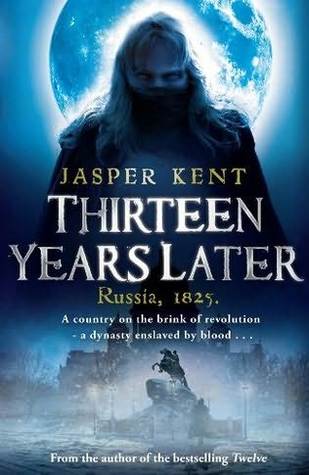
Review: Thirteen Years Later (The Danilov Quintet 02) by Jasper Kent

Synopsis (from Goodreads):

Aleksandr made a silent promise to the Lord. God would deliver him -- would deliver Russia -- and he would make Russia into the country that the Almighty wanted it to be. He would be delivered from the destruction that wasteth at noonday, and from the pestilence that walketh in darkness -- the terror by night.

1825, Europe -- and Russia -- have been at peace for a decade. Bonaparte is long dead and the threat of invasion is no more. For Colonel Aleksei Ivanovich Danilov, life is peaceful. The French have been defeated, as have the twelve monstrous creatures he once fought alongside, and then against, all those years before. His duty is still to his tsar, Aleksandr the First, but today the enemy is merely human.
However the tsar himself knows he can never be at peace. He is well aware of the uprising fermenting within his own army, but his true fear is of something far more terrible -- something that threatens to bring damnation down upon him, his family and his country. Aleksandr cannot forget a promise: a promise sealed in blood... and broken a hundred years before.

Now the victim of the Romanovs' betrayal has returned to demand what is his. The knowledge chills Aleksandr's very soul. And for Aleksei, it seems the vile pestilence that once threatened all he held dear has returned, thirteen years later.

What I liked:

First let me tell you that it is rare that a second part of a series is better than the first one. Still it can happen and I am delighted to say it happened here, at least in my humble opinion. The second installment of the Danilov Quintet series is set, in accordance to the title, 13 years after the Napoleonic invasion on Russia, during the Decembrists revolt. If you need to brush up on your history as I did -  In December of 1825 in St. Petersburg, a group of military officials staged a revolt against Tsar Nicholas I. These rebels were liberals who felt threatened by the new ruler's conservative views and they wanted his brother, Konstantin, to take over the throne. They were, however, quickly defeated by the tsar's forces. Sixty to seventy rebels died, and all that were captured were either hanged or exiled to Siberia. As a result of this revolt, Nicholas I implemented a variety of new regulations to prevent the spread of the liberal movement in Russia.

Aleksei Ivanovich Danilov once again is your guide in the shadowy world of imperial Russia's spies and secret societies. He is accompanied by his young son, Dimitry, who, according to his father's wishes, is about to join the Russian Army but if he were to decide he'd prefer to become a professional pianist and composer. I liked the fact that some chapters we witness through Aleksei's eyes and some are told from the Dimitry's point of view because it allowed the author to refresh his world build. Overall this novel is better written than the first one, with a more balanced conflict between the human and the vampire factions, more nuanced characterization and more historical background. Without spoiling you much I might say that Iuda a.k.a Richard Cain a.k.a Vassily Makarov is back again and Aleksei will have to deal with him on a definitely more intimate level than he'd ever wanted to. Iuda is a great creation and I was very glad that he returned in full force.

The mystery of the Romanov Betrayal and the Taganrog / Crimea chapters were a very interesting addition to the whole plot. Also the romantic angle of the two women in Aleksey life continues to be one of the highlights of the story so far, with additional elements/characters featuring in the background like the little daughter of Aleksei and Domnikiia, Tamara, or Aleksei's son, who was supposed to know nothing about the illicit Moskow affair of his dear daddy but, as it often the case with children, knew rather more than less. It was really nicely ballanced.

You also meet one great vampire character, called Kyesha. I admit it was the very character I was personally waiting for while reading Twelve - a complicated baddie who defies clear-cut division lines which had ruled Aleksei's life so far. Let me just tell me this: Aleksei will feel responsible for that particular vampire and will bond with him despite himself almost as if Kyesha was his long-lost friend.

What I didn't like:

I know that some editors pressurize authors to make every installment of a series a more or less stand-alone book but it is not a practice which I particularly like or appreciate. When the first hundred pages (so about one fifth of the whole novel) are spent catching up from the previous part I sometimes yawn angrily and sometimes skim waiting for the real fun to happen but never think 'gee, thanks for mentioning, good to be reminded of it, I've really forgotten about this or that!'. I've already worked out that some time had passed and usually if I like a series I read one part straight after the other (providing they are available).

I also admit I found the flow of the plot a little jerky between part’s two and three (it felt like the individual vampire story was being overly stretched out in order to fit with the historical drama.) Now something about the ending. It felt rushed, especially the outline of the Aleksei's fate after the revolt. It seemed to me that the author wanted to get rid of the poor old Aleksei post haste in order to have his son in the third part all on his own. I wasn't pleased by such a treatment but perhaps it paid off - I will be able to say so after reading the next installment.

One more problem and I have to mask it as a spoiler and it is connected with the vampires. According to Mr Kent as soon as a vampire dies his or her body turns into a pile of ash unless the vampire in question is really 'freshly created' or young. Now there is a scene at the end of the novel when (spoiler, highlight to read)  critically injured Iuda, in order to save his life, drinks blood of Kyesha, a vampire boy he killed a bit earlier. Iuda, a kind of mad scientist, saved his blood in a glass vial just in case and did so after Kyesha had drunk his contaminated blood as well, starting the change. Now my question is: if it was blood of a dead vampire why it didn't turn to ash like the rest of Kyesha's body parts, attached or not attached?

Final verdict:

One of better historical fantasy series with vampires I've read so far - of course providing that the next book won't be a big fat disappointment (but hey, Iuda might be featured again and I love following and hating that b*****d!). This series is a must if  you're a fan of the genre and generally a good quality entertainment even if you don't usually read historical fantasy .
Enhanced by Zemanta

Sunday, 24 February 2013

Review: Greywalker by Kat Richardson (Greywalker 01)

Book info:
Form: paperback, 341 pages
Genre: urban fantasy, detecitve story
Target audience: adults


Synopsis

Harper Blaine, a PI living with her ferret, Chaos, in Seattle, sometimes runs out of luck. One of such instances (a very agressive  debtor determined not to pay his debt) results in her being taken to a hospital  in a very bad  state of utter confusion - grevious bodily harm and such. When she comes to her senses (more or less) she finds out that she was clinically dead for approximately two minutes.  Ok, no big deal, it can happen in this line of work and if the paramedics still manage to resuscitate you it is fine, right? Wrong.

 Harper goes out of the hospital, determined to continue  earning her living and paying the outstanding bills when things start getting strange. It seems  she has developed the ability to see into the Grey, the purgatory-like  alternate reality in between here and the afterlife, full of  vampires, ghosts, and various creepy critters. Unfortunately for Harper, the creatures of the Grey have the ability to see her as well  and not all of them are exactly harmless or friendly. Will she be able to learn how to defend herself?

Back to the normal world. Soon enough Harper is having two new clients. A posh, middle class lady is looking for her missing son, a uni student, who's disappeared without most of his precious goods and chattels. The police don't want to investigate because a missing student is hardly a big deal. A strange foreigner is looking for old  pipe organs, once allegedly his possession, and wants Harper to find them for him. Nothing difficult for a PI, isn't it? Or maybe, just maybe, these two cases are somehow connected and far more complicated than they sound? 
What I liked:

I found this one in a bookshop with cheap sale books and somehow the blurb took my fancy so I bought it. The book one is not exactly new (it was released in 2006) but I admit I found it  a lot more unique than I expected.  The Grey, somewhere in-between the real land of the dead and the harsh reality... an intriguing concept  and the author didn't disappoint in that respect. The world building was a refreshingly different, and surprisingly coherent and let me tell you, it is no mean feat to achieve it with more and more  series being  increasingly oversaturated with vampires, werewolves, and intrepid female PIs. We have vampires and revenants and witches and ghosts all inter-twined in different ways – and even these simple labels rarely encapsulate the full power and variety of each being. 

Unlike the familiar heroine in the genre, Harper appears older and rather mature (however her age is not stated in the first installment so forgive me if I am wrong). I was so happy we were spared annoying wisecracks and fashion tips, not to mention shopping for clothes. Also the vampires, presented here, are more bloodthirsty and cunning than in your average paranormal romance. Yes, we get one Edward and one Alice but Edward is a manipulative, sadistic businessman and Alice is his biggest enemy - no Twilight traces. Which is good.

The plot I found interesting and well-spaced, although a bit slow at the beginning; still starting a book with the death of the main character is always an original  move. There is some romance but no insta-love or any such inanities.
What I didn't like:

I know it is the first book in the series and a debut novel to boot but it was sometimes weird that you don't learn anything about the main character except that she was attacked, died for two minutes, has shoulder length hair, lives alone and owns a ferret. Ferret was actually sweet and funny but she can't stand for the whole family, right? In my opinion such skeletal characterization makes Harper harder to relate to at first. It seems as if this book was a lot of set-up for other books, and that the author idn't have a clear picture of how she wanted to flesh out her main character. 

The narration also spends quite a lot of time on Harper blindly trying to figure out what the heck is going on with her and not believing other people (like one Irish witch called Mara) who try to help her. It was a bit irritating. From time to time (too often in my humble opinion) we get such a scene:

Harper: I don't want this Grey. It hurts!
Mara: Because you're fighting it. Accept it and it'll stop hurting.
H: But I don't want it. I want it to stop, to go away, to vanish! Shooo ugly monsters!
M: They won't go away and this can't be undone. Accept it and it will be easier.
H: But I don't want to be the Greywalker! I don't believe in it and I don't like the smell!
M: You must accept it. There is no other option.

*Harper glowers, pouts and storms out without another word*
*Hours pass and then they talk over the phone or in person and...*

M: I'm sorry I pushed you too strongly.
H: It's okay. I know you did me a favour.
M: Come along for a piece of cake and some good energy.

Yeah...did I say the heroine is mature? Scratch that. She is SOMETIMES mature and sometimes not.
Final verdict:

In my opinion Greywalker  has a potential to evolve into a good series. The good news is that you don't have to wait forever for the rest - as far as I know there are at least seven other novels available on the market.

If you're looking for an original spin on the standard urban fantasy tropes or a female-protagonist urban fantasy with a lot more action and a lot less romance, then this novel is worth taking a look at. It is nothing great but it will keep you entertained.
Enhanced by Zemanta

Monday, 7 May 2012

Review: The Fixer: A Lawson Vampire novel by Jon F. Merz


Book info:
Form: e-book, Kindle format
Genre: fantasy, vampire detective story
Target audience: adults


I borrowed a digital version of this book from my friend - thank you very much, pchlaszachrajka! 

Synopsis:

When a bad, big, psychotic vampire called Cosgrove returns to Chicago, one thing is sure: there will be blood and murders galore. Cosgrove doesn’t disappoint his faithful allies and enemies - soon enough the Council, a body supervising all vampires living in that area, condemn him to death. Any death but the sooner the better. Lawson, one of vampire Fixers (so kind of law enforcers)  and his Control (so kind of boss) McKinley are given the order to find Cosgrove and drive something made of wood straight through his dark, scheming heart. The balance must be preserved and there is no balance with such psychos as Cosgrove.

Unfortunately killing him is easier said than done. Firstly, nobody knows what Cosgrove looks like now. Then our baddie has an interesting plan of his own and plenty of other vampires are cooperating with him secretly. When Lawson’s best friend is murdered in a club there’s no looking back, though, especially when a female assassin Lawson falls in love with, Talya, joins the hunt and is kidnapped as a result. Will vampires manage to clean their ranks? How many lives will it cost? Will humans finally find out the truth about vampires?

What I liked:

This novel was highly readable, I really was sucked inside the plot and the more I read the more I wanted to know about our sad vampire protagonist. Lawson was an interesting character mainly because he was so flawed -  an experienced law enforcer who is hardly fearless and has a very unpleasant fund of memories- anyway that’s what made this story work for me. The world Lawson lives in is dangerous but he didn’t choose his life, it chose him, and, while he would have chosen differently, he doesn’t waste a lot of time pining over it either. Well, being so very flawed and in love he whines a bit but not too much.

Talking about the love interest of the main lead I must mention Talya, a big asset of this book. She is an Asian girl – half Chinese, half Kazakh – which I found original. She used to work as a KGB secret agent and now she is a freelancer assassin, also something you hardly expect from a ‘damsel in distress’, usually met in such books. She has a brain of her own and she knows what she wants – another feature I appreciate in my heroines.

 Apart from that Merz did, in my opinion, a wonderful job of setting the fighting scenes. They seemed real and gory but not overly so. I also enjoyed several mentions of Musashi  Miyamoto, a Japanese swordsman and rōnin and bushido, the code of samurai. I like Japanese culture very much and it was like a ‘hello’ from a distant friend.

Finally let me tell you that I appreciated the idea that the vampires in this series aren't some weird type of supernatural creatures but just another species that evolved alongside of humans. That alone opens up many more doors which, I hope, will be explored in next parts.

  
What I didn’t like:

This novel was published for the first time in 2002. That’s exactly ten years ago. It makes itself felt. In other words if you look for a terribly original premise, keep looking because you are bound to be disappointed by this one.

My other complain is that this book could really do with some more extensive editing. I’m not a native English speaker and still I noticed some strange mistakes: e.g. a faulty sentence structure like "I knew your reaction would be worth coming out in this miserable rain for" or an occasional redundancy of word choice, like " Her hips ground in to my face as she rode my face..." (and it was supposed to be one hot scene, imagine that!) A rookie writer mistakes, more often found in low-quality fanfic nowadays than in officially published books (although there are exceptions to this rule).

Now my main complaint. I really couldn’t swallow that Lawson, a centenarian and a vampire with a several decades spent as a black Ops veteran, was from time to time so incredibly sloppy with his detective work. First he readily told his love interest, a human woman after all, that their mutual quarry is a vampire when the mere existence of vampires was supposed to be the biggest secret. He often took really poor operative decisions, allowing the main baddie to escape with ease and flourish. Ok, he was in love, but honestly, you should have expected a better control from such a professional. Also on several occasions Lawson describes himself as reacting "like a fourteen year old boy" to Talya. Well, doesn’t it sound silly? His background and training is given as lengthy, Marine/special forces tough, dangerous and pretty comprehensive but for all of his training Lawson doesn't seem to know what to do in a tight spot and allows situations to worsen through his own failure to deliver.

Final verdict:

 The world building was interesting but not especially original. The characters were complex but not very captivating. Still I want to give this series one more chance. Idealistic, I know...

Friday, 27 January 2012

Review: Lothaire by Kresley Cole

Book info:
Form: pdf e-book
Genre paranormal romance
Target audience: adults

 Warning:

 It is a part of hugely popular series which I read, despite being repeatedly told not to, completely out of order (it is, I believe, the book number 12). Due to that fact my review might be skewed and rather unjust although still fully reflecting my personal opinion. 

 Synopsis:

 One old, bad, murderous vampire called Lothaire the Ennemy of Old looks for his bride – he needs her badly because she only can ‘blood’ him, in other words make him function again. Without a bride any vampire is ‘frozen’ – no hearbeat, no sex, no fun. Ok, he can have fun providing he loves carnage…but after several centuries the effects of even the best carnage can wear off.

 Finally Lothaire finds his bride. Her name is Ellie and she is a hillbilly gal from Appalachians, born and raised in a little dingy trailer among a family of miners. What cheer. Small wonder he believes for half of the story that his real bride must be somebody else - like a demonic goddess hiding in Ellie’s luscious body, reemerging from time to time to demand clothes, jewels, clothes, a nice carnage, shoes, more clothes, spa treatment, blood, clothes, sacrifices, jewels, clothes…you get the drift. Poor undereducated Ellie who did a time in prison due to that goddess’s bloodthirsty habits, has just one hidden weapon, one advantage and one chance: sex. Will it be enough? Who will Lothaire appreciate more and for what reason? Will Ellie get rid of her demonic parasite who is hell-bent on destroying her soul? 

What I liked: 

 Despite the snark that somehow sneaked (or snuck) into my synopsis at an early stage this book had some advantages. Firstly and foremostly it had a sense of humour. Clashing together the worlds of Ellie and Lothaire provided a lot of comic relief. I admit I sometimes laughed despite myself – not a bad thing in my current depressive mood. Lothaire is pretty much all that he was billed to be: snarky, crazy, hilarious, and completely out of his league when having to deal with Ellie.

 What’s more the book mentioned some great and profound issues. It showed that you must be really careful what you wish for. It proved that going to bed with somebody is not the same as falling in love with him/her even if sex was good. It argued that greed is bad as it might make you as blind as a bat and happiness is worth every sacrifice, even if it means hurting your own ego. It downplayed the vengeance and praised family values. Too bad that, in my humble opinion, all of these truths were hidden in a very cheesy mush of a plot.

 What I didn’t like: 

 Hmm…let me think. In order to enjoy this one I would have to be logically impaired. Seriously. Although I am not a great philosopher, just a simple working woman, I sometimes cannot switch off thinking while reading. When I am handed a wrong book…woe is me.

 Let’s start with the first chapter. Here we are introduced to Ivana the Bold, the proud and beautiful vampire mother of young Lothaire. This woman, in a fit of righteous rage, defies publicly the king of Horda, a very powerful vampire, her ex-lover and the father of her child under whose roof she lives; as a result she is thrown with her son out of the castle. The conditions outside are brutal – think winter in Siberia. What’s more the happy daddy murders his boy’s favourite puppy as a good-bye gift in order to get his message across. You. Are. Not. Wanted. Here. Eff. Off. All good and well, sadistic vampire fathers happen, but in the same chapter we are told that a) Ivana comes from the royal line of the Daci, a species of vampires who are very clever, cunning and extremely wise creatures b) she cares about her son more than about her own life. Well, riddle me this: how come a mother and a very clever creature who schemes as she breathes could have endangered the well-being of her only offspring just to have a good, cat-fight with her ex-lover over a human woman, allegedly lesser than animals? Her brain went on holiday?

 Then the same woman finds herself trapped and surrounded by human peasants. Her father (one selfish swine in the form of the Daci king) is near but he doesn’t come to rescue her in order not to endanger the secret location of his hidden kingdom. Ivana burries her sonny in a snow mould breaking and blooding her nails (awww) and then she exposes herself, being captured, gang-raped and burned to a cinder. Wait a moment…she was supposed to be a vampire, right? A male vampire can lift a whole train without breaking out into a sweat. As a female she might be weaker so let her lift just one measly wagon. Still she is far stronger than even a bunch of humans. Why couldn’t she defend herself? What was wrong? A momentary lapse of her abilities due to stress?

 I could continue quoting similar scenes and making my review obnoxiously long, repetitive and dull but I will spare you, my dear reader. Just one more thing: rarely did I read a book in which there were so many those horrible, truly horrible Russian swear words included. I grant it, the author got them perfectly right, the transcription and all. Perhaps if you don’t know Russian you might treat them just like innocuous local flavour as the main character is half Russian or something. Let me tell you, though, that I winced every single time I met them in the text. They are…well…I think I’ve written ‘horrible’ too many times in this paragraph so let me make use of my lovely Penguin Thesaurus. Dreadful. Appalling. Abominable. Detestable. Utterly Obscene. Here you go. If my poor mum heard me saying them she would smack me and tell me to wash my mouth with soap for fifteen minutes.

 Final verdict: 

 I know Kresley Cole is one beautiful woman who has many fans out there. She’s written many novels, got them published and people have been reading them – it is a huge achievement. I do not intend to make those people angry or insult their tastes. Some books are the right thing for you, some are not. This was not my cup of tea.

Wednesday, 18 January 2012

Review: Half Way to the Grave (Night Huntress 01) by Jeaniene Frost


Book form: pdf format e-book
Genre: urban/adult romance/action/suspense/vampire
Target audience: adult (explicit sex scenes, dirty language and a lot of innuendo)

Synopsis:

 Catherine Kathleen Crawfield, by friends and enemies known as Cat, is  a half-vampire half human, probably the only of her kind. Her main occupation and pastime is hunting vampires. Once a vampire ruined her mother’s life, date-raping and neglecting her afterwards. Now, Cat lives to kill as many undead as she can find in nightclubs and discos, luring them outside with the help of her low cleavage and as much of her body exposed as it is legally possible. Her mum approves.
One night Cat is captured by Bones, a vampire bounty hunter and hit man – she killed his mark and then tried to do him in as well. Bones thinks Cat might work for another vampire and when he finds out he is wrong he forces her into a partnership. Cat is trained by him in exchange for finding her father. She learns far more than she’s bargained for. It seems vampires are as different as people; some of them are actually noble and good, something her mother didn’t know… Pretty soon Bones will have her convinced that being half-dead doesn't have to be such a horrible fate either. Before she can enjoy her newfound status as a kick-ass demon hunter, Cat and Bones are pursued by a group of killers. Now Cat will have to choose a side . . . and Bones is turning out to be as tempting as any man with a heartbeat. Will she be able to trust him, though?
What I liked:
Firstly and foremostly I was smitten by the sense of humour. I like it when the characters are witty and intelligent – with such characters I can forgive a book and an author a lot. Cat is perhaps not the sharpest tool in the drawer but Bones makes up for that. His calm and patient demeanor contrasts well with Cat's impulsive nature. What’s more those two have a lot of backbone. In short Jeaniene Frost has put a new spin on the vampire hunter theme, especially adding that slightly paranoid and definitely damaged mother to the whole set – a mother who turned her own daughter into a murderess in order to get her revenge.
Cat is a likeable character - strong, vibrant, damaged, outspoken and  sometimes rather naïve. She is struggling with what she is. Bones brings her to life - he takes her under his wing, trains her and falls in love with her. Her mother has done quite the number on her growing up making her believe that all vampires are evil and she is a bit evil herself unless she follows her mother’s advice and kills as many of these dirty demons  as she can. Bones challenges her prejudice and brings out the best in her.
I even enjoyed the background, especially the bit showing that the politicians can be in cahoots with whoever  gives them an advantage. That family can let you down no matter how hard you try to make it up to them. That life there to be lived whether you have a pulse or you pretend to have one. Such topics gave this novel definitely more serious overtone than I expected.
Also let me tell you that the end was unexpected, taking the whole storyline down a surprising turn. It is not a cliffhanger but as close as you can get.
What I didn’t like:
This book is like deep-fry spring rolls  with double French fries (or chips if you live across the pond) and no salad. A big, greasy, delicious meal but even if you wash it away with a diet coke you know you will regret it later. After reading it I felt my cholesterol levels spike, clogging my synapses and shutting up my poor brain. I asked myself some serious questions I was too ashamed to answer. Bad, bad Anachronist.
Well, to be absolutely honest I must admit Half Way to the Grave is filled with gratuitous scenes of jealousy, flirting, snogging, sex on the stairs, sex elsewhere and proclamations of love - the stuff you can find galore in any decent fanfiction. The sex orginates from Bones and Cat, our main protagonist. Some other characters come into this story but they're not important because they're not having sex. Sad.
There is also the question of the main character's full name… when it was finally revealed it made me laugh out loud. Either it's a joke, or the author didn't bother to Google her first and middle names, or  we should just believe that the character's mother is so far "out there" that she deliberately named her daughter the same name twice ! 
I’ve also read in other reviews that Bones is Spike from Buffy the Vampire Slayer and Angel TV show (I haven’t watched it, so I can’t tell). Right. Let the lawyers take care of it.
Final verdict:
One more food analogy – this book had perhaps no nutritional value, probably not what you would choose if you could have whatever you wanted, but at the right time and the right place, it really hits the spot. If you are a fan of urban fantasy, I recommend it. It was still good escapist fun and I enjoyed it.

Sunday, 13 March 2011

Concise history with fangs – part four ( and the last)

Glamour, entertainment and science

From 19th century to this day

In the third part of this essay I presented two historic figures who became unwillingly two template vampires. The fact that they were both aristocrats influenced the way vampires have been perceived ever since - after a while these monsters started to be presented as sophisticated creatures, often Europeans of noble classes. They were knowledgeable, elegant, cultured, although savage. Additionally, they were presented as sensual and alluring – often because their incredible, much coveted and never changing youth. This is another significant element of our modern view of vampires, an element which separates them from their legendary ancestors, horrible monsters all of them, and all other fiends and ghouls: contemporary vampires do have sex appeal. Bloodlust, eroticism and death – a truly intoxicating mixture, perfect for any popular story or Hollywood production. How could we forget about such enticing creatures?

During the late 18th and 19th centuries the belief in vampires was widespread in parts of New England, particularly in Rhode Island and Eastern Connecticut. In this region there are many documented cases of families disinterring loved ones and removing their hearts in the belief that the deceased was a vampire who was responsible for sickness and death in the family (although the word "vampire" was never used to describe him/her). The deadly tuberculosis, or "consumption" as it was known at the time, was believed to be caused by nightly visitations on the part of a dead family member (who had died of consumption him/herself). The most famous (and latest recorded) case is that of nineteen year old Mercy Brown who died in Exeter, Rhode Island in 1892. Her father, assisted by the family physician, removed her from her tomb two months after her death. Her heart was cut out then burnt to ashes. An account of this incident was found among the papers of Bram Stoker and the story closely resembles the events in his classic novel, Dracula. Before we will progress to Dracula the book, though, let me present other vampire novels, almost forgotten now, which showed that new trend – glamourizing of monsters.

Perhaps the most significant contribution to the evolution of vampires was Dr. John Polidori's eighteenth century novel entitled The Vampyre (well, how else?). The fanged main character of this novel, called Lord Ruthven, is a magnetic, sensual bloodsucker - suave, sophisticated and able to seduce almost anyone he chooses.Charming and intelligent he might be, but he is also very fickle in his affections, absolutely cold- hearted type. Polidori wrote that novel as a satire, intending to insult Lord Byron, whom he had adored and who had recently discarded him. However, much to his horror, the public bestowed equal adoration on the Vampyre figure himself, and, as Polidori drifted into obscurity, many attributed the authorship of this astounding book to Byron . It was, you must admit, also an example of intellectual vampirism.

After the success of this novel the concept of the aristocratic vampire really took off, and a whole wave of similar tales precipitated over the following century. Sheridan LeFanu's famous novel Carmilla, published in 1871, used the vampire myth to explore forbidden aspects of sexuality, and, in doing so, created an interesting, overtly lesbian heroine who, despite her nature, attempted to resist harming the girl whom she truly loved. The vampire and the human had at last become directly entwined. There was also a lengthy penny dreadful serial written by James Malcolm Rymer (Varney the Vampire) but without any long-term significance.

Knowing that background we can deal now with “Dracula”, written by Bram Stoker in 1897. The book featured as its primary antagonist a vicious Count who was given not only new life but also a totally new historical background and bears almost no resemblance to the historic Vlad III Dracula.
Bram StokerBram Stoker via Wikipedia


The novel is mainly composed of journal entries and letters written by several narrators who also serve as the novel's main protagonists; Stoker supplemented the story with occasional newspaper clippings to relate events not directly witnessed by the story's characters. The tale begins with Jonathan Harker, a newly qualified English solicitor, going to Count Dracula's crumbling, remote castle (situated in the Carpathian Mountains). The purpose of his mission is to provide legal support to Dracula for a real estate transaction. At first the young man is enticed by Dracula's gracious manner but soon he discovers that he has become his prisoner. One night, while searching for a way out, Harker falls under the spell of three wanton female vampires, the Brides of Dracula. He is saved at the last second by the Count, who wants to keep him alive. Finally Harker escapes from the castle but he is very ill. Not long afterward, a Russian ship, runs aground on the shores of Whitby, England, during a fierce tempest. All of the crew are missing. The captain's log is recovered, containing strange events which led to the gradual disappearance of the entire crew. An animal described as a large dog is seen on the ship leaping ashore. The ship's cargo is described as silver sand and boxes of "mould", or earth, from Transylvania. As you might guess Dracula arrives to London to track Harker’s devoted fiancée, Mina Murray, and her friend, Lucy Westenra. There is a notable encounter between Dracula and Seward's patient Renfield, an insane man who wants to consume different creatures in order to absorb their "life force". Renfield acts as a motion sensor, detecting Dracula's proximity and supplying clues accordingly.

Lucy begins to waste away suspiciously. Her suitors fret, and finally one of them, Seward, calls in his old teacher, Professor Abraham Van Helsing from Amsterdam. Van Helsing immediately determines the cause of Lucy's condition but refuses to disclose it. Van Helsing tries multiple blood transfusions, but they are not working. On a night when Van Helsing must return to Amsterdam (and his message to Seward asking him to watch the Westenra household is accidentally sent to the wrong address), Lucy and her mother are attacked by a wolf. Mrs Westenra, who has a heart condition, dies of fright, and Lucy apparently dies soon after.

Lucy is buried, but soon afterward the newspapers report children being stalked in the night by "beautiful lady". Van Helsing, knowing that this means Lucy has become a vampire, confides in Seward, Lord Godalming and Morris. The suitors and Van Helsing track Lucy down, and after a disturbing confrontation between her vampiric self and Arthur, they stake her heart, behead her, and fill her mouth with garlic. Around the same time, Jonathan Harker arrives home from recuperation in Budapest (where Mina joined and married him); they also join the coalition against Dracula.Dracula learns of the plot against him and he takes revenge by visiting and feeding from Mina at least three times. Dracula also feeds Mina his blood, creating a spiritual bond between them. The only way to forestall this is to kill Dracula first. Mina slowly succumbs to the blood of the vampire that flows through her veins, switching back and forth from a state of consciousness to a state of semi-trance during which she is telepathically connected with Dracula. This telepathic connection is established to be two-way, in that the Count can influence Mina, but in doing so betrays to her awareness of his surroundings.

After the group sterilizes all of his lairs in London, Dracula flees back to his castle in Transylvania, transported in a box with transfer and portage instructions forwarded ahead. He is pursued by Van Helsing's group. After a dramatic pursuit Harker shears Dracula through the throat with a Kukri while mortally wounded Quincey, slashed by one of the crew, stabs the Count in the heart with a Bowie knife. Dracula crumbles to dust,
Dracula souvenirs for sale in the street, Sigh...Dracula souvenirs for sale via Wikipedia
and Mina is freed from his curse.
The book closes with a note about Mina's and Jonathan's married life and the birth of their first-born son, whom they name after all four members of the party, but refer to only as Quincey in remembrance of one of their friends.

According to literary historians, Nina Auerbach and David Skal in the Norton Critical Edition, the novel has become more significant for modern readers than it was for contemporary Victorians, most of whom enjoyed it just as a good adventure story; it only reached its broad iconic legendary classic status later in the 20th century when the movie versions appeared.

As we already mentioned movies…
The first film about vampires was released as early as 1922 – it was F. W. Murnau's seminal silent movie, Nosferatu, eine Symphonie des Grauens (A symphony of grays) . Then came the classic 1931 film "Dracula" starring Bela Lugosi (a Hungarian). As a homage to the first 1922 movie director Werner Herzog made the 1979 film Nosferatu the Vampyre which basic story is derived from Bram Stoker’s novel. Herzog considered Murnau's Nosferatu to be the greatest film ever to come out of Germany. The Vampyre was played by Klaus Kinsky (and if you like being afraid while watching a horror movie do see this one – old but incredibly scary; I was never able to watch it from the beginning to the very end).

In 1992 Francis Ford Coppola decided to shoot a new version of “Dracula”, a gothic romance-thriller, starring Gary Oldman as Dracula and Winona Ryder as his beloved Mina. In this movie Dracula was portrayed as a creature more human than ever, really a monster you can sympathize with. Despite some narrative confusions and dead ends I enjoyed the movie simply for the way it looked and felt. Production designers have simply outdone themselves.To tell you the truth I am yet to find a better vampire movie.

Filmmakers have interpreted the cult of vampires in many ways, some emphasizing the primal and ancient instinct of the ungodly, while others using vampires as tools to introduce generic horror and gore. For example, vampires have been portrayed as rock stars in Queen of the Damned, next door neighbors in Fright Night, space creatures in Lifeforce, melancholic aristocrats in Interview with the Vampire and criminals in From Dusk Till Dawn. They never ceased to entertain the public, though.


Movies and fiction are one thing, real life is just another, right? Do people still believe in vampires? You bet they do. It seems this belief not only persists to this day but also is spreading. While some cultures preserve their original traditions about the immortal, most modern-day believers are more influenced by the fictional image of the vampire as it occurs in films and literature.

In the 1970s, there were rumors (spread by the local press) that a vampire haunted Highgate Cemetery in London. Amateur vampire hunters flocked in large numbers in the cemetery. Several books have been written about the case, notably by Sean Manchester, a local man who was among the first to suggest the existence of the "Highgate Vampire" and who later claimed to have exorcised and destroyed a whole nest of vampires in the area.

In the modern folklore of Puerto Rico and Mexico, the chupacabra (goat-sucker) is said to be a creature that feeds upon the flesh or drinks the blood of domesticated animals, leading some to consider it a kind of vampire. The chupacabra mystery was frequently associated with deep economic and political crises, particularly during the mid-1990s.

During late 2002 and early 2003, hysteria about alleged attacks of vampires swept through the African country of Malawi. Mobs stoned one individual to death and attacked at least four others, including Governor Eric Chiwaya, based on the belief that the government was colluding with vampires (the best political accusation I’ve ever heard, this one!).


In January 2005, rumours began to circulate that an attacker had bitten a number of people in Birmingham, England, fueling concerns about a vampire roaming the streets. However, local police stated that no such crime had been reported. This case appears to be an urban legend.


In March 2007, self-proclaimed vampire hunters broke into the tomb of Slobodan Milosevic, former president of Serbia and Yugoslavia, and staked his body through the heart into the ground. Although the group involved claimed this act was to prevent Milosevic from returning as a vampire, it is not known whether those involved actually believed this could happen or if the crime was simply politically motivated.

Mistletoe, a plant - vampire
What contemporary science has to say? It seems doctors and scientists have found real vampires and the culprit as well. They say that the first step in understanding vampire lore is to understand some of the biological reasons that may have led to such beliefs. In zoology and botany, the term vampirism is known and used in reference to leeches, mosquitos, mistletoe, vampire bats, and other organisms that subsist on the bodily fluids of others.

Today many scientists believe that ancient people’s misunderstanding of decomposition resulted in many being accused of being vampires. As the body decomposes and the skin withers away it can create the illusion of growing hair or fingernails (and these grow anyway for some time after death). Also, as the body decomposes it can become filled with a gas causing it to swell. This swelling made many vampire hunters thinking a corpse looks well-nourished and must be rising from the dead at night to feast upon the living. If someone were to stake a cadaver swollen with gases it could cause the gases to look for an escape route due to the newfound pressure. Now we can imagine such a scenario: the gas passes out of the mouth, it comes into contact with the vocal chords and makes a groaning sound (or it could pass through the anus and make a sound similar to flatulence). Both these sounds could be confused with signs of life after death, especially by frightened, superstitious people “working” in darkness or semi-darkness.

A victim of porphyria
One of the most plausible medical explanations for vampire myths, though, is the disease called porphyria, which occurred frequently in Transylvania. Porphyrias are a group of inherited or acquired disorders of certain enzymes in the heme bio-synthetic pathway (also called porphyrin pathway). They are broadly classified as acute (hepatic) porphyrias and cutaneous (erythropoietic) porphyrias, based on the site of the overproduction and accumulation of the porphyrins (or their chemical precursors). They manifest with either neurological complications or skin problems (or occasionally both). In January 1964, L. Illis' 1963 paper, "On Porphyria and the Aetiology of Werwolves", was published in Proceedings of the Royal Society of Medicine. Later, Nancy Garden argued for a connection between porphyria and the vampire belief in her 1973 book, Vampires. In 1985, biochemist David Dolphin's paper for the American Association for the Advancement of Science, "Porphyria, Vampires, and Werewolves: The Aetiology of European Metamorphosis Legends", gained widespread media coverage, thus popularizing the connection. Vlad III the Impaler was also said to have suffered from acute porphyria, which may have started the notion that vampires were allergic to sunlight.Indeed porphyria results in rapid tissue damage, giving the victim a ghastly pallor and enlarged teeth due to gum damage. The effects of porphyria are greatly amplified upon exposure to the sun, making sun light something the victims would try to avoid at all costs. It is also believed that certain strains of porphyria are associated with neurological conditions, which would result in insanity. This condition might also explain the practice of drinking blood - these people would have done so trying to alleviate somehow their severe anemia.

Some doctors have also established a link between the disease rabies and the belief in vampires. They suggest that the “vampires” and "werewolves" that ancient people fiercely believed in were merely people in the late stages of rabies. Rabies can cause hypersensitivity, disruptions in sleep patterns (causing someone to become nocturnal for example), a bloody foaming at the mouth, and the urge to bite other people and/or animals.

There are also psychological aspects entangled in the vampire myths. Many historians have noted that the belief in vampires rises when ancient communities are going through times of mass outbreaks of disease. Perhaps the only way that ancient people knew how to explain these disease epidemics that were killing them were through the folkloric tales of vampires. Some of the psychologists of the Freudian field of thinking believe that vampires represent the darker side of human nature and these myths and legends are manifestations of secret human desires.

Regardless of the reason, vampires have become a mainstay in world culture, and to some they are very real. In the modern world, there is an entire subculture dedicated to the vampire. These groups of people often partake in the drinking of blood or sometimes they feed off the supposed life energy of another. This life energy feeding is often refereed to as psychic vampirism in the vampire community.

Do you still believe in vampires? If so, ponder over this. In 2006, Costas Efthimiou and Sohang Gandhi published a dissertation that, using geometric progression, makes the following statement: if each vampire's nourishment depended on making even one other person a vampire, it would only be a matter of years before the Earth's entire population was among the undead or vampires completely died out. Makes sense, doesn’t it?
A mosquito- the only vampire you should be afraid of.


My concise history with fangs ends here. Thank you for accompanying me during this long and scary journey through countries and ages – I hope you enjoyed it as much as I did!


Sources:

http://istina.rin.ru/eng/ufo/text/111.html
http://www.vampiresamongus.com/history.html
http://www.crystalinks.com/vampires.html
http://www.cse.unr.edu/~lambertt/vamp.html
http://www.bukisa.com/articles/384043_ancient-origins-of-the-vampire-myth-part-1
http://www.buzzle.com/articles/the-myth-legend-and-reality-of-the-vampire.html
http://www.bellaonline.com/articles/art36704.asp
http://www.paranormalhaze.com/real-vampires/


Enhanced by Zemanta

Sunday, 6 March 2011

Concise history with fangs - part three

I didn’t manage to fit two interesting bios into the second part of my fanged history, although chronologically they belonged there. Their stories are too important to be simply skimmed and be done with, especially if you want to understand the further fate of vampire myths in the 20th and 21st century. These two people were highborn, influential and rich but certainly weren’t affected by vampirism. Why did they become the modern vamps' templates, portrayed and copied in many books and movies? It seems mainly because of a propaganda campaign implemented by a sly and dishonest king and also because we like horror stories too much to care whether they are true or not. Let me present today...

Part three


Two ultimate vampires who weren’t vampires at all.


Ladies first – the life and legend surrounding Countess Elizabeth Báthory de Ecsed (Báthory Erzsébet in Hungarian, 7 August 1560 – 21 August 1614) is dark and strange indeed. She has been labeled the most prolific female serial killer in history and, of course, a vampire. It is difficult to explain why a noblewoman like her turned a cruel murderer.
Erzsébet BáthoryElizabeth Bathory via Wikipedia

Her early life promised well. Elizabeth came from the renowned Báthory family of Hungarian nobility with a dragon adorning their family crest. Through her mother, Elizabeth was the niece of Stefan Báthory, King of Poland and Duke of Transylvania. She was a well-educated woman who could read and write in four languages - as a young girl she learned Latin, German and Greek. She was also interested in science and astronomy – something not very common among highborn ladies, especially at that times. There were several instances mentioned where she intervened on behalf of destitute women, including a woman whose husband was captured by the Turks and a woman whose daughter was raped and impregnated by a Turkish soldier– it might prove that she was kind and compassionate.

Young Elizabeth got engaged to Ferenc Nádasdy, and the couple married on 8 May 1575. Right afterwards Elizabeth moved to Nádasdy Castle in Sárvár and spent much time on her own, while her husband studied in Vienna. Nádasdy’s wedding gift to Elizabeth was his home, Csejte Castle, situated in the Little Carpathians near Trencsén; the castle itself was surrounded by a village and agricultural lands, bordered by outcrops of the Little Carpathians. It shows that Elizabeth was highly appreciated. In 1578, Nádasdy became the chief commander of Hungarian troops, leading them to war against the Ottomans. With her husband away at war, Elizabeth Báthory managed business affairs and the estates instead. That role usually included providing for the Hungarian and Slovak peasants. During the height of the Long War (1593–1606), she was even charged with the defense of her husband's estates, which lay on the route to Vienna. She was trusted and skilled, a woman you could rely on in those hard times.
family coat of arms of the BáthorysFamily crest of the Bathorys via Wikipedia

In 1585, Elizabeth gave birth to a daughter, Anna. A second daughter, Ursula, and her first son, Thomas, both died at an early age. After this, Elizabeth had three more children so I suppose her marriage was quite happy. Elizabeth's husband died in 1604 at the age of 47, reportedly due to an injury sustained in battle. The couple had been married for 29 years. After the death of Ferenz Nadasdy strange killings started to happen around his widow.

Somewhere between 1602 and 1604, a Lutheran minister called István Magyari complained about some horrible atrocities, allegedly occuring on the lands governed by Elizabeth and with her consent; he did it both publicly and with the court in Vienna. The Hungarian authorities took some time to react but finally, in 1610, as the situation deteriorated, King Matthias II of Hungary (ETA: not the same ruler as King Matthias Corvinus - thanks Tracy for spotting it!!!) assigned György Thurzo, the Palatine of Hungary and Elizabeth's cousin, to investigate. Thurzó ordered two notaries to collect evidence. Even before obtaining the results, Thurzó debated further proceedings with Elizabeth's son Paul and two of her sons-in-law. A trial and execution would have caused a public scandal and disgraced more than one noble and influential family; also Elizabeth's considerable property would have been seized by the crown. Thurzó, along with Paul and her two sons-in-law desperately wanted to control the damage - they originally planned for Elizabeth to be hidden a nunnery, but as accounts of her murdering  the daughters of lesser nobility spread, it was agreed that Elizabeth Báthory should be kept under strict house arrest. I really wonder whether they believed in her guilt or allowed her to explain herself. It was also determined that king Matthias would not have to repay his large debt to her, for which he lacked sufficient funds.

In 1610 and 1611, the notaries collected testimony from more than 300 witnesses. The trial records include the testimony of the four defendants, as well as thirteen witnesses. Priests, noblemen and commoners were questioned.. According to all this testimony, initial victims were the adolescent daughters of local peasants, many of whom were lured to Csejte by offers of well-paid work as maidservants in the castle. Later, Elizabeth allegedly started killing off daughters of the lesser gentry, who were sent to her gynaeceum by hopeful parents to learn courtly etiquette and find good husbands. Abductions were said to have occurred as well.

The descriptions of torture that emerged during the trials were often based on hearsay. The atrocities described most consistently included burning or mutilation of hands and faces, biting the flesh of different body parts, freezing to death, starving, sexual abuse, and finally surgeries on victims. Horrible, nasty deeds of a deranged mind.

Some witnesses named relatives who died while at the gynaeceum. Others reported having seen traces of torture on dead bodies, some of which were buried in graveyards, and others in unmarked locations. According to the testimony of the defendants, Elizabeth Báthory tortured and killed her victims not only at Csejte but also on her other properties. In addition several other people were named for supplying Elizabeth Báthory with young women. A little-known figure named Anna Darvulia was rumored to have influenced Báthory, but Darvulia was lucky and dead long before the trial so unable to comment.

Thurzó went to Csejte Castle on 30 December 1610 with his men. They reportedly found one girl dead and one dying. Another woman was found wounded, others locked up. King Matthias had urged Thurzo to bring Elizabeth to court and two notaries were sent to collect further evidence, but in the end no court proceedings against her were ever commenced. Her family had seen to that.

The countess was bricked in a set of rooms (and remained so until her death) but her associates were brought to court. A trial was held on 7 January 1611 at Bicse, presided over by Royal Supreme Court judge Theodosious Syrmiensis de Szulo and 20 associate judges. All of the defendants were found guilty and condemned to death, the sentence being carried out immediately.

The exact number of young women allegedly tortured and killed by Elizabeth Báthory is unknown, though it is often speculated to be as high as 650, between the years 1585 and 1610. During the trial and before their execution, Szentes and Ficko reported 36 and 37 respectively, during their periods of service. The other defendants estimated a number of 50 or higher. Many Sárvár castle personnel estimated the number of bodies removed from the castle at between 100 to 200. One witness who spoke at the trial mentioned a book in which a total of over 650 victims was supposed to have been listed by Elizabeth herself. This number became part of the legend surrounding Báthory. Reportedly, the location of the diaries is unknown but 32 letters written by Báthory are stored in the Hungarian state archives in Budapest.

On 21 August 1614, Elizabeth Báthory was found dead in her castle. Since there were several plates of food untouched, her actual date of death is unknown. She was buried in the church of Csejte, but due to the villagers' uproar over having "The Tigress of Csejte" buried in their cemetery, her body was moved to her birth home, where it is interred at the Báthory family crypt.

Several theories have been suggested concerning perpetrators of these horrible crimes and their motives. Most people think that Elizabeth was guilty and her sadism was a result of a considerable amount of intermarriages and inbreeding among the Bathory family with the usual problems of this practice. Allegedly she had a degenerate aunt, Clara Bathory, who used to invite young, bored, lonely Elizabeth to her castle to have "fun" and might have taught her a thing or two about sadistic pleasures.


László Nagy has argued that Elizabeth Báthory was a victim of a conspiracy, though. The conspiracy theory is consistent with Hungarian history of the reign of Mathias II - there was great conflict between religions, including Protestant ones, and this was related to the extension of Habsburg power over Hungary. As a Transylvanian Protestant aristocrat, Elizabeth belonged to a group generally opposed to the Habsburgs and some powerful people might have arranged a case against her. Elizabeth's life inspired numerous stories during the eighteenth and 19th centuries. The most common motif of these works was of course that of the evil countess drinking and bathing in her victims' blood in order to retain her beauty or/and youth – a real “Bloody Countess” or even a “Bloody Queen” – in short a female vampire extraordinaire. It remains to be proven whether she was a sadist or an innocent victim of some major set-up.

Now the time for the most famous vampire aristocrat -Vlad III, Prince of Wallachia (1431–1476), more commonly known as Vlad the Impaler (Romanian: Vlad Tepes) or simply as Dracula.

His Romanian surname Drăculea (also spelled "Drakulya"), means "son of the dragon". It was a reference to his father, Vlad II Dracul, who had joined the Order of the Dragon (lat. Societas Draconistrarum). This institution was highly respected and elitist – a monarchical chivalric order for selected nobility. The Order primarily flourished in Germany and Italy. According to a surviving copy of its statute, the Order required its initiates to defend the Cross and fight the enemies of Christianity, in particular the Ottoman Turks. Theoretically all its members should have supported each other and fight one common enemy but in reality they often kind of forgot about their allegiances for the sake of politics and greed.

In 1436, Vlad II Dracul ascended the throne of Wallachia but soon he was ousted in 1442 by rival factions in league with Hungary, his Christian ally. He had no choice and secured Ottoman support for his return agreeing to pay tribute to the Sultan and also send him two legitimate sons, Vlad III and Radu to the Ottoman court. They were to serve as hostages of his loyalty. Vlad III Dracula was the ferocious one – he was often imprisoned, whipped and beaten because of his verbal abuse towards his trainers and stubborn behavior; his younger brother, Radu, was meeker and much easier to control - he converted to Islam, entered the service of Mehmed II (later known as the Conqueror), and was allowed into the Topkapi Palace, honoured by the title Bey; later he was even given command of the Janissary contingents. A total failure from Vlad’s point of view.

In December 1447, boyars in league with the Hungarians rebelled against Vlad Dracul again, and killed him in the marshes near Bălteni. Mircea, Dracul's eldest son and heir, was captured, blinded and buried alive. To prevent Wallachia from falling into the Hungarian fold, the Ottomans invaded the country and put young Vlad III on the throne. It must have been painful and humiliating for the young prince, being installed on the throne as his greatest enemies’ puppet. Beggars are not choosers though. Still his rule was short-lived as Hungarians invaded Wallachia defending their interests. Vlad fled to Moldavia, where he lived under the protection of his uncle, Bogdan II, but it seems bad luck followed - in October 1451, Bogdan was assassinated and Vlad fled to Transsylvania, then under the Hungarian rule.

In 1456, three years after the Ottomans had conquered Constantinople, they threatened Hungary by besieging Belgrade. The Hungarian king began a concerted counter-attack in Serbia with Vlad fighting by his side. While the king moved into Serbia and relieved the siege Vlad led his own contingent into Wallachia, reconquered his native land and killed its Hungarian-affiliated ruler, Vladislav II, in an epic hand-to-hand combat (I would love to see that). Vlad found Wallachia in a wretched state: constant war had resulted in rampant crime, falling agricultural production, and the virtual disappearance of trade. Regarding a stable economy essential to resisting external enemies, he used severe methods to restore order and prosperity. Vlad considered the boyars the chief cause of the constant strife as well as of the death of his father and brother. To secure his rule, he had many leading nobles killed and gave positions in his council, traditionally belonging to the greatest boyars, to persons of obscure origins, who would be loyal to him alone, and some to foreigners. For lower offices, Vlad preferred knights and free peasants to boyars. In his aim of cleaning up Wallachia Vlad gave new laws punishing thieves and robbers. Vlad treated the boyars with the same harshness, because they were guilty of weakening Wallachia through their internal struggles for power. The older boyars and their families were immediately impaled. The younger and healthier nobles and their families were marched north to the ruins of Poienari Castle in the mountains above the Arges River. Vlad was determined to rebuild this ancient fortress as his own stronghold and refuge so he might monitor the movements of the Hungarians coming through Transylvania and the Turks of the Ottoman Empire. The enslaved boyars, their families and some master masons were forced to labor until their deaths, rebuilding the old castle with materials from another nearby ruin. According to tradition, they labored until the clothes fell off their bodies and then were forced to continue working naked. None survived the construction of castle Poienari, as those who did not die from exhaustion were impaled. This cruel policy was bound to backfire in the future but for the time being it seemed to be a right thing to do.

In 1459, Pope Pius II called for a new crusade against the Ottomans. The only European leader that showed enthusiasm for the crusade was Vlad of Wallachia. Later that year, in 1459, Mehmed sent envoys to Vlad urging him to pay a delayed tribute. The sultan had every right to demand it as he supported Vlad earlier but the prince refused to pay 10,000 ducats and send 500 recruits into the Ottoman forces. In order to provoke and instigate war with the Sultan Vlad, who knew Muslim culture very well, demanded the Turkish envoys raise their “hats” to him and, when they refused for religious reasons, he killed them by nailing their turbans to their heads. Subsequently, the Ottomans attempted to remove him - the Turks crossed the Danube and started to do their own recruiting by force of adolescent Romanians into the Janissary. Vlad allied himself with Matthias Corvinus , son of John Hunyadi (János Hunyadi), the King of Hungary, his former enemy. In the winter of 1462, Vlad crossed the Danube and devastated the entire Bulgarian land in the area between Serbia and the Black Sea. Disguising himself as a Turkish Sipahi, he infiltrated and destroyed Ottoman camps. In a letter to the Hungarian king, Corvinus dated 2 February he wrote:

I have killed peasants men and women, old and young, who lived at Oblucitza and Novoselo, where the Danube flows into the sea, up to Rahova, which is located near Chilia, from the lower Danube up to such places as Samovit and Ghighen. We killed 23,884 Bulgars without counting those whom we burned in homes or the Turks whose heads were cut by our soldiers...Thus, your highness, you must know that I have broken the peace with him (Sultan Mehmet II)

In response to this, Sultan Mehmed II raised an army of around 60,000 troops and 30,000 irregulars and in 1462 headed towards Wallachia. Commanding only 40,000 men, Vlad was unable to stop the Ottomans from entering Wallachia and occupying the capital Târgoviste but he never stopped guerrilla attacks and ambushes on the Turks, such as The Night Attack when 15,000 enemies were killed. The strategy proved to be very successful. Vlad III defeated Ottoman Sipahi commanders such as Iosuf Bey, Turkhanbeyoglu Omer Bey and Evrenos Bey. This instigated Mehmed II, who then crossed the Danube.

Poenari Castle today
Vlad III's younger renegate brother, the highly capable Radu Bey and his Janissary battalions, were given the task of leading the Ottoman Empire to victory at all expense by Sultan Mehmet II. After the Sipahis incursions failed to subdue Vlad, the few remaining Sipahis were killed in a night raid by Vlad III in 1462, killing possibly 4,000 of Radu's troops. However the war raged on, Radu and his formidable Janissary battalion was well supplied with a steady flow of gunpowder and money, this advantage allowed them to push deeper into the realm of Vlad III. Radu and his well equipped forces finally besieged and captured Poenari Castle the famed lair of his brother.

With the siege of this castle comes the first mention of Vlad's first wife who, according to local legend, was a noblewoman of unknown name and origin. She died during the siege. Allegedly a woodland archer, having seen the shadow of Vlad's wife behind a window, shot an arrow through the window with a message warning her that Radu's army was approaching. Some historians (McNally and Florescu) explain that the archer was most probably one of Vlad's relatives who sent the warning out of loyalty despite having converted to Islam and served in the ranks of Radu Bey - it was kindness, not a threat. Upon reading the message, however, Vlad's wife threw herself from the tower into a tributary of the Arges River flowing below the castle, saying she would rather rot and be eaten by the fish of the Arges than be led into captivity by the Turks. A total pessimist but she was right - the castle was taken by the Turks. Today, the tributary is called "the Lady's River".

After his difficult victory Radu was then given the title Bey of Wallachia. Vlad III was defeated because the Boyars had been alienated by Vlad's policy and disliked him as he was undermining their authority, and weakening their control over Wallachia. They joined Radu and believed that Ottoman protection was better than Hungarian occupation. Others had their families contained by the Ottomans and thus also sided with Radu in order to reunite with their loved ones. Until 8 September, Vlad obtained another three victories but continuous war had left him without any money and he could no longer pay his mercenaries. Vlad travelled to Hungary to ask for help from his former ally, Matthias Corvinus. But instead of receiving help he found himself arrested and thrown into the dungeon for high treason.

Matthias Corvinus feared that Vlad III and his forces might devastate the rural countryside of Hungary and instigate an Ottoman invasion. The king was also jealous of Vlad’s military successes, although they didn’t cost him a lot; after all he was also supposed to fight with the Turks but so far all the dirty work had been done by Dracula and his men. The exact length of Vlad's period of captivity is open to some debate, though indications are that it was from 1462 until 1474. Diplomatic correspondence from Buda seems to indicate that the period of Vlad's effective confinement was relatively short. Radu's openly pro-Ottoman policy as voivode probably contributed to Vlad's rehabilitation. Gradually winning back King Matthias's favour, he married Ilona Szilágyi, a cousin of the king, and in the years before his final release in 1474, lived with her in a house in the Hungarian capital. Around 1465, Ilona bore him two sons: the elder, Vlad IV Dracula, spent most of his time in the king's retinue and later was an unsuccessful claimant to the Wallachian throne. The younger, whose name is unknown, lived with the Bishop of Oradea in Transylvania until 1482.

On 26 November 1476, Vlad III declared his third reign and began preparations for the reconquest of Wallachia. In 1476, with Hungarian support, he invaded the country crossing the river Danube. It was a short campaign - it lasted little more than two months - Vlad was killed on the battlefield, during a fierce confrontation with the Ottoman Sipahis near Bucharest in 1476. Vlad III was buried in the Snagov monastery, and his head is believed to be in Istanbul. The Sultan finally got his tribute of a kind.
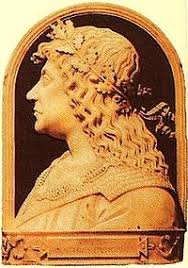
King Matthias Corvinus
After the death of Vlad the fame of his cruelty spread in the form of a pamphlet which tone was seriously exaggerated. The whole thing was promoted by none other than Matthias Corvinus, the king of Hungary. You can ask why a former ally would do such a thing to his dead protégé and it is a very good question. Apparently Matthias tarnished Vlad’s reputation and credibility for a political reason: as an explanation for why he had not helped Vlad fight the Ottomans in 1462, for which purpose he had received (and embezzled) money from most Catholic states in Europe. His smear campaign once again was very successful – to these days in the West, Vlad III has been characterized as a tyrant who took sadistic pleasure in torturing and killing his own people. According to the German stories the number of victims he had tortured and murdered was at least 80,000 - he allegedly had whole villages and fortresses destroyed and burned to the ground. These numbers are most likely exaggerated as all his life Vlad wanted to rebuild his country, not ruin it.

Two tragic stories full of cruelty and blood but devoid of any vampiric traits - next time I am going to improve that. In the final installment, most likely published next week, I will try to find out why these false legends and accusations proved to be so popular and how the vampires and werewolves are presented in popular culture nowadays. There will be also a paragraph or two about real illnesses which might make people look like vampires and/or werewolves.
 
Sources:
http://en.wikipedia.org/wiki/Vlad_III_the_Impaler
http://en.wikipedia.org/wiki/Elizabeth_Bathory

Enhanced by Zemanta