Friday, 31 August 2012

Review: The Fire by Katherine Neville

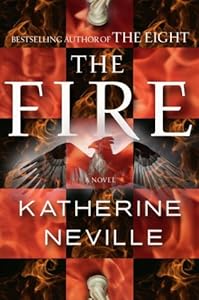
Cover of "The Fire: A Novel"
Cover of The Fire: A Novel
Book info:
Form: pdf, e-book
Genre: alchemy and chess-related thriller
Target audience: pretty much everyone interested in the topic


Synopsis:

The Fire is actually a sequel to Katherine Neville’s The Eight published some twenty years ago and reviewed by me last year. The Fire, like The Eight, follows two timelines, one past (in this case 1822) and one present (2003).

Alexandra Solarin (Xie) was twelve years old in the autumn of 1993. She was being accompanied by her father, Aleksandr Solarin on a chess tournament in Zagorsk Monastery, Russia. This young chess prodigy was to play against a similarly young boy from Ukraine named Vartan Azov in the very final game of the tournament. Shortly before the game, the girl bumped into a local woman who – without Alexandra realizing it – slipped a cardboard placard into her pocket; a symbol that bore “a small illustration of a flying bird set inside an Islamic eight-pointed star, and three words printed in Russian…” that meant “Beware the Fire”. Later in the monastery, Aleksandr saw a sculpture known as “The Black Queen”. Sensing danger, Aleksandr fled the tournament with his daughter to find the woman who slipped the cardboard with the symbol earlier, but as soon as he spotted her, Aleksandr was shot in front of his young daughter.

Ten years later, with the sudden and mysterious disappearance of her mother, Cat Velis, Alexandra realizes that the Game in search of the scattered chess pieces has evidently started again… As Alexandra reunites with her arch nemesis, Vartan Azov, they must join forces on an adventure to solve the puzzle and save their lives.

The second thread of the plot takes place in the 19th century Albania. Haidee, the young daughter of a powerful Ottoman ruler, embarks on a dangerous mission – she has to smuggle a valuable relic out of her native country and deliver it safely into the hands of a stranger. Still she and her companion, Kauri, are captured by pirates and sold at a marked in Fez. Will they be able to fulfill their mission?


What I liked:

Katherine Neville’s The Eight was a good novel and for more than one reason: the narration was convoluted without being incomprehensible, it jumped in time and space still remaining logical and fun, the author used different alchemical elements and ideas and tied them up with the plot in an ingenious manner. As soon as I was able to get the sequel I decided to read it but I admit that my expectations were high. Perhaps too high…you know the curse of the sequels: somehow they are rarely as good as the first parts. This sequel, additionally, can hardly be called a stand-alone.

In structure and elements, The Fire has much in common with The Eight: characters in each period are playing a high-stakes game related to a chess set that once belonged to Charlemagne. At the end of the first novel, the players learned that the board and pieces contained the formula for the elixir of life; here it's discovered that the board may hold more abstract information about natural order and balance -- the Big Picture, it's called at one point, the Original Instructions at others. Whatever it is, it still seems worth killing for.

Overall if you haven’t read The Eight, then I highly suggest you read it first. Otherwise, you’ll get its magical story distilled in a few paragraphs of dry summary, and by only reading The Fire you’ll probably think “The Game” is pretty pointless as well – somehow Neville never manages or bothers to demonstrate what’s actually at stake, or even introduce any real drama or urgency to Alexandra’s quest (Haidee’s story is woefully relegated to serious back burner status). 

 The story brings you on a journey throughout the Middle East and it is jam-packed with historical references – on the Ottoman empire, Lord Byron, Napoleon, chess strategies, the Basques, the Mages the Sufism and more. It was nice. Still it was less dazzling than the first part, reminding me slightly (ONLY slightly) of The Da Vinci Code with the break-neck adventures and puzzle-solving frenzy.

What I didn’t like:

I despised the predictability of that one. The villains never dared to hurt any of the positive characters in a permanent manner and you KNEW they wouldn't dare perhaps because they were as cardboard-thin as it is only possible; the romantic interest of Alexandra could be spotted from a mile off  and the romance itself was far more schematic that in the first part. There was less chess more running around and looking for clues, Dan Brown style.

Part of the interest here was the way that Neville layers and repeats motifs. For example, in the book's historical narrative - set in the 1820s - another party of eight gathers to discuss the game, including Napoleon's mother, Letizia Bonaparte, and Lord Byron. But if the plot is a giant chess game, it's odd that none of the pieces gets taken; in both the historic narrative and the modern one, the characters just shuffle around the board spaces, staring menacingly before moving on. There is a lot of talk about the white team and the black team but the one person who emerges as a “villain” cannot even be taken seriously. And Xie's chess blindness seems a permanent affliction, since she rarely seems to know what's going on. Don’t get me wrong, Alexandra is a sympathetic character but she’s never proactive – she merely reacts to situations during the entire book and tries do defend herself. Perhaps this had something to do with her favorite chess strategy – The King Indian Defense – but practically, it was highly frustrating.

Final verdict:

Neville has certainly done her research, and if you like conspiracy theories, complex riddles, and the fictional integration of real historical personalities like Lord Byron and Thomas Jefferson, then this might be up your alley. For me though, it was a bit too repetitive and schematic.  Much of the background information sounded  as dry and impersonal as a Wikipedia entry, and the characters delivering it were often pretty lifeless. I don’t regret reading it but I was hardly swept away by it.


Enhanced by Zemanta

Tuesday, 28 August 2012

Movie review: My Week With Marilyn by Simon Curtis


Director: Simon Curtis
Cast:
Michelle Williams – Marilyn Monroe
Colin Clark – Eddie Redmayne
Sir Laurence Olivier: Kenneth Brannagh
Vivien Leigh- Julia Ormond


Synopsis:

It is a movie based on facts. In 1956 Marilyn Monroe went on her first trip to London. She was supposed to combine work and pleasure: it was her honeymoon right after the marriage with the playwright Arthur Miller and she was invited to star along Sir Laurence Olivier in The Prince and the Showgirl. The film follows closely the shooting, especially one week of it.

Marilyn, alienated and lonely especially when Miller leaves England, develops peculiar relationship with Colin Clark, a 23-year old film student just down from Oxford who grubs the spot of third assistant director. Colin, fascinated with the great actress, soon finds out that the idol of Marilyn Monroe has big fat cracks all over it – Marilyn is emotionally unstable, already addicted to some dubious pills, fickle and very difficult to work with. Apparently fame and beauty do not always make a pretty picture. As Miller leaves England very soon, the coast is clear for Colin to introduce Marilyn to some of the pleasures of British life; an idyllic week in which he escorts Monroe, desperate to get away from her retinue of Hollywood hangers-on and the pressures of work, showing her castles, rivers, pieces of art and the famous English countryside. Will she be tempted to drop her noxious, demanding career for quiet life - with him?

My impressions:

English: Cropped screenshot of Marilyn Monroe ...
Cropped screenshot of  real Marilyn Monroe in the trailer for the film The Prince and the Showgirl (Photo credit: Wikipedia)
The story is told and seen from the standpoint of the film's star-struck third assistant director, Colin Clark, son of the great art historian Kenneth, and younger brother of the notorious Tory MP Alan. The movie-mad youngster had managed to find a job in Olivier's production office as an office boy/jack-of-all-trades. I admit I envied him. Not only had he good education and great plans which he yearned to accomplish, he also had that rich family to fall back on in case something went wrong. As a kind of bonus he also had an opportunity to meet one of the most desirable women of that time and something in him, perhaps his youthful innocence and honest concern, caught the eye of Marilyn herself. With her genius for enslaving men she made him her private confidant and helpmate – you must admit a bit shady position with a new husband hanging around...or even safely gone. Of course Colin fell hard for the bewitching star to a point of proposing, poor lad. Of course she refused, breaking his heart. Still he was left with memories to die for and she managed to shoot that movie to the very end.
Michelle Williams as MM - similar?


What I liked the most  was the fact that the film offered a realistic look into Monroe’s struggle to be herself and a good professional as well . Like most of actresses the real Marilyn was a woman shockingly different from her stage persona. Watching her sweetie-sweetie act it is easy to forget her mother was placed in an insane asylum and her father was never identified; Marilyn had no real childhood and that early abandonment deeply plagued all her adult life. Monroe whispers to Clark in one scene: "People always see Marilyn Monroe. As soon as they realize I'm not her, they run," underscoring the frustration she battled facing the incongruities between the person she wanted to be and the image of her that had been ingrained in peoples' minds, that of glamour, lusty mystery and infinite joie de vivre.

Let me tell you that Michelle Williams, although not especially similar to Marilyn from the physical point of view, played her very well indeed. It was a show inside a show watching her as she shimmied for the crowd and swerved her hips, flashing that wide-mouthed-pearly-white smile and sensually placing her index finger over her red lips. Also Kenneth Branagh was tremendous as Olivier. I especially liked one of his facial expressions - when the corners of his mouth extended outwards, in a grimace of distaste, and his eyes became black discs, like the eyes of a rattlesnake preparing to digest a large mammal. ;p He should play some baddies, he would be great at it!

Eddie Redmayne also excelled in the challenging task of playing Clark, an intelligent but inexperienced young man who has to toss up between a relationship with a pretty wardrobe mistress (Emma Watson – it was her first big-screen role since Harry Potter) and a chance of love with the most famous woman on Earth (and of course you don’t need to be a genius to guess who he chose). Although sometimes he was almost too naïve for his own good, it was still believable.

I didn't like the fact that the movie was a bit too predictable. Even if you don't know much about Marilyn Monroe and you aren't a big fan of the cinema in general it is very likely you will still know how the career of that particular actress ended and no, it wasn't a happy end at all. That's why I found it sometimes hard to keep my interest up, especially during those one-to-one scenes between Marilyn and Colin. It was almost painful to watch how the boy was fighting a losing battle against all odds, knowing fully well he had no chance from the very beginning.

Final verdict:

I admit in my opinion My Week With Marilyn is relatively light fare: it doesn't pretend to offer any great psychological insight, it doesn't surprise you with unknown facts or theories; instead it gives a great deal of pleasure and fun, and an unpretentious homage to a terrible and mostly forgotten British movie that somehow, behind the scenes, generated a very tender almost-love story. The film didn’t end with a fairly-tale HEA (and who would believe it if it did), but at least it isn’t overly bitter either. Overall I don't regret watching this one (and I would like to thank Tasha for her review which made me interested)
Marilyn, Richard Avedon
One of the best portraits of Marilyn by Richard Avedon (Photo credit: amaianos)

Monday, 27 August 2012

Review: Higher Magic by Kira Izmailova


Form: paperback
Genre: Urban fantasy, romance, crime story
Target audience: adults and young adults (but closer to 18)
Pages: 416


Synopsis:

When Naina Chernova signed up for the State’s Magic University in Moskow she thought it was a good choice, better than economy anyway. She was left disappointed though. Mathematics? Philosophy? The history of magic? Who needs these when you are promised to practice witchcraft? What could be done?  Soon enough her student life was progressing at a steady pace until one day she was sorely tempted and decided to break into a forbidden section of the University library. And was caught - by  professor Igor Davletiarov, a guy nobody, especially not a student, would like to cross. She expected to be thrown out. And officially she was. Still it was completely spurious.

Both her status and education changed dramatically – she became a part of a very exclusive group of students schooled in real magic, something she had yearned to try ever since. She proved to be gifted, so gifted that she was chosen for a special team preparing to conduct some dangerous and super secret experiment. And here she hit another snag. Davletiarov, a tutor who was never exactly friendly but decent, started to pick on her publicly in a very nasty manner. Why? Naina’s curiosity became alive despite her hurt feelings. She decided to investigate the past of her tormentor and found out things which made her rethink pretty much everything time and again. Can magic be dangerous to her?  

What I liked:

At first glance it seemed just another version of Harry Potter for a slightly older audience – a clever but rather homely girl starts her higher education in magic, is underwhelmed by the chosen alma mater and a tad lonely; then  her life changes all of a sudden because of her own curiosity, a mysterious sixth floor which keeps appearing and disappearing and an unpleasant professor (Snape, yes, I had to add that, almost Snape but more intelligent and cleaner). Still it was original and fresh – not only the sense of humour (I laughed out loud like mad several times maybe because I could relate) and the vivid characterization but also the whole setting which really sometimes seemed far closer to Bulhakov than to J.K Rowling.

Naina is a very likeable character, inquisitive, recourceful, intelligent, ironic. I liked following her around even if from time to time her life was boring. Her relationship with Davletiarov was mature, changing and developing, so far from those tiring, silly infatuations as it is only possible; yes, there was a kind of fascination but also a lot of common sense (‘what this guy wants?’ why he behaves that way or the other?’ ‘what’s happened to him?’). After reading so many American novels in which the females are either drooling over boyfriends’ six packs or cat-fighting each other to prove how kick-ass they are this was like a return to a much-missed normalcy.

Finally Naina did something which not only made me cheer but also earned my deepest respect (as it is a spoiler it is masked, highlight to read or skip, according to your wishes): she left Davletiarov. Yes, she walked away from him completely on her own. And he let her do it. Mind you she did it ONLY and SOLELY because she wanted to show her own mettle. There was no ‘third’ party, no other romantic interest, NOTHING like an ugly love triangle. You see, Mesdames et Messieurs? Completely possible. What a refreshing move after reading about all those vapid, brainless girls who are so insanely bipolar when it comes to their feelings that they sometimes make me dizzy (up-again-down-again).


What I didn’t like:

I do admit the book had its weaknesses. It was a bit too long or too short – I am sure any American writer would make of it a fully-fledged trilogy. Not a bad trilogy to add. The pace of narration was too monotone, especially in the third part of the book when the characters of Naina and Igor were separated for some time. Some plot devices like Naina’s sudden trip to Paris and her equally sudden change of heart after shopping in Parisian boutiques and getting to know foreign mages were a bit stretched. I can understand a girl can lose heart after seeing a nice pair of shoes but to lose her heart so completely? Has the author run out of ideas? Fortunately soon the order of things was restored and in the end we get a big fat HFN (happy for now). Which suited me fine.

Oh and the cover seems to be just a random jumble of pictures. This story deserves something better.

Final verdict:

A very light and refreshing novel with an interesting plot, narrated in a funny way, and featuring a pair of protagonists who are very likeable although a bit flawed. Bad news: as far as I know it is not available in English. Not yet I hope – a publisher should get interested in this one asap. 

Friday, 24 August 2012

Review: A Dance with Dragons by George R.R. Martin


Book info:
Format: pdf, e-book
Genre: fantasy
Target audience: adults

Synopsis or something like that:

It is he fifth volume of A Song of Ice and Fire, the fantasy epic series which has been made very popular nowadays. If you have read the previous four parts you know that summarizing the fifth would be close to impossible; if you haven’t read any of them, well, just let me tell you no summary an no TV series can prepare you for the complexity of those books. In fact the plot is so convoluted as to defy synopsis. Really even the work of Tolkien pales in comparison. What can be said…winter is coming and the seven Kingdoms are hardly prepared for it because they plot and prepare for a war – every ruler wants to assure the Iron Throne, currently occupied by a child, Tommen Baratheon, will fall into the hands of their man or woman.
Coat of Arms of the House of Lannister
Coat of Arms of the House of Lannister (Photo credit: Wikipedia)


What I liked:


Just several chapters, really; and if I described them in more detail I would spoil you horribly. As usual, I am giving you the choice: highlight and read if you want to or skip if you prefer not to be spoiled:

-          Finally we know for sure Brienne is alive but we still aren’t told how and why – she meets with Jaime and informs him that Sandor has Sansa under his care.  Now I wonder…how would Petyr Baelish, lord Littlefinger, react if he knew? Does he know? Is he still among living? 
-          Arya is progressing on the path of Braavos Faceless Men (assassins trained in the Temple of Black and White).  Now we are told that she was made blind on purpose and then that  process is reverted. She is also shown how to change her face and sent as an apprentice on her first mission. Go Arya, GO!
-         Cersei was humiliated for her sins: she was shaved bald and led, naked, through the King’s Landing. Still she is alive. Ok, great, I can’t wait for her meeting Tyrion again.
-         Tyrion was first sold as a slave and then joined the Golden Company of sellswords and other scum. He will have an interesting life for sure but he is one of the best characters around so small wonder. If only it took him less time....


What I didn’t like:

General remarks, spoiler-free:

estandarte ficticio
 (Photo credit: Wikipedia)
This story is becoming so huge, so convoluted, so Byzantine that it is really difficult to keep your interest, especially that different parts have been published several years apart. I really struggled reading this one – too many inner monologues, too many info dumps, too much info about secondary characters who were hardly germane to the story. It seems the author, after a tremendously good start, tripped over his own pen. Ok, I understand, it is more likely than not THE story of his life and he did plan it as a panorama rather than a portrait or a simple landscape but really he went over the top with the number of sub-plots, different trivial descriptions of this custom or that and all those strange names of strange foreign people I hardly remembered or recognized at all. What’s more the author started to repeat different plot devices – sometimes I felt as if I breathed recycled air; officially everything is fine but your nose recognizes the same particles and starts to itch…


More particular remarks, highlight to read as they include serious spoilers;

-          The death (?) of Jon Snow was a horrible scene; still maybe he survived; rings a bell?
-         I’ve had enough of Cersei in the previous books and here she got three more chapters or so; really unfair, I would prefer more Arya/Tyrion chapters
-         Sometimes the narration was so slow that almost sleep-inducing (e.g. the journey of Tyrion to Mereen or the whinnying of Theon aka Reek)
-         Danny was reduced to a goody-goody Snow White who cannot determine her priorities because she is too occupied bedding Daario; her inner dragon had to go into a coma; her little flying adventure on a big, bad, black Drogon made me despise her even more;
-         Too many witches/priestesses/prophetesses/greenseers/whiteseers etc. around, too many different prophesies. Boring.

Final verdict:

It took me almost a month to get through this book. I didn’t want to start reading and I forced myself to finish it. Some chapters were worth the effort but most of them I found too long and boring and let me tell you I was never bored by the previous novels. In my humble opinion a determined editor should have cut out at least half of the material, making the story more compact and edgy. Will I continue reading? Yes, some characters are worth it. Still it seems the series is deteriorating and it is a bit sad.
Enhanced by Zemanta

Tuesday, 21 August 2012

Movie review: Brave


Directed by: Mark Andrews, Brenda Chapman
Story: Brenda Chapman
Cast (voices): Queen Elinor - Emma Thomson
                    Merida: Kelly Macdonald
                    King Fergus: Billy Conolly
                    The Witch: Julie Walters


Synopsis:

Brave (2012 film)
Brave (2012 film) (Photo credit: Wikipedia)
Once upon a time in medieval Scotland lived an impetuous princess called Merida. Merida loved riding her pony and shooting arrows at different targets. Mainly artificial, immobile targets, mind you, nothing alive. Hunting? Who heard of hunting in the Middle Ages? At that time people and wild animals lived in perfect harmony as nobody, either noble or otherwise, ate venison, right? Ok, I digress… soon enough Merida found out that the life of a princess is not only about learning and pleasures but also about duties. Her mom, the queen Elinor, decided that Merida, a 16-year-old girl, should marry. Elinor wheedled her husband, King Fergus, into organizing a nice little contest; they invited three other clans and each of them presented the most worthy young men, candidates to be a husband of a princess.

Merida was angry, shocked and hurt but mainly shocked. How could her beloved mom do something like THAT to her when she, a spoiled teenager, stated several times that she WAS. NOT. READY. FOR. A. MARRIAGE (and of course she knew best)? Let me remind you that we deal here with a Middle Ages princess who is basically telling her mum to stick her ideas up her...long braid. Her dad, a big oaf of a king and a totally henpecked husband, was hardly of help. It was time for extraordinary measures. After a fight with her mom she tore off into the woods on her faithful pony and immediately was led by a will-o’-the-wisp to a cottage inhabited by a witch…er…magical wood carver. Making a deal with a witch is never a good idea but our clever Merida decided she knew best once again - she purchased not only a room-full of useless wooden statues of bears but also a small cake which could change the eater… quite dramatically.

As soon as she returned to the castle, Merida presented her mum with the cake, calling it a peace offering. Elinor, appeased, ate one little piece of it. The results, as always when you deal with magic, exceeded anybody’s expectations. All of a sudden Merida was faced with harsh reality – either she made things right soon or her life and the lives of her family would be tragically changed forever.

My impressions:

Brave, originally titled The Bear and the Bow, follows a prickly mother-daughter relationship with a dash of special effects connected with magic – a willful teenager confronts her stubborn mother, asks for help a complete stranger creating more problems than she’s ever believed possible and ends up solving them all. Fine, just fine. 
I really wanted to be smitten by this one. The premise sounded so nice and enticing at first glance: Scottish Highlands and a Disney/Pixar cartoon  focusing almost completely on female characters; mind you it was not, I repeat, it WAS NOT about finding the love of their lives. I almost felt like cheering. Then my problems started. 

All male characters were there to provide comedy relief, remaining as thin as cardboard cut-outs (so no, don’t invite your boyfriend/husband along to see this movie; it might have disastrous effects). There’s the idiotic father, completely dominated by his cool wife, and three triplet boys who are simply up to no good all the time and could have easily been one person, so similar they seem. There is also a bunch of fight-crazy, bombastic clansmen who just eat, drink, laugh loudly, quarrel, fight and strut about (small wonder they would lose their independence in the near future). It was funny for about five minutes but after a while I admit I  got bored, waiting in vain for somebody male with brains (such a thing exists, right?). In other words, somebody to break the routine in an intelligent way. At the end I found out that  this tale definitely wasn’t as fresh and groundbreaking as I hoped. For all the hubbub about Merida being Pixar’s first truly feminist princess, there is little evidence that she is anything more than a spoiled redhead lass, badly in need for a life lesson or two. She is also surprisingly weak – even compared to the other Disney princesses. 

Say what you might about Jasmine but she was far more independent and clever enough to escape her gild cage and then play along with Jafar to help Aladdin. Ariel knew what she wanted and had to work hard on her own in order to win over the prince. Belle had to work as well and overcome many obstacles to save the day and her beloved Beast. Merida, on the other hand, simply has to reverse what harm she did (and let me remind you she did it out of  her own sheer stupidity) and follow the steps laid out for her at the very beginning – not a particularly difficult task you must admit. If anything, it’s Merida’s mother who is the strong female, being more than capable of stopping the men right in their tracks, especially her husband. Yes, I appreciated the fact that Merida didn’t have to either fall in love or marry at the end (undoubtedly preparing the ground for the next installment in which she WILL marry as her mum wishes) but I felt a bit disenchanted by too many clichés, plaguing this movie. Mother/daughter bonding couldn’t carry the whole an-hour-and-half long film and it is hardly something new although I admit an evil step-mother is a far more popular trope.

What’s more…ok, I grant it, the visual effects were simply great. The shaggy, orange-red hair of Merida was done in a really ingenious way, along with many animals and landscapes, always animated to perfection. On a sensory level, Brave is almost entirely a delight. On a plot level and character-wise – nothing special.

Final verdict:

Overall, in my humble opinion, Brave is Pixar trying too hard. When you’ve built your brand on delivering on your promises, it’s devastating when you come up short. The film that starts off big and promising soon diminishes into a rather wee, schematic fairy tale with a heroine who is supposed to be kick-ass and then she isn’t because it was WRONG all the way. Yes, boys and girls, her mum did know better from the very start. Ha, show me a child, let alone a teenager, who wouldn’t be pissed off with such an ending. I myself was expecting so much more.


Enhanced by Zemanta

Monday, 20 August 2012

Review: On the Island by Tracey Garvis-Graves

Book info:

format: mobi
Genre: adventure, romance
Target audience: adults

Synopsis (from Goodreads):

When thirty-year-old English teacher Anna Emerson is offered a job tutoring T.J. Callahan at his family's summer rental in the Maldives, she accepts without hesitation; a working vacation on a tropical island trumps the library any day. T.J. Callahan has no desire to leave town, not that anyone asked him. He's almost seventeen and if having cancer wasn't bad enough, now he has to spend his first summer in remission with his family - and a stack of overdue assignments - instead of his friends.

Anna and T.J. are en route to join T.J.'s family in the Maldives when the pilot of their seaplane suffers a fatal heart attack and crash-lands in the Indian Ocean. Adrift in shark-infested waters, their life jackets keep them afloat until they make it to the shore of an uninhabited island.

Now Anna and T.J. just want to survive and they must work together to obtain water, food, fire, and shelter. Their basic needs might be met but as the days turn to weeks, and then months, the castaways encounter plenty of other obstacles, including violent tropical storms, the many dangers lurking in the sea, and the possibility that T.J.'s cancer could return. As T.J. celebrates yet another birthday on the island, Anna begins to wonder if the biggest challenge of all might be living with a boy who is gradually becoming a man.

What I liked:

The story – as simple as that. Although the premise made me think immediately of Castaway movie with Tom Hanks, I was soon made so curious about the future of both protagonists that I kept reading until the very end. The plot was thought out in a really good way and, to my delight, it didn’t finish with the rescue, which I kind of expected. The pace of narration doesn’t slow down for a moment – I literally swallowed the book in two evenings. The author tells her story using alternatively two POVs: that of Anna and T.J. She isn’t shunning difficult topics like age disparity or hormonal turmoil of a teenager becoming an adult.

The best part was the changing relationship between Anna and T.J. It was described in a very realistic, mature way and still the author managed to end the book with a HEA. Both characters were presented with their flaws and advantages; they never acted strangely (read: in a stupid way) and their reactions were logical.

What I didn’t like:

First of all it is clearly a debut novel and it is felt. The style could have been more polished Some dialogs seemed a bit wooden. The characters overused their Christian names too much, sometimes stating obvious things over and over again..

I didn’t appreciate jumps in the narration timeline either (like: three years later or two years later, I hate those); in fact it was perhaps the very feature that disturbed me the most. I suppose the book would be far better without them, even if it was a bit longer/ more complicated.

Cover:

A bit generic but fitting. I like those blues.

Final verdict:

A good story but rather shabbily told. If you like romance novels you might appreciate it better than me. Still not a bad novel for a debutting author.


Wednesday, 15 August 2012

Austrian Alps and Tirol – my holiday report


The German name for Austria, Österreich, means "Eastern realm", it derives from the word Ostarrîchi, which first appears in the "Ostarrîchi document" of 996 but I  don’t mean to bore you with historical details. It will be just about my personal experience. During eight days (plus two days spent going there and back) I visited two cities (Vienna, Salzburg), some small towns like Innsbruck and Hallstatt and a bit of Tirol, mainly the Alps and more precisely the High Tauern near Grossglockner along the High Alpine Road.


Vienna

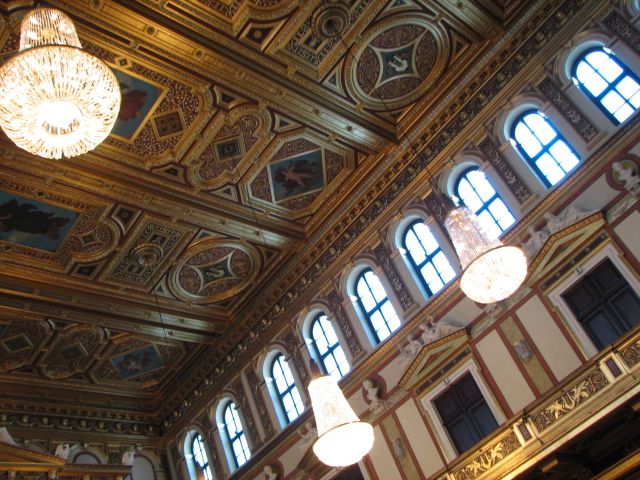
It is the capital of Austria – a big, multinational city full of tourist prime spots, historical or otherwise. Everybody knows Vienna so there is no need to write anything more. Yes, I saw the Danube, no, it wasn't blue at all. Apart from that famous river I wanted to visit the National Austrian Library located in the Hofburg Palace but it was closed due to some kind of renovation (not a brilliant idea, renovating a building right in the middle of the holiday season but what could be done). Still I was able to glance at some interesting buildings – the seat of Musikverein ( photo number two) and a very unusual tenement house designed by Hundertwasser (photo number one) among them. I must return there one day – I didn’t see Schönbrunn and plenty of museums, not to mention that library of course…


Salzburg

It’s all about Mozart here, not necessarily in a good way. Not that I don’t like Mozart music but here you get Mozart sweets and Mozart airport, Mozart house and Mozart gift shops full of ugly Mozart dolls, Mozart key fobs and Mozart mugs. Tacky t-shirts with an ugly Mozart. Do you want something to drink? Do not forget about Mozart – they won’t let you anyway. A Mozart here, a Mozart there, you will have a Mozart everywhere…after a while you can almost get sick seeing another Mozart-related monstrosity but you can’t escape. Not in Salzburg.
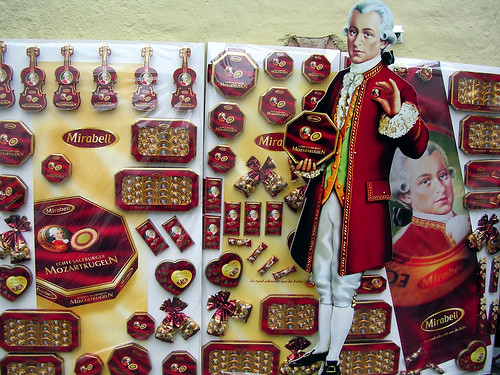
This city is hugely popular among tourists so it also a bit more expensive than Innsbruck and even Vienna – all because of Mozart of course. I visited the Hohe Salzburg (a kind of fortress on a hill with great vistas and some museums inside) and the Natural History Museum (I am a big fan of those places and I couldn’t visit the bigger one in Vienna because we lacked time) where I could forget about Mr. M for the time being. Unfortunately I was also tempted to get inside the Mozart birth house It wasn’t worth the bother. Just white walls with family portraits, three or four tiled stoves, some letters and one harpsichord. Oh and a lot of fuss. It’s all about money…er… Mozart, right?
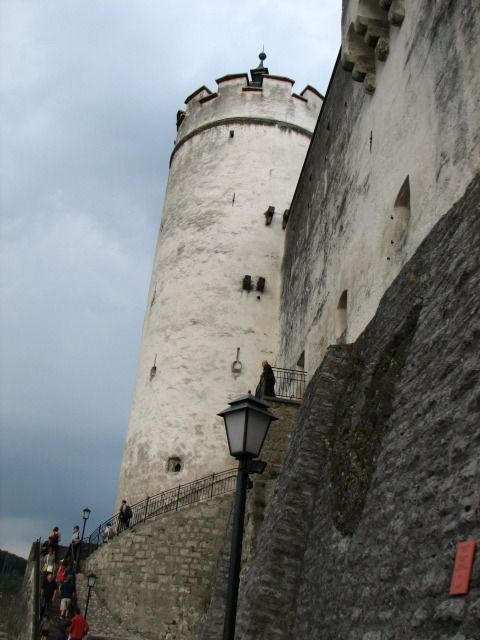
Hohe Salzburg fortress


If you are tired of Salzburg (easily done, believe me) it is the nearest place where you can relax. Untersberg is a mountain massif of the Berchtesgaden Alps that straddles the border between Berchtesgaden, Germany and Salzburg.


It is easily accessible – it’s enough to take a public transport bus (the ride from Salzburg lasts roughly 30 minutes) and a cable car (10 minutes if there are no queues) to be transported straight into the peace and quiet of one of the Alpine mountains. I really needed that after the Mozart folly and two hours were enough to recharge batteries and prepare for more urban sightseeing. The views were great, there were not so many fellow tourists and the sound of silence was simply priceless. Oh and there is a nice legend connected with that place - allegedly Emperor Frederick Barbarossa (of the Holy Roman Empire) is asleep inside Untersberg, taken care of by the "Untersberger Mandln", small dwarf-like creatures. His beard is said to be growing longer and longer around a round table and to have grown round two times. Myth says that when the beard has grown three times around the table the end of world has come. Right – I can hardly wait.

Innsbruck

A nice holiday resort in the middle of the Alps – small but very cute, especially the town hall and the old tenements around it. Painted in pastel colors of green, yellow, pink and blue, the buildings reminded me of cupcakes, and the white fluffy decorations made the icing on the cake. 


It really had that medieval atmosphere so difficult to copy. If you have some time to kill and you are nearby it is worth checking out. Its landmark is the Golden Roof – a three-story balcony on the central plaza at the heart of the Old Town. It was constructed for Emperor Maximilian I to serve as a royal box where he could sit in state and enjoy tournaments in the square below and the roof is covered by real golden tiles.

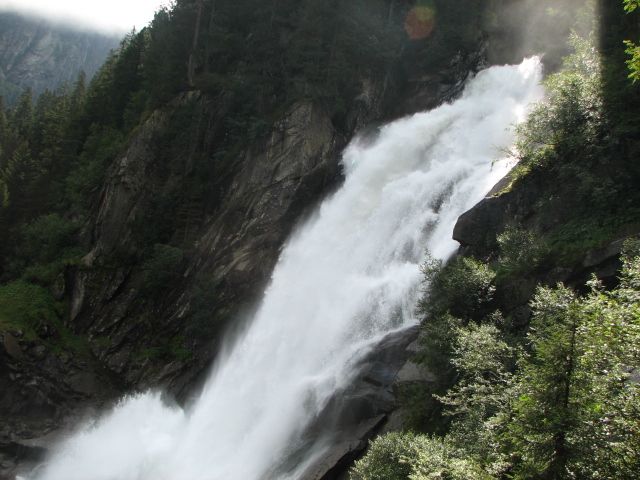
Krimml waterfalls

with a total height of 380 metres (1,247 feet) it is the highest waterfall in Austria. The falls are formed from the Krimmler Ache river and are located near the village of Krimml in the High Tauern National Park in Salzburgerland. The waterfall begins at the Krimmler Ache at the top of the Krimmler Achendal, and plunges downward in three stages. The upper stage has a drop of 140 metres, the middle of 100 metres, and the lowest a drop of 140 metres. 


It is a really scenic and refreshing experience, especially when the weather is nice. The paths are so comfortable that I saw even people with prams and very small children, not to mention those brave elderly ladies with walking sticks. Of course nobody forces you to go to the very top but let me tell you, you will want to anyway. Still be warned – in the summer, especially during the weekends, the path is rather crowded.

Hellbrunn

An early Baroque villa of palatial size, near Morzg, a southern district of the city of Salzburg. It was built in 1613-19 by Markus Sittikus von Hohenems, Prince-Archbishop of Salzburg, and named for the "clear spring" that supplied its water gardens. Hellbrunn was only meant for use as a day residence in summer, as the Archbishop usually returned to Salzburg in the evening. Still that fact didn’t prevent him from splashing money around like water – literally.


 The villa is  famous for its jeux d'eau ("watergames") in the grounds, which are a popular tourist attraction in the summer months. These games were conceived by Markus Sittikus himself; apparently he was a man with a keen sense of humour and he liked to perform a series of practical jokes on guests. Notable features include stone seats around a stone dining table through which a water conduit sprays water into the seat of the guests when the mechanism is activated, and hidden fountains that surprise guests while they take part on the tour. 


Other features are a mechanical, water-operated and music-playing theatre built in 1750 showing various professions at work, a grotto and a crown being pushed up and down by a jet of water, symbolizing the rise and fall of power. At all of these games there is always a spot which is never wet: that where the Archbishop stood or sat, to which there is no water conduit and which is today occupied by the tour guide. As the weather was sunny and warm, spraying was a lot of fun; however you should protect your camera. Near the villa there is also the Zoo so both children and adults can spend there the whole day without ever getting bored. I liked Hellbrunn very much – history and amusement was balanced there in such a way that it made everybody happy.

Lichtenstein gorge

A wonderful place and one of the deepest gorges in the world (the fifth deepest if I remember correctly). Perfect for a stroll with the whole family – even elderly people or/and kids will manage. Just don’t forget your camera and wear good shoes as the wooden pathway can be pretty slippery and wet. The rock formations, carved by water, are incredible (see the photo).

Hallein salt mine

I expected something different and I was disappointed. The main attractions of this mine are: a rather smallish artificial lake and wooden rails on which you can slide down. I’ve visited far more interesting salt mines in my own country. What’s more the movie, which was supposed to present its history, was embarrassingly stupid (the ‘famous’ German sense of humour, eh).

Hallstatt

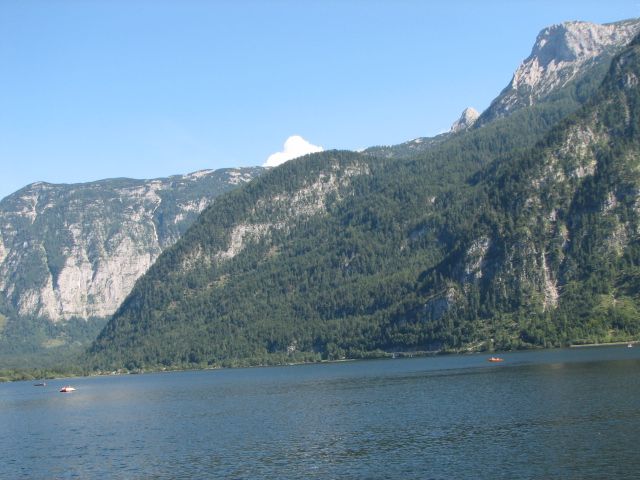
A very small town squeezed between a lake and a mountain and famous because of a salt mine (yes, another one) near which there were prehistoric artifacts found. The market municipality was already inhabited in the 1st millenium before Christ: during this period - the iron age - the civilization apparently flourished there. When I  visited it was brimming with Asian tourists so it was difficult to enjoy it; however the weather was fine and the views – breathtaking so I managed to take some photos nevertheless.


Why so many tourists from Asia, you might ask…well, not without a reason. Imagine yourself that a Chinese corporation designed an exact copy of this town that was built in the north of Hong Kong and now plenty of Chinese want to see the original as well; I bet they want to spot the differences or lack thereof. You can find out more about it all over the Internet, for example here:  


High Alpine Road

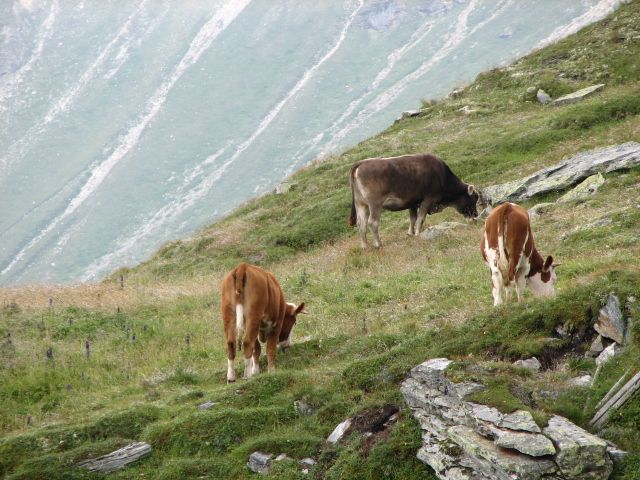
If you want to see the Austrian Alps in full comfort, admiring them from the window of your car or your coach it is the perfect place . The views are really breathtaking, you can make a few stops (there are special parking bays along the road) to get outside and take a picture or two and you won’t even break out into a sweat, quite the opposite in fact – even in the summer don’t forget about  some warmer clothes. I was there in August and it was like 9 degrees Centigrade despite the fact that the weather was nice and sunny. I must admit, though, that it felt weird. I am not a fan of sightseeing the mountains while only looking through the window, I felt like a cheat. There is nothing like trekking especially if you can meet some lovely Alpine cows.


Ice caves in Werfen near Salzburg (Eisriesenwelt Werfen)

The caves are impressive – big, cold and icy ( only plus 3 degrees Centigrade inside). A guided tour is possible only during the warmer part of the year, I was told that in the winter the trail leading to them is too dangerous and inside there is only -15 degrees. Imagine spending an hour or so in such a temperature while moving slowly along a rather narrow flight of wooden, slippery stairs. In the summer, though, they are certainly worth visiting providing that you arrive early to avoid horrible queues to the cable car. One more tip - you can't take photos inside the caves (that's why I had to google that one)


Hohenwerfen castle


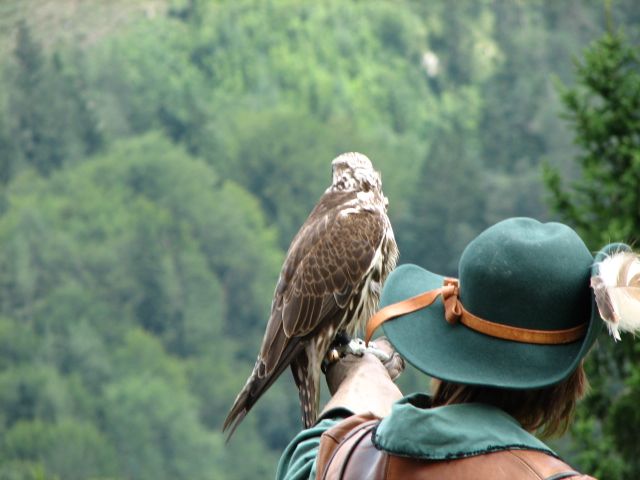
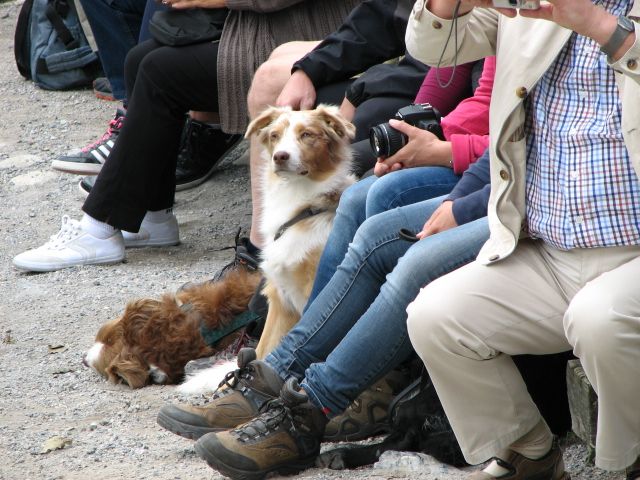
It used to be a typical medieval defence construction – made of local stone on a hill, rather small, inaccessible, uncomfortable to live in. Nowadays the bastion, enlarged and renovated several times over the centuries, functions as an ‘adventure’ fortress. There are guided tours showing its weapons collection, the falconry museum as well as a stylish fortress tavern (expensive but what can be done, it is so stylish you must visit it). The historic Falconry Centre offers daily flight demonstrations by various birds of prey. They last about 45 minutes and are really impressive – even merely admiring the various birds like falcons, eagles and buzzards so close would be a great experience, watching them in action was simply awesome. Literally everybody was awed, adults, kids, even some dogs ;p. 


One naughty female eagle put on a real show – she didn’t want to return to her handler for quite a while and sat perched on one of the turrets looking very pleased with herself. Only a huge chunk of a chicken leg persuaded her to listen to the commands, the trainers got truly impatient with her. It was obvious it hadn’t been premeditated but it was fun to watch. Nobody will tell a big, bad eagle what to do… unless you carry a tasty morsel of flesh in your gloved hand.

Bad Ischl and Kaiservilla

This little spa town, situated in the southern part of the Upper Austria is famous mainly because Franz Joseph and his wife, Elizabeth of Bavaria (Sissi), owned a villa here – it was a wedding present from the Archduchess Sophia, the mother of Franz. They got engaged there and the Kaiser liked spending his free time among those walls whenever he could.


Franz Joseph described it as "Heaven on Earth". He granted a nearby mansion to his 'official' mistress, Katharina Schratt, so her house could be easily reached via a hidden footpath. The grounds and parts of the residence are now open to the public although it remains in the hands of the Habsburg family so it is private. As I’ve written three essays about the last Habsburgs (Be careful what you wish for...especially if you wish you were a king. Requiem for an Empress and her son, the Crown Prince Riders on the Storm) I wanted to visit the villa very badly. I wasn’t disappointed although the numerous antlers on the walls in practically every room made me squirm – Franz Joseph loved hunting and he murdered a lot of innocent animals living nearby for sport. He even had some of them stuffed and put inside glass cabinets. I am really not fond of that man.

The villa itself is an elegant building with nice, original interiors. Inside, you can admire a copy of one of Sissi’s dresses (the pic below, showing it, is also from Google, you can't take photos in the villa), plenty of oil paintings, furniture and other imperial souvenirs. By the way, all the rooms are connecting so you come from one straight into another, there are no corridors - a characterisitc trait of older buildings.


I would like to return to Austria one day. Now I know what to avoid and what I would like to see for the second time - more Alps, more museums, less Mozart-pimping. ;)


Enhanced by Zemanta

Friday, 3 August 2012

Holiday break


From 4th to 14th of August I will be away on a trip to Austrian Alps. During that time I am not going to post and/or comment. Yes, it is a deliberate and planned Internet break. I wish you all a very good summer and I promise to show some photos if/when I return. Have fun!

Wednesday, 1 August 2012

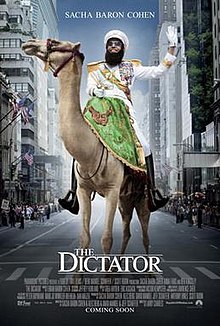
Movie Review: The Dictator


Directed by Larry Charles
Screenplay: Sacha Baron Cohen, Alec Berg, David Mandel and Jeff Schaffer

Cast:
General Admiral Haffaz Aladeen/Efawadh: Sacha Baron Cohen
Zoey: Anna Faris
Tamir: Ben Kingsley


Synopsis: 


A little African country of Wadiya is a dictatorship ruled by the Supreme Leader Haffaz Aladeen (yes, like Aladin and his Wonderful Gun). Aladeen is a cross between Saddam Hussein (he wants nuclear weapons and he has murderous inclinations), Moammar Gadhafi (he is surrounded by female bodyguards, always wears dark sunglasses and has murderous inclinations) and Mahmoud Ahmadinejad (he hates Israel and has murderous inclinations). In other words he lives to oppress the weak and he loves executing people for no reason at all; what's more, the walls in his bedroom are papered with Polaroid photos of him and his famous Hollywood lovers (Arnold Schwarzenegger and Megan Fox among them). A paradise? Unfortunately not.

The nuclear industry of Wadiya is endangered by an evil declaration of UN, threatening that they will attack and destroy all those lovely missiles with pointy heads. Well, nobody can fight all the international community at once so Aladeen decides to visit the nest of snakes, New York, and speak before the UN representatives to avoid the war. On a trip to New York, Aladeen takes crap from a hotel manager (a terrific John C. Reilly), who mistakes him for an Arab. "You're all Arabs to me," says the manager, "the blacks, the Jews, those blue, tree-hugging queers in Avatar." And then the same manager tortures his guest by removing his world-famous black beard and turning Aladeen into an ordinary illegal alien (I love this term). Stripping him of all the power. What can be worse? Only working for a cooperative full of political refugees, led by a little Jewish woman as short and flat as a hobbit…still beggars are no choosers, right? Aladeen has to regain the power or die trying. He might also learn a bit or two about himself and America.


My impressions:

Any Sacha Baron Cohen’s movie usually can be, in my humble opinion, divided into three parts. One part consists of very witty observations and really great irony concerning the world we live in. The second part includes so-so, fill-the-middle stories which hardly deserve a smile and the last part are these horrible lavatory jokes which leave a bad taste in my mouth. I have to say The Dictator was not bad – I enjoyed it better than Borat – but still, it’s a Cohen movie so…

Let’s start with the positives. The plot was ALMOST coherent. I really enjoyed how the skills of dictatorship made Aladeen a very successful manager of that little cooperative shop, owned by Zoey, showing what is really needed to succeed on a very demanding and fully democratic market. Those scenes were brilliant and funny, leaving me laughing helplessly although sometimes that laugh stuck in my throat. I also liked how Cohen exposed ties between politics and big business – Tamir, his second-in-command (a simply great role of Ben Kingsley), plans to introduce democracy not because he believes people of Wadiya deserve it but because he wants to sell oil abroad and become super-rich. Then he will buy a villa in Lake Como next to the mansion of George Clooney, move out and the rest of Wadiya might go to hell with a little help of oil companies. Too densely populated area? Depopulate it.

Still the best scene was that stingingly funny climax in which Aladeen gives his big speech about the good sides of dictatorship. It was the killer sequence which dodged soothing convention and ultimately merits comparisons to The Marx Brothers' Duck Soup and Charlie Chaplin's The Great Dictator - simply done to perfection. "You don't know how good you have it here," says Aladeen to the heart of democracy. In his country, he claims, the top one-percent controls all the wealth and a dictator can declare war with impunity, even on the wrong country. It must ring a bell, reminding you of the American war on terror, the invasion of Iraq and its sad consequences. Finally let me tell you that the fact that, at the end, Aladeen started to use Jewish slang words, picked up from his NY customers, I found simply hilarious.

My fun ended as soon as Aladeen was becoming sexually aroused. I am really unresponsive to this kind of humour - the hairy armpits of Zoey failed to make me smile and the remarks like: "I love it when women go to school, it's like seeing a monkey on roller skates – it means nothing to them, but it's so adorable for us," make me simply shudder. It is as if Cohen said: 'ok, all you intelligent people satisfied? Great! Now let's cater for those less fortunate ones who also have some disposable income left in their pocket. You know, pecunia non olet' I know what attitude it was supposed to mock; however, I cannot find it even remotely funny. Zoey schooling her new squeeze in the nitty-gritty of jerking off was also rather distasteful and hardly believable (such a stud of a dictator and not knowing some basics? Do me a favour…). The biggest chill I felt watching a scene when Aladeen-the-shop manager helped a female customer in labour. First he flirted with Zoey, then he had to read a text message on his mobile. After delivering the baby he tells the happy parents: ‘I have bad news. It’s a girl. Bring in the trash can.’ Sorry but such a practice is too widespread around the world and too horrible to be an object of  even a half-decent joke.

Final verdict:

Baron Cohen never plays it gentle - if you like his style, you might find The Dictator very amusing. I admit the movie kept me entertained but it was zigzagging through 84 minutes like a drunk madman, spouting forth more or less witty jokes. Its premise was interesting. Still I felt some scenes kind of ruined all the fun.