Showing posts with label YA. Show all posts

Friday, 28 June 2013

Review: Glow (Sky Chasers #1) by Amy Kathleen Ryan

Synopsis:

What if you were bound for a new world, about to pledge your life to someone you'd been promised to since birth, and one unexpected violent attack made survival—not love—the issue?

Out in the murky nebula lurks an unseen enemy: the New Horizon. On its way to populate a distant planet in the wake of Earth's collapse, the ship's crew has been unable to conceive a generation to continue its mission. They need young girls desperately, or their zealous leader's efforts will fail. Onboard their sister ship, the Empyrean, the unsuspecting families don't know an attack is being mounted that could claim the most important among them...

Fifteen-year-old Waverly is part of the first generation to be successfully conceived in deep space; she was born on the Empyrean, and the large farming vessel is all she knows. Her concerns are those of any teenager—until Kieran Alden proposes to her. The handsome captain-to-be has everything Waverly could ever want in a husband, and with the pressure to start having children, everyone is sure he's the best choice. Except for Waverly, who wants more from life than marriage—and is secretly intrigued by the shy, darkly brilliant Seth.

But when the Empyrean faces sudden attack by their assumed allies, they quickly find out that the enemies aren't all from the outside.


This wasn’t an easy read for me. Not only did real life constraints make it difficult for me to find the time to read but the writing itself didn’t exactly suck me in. Ryan’s writing is efficient and it gets the point across but she isn’t a wordsmith like Laini Taylor is. She’s a plotter, and that’s a skill that means more to me than pretty words.

If you’ve read the blurb you know there are two space ships carrying the last vestiges of the human race to a faraway place and that there are two teenagers in the middle of it all. The blurb also promises a love story or a triangle, but it’s hardly mentioned after the set up. It’s the process of growing up in an unlikely situation and learning to take responsibility for one’s actions that dominates the story. That and survival.

I’m not going to talk about the science simply because I decided not to think about it too hard. I’d never been able to finish reading the book had tried. Not that there is much scientific detail to bog down the tragedy of humanity, but there was enough for me to consider it unlikely. That applies both to the space travel as well as to the fertility solution especially considering they were fleeing an environmental catastrophe… I said I wouldn’t talk about it and I won’t. Instead let me introduce you to the main characters.

On the plus column there’s Waverly, an anti-Mary Sue and a very regular sixteen year old girl at the cusp of adulthood. Because of the mission she’s expected to marry and procreate, but she has her doubts. In a way, what was done to her should’ve been a blessing for her and her desire to choose for herself had she actually been given the opportunity. Because she’s still a child she still needs her mother, but because she’s almost an adult she also learns to take care of herself and others, even if there are mistakes made along the way.

On the minus column there’s Kieran. He’s intolerable know-all who goes through a very difficult journey to realise that maybe he doesn’t know it all after all. He too learns from his mistakes even if he’s not ready to face the slippery slope he’s drifted on.

You can invert the columns if you like but you can’t change what dominates them both: Religion. Christianity. The folly of knowing God’s will and imposing it on others. Or simple ambition, thirst for power. And the rejection of it.

Glow reads like a carefully constructed adventure story with each point of view delivering only a sliver of the bigger picture. Both Waverly’s and Kieran’s chapters are subjective to their situation and viewpoint, but it’s the use of third limited that allows the reader enough distance to see through the (obvious) manipulation. Ryan doesn’t shy away from showing flaws and gaping holes in morality in absolutely everyone. Each character is only acting and reacting based on their own experiences. Except when they’re not.

Apart from Waverly, Kieran, and Anne Mather—and you can challenge me on Anne Mather—all other characters are accessories and subject to the whims of the plotter. For example, Ryan tries to justify Seth’s behaviour after the kidnapping in couple of different ways but I didn’t find those reasons completely believable. And unless he gets his own chapters in the following books, I fear he’s doomed to remain a pawn in Waberly and Kieran’s game and the object of their mutual desire.

Glow isn’t an easy read because of its subject matter and real moral dilemmas but it is a book that makes you think. I wasn’t completely sold on the delivery, but I applaud the message.

This recommendation comes with a warning: Glow is the first book of Sky Chasers series of which only first two have been published. The third is expected to be published in 2014.

Monday, 12 March 2012

Review: The Traitor in the Tunnel (The Agency #03) by Y.S. Lee


Form: e-book, Kindle format
Genre: historical fiction
Target audience: YA


Synopsis:

Mary Quinn, now a fully fledged operative of the all-female secret Agency, is placed in the Buckingham Palace as a domestic servant to find who has been stealing different trinkets from one of the Queen Victoria’s parlours. If the task sounds easy, rest assured with Mary no assignment is as easy as it looks. When one of the Prince of Wales’s irresponsible young friends is killed in disgraceful circumstances Mary is, surprise, surprise, among few people to know the truth behind that incidents. Should the Queen hush things up or allow justice to take its course? Mary’s interest in this private matter soon becomes deeply personal: the alleged killer, a drug-addicted Chinese sailor, shares a name with her long-lost father. Could it be the same person?
Meanwhile, James Easton’s engineering firm is repairing the sewers beneath Buckingham Palace. Trouble is, there’s a tunnel that’s not on the plans. Its purpose is unclear but it seems to be very much in use. These overlapping puzzles offer a perfect opportunity for Mary and James to work together again… if they can still trust one another. This is Mary’s most personal case yet and she has everything to lose and plenty to gain.

What I liked:

This is one of few YA series that I really appreciate. Usually my main complaint is that the books are too short – I am that smitten. The writing style of Ms. Lee is highly readable, I swallowed this book in less than 24 hours. The pace of narration was great, neither too quick, not too slow, everything happening in the right order.

Of course the biggest asset was Mary Quinn herself. She’s never been one of these ‘too-stupid-to-live’ insipid girls and she’s grown up a lot. Now she faces several personal issues, trying to defeat demons of her past unleashed by a man whose name is the same as that of her long-lost Lascar father. She also falls more and more for James, still being unsure what his reaction might be when he finds out all her secrets. Last time he flinched hearing about Mary’s sad childhood and thievery – what will he say now?

Fortunately James Easton has changed too and for better – he is less sanctimonious, less prickly, more cooperative and eager to kiss Mary every opportunity he has. Their romance comes to a rather happy conclusion at the end but, hopefully, it is still not the end of their common adventures. They can't marry - not yet anyway and Mary has great plans for the future – with the silent support of the Queen Victoria they even seem realistic!

Finally this is also one of those historical series which has never made me wonder whether the author did her research job. It is very obvious she did. Victorian London, presented here, sounds real and plausible – perhaps some sights and smells would be difficult to tolerate but you would like to visit nevertheless. I am also glad that, in spite of the fact these books are clearly YA, the author never patronizes her readers, mentioning even delicate issues in an honest way. In the previous novel Mary had a small but significant chamber pot problem (how to relieve yourself when you are pretending to be a man and another man is present in the room?); in this one she is even pushed further as one of the villains tries to make her prostitute herself.


The cover art I find nice and appropriate.

What I didn’t like:

I must admit the main criminal puzzle was a little bit less intricate than usual, although still it featured an interesting twist or two. Also the baddies weren’t as interesting as previously. Fortunately the character development of the main heroine overshadowed these slight shortcomings. Oh and the book was too short of course. ;)

Final verdict:

A great novel for light recreational reading which can make you happy and bouncy – it is a YA position but  neither syrupy sweet nor depressing! If only there were more such books...


Thursday, 8 March 2012

Review: Cinder by Marissa Meyer

I got this book from rameau - thank you very much for your generosity and kindness!

Form: e-book, Kindle edition
Genre: sci-fi fairy tale
Target audience: YA


Synopsis:

Being a cyborg in New Bejing means being a second class citizen. Cinder knows it only too well – she has to work and earn not only her living but also the living of her small family, consisting of her stepmother and two stepsisters, Peony and Pearl. Fortunately Cinder is an extremely gifted robotics mechanic (not unlike little Anakin Skywalker), already renowned in the city despite her young age. One day even prince Kaito, the heir apparent to the imperial throne, pays her a visit in her little shop. He has an android to repair – an old one he keeps only for sentimental reasons. Or so he claims.

Cinder finds the prince very handsome, very kind and even funny. She is afraid to admit that she falls for him head over heels - after all she has a snowball in hell chance to be the right bride for a future emperor. She is over 36% artificial, she has no money to speak of and her stepmom simply hates her guts. Still a cyborg can dream, can't she? Well...soon enough her dreams must disappear - Peony, the nicer of her stepsisters, accompanies her to a local landfill site and falls ill. She catches a virus of lethumosis, a mysterious disease similar to the bubonic plague - incurable and very deadly. Of course Peony’s mother blames Cinder for it and decides to make her stepdaughter “volunteer” as a scientific guinea pig. So far none of those survived. The stepmom thinks she is so clever - not only she gets rid of Cinder, she is also paid for it. Sounds like a sweet deal but...Cinder returns. And she strikes back. ;)

What I liked:

The originality. It is not easy to work with such a well-known stuff as Cinderella and still produce an original book. Every kid and their parent can correct you (or at least have some remarks) but I must admit I was sold as soon as I started this one. New Beijing. Cyborgs. A handsome heir apparent who doesn’t want to be an emperor at all. A nice teenager girl who earns her living as an open-air market mechanic instead of whining, flirting, swearing and combing her hair. It was actually funny but reading about Cinder I thought all the time about Luke Skywalker or his dad. I couldn’t help it. Luke and Cinder were both orphans raised by foster families. They both had some shadowy secrets to discover. Cinder, like both Skywalkers, had a bionic limb (but no, she didn’t get hers because she fought her evil Sith lords with a light saber ;) ) and liked tinkering with robots. She also had a snarky android friend. The book, like the Star Wars movie, was peppered with funny scenes. Still it remained original.

Cinder and her love interest, prince Kaito, are real assets here. Both, despite their young age (late teens) have suffered serious losses and have to shoulder great responsibilities. Both are pressurized into choosing between an evil and another evil. I liked their slow romance a lot – no ugly love triangle, not many adventures, a YA book with just one kiss and still it kept me riveted! Well done! Making Levana an evil Lunar queen was a great move. The author reverted the usual order, popular in such stories – here an adult woman is an aggressor and a young, inexperienced man – her victim. Mind you it is an YA book so you won't find any sordid details here - prince Kai just grits his teeth and soldiers on, poor thing.

The pace of narration was great –  not too quick, not to slow but you didn’t want to stop reading. I especially enjoyed the build-up toward that great annual ball and you see, that’s the beauty of a well-told story: you know Cinder will attend the ball although she repeatedly declines the prince's invitation, you know the prince will finally fall for her and she for him but still you are wondering how and when and for what reasons. That’s how a good fairy tale adaptation should work.

Finally the cover art -I like it a lot and I find it really suitable, especially the title font. It took me to the Moon and back...;)

What I didn’t like:

Firstly I was a tad surprised reading that Cinder, left without any schooling or tutoring at 11, was such a fantastic mechanic. If the author made her stepfather live a little bit longer all of it would be far more creditable. Even Anakin had to be taught this and that.

I admit the baddies were a shade too one-dimensional. This novel deserved something better than an all-evil queen-autocrat or a horrible full stop horrible stepmother. I do hope though that it will be improved in next installments – it is just the beginning, right?

I also was a bit disappointed by so few world building elements and minor glitches. We know there are many cyborgs in New Beijing but we are shown just Cinder and her problems. The Lunar queen comes with a visit but we know very little about the settlements on the Moon – how they became possible at all, what discoveries and technical inventions allowed that (apart from magic that is). Once again – plenty of material to be developed in other books. Hopefully in a creative way.

Final verdict:

I am definitely interested in reading the next part of Lunar Chronicles. Actually I am pretty curious what path Ms Meyer will choose: will she continue adapting the same fairy tale or will she tell another story?  No matter what her choice is, may the Force be with her...ehem...good luck!

Tuesday, 27 December 2011

Review: The Monstrumologist (#01) by Richard Yancey

Book info:
Form: epub file, e-book
Genre: YA horror and adventure (officially at least)
Target audience: everyone


Synopsis:

An elderly resident of an old people’s home called William James Henry, dies in his sleep. He claimed he was born in 1876 which would make him a 131-year old man in the moment of his death but nobody believes him. His notebooks are lent to the narrator/the author.

That’s how, after a short intro, we are plunged into a story within a story, featuring a first person narration of younger Will Henry who describes one event that shaped his entire life. Will was an orphan, taken in by Pellinore Warthrop (guess why Warthrop was given such a strange first name and you will find out a lot about him), a man of wealth, a scientist, a doctor and the titular Monstrumologist. He felt responsible for the boy as he used to employ Will’s father and they were friends. Will works for the doctor  in a capacity of a personal assistant and a servant.

One day a grave robber visits doctor Warthrop, showing him his unusual find – two bodies, one of a young girl and the second not quite human, intertwined in a kind of embrace. Doctor is known for a particular interest in different oddities and he usually pays for such curio well. It turns out the grave robber happened to dig out a predator called anthropophagus and his unlucky victim. The dissection of both bodies leads to very alarming conclusions – in short it seems that there are more Anthropophagi around and the whole population of New Jerusalem is being endangered. How have such monsters wandered to the USA, though, as they can’t either swim or fly and their original habitat is situated in hot, faraway places like Africa or New Zealand?

Doctor Warthrop and his young assistant will have to solve that mystery really post haste – soon enough a pastor and almost his whole family are slaughtered by the hungry monsters. The local authorities are anxious to stop anthropophagi at all cost but will they manage to do it on their own? What will be discovered in the process?

What I liked:

Despite all these monsters, blood, slaughter and intestines flying around it is not a scenario for any Hollywood B movie (well, perhaps after dumbing it down a lot…). It is a slightly philosophical story, best summarized by these two Nietzsche quotes:

“Battle not with monsters, lest ye become a monster, and if you gaze into the abyss, the abyss gazes also into you.”


In other words leave the monsters alone and...let them kill you and yours as they please?

“All things are subject to interpretation; whichever interpretation prevails at a given time is a function of power and not truth.”

Hmmm...no politician would be ashamed of such a statement...

Anthropophagi, as presented here, originated in works of Herodotus and Pliny the Elder. I always appreciate when the author bases his story on ancient texts and does it in an intelligent manner – the effects are more often than not interesting, at least to me. Let me also assure you that the anthropophagi (literally man eaters) are hardly the biggest monsters around. The worst baddies, as usual, are humans, particularly one man. A very handsome and intelligent man to boot, called dr. Jack Kearns or Richard Cory (among other names he uses and not without a very good reason). Let me present him in more detail - the quote below is his description from the novel:

“He was quite tall, well over six feet, the man standing on the doctor’s doorstep, athletic of build and handsome in a boyish way, with rather fine features and stylishly long flaxen hair. His eyes were an odd shade of gray; in the glittering lamplight they appeared nearly black, but later, when I saw them in daylight, his eyes took on a softer shade, the ashy gray of charcoal dust or the hue of an ironclad warship. He wore a traveling cloak and gloves, riding boots and a homburg hat set at a rakish angle. His mustache was small and neatly trimmed, golden like his mane of hair, so diaphanous it appeared to float above his full and sensuous lips.”

If his physique made you think he must still be somehow a positive character, you are in for a very big surprise. The man is deeply immoral, maybe even a psychopath. He is also nice to look at (even according to other men), very fit, undoubtedly well-muscled, intelligent, cynical, witty, and cunning. If only he cares he can daze you with his pearl-white smile, straight from a toothpaste ad, and entertain you with his educated banter. Yes, he can quote the Bible and Shakespeare from memory, he knows Nietzsche personally and he claims he’s influenced some of his theories. You definitely shouldn’t judge him by appearances, though, and only at the very end you find out enough facts about him to form a viable and definitely negative opinion. Without spoiling you the pleasure of such discovery let me just say I wouldn’t leave my dog in the tender care of such an individual – not even for a minute or two. The construction of such a character is not easy and this one was extremely well done, I really haven’t met a more enticing and more dangerous baddie for a long time, especially in a YA book. Lonely and obsessed dr. Warthrop and poor, young and equally lonely Will pale in comparison but of course they would be a far safer and nicer company.

What’s more? The book was highly readable, the narration flowing smoothly, its pace lively and well-planned. All mysteries were solved and nicely tucked away at the end but still I think there is a sequel and of course I would like to read it even without any ugly cliffhanger.

Finally the cover is really fitting and well-designed despite being a bit gruesome...

What I didn’t like:

Just one complaint - the book didn’t feature one single female character worth mentioning. Women are positioned only in the background as decorations or props. I know that we speak here about a backwater society from 19th century but still…I wish there was one strong woman presented among all these men.

Final verdict:

Despite the fact that Mr. Yancey didn't hesitate to make this story gruesome and in places downright stomach-churning I enjoyed it very much indeed. I loved the characters, I loved the writing and the philosophical undercurrent of the novel; it was really surprising it was published as a YA horror story. I would like to read the rest of the series now!

A riddle:

Look at this pic of a nice little anthropophagus (poppy if you like diminutives):


Isn't it a beauty? As you noticed it is built almost like humans or big apes with one distinctive difference – it lacks a head. Its eyes are on its shoulders and its teeth-filled mouth - right in the middle of its chest. Now try to guess where the anthropophagi have their brain? 

Highlight the text below if you want to know the right answer! 

Their brain is situated right above their crotch, in the lower abdomen ;). A very fitting place don’t you think? Making all those nice brain idioms far more ...scenic ;p 


Monday, 14 November 2011

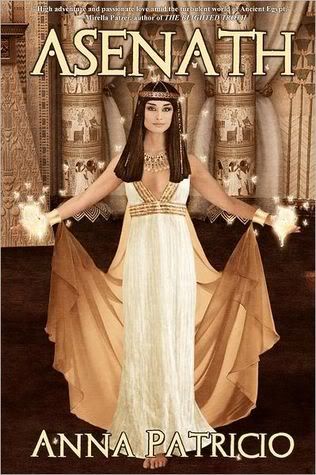
Mini review: Asenath by Anna Patricio

This book was provided by the author's publisher via my lady Blodeuedd's excellent blog in return for an honest review. Just in case - I haven't been compensated for writing the said review in any way and the fact that the book came free of charge didn't influence me either.

Book info:
Form: e-book, mobi format,
Genre: historical fiction, YA adventure
Target audience: YA


Synopsis:

The novel is a creative version of the life of Asenath, the Egyptian wife of Joseph, the son of Jacob and Rachel from the Bible. You might remember him – he had a coat of many colours and was rather disliked by his half-brothers – and you most likely won’t remember her, as she is just mentioned once, as his wife and the mother of his two sons. We are given just a name and still the author managed to fill all the gaps with her vivid imagination.

Asenath, according to Ms. Patricio, is an adopted daughter of a Heliopolis priest; before that she was a low-born peasant called Kiya; after an attack of foreign invaders and the death of her parents her life altered beyond recognition. Still her sad experience stayed with her, making her life as an aristocratic lady rather difficult. However, the same experience helped her find the love of her life – seeing a slave lying on the ground in scorching sun she didn’t hesitate one moment and let him drink some water. The same slave later will become a grand vizier of Egypt and her husband.

What I liked:

It was a nice story and a book rather pleasant and easy to read. Written in the first person narrative it is a compelling tale of a stunning success of a simple peasant girl and a simple Hebrew slave – from rags to riches, nothing less. The book is geared definitely toward the Young Adult market and I suppose these readers will appreciate it the most, especially if they have read some Bible stories as well and are acquainted with Joseph and his story.

The cover is rather nice as well - I like the colours!

What I didn’t like:

As I said, the fact that it is clearly an YA position influenced the way it was told. In my humble opinion it was too sanitized. Asenath/Kiya’s slavery time is glossed over; the authoress also kind of forgot that the initial intention of Joseph’s brothers was to kill him; only after the intervention of the eldest one, Rueben, who seemed to be the most level-headed and responsible at that time, they agreed to spare him and sell into slavery (the Elohist version) . The rest of them were mad of jealousy and hated Joseph’s guts just because he dared to be the favourite of his dad.

I would also like to see more Egyptian court life and less teenage angst. I know the book was written from Asenath’s point of view but it would be more complex if another narrative voice was added and a new perspective with it.

Finally let me say that many details of everyday Egyptian life seemed surprisingly modern. Asenath’s childhood friend proposes during an official function, kneeling before her…I am not sure it was done that way in ancient times. Asenath gets married dressed in white with a veil…not sure about that either. The pharaoh appologising to his subject – no way, he was the living god! In other words – if you want to find out more about the culture of ancient Egypt, it is not the right book.

What I learned:

Joseph and Asenath (Mosaic in Basilica di San ...Joseph and Asenath, a mosaic in Basillica di San Marco  via Wikipedia
Let me also add that the story of Joseph's near seduction by his master's wife bears a marked similarity to the Egyptian story of the Tale of Two Brothers, which was popular at the time of Pharaoh Seti II (roughly 1200-1194 BCE). It has also been suggested that there are similarities between the rise to power of Joseph, and Manethos' tale of Osarseph, who was Syrian born, and rose to be Vizier of Egypt, beginning his career under Pharaoh Merenptah and his son Seti II. Indeed the name Potiphar (Joseph’s master) may even be a version of Merenptah's name (Poti = Ptah, Phar = Pharaoh). The "seven lean years" has been taken to refer to a Middle Eastern famine documented at that time.

Final verdict:

I liked the novel but only for its entertainment factor. The historical background was like that of any Disney movie (The Prince of Egypt anyone?) so not impressing at all. Still kudos for finding an interesting topic and an original heroine.


Tuesday, 11 October 2011

Mini review: Witch Eyes by Scott Tracey

Book form: Kndle format e-book
Genre :LGBT, fantasy, adventure.
Target audience: YA
Source: borrowed


Synopsis:

Braden Michaels, a seventeen-year-old witch boy with a special gift, has lived so far a secluded life with his uncle, John. His gift is called ‘witch eyes’ and it gives him an enormous power but only at a cost of torturous headaches. Although Braden’s uncle does anything to keep his nephew happy and educated it seems that for the boy all roads lead to Belle Dam, a mysterious place he knows nothing about.

One day Braden gets an unusual vision and he knows he must go to Belle Dam no matter what or something terrible will happen. He leaves his uncle behind and lands right in the middle of a sleepy little town where nothing is as it seems to be. He is greeted by a successful lawyer, Lucien Fallon, and taken to a good hotel. Who's arranged that and paid for it? As the story unravels Braden finds out more about his family, his gift and destiny; he also falls for another boy – in fact the last person he should fall for. And somebody tries to kill him. Will he return to a quiet life elsewhere or will he stand up and fight like an adult witch with a history of family feud? Will he be given a choice at all?

What I liked:

Braden was a nice character with a sense of humour and his journey - a good, action-packed adventure. The narration flowed easily so the book was a pleasure to read. What’s more the descriptions of Belle Dam were so intriguing and lively that I actually felt like visiting the place myself. I liked the fact that every detail had its place and its meaning.

The gay content was presented in a very mild way – the feelings were described quite honestly, erotic scenes toned down to nothing more than a few kisses and embraces (but of course every parent must keep in mind the fact that this YA book clearly present gay relationship as something not only natural but also interesting and exciting). Overall the premise (a young gay male witch) I found refreshing – let’s face it, most such books are written by women, about women and for women (girls, females, whatever). There were no love triangles here (what a relief!) and no major cliffhangers at the end although from my point of view it is clear the author plans a continuation – some problems were still left unexplained.

What I didn’t like:

It seems that in plenty of contemporary YA books a teenager must be left alone in dire straits just in order to gauge his or her own potential and mature. It’s actually strange that adults seem to be presented as only a hindrance, not help. This book didn’t break that scheme and I found it a bit silly. After all, it would be only natural for Braden to look to his witch parent for advice and support. Instead, he constantly challenges his father’s knowledge, good faith and pretty much everything else. I know, he is just a little rebel trying to find his own place but it kind of started to grate after some time.

Now something about the romantic thread…you know me, usually I am hard to please when it comes to that. The fact that Braden and Trey (his love interest) fell for each other instantly and both happened to be teenage gays from affluent witch families at variance defied a bit the laws of probability. It also made me think instantly how the ‘Romeo and Julian’ scenario has never really been my cup of tea. Perhaps it was nicely written but also rather cliche and very predictable.

Final verdict:

A nice, light read but a bit lukewarm. Of course I can imagine many teen boys and more than a few girls enjoying the world and characters and I do have to give Witch Eyes points for daring to be different, but it just doesn't change the fact that, in my very humble opinion, we don’t deal here with an YA ground breaking masterpiece. I am not sure whether I will read any other installments of that series.