Showing posts with label miscellaneous essays. Show all posts

Friday, 2 August 2013

Cute Plant From Hell (but hey: devils can be useful too)

Do you recognize this plant?


  • It has wide, light-green, heart-shaped leaves with a truncated base, 7–14 cm long and 5–12 cm broad, with an entire margin. 
  • While hollow, reddish stems may reach a maximum height of 3–4 m each growing season without any problem, it is typical to see much smaller plants in places where they sprout through cracks in the pavement or are repeatedly cut down. 
  • You see, cutting down makes it only STRONGER. 
  • Flowers which are small, cream or white, are produced in erect racemes (so arranged singly along an elongated unbranched axis, as in the lily of the valley) 6–15 cm long in late summer and early autumn.
 So, do you recognize it? If your answer is still no, you are lucky. However it is very possible that you have seen that murderous beauty  and you haven't known that you actually met one of these superplants which can survive no matter what.. 
Detail of the stalk
Detail of the stalk (Photo credit: Wikipedia)

Japanese knotweed (Fallopia japonica, syn. Polygonum cuspidatum, Reynoutria japonica) is a large, herbaceous perennial plant, native to eastern Asia - Japan, China and Korea.The species has been so very successful elsewhere that it has been classified as invasive  in several countries. In fact it is listed by the World Conservation Union as one of the world's 100 worst invasive species. Why?

Ponder over this. It grows everywhere. More specifically, it grows through everywhere.The invasive root system and strong growth of this plant can damage concrete foundations, buildings, flood defences, tarmac roads, paving, retaining walls and architectural sites. It can also reduce the capacity of channels in flood defences to carry water.It forms thick, dense colonies that completely crowd out any other herbaceous species. Its resistance is really amazing. Rhizomes of Japanese knotweed can survive temperatures of −35 °C and can extend 7 metres (23 ft) horizontally and 3 metres (9.8 ft) deep, making removal by excavation extremely difficult. 

English: Japanese knotweed ; (Species: Fallopi...
Flowers of Japanese knotweed   (Photo credit: Wikipedia)
The plant is also resilient to cutting, unless it is done repeatetively and combined with herbicide treatments. Otherwise it is vigorously resprouting from the roots in no time. Studies have shown that a 1cm section of rhizome can produce a new plant in 10 days - a true record. Rhizome segments can remain dormant in soil for twenty years before producing new plants.The most effective method of control is by herbicide application close to the flowering stage in late summer or autumn. Still who would want herbicide-soaked soil in their backyard or anywhere else? The herbicide treatment may have to be used for at least three years before Japanese knotweed stops growing back. Even when the plant seems to be completely eradicated any soil removed from the area is likely to have dormant rhizome and must be disposed of as described within the knotweed code of practice. Which means you'll spend a lot of time and money to get rid of this.

How has it found its way to our backyards? Japanese Knotweed was introduced as an ornamental plant by the freaking Victorians in 1825. Allegedly it was shipped from Japan. It looked cute, its flowers smelled cute, it must have been cute. right? The great garden-writer William Robinson recommended it warmly in The Wild Garden of 1870 for its “large and noble tufts of lively green, which increase in beauty from year to year”. Yeah, I've always known that the aliens would conquer our planet in one week if only they presented themselves in a form of sweet, fluffy bunnies.Already by the 1880s, gardeners had become alarmed by the plant’s invasive tendencies. As you might guess it was already too late.
Several invasive species of knotweed form larg...
Several invasive species of knotweed form large thickets like this (Photo credit: Wikipedia)

Funnily enough this monster has a second, also very interesting face. Scientists are reporting that Japanese knotweed could hold the answer to the oil crisis and provide a sustainable, clean source of energy. The plant’s ability to generate massive amounts of energy is simply uncanny - by pyrolysing knotweed rhizomes in low temperature ovens, the gas and hydrocarbon fuels generated are only slightly lower in yield than some brown coals.

That horrible plant might also restore your health. Yes, you read it right. The leaves and shoots are edible and the roots contain resveratrol which has been identified as a potent flavonoid. How can it be helpful?  

 Extracts from Japanese knotweed rhizomes have been used in traditional Chinese medicine for centuries. Resveratrol decreases the viscosity of the blood and acts as anticoagulant to thin blood, effective in treating cardiovascular disease by reducing thrombosis and embolisms that can block arteries and lead to myocardial and cerebral infarctions (Wang et. al, 2002). Resveratrol has been found to reduce tumor volume, tumor weight, and lung metastasis; it  inhibits cancer cells without harming the liver. Studies indicate the most beneficial use to be in pancreatic, breast, and ovarian cancers.

If you are overweight this plant can be also your friend.To date, resveratrol is the most potent natural compound able to activate SIRT1, mimicking the positive effect of calorie restriction. (Alcaín FJ, Villalba JM April 2009). Daily consumption of 1/2 teaspoon of the tincture, first thing in the morning, provides approx 500 mg of resveratrol which may prevent aging by protecting cellular DNA from free-radical damage. That's not all. Japanese Knotwood root is known to aid the central nervous system and kill Lyme bacteria. To inhibit the growth of staph, strep, E. coli, and salmonella the dosage is 1/2 tsp. of the tinctured root first thing in the morning, mid-day and at bedtime. To inhibit the growth of influenza type A, ECHO virus, and herpes simplex, the dosage is 1/2 tsp. of the tinctured root first thing in the morning, mid-day and at bedtime. 

Just in case: I am not a doctor and I found this info on the Internet which is the source of such theories like the one about the British Royal Family who, according to some people, are a bunch of big, ugly lizards from space. Contact somebody professional if you have any health problems and you want to try this plant's roots in your therapy.

Alternatively you can also eat this ugly invader. Yes, I am dead serious now, that monster is edible. Related to rhubarb, it’s very sour and may act as a laxative the way rhubarb does, so use it sparingly at first. Most importantly, be sure that any harvesting of Japanese knotweed does not result in its spread. Never add knotweed to your compost or send it to municipal compost center - in many countries it is against the law and you might be sued. So, what exactly can be done with it? I found you one yummy recipe.

DANDY KNOTWEED MUFFINS
The best time to gather young knotweed shoots, up to about 8 inches, is in early spring (the larger ones are tough and stringy). Some people peel the outer skin off the shoots, but that can be tedious, and if you’re not careful, you may peel too much off.

Makes 16 large muffins

Japanese knotweed stalks to measure 2 cups, minced
1.5 cups flour
0.5 cup dandelion flower petals, stripped from their base (do not include any green parts)
1 teaspoon baking powder
1 teaspoon baking soda
0.5 cup softened butter
1 cup light brown sugar
2 eggs
1 teaspoon vanilla
1 cup sour cream or yogurt
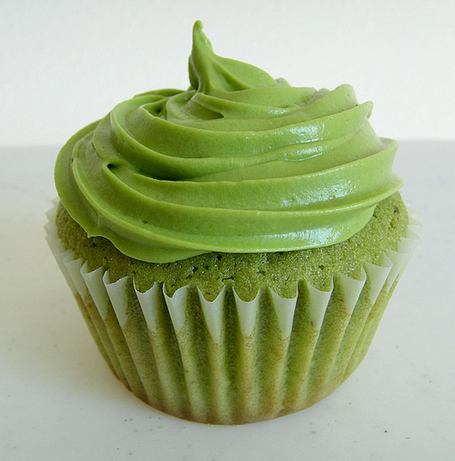
green food colouring or fresh spinach juice (if you like them organic)


Snip off the pointy tops of the knotweed stalks and mince.
Combine flour, dandelions, baking powder, and baking soda in a small bowl.Cream 0.5 cup butter with 1 cup brown sugar until fluffy. Beat in eggs one at a time and then add the vanilla. To this mix, alternately fold in the sour cream, dry ingredients and colouring until blended. Fold in the knotweed pieces. Divide the batter into greased muffin forms.

Bake at 350˚F for 15 to 20 minutes, until the muffins test done in the center proves they are ready.

You can decorate it with some cream at the top.

Enhanced by Zemanta

Saturday, 27 April 2013

How to pass the Bechdel test and why it is IMPORTANT at all


The Bechdel test or Bechdel/Wallace test was developed by Liz Wallace and became widely known after Alison Bechdel featured it in her comic Dykes to Watch Out For.

The Bechdel test is a test of female characterisation in movies. Passing the Bechdel test requires that the movie (or media):

  • has at least two women characters;
  • who talk to each other at some point;
  • about something other than a man or men

Of course passing or failing the test is not an ironclad guarantee of well-rounded, feminist, characterisation or a great, interesting movie; however it is indicative of the problems of token women characters that are plaguing the film industry. A vast amount of geeky media fails the test although you have to admit the criteria cannot be called exorbitant. Just a minute or two of small talk between two chicks, no guys mentioned - is it such a big deal? Is it?

Now, I am really not a proponent of limiting yourself to shows/movies that pass the test; if you did so you'd be cutting out a lot of otherwise-worthy entertainment. Indeed I admit a fair number of top-notch works have legitimate reasons for including no women (e.g. The Name of the Rose, a not exactly great movie but based on a brilliant book by Umberto Eco which was set in a medieval monastery), or with no conversations at all, or having only one or two characters.

A movie can easily pass the Bechdel Test and still be incredibly misogynistic. Conversely, it's also possible for a story to fail the test and still be strongly feminist in other ways, and there's nothing necessarily wrong with that. What's a problem is that it becomes a pattern — when so many movies fail the test, while very few show male characters whose lives seem to revolve around women, that says uncomfortable things about the way Hollywood handles gender. There are also lesser-known variations of the rule, such as the Race Bechdel Test, in which two characters of colour talk about anything other than the white leads and the Reverse Bechdel Test, with the roles of men and women swapped.

Now you might be surprised if you consult the list of famous films that failed the original test miserably.

1. Run Lola Run
2-4. The Entire Lord of the Rings Trilogy
5-7. The Original Star Wars Trilogy
8. Avatar
9. Harry Potter and the Deathly Hallows: Part II
10. The Social Network
11. Matrix
12. Inception
13. Eternal Sunshine of the Spotless Mind
14.Shrek
15. Princess Bride
16. Sex and the City
17. The Avengers
18. The Hunt for Red October

Quite a list, isn't it? If you want to know more or if you want to check whether your fav movie would pass the test without actually rewatching it, please visit http://bechdeltest.com/ where movies are listed and assessed properly. You can comment there as well. :)


Some people MIGHT get twitchy at the idea that more female protagonists would be a positive step in cinema. Shouldn't cinema be just about art and good films telling interesting stories? No, it shouldn't -  here’s a few reasons why I think the Bechdel test is important, and what it can tell you:

1. You don’t notice it until you have it pointed out…

…and then you can’t stop. It’s amazing how the relative absence of women in film is so normal, so acceptable and so widely spread it can barely be noticed.

Think about it this way – how weird would a reverse Bechdel world be? Most movies only have one male character and if he gets any dialogue at all with a rare second male character, it will inevitably be about women. Challenge of the day: have you ever seen that film? Think, and think hard, and if you come up with a title please comment. If you can name one, what kind of film is it? Is it making a point, or aimed at a particular demographic – or is the lack of testosterone entirely by accident, because no one is paying attention.

2. “Women aren’t interesting enough to deserve more time in a movie...”

…is a very short-sighted fallacy. While cinema can’t – shouldn’t – rebuild the world as an equal-opportunities utopia, a great many test-failing stories seem to arise through laziness and ignorance. This can’t be simply pigeonholed as a “feminist issue”. If you’re only telling stories about men, you’re ignoring 50% of the ideas, thoughts, and experiences in the world. That’s a whole lot of movies not being made. Not a big deal, really?

3. It demonstrates the lack of good, strong female protagonists so the lack of good, strong female models

And, connected to that...

4. Film shapes popular culture and popular perception of male and female gender far more efficiently than school, any piece of legislation or government policy.

If you think the way women are treated nowadays matters and should be improved/changed you simply cannot neglect such a powerful tool as pop culture entertainment. As much as film is a product of a culture where women are dull accessories with nothing to say or do, it reproduces this culture. If you learn most of your information about a world outside your so-called comfortable, contemporary  existence through cinema how are you to know how realistic say City of God or Das Boot is? But when you happen to discuss street kids or submarine operators, those vivid images come to your mind. If you want to change the way men perceive and treat women start with the entertainment. 

5. It says a lot about the industry and the world we live in.

Why is it so difficult for a movie to pass such a simple test? Is it because most scriptwriters, directors and producers are male? And therefore inclined to write from their personal experience?  Even assuming they’ve managed to name two women, perhaps their understanding of what women are interested in is limited? I am inclined to think this must be the case. Maybe women are traditionally a rarer cinema-going demographic precisely because of a lack of realistic women on screen? Why would Hollywood willingly shut off a source of income otherwise?


If you are a writer or a scriptwriter: do you have two well-developed female characters in your books/scripts ? Are they important enough to the plot that they need to meet and talk? Do they have enough to say beyond just discussing the men in their lives? It’s cheating to stick in a token scene just to pass – their contribution must be as real and measurable as the men in your scenario. Is it worth the effort though? I think 'yes' every time I hear or watch news about home violence, worse treatment of women at work, physical, sexual and psychological abuse of women and related issues. If something can be done, let's do it damnit.


Sources:

Tuesday, 16 April 2013

New Adult, Old Tricks

Teen and Young Adult Fiction
 (Photo credit: Blue Train Books)
Have you heard about that New Adult category of books, being created practically before our eyes? Other terms for it include: Upper YA, Crossover Fiction, and Mature YA. How did it start and what is it about? 

New-adult Fiction or post-adolescent literature was first proposed by St. Martin's Press in 2009. Allegedly St. Martin’s Press editors wanted to address the coming-of-age that also happens in a young person’s twenties.They wanted to consider stories about young adults who were still finding their way in building a life and figuring out what it exactly means. NA characters are often portrayed experiencing: college, living away from home for the first time, military deployment, apprenticeships, a first steady job, a first serious relationship, etc. Other common themes in NA are identity, sexuality, race, alcohol abuse, drug abuse, bullying, empowerment, familial struggles, loss of innocence, fear of failure, etc. - I suppose that list gets plots of most of the books, if not all of them, covered pretty thoroughly. Here you can find a list of most popular New Adult positions (fromGoodreads) and check just the first page, it is more than enough ;p.

Now you have to admit those topics aren’t exactly new so why publishers think we need a new category of books? That is the question and the answer is as old as the publishing business or perhaps even older – money.

 I still blame in the first place "Twilight", with the horribly skewed version of the alluring nectar of forbidden love it presented. I know, Twilight itself remains  firmly in the YA paranormal romance realm but it was a step toward the NA direction. Stephenie Meyer has achieved a lot, earned a lot and her mind-boggling success undoubtedly inspired other authors and the whole publishing world. For example an author I love to hate, hiding under the pen name of E.L. James, as her "50 Shades of Grey", a cheesy, kinky juggernaut, is so obviously modelled on Twilight. It spawned in turn "50 Shades"-themed bondage classes and single-handedly boosted the book industry (which should be nevertheless thoroughly ashamed of themselves). The book series once dominated the number one, two and three spots on the New York Times Bestseller List (New York Times, shame on you, your bestseller list doesn’t exist in my universe anymore). 50 Shades books are still not NA positions but the success of the series, like that of Twilight, definitely helped to create the NA phenomenon - it showed you can create a certain market niche and then make it brimful of curious readers. And line your pockets nicely in the process. It was too tempting not to try it.

So if you asked me what New Adult books are about I would say: in a nutshell it is about merging the former young adult themes with erotic fiction. In other words the publishers want to lure people who liked novels as children and teenagers, offering them something better-fitted to their more mature tastes. Buying and reading erotica? Some people would still consider it a social taboo. Buying and reading New Adult? Not a problem – it sounds almost posh, almost respectable, with that dashing, naughty flavor some appreciate so much, and it promises content that actually makes sense, a real plot in which those steamy moments are just inserted here and there like raisins in a bun. In fact, after having read some of New Adult positions I must admit I found these books a bit like the old Harlequin romances, just set in modern times, with younger characters, many of whom are in college, coming of age and often exploring their sexuality. Think Smut Fiction with some window dressing so it looks respectable and…kind of new, at least to me (I've never read those pesky Harlequin but I've heard STORIES).

Of course I am sure there will be plenty of fans and several book sellers who might disagree with such an assessment. They claim New Adult covers a wide range of themes and issues, not focusing solely on sex. That’s why some view New Adult fiction as only a category of literature—meaning, it gives readers general content expectations, but it does not dictate strict, genre-based criteria. Typically, a novel is considered NA if it encompasses the transition between adolescence—a life stage often depicted in Young Adult (YA) fiction—and true adulthood. The fact is that it rarely (if at all) avoids the description of sexual encounters so if you ask about the main difference between YA and NA here it is – the later features more hot scenes, often described in great detail and covering the whole gamut of preferences.

Let me also quote here the explanation offered by one of the NA authors, Cora Carmack, why this category/genre should exist at all. Carmack thinks we're only just now hearing the term "New Adult" because:

...the world is a very different place than it was when YA first became an accepted genre. It used to be that many people got jobs straight out of high school, and only some people went on to college. And usually those who did go to college were more financially and emotionally dependent. Now, it has become the norm to go to college, and for young adults to remain in contact or even dependent upon their parents for years after graduating high school. College is the new high school, and as such that "growing up" phase has been stretched to include a few extra awkward years.

Hmm… with all due respect that sounds like waffling to me. Authors have been writing about the transition from childhood to adulthood and those ‘extra awkward years’ like forever. Jane Austen, anybody? Some of her characters, like Anne Elliot from Persuasion, definitely prolonged their ‘forming years’ quite a bit. The Sorrows of Young Werther ? (damn that Goethe, he was good – have you noticed how he sneaked that ‘Young’ into his title?) Girl Interrupted? The Dangerous Liaisons? Maurice? Fanny Hill? Gosh, I can even quote here some stories straight from the Bible and they would most definitely qualify for being New Adult– for example the first part of the life of David who later became one of the most prominent kings of Israel. All of them share one basic feature: they present a newly emancipated person on the cusp of discovering themselves, where they fit into life, what allowances they will make, and how they relate to others. Unrequited love, forbidden love, friendship, committments, leaving your old family behind, real-life challenges - you get everything there as well.

Let's be honest and let me get to my point: those are marketing gurus who really need "New Adult" fiction to be a stand-alone category or genre, not readers. They want the millennials to believe it is a bespoke literature segment created to fit their unique needs. So what the content is hardly new and often presented in a very crude, sometimes even amazingly tacky voice? As long as you believe it is good and you are prepared to pay extra for the ‘novelty’ factor they are going to do cracking business.

Take into account the fact that this new category is intended to be marketed to mostly female readers ages 18 to 30. Quite coincidentally that particular age group is considered to be the most lucrative as it consists (but is not limited to) readers who are already active on the job market at least part-time so have a larger disposable income than, say, your average primary and secondary school student. They have money, they want to have fun and they don’t want to be limited in any way. Ready for harvest.

It reminds me of the term "teenager," which, crazy as it might seem now, didn't even exist until the mid-20th century. Today, teenagers are a consumer group worth about $200 billion. Youth became a sought-after commodity but it didn’t happen overnight, the whole process was rather an evolution than a revolution – it needed some generations to solidify. Today, with the digital publishing and the Internet connecting most of the world, it will be definitely something more dynamic.

Will marketers be able to pull the same trick with kinda-youth? It seems they're certainly going to try – compartmentalizing the market has never been a mistake so far. Before you go to your favourite library and shop for a New Adult novel ask yourself a question, though: what do I really need to read?

The idea of this essay was implanted in my silly brain by Bloddeued and Rameau helped me with the editing and supported me morally on Twitter - thank  you very much, girls, I owe you and you rock!


My sources:

Enhanced by Zemanta

Friday, 15 March 2013

Blue Moon...Is It Real?


What is a Blue Moon?

I am pretty sure you've heard the phrase, “until a blue moon” or "once a blue moon". It  developed in the 19th century, meaning 'never', or at least 'extremely unlikely'. It's been now and then used in titles of many songs and UF novels among other things because let's face it, the idea is visually attractive. Is a blue moon just a  fiction or a metaphor? You might be surprised but, after all, blue moons do occur still the whole matter is a bit tricky.

There are in fact two definitions for a blue moon. According to the more recent definition, a blue moon is the second full moon in a calendar month. For a blue moon to occur, the first of the full moons must appear at or near the beginning of the month so that the second will fall within the same month (the average span between two moons is 29.5 days). The full Moon on Aug. 31, 2012, was an example of this type of blue moon - it was the second full moon in one month.

The Other Kind of Blue Moon

The older definition, which is recorded in early issues of the Maine Farmer's Almanac, states that the blue moon is the third full moon in a season that has four full moons. Why would one want to identify the third full moon in a season of four full moons? The answer is complex, and has to do with the Christian ecclesiastical calendar.

Today we usually mark the beginning of the seasons when the Sun's celestial longitude passes 0° (spring), 90° (summer), 180° (autumn), and 270° (winter). The Sun appears to move along the ecliptic at a variable rate because of the Earth's not-quite-circular orbit, so the seasons defined this way are not equal in duration. Another approach uses the dynamical mean Sun or fictitious mean Sun — imaginary bodies that move along the ecliptic and the celestial equator, respectively, at a constant rate and produces seasons of equal length. The Maine almanac defines the seasons using this alternative method.

The almanac also follows certain rules laid down as part of the Gregorian calendar reform in 1582. The ecclesiastical vernal (spring) equinox always falls on March 21st, regardless of the position of the Sun. Lent begins on Ash Wednesday, 46 days before Easter, and must contain the Lenten Moon, considered to be the last full Moon of winter. The first full Moon of spring is called the Egg Moon (or Easter Moon, or Paschal Moon) and must fall within the week before Easter.

Some years have an extra full moon—13 instead of 12. Since the identity of the moons was important in the ecclesiastical calendar (the Paschal Moon, for example, used to be crucial for determining the date of Easter), a year with a 13th moon skewed the calendar, since there were names for only 12 moons. By identifying the extra, 13th moon as a blue moon, the ecclesiastical calendar was able to stay on track.

How Often Does a Blue Moon Occur?

Over the next 20 years there will be about 15 blue moons, with an almost equal number of both types of blue moons occurring. No blue moon of any kind will occur in the years 2014, and 2017.
Two full moons in one month may occur in any month out of the year except for February, which is shorter than the lunar cycle.

The other, older blue moon event, which happens when there are four full moons in a season, last occurred in May 2008 and  on Nov. 21, 2010. Since this type of blue moon is reckoned according to the seasons, it can only happen in certain months - February, May, August, or November, about a month before the equinox or the solstice.

At last we have the "Maine rule" for Blue Moons: Seasonal Moon names are assigned near the spring equinox in accordance with the ecclesiastical rules for determining the dates of Easter and Lent. The beginnings of summer, fall, and winter are determined by the dynamical mean Sun. When a season contains four full Moons, the third is called a Blue Moon.

Why is the third full Moon identified as the extra one in a season with four? Because only then will the names of the other full Moons, such as the Moon Before Yule and the Moon After Yule, fall at the proper times relative to the solstices and equinoxes.

Once in a Blue Moon

"Blue moon" appears to have been a colloquial expression long before it developed its calendrical senses. According to the Oxford English Dictionary, the first reference to a blue moon comes from a proverb recorded in 1528:

If they say the moon is blue,
We must believe that it is true.

Saying the moon was blue was equivalent to saying the moon was made of green (or cream) cheese; it indicated an obvious absurdity. In the 19th century, the phrase until a blue moon developed, meaning "never." The phrase, once in a blue moon today has come to mean "every now and then" or "rarely"—whether it gained that meaning through association with the lunar event remains uncertain.
(Information Please® Database, © 2007 Pearson Education, Inc. All rights reserved.)

Can the Moon really turn blue?

Yes it can turn blue, in the eye of the beholder of course, but not everywhere and it can be seldom witnessed.

The key to a literal blue moon is having in the air lots of particles slightly wider than the wavelength of red light (0.7 micron)–and no other sizes present. This is rare, but volcanoes sometimes spit out such clouds, as do forest fires.

For example in 1883, an Indonesian volcano named Krakatoa exploded. Scientists liken the blast to a 100-megaton nuclear bomb. Fully 600 km away, people heard the noise as loud as a cannon shot. Plumes of ash rose to the very top of Earth’s atmosphere and it was the reason why the moon temporarily turned blue. Some of the ash-clouds were filled with particles about 1 micron (one millionth of a meter) wide – the right size to strongly scatter red light, while allowing other colors to pass. White moonbeams shining through the clouds emerged blue, and sometimes green.

So, will you ever see a blue moon? In astronomical terms, it is quite possible. If you hope to see a full moon which is the actual color blue, that is less likely unless you live in a country with an active volcano or with a forest fire season.

(Info from Nick Greene at about.com)
http://www.infoplease.com/spot/bluemoon1.html
http://www.skyandtelescope.com/observing/objects/moon/3304131.html?page=1&c=y


Tuesday, 19 February 2013

Shakespeare Or Not Shakespeare? That Is The Question…


William Shakespeare
William Shakespeare - an English poet and playwright, by many literature pundits regarded as the greatest author in the English language and the world's pre-eminent dramatist. His works, including some collaborations, consist of about 38 plays,154 sonnets, two long narrative poems, two epitaphs on a man named John Combe, one epitaph on Elias James, and several other poems. His plays have been translated into every major living language and are performed more often than those of any other playwright. What author wouldn’t dream of such achievements? You can even say several good writers would be quite happy to share all this wealth. However many critics have asked themselves how it was possible that a simple son of a glover from a little backwater place called Stratford-upon-Avon single-handedly transformed the whole English and world literature for centuries if not forever? Wasn’t it in fact a kind of an astounding miracle? 

You might be surprised but many people don’t believe in miracles and don’t believe in the common notion that Shakespeare from Stratford-upon-Avon was the sole or the main author of all these wonderful plays and sonnets; some say he actually didn’t write anything at all because he was…illiterate. Let’s face it, their arguments are interesting to say the least of it.
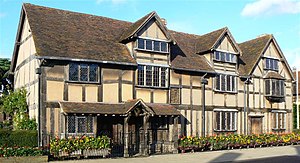
English: Birth place of William Shakespeare, S...Firstly it is a well-established fact, even among mainstream scholars that we know surprisingly little of Shakespeare’s personal life – the biographical facts are so scant that their lack might indeed indicate an organized attempt to expunge all traces of the real Shakespeare from the historical record and to conceal the true identity of this man. The available data, regarding his life consist of mundane personal details: vital records of his baptism, marriage and death, tax records, lawsuits and real estate transactions. One might wonder, though: if those documents survived, why not the other ones? No personal letters or literary manuscripts written by Shakespeare of Stratford have been found. Did he really attend the Stratford’s grammar school as it is widely thought? There are no records which could support that claim. Was he really an erudite and an autodidact who not only composed beautiful poems and wrote brilliant plays but also had intimate knowledge of the Elizabethan and Jacobean court and politics? When, where and from whom did this man who never traveled farther than London from his hometown, and who reputedly spent the years prior to his early marriage in apprenticeship to a butcher, supposedly learn all of this? I have to admit that without everyday press, television or the Internet and a well-connected family as a support the task sounds rather daunting.

Family… here also you can find controversies galore. Shakespeare's father, John, married Mary Arden, one of the Ardens of Warwickshire, of the local gentry; still both of them signed their names with a mark, and there are no other examples of their writing. This is often used as an indication that Shakespeare was brought up in an illiterate household. At 18, Shakespeare married the pregnant Anne Hathaway, who was eight years his senior. By 21, he had fathered three children. He turns up in the documentary record next at age 28 in London—apparently without his family—working as an actor. He's later listed as a member of a prominent acting troupe, the Lord Chamberlain's Men, and then the King's Men. His name appears on the title pages of plays printed for popular consumption beginning in his mid-30s. Records show he retired around 1613 and moved back to Stratford, where he died in relative obscurity three years later at 52. In his last will he bequeathed no books to anybody – is it possible he didn’t own one? Not even a copy of his own plays? What’s more, there is no evidence that Shakespeare's two daughters were literate, save for two signatures by Susanna that appear to be "drawn" instead of written with a practiced hand. His other daughter, Judith, signed a legal document, like her grandparents, with just a mark. Don't tell me that such an educated, cultured man didn’t care whether his own daughters could read his own poems and plays or indeed, read at all. A man who exhibited a surprising level of intimacy with court politics and culture, foreign countries, and aristocratic sports such as hunting, falconry, tennis, and lawn-bowling never had time and/or money to teach or have his daughters taught ? Would the only literate member of his extended family (his son-in-law) praise, in print, fellow Warwickshire poet Michael Drayton but never write a line acknowledging that his own father-in-law was England's most accomplished and appreciated poet-dramatist (or even a writer)?

It's also certainly curious that the creator of such vivid, recognizably human characters as Falstaff, Lear and Hamlet should himself remain as insubstantial as stage smoke. The most detailed description of the man left to us by someone who actually knew him, it seems, is a less-than-incisive sentence from his friend and rival, the playwright Ben Jonson: "He was, indeed, honest, and of an open and free nature." Hmm…you have to admit that it covers a lot of ground, almost as if Jonson didn't want to say anything concrete at all. As for Shakespeare's appearance, none of his contemporaries even bothered to describe it. Tall or short? Thin or chubby? It's anyone’s guess. You might say that there are at least paintings of Shakespeare face but, unfortunately, here we also hit a snag. Rendered by long-forgotten artists, each of the six painted portraits surfaced only after the playwright's death, in some cases centuries later, so without any indication that the authors had seen or known Will at all.

Academic Shakespeareans and literary historians rely on documentary evidence in the form of title page attributions, government records such as the Stationers' Register and the Accounts of the Revels Office, and contemporary testimony from poets, historians, and those players and playwrights who worked with him, as well as modern stylometric studies. These criteria are the same as those used to credit works to other authors and are accepted as the standard contemporary methodology for authorship attribution but do they work as efficiently in the case of an author from a completely different era?

 Let’s take a closer look at the language of Shakespeare and more precisely at the number of words he used. It is definitely a language of an erudite, consisting of a really extensive vocabulary, calculated to be between 17,500 and 29,000 words, some of them invented by the author himself. It is really impressive. For everyday conversational needs, you need about 2500 words to communicate effectively in a wide range of social and practical situations. Most native speakers use more than 3,000 words regularly, irrespective of their level of education, and they have a "passive vocabulary" of 15-20,000 words that they know but don't often use. Professional writers and translators tend to have an active vocabulary of 20,000 - 30,000 words and a passive vocabulary of 150,000+. Lederer has suggested that a typical English speaker has a vocabulary of between 10,000 and 20,000 words. Mind you we speak here about contemporary people and criteria. In December 2010 a joint Harvard/Google study found the whole English language to contain 1,022,000 words and to expand at the rate of 8,500 words per year so back then the author of Shakespeare plays would be placed really high as a language user. Does it tally with the profile of Shakespeare from Stratford? What would his longhand reveal?


Shakespeare's six authenticated signatures, shown above, are written in secretary hand, a style of handwriting that vanished by 1700, and he used breviographs to abbreviate his surname in three of them (breviographs being a type of scribal abbreviation in the form of an easily written symbol, character, flourish, or stroke based on a modified letter form). The appearance of Shakespeare's surviving signatures is often characterized as "an illiterate scrawl"; it can indicate that he was illiterate or barely literate. 

What’s more, William Shakespeare did not spell his name as it appears on most Shakespeare title pages. Overall his surname was spelled inconsistently in both literary and non-literary documents, with the most variation observed in those that were written by hand. This can be taken as evidence that he was not the same person who wrote the works, and that the name was used as a pseudonym for the true author, especially that some versions are hyphenated as "Shake-speare" or "Shak-spear". This hyphen use might be construed to indicate a pseudonym;  anti-Stratfordians  argue that fictional descriptive names (such as "Master Shoe-tie" and "Sir Luckless Woo-all") and pseudonyms such as "Tom Tell-truth" were often hyphenated in plays to emphasize the fact that they were not real names.

Reasons proposed for the use of "Shakespeare" as a pseudonym vary, usually depending upon the social status of the candidate. Aristocrats such as Derby and Oxford supposedly used pseudonyms because of a prevailing "stigma of print", a social convention that putatively restricted their literary works to private and courtly audiences—as opposed to commercial endeavours—at the risk of social disgrace if violated. In the case of commoners, the reason was to avoid prosecution by the authorities: Bacon for example wanted to avoid the consequences of advocating a more republican form of government, and Marlowe - imprisonment or worse after faking his death and fleeing the country.

If not William Shakespeare from Stratford then who? The Bard's authorship has been questioned publicly since 1848, when Joseph C. Hart, in his book The Romance of Yachting, said that "Shakespeare merely adapted the works of more educated playwrights, making them popular by adding the occasional crude joke”. Skeptics have suggested more than 70 different candidates but let me focus on the most important ones. We’ll deal with the ladies first. Yes, the ladies – because some anti-Stratfordians claim that there must have been a woman behind Shakespeare.

Elizabeth I (7 September 1533 – 24 March 1603)

The queen regnant of England and Ireland from 17 November 1558 until her death on 24 March 1603. Sometimes called "The Virgin Queen", "Gloriana" or "Good Queen Bess", Elizabeth was the fifth and last monarch of the Tudor dynasty. By the time her formal tutoring ended in 1550, she was one of the best educated women of her generation – she could write English, Latin Italian, French and Greek. By the end of her life, Elizabeth was also reputed to speak Welsh, Cornish, Scottish and Irish in addition to English. Allegedly she could compose poems but she lived too short to be considered the author of Jacobean plays. And would he really have time for all that even if she loved theatre?  What, with the whole kingdom on her red head and those wars, conspiracies and lovers...

Mary Sidney Herbert the second Countess of Pembroke (1561 – 1621)

Like the Queen she was well educated and high-minded, with a talent for poetry. Her education enabled her to translate Petrarch's "Triumph of Death" and several other European works. She had a keen interest in chemistry and set up a chemistry laboratory at Wilton House, run by Walter Raleigh's half-brother. She turned Wilton into a "paradise for poets", known as "The Wilton Circle" which included Edmund Spenser, Michael Drayton, Sir John Davies and Samuel Daniel, a salon-type literary group sustained by the Countess's hospitality. Her aim shared with her brother Sir Philip Sidney was to strengthen and classicize the English language. After James I visited her at Wilton in 1603 and was entertained by Shakespeare's company "The King's Men", Mary moved out of Wilton as Dowager Countess and rented homes in London. Though it is certain that the King's Men attended Wilton, whether William Shakespeare was with them remains unconfirmed. However, it is reported that there was at Wilton at one time, a letter in which the Mary Sidney urged her son to attend Wilton, as "we have the man Shakespeare with us." If she wrote a play or two she definitely could have paid her way to see it on stage, under a different name of course, and she would be careful to remove any proof, unfortunately.

Sir Francis Bacon (22 January 1561 – 9 April 1626)

He was a lawyer, philosopher, essayist and scientist so definitely a very educated man. Bacon's candidacy relies upon historical and literary conjectures, as well as alleged cryptographical revelations. In a letter addressed to John Davies, Bacon closes "so desireing you to bee good to concealed poets", which according to his supporters is self-referential.Baconians argue that while Bacon outlined both a scientific and moral philosophy in The Advancement of Learning (1605), only the first part was published under his name during his lifetime. They say that his moral philosophy, including a revolutionary politico-philosophic system of government, was concealed in the Shakespeare plays because of its threat to the monarchy. Baconians suggest that the great number of legal allusions in the Shakespeare canon demonstrate the author's expertise in the law. Bacon became Queen's Counsel in 1596 and was appointed Attorney General in 1613. Bacon also paid for and helped write speeches for a number of entertainments, including masques and dumbshows, although he is not known to have authored a play. His only attributed verse consists of seven metrical psalters, following Sternhold and Hopkins. Since Bacon was knowledgeable about ciphers, early Baconians suspected that he left his signature encrypted in the Shakespeare canon. In the late 19th and early 20th centuries many Baconians claimed to have discovered ciphers throughout the works supporting Bacon as the true author. In 1881, Mrs. C. F. Ashwood Windle claimed she had found carefully worked-out jingles in each play that identified Bacon as the author. This sparked a cipher craze. Hull Platt for example argued that the Latin word honorificabilitudinitatibus, found in Love's Labour's Lost, can be read as an anagram, yielding Hi ludi F. Baconis nati tuiti orbi ("These plays, the offspring of F. Bacon, are preserved for the world.").

Edward de Vere, 17th Earl of Oxford and Lord Great Chamberlain of England (12 April 1550 – 24 June 1604)

One of the most serious and most popular candidates. Oxford was an important courtier poet, praised as such and as a playwright by George Puttenham and Francis Meres, who included him in a list of the "best for comedy amongst us". Examples of his poetry survived but none of his theatrical works. Oxfordians believe certain literary allusions indicate that Oxford was one of the most prominent "suppressed" anonymous and/or pseudonymous writers of the day. They also note Oxford's connections to the London theatre and the contemporary playwrights of Shakespeare's day, his family connections including the patrons of Shakespeare's First Folio, his relationships with Queen Elizabeth I and Shakespeare's patron, the Earl of Southampton. He had vast knowledge of Court life and his wide-ranging travels through the locations of Shakespeare's plays in France and Italy might be another tip. The case for Oxford's authorship is also based on perceived similarities between Oxford's biography and events in Shakespeare's plays (notably Hamlet), sonnets and longer poems; perceived parallels of language, idiom, and thought between Oxford's letters and the Shakespearean canon; and the discovery of numerous marked passages in Oxford's Bible that appear in some form in Shakespeare's plays.

Christopher Marlowe (baptised on 26 February 1564 – 30 May 1593)

Another candidature which has gained a lot of followers. Poet and dramatist Christopher Marlowe was born into the same social class as Shakespeare—his father was a cobbler. Marlowe was the older by only two months, but spent six and a half years at Cambridge University so was far better educated. He pioneered the use of blank verse in Elizabethan drama, and his works are widely accepted as having greatly influenced those of Shakespeare.

The Marlovian theory argues that Marlowe's documented death on 30 May 1593 was faked. Thomas Walsingham and others are supposed to have arranged the faked death, the main purpose of which was to allow Marlowe to escape trial and almost certain execution on charges of subversive atheism. The theory then argues that Shakespeare was chosen as the front behind whom Marlowe would continue writing his highly successful plays. These claims are founded on inferences derived from the circumstances of his apparent death, stylistic similarities between the works of Marlowe and Shakespeare, and hidden meanings found in the works and associated texts.

Marlovians note that, despite Marlowe and Shakespeare being almost exactly the same age, the first work linked to the name William Shakespeare—Venus and Adonis—was on sale, with his name signed to the dedication, just 13 days after Marlowe's reported death, having been registered with the Stationers' Company on 18 April 1593 with no named author. Lists of verbal correspondences between the two canons have also been compiled.

William Stanley, 6th Earl of Derby (1561 – 29 September 1642)

He was first proposed as a candidate in 1891 by James Greenstreet and later supported by Abel Lefranc and others. Greenstreet discovered that a Jesuit spy, George Fenner, reported in 1599 that Derby "is busye in penning commodyes for the common players." That same year Derby was recorded as financing one of London's two children's drama companies, Paul's Boys; he also had his own company, Derby's Men, which played multiple times at court in 1600 and 1601.Derby was born three years before Shakespeare and died in 1642, so his lifespan fits the consensus dating of the works. His initials were W. S., and he was known to sign himself "Will", which qualified him to write the punning "Will" sonnets.Derby travelled in continental Europe in 1582, visiting France and possibly Navarre. Love's Labour's Lost is set in Navarre and the play may be based on events that happened there between 1578 and 1584. Derby married Elizabeth de Vere, whose maternal grandfather was William Cecil, thought by some critics to be the basis of the character of Polonius in Hamlet.Still is it really viable proof?


Enhanced by Zemanta

Saturday, 24 November 2012

La Voisin or a 17th century self-made woman à la française


As the title suggests it will be a story of one intrepid woman who lived in the 17th century France. She didn’t have any wealth or titles to her name. Despite that fact she managed to educate herself and find a good, high-profile job or rather create one. In fact she was far more successful than her husband and she was able to cater for the needs of all her household. She became a very prominent figure in Paris, feared and visited
Catherine Deshayes, "La Voisin", 17th-century print of her portrait held by a winged devil (so you know at once she is bad). (Photo credit: Wikipedia)
even by those rich and mighty. Still her job wasn’t exactly respectful – I would call it demanding and dangerous. No, she wasn’t a prostitute. She was a fortuneteller and a poisoner. Her name is Catherine Monvoisin, née Deshayes, but she was better known as "La Voisin".


Nobody knows when Catherine was born. At that times children from lower classes weren’t registered at all, especially girls. It was most probably around 1640. You also won’t be able to find anything about her childhood or youth. Her public life started with a marriage to one Antoine Monvoisin, a jeweler with a shop at Pont-Marie in Paris. Antoine wasn’t a great businessman – soon enough he was ruined. Catherine decided to take things into her own hands – she started practicing chiromancy, face-reading and midwifery to support her family. Some say she specialized mainly in performing abortions.

There are several conclusions to be drawn from that facts. First is that Catherine must have had a real gift of reading people’s characters. She said that she developed the talent God had given her and, allegedly, she had been taught the art of fortune telling from the age of nine. It is known that she actively studied methods of physiology but without being a natural psychologist she would have never achieved so much. She was clever enough to spend a lot of money to provide the right atmosphere which would make her clients more inclined to believe in her authority and the prophecies provided. For example she acquired a special robe of crimson red velvet embroidered with eagles in gold for an exorbitant price of 1500 livres to perform in because her sessions were a kind of performance, no doubt of it.

In order to give you some notion how exorbitant a price it really was compare it to the expenses of one Aubert de la Chesnaye a merchant, fur-trader, seigneur, financier, member of the Conseil Souverain of New France who lived in the same period. Soon after his arrival in the colony La Chesnaye began to acquire land. In 1659 he purchased for 1,000 livres 70 acres on Coteau Sainte-Geneviève, one of the colony’s most favoured sites for agriculture by virtue of its proximity to Quebec, and a lot on Rue du Sault-au-Matelot in Lower Town where he built a spacious home in the 1660s. La Voisin seemed to aim really high, feeling the need to spend more on a robe.

During her work as a fortune teller, she noticed the similarities between her customers wishes about their future: almost all wanted to have someone fall in love with them, that someone would die so that they might inherit, or that their spouses would die, so that they might marry someone else. Her clients were her masters and she knew how to be flexible and meet their expectations. Initially, she told her clients that their will would be true if it was also the will of God. Then, she started to recommend to her clients some actions: to visit the church of some particular saint; eventually, she was selling them amulets and recommend magical practices of various kinds. She started to sell aphrodisiacs to those who wished for people to fall in love with them, and poison to those who wished for someone to die. The bones of toads, teeth of moles, Spanish flies, iron filings, human blood and mummy, or the dust of human remains, were among the alleged ingredients of the love powders concocted by La Voisin. Apparently not all her clients wanted to visit a church or believed in divine interventions so she was arranging black masses where they could pray to the Devil. It was only a matter of money.

Of course La Voisin hardly worked alone although her unlucky husband seemed to be content to keep to the background. Catherine found other, more skilled professionals, to cooperate with and soon enough she had a large network of colleagues and assistants, among them Adam Lesage, who was one of her lovers and performed allegedly magical tasks; the reneged priests Étienne Guibourg and abbé Mariotte, who officiated at the black masses; and poisoners like Catherine Trianon as La Voisin was not particularly skilled in that area and her clients, recruiting from those privileged, influential and rich, were more and more demanding. She had also an extensive network of associates and had been able to place young girls among the ladies-in-waiting at the royal court to spy for her.

That way Catherine had made a real fortune from her business. Among her noted clients were countess de Soissons, duchess de Bouillon; Comtesse de Gramont ("la belle Hamilton"), François-Henri de Montmorency, duc de Luxembourg, princesse Marie Louise Charlotte de Tingry, marchioness Benigne d'Alluye, countess Claude Marie du Roure, count de Clermont-Lodéve, countess Jacqueline de Polignac, duchess Antoinette de Vivonne, Marquis Louis de Cessac, Marquis Antoine de Feuquieres and Marechal de la Ferthe. La Voisin resided at Villeneuve-sur-Gravois, where she received her clients. Like a good businesswoman she tended to them all day and them she entertained them at parties with violin music in her gardens at night. The house also included a furnace, allegedly for the bodies of dead babies, who were then buried in the garden.

Officially La Voisin was a religious woman although it’s hard to say whether she truly believed in God or just pretended to do so in order to deflect any accusations and make a part of her clientele more comfortable with her services. Anyway she regularly attended the church of the Jansenist abbé de Sant-Amour, principal at the Paris University. On the other hand she was also interested in science and alchemy and financed several private projects and enterprises, some of them made by con artists who tried to fool money out of her. Privately it is said her glamorous life was also a stressful one - she suffered from alcoholism. It must have been a high-stress and high-risk career, full of unexpected pitfalls. For example in 1665/66, her fortune telling was questioned by the priests of Saint Vincent de Paul's order, the Congregation of the Mission, but La Voisin defended herself successfully before the professors at the Sorbonne. She proved to be one intelligent lady but it was hardly the end of her problems.

The death of the king's sister-in-law, the Duchesse d'Orléans, had been falsely attributed to poison, and the crimes of Madame de Brinvilliers (executed in 1676) and her accomplices were still fresh in the public mind. In parallel, a riot took place where people accused witches of abducting children for the black masses, and priests reported that a growing number of people were confessing to poisoning in their confessions. In 1677, the fortune teller Magdelaine de La Grange was arrested for poisoning, and claimed that she had information about crimes of high importance. It led to the arrest of the successful fortune teller and poisoner Marie Bosse and Marie Vigoreux in January 1679. All these events made the police aware that there existed a network of fortune tellers in Paris who dealt with the distribution of poison. They started to look for other members of that network but I suppose nobody could predict that they would be dealing with an attempted regicide soon.

Madame de Montespan
The most important client of La Voisin was Madame de Montespan, the official royal mistress to King Louis XIV of France. She was also her downfall. In 1667, Montespan hired La Voisin to arrange a black mass, allegedly celebrated in a house in Rue de la Tannerie. Adam Lesage and abbé Mariotte officiated, while Montespan prayed to win the love of the king. The same year, Montespan became the official mistress of the king, and after this, she employed La Voisin whenever a problem occurred in her relationship with Louis. As you can guess, she could practically take it for granted that sooner or later there would be problems.

In 1673, when the king's interest in Montespan seemed to deteriorate, she again turned to La Voisin, who provided a series of black masses officiated by Etienne Guibourg. Allegedly on a least one occasion, Montespan herself acted as the human altar during the mass. I don’t doubt the royal mistress was a great client but she was also too ambitious for her own sake. In 1677 she made clear that if the king should abandon her, she would have him killed. When the King entered in to a relationship with Angélique de Fontanges in 1679, Montespan called for La Voisin and asked her to have both the king and Fontages poisoned. La Voisin hesitated, but was eventually convinced or blackmailed to agree. At the house of her colleague, Catherine Trianon, La Voisin came with a plan to kill the king together with other fellow poisoners, Bertrand and Romani, the last being also the fiancé of her daughter. Trianon was unwilling to participate and tried to make her change her mind by constructing an ill-fated fortune for her, but Voisin refused to listen to her. Perhaps she was in a very tight corner and I suppose she knew the best how worthless these fortunes were. The group decided to murder the king by poisoning a petition which was to be delivered to his own hands.

The 5 March 1679, La Voisin visited the royal court in Saint-Germain to deliver the petition. At that day, however, there were too many petitioners and the king did not take them in his hands, which made her return without having delivered it. Upon her return to her home in Paris, she handed the petition to her daughter and asked her to burn it, which she also did. The next day, she made plans to visit Catherine Trianon after mass, allegedly to plan the next murder attempt upon Louis XIV.

The 12 March 1679, La Voisin was arrested outside Notre-Dame de Bonne-Nouvelle after having heard mass, just before her appointed meeting at Catherine Trianon. In April 1679, a commission appointed to inquire into the subject and to prosecute the offenders met for the first time. Its proceedings, including some suppressed in the official records, are preserved in the notes of one of the official court reporters, Gabriel Nicolas de la Reynie.
Louis XIV

At the arrest of La Voisin, her maid Margot stated that the persecution would mean the end of a number of people of all positions of society. Still the commission didn’t hesitate to arrest Marguerite Monvoisin, the only daughter of La Voisin, Guibourg, Lesage, Bertrand, Romain and the rest of her network of her associates. La Voisin was kept at Vincennes, were she was subjected to questioning. On 27 December 1679, Louis XIV issued an order that the whole network should be exterminated by all methods regardless of the rank, gender or age of those involved.

La Voisin confessed to the crimes she was accused of and described the development of her career. She was never subjected to torture: a formal order was issued giving permission to the use of torture, but it was made clear that the order was not to be put in effect, and consequently it was never made use of. The reason it suggested to be the fear that she might give away the names of influential people if she was questioned under torture. La Voisin never mentioned the names of any of her clients during the interviews. She once mentioned to the guards, that the question she feared most was that they should ask her about her visits at the royal court. It is likely that she was referring to Montespan as her client and her attempt of murdering the king, and that she feared that such a confession should result in her execution for regicide. Other sources state that, after being held a year, she was subjected to three days of intense torture during which her legs were systematically crushed. Still she did not confess.

Her list of clients, the arranging of the black masses, her connection to Montespan and the murder attempt on the king was not to be revealed until after her death, when it was stated by her daughter and confirmed by the uncontaminated testimonies of the other accused.

La Voisin was convicted of witchcraft and was burned in public on the Place de Grève in Paris the 22 February 1680. In July, her daughter Marguerite Monvoisin revealed her connection to Montespan, which was confirmed by the statements of the other accused. This caused the monarch to eventually close the investigation, despite his earlier threats, seal the testimonies and place the remaining accused outside of the public justice system by imprisoning them under a lettre de cachet (a letter under the sovereign's seal, often authorizing imprisonment without trial; literally: letter with a seal)

After many years of stories circulating throughout Europe of witches, Satanists, and black masses, largely believed to have been created by the imaginations of Inquisitors, the case of La Voisin appears to have been the first real registering of events that began to conform to the rumors. It would, of course, not be the last. Still La Voisin seems to me firstly and foremostly a successful businesswoman and a clever psychologist who was destroyed by her own ambition, not an evil witch.

 
La Voisin and her organisation is portrayed in a novel by Judith Merkle Riley: The Oracle Glass (1994), which was reviewed by Blodeuedd not so long ago.


Enhanced by Zemanta

Friday, 22 June 2012

Our sweet consolation or devil’s candy?


The summer has come. Have you noticed? The temperatures are high, the sun is shining so many people parade around in t-shirts skirts and shorts, showing off…well, their not very appetizing bodies. To put it blandly, they are FAT. It concerns all sexes and people of all ages, even very young children. Have you thought why there are so many seriously obese people around the world? The hero of my essay might be one of the main culprits. I am thinking here about high fructose corn syrup (HFCS) known also as glucose-fructose syrup in the UK, glucose/fructose in Canada, and high-fructose maize syrup in other countries. It is a ubiquitous sweetening ingredient which is mixed into thousands of drinks and snacks to appeal to sweet toothed customers.


You can find this ingredient in breads, cereals, breakfast bars, lunch meats, yogurts, soups, and condiments. According to the Wikipedia which quotes USDA, HFCS consists of 24% water, and the rest sugars. The most widely used varieties of high-fructose corn syrup are: HFCS 55 (mostly used in soft drinks), approximately 55% fructose and 42% glucose; and HFCS 42 (used in beverages, processed foods, cereals and baked goods), approximately 42% fructose and 53% glucose. HFCS-90, approximately 90% fructose and 10% glucose, is used in small quantities for specialty applications, but primarily is used to blend with HFCS 42 to make HFCS 55. Now, if you don’t work for a food company, should it interest you at all? Yes, it should; especially if you (like yours truly) or somebody from your family or friends have gained a lot of weight lately and simply can’t get any slimmer. You see, HFCS might be responsible.


 Before I explain how and why let’s see how it began. When it comes to the substance itself, the HFCS was first introduced by Richard O. Marshall and Earl R. Kooi in 1957. They were, however, unsuccessful in making it viable for mass production .The industrial production process and creation was made by Dr. Yoshiyuki Takasaki at the Agency of Industrial Science and Technology of Ministry of International Trade and Industry of Japan in 1965–1970. HFCS was rapidly introduced to many processed foods and soft drinks in the U.S. from about 1975 to 1985. High-fructose corn syrup is produced by milling corn to produce corn starch, then processing that starch to yield corn syrup, which is almost entirely glucose, and then adding enzymes that change some of the glucose into fructose. The resulting syrup (after enzyme conversion) contains approximately 42% fructose and is HFCS 42. Some of the 42% fructose is then purified to 90% fructose, HFCS 90. To make HFCS 55, the HFCS 90 is mixed with HFCS 42 in the appropriate ratios to form the desired HFCS 55.

Why did HFCS supplant so swiftly other ‘normal’ kinds of sugar, produced from sugar cane or sugar beet? Its price is the key to quite an incredible career. In 1971 the Oval Office was occupied by one of least pleasant American presidents, Richard Nixon. He was facing re-election and his popularity plunged dangerously because of the Vietnam war and the soaring cost of food. The war was one matter but the high cost of living was affecting every single American citizen. Nixon knew very well that, if he wanted to continue his career as a politician, he had to reduce food prices. The president appointed Earl Butz, an academic from Indiana to find a solution. Butz, an agriculture expert, pushed farmers into a new, industrial scale of production and farming one crop in particular – corn. In doing so he seemed to literally alter the shape of human race. US cattle were fattened by the immense increase in corn production. Burgers became bigger, French fries, fried in corn oil, became fattier and more tasty. The market was swamped by cheaper food and everybody at that time seemed enjoying the bonanza- Nixon’s popularity went up, American farmers became richer than ever and the consumers had products with lower price tag. A paradise? Well, there was trouble brewing.

 By the mid-70s, there was a surplus of corn so Butz flew to Japan to look into a scientific innovation that would change everything: the mass development of high fructose corn syrup (HFCS). It was not only sweet but also so incredibly cheap. HFCS was soon included into every conceivable food: pizzas, coleslaw, meat. It provided that "freshly baked" sheen on bread and cakes, made everything sweeter, and extended shelf life from days to years. A silent revolution of the amount of sugar that was going into our bodies was taking place Why was HFCS such a miracle worker? Table sugar (also called sucrose) and HFCS both consist of two simple sugars: fructose and glucose. The proportion of fructose and glucose in HFCS is basically the same ratio as table sugar, which is made of 50% fructose and 50% glucose. Both sweeteners contain the same number of calories (4 calories per gram). There is a slight difference, though. Fructose and glucose in table sugar, coming most often from sugar beet, are chemically bonded together, and the body must first digest sugar to break these bonds before the body can absorb the fructose and glucose into the bloodstream. In contrast, the fructose and glucose found in HFCS are merely blended together, which means it doesn't need to be digested before it is metabolized and absorbed into the bloodstream. Because of this, theories abound that HFCS has a greater impact on blood glucose levels than regular sugar (sucrose).

However, research has shown that there are no significant differences between HFCS and sugar (sucrose) when it comes to the production of insulin, leptin (a hormone that regulates body weight and metabolism), ghrelin (the "hunger" hormone), or the changes in blood glucose levels. In addition, satiety studies done on HFCS and sugar (sucrose) have found no difference in appetite regulation, feelings of fullness, or short-term energy intake. Overall official sources are unanimous: research studies have yielded mixed results about the possible adverse effects of consuming high-fructose corn syrup. Although high-fructose corn syrup is chemically similar to table sugar (sucrose), concerns have been raised because of how high-fructose corn syrup is processed. Some believe that your body reacts differently to high-fructose corn syrup than it does to other types of sugar. But research about high-fructose corn syrup is evolving. It basically means nobody is able to tell you they know EVERYTHING about that kind of sugar.

Some research studies have linked consumption of large amounts of any type of added sugar — not just high-fructose corn syrup — to such health problems as weight gain, dental cavities, poor nutrition, and increased triglyceride levels, which can boost your heart attack risk. But there is insufficient evidence to say that high-fructose corn syrup is less healthy than are other types of added sweeteners. HFCS has been classified generally recognized as safe (GRAS) by the U.S. Food and Drug Administration since 1976 Still…it would be extremely naïve if you didn’t take into account one very important factor – in the best interest of plenty of powerful, rich companies is to prove HFCS is harmless – just like any other kind of sugar. I would compare it to the situation of the tobacco companies which for many years, persistently and doggedly told their customers cigarettes were harmless. They used every trick in their books, tweaked and bought false research results, intimidated and blackmailed. The money they earned allowed them to do so and encouraged them to do even more. The situation might be repeating itself – we are speaking about equally affluent businesses.

 Finally people decided it was high time to lose some weight. Okey dokey. The food industry spotted another great opportunity right away - the creation of a new genre of food, something they knew the public would embrace with huge enthusiasm, believing it to be better for their health. The market for "low fat" products was born. Overnight, new products arrived on the shelves, products that seemed too good to be true. Low-fat yoghurts, spreads, even desserts and biscuits. All with the fat taken out, and replaced with sugar – yummy hings you could eat without pangs of conscience- but are they really so innocent? Britain was one of the most enthusiastic adopters of what food writer Gary Taubes, author of Why We Get Fat, calls "the low-fat dogma", with sales rocketing. However, when you take the fat out of a recipe, food tastes like cardboard, and you need to replace it with something – that something being sugar. By the mid-80s, health experts such as Professor Philip James, a world-renowned British scientist who was one of the first to identify obesity as an issue, were noticing that people were getting fatter and still no one could explain why. 


The food industry was keen to point out that individuals must be responsible for their own calorie consumption (they are always responsible, aren’t they), but even those who exercised regularly and ate low-fat products were gaining weight. In 1966 the proportion of people with a BMI of over 30 (classified as obese) was just 1.2% for men and 1.8% for women. By 1989 the figures had risen to 10.6% for men and 14.0% for women. And no one was joining the dots between HFCS and fat. Moreover, there was something else going on. The more sugar we ate, the more we wanted, and the hungrier we became. At New York University, Professor Anthony Sclafani, a nutritionist studying appetite and weight gain, noticed something strange about lab rats. When they ate rat food, they put on weight normally. But when they ate processed food from a supermarket, they ballooned in a matter of days. Their appetite for sugary foods was insatiable: they just carried on eating. According to dr Tony Goldstone, one of the by-products of obesity is that a hormone called leptin ceases to work properly. Normally, leptin is produced by the body to tell you that you are full. However, in obese people, it becomes severely depleted, and it is thought that a high intake of sugar is a key reason. When the leptin doesn't work, your body simply doesn't realize you should stop eating. Leptin raises a big question: did the food industry knowingly create foods that were addictive, that would make you feel as though you were never satisfied and always wanted more? I am fully aware that this is highly controversial. If it could be proved that at that some point the food industry became aware of the long-term, detrimental effects their products were having on the public, and continued to develop and sell them, the scandal would rival that of what happened to the tobacco industry. 


You might wonder: after all sugar is a natural product, right? Wrong. Let’s face it: neither table sugar nor HFCS would exist without human interaction and processing. You cannot just go to a field and squeeze corn syrup out of corn or sugar out of sugar beets or sugarcane. "Natural" or not, too much sweet stuff can't be good for you—even if it comes from what you might think of as natural sweeteners like honey, agave syrup (which is also highly refined and actually higher in fructose than HFCS) or raw sugar. Barry Popkin, Ph.D., a nutrition professor at the University of North Carolinal stresses that the real obesity problem doesn’t lie just with HFCS. Rather, it’s the fact that sugars from all sources have become so prevalent in our food supply, especially in our beverages. He scoffs at the “natural” sweeteners sometimes added to upscale processed foods like organic crackers and salad dressings. “They all have the same caloric effects as sugar,” he explains. “I don’t care whether something contains concentrated fruit juice, brown sugar, honey or HFCS. The only better sweetener option is ‘none of the above.’” Perhaps it is the wisest option, after all.


Finally let me add that the situation is not hopeless. Responding to the public mood, Starbucks last year removed the syrup from its bakery products, and several other brands including Gatorade sports drinks have cut back on its use. Hey, we are not that helpless as the customers after all!


My sources:


 http://www.guardian.co.uk/business/2012/jun/11/why-our-food-is-making-us-fat
http://www.bbc.co.uk/programmes/b01jxzv8http://www.guardian.co.uk/business/2010/sep/15/high-fructose-corn-syrup-rename
http://en.wikipedia.org/wiki/High-fructose_corn_syrup
http://www.sparkpeople.com/resource/nutrition_articles.asp?id=486
http://www.eatingwell.com/nutrition_health/nutrition_news_information/is_high_fructose_corn_syrup_bad_for_you 
http://www.mayoclinic.com/health/high-fructose-corn-syrup/AN01588