



You might be surprised but many people don’t believe in miracles and don’t believe in the common notion that Shakespeare from Stratford-upon-Avon was the sole or the main author of all these wonderful plays and sonnets; some say he actually didn’t write anything at all because he was…illiterate. Let’s face it, their arguments are interesting to say the least of it.
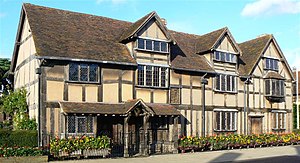 Firstly it is a well-established fact, even among mainstream scholars that we know surprisingly little of Shakespeare’s personal life – the biographical facts are so scant that their lack might indeed indicate an organized attempt to expunge all traces of the real Shakespeare from the historical record and to conceal the true identity of this man. The available data, regarding his life consist of mundane personal details: vital records of his baptism, marriage and death, tax records, lawsuits and real estate transactions. One might wonder, though: if those documents survived, why not the other ones? No personal letters or literary manuscripts written by Shakespeare of Stratford have been found. Did he really attend the Stratford’s grammar school as it is widely thought? There are no records which could support that claim. Was he really an erudite and an autodidact who not only composed beautiful poems and wrote brilliant plays but also had intimate knowledge of the Elizabethan and Jacobean court and politics? When, where and from whom did this man who never traveled farther than London from his hometown, and who reputedly spent the years prior to his early marriage in apprenticeship to a butcher, supposedly learn all of this? I have to admit that without everyday press, television or the Internet and a well-connected family as a support the task sounds rather daunting.
 Firstly it is a well-established fact, even among mainstream scholars that we know surprisingly little of Shakespeare’s personal life – the biographical facts are so scant that their lack might indeed indicate an organized attempt to expunge all traces of the real Shakespeare from the historical record and to conceal the true identity of this man. The available data, regarding his life consist of mundane personal details: vital records of his baptism, marriage and death, tax records, lawsuits and real estate transactions. One might wonder, though: if those documents survived, why not the other ones? No personal letters or literary manuscripts written by Shakespeare of Stratford have been found. Did he really attend the Stratford’s grammar school as it is widely thought? There are no records which could support that claim. Was he really an erudite and an autodidact who not only composed beautiful poems and wrote brilliant plays but also had intimate knowledge of the Elizabethan and Jacobean court and politics? When, where and from whom did this man who never traveled farther than London from his hometown, and who reputedly spent the years prior to his early marriage in apprenticeship to a butcher, supposedly learn all of this? I have to admit that without everyday press, television or the Internet and a well-connected family as a support the task sounds rather daunting.
It's also certainly curious that the creator of such vivid, recognizably human characters as Falstaff, Lear and Hamlet should himself remain as insubstantial as stage smoke. The most detailed description of the man left to us by someone who actually knew him, it seems, is a less-than-incisive sentence from his friend and rival, the playwright Ben Jonson: "He was, indeed, honest, and of an open and free nature." Hmm…you have to admit that it covers a lot of ground, almost as if Jonson didn't want to say anything concrete at all. As for Shakespeare's appearance, none of his contemporaries even bothered to describe it. Tall or short? Thin or chubby? It's anyone’s guess. You might say that there are at least paintings of Shakespeare face but, unfortunately, here we also hit a snag. Rendered by long-forgotten artists, each of the six painted portraits surfaced only after the playwright's death, in some cases centuries later, so without any indication that the authors had seen or known Will at all.
Academic Shakespeareans and literary historians rely on documentary evidence in the form of title page attributions, government records such as the Stationers' Register and the Accounts of the Revels Office, and contemporary testimony from poets, historians, and those players and playwrights who worked with him, as well as modern stylometric studies. These criteria are the same as those used to credit works to other authors and are accepted as the standard contemporary methodology for authorship attribution but do they work as efficiently in the case of an author from a completely different era?
Let’s take a closer look at the language of Shakespeare and more precisely at the number of words he used. It is definitely a language of an erudite, consisting of a really extensive vocabulary, calculated to be between 17,500 and 29,000 words, some of them invented by the author himself. It is really impressive. For everyday conversational needs, you need about 2500 words to communicate effectively in a wide range of social and practical situations. Most native speakers use more than 3,000 words regularly, irrespective of their level of education, and they have a "passive vocabulary" of 15-20,000 words that they know but don't often use. Professional writers and translators tend to have an active vocabulary of 20,000 - 30,000 words and a passive vocabulary of 150,000+. Lederer has suggested that a typical English speaker has a vocabulary of between 10,000 and 20,000 words. Mind you we speak here about contemporary people and criteria. In December 2010 a joint Harvard/Google study found the whole English language to contain 1,022,000 words and to expand at the rate of 8,500 words per year so back then the author of Shakespeare plays would be placed really high as a language user. Does it tally with the profile of Shakespeare from Stratford? What would his longhand reveal?

Shakespeare's six authenticated signatures, shown above, are written in secretary hand, a style of handwriting that vanished by 1700, and he used breviographs to abbreviate his surname in three of them (breviographs being a type of scribal abbreviation in the form of an easily written symbol, character, flourish, or stroke based on a modified letter form). The appearance of Shakespeare's surviving signatures is often characterized as "an illiterate scrawl"; it can indicate that he was illiterate or barely literate.
What’s more, William Shakespeare did not spell his name as it appears on most Shakespeare title pages. Overall his surname was spelled inconsistently in both literary and non-literary documents, with the most variation observed in those that were written by hand. This can be taken as evidence that he was not the same person who wrote the works, and that the name was used as a pseudonym for the true author, especially that some versions are hyphenated as "Shake-speare" or "Shak-spear". This hyphen use might be construed to indicate a pseudonym; anti-Stratfordians argue that fictional descriptive names (such as "Master Shoe-tie" and "Sir Luckless Woo-all") and pseudonyms such as "Tom Tell-truth" were often hyphenated in plays to emphasize the fact that they were not real names.
Reasons proposed for the use of "Shakespeare" as a pseudonym vary, usually depending upon the social status of the candidate. Aristocrats such as Derby and Oxford supposedly used pseudonyms because of a prevailing "stigma of print", a social convention that putatively restricted their literary works to private and courtly audiences—as opposed to commercial endeavours—at the risk of social disgrace if violated. In the case of commoners, the reason was to avoid prosecution by the authorities: Bacon for example wanted to avoid the consequences of advocating a more republican form of government, and Marlowe - imprisonment or worse after faking his death and fleeing the country.
If not William Shakespeare from Stratford then who? The Bard's authorship has been questioned publicly since 1848, when Joseph C. Hart, in his book The Romance of Yachting, said that "Shakespeare merely adapted the works of more educated playwrights, making them popular by adding the occasional crude joke”. Skeptics have suggested more than 70 different candidates but let me focus on the most important ones. We’ll deal with the ladies first. Yes, the ladies – because some anti-Stratfordians claim that there must have been a woman behind Shakespeare.

Mary Sidney Herbert the second Countess of Pembroke (1561 – 1621)

Sir Francis Bacon (22 January 1561 – 9 April 1626)


One of the most serious and most popular candidates. Oxford was an important courtier poet, praised as such and as a playwright by George Puttenham and Francis Meres, who included him in a list of the "best for comedy amongst us". Examples of his poetry survived but none of his theatrical works. Oxfordians believe certain literary allusions indicate that Oxford was one of the most prominent "suppressed" anonymous and/or pseudonymous writers of the day. They also note Oxford's connections to the London theatre and the contemporary playwrights of Shakespeare's day, his family connections including the patrons of Shakespeare's First Folio, his relationships with Queen Elizabeth I and Shakespeare's patron, the Earl of Southampton. He had vast knowledge of Court life and his wide-ranging travels through the locations of Shakespeare's plays in France and Italy might be another tip. The case for Oxford's authorship is also based on perceived similarities between Oxford's biography and events in Shakespeare's plays (notably Hamlet), sonnets and longer poems; perceived parallels of language, idiom, and thought between Oxford's letters and the Shakespearean canon; and the discovery of numerous marked passages in Oxford's Bible that appear in some form in Shakespeare's plays.
Another candidature which has gained a lot of followers. Poet and dramatist Christopher Marlowe was born into the same social class as Shakespeare—his father was a cobbler. Marlowe was the older by only two months, but spent six and a half years at Cambridge University so was far better educated. He pioneered the use of blank verse in Elizabethan drama, and his works are widely accepted as having greatly influenced those of Shakespeare.
Marlovians note that, despite Marlowe and Shakespeare being almost exactly the same age, the first work linked to the name William Shakespeare—Venus and Adonis—was on sale, with his name signed to the dedication, just 13 days after Marlowe's reported death, having been registered with the Stationers' Company on 18 April 1593 with no named author. Lists of verbal correspondences between the two canons have also been compiled.

Now tell me: what do you think of it and who would be your man or woman?
Sources:


Eh, no I do not wanna! Tell me :D
ReplyDeleteI can't tell you YOUR opinion ;p
ReplyDeleteok..Shakespeare was Shakespeare
ReplyDeleteGreat! Now present your proof! :D
ReplyDeleteThank you for the phenomenally interesting mid-afternoon (for my time zone) read! I love the notion that we can't be exactly sure who wrote all those plays.
ReplyDeleteWell, I'm a Stratfordian, although I think your essay is one of the more convincing arguments I've read for Shakespeare not being Shakespeare. Most of the arguments for him being a noble man or woman smack of classism, as if it's impossible for a teacher from Stradford to know so much or be so talented. Marlowe came from a working-class background, as well. And there are parallels between Shakespeare's work and events in his life, such as the death of his son, Hamlet. While the documentary evidence related to Shakespeare is incomplete and he is a mysterious figure (which I love), there's a complete lack of documentary evidence for any of the proposed alternate Shakespeares being Shakespeare.
ReplyDeleteIncidentally, have you watched Anonymous? That movie is RIDICULOUS. I laffed my butt off watching it. Even if I wasn't a Stratfordian, it would have convinced me to be so. Or read Interred With Their Bones? That book offers an interesting interpretation of the Is-Shakespeare-Shakespeare? debate.
Really, my pleasure! I suppose we will never be 100% sure who the real Shakespeare was.
ReplyDeleteI admit I started writing my essay as a regular Stratfordian, adopting the contradictory pov just for the heck of it, and ended it thinking that indeed there must have been something fishy with Mr Shakespeare's identity. Funnily enough the most persuasive argument in my case concerned his books or rather the lack of them. I can believe in many things and coincidencies but I simply cannot fathom how it was possible that an author didn't own ONE SINGLE COPY of his own plays and/or poems.
ReplyDeleteIncidentally, have you watched Anonymous? That movie is RIDICULOUS. I laffed my butt off watching it.
Yes, I watched that movie not so long ago. I would call it 'Gospel about Shakespeare according to Saint Edward de Vere'. Ridiculous is a good word to sum it up. I especially hated the incest twist - wayyyyy over the top.
Or read Interred With Their Bones?
My review of this one is scheduled later this month.
Uhg, yeah. Incest "plot twists" are one of my pet peeves. Can't wait to hear your thoughts on Interred!
ReplyDeleteOr he purchased one. That occasionally happens when the crown is in need of cash for a new mistress.
ReplyDeleteOh yes, mistresses are costly.
ReplyDelete