
Showing posts with label thriller. Show all posts

Sunday, 17 February 2013

Review: In the Frame by Dick Francis

Book info:
Form: pdf e-book
Genre: crime mystery, thriller
Target audience: adults

I was encouraged to read this one by an excellent review of Heidenkind - thank you very much for the inspiration!
Synopsis

When Charles Todd visits his cousin, Donald, he lands unexpectedly right in the middle of a major crisis: a burgled house, Donald's young wife, Regina, brutally murdered, Donald himself prostrated by grief, almost at his wit's end. What's even worse the police inspector instead of looking for a murderer starts accusing Donald of orchestrating the whole burglary to profit financially from it and help his ailing firm. Charles is outraged by their approach but what can be done? Especially that shocked Donald doesn't even think of defending himself efficiently.

Returning to London Todd, who earns his living as a painter specialising in horses, is hired by Maisie to immortalize her burned house on canvass (not a horse, I know, but still an income). Chatting with that lady he almost has a sense of déjà vu: Maisie, like his cousin, has visited Australia recently, she, like his cousin, brought back a Munnings painting bought for a very reasonable price in an obscure, little art gallery and now she lost her house and almost all her belongings. Just a coincidence? Or maybe those two tragedies are somehow connected? Also in the case of Maisie the insurers are giving the victim a lot of grief, suspecting foul play.  When Todd decides to investigate, Maisie is only too willing to assist him financially.

With her money, Charles is able to go to Australia and start sniffing around. He is helped by Jik, his old university friend, also a painter, and his wife, Sarah who live in Melbourne. Soon enough they trail a set of clues only to realize that someone is trailing them. What will they discover?

What I liked

I liked the characterization in this novel, I really liked it a lot. It was done in really great way (and yes, I felt like repeating myself). Charles (or rather Todd, he hated being called Charles in fact)  is a painter and he talks, thinks and breathes his passion. If he watches somebody he can describe them very accurately afterwards, he can tell you what ingredients are in particular paint colours, he can distinguish between a fake and an original just looking at the paint brushes; you don't doubt for one second that he is the real thing. The same can be said about his friend Jik - although he is a man of a completely different temperament and style, he and Todd understand each other perfectly well mainly because they share the same way of thinking.

It was a nice change that Todd wasn't made to fall in love during his investigation. Well, he kind of fell for Sarah but he controlled his feelings like an adult, responsible person. No insta-love or insta-lust - it made the novel even better. At least I got the feeling that the relationships between Jik, Sarah and Charles were natural and real.

What's more, I loved the narration style - smooth, elegant, unaffected, peppered with funny dialogues and situations in the right moments, teaching you a thing or two about art as well. In fact I was surprised when I found out that Francis was not a painter but a retired jockey; the man definitely knew a lot about painting and must have had an artisitc soul.

It is a crime story and I am glad to say that the whole mystery was nicely done, not very difficult but also not so easy to solve. Sometimes Todd reminded me of Sweeney Todd the Demon Barber of Fleet Street - they shared the same passion in pursuing the justice. It is a compliment of a kind I suppose ;).

What I didn't like

I admit that Charles Todd was a bit too lucky from time to time, especially for a total rookie of a private investigator who encoutered very ruthless and agressive criminals on his path. It was his first case, after all! I was also surprised a bit that such a big, efficient criminal organization like the one he discovered didn't have a plant inside the police forces. However, those are minor quibbles.

Final verdict

One of better murder mysteries I've read for a long time even if it felt a bit dated. I will gladly take another Francis book.


Saturday, 22 December 2012

Review: Battle Royale by Koushun Takami, Yuji Oniki

Cover
Cover (Photo credit: Wikipedia)
Book info:
Form: pdf format
Genre: YA dystopia/thriller
Target audience: fans of Japanese culture and dystopia but definitely older YA and adults

Synopsis:

Welcome to a dystopian East Asian country (like Japan but larger) where people live happily and peacefully under the watchful eye of your average, sadistic Dictator. In order to keep things straight under control once a year a class of 15-year-old junior high kids is sent to an enclosed location. The kids are given different weapons at random, weapons as different as an Uzi is different from an ice pick or a crossbow from a fork, a day pack with a bottle of water and they are told to go and kill each other. The last survivor wins. It is called the Program. If it serves a purpose nobody knows what purpose exactly.

In order to ensure there is no cheating (you know those pesky teens, they always cheat) each of the students is fitted with a nice shiny collar which allows the organizers to check their condition, track them and listen to their conversations. The collar has also an in-built explosive device. No deaths for longer than 24 hours? All participants are eliminated. More than one survivor? All the rest is eliminated as well. Trying to hide somewhere for too long or trying to run away? The same outcome – you are blown up to smithereens.

You follow 42 students – the newest batch of victims – who have to participate in the Program. Who will win this time: energetic Yukie, the class Representative, selfish and manipulative Mitsuke, acting as if she was a female Yakuza mobster, mysterious Kazuo, a boy so gifted and so calm that he is followed and admired even by thugs, Noriko, just your ordinary, averagely pretty girl, or maybe Shuya, a kind orphan boy who likes those forbidden rock and roll songs and plays the electric guitar? Or maybe somebody else? Can anybody truly be a winner in such circumstances?

What I liked:

There were many stories included in one bigger story and I found them the best part of  this book. More than dozen of students were given an opportunity to tell you about their hopes and fears. Because of that they became real, three-dimensional characters, not just a shooting range dummies. It was really the "good stuff"  for me - watching all the little petty relationships, conflicts and problems you have when you are 15 suddenly twisted horribly by the extreme fear of knowing only one person will be allowed to live and your classmates and friends have to become your deadly enemies.

Of course there was violence, quite a lot of it, but I would compare it to one of these cheesy movies of Tarantino - you are disgusted, you know it is bad but you still want to watch. Indeed it might be treated as great entertainment only by people with a tolerance for high amounts of guts-and-gore, but, as it was also a really well-done study of the psychology of extreme fear and included some insights about totalitarianism as well  somehow I managed to survive. The personal stories, often told in an almost poetic way, stop Battle Royale from spiraling into a mindless bloodbath.

What I didn’t like:

First let me tell you that the first 50-60 pages were downright boring. Then the action accelerated and here I hit another snag - Battle Royale was a lot more graphic than I'd imagined. So instead of puking up the contents of my stomach, after a while I just skipped the paragraphs describing blood and bashed-in brains. In fact from time to time the plot was so childish that it reminded me those computer games when you kill and kill and kill and finally you forget about the reason why you keep doing it because it doesn’t matter as long as the next opponent lies, neutralized, in a puddle of blood. Frankly the detailed descriptions of different violent deaths were horribly ridiculous.

Shuya Nanahara as he appears in the manga.
Shuya Nanahara as he appears in the manga. (Photo credit: Wikipedia)
What’s more even from the first chapter the plot was rather obvious – you could guess with a high success rate who would be killed and how soon.  The style of the narrative I also found a bit uneven, or maybe it was the problem with the translation, I really can’t tell. Anyway the descriptions were very anime, which makes me think that if the writing had been really beautiful, or if any of the emotions had been deeper, I may have liked this book a lot better.

Finally the ending…I must say I was completely disappointed by it. It was a ridiculous and artificial construction of a plot-twist after a plot-twist (so you thought they were really dead?! No! They are alive! No, wait, they are going to be dead soon...or maybe not?). I was not amused.

Final verdict:

Personally I liked this novel despite its many flaws but in my view it is not perfect and certainly not for everybody. Still cult novels (yes, it is one of them) are so hard to resist so how to tell whether or not it is your next best thing? Well, if you salivate at the mere thought of a book which combines Manga and Anime poesy, Hunger Games-style action, Lord of the Flies political undercurrents and an amount of atrocities straight from Quentin Tarantino movies this might be a perfect read for you. Do not read it if you are feeling nauseous even after my quite innocuous synopsis. Helpful? I hope so. 

Enhanced by Zemanta

Thursday, 6 December 2012

Review: Dope by Sara Gran


Book info:
Genre: crime story noir/thriller
Target audience: adults
Form: pdf

Synopsis:

1950s, New York City, light ages before the famous ‘no tolerance’ policy of Mayor Giuliani. Josephine Flannigan, 36,  tries to make her living as a former heroin addict. She is a skilled con artist, a shrewd shoplifter and, generally, whatever anybody wants her to be providing they pay cash. She doesn’t do drugs and she doesn’t sell herself, anything else is negotiable. She must be clever and flexible - in such a seedy, dangerous, crime-ridden city she is lucky she’s survived to her third decade at all. As she hasn’t been shooting up for two years she looks ‘great’, with shiny hair, clearer complexion and a more rounded figure. Still paying her rent every single month is a challenge – she has no education and no steady position so money is tight; occasional odd jobs (like stealing a ring at Tiffany for breakfast ;p ) are hardly very profitable, fences never pay you much - the competition is too fierce.

Fortunately one of her ‘friends’ recommends Joe’s skills to the Nelsons, a respectable suburban couple. Their eighteen-year old daughter, Nadine, has abruptly disappeared with a wrong kind of boyfriend. Josephine recognized him instantly with a shudder as a ruthless pimp and a drug dealer called Jerry McFall. As Nadine has been a drug fiend for some time now (that’s why she dropped out of Barnard College) it seems Joey is the best person to find her, far better than any police officer of a PI – after all she knows that milieu like the back of her hand. What’s more the anxious parents offer her $1,000 upfront and then another thousand if she brings Nadine home in one piece. A sweet deal and easy buck? Not really.

Josephine embarks on an odyssey through New York’s underworld which is a bit like a sentimental but a very dangerous journey to her – she reconnects with many of her old friends and must constantly fight off the temptation to return to drugs. After a while she starts to care about the absent girl in spite of herself, maybe because the girl is as vulnerable as herself and maybe because Joe misses her younger sister, Shelley. Shelley, now a popular ads model and a budding actress, managed to make a stunning career considering her background, mainly because of Joe’s devotion and support; however, she doesn’t need the older sister anymore and she is even ashamed of her. Let’s face it, she aspires to be upper class and a former prostitute and drug addict of a sister not exactly helps that image. Business is business.

 Will Josephine be able to find Nadine on time to prevent the worst? Will the money be worth her efforts? Or maybe it is not such a great chance at all and somebody is simply framing her for murder? You know that old saying: if something looks or sounds too good it is most likely too good to be true…

What I liked:

There is nothing romanticized about the story you get in this novel and its heroine, mauled by her sad experience. The slums are not just providing a colourful background – they are described with gritty vividness, really the worst places to visit, full of brutal, despairing, desolate people who see no end of their problems and have no future. Josephine is not a princess who managed to come unscathed from hell, quite the opposite in fact; as the narrator she honestly admits from the beginning that she has been leading horrible life since her childhood with alcoholic, unstable mother and a younger sister to feed and protect from the worst.

Raised rough in Hell’s Kitchen, Josephine never expected much from life. She has scraped by, pulling small cons, shoplifting, whoring when times were particularly bad— then doing just about anything to get enough for her next fix. Still she never feels sorry for herself and the way she treats her sister, now apparently doing much better than poor Joe has ever done, is very touching. Almost as touching as Joe’s heroic efforts to find a rich brat from a ‘good’ house even when it is obvious nobody really cares what’s happened to Nadine. Making Josephine persevere the author showed that her heroine really deserved better than being labeled 'white trash'. It is even more impressing that at first Joe admits her annoyance at Nadine, a girl who had every advantage like a loving family and money, and managed to screw up her life royally just for fun. She says chillingly:

She wanted her walk on the wild side and now she was getting it. So let her see what The Life was like. Let her lose her looks from getting hit in the face too many times . Let her lose a few teeth and all of her pride and all her charm school manners. Her college education wouldn't do her any good out here.”

 It really takes a lot of backbone and character integrity to keep looking for and helping somebody you’ve envied so much; such qualities made Joey a compelling character and it was really shown, not told.

Now about the style. Sara Gran writes with a lot of reserve which only adds force to her narration. There are no infodumps or boring fragments in this novel – with every new person Josephine encounters on her path there is the promise of a whole new interesting story just waiting to be told to a willing listener. There are no redundant secondary characters either. The baddie is really bad – a female boxer and a pimp plus a crooked drug dealer, is there anything better for your negative character…I mean anything worse? There is another baddie, as ugly as Jerry but I can say no more, it would be a major spoiler.

What I didn’t like:

The ending. I wanted a HEA for Josephine very badly but, unfortunately, the author decided otherwise – she  suggested a much more real but pretty painful outcome. Still a suggestion is not a fact, right? I would love to read a sequel in which Joey has a bit more luck and finds her much-deserved stability, maybe even happiness.

Final verdict:

One of better noir mystery novels I’ve read this year with a funny, intelligent heroine and interesting settings. Still it is definitely not a novel for somebody who likes happy endings – be warned, the final several pages are pretty heart-rending in a dark, brutal way.

Friday, 31 August 2012

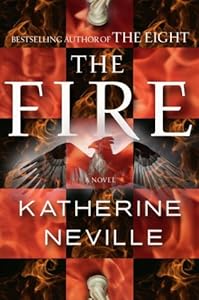
Review: The Fire by Katherine Neville

Cover of "The Fire: A Novel"
Cover of The Fire: A Novel
Book info:
Form: pdf, e-book
Genre: alchemy and chess-related thriller
Target audience: pretty much everyone interested in the topic


Synopsis:

The Fire is actually a sequel to Katherine Neville’s The Eight published some twenty years ago and reviewed by me last year. The Fire, like The Eight, follows two timelines, one past (in this case 1822) and one present (2003).

Alexandra Solarin (Xie) was twelve years old in the autumn of 1993. She was being accompanied by her father, Aleksandr Solarin on a chess tournament in Zagorsk Monastery, Russia. This young chess prodigy was to play against a similarly young boy from Ukraine named Vartan Azov in the very final game of the tournament. Shortly before the game, the girl bumped into a local woman who – without Alexandra realizing it – slipped a cardboard placard into her pocket; a symbol that bore “a small illustration of a flying bird set inside an Islamic eight-pointed star, and three words printed in Russian…” that meant “Beware the Fire”. Later in the monastery, Aleksandr saw a sculpture known as “The Black Queen”. Sensing danger, Aleksandr fled the tournament with his daughter to find the woman who slipped the cardboard with the symbol earlier, but as soon as he spotted her, Aleksandr was shot in front of his young daughter.

Ten years later, with the sudden and mysterious disappearance of her mother, Cat Velis, Alexandra realizes that the Game in search of the scattered chess pieces has evidently started again… As Alexandra reunites with her arch nemesis, Vartan Azov, they must join forces on an adventure to solve the puzzle and save their lives.

The second thread of the plot takes place in the 19th century Albania. Haidee, the young daughter of a powerful Ottoman ruler, embarks on a dangerous mission – she has to smuggle a valuable relic out of her native country and deliver it safely into the hands of a stranger. Still she and her companion, Kauri, are captured by pirates and sold at a marked in Fez. Will they be able to fulfill their mission?


What I liked:

Katherine Neville’s The Eight was a good novel and for more than one reason: the narration was convoluted without being incomprehensible, it jumped in time and space still remaining logical and fun, the author used different alchemical elements and ideas and tied them up with the plot in an ingenious manner. As soon as I was able to get the sequel I decided to read it but I admit that my expectations were high. Perhaps too high…you know the curse of the sequels: somehow they are rarely as good as the first parts. This sequel, additionally, can hardly be called a stand-alone.

In structure and elements, The Fire has much in common with The Eight: characters in each period are playing a high-stakes game related to a chess set that once belonged to Charlemagne. At the end of the first novel, the players learned that the board and pieces contained the formula for the elixir of life; here it's discovered that the board may hold more abstract information about natural order and balance -- the Big Picture, it's called at one point, the Original Instructions at others. Whatever it is, it still seems worth killing for.

Overall if you haven’t read The Eight, then I highly suggest you read it first. Otherwise, you’ll get its magical story distilled in a few paragraphs of dry summary, and by only reading The Fire you’ll probably think “The Game” is pretty pointless as well – somehow Neville never manages or bothers to demonstrate what’s actually at stake, or even introduce any real drama or urgency to Alexandra’s quest (Haidee’s story is woefully relegated to serious back burner status). 

 The story brings you on a journey throughout the Middle East and it is jam-packed with historical references – on the Ottoman empire, Lord Byron, Napoleon, chess strategies, the Basques, the Mages the Sufism and more. It was nice. Still it was less dazzling than the first part, reminding me slightly (ONLY slightly) of The Da Vinci Code with the break-neck adventures and puzzle-solving frenzy.

What I didn’t like:

I despised the predictability of that one. The villains never dared to hurt any of the positive characters in a permanent manner and you KNEW they wouldn't dare perhaps because they were as cardboard-thin as it is only possible; the romantic interest of Alexandra could be spotted from a mile off  and the romance itself was far more schematic that in the first part. There was less chess more running around and looking for clues, Dan Brown style.

Part of the interest here was the way that Neville layers and repeats motifs. For example, in the book's historical narrative - set in the 1820s - another party of eight gathers to discuss the game, including Napoleon's mother, Letizia Bonaparte, and Lord Byron. But if the plot is a giant chess game, it's odd that none of the pieces gets taken; in both the historic narrative and the modern one, the characters just shuffle around the board spaces, staring menacingly before moving on. There is a lot of talk about the white team and the black team but the one person who emerges as a “villain” cannot even be taken seriously. And Xie's chess blindness seems a permanent affliction, since she rarely seems to know what's going on. Don’t get me wrong, Alexandra is a sympathetic character but she’s never proactive – she merely reacts to situations during the entire book and tries do defend herself. Perhaps this had something to do with her favorite chess strategy – The King Indian Defense – but practically, it was highly frustrating.

Final verdict:

Neville has certainly done her research, and if you like conspiracy theories, complex riddles, and the fictional integration of real historical personalities like Lord Byron and Thomas Jefferson, then this might be up your alley. For me though, it was a bit too repetitive and schematic.  Much of the background information sounded  as dry and impersonal as a Wikipedia entry, and the characters delivering it were often pretty lifeless. I don’t regret reading it but I was hardly swept away by it.


Enhanced by Zemanta

Monday, 16 July 2012

Movie review: Catacombs by Tomm Coker, David Elliot

Directed by: Tomm Coker,David Elliot 
Screenplay: Tomm Coker,David Elliot 
Release year:  2008  
Genre: Horror 
Cast:
Victoria: Shannyn Sossamon
Carolyn: Alecia Moore (Pink)
Jean Michel: Mihai Stanescu
Nico: Radu Micu
Henry: Emil Hostina
MPAA: Rated R ( strong violence, terror and disturbing images, language, some nudity and drug content)

Synopsis:

Victoria, a shy, young woman, is visiting her sister, Carolyn, studying in Paris. She doesn’t enjoy the trip as much as she should so Carolyn invites her to a rave party organized clandestinely in one of the biggest catacombs in Europe, straight below the lovely capital of France. It is arranged by Carolyn's Parisian friends, two guys called Jean Michel and Nico. Carolyn claims the party can change the neurotic, oversensitive Victoria’s life and she takes her sis shopping for clothes so Victoria, not wanting to be a spoilsport, decides to attend against her better judgment.

 During the party Victoria is given absinthe ('no, it's not alcohol!' ROFL) and told a kind of urban legend about a cult of dark virgin and an Antichrist living in the catacombs and hunting people for food. The story seems to be completely spurious from the very beginning but, as Vicki gazes at the classically beautiful face of Jean Michel (really, the guy must have some Greek blood in him), you get the impression she would believe anything that boy cared to tell her and then some. After a while poor Victoria feels she's had enough of the party (Jean Michel's disappeared) - she tries to get out on her own. She gets lost and witnesses her sister being attacked by a man wearing a mask of a goat. The girl, sure that Carolyn has been killed, panics and runs away helter-skelter with fatal results, not only due to an unpredictable intervention of the French Police.

My impressions:

The first line of the film is a voice-over: "My sister sent me a postcard, all it said was 'Come to Paris. It'll be good for you.' 48 hours after I arrived, she and everyone I'd met were dead." It didn't impress me at all. I thought: "another one of these mediocre B-class thrillers" and I didn't expect any fireworks or indeed much fun. Maybe because of it I was in for a nice surprise.

Despite the obviously limited budget and lack of any special effects the movie was really decent and it seemed real, not like other thrillers also allegedly based on true events. It was intelligently done as the director didn’t try to stun you with too much gore or too many horrible atrocities. Of course it is a thriller so you see a fair amount of really nasty accidents and murders but they didn’t go over the top with it (a major sin of B-class movies- too much ketchup or raspberry juice or whatever they use nowadays to imitate blood).

The ordeal of Victoria is something really scary, especially for a person who, like me, understands agoraphobia and claustrophobia pretty well. Believe me or not but even wild horses wouldn’t drag me to a catacomb party and not because I don’t like music or dancing. However it was nice to watch Vicki’s struggle – you wouldn’t believe such a delicate, sheltered wallflower to put up so much fight and to be so clever when facing an ultimate challenge – running for your life.

The catacombs of Paris really exist and they are an incredible sight to behold – even the glimpses shown in this movie might make you come out in goose pimples (and, depending on your tastes, you will love them or hate them). One thing is sure - after watching this film you will certainly change a bit your perception of Paris – it is not only a city of light or a city of love or an overpriced French tourist trap full of old stuff and rude Parisians but also a very old place with fascinating history and many mysteries. Also, like most of big cities around the world, it is a dangerous place. If you are alone you might get into all sort of troubles and not knowing the language, oh la, la, ça ne sera ni beau ni facile.


There was one stupid scene I didn’t like. Just one. Imagine yourself - right at the very end our brave Victoria emerges from the catacombs. She looks like something an old, arthritic, half-blind cat might drag in – she is dead tired, filthy, bloody, she wears just a flimsy dress covered with all kind of muck and body fluids, undoubtedly smelling of l’eau de catacombs mixed with l’eau de BO. What does she do? She jumps into a taxi and orders: ‘to the airport’. And the taxi driver, after one mistrustful look, starts the engine. Not even one single question. Oh really?

Well, just one short scene and I have several remarks. First: a filthy woman without a BAG (so most probably without money unless she keeps a stash in her combat boots) would be more or less gently asked by any experienced taxi driver to get out of his car and go to hell. Ok, out of sheer pity he might have driven her to the nearest police station or a hospital but only after some serious cajolery and pleading. Secondly: any sensible person in Victoria’s shoes would have returned to her sister’s lodgings first to rest a bit, have a shower and collect her belongings. Let’s face it - without a passport and money, not to mention at least hand luggage, you really have no business at any airport and it didn’t seem Vicki took these items to that fateful party. Not to mention the fact that with a bloody, scratched face and wearing a dirty, smelly excuse for a dress you have a cat in hell’s chance to get through any security check. Finally let me tell you that the lovely city of Paris has more than one airport in its vicinity so telling a taxi driver ‘to the airport’should have immediately elicited a logical response: ‘Which one, honey? Le Bourget, Orly or Charles de Gaulle?’

Final verdict:

A very decent psychological thriller with a slick twist at the end and Paris in the background. No rubber monsters around! Still the last cut kind of ruined it for me a bit - such a stupid blunder!

Here you have the link to a real-life rescue story of three youths lost in Paris catacombs. Yes, it can happen to the curious.

Tuesday, 5 June 2012

Review: Phantom by Jo Nesbo (Harry Hole 09)

Book info:
Form: Kindle format
Genre: thriller, crime mystery
Target audience: adults


"My name's Harry and I come from Hong Kong. Where is she?"

The man arched an eyebrow. "The Harry?"

"Since it has been one of Norway's least trendy names for the last fifty years, we can probably assume it is."


Synopsis:

After three years of more or less quiet and healthy life Harry Hole returns to Oslo from his exile in Hong-Kong. Of course  he starts having a lot of trouble immediately. Is it bad? Not necessarily – he loves it all: issues, being miserable, chasing after criminals, fighting his own demons and flesh-and-blood opponents as well, deduction and crime-solving, more issues, being more miserable, drinking Jim Beam… 

Anyway his main problem this time revolves around the premature and rather violent death of a young drug dealer and addict called Gusto Hanssen. He was shot – a crime like many others, the local cops don't care a fig about such victims. The problem is that Gusto was a partner in crime and a close friend of Oleg, the son of Harry's most serious love interest, Rakel. Oleg, now aged 18 and a drug fiend himself, is remanded in custody, accused of murdering his associate; the outlook for him is rather bleak as DNA tests show clearly he was present at the crime scene. That’s why Harry, although no longer a young, energetic police officer, wants to investigate that murder, apparently already solved, so much. He thinks he owes Oleg for not being there for him all those years. After all Harry has always been a kind of father-figure to the boy and he doesn’t feel like deserting him and his mother in dire straits. Soon Harry finds the whole case a real challenge – he is overwhelmed with the number of possible suspects; he needs more evidence and evidence is scarce. Is somebody actively hindering his investigation?

Before he faces the truth Harry will have to unravel the current drug-scene to find out who is the man with the nick of ‘Phantom’ both Gusto and Oleg were working for. He’ll find out there is a new synthetic drug around, called "violin", similar to heroin but far more potent, playing hellish havoc with Oslo's junkie population. His investigation will reveal police and local-government corruption and (nothing new, really) it will become increasingly dangerous to all interested parties. Will Hole outsmart his opponents and survive once again?

What I liked:

First let me tell you that I have read all Harry Hole novels available so far (here you can find all Nesbo's books in order if you are curious) and it seems to me ‘Phantom’ is one of the best, if not the best, of all. It is a great mix – an interesting detective story with acute social commentary on the downside of drug abuse and the clash between new wealth and old values. Even if you don’t live in Norway (I don’t) you can relate. Mind you the author never gets sentimental which is great.

Nesbo adopts an interesting handful of P.O.V.s, presenting not only Gusto's dying thoughts along with Harry's real-time hectic investigation but also some insight into the thoughts of a female rat (sic!). In fact the rat opens the whole novel and then resurfaces at the beginning of each of the novel's five sections. I am not sure a rat can think as coherently and clearly as it was written here but it was a nice, original idea anyway, adding to already a very dynamic narrative. And it was fun.

I'm usually not a person who can pick spot-on the identity of a murderer in a decent whodunit (I think I am too stupid or too lazy or both) so small wonder I missed nearly every clue and certainly did not see the ending coming (one big twist, believe me!). Still it was one heck of a ride, rollercoaster as usual, nothing less, which I enjoyed immensely. Be warned: this book is a compulsive page-turner, reading from time to time like Jason Bourne’s adventures.

However the biggest asset of this series is, in my humble opinion, the psychological veracity and dynamics of both baddies and protagonists. All of them are flawed, all of them have good and bad days, ups and downs, almost like in real life. The baddies tend to be smart, charming and handsome, you can’t help pitying some of them and our lonely ex-detective has to perform top notch to outsmart them in time. Harry also changes as he is plagued by bad memories and different ‘ghosts’ because, let’s face it, his ‘job’ is not easy and hardly ever done. It's only too normal that he breaks down regularly (who wouldn’t), drinking or taking drugs. It is also a reason why it is great to start reading about him from the very beginning although Phantom, like other parts featuring Hole, can be easily a stand-alone book. Still it is so very nice to find some of the plot themes from the previous books coming together.

What I didn’t like:

I admit the book was a tiny little bit overwritten. I was especially surprised that dying took poor Gusto so long. He was an addict on forced withdrawal, mortally wounded because shot more than once from a very close distance, lying in a horrible junkie den, bleeding heavily...and he actually managed to tell his part of the story to the very end in a lucid way. This was probably the weakest part of this book although I did see the point of Gusto’s narrative. Oh well, it is just a fictional story, isn’t it? Still a brave, motivated editor, not afraid of cutting out this or that, could have made this a tighter, more edgy novel.

My second complaint concerns Harry himself. Sometimes he acts as if he was immortal and he knew it (and his enemies not, ha ha, let surprise the b******ds one more time!). Unlike ordinary, mortal folk he doesn’t care much about his own health and safety: he goes to meetings with a possibly deadly outcome almost unprepared, he hardly ever eats or sleeps. After a while it starts being a bit silly. In ‘Phantom’ our brave ex-detective sews up his own partially cut throat and chin using a simple, non-sterilized needle and a black thread (don’t try that at home) and, instead of visiting a friendly doctor or at least a voluptuous nurse soon afterwards to have it done properly, he goes out to dig out a corpse from a grave. Hey mister, have you ever heard of sepsis? Oh, sorry, you are immortal, I forgot…Then he turns off half of the city’s power supply instantly and mind you, he does it with just one single phone call. A regular Superman, don’t you think? I almost crooned ‘my hero!’ I wish I could solve such mundane (and far less complicated) problems as a mistake in an invoice or an outstanding payment that way - one phone call and it is done. No such luck so far.

Finally I am not a big fan of the cover art - it seems too bland and generic. Not hearing anything about the book itself I would hardly glance at it and move on.

Final verdict:

Despite  minor shortcomings I liked this novel very much. Still I must warn you the author left deliberately some significant loose ends (it is, in fact, a steep, sharp cliffie, sharper than rat’s teeth, be warned). It is really hard to predict where Harry’s going from here but if there is a new book available next year, I am going to preorder it for sure. Just for the heck of it let me predict how the series will end. In other words…

How to kill Harry Hole?

It is really simple. No need of guns, sophisticated torture devices, madmen or poison. In fact the more obstacles you throw his way, the stronger Harry is. However, try keeping him satisfied and happy in a fluffy-warm, fully functional family straight from a soap opera for three months and he will wilt by the excess of happiness like a plant exposed too long to direct sunlight. He might kick the bucked even sooner, let’s say after a mere month, if his beloved Rakel and Oleg join him there - it’s enough Oleg whispers ‘dad’ every day and Rakel hugs him tightly. ;)

Wednesday, 23 May 2012

Review: Headhunters by Jo Nesbo

Book info:
Form: Kindle e-book
Genre: thriller, crime story
Target audience: adults


An artist who maintains that he has been misunderstood is almost always a bad artist who, I’m afraid to say, has been understood.” (loc. 773)


 “The world is full of people who pay serious money for bad pictures by good artists. And mediocre heads on tall bodies.” (loc. 518) 


 “Noble, loyal souls are often handicapped by loyalty to even the basest of individuals. Well, especially the base individuals.”


Synopsis:

Roger Brown, the narrator of this novel is one of the best Norvegian corporate headhunters. In his humble opinion he is of course the very best. Unfortunately he is rather short (1.68 m or 5.5 feet) and let’s face it, in his little world size and first impressions matter.

Roger has many ways to compensate for the missing centimeters. He lives in an enormous vintage villa, he has a lovely, supermodel-thin and even quite intelligent wife (of course far higher than him), Diane, who has been given an art gallery from her loving husband. He has a mistress (of course far shorter than him), Lotte, who is a sad, suppressed, miserably lonely translator (but quite good in the sack). He has even a kind of hobby, if stealing different pieces of art and selling them on the black market can be called so. It is still not enough. He must prove himself he is the best every single day. By the way his career, no matter how profitable, simply can’t support his luxurious lifestyle and the fledgling art gallery of his demanding wife. That’s why for Roger stealing is as much a necessity as a thrilling hobby.

One day our headhunter spots a perfect business opportunity – it is called Clas Greve, a former co-owner of HOTE, one of Dutch telecommunication and surveillance companies. Roger wants him to become a new CEO of a similar company in Norway which produces sophisticated GPS devices. Up to a point everything is going very well: Clas, after initial reluctance, proves to be quite willing to take up the new job and, to his own delight, Roger finds out that his mark even owns a very expensive if not priceless Rubens masterpiece, allegedly  lost since WWII. Hobby and work combined in one highly profitable bundle - what cheer! While stealing it from Clas's unfinished apartment Roger accidentally finds out that Mr. Greve most likely knows Diane far more intimately than he was supposed to. With this discovery all the hell is let loose - Roger finally finds an opponent on a par with himself when it comes to stamina, hunting skills and manipulation. Their vicious, dirty fight for supremacy will include a couple of murders and a lot of excrements.

What I liked:

This novel is a stand-alone, not another installment of the Harry Hole series (its first part I reviewed not so long ago) . As usual with Nesbo the plot  was like a rollercoaster ride– very fast, very entertaining, riveting to the end, a page-turner, nothing less. The author has a storytelling talent, there is no doubt of it. Apart from that Nesbo's keen knowledge of human nature and sharp, dry  sense of humor make this thriller far more readable than your average novel of this genre. Yes, it includes a bit of bathroom humour (be warned – no eating while reading certain scenes!) but all things considering it remained still palatable, even if barely so.


Beside the very high amusing factor this book pushed my other buttons. It mentioned some famous paintings and, generally, art. It explained in a very funny way a method of recruiting and/or interrogation called Inbau, Reid and Buckley’s nine step model (yes, it is real and used).

Ok now something about the main "headhunter" Roger Brown. I liked him more than I should have. Let me assure you that he is a loathsome human being, but his powerful enemies are at least as clever, opportunistic, and amoral as he is. No matter whether you sympathize with his ordeal or not, you will certainly laugh with him and even root for him from time to time. Still his adventures don’t make Roger a “white hat”, not really, even though his rival is a ruthless, manipulative psychopath with special forces training.


What I didn’t like:

The first person narrative was sometimes so misleading that almost annoying. I know in such books the first person is used in order not to reveal too much too early, keeping the readers on the edge of their seats (and accordingly our hero omits important info leaving you completely befuddled and craving for more several times). After a while I admit I was rather tired by all those twists, turns and fireworks, especially near the ending. I had a feeling all was happening a bit too fast, almost as if I watched one of Disney cartoons with Tom and Jerry – all action, little sense. There were many moments when I had to suspend belief  and even then the plot seemed just too slick and shallow.

After a while (like in the second part) I started wondering: is this one of the early Nesbo novels? Perhaps it was written with a very strict deadline hovering over the author’s neck? This book definitely has a potential but, in my humble opinion, it failed to deliver. Even the baddies weren’t as fully-fledged as I expected them to be. Once again it seems that, having all the necessary ingredients, the author lacked time or will to work on that more. Small wonder this book was adapted for cinema – it is good but not overly demanding and just flashy enough to interest the widest audience possible.

Final verdict:

If you haven’t read any of Nesbo novels, you can start with this one - everything else will be only better. If you, however, have already discovered one of the Harry Hole books you can skip “Headhunters” or watch the movie. It wasn’t bad, not at all; it was a really decent thriller with all the necessary features and even more; my problem was that after some Harry Hole novels it seemed a bit tawdry to me. Still it kept me entertained. 

The Calydonian Boar Hunt by Peter Paul Rubens.
A lot of fuss and some funny people busy killing - like in this book.

Wednesday, 14 September 2011

Mini review: The Cambridge List by Robert Clear

Why I read it: I was contacted by Melissa (Books and Things) - thank you very much! - and she asked me to read and review this novel; it was provided by the author free of charge in exchange for an impartial opinion. That fact, of course, didn't influence my review in any way and I wasn't compensated in any form for doing so.  As always the pleasure was mine.


Book form: e-book, epub
Title: The Cambridge List
Author: Robert Clear
Genre: dark comedy, thriller
Target audience: adults.


Synopsis:

James Connor, a young English teacher in one of many Cambridge language schools for foreigners, is being seriously depressed. Not only his job is tedious to the extreme and not exactly well-paid but he also can’t find anything better. He desperately wants a change. Flanoxiride, a new anti-depressant developed by one of his flatmates, a PhD biotech student, still not tested on humans due to lack of funds, seems to be his chance to turn over a new leaf. He has nothing to lose, doesn’t he?

Soon enough he is able to hear a beautiful tune in his head, sung by a woman. He knows that probably something is not entirely right with him but the tune is so enticing he doesn’t want to interfere – it’s better to hear that than his students’ poor English, right? The woman sang about existence itself – of stars and galaxies, atomic and subatomic life. Who wouldn’t want to listen to it? After a while James has a whole Greek pantheon in his head – Hera, Athena, the Muse (like in Homer’s Iliad), all of them. They have a plan concerning James – they want him to kill five people who defy Greek deities the most and whose names are on an appropriate list. James will be the human agent or  “wessel” of Olympians’ wrath. Call it a promotion.

Very conveniently, the first victim, Harriet Mason, happens to be James’s previous academic mentor, a monstrously fat woman and a lecturer in Ancient Greek who hates men (or so people think). That way we find out more about James’s classic studies at Midsummer College and the hidden plot which prevented him from obtaining a hard-earned degree and starting a very promising scholar career at the Faculty. Small wonder gods themselves had to intervene. ;) As the story unravels it seems that the Cambridge University’s Classics Study Division hides more unpleasant secrets than any decent mafia…or Greek tragedies. Small wonder- after all, believe it or not, classics is the study of death and sex…

Will James carry out that grim task? Will a young reporter, Wendy, help him? Will gods be appeased?

What I liked:

The premise was perhaps not the most original one (Greek gods have been featuring a lot in different nowadays) but it certainly was presented in a refreshing way. Hera, Aphrodithe and the Muse (a.k.a Muesli, the teenage single mother of four) were fun to read and had a lot of character.

All other deities were presented in a very human manner – they quarrel and fight, they swear and plot, all in poor James’s brain. If you think it is a bit too homey you should read the Greek myths themselves in which gods were exactly like these presented here: true, they used another language but, by and large, they remained a mirror reflection of their worshippers, not above stealing, raping, murdering and killing, even women and children. It’s obvious Mr. Clear understands Greek mythology rather well.

What I didn’t like:

Two-dimensional characters. If James was supposed to grow up and shoulder any responsibility as an assassin or a sociopath he didn’t let it be seen (sly dog).

Sometimes the sense of humour, which was supposed to be dark, became too close to those lavatory jokes, dealing with any secretions a human body can excrete. Not my kind of fun (but undoubtedly appealing to some dumb teenage boys), I prefer something a tad more intelligently dark. Giving you a hint I do not recommend eating anything, even the best dark Lindt chocolate with cherry filling and a dash of chili, while reading some parts of this book – your gag reflex might still surprise you rather nastily. When I come to think about it you might actually think twice before visiting the lovely and ancient town of Cambridge, England. I am not sure the reputation the author gave that place in his novel was fair but it was certainly horrible. And a bit funny too.

Finally there was a lot of swearing in this one - too much in my view. If it was supposed to make the atmosphere even more hilarious (imagine Hera saying to Dionysos something like: “I could f*****g well wring you clean”) it failed. It made the dialogues between gods merely ludicrous.

Final verdict:

A book with good scenes and ideas but also one that failed to impress me. Not my type of humour, not my kind of fun. Pity, because I do like mythological variations and thrillers.


Monday, 12 September 2011

Mini review: The Devil’s Company by David Liss

· Hardcover: 384 pages
· Publisher: Random House; First Edition edition (July 7, 2009)
· Language: English
· ISBN-10: 1400064198
· ISBN-13: 978-1400064199
· Genre: historical fiction, thriller
· Target audience: adults


Synopsis (partially from the back cover):

It is the third historical thriller featuring Benjamin Weaver (after A Spectacle of Corruption and A Conspiracy of Paper, reviewed by me not so long ago).

1722, London. Benjamin, still earning his living as a ruffian for hire, a thieftaker and a master of disguise, is forced to cooperate with a mysterious mastermind – a man named Cobb – nobody knows anything about. To keep unwilling Weaver in line, Cobb has bought a lot of debt notes belonging to Weaver’s ill uncle, Miguel, and two other close friends of his, practically holding their lives in the balance (and we speak about times when you could spend many years in a debtor's prison if you didn’t manage to pay your dues). To protect the people he cares about Weaver must stage a daring robber from the headquarters of the ruthless British East India Company. Although he manages to do so, it is just a thin end of the wedge. Next, he is ordered to work for that very company in a rather dubious capacity to find out the real reason of death of a certain Absalom Pepper – a closet inventor, a ladies’ man and much much more. Soon enough, against his better judgement, he gets involved in a dangerous game of secret plots, corporate rivalry and foreign spies. Navigating a labyrinth of greed and treachery he will get acquainted with a corporate life resembling very much that of our contemporary great companies.

What I liked:

The plot was as action-packed and full of twists and turns, as I like. I didn’t have one minute of boredom while reading this one.

Vivid period detail is rendered so it can actually make you interested in history, even if you didn’t like the subject or the era before. This time Mr. Liss provides some interesting glimpses into the Rules of the Fleet – a law-free area around Fleet Prisons where debtors could live free from arrest and clandestine marriages took place without banns or license. After reading about it if you ever visit that area in London you will never treat it as just another part of the city again.

The narrative voice of  our main hero never ceased to amuse me - Weaver has a biting, sarcastic wit, and he had me laughing at many places in the novel. Apart from that, once again the author did choose the right amount of archaisms to make the book era-believable but not to discourage contemporary readers.

What I didn’t like:

I know it is difficult to keep a series of novels based on the same formula on a high level it was started; small wonder the third part I found somehow lacking.

First of all, in this book we meet a Celia Glade who is supposed to be the next love interest of Benjamin. I did want more romance but now I suppose our main character fell in love again too early – to be honest I found Miss Celia one of the weakest female characters in Liss’s trilogy so far. Not only she doesn’t feature often enough to be close to a fully-fledged heroine you can relate to but she remains surprisingly two-dimensional to the very end, despite the fact that she is supposed to be a splendid actress and a mistress of disguise herself. I don’t say she is not amendable because undoubtedly she is (providing that the author plans a fourth book). I just wish we were given more proof of it.

I was also a bit disappointed that Mr. Liss neglected to explore the inner workings of the British East India Company in greater detail; I would love to read about it even if it meant a slightly bulkier book. I did enjoy his rants about the evils of big corporations and capitalism, though – a very contemporary topic and always close to my heart. Here, I end this section in a positive way - it means the book wasn't totally bad. :-)

Final verdict:

If you enjoy historical fiction with a strong background of conspiracy, economics, technological development and a tad of romance, and with much of the action taking place in 18th century London, this trilogy is for you. I admit I found the third part the weakest but, overall, I don’t regret buying and reading it. After two such brilliant installments you simply must read the third even if deep down you know it might be a tad worse.

Tuesday, 6 September 2011

Mini review: The River Panj by David Raterman

Author: David Raterman
Title: The River Panj
Genre: thriller
Form: e-book
Target audience: adults


Why I read it: I was contacted by the author and he was kind enough to offer me his book free of charge in exchange for an impartial review. That fact didn't influence my opinion in any way.


Synopsis

The narration takes place during the 09/11 attack on the World Trade Center but the place of narration is not in America but on the border between Tajikistan and Afghanistan so in the very heart of darkness so to speak. A young American emergency relief worker, Derek Braun, all of a sudden finds himself in a very precarious situation. Not only his life is in grave danger, like that of all his Western colleagues, but his Tajik fiancée, Zarina, and one of his co-workers, Henry Ames, were abducted by unknown terrorists who, apparently, work closely with al-Qaida and also some corrupt Russian soldiers. Derek has to pay ransom of one million dollars if he wants to see  both kidnapping victims alive. He doesn’t have such an amount of money and nobody seems very interested in helping him. He decides to stay and find Zarina on his own against all odds. He can’t count on anybody and he is in a land of ruthless enemies – the Talibans – and a land where different mafias fight for their share in narco-business. Will it be his suicide mission? Will he prevent another  suicide mission in Chicago?

What I liked:

  • It was a gripping story with plenty of interesting details. It is obvious the author was there, saw horrible atrocities along with remnants of a great culture and decided to describe them. I am impressed that he knows Russian as it is a difficult language to learn.
  • I do agree that relief workers deserve more spotlight, facing really dangerous conditions, getting little recognition until there‘s a war or natural disaster of relevance to Americans and other Westerners. It’s good somebody thought and wrote about them.

  • We are shown here really difficult life of different people native of the Central Asia region. Some scenes were really gut-wrenching, like two pregnant women fighting for flour. It was eye-opening and it can put all your problems into a quite new perspective.

  • The political situation was described spot-on and the lack of help Derek faced was truly believable. That’s what usually happens when not important people are kidnapped by terrorists.

  • Clash of cultures is there, shown from both sides with all the ugly underbelly of human trafficking, drug smuggling and darker sides of American culture.

What I didn’t like:

  • The main characters were a bit too two-dimensional - I sympathized with the fate of Derek and Zarina but somehow they failed to move me deeply. I wish they could.
  • The narrative voice didn’t manage to keep me riveted to this book although the premise was interesting enough to make me finish it.

Final verdict:

I am glad I read this book but I wish it was better-written. The topic truly deserves it.


Monday, 5 September 2011

Mini review: The Egyptian (Dominic Gray 02) by Layton Green

Book form: e-book, Kindle edition
Language: English
Genre: thriller, mystery, 
Target group: adults

Synopsis (with some spoilers concerning the first part, sorry):

It is the second part of the Dominic Gray series, started by The Summoner, reviewed by me not so long ago. It can be easily read as a stand-alone but starting from the beginning doesn’t hurt J.

Dominic, now living in New York, is recovering from his stint in Zimbabwe and from a broken romance with Nya. Not being able to come to terms with her ordeal, she asked him to leave and so he did but he could't get over it. A broken-hearted guy needs an employment badly – anything to stop thinking about, well , his sad and solitary life and the rest of his blues. After a while he finally gets what he was wishing for. An Egyptian businessman and scientist called Al Miri contacts him through his current boss, Victor Radek, and wants him to find out what  happened to a silver test tube suspended in hydraulic stasis which had been stolen from his bio-tech company in Cairo, Egypt. Apparently a rival firm had managed to persuade one of Al Miri's workers to steal the tube and sell it to them. All traces lead to a shady Bulgarian scientist who dabbles in the occult to find a source of eternal youth in the most literal sense.

 Soon enough Grey and Viktor are joined, against their better judgment of course, by an investigative reporter, Veronica, a specialist in tracking rogue biomedical companies and exposing their ugly deeds. Then they meet Jax, a former mercenary, who got mixed up with the whole business for money and now regrets every moment of it, having far more trouble than he bargained for. All of them will have to sift through science, myths, and murderous rogues  to uncover the truth behind the Egyptian and his sinister biotech – preferably before that truth kills them.

What I liked:

Have I mentioned that I am a real sucker for alchemy? If I haven’t, here it is – I make it official. It’s enough a book mentions Hermes Trismegistus, Prester John, golems, the Fountain of Youth, the Philosopher’s Stone, Emerald Tablets and Nicolas Flamel (not necessarily in this order) and it can win me over in a sec. This novel mixed all these ingredients together and the author did it in a clever way, apparently backed up by some serious research. I loved every second of it; in fact I wouldn’t mind having more.

The character development didn’t disappoint me either, at least in most of cases. Grey is perhaps still a bit too serious and taciturn but in the second installment it is apparent that he can think and feel, not only do jujitsu. We see less of Nya (good move imvho, she became a wet blanket a bit too soon) and a new girl, Veronica, is introduced. Overall I liked her better. She was perhaps a bit too much like one of these annoying Bond girls (you know the drift: intelligent but not overly so, very pretty, very sexy, definitely in need of a strong, manly arm) but I hope she will gain more depth later. I liked the fact that she fell in love and, despite her best efforts, it remained rather unrequited.


 I also liked the idea of adding another new character- Jax the mercenary – to the mix. Jax is very selfish, neither completely good nor totally bad but, maybe because of it, very likeable. He brings his ironic sense of humour and almost complete lack of scruples on board. Well, in the whole narration whirlwind I missed some humour in the first part too. Indiana Jones's type of humour. Let’s face it: Grey is a dour kind of guy and while I understand the reasons behind it, his constant pining for Nya and reminiscing his harsh childhood and teen years can get tiresome after a while; Victor is even more sour from time to time, not to mention the fact that he is an absinthe addict (an original addiction, I grant you, but not exactly a sociable one). Veronica can be catty in an amusing way but, as she is now seriously in love with our long-faced Dominic, she is not exactly a ray of sunshine either. Jax, with his sexual innuendos, zest for life and witty remarks was like a whiff of fresh air in a stuffy room.

The setting was once again interesting. Perhaps not as exotic as Zimbabwe but interesting enough. The pace of narration, as in the first part, could leave you breathless (or, more precisely, reading greedily far longer than you had planned) so doing exactly what a real thriller should do to you.

What I didn’t like:

I could list here different minor quibbles (some scenes, like the just-in-time rescue of Veronica, were rather cheesy, fortunately not too many of them)  but there was one major drawback. Baddies. I noticed an improvement but not enough. Is it really that difficult to make your evil guy handsome, clever and enticing, at least for a moment or two? Apparently it is – in this part every baddie was physically repulsive in his own way so you knew at once when you read their descriptions what and who you were dealing with. Cliché. It’s good some of them (Al Miri) at least showed some higher feelings.

Final verdict:

I must visit Egypt and maybe also Bulgaria – if not this year then the next one. Going there, I will gladly reread this one. Or the next part, if available. It is really good and intelligent as far as thrillers go, not to mention the entertainment factor. I wouldn't be surprised if the series was adapted for the screen in the near future.


A bottle of absinthe with a lovely Tiffany lamp. Enticing but dangerous.