

Showing posts with label David Liss. Show all posts

Monday, 26 March 2012

Review: The Ethical Assasin by David Liss

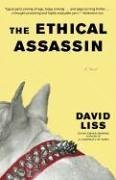
Cover of "The Ethical Assassin: A Novel"
Cover of The Ethical Assassin: A Novel
Book info:
Form: paperback
Genre: criminal mystery, thriller, contemporary fiction
Target audience: adults
Pages: 327
Publisher: Ballantine Books

Synopsis:

Can murder be justified, even called the most sensible course of action in some circumstances? Is the life or animals always worth less than the life of human beings? Should cruelty, corruption and greed of big corporations and individuals be condoned just because there’s no better option? What are prisons really for? Young Lemuel Altick will have to find answers to those questions while earning college money as a door-to-door salesman of worthless encyclopedias.

One day, while trying to sell his wares to the inhabitants of a dingy trailer somewhere in rural Florida, Lem witnesses a double assassination. The perpetrator, Melford Kean, seems to be far from an ordinary ruthless thug, though. Instead of shooting the hapless witness along with the others he suggests a deal: stay quiet, don’t contact the police, and everything will be fine. It is one of these propositions you simply can’t refuse but it is hardly an end of Lem’s problems.

He finds himself drawn against his will into the realm of the assassin, a post-Marxist intellectual with whom he forms a kind of a friendship. Who Melford really is? A charming vegan sociopath, an eco-activist, or a lonely vigilante for social justice?  To unravel the mystery and save himself, Lem must descend deep into a bizarre world he never knew existed, where a group of desperate–and genuinely deranged–schemers have hatched a plan that will very likely keep Lem from leaving town alive.

What I liked:

  • The plot. I love when a mystery is skillfully done and this one was really refined and complex. It starts slowly - at first it seems nothing fits – we meet a bunch of unpleasant guys who do unpleasant things without even a shred of remorse. The more you read the clearer it gets, like a jigsaw puzzle which you try to assemble without looking at a model pic. I found it truly entertaining, intelligent and clever.
  • The lead characters. Lem is our usual ingénue who grows up while solving a mystery and saving his life but he is not one of these ‘too stupid to live’ boys/girls who must be led by a hand and constantly watched over by an older mentor. It is true that Melford shoves him towards the right direction from time to time but overall the boy can think and take decisions on his own, mainly because he has been forced to do so from his childhood. By the way the title assassin is a joy to read. Does he belong to white or black hats? His actions will make you change your mind more than once but you will enjoy reading about him.
  • The baddies. They are well-rounded, real-life criminals – those who are successful and skilled, evading the justice by exploring the holes in the system. I liked it very much how the author described mechanisms of different scams, the seamy underworld of an allegedly peaceful backwater town. It ringed true. Even the fact that they used such a foul language didn’t deter me – after all you can’t expect a hardened criminal to speak like the Queen of England or a news anchor.
  • The pace of narration. After first several chapters you’ll find yourself glued to this book. It is highly readable, as all Liss’s novels I’ve read so far.
  • Dark comedic undertones – I LOVE this kind of humour.
  • The death of the major villain. Dear me, it was a bit of justice I wouldn’t have imagined, not in a hundred years – horrible, disgusting, bloody but so right.
  • The cover - it fits the story.


What I didn’t like:

  • Female characters. It seems Mr. Liss has a problem here. Compared to two leads, mentioned above (Lem and Melford) the ladies are simply pale and insignificant. Chitra, the fellow encyclopedia peddler from India, is almost like a carton cut-out girl or a prop for Lem – pretty eye candy whose main role is similing, swooning and whispering ‘my hero’. Desiree, the young charge of B.B., a secondary male character, is better but it features in too few scenes to be really a significant player; there is more background to her actions, but she is not strong enough to stand on her own feet. Pity – I would enjoy more of her and generally more gender ballance for sure.
  • Sometimes the book sounded a bit too preachy but fortunately the author never overdid it.

Final verdict:

David Liss is mainly known as the author of Conspiracy of Paper series (if you can call it that) , three great historical fiction novels which I enjoyed very much. The Ethical Assassin shows that he can write contemporary fiction as well. I recommend this book to all those who like intricate mystery thrillers which focus not only on a simple ‘whodunnit’ but also on more serious issues like animal rights. It is perhaps not a work of pure genius but it will keep you intelligently entertained -  you won't regret the time spent with it. 

Monday, 12 September 2011

Mini review: The Devil’s Company by David Liss

· Hardcover: 384 pages
· Publisher: Random House; First Edition edition (July 7, 2009)
· Language: English
· ISBN-10: 1400064198
· ISBN-13: 978-1400064199
· Genre: historical fiction, thriller
· Target audience: adults


Synopsis (partially from the back cover):

It is the third historical thriller featuring Benjamin Weaver (after A Spectacle of Corruption and A Conspiracy of Paper, reviewed by me not so long ago).

1722, London. Benjamin, still earning his living as a ruffian for hire, a thieftaker and a master of disguise, is forced to cooperate with a mysterious mastermind – a man named Cobb – nobody knows anything about. To keep unwilling Weaver in line, Cobb has bought a lot of debt notes belonging to Weaver’s ill uncle, Miguel, and two other close friends of his, practically holding their lives in the balance (and we speak about times when you could spend many years in a debtor's prison if you didn’t manage to pay your dues). To protect the people he cares about Weaver must stage a daring robber from the headquarters of the ruthless British East India Company. Although he manages to do so, it is just a thin end of the wedge. Next, he is ordered to work for that very company in a rather dubious capacity to find out the real reason of death of a certain Absalom Pepper – a closet inventor, a ladies’ man and much much more. Soon enough, against his better judgement, he gets involved in a dangerous game of secret plots, corporate rivalry and foreign spies. Navigating a labyrinth of greed and treachery he will get acquainted with a corporate life resembling very much that of our contemporary great companies.

What I liked:

The plot was as action-packed and full of twists and turns, as I like. I didn’t have one minute of boredom while reading this one.

Vivid period detail is rendered so it can actually make you interested in history, even if you didn’t like the subject or the era before. This time Mr. Liss provides some interesting glimpses into the Rules of the Fleet – a law-free area around Fleet Prisons where debtors could live free from arrest and clandestine marriages took place without banns or license. After reading about it if you ever visit that area in London you will never treat it as just another part of the city again.

The narrative voice of  our main hero never ceased to amuse me - Weaver has a biting, sarcastic wit, and he had me laughing at many places in the novel. Apart from that, once again the author did choose the right amount of archaisms to make the book era-believable but not to discourage contemporary readers.

What I didn’t like:

I know it is difficult to keep a series of novels based on the same formula on a high level it was started; small wonder the third part I found somehow lacking.

First of all, in this book we meet a Celia Glade who is supposed to be the next love interest of Benjamin. I did want more romance but now I suppose our main character fell in love again too early – to be honest I found Miss Celia one of the weakest female characters in Liss’s trilogy so far. Not only she doesn’t feature often enough to be close to a fully-fledged heroine you can relate to but she remains surprisingly two-dimensional to the very end, despite the fact that she is supposed to be a splendid actress and a mistress of disguise herself. I don’t say she is not amendable because undoubtedly she is (providing that the author plans a fourth book). I just wish we were given more proof of it.

I was also a bit disappointed that Mr. Liss neglected to explore the inner workings of the British East India Company in greater detail; I would love to read about it even if it meant a slightly bulkier book. I did enjoy his rants about the evils of big corporations and capitalism, though – a very contemporary topic and always close to my heart. Here, I end this section in a positive way - it means the book wasn't totally bad. :-)

Final verdict:

If you enjoy historical fiction with a strong background of conspiracy, economics, technological development and a tad of romance, and with much of the action taking place in 18th century London, this trilogy is for you. I admit I found the third part the weakest but, overall, I don’t regret buying and reading it. After two such brilliant installments you simply must read the third even if deep down you know it might be a tad worse.

Monday, 18 July 2011

Review: A Spectacle of Corruption by David Liss.

Book info:

  • Hardcover: 400 pages
  • Publisher: Random House (March 16, 2004)
  • Language: English
  • ISBN-10: 0375508554
  • ISBN-13: 978-0375508554
  • Genre: historical fiction
  • Target group: adults


Synopsis:

We meet again Benjamin Weaver, who remains the main hero and the narrator, like in the case of The Conspiracy of Paper, reviewed by me here. He starts the book as a  spurned adorer of Miriam, his cousin's widow, drinking his way into oblivion because that ambitious woman converted to Christianity and married a handsome, promising Tory politician, Griffin Melbury, in an effort to become a real  fashionable English lady. Well, it was always her secret wish after all but be careful what you wish for...

 Soon the situation of Benjamin goes from bad to worse - he’s just been sentenced to hang by his neck for a murder he clearly didn’t commit. The judge, previously known as a decent, honest lawyer, now seemed simply hell-bent on pronouncing Benjamin guilty no matter what. At the end of a very skewed, outrageous trial, however, an unknown woman manages to slip him secretly a file and a picklock – two tools of his former thieving trade which are going to save his life and help him escape the horrible Newgate prison. Now Benjamin, an escaped convict with a large bounty placed on his head, leads a very precarious life. In order to clear his name he has two main tasks– to discover who wanted him dead and who was equally desperate to give him one more chance.

As the action is set in 1722, the year of General Election, widely viewed at that time as a kind of referendum whether king George I was the right ruler for England, we will see plenty of political intrigues, involving people from different walks of life, men and women alike. Two main political parties, Tories, associated with old money, and Whigs, supporting nonconformist Protestants, Jews and new landless wealth, will use any trick in their books to gain power. The life of Benjamin might depend on the outcome of the election so he will have to keep all his wits about him most of the time and take some really desperate steps. Like, say, befriending Miriam’s new husband, the last person in England he would like to befriend, or trusting a bit more his former rival, the most powerful thief-taker in London, Jonathan Wild.

What I liked:

The main character – nothing changed here. We deal here with a very likeable rouge but if you take into account the times he lived in and his underprivileged position within the English society you might judge him even less harshly. Of course Benjamin is hardly a saint - it makes him as well-rounded a character as I like. Despite tough conditions he always complies with his own set of rules although he is not forced to do it by anyone or anything, apart from his own conscience. Indeed, when you come to think about it he is fairer and more honest than most of high-born politicians-gentlemen who shamelessly sell their votes and political views to the highest bidder. In this part I found Ben really well fleshed-out and from time to time very amusing, still too infatuated with Miriam to behave rationally even if it would be in his best interest. Love is blind but I do hope he will get cured soon.

The political background. Once again the period was researched thoroughly and explained in a very entertaining but accurate manner (as far as I know of course). At the beginning of the book we get even a short time line and key political terms included so you don’t have to feel like an idiot and you don’t need to be a history geek to get a grasp of the whole situation very quickly. The author never condescends to his readers and I truly appreciate his approach.

Two female characters, Miriam Melbury and Grace Dogmill, featured in this book, were really exceptional although, I must say, not exactly as likeable as the main lead. Both being intelligent, capable and ambitious women, they did their best to find a better postion in a society dominated by men and get away with it. Miriam married an allegedly respectable politician and changed her denomination, practically reinventing herself as an English lady; Grace could be called a political animal - she took an active part in canvassing on behalf of a Whig candidate, supported by her brother, and tried to lead an independent life, even daring to chose her own lovers and not wanting to marry anyone, a very bold move for any woman at that time. Their strategies, although different, had advantages and disadvantages and I loved the fact these were fully exposed during the narration. However I found both ladies terribly selfish that's why my sympathy for them was limited. Still I am glad we met.

Finally the baddies (I promise, I will be short now): I simply adore baddies who are as close as possible to real life people - complex characters, with many layers (like onions or Shrek who wasn’t a complete baddie but still, you get my drift) and an interesting personality. You can find such villains in this book - Jonathan Wild and Dennis Dogmill are just two examples. Thank you Mr. Liss for them, it was a treat.

What I didn’t like:

We are left with a whodunit mystery cliffhanger at the very end and, reading an interview with the author, I found out it was a deliberate move. I do not like cliffhangers although I do understand their uses when it comes to making people buy the next part of a series. Still not fair.

Final verdict:

A great sequel to the brilliant first part and a great historical fiction you can get addicted to. Yes, I’ve ordered the next book. I know, bad Anachronist. One more thing - this book can be easily read as a stand-alone novel so those of you who like jumping right in the middle of things won't have any difficulties at all (wink at Melissa).

Jonathan Wild in the condemned cell at Newgate...Jonathan Wild in the Newgate prison awaiting his execution via Wikipedia


Enhanced by Zemanta

Tuesday, 21 June 2011

Review: The Coffee Trader by David Liss

Book info:


Paperback: 432 pages
Publisher: Ballantine Books (February 3, 2004)
Language: English
ISBN-10: 0375760903
ISBN-13: 978-0375760907
Genre: historical fiction
Target group: adults


Synopsis:

The book is set in 1659 in Amsterdam – one generation before The Conspiracy of Paper. The narration is presented from two POVs – that of once-prosperous trader, Miguel Lienzo, and a far more shadowy character, an usurer called Alonzo Alferonda. Both men are Jews who fled Portugal and Inquisition. In fact Miguel had saved Alonzo’s life, alerting his family of the danger.

After some disastrous Exchange transactions involving Brazilian sugar, debt-ridden Miguel is currently living in the basement of his more prosperous younger brother’s house. He hates every minute of it and he is fervently looking for ways to reverse his bad fortune. One night, it seems by a stroke of sheer luck, Miguel meets an attractive and enterprising Dutch widow, Geertruid Damhuis who helps him exposing some con men. After a while she suggests to her new friend a secret business partnership - she dreams of  monopolizing the market of coffee, predicting that soon enough coffee beans, currently an unfamiliar product prescribed only by apothecaries, will become hot commodity around the Europe, especially among business people. Miguel, knowing how the Stock Exchange works, is the mastermind of the plan and Geertruid is to provide financial back-up. However, are they truly open and honest with each other?

It becomes obvious pretty quickly that "coffee is a drink that brings out great passions in men, and you may be unlocking great forces if you trifle with it." Miguel is hardly the only trader interested in its hidden potential. A far more powerful man, Solomon Parido, who sits on the local Jewish regulatory council (Ma’amad) and enjoys an opinion of a very clever merchant, seeks to thwart Miguel’s plans at all cost. He does it for profit but also for personal reasons. Some time ago Miguel had been betrothed to Parido's daughter, until an unfortunate lack of discretion (involving a secret meeting with a pretty maid in a rather cramped closet AND the ensuing discovery) caused the relationship to end, earning him Parido's lasting enmity. If Lienzo fails, he will not only be ruined but exiled as well...and nothing would please Parido more.

 Parido’s dirty tricks make Miguel turn to Alferonda, now an excommunicated loanshark, a man feared and hated by every thief and debtor. As the narration twists and turns Miguel starts to distrust everyone, being more and more entangled in slightly paranoid world of business and deceit. Not only he must face the constant threats of his creditors along with the scrutiny and possible punitive measures from the draconian Jewish council but also he finds himself more and more attracted to his put-upon, pregnant sister-in-law who has been fancing him for some time as well.

What I liked:

It is my second David Liss novel and I'm  admiring this writer more and more. Liss meticulously recreates the 17th century Dutch city of Amsterdam fully based on historical documents – really it seems that the author completed exhaustive research if you only consult the list of his sources, provided at the beginning of the book. He brings Lienzo's world to life in great detail, as well as the workings of the bourse which are indeed very similar to modern commodities markets (but fortunately there is no trade of whale oil anymore - shudder, poor whales).

The complex storyline, chock full of intrigue, is really compelling but, what’s even more praiseworthy, the author didn’t repeat the scheme from his first, very successful book – no murder mystery here, only coffee, business and some romance as well. The characters are as three-dimensional as I like: Miguel, actually, is a surprisingly nuanced figure but also Alonzo the usurer and Hannah, the wife of Miguel’s brother, Daniel, contribute greatly to the story showing how Jewish immigrants were treated by Dutch people and their compatriots as well. It seems that being Jewish in Amsterdam during the Golden Age was extremely difficult for more than one reason. For instance, Miguel must be careful not to scorn the Ma'amad, the restrictive and mysterious governing body of the Jewish community. He must also be wary not to conduct business with the Gentiles, something extremely forbidden during the mid-1650s. Hannah has to wear demure black clothes and she cannot go out without her head veiled although Dutch women, married or not, parade along undisturbed in provocative, bejewelled caps and colourful dresses. Her husband doesn't want her to learn how to read and write although  Jewesses coming from the East are allowed to do so.

I was also delighted by the fact that the author didn’t avoid tensions inside the Jewish community itself, between Jews coming from the Southern and Eastern Europe. In short all events are portrayed quite realistically. In fact, a couple of secondary characters suffer badly from unintended consequences of Miguel’s shadowy actions - it adds a subtle but gritty moral note which plenty of other historical novels lack. I even cherished the fact that for most of the time Miguel doesn't exactly know who to trust. In some ways his uncomfortable position emulates very well the risks that investors take today in dealing with high finance (but bear with me - no matter how boring it might sound to you I studied economics after all).

Finally there's also something very readable about the prose style. Although the plot is hardly easy to follow you simply don’t want to put this book down until the very end. Two POVs (well, in fact even threes if you count some short glimpses of Hannah's world) make it even more interesting.

What I didn’t like:

I wouldn’t call it a serious drawback but I have to mention it - the main character, Miguel Lienzo. A well-rounded, real-life hero, I admit it, but not exactly very likeable. Let’s face it – as a protagonist he has very few redeeming qualities - he is charming and handsome and well...ambitious...

I fully understand him being an embodiment of a businessman of any age - a man who would lie, steal, cheat, plot, deceive, gamble and hoodwink if only it might bring him some profit – but, in the end, you are not exactly sure whether you want him to succeed or not. How can you fully sympathize with somebody who, even if only for a moment or two, seriously considered killing his own brother (no matter how obnoxious) in order to run away with his pregnant sister-in-law and yet, at the same time, never wasted any occasion to screw (there is no nicer word for it) any pretty young maid in his proximity or to visit a whore? I know, I am speaking from a rather female point of view…I bet plenty of guys would find nothing wrong with this perfectly realistic behaviour but still I can’t easily condone it.

By the way I wonder whether we really deal here with the uncle of Benjamin from The Conspiracy of Paper - the same surname but I am not completely sure as other facts don't exactly match.

Final verdict:

Overall a very intelligent reading. If you are a coffee fanatic like myself and you like good historical fiction with a dash of finance and trade then by all means go out and get yourself a copy of The Coffee Trader. Just don’t forget to brew or buy yourself some coffee too – believe me, you will crave it even more. If people at Starbucks knew their business they would sell this book along with their drinks.


Sunday, 12 June 2011

Review: A Conspiracy of Paper by David Liss

Book info:
Form: e-book, mobi format
Genre: historical fiction/murder mystery
Target audience: adults


Synopsis:

The book, a first-person narration, is set in 1719 in London, one year before the famous stock-market crash known in the English-speaking world as the South Sea Bubble. 


What happens when a big, bad corporation finds out that you know its dirty secrets and you intend to expose them? Well, it depends. You might be ‘accidentally’ run down by a hackney cab at night or you might all of a sudden display some suicidal tendencies and hang yourself in your own house. The choice is rather not entirely yours.

The main lead of this book is called Benjamin Weaver but his real surname used to be Lienzi; he comes from a family of Portuguese Jews who fled the Inquisiton. One day he is informed that the recent death of his father, who had been run down by a hackney, was most probably arranged. A William Balfour, the son of another victim (self-murder), who had been Benjamin's father’s close associate, asked him to investigate both cases. The problem is that Benjamin had been estranged from his family since he turned fourteen and now he knows very little about stock-jobbing, finances, and banking. He had never finished any school – he is an ex-pugilist and now he earns his living as a kind of private investigator, specializing in rather straightforward activity of retrieving stolen goods. Why such a person could find employment in those times? The answer is simple.

William Hogarth - The PitImage via Wikipedia
In the early 18th century there were no British police as such, only the so-called thief-takers. The London underworld was ruled by one of them, Jonathan Wild – a real person and the first real crime lord ever officially recorded. He used to profit from selling thieves he allegedly “caught” to the justice – the price for one such individual was 40 pounds – and of course he caught only those who crossed him or dared to defy his power (for comparison – a poor laborer in London could earn only 20 pounds a year and still was able to feed his family - I am quoting the author's explanations). It was not Wild's only source of profit of course. His people stole different things and then used to resell them to their legal proprietors, pretending that they “retrieved” them. Wild  also controlled most of prostitution and prohibited traffic in the city. If somebody was intelligent enough to see through his  practices, he would be a potential customer of such people as Benjamin Weaver (a fictional character) but usually people considered Wild a hero who fought crime day and night. Until he was hanged that is. Ok, let's return to the summary itself.

Although the conspiracy of the title seems to go way over Benjamin’s head or experience he decides he owes that much to his late father and starts the investigation. He will need all the luck and help he can get, though, as it is clear from the very beginning that he got involved in something far bigger than an occasional thievery or murder. He will have to cross his path with Wild and his henchmen more than once, he will also have to reconcile with his uncle, meeting in the process Miriam, an intelligent, beautiful woman he will fall in love with.

What I liked:

Plenty. Let me state it loud and clear – it was a delicious book and I simply devoured it. It kept me up far later than I should have been several nights in a row and for a good reason - although the book was rather long it was unputdownable.

A Conspiracy Of Paper has it all. It presents very well developed and interesting characters (particularly Benjamin Weaver - let's face it, you have to adore a man who, living in that strange, unhygienic era, washes his head thrice a month to avoid lice and uses condoms made of sheep intestines), an exciting and mysterious plot, an ability to make early 18th century London come alive for the reader and a compelling historical perspective of the London’s stock market in its infancy, the criminal underworld, the powerful business elite which doesn't hide its anti-Semitic sentiments.


If you are not interested in the world of finances, don’t worry – our main character knows precious little about it either so there is ample (but never overly so) explanation provided. If, however, you have studied the history of economics or particularly the trade disasters of modern day stock exchanges  you will be able to identify with the excitement and confusion of the 1719 trade market even better. Believe me, the South Sea Company and dark machinations to protect their public image while earning as much as they can are a surprisingly contemporary topic. A fool and his money are soon parted after all- and nowhere so quickly as in the stock market, it would seem.

The author employs high action plot in a very good way, seducing the reader to enter the financial trading scene. I was happy to find all the accumulated implausibilities and unlikelihoods neatly wrapped up at the end – no mean task for such a long book. Additionally, Mr. Liss writes with confidence and humour. Is there anything more you can wish for?

What I didn’t like:

One really minor quibble from me (and now my romance-loving friends will gasp with surprise and clap with delight): I wanted so much a good solid HEA for Benjamin that my hands itched to slap that rebellious, stupid, overly ambitious Miriam over her lovely but stubborn head. Of course the way the author tied up the romantic plot line was very realistic and logical but still it made me sad. Well, real life is mostly sad, isn't it? Dear me, I suppose I complain because I keep bad company. ;p Or maybe because it's summer and I've been spoiled by too much chicklit?


Final verdict:

If you  like detective as well as historical novels, you will be delighted with this book. I found it completely absorbing and entertaining – a very strong contestant to the title of the best book I’ve read this year. Historical fiction at its finest - I can hardly wait for the sequel!


William Hogarth's Gin Lane - I had it on my mind all the time.


Enhanced by Zemanta