
Showing posts with label historical romance. Show all posts

Tuesday, 30 July 2013

Trial by Desire by Courtney Milan (Carhart #2)

Synopsis:
SHE CANNOT FORGET THE FIRE HE IGNITED ...

In the three years since her husband left her, Lady Kate Carhart has managed to forge a fulfilling life for herself. But when Ned Carhart unexpectedly returns, she finds her tranquility uprooted --- and her deepest secrets threatened. Though she has no intention of falling for Ned's charms, Kate can no longer deny the desire that still burns in her heart.

OR THE PROMISE OF HIS LOVE ...

Ned is determined to regain his wife's trust by using unbridled seduction. But just as Kate surrenders to Ned's passion, her carefully guarded past threatens to destroy her. Now Kate must place her faith in the only man she's ever loved, and the only one who has ever betrayed her ...


Quite disappointing.

I’d been saving this book, so I could savour it whenever I felt like I needed to read a really good romance novel. After the last couple of months, it felt like it was time.

Trial by Desire is a sequel to Proof by Seduction and although the couple set up is much more believable than in its prequel, the romance itself isn’t.

A scandal forced Ned and Kate to marry, but it was clear that both of them—Ned—at least needed to grow up in leaps and bounds for them to earn their (believable) happy ever after mandated by the genre. Milan’s solution is to send Ned away soon after the nuptials for three years and let him grow up into a capable man abroad.

Ned does grow up. When he comes back he’s a changed man and his reunion with his estranged wife is promising. Of course there are the familiar tropes keeping them apart: Miscommunication and a caricature villain. I’m wretchedly disappointed in the villain’s characterisation as the early promise of a multilayered characterisation for the domestic abuser is never realised. He has his internal logic that justifies the abuse but the reader is never shown why he thinks that way. Other than it’s assumed the period explains men’s attitudes towards women.

Even so, one man wanting his runaway wife back isn’t what stands between Ned and Kate and their happiness. It’s Ned himself. Milan tackles an important issue by making Ned bipolar—I assume that’s the correct diagnosis—and showing people have battled with mental illness before they had names for them. As admirable as it is to see Ned find his own solution for his mood swings, it doesn’t change the fact that his dogged insistence to cope on his own is what destroys the romance. The constant repetition of his desire to be the hero and secrets kept until the very end, don’t make him good husband material. He may have learned to stand on his own feet, but Ned doesn’t believably learn to lean on his wife, which leaves their marriage a sham.

Worse than Ned’s inability to transform from an independent man into a half a married couple, is how Kate’s plot is handled. She’s supposed to be saving battered wives from their husbands and an early feminist who learns to win her own battles, but time and time again Ned rushes to her rescue. He saves her both from a physical and a juridical attack. He’s the one who comes up with the final solution. Having read Kate’s story makes me appreciate Margaret and Jessica and all the other Milan heroines that much more.

The writing itself is uneven—which still occasionally true for Milan’s novels—and the story is boring. There are hideous amounts of telling and horrible smut euphemisms I wish never to see in a romance book again. Milan kept me engaged with the story at times but only at times.

I feel like I’ve read the worst Milan has to offer and I can go back to waiting for her next book. At least I know most of these novice mistakes won’t be repeated quite as blatantly ever again.

Thursday, 25 July 2013

Rameau's Review Archive: Proof by Seduction by Courtney Milan (Carhart #1)

Originally posted on Goodreads on February 2nd 2012. This is one of our second opinion reviews and if you click the 2nd opinion icon, you'll find the original:


Synopsis:
"She was his last chance for a future of happiness..."A gifted fortune-teller from a humble background, Jenny can make even the most sophisticated skeptic believe her predictions simply by batting her smoky eyelashes. Until she meets her match in Gareth Carhart, the Marquess of Blakely, a sworn bachelor and scientist.

"He just didn't know it yet"

Broodingly handsome, Gareth is scandalized to discover his cousin has fallen under the spell of "Madame Esmerelda," and vows to prove Jenny a fraud. But his unexpected attraction to the fiery enchantress defies logic. Jenny disrupts every facet of Gareth's calculated plan--until he can't decide whether to seduce her or ruin her. Now, as they engage in a passionate battle of wills, two lonely souls must choose between everything they "know."..and the boundless possibilities of love.


Proof by Seduction (Carhart, #1)Proof by Seduction by Courtney Milan

When an uptight scientist meets an alluring fortune-teller, a clash is unavoidable. Rich and dutiful Lord Blakely is ready to fight the conniving liar Madame Esmerelda for the soul of his cousin Ned Carhart. Who could have guessed that they'd end up fighting for something else instead?

Who indeed?

It's the basic set up for a historical romance novel. A powerful aristocratic man meets a poor but somehow exceptional woman who changes him irreversibly. Naturally he does the same for her. They meet, they squabble, and go their separate ways. Until they meet again and start anew. They end up challenging each other in ways that neither fully understands until the very last pages of the story.

What sets this novel apart from the rest, is how Milan fills the pages. There's enough material for two novels, and all the important exposures are knitted with plot points instead of being offered in info dumps. Milan also utilises secondary characters in a way many forget to do. The scenes told from Ned's point of view don't feel like a distraction from the main story, but add something heartwarming to the mix. I can't wait to read more about him.

However. This is not a fair rating. Proof of Seduction may be her debut novel, but it isn't the first Courtney Milan romance I've read, and thus she's competing against herself. And as good as this book is compared to all those other romance novels out there, I've read better, especially from Mrs Milan.

The story has all the elements I've come to love about Milan's writing–abundance of plot, tempting set up, intriguing characters, bewitching storytelling, and a historical world I'd be more than happy to suspend my belief for–but from a purely technical standpoint it's by far her weakest work. There are unfortunate word choices, questionable characterisations–Jenny, for example, is painfully naive on occasions– and unnecessary scenes, which amount to repetition at times.

Unlike with Milan's other fictitiously happy Harlequin endings, I didn't buy this one. I felt like the trademark ending only served to distort the characterisations in a way that made them unbelievable to me. I've become accustomed to suspending belief when it comes to historical romances, but this time the magic of the story wasn't strong enough to carry me through the disparity of the marriage.

See, nothing fair about that.

Sunday, 21 July 2013

Review: The Heiress Effect (Brothers Sinister 02) by Courtney Milan

Book info:
Genre: Victorian romance, historical romance
Target audience: adults

Synopsis:

“Never before had so much money been put in the service of so little taste.”

Jane Fairfield is trying on a new dress. She knows she looks utterly ridiculous but she has no choice – that’s the way it has to be. Her hideous, expensive, ghastly attires, overflowing with lace and silk of any imaginable kind, are her only armour against the polite society. She must drive away any potential marriage candidate while pretending she is actively looking for a husband – no mean task when you are young, fresh and you have one hundred thousand pounds of dowry.

Still the happiness and well-being of Jane’s sister Emily, is at stake so Jane will go to any lengths to achieve her goal. Four hundred and eighty days – that’s how long she must endure, attending parties, spouting the most stupid, the most cheeky nonsense she can think of to practically everybody and bear the consequences. Everybody around calls her the Feather Heiress; they joke about her poor taste, brainless head and giggle behind their fans and tumblers when she opens her mouth. It doesn’t matter. Being dreadful is such a wearing work but she is prepared to suffer it to the bitter end.

Everything is going exactly according to her plan until she meets Olivier Marshall, an illegitimate son of a duke, a very ambitious young man, a future politician and possibly also a prime minister. She takes him for a servant. And then insults him some more, calling him ‘common’. And then she insults his father. Such a grave mistake but at that time Jane was unaware of the consequences of treating Olivier as if he was just a headless aristocrat. Will she manage to fend off Mr. Marshall like her other suitors – with brainless talk, horrible dresses and a complete lack of manners? Never trust a politician – that’s how I’ll end my synopsis. If you want to know more you must read this novel. ;p

My impressions:
Once again Courtney Milan proved that when it comes to challenging Victorian romance clichés she has no equals. In this novel you have your ordinary uncouth heiress who is invited to the parties only because she is filthy rich. However our heroine, not as stupid as everybody would like to believe, has her own secret agenda: she can’t marry for the sake of her beloved younger sister. She must fool her uncle Titus who would love nothing more than to get rid of tempestuous Jane for good. She must endure endless jokes and derision.

It worked surprisingly well, allowing Ms. Milan to add several deliciously funny scenes during which Jane, looking as if butter wouldn’t melt in her mouth, was offending in public everybody around her. Not to mention the fact that she deliberately dressed as if she wanted to test the sense of sight and colour recognition of all the present guests at the same time. Who would like such a wife: not only stupid and socially inept but also with a complete lack of any sense of colour coordination? And here I hit the first little snag because I believe plenty of men would gladly close their eyes, plug their ears and pocket both one hundred thousand pounds and their owner, no matter how uncouth or stupid she was. Add to that the fact that Jane was rather curvaceous and pretty and I believe her little ruse wouldn't work in real world at all, not even for a month, let alone for over a year. I bet a clever gentleman would outmaneuver her in no time, using the old, stupid Titus as a bait.

Now we get Mr. Olivier Marshall who, despite being an illegitimate son of a duke, wants to make a career in politics. He is of course aware of his disadvantages; he also knows that the right wife might help his prospects a lot. Unfortunately, he falls for our heiress, admiring her stamina, wits and stubbornness. Once again, the romantic cliché of a strong male delivering a weaker female from dire straits, social or otherwise, was inverted here: firstly Jane didn’t need delivering, not really, secondly she actually provided greater assistance to Olivier than the other way round. And, surprise, surprise, soon enough the gentleman got scared off because he’d never envisioned somebody as assertive and colourful in his life. He wanted a wren and he got a phoenix. What’s more, a darker, more opportunistic part of his nature was whispering in his ear dangerous ideas: perhaps the foolish heiress could be used to his advantage after all; she had trod on too many toes. If only he could persuade his conscience there is nothing wrong with humiliating her a bit so she stops pestering his aristocratic friends with her inanities. I liked that aspect of Olivier’s personality very much but, unfortunately, it wasn’t developed properly. Eh, the woes of romance fiction...

The secondary characters I liked the best. The romance between Emily, Jane’s little sister, and a certain Hindu student of law was unexpectedly sweet. Emily was an avid reader of popular adventure series penned by a woman which also sounded very original. Sebastian Malheur and Violet reappeared again and made me curious about their relationship to say the least of it (I try hard not to spoil you here so bear with me).

As I already mentioned Emily and her interracial affair...it made me do some research concerning the actual status of Hindu-English marriages in Victorian times and, although I agree it was completely possible, I have to say it sounded a bit unreal. Let me quote a fragment from a very interesting article (which can be found here) written by William Dalrymple who presented the results of his own (much more professional) research concerning that topic:

“This period of intermixing did not last: the rise of the Victorian Evangelicals in the 1830s and 40s slowly killed off the intermingling of Indian and British ideas, religions and ways of life. The wills written by dying East India Company servants show that the practice of marrying or cohabiting with Indian bibis quickly began to decline: from turning up in one-in-three wills between 1780 and 1785, they are present in only one-in-four between 1805 and 1810. By 1830, it is one-in-six; by the middle of the century, they have all but disappeared. Biographies and memoirs of prominent 18th-century British Indian worthies that mentioned their Indian wives were re-edited in the mid-19th century so that the consorts were removed from later editions. The mutiny of 1857 merely finished off the process. Afterwards, nothing could ever be as it was. With the British victory, and the genocidal spate of hangings and executions that followed, the entire top rank of the Mughal elite was swept away and British culture was unapologetically imposed on India.”

The Heiress Effect is set clearly after the Indian Rebellion of 1857 also known as the sepoy mutiny, so you can assess on your own the probability of an Indian-English marriage in India, let alone in London. Of course it is not a historical book, just my inner nerd had to be appeased. ;p

Finally the ending. I know, I know, romance and HEA are like a horse and carriage or rather like petrol and a car – virtually inseparable. Still the HEA in this one was, again, a tad too rushed and too perfect, at least in my opinion. We were never shown the struggle of adjusting and readjusting of any of the young couples. Pity.

Final verdict:
I liked this one more than The Duchess War but less than some of the Turner series novels which were simply brilliant. Overall I of course recommend it but I do hope the next part will be even better. I know it can be so.

One more remark. I want to use this opportunity to emphasize the fact that Courtney Milan is one of those authors who appreciate both positive and negative reviews. If you don't like her book you don't have to be afraid that, after expressing your opinion in public, you might be attacked by her/her friends online for your 'cheek'. What's more she encourages sharing her novels with friends, often publishing them without DRM. I really appreciate both approaches - thank you Ms. Milan for a bit of normalcy!

Saturday, 20 July 2013

The Heiress Effect (Brothers Sinister #2) by Courtney Milan

Synopsis:
Miss Jane Fairfield can’t do anything right. When she’s in company, she always says the wrong thing—and rather too much of it. No matter how costly they are, her gowns fall on the unfortunate side of fashion. Even her immense dowry can’t save her from being an object of derision.

And that’s precisely what she wants. She’ll do anything, even risk humiliation, if it means she can stay unmarried and keep her sister safe.

Mr. Oliver Marshall has to do everything right. He’s the bastard son of a duke, raised in humble circumstances—and he intends to give voice and power to the common people. If he makes one false step, he’ll never get the chance to accomplish anything. He doesn’t need to come to the rescue of the wrong woman. He certainly doesn’t need to fall in love with her. But there’s something about the lovely, courageous Jane that he can’t resist…even though it could mean the ruin of them both.


Trust Milan to turn another historical romance cliché on its head. No, it’s not an inexplicable déjà vu, yes, I’m repeating myself again.

Jane Fairfield doesn’t want to get married. It’s not that she doesn’t want to fall in love and have a family, it’s that the family she has—her sister—is more precious. Having been neglected and starved for parental love and care, Emily and Jane are each other’s worlds. Well, there’s some bad literature involved too, a girl can’t avoid that not even in the 19th century. Or they would be if Emily’s guardian would let them. The Fairfield girls have little choice but to wait and count the days until Emily’s majority and freedom.

It’s just that a promise and Jane’s enormous fortune make achieving this goal a little bit difficult. Here’s where the mountains of lace come in. Jane was never brought up to be a proper lady and now she’s taking those liberties she has taught herself to the extreme to protect herself, her fortune, and her autonomy. That is to say she wears horridly tasteless gowns (some do like bright colours, even I, occasionally) and doesn’t shut up like a proper lady should (not—which, good for her—but is expected to). She’s smart and capable, but she’s also been coddled in a way. No one has taught her how to be ruthless. She’s about to learn.

Oliver is ambitious. He has everything Jane doesn’t: A loving family and a thorough education he means to use. He wants a career in politics (which makes me question his intellect and attractiveness to be quite honest) and he wants to change the world. He knows how to be ruthless, when to take a punch and when to walk away, and that has left its mark on him. Nope, we’re not talking about visible scars either, unless you count the freckles, which my mother does every summer just to annoy me.

Both Jane and Oliver are well off. They’re not starving and though they have their challenges, they’ve found ways to cope. Neither recognises that in this link or circumstances it’s them in danger of breaking. They both need saving before they lose themselves.

I admired how proactive Jane was. She didn’t stand still and wait someone to come rescue her, she faced the danger and rescued herself. It was a treat especially now that I’ve read theCarhart books. She was the one who found a solution for Oliver’s problem. She was the one who discovered the strength to play dirty. Jane recognised Oliver’s doubts and adapted but only to a degree her self-worth would let her. And in the end her choices forced Oliver to adapt.

As I saw Jane conquer one obstacle after another, I was left wondering whether there’d be left anything for Oliver to do. Sure he had the important task of negotiating a new law, but on a more personal level he appeared inert. I didn’t get it until I did. The flinching, it’s what I’ve learned to do. Not from fights, but talking. I simply don’t have the passion and strength to do it like I used to and I’ve learned to pick my moments. I understood the importance of Oliver reclaiming that part of himself. I also chalked it up to different tempers and theatrics. Partly.

The rest of it were the genre dictated expectations, which I’m also blaming for the epilogue. Too nice a bow for the story. Maybe that moment of absolutely happiness had been earned, but I think Jane and Oliver would have been better—more real—without it.

This being a romance novel I have my little gripes too. I’m definitely not a fan of the euphemisms even if it’s virginal Jane describing the scene. However, that doesn’t explain why Oliver would ever refer to his penis as his member (of parliament). And let’s not forget the slight ridiculousness of how their short-lived affair began. It should have been Jane who interrupted them, not the rain.

There’s also something that takes this book a step beyond the typical romance. Milan gives Emily a voice to show just how capable she is and to highlight another less talked of historical fact: Immigration. As surprised as I was to see the time taken to develop this side of the story, it fit well into the rest of the narration.

On a technical level, this is one of Milan’s successes. The text flows and plot is balanced. There weren’t any of those weak moments that plagued The Duchess War.

There weren’t any violent mood swings this time, only some deep laughs, but I loved it all the same.


Thursday, 11 July 2013

Rameau's Review Archive: Gold Mountain by Sharon Cullars

Rameau's ramblings: I had high hopes for this book once. Originally posted on Goodreads November 21st 2012.

Synopsis:
In 1865, the hope for gold has spurred many to seek their fortunes in California, the place the Chinese call Gum San or "Gold Mountain." Amidst this backdrop, Quiang, a new Chinese immigrant, works the dangerous rails hoping to save enough money to send home to his parents. In town, Leah and Clara, two enterprising women from New York, have plans of their own to grow a restaurant and laundry business. However, both plans go awry when Quiang and Leah meet one fateful day. What starts as a budding attraction soon grows into tumultuous desire despite the cultural and language barriers between them.

Initially resistant, Leah succumbs to passion following a tragic loss that leaves her vulnerable and alone. With hopes for a future that now includes Leah, Quiang embarks on a perilous path as he leaves the railroad behind for a more profitable position as a courier for The Tong, henchmen for the dangerous Triad. Quiang soon finds that navigating the secretive life of a courier brings more danger than he has ever faced on the railroad, dangers that not only threaten to tear him and Leah apart, but may cost them their lives as well.

Publisher's Note: This book contains explicit sexual content and graphic language.

Gold MountainGold Mountain by Sharon Cullars

This review can also be found on Book Girl of Mur-y-Castell-blog.

It’s been six months but I remember buying this book because I’d seen a semi-positive review on a blog—Dear Author probably—and because a romance of a mixed-race couple in the 1860’s Wild West sounded intriguing. Especially since neither character is white.

Unfortunately the story didn’t live up to its promise.

I did like the start of the book, although I did think it somewhat boring. The author spends a lot of time setting the scene and describing the life of a Chinese worker building the railroads for a pittance and the life of a black single woman trying to build a new life and a business for herself and her friend. Bias, racism, sexism, it’s all there and prevalent in the vernacular.

As if that’s not enough to create obstacles to the couple’s happiness, there’s also their inability to fully understand each other. Quiang speaks but a little English and he and Leah have to communicate through gestures, looks, and touches.

There’s all this, and what does the author do with it? Nothing. Cullars glosses over all the difficult—and rewarding—steps of a meaningful relationship building and focuses on the paper thin physical attraction instead. There’s a brief mention of how Leah and Quiang learn to communicate with the help of a dictionary, but they don’t really talk to each other. When they’re together they’re either taking their clothes of and having sex or putting their clothes on and thinking about having sex. And those sex scenes are bad. There’s creaming and there’s tumescence, there’s orbs and there’s the infamous “her sex” euphemism.

After all that, the story and my rating for it could have been saved had I bought Quiang’s interactions with the triad members. I can’t really pinpoint my problem with them, but something in the language used left me unconvinced. It wasn’t just Wao’s refusal to call an erection an erection, it was also how the revelation of the misappropriation was handled. Until then, I had liked Quiang’s willingness to engage in shady businesses for quick profit and that both characters had such defined lives outside each other, after it just felt anticlimactic.

I didn’t want a happily ever after epilogue, I wanted to read how they get there.

So what does the book have? Good historical description with nascent characterisations, but without any real character or relationship development, and a whiff of Wild West adventures. It simply wasn’t enough for me.


Thursday, 4 July 2013

Rameau's Review Archive: Heart of the Druid Laird by Barbara Longley

Rameau's ramblings: Originally posted on Goodreads on November 17th 2011.

Synopsis:
Cursed with immortality, Dermot MacKay craves death. To lift the faerie curse placed upon him and his men over 1,600 years ago, he must return the soul of his reincarnated wife to the exact place and time of her murder. But her soul is currently residing in the very modern Sidney St. George--and first he has to convince her to accompany him to Scotland.

Sidney doesn't believe Dermot's wild claims of immortality and rebirth, yet she cannot deny that she is drawn to the sexy Scot. Nor can she explain the sense of deja vu his touch elicits. Desperate for answers, she agrees to go with him--only to learn too late that to help the man she loves is to lose him forever...


Heart of the Druid LairdHeart of the Druid Laird by Barbara Longley


Critique should always have both good and bad points. I'll try.

The premise looked so promising. Although, I'm not a fan of fairies in general I thought this just might be the book to change my mind, and in that Heart of the Druid Laird succeeded. The fairies were easily the best part of this book.

See, it's working. Good news comes first and there's more.

I also really liked the structure of the plot. The author obviously knows how to plan events ahead while to give herself some room for manoeuvring. All the plot twists were well set up and logical and the pacing was decent. There were no out of the blue surprises behind the corners, but there was that telltale glow that warns about a speeding car.

And I really enjoyed Tommy and Zoe and their little side romance. They made the perfect addition so as not to burden the main couple with too much of the background reveal. Info dump nicely avoided and a golden star to the author.

Unfortunately, this was it. Now on to the bad.

Let's start with the ridiculous. For a while now I've been aware of the fact that historical fiction is just that, fiction. As much as I'd like to think all men of old were nearly two metres tall and build like muscle towers, I know they weren't. Their nutritional status wouldn't have allowed it. I can suspend belief for one or three exceptionally well-built historical heroes at the time and enjoy the fluffy romance while they swoop their tiny, fragile heroines of their feet. But there's a limit to this good will of mine, and that limit is five. I find five 1650-year-old, extra tall hunks walking down the street in formation ridiculous. When the number is upped to thirteen, it becomes absurd.

Shall we move on to the language then? Longley didn't overdo the Scottish accent apart from a handful of lines in dialogue, but the little touches she chose to use to imply the accent didn't work well for me. I stumbled over every single no' (not) even when I managed to get through the lines of heavier brogue.

This, however, was not my pet peeve. That honour falls on the cursing with all the effings and soddings and such. For majority of the book everyone acts like their mother is eavesdropping just behind the corner ready to rap them on the knuckles for saying a rude word. Then when things get tense and the climax approaches they suddenly start dropping asses, arses, and shits. A few pages later, after the threat has been resolved, they go back to being prissy. Continuity, this book has none.

None of these little mishaps are as dire failure as is the utterly bollocksed characterisation. I'm at a loss what to make of these characters. They continuously say and claim to think one thing, and then go on acting in the exact opposite manner. Dermot is supposed to get Sidney to Scotland to lift the curse and not get tangled up and hurt the girl's feelings, but he promptly starts wooing her. Later on, he blames her for distracting him before he could tell her the truth, which, might I add, would have simplified the plot substantially. She's supposed to be this hard boiled single woman who doesn't date or even look at a man twice, but she melts into a puddle of goo just from looking at him. You can imagine the level of sexual attraction when he starts to speak.

Yeah, not so much. Didn't work for me. Sidney's crying fits and whiplash reactions to the truth (once finally shared with her) make her the first character to earn a place on my new vapid-insipid-divas-and-ingénues shelf. Until her, I hadn't felt tempted enough to make one.

The bad characterisation extends to Zoe and David, Sidney's friend, and brother, who basically act like a deus ex machina to get the unhappy couple together. Aside from Tommy, the muscle gang doesn't win in the personality lotto. Lachlan gets closest with few hits.

What really ends up killing this book for me, though, is the manufactured drama. With a set up like this, a reincarnation, a cursed immortality, and a choice between loving and letting go, there's no need for all the fights originated from miscommunication. Dermot and Sidney have enough on their plate with a fairy princess and their growing feelings for each other interfering with the lifting of the curse, so they don't really need to be getting their wires crossed too.

A good critique should always end up on a positive note.

I can't complain about the grammar or editing.


You can also read this review on Sandra's My Reading Nook-blog.

I received a copy of this book from the publisher through NetGalley.


Tuesday, 25 June 2013

Rameau's Review Archive: Skybound by Aleksandr Voinov

Originally posted on Goodreads January 13th 2013.

Synopsis:
Germany, 1945. The Third Reich is on its knees as Allied forces bomb Berlin to break the last resistance. Yet on an airfield near Berlin, the battle is far from over for a young mechanic, Felix, who’s attached to a squadron of fighter pilots. He’s especially attached to fighter ace Baldur Vogt, a man he admires and secretly loves. But there’s no room for love at the end of the world, never mind in Nazi Germany.

When Baldur narrowly cheats death, Felix pulls him from his plane, and the pilot makes his riskiest move yet. He takes a few days’ leave to recover, and he takes Felix with him. Away from the pressures of the airfield, their bond deepens, and Baldur shows Felix the kind of brotherhood he’d only ever dreamed of before.

But there’s no escaping the war, and when they return, Baldur joins the fray again in the skies over Berlin. As the Allies close in on the airfield where Felix waits for his lover, Baldur must face the truth that he is no longer the only one in mortal danger. 


SkyboundSkybound by Aleksandr Voinov

World War II fantasy love story between two men.

That’s the shortest summary I can think of for this lovely little novella. I don’t know enough about planes and I’ve mostly forgotten the details of war I learned on my history lessons to really gripe about the historical accuracy, but the weekend holiday, the family gamekeeper connections, and the ending did stretch my suspend disbelief abilities. That’s why there’s the word fantasy in my nine word summary.

And as the story didn’t wow me, three stars.


Sunday, 26 May 2013

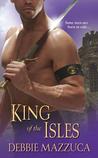
Rameau's Review Archive: King of the Isles by Debbie Mazzuca

Rameau's ramblings: So far I've given examples on what my one star and five star reviews—or a "total failure" and "one brilliant book" ratings—look like. Now it's time to see what "meh" means to me. This just happens to be one of my snarkier reviews. 

Originally posted on Goodreads on January 12th 2012.


Synopsis: 
Some men are born to rule…

She’ll find him a bride if it’s the last thing she does.

And it very well might be. Evangeline may be powerfully persuasive in her way, but convincing the notoriously wild Highland king Lachlan MacLeod to strengthen his alliances with a strategic marriage seems to be asking the impossible. Stubborn and proud, Lachlan seems determined to go against her will, even if it means endangering the people he’s sworn to protect and the enchanted isle that has already seen so much discord.

Yet the battle-scarred Highlander cannot ignore his sultry advisor for long. When his mentor is kidnapped, forcing him to ride into combat alongside the beautiful Evangeline, he must choose between her safety and his own independence. It’s a choice he makes in an instant…but once wed to the woman he could not resist, he’ll soon find that his heart is in even greater danger than his kingdom…


King of the Isles (Men of the Isles, #3)King of the Isles by Debbie Mazzuca

A while ago I won a book on a Twitter and a little while later I received a small package in the mail. My first ever paperback ARC. So naturally, I postponed reading said book until I could concentrate and give it the attention it clearly deserved. And I did–concentrate–for several weeks.

After I finished reading said book, I wrote a long list of things that bugged me about the novel and I set it aside. This was my attempt to remove the sting of somewhat critical review.

Everyone in their seats? Seat-belts? Safety glasses? Just glance at the stars, hold on, and let the ride begin.

Oh, for the love of... That was my first thought. Repeated several times during the early chapters. With every bountiful breast jiggle I cursed all the smut-writing gods and prayed for fanfic erotica salvation. (I am saved.) What the author must have considered as slow building for the sexual tension designed to bring two stubborn people together and help to break the ice between them I regarded as cheap smut tricks. Thanks to this book I could go on a lifetime without ever reading the expressions feminine curves and his manhood ever again. My quota is full.

I think M(r)s Mazzuca forgot that it's not the action of a lively pair of breasts women readers think is sexy, it's the hero's reaction to it. Though that didn't work well either when Evangeline and Lachlan went riding with winged horses (see his manhood).

I love the Scotch, both the drink and the accent, but I swear these authors are trying to destroy that love. Writing thick and sexy brogue is anything but. Reading it is painful. I swear, part of the reason why it took me so long to read through this book was because I couldn't understand a word Lachlan was saying. There were long pieces of incomprehensible dialogue that slowed my reading to the point where I started paying way too much attention to the details. And what happens when the reader starts paying too much attention to detail? This review is what happens (I'd say I'm sorry, but I'm not).

Speaking of Lachlan and his male pride (another thing I'd happily never read again), the caveman mentality sucks. It's especially unappealing when it's the only thing continually showing the period. Yes, there's a time-traveller, but the rest of the characters, human and fae alike, are supposed to be living in the early 17th century. Do they act like it? No, they don't. And don't even get me started on the equal partnership-thing. (Seriously, don't. I've forgotten that bit.)

Then there's the supernatural. I was under the impression that faeries are supposed to be older and long-lived. Sure, there must be or have been fae children once upon time, but those are far and few between. Or so I thought. I don't even know how old Lachlan is, I just know that at twenty-six, Evangeline is supposed to be older. Why the hell couldn't she be at least in her sixties to make things more interesting? I had other complaints about the fae, but I've forgotten them too.

Perhaps this is explained elsewhere in the series, because before there was a King there was a Lord and a Warrior of the Isles. You can certainly read this book without having read the prequels (I did), but the knowledge of things you're missing will haunt you (it did haunt me). I would complain more about the abundance of secondary characters apparently known from the other books had I cared enough about Evangeline and Lachlan to be upset when the focus wasn't solely on them.

The series issue is a hindrance in other things too. I have no way of knowing if this was explained in the other books, but I must assume it was, because if it wasn't... it's just a sign of the author's laziness. Having not read the other books, Evangeline's fears remained too abstract and thus the culmination of this book fell flat for me. This combined with the fact that there isn't a true ending for the story, only further groundwork for the sequel, I can't recommend this book for anyone not willing to commit to a series.

That's most of my complaining done, but there are few spoilery details such as the vampirism and the pregnancy issue. I still wish Evangeline would have remained childless, because I refuse to believe that every woman must reproduce to find happiness in her life.

There were good bits too, as you can see from my rating. Whenever the author was writing action or was otherwise engaged with the plot, she forgot to add the unnecessary descriptions, which in turn made the text flow better and the reading enjoyable. Mazzuca clearly knows how to come up with plots for her romances, it's just a shame she doesn't focus on that more.

I received a copy of this book from the publisher. 


Sunday, 12 May 2013

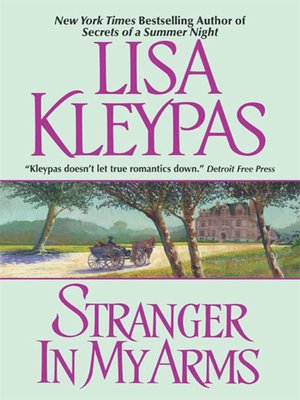
Review: Stranger In My Arms by Lisa Kleypas

Book info: 
Form: pdf format
Genre: historical romance
Target audience: adults

Synopsis:

As a young man accustomed to privilege and filled with a sense of invulnerability, Hunter Hawksworth had once believed the world existed only to please him. Accordingly he enjoyed different pleasures in every possible way: he had a young wife and a temperamental lover, a lot of friends to hunt with and cavort around, a nice, profitable estate. He lacked just one thing – an heir – but being still a young man he could hope to acquire that commodity as well. However one day he decided to go to India and almost drowned in a shipwreck. He was badly injured – had his head almost cracked open – and for some time forgot his own identity. When he got better, though, he started to remind himself the important details and returned home where he had been officially declared dead for some months.

Larissa lady Hawksworth was never more relieved than when she became a young widow. Although noticeably poorer, she was finally free from the debasing, disgusting marital duties and a brute of a husband who was bored by her almost immediately after their wedding. She could focus on things she liked the most – helping the others, especially underprivileged orphans. She enjoyed her independence, limited only by the money at her disposal, until her allegedly-dead husband returned, claiming his title and his wife back. What a drag. Couldn’t the man do one decent thing in his life and stay dead?

However, soon enough Lara finds out that a quite different person returned from the land of dead - Hunter has changed into a man she can trust, rely on and even love. Will it last? Is this new, improved lord Hawksworth really the person he claims he is?

My impressions:

It is a story about an angel tempted by the devil who was able to change into...whatever he wanted to be. Quite an usual pair of romantic protagonists but it worked for me well enough; let me tell you why in my own way.

Our young, green-eyed Lara is of course the said angel – sweet, unpleasantly experienced because married to a man who didn’t care about her at all. She is pretty but unaware of her assets and almost maudlin in her goody-goody attitude. Now returns Hunter, the very devil she feared and despised– he managed to survive a horrible accident and stayed in India long enough to pick up this and that (think Kamasutra, martial arts and yoga and you won’t be far off the mark).When I was reading about Hunter’s experiences I could hardly suppress a smile. He reminded me suspiciously of the generation of flower-children who considered a pilgrimage to India (yes, it was nothing less than a religious pilgrimage) to be a life-changing event, highly recommended to any troubled, world-weary soul. Hunter would fit in perfectly well; we are not told that but I suppose he was bored with his comfortable life and yearned for a change.

After he returns - thinner, fitter, more tanned and muscled-  he becomes really keen on his old-new wife. It is actually a classic trope: the charmed devil wants to seduce the angel but the angel doesn’t reciprocate, not at once anyway. Small wonder – Lara was so happy living alone and independent, unburdened by that oaf or a man, and all of a sudden she has a husband again, poor woman, and it seems it is really the same husband. Still she hasn’t expected what a spell in India could do to a man. The new Hunter is not only quite taken with her, he tries to win her heart back in a manner that would have tempted a saint or a saintly angel.

Accordingly Lara is tempted and after a while she cannot imagine her life without the new, tender, skilled Hunter who can teach her so many new things about practically everything (but mainly sex - hey, it is a romance, right?). Roughly after the first part of the novel the author makes us rethink the entire plot so far. The identity of Hunter is being questioned time and again (AND you might actually start to appreciate the DNA tests) but those most interested in proving he is an impostor are also the very people whose testimony can be instantly rejected or at least seriously doubted. For example his good-for-nothing, hypocritical uncle would love to fill in Hunter’s shoes again; also his former mistress bears a huge grudge after she was rejected and humiliated publicly by her former lover.

Can leopard change its spots? Can a devil turn into an angel to make another angel happy? I am pleased to say the author didn't take an easy way out but if you want to know more you'll have to read the book. No spoilers!

Final verdict:

It was one of better Kleypas romance novels I’ve read so far – more imaginative, with a logical, real-life  psychology and a plot with nice, interesting twists. Even if sometimes I hated Lara and her saintly-saint attitude I fully sympathized with her final choice. Let’s face it – who wouldn’t? I only wondered why it took her so long...

ETA: I really don't get the cover. Not even for a moment.

Thursday, 9 May 2013

Rameau's Review Archive: Destiny's Embrace by Beverly Jenkins

Originally posted on Goodreads February 14th 2013.


Synopsis:
Gentleman Seeks Housekeeper. Must be willing to travel.

Desperate for another life away from Philadelphia, headstrong and beautiful Mariah Cooper answers an advertisement for a housekeeper at the other end of the continent. Waiting in California is the most breathtaking—and arrogant—man she has ever met . . . and he'd like nothing better than for Mariah to go back home!

Logan Yates has run Destiny, the family ranch,since he was a boy. He doesn't need this Eastern miss his stepmother hired, though his home's chaotic state suggests otherwise. Still, he's secretly pleased that Mariah gives as good as she gets—and he must fight the urge to take her in his arms and kiss her whenever she proudly stands her ground. But when he's in danger of losing her, Logan will have to choose between pride . . . and his heart's true desire.


Destiny's EmbraceDestiny's Embrace by Beverly Jenkins

Mariah Cooper wants a life for herself. She wants a husband and children, and she wants a career as a seamstress where she works for herself instead for her mother. None of these things she can get in Philadelphia, so with a little help from her aunt Mariah answers an advertisement for a housekeeper and travels across the continent to find a new life in California. Her reluctant employer, Logan Yates finds himself bewitched by the spirited widow. He ends up wanting to share his life and family with her and it only takes him a little over a week to decide this.

Jenkins takes the time to set up both Mariah’s life in Philadelphia and Logan’s life on his farm before bringing the characters together—with a clash or ten. Mariah’s decided to change her life and she won’t let anyone walk all over her ever again. This leads to repeated conflicts with Logan who is used to getting his way without having to invest too much of himself.

The banter between these two characters is wonderful as are the little titbits about Californian history the author sprinkles between the pages. I loved that all their troubles came from their characterisations instead of manufactured obstacles. Mariah wants to commit, Logan doesn’t, and neither is hiding the fact. There’s quite a lot of plain speaking and whatever lies or secrets are told, they don’t stay secret forever. Truths comes out and they have consequences. For example, Mariah admits she’s attracted to Logan but that doesn’t change her mind about wanting a commitment. For Logan, when he finally changes his inconstant ways, there are consequences for that too.

Even though the romance itself takes barely a week to develop, it doesn’t feel rushed. With the exception of the sex scenes. The initial kisses and seduction worked well for me, but their first actual sex scene and the events leading up to it felt more like a slapdash-afterthought method had been applied in writing them. It made me question whether or not the publisher had asked them to be added in later. This could also explain why I felt like the author missed the optimal notes for the emotional pay offs such as their I love yous and the umpteenth proposal. Luckily, Mariah’s confrontation with her mother saved a lot.

Destiny’s Embrace is the first book of a trilogy and there is the definite feeling that Jenkins is setting things up for a bigger story. She spends a lot of time on introducing secondary characters like Logan’s stepmother and half-brothers, and expanding their personal histories. For some reason the book also felt little anachronistic; it felt like a 1990’s kind of a book rather than a historical romance written in the 2010’s. I don’t have enough perspective to properly explain why this is.


My thanks to Sarah for gifting me this book when I had trouble buying a copy.

Friday, 3 May 2013

Rameau's Review Archive: Unveiled (Turner #1) by Courtney Milan

Rameau's ramblings: After reading Unclaimed and converting Anachronist into a romance reader, I had to hunt down everything Milan had ever published. So far. These days I savour her books instead of devouring them. 

Originally posted on Goodreads September 22nd 2011.

Synopsis:
Ash Turner has waited a lifetime to seek revenge on the man who ruined his family--and now the time for justice has arrived. At Parford Manor, he intends to take his place as the rightful heir to the dukedom and settle an old score with the current duke once and for all. But instead he finds himself drawn to a tempting beauty who has the power to undo all his dreams of vengeance....Lady Margaret knows she should despise the man who's stolen her fortune and her father's legacy--the man she's been ordered to spy on in the guise of a nurse. Yet the more she learns about the new duke, the less she can resist his smoldering appeal. Soon Margaret and Ash find themselves torn between old loyalties--and the tantalizing promise of passion....


Unveiled (Turner, #1)Unveiled by Courtney Milan

I'm in no shape to write as comprehensive review as I did for the sequel Unclaimed, mostly because I'm lazy and because this not being one of my few ARCs I don't feel obligated enough. But at the same time I feel like I'm not doing this book justice if I don't.

Courtney Milan can write a romance, again, in the best sense of the word. Her characters while highly sexual beings even in historical setting don't just abandon their morals and jump in the sack at the first opportunity. In fact, I'd be hard pressed to name another author who understands as clearly the need for seducing the mind as Milan does. It's all about showing why these two characters are right for each other and why they should choose each other above everyone else with Milan.

In here, Ash Turner is the epitome of as self-made man. He left home at the age of fourteen to make his fortune and ensure the future of his brothers, in doing so, he sacrificed his relationship with them. Now, it's his turn to exact vengeance on those who wronged him and his family when they were poor and in desperate need of help. But he doesn't know if he can have that revenge without damaging his tenuous connection with his brothers permanently.

Margaret Dalrymple is an innocent victim of Ash's revenge, collateral damage if you will, but she's prepared to fight back. Her only chance is to find some unforgivable flaw in the new Parford heir to reclaim her family's inheritance. The only problem, she finds herself falling for the last man whom she should ever fall in love with.

There are numerous reasons why these two should hate each other and why they should be bitter enemies to the end. There's also that tiny spark that if nurtured correctly can grow into an unquenchable blaze. And that's what Milan does. She introduces that tiny spark of chemistry and attraction and lets it grow into an unforgettable love affair without ever sacrificing the uniqueness of the characters.

I might even like Ash and Margaret more than I did Sir Mark and Jessica, but as a whole, the second Turner book was better paced. This one seemed to drag towards the end only to collect itself at the last minute and finish the race in top three.

Spoilers for Unveiled and Unclaimed both: <spoiler> As much as I enjoyed the Sir Mark seduce the debauched courtesan in Unclaimed, nothing in it came close to the sexiness of Margaret taking that key from Ash and locking them in his bedroom for the night before their planned wedding. </spoiler>


Still, I have a feeling I'm going to like Smite's story the best, he just sounds like my kind of man. Can't wait for Unraveled.

Thursday, 2 May 2013

Rameau's Review Archive: Unraveled (Turner #3) by Courtney Milan

Rameau's ramblings: What can I do to help kick off the Romance May? Give you another Milan review! Naturally.

Originally posted on Goodreads December 14th 2011.


Synopsis:
Smite Turner is renowned for his single-minded devotion to his duty as a magistrate. But behind his relentless focus lies not only a determination to do what is right, but the haunting secrets of his past—secrets that he is determined to hide, even if it means keeping everyone else at arm’s length. Until the day an irresistible woman shows up as a witness in his courtroom…

Miranda Darling isn’t in trouble…yet. But she’s close enough that when Turner threatens her with imprisonment if she puts one foot wrong, she knows she should run in the other direction. And yet no matter how forbidding the man seems on the outside, she can’t bring herself to leave. Instead, when he tries to push her away, she pushes right back—straight through his famous self-control, and into the heart of the passion that he has long hidden away…


Unraveled (Turner, #3)Unraveled by Courtney Milan

Having read Unveiled and Unclaimed both, I knew what I was getting myself in for. That's why this review is littered with comments about the anxious wait I was made to suffer until self-published Unraveled was released. You'd think the author would have the decency to write something bad to make it up to me, to make my part as reviewer easier, but no. Damn you Milan, how dare you make me love Smite Turner even more than I thought I would? And Miranda Darling and Ghost? How dare you!

Of the three Turner brothers Smite is the most scarred. His skin may be intact, but inside he carries the weight of the water that once nearly crushed and suffocated him. Inside he's an impenetrable fortress that stands alone under the storms of his nightmares. Inside he's cold, but far from dead.

Ghost, the puppy, may have started the thawing, but it takes a blazing sun like Miranda Darling for Smite to forget himself and break the barriers he's erected just to be able to function. For two decades he's spent simply existing, but when Miranda flattens him with few sharp remarks Smite finds himself wanting to live again.

She's naive yet worldly as only a child grown amidst actors can be. She's a survivor, but not hardened through and through. She has a sharp tongue and wicked mind, but she's also loyal and too trusting. She's a ray of sunshine that lights up the room, but will scorch if faced directly. Miranda is just the right woman to get under Smite Turner's skin.

What starts with a lie and on the grimy streets of Bristol, moves to shining marble halls and into a bedroom. While they are discovering new physical boundaries, an unexpected accord forms between the two lovers. Miranda finds herself attracted to a decent man and Smite opens up to her in a way he hasn't been able to do with anyone else.

I could quote the whole book and it would make more sense than this review so far.

What you need to know is that Smite is a diligent magistrate in Bristol with an unerring memory. He recognises Miranda and stops her from committing perjury, he also follows her to warn her not to try that particular trick in his court again. What Smite doesn't realise is that Miranda has her own set of problems and very little choice. She's bartered her life and skills to the Patron for personal protection for herself and the boy living with her.

Smite might be able to remove Miranda from the dirty and sooty streets, but he can't free her from her obligations. And here, Milan surprises positively. Instead of hiding her troubles and trying to deal with them by herself, Miranda faces Smite and confides in him risking everything now dear to her. Of course this doesn't stop Smite from reacting rather stupidly, but he has the baggage to excuse it.

Despite the slight feel of repetition in the beginning–which might be because I kept putting the book down and rereading to get where I'd left off–the text carried me through the story like a gentle way pushing me to the shore. The way Milan writes makes days feel like hours and weeks feel like years. By the time I finished reading the last chapter I couldn't believe how far both characters and their extended families had come. It felt like I had read the first pages a lifetime ago instead of few hours.

I know I'm forgetting something important–like the laughs–but for the life of me I can't think of anything else without spoiling the journey. This is the best I can do for a five star review and I know it's not nearly enough.

P.S. If anything, this story shows you how important a comma can be.


Wednesday, 1 May 2013

Review: The Lion's Daughter (Scoundrels 01) by Loretta Chase

 photo ae334d5a-9e8e-4355-9b2d-a643fe91dd0d_zps50b1542a.jpg


May is going to be a very romantic month on this blog - as we promised you in the previous post there is going to be plenty of reviews covering all kinds of romantic fiction. Let me start with a classic: Loretta Chase and the first part of her 'Scoundrels' series, The Lion's Daughter.

Synopsis:

Varian St George, baron Edenmont, is an English peer who knows Davies and Byron. He is also a handsome, penniless whore, shamelessly sponging money off naïve women whenever he can. A jackal and an opportunist – that’s him. While he was traveling through Italy, seducing different rich and bored wives in order to earn his upkeep, the fate made him accompany a young boy, Percival, for a fee of course, to Albania.

There he meets the love of his life – a scrawny girl with green eyes and a mop of red curls, known as ‘a little warrior’ or ‘the Red Lion’s daughter’. Some people also call her ‘a spitfire’. Her name is Esme and her father, Jason Brentmor, has been just assassinated while in service of the Vizier of Janina, Ali Pasha or so they say. Esme needs a white knight rather badly – another suitor, far less civilized than Varian, is waiting impatiently to wed her and she doesn’t fancy him, not even a bit.

Varian, although hardly as noble as a real knight should be, falls in love, seduces the girl and marries her properly which is like a huge leap of faith for him – Esme is poor as well. Still she has a rich, eccentric grandmother who might or might not provide for the young couple. Unfortunately the old lady is hardly willing to throw good money after bad – and who can blame her? Varian is facing a big challenge : he must try to rescue whatever can be rescued from a shambles called his life and persuade everybody, his young wife and his own family included, that this time he means it. You must admit it is a scarier task than slaying a dragon.

What I liked:

The main heroine, Esme, was a great character. She was intrepid, funny, intelligent and far more independent than your average female romantic interest - a fearless rebel with a tender heart but a temper that runs hotter than fire and her flaming red hair. It always bodes well for a book, romance or not, if I like the main lead so don’t be surprised by the rest of my review : yes, I did like this one, I liked it very much. How not to like a book after reading such a scene?

Esme’s lips were twitching as she gave the letter back to her grandmother.

“It ain't funny,” the old lady growled.

“Not only amusing but imaginative,” Esme said. “They say I have tattoos on my hands, wear a ring in my nose, and in this garb—and nothing else—I dance lewd dances in your rose garden. By the light of the full moon. Mrs. Stockwell-Hume does not mention my howling at the moon as well, but perhaps her London friends will think of that in time.”

Her beloved Varian wasn’t bad either; as his name, St Georges, indicates, he was simply predestined to save virgins from dragons even if he was the dragon itself. :) Still he will feature in the ‘dislikes’ section as well -  I suppose carping about romantic heroes is my second nature. One thing is sure: I really appreciated the lack of misunderstandings between Esme and Varian. Practically from the very beginning they had a degree of trust, or at least a degree of strength of character that allowed them to put themselves in the other person's shoes and not jump to conclusions about nefarious motivations if anything went wrong.

What I didn’t like:

Here you go. 

Varian was too pretty, too honourable and reformed too fast for an inveterate womanizer, a rake and a coxcomb. If only he was given more time...By the way imagine what Jane Austen would say: a baron, possibly married but with two younger, eligible brothers, is never visited by any of his curious neighbours while reparing the crumbling ancestral  mansion. No curious maiden ever set her foot in the proximity, no hen-pecked husband, forced by his wife to make the acquaintance for the sake of his daughters, called with a visit, no intrepid servant appeared near the Mount Eden estate...was it a desert or an English countryside? It seemed as if the poor man worked in a complete void.

Apart from that the political intrigue in the book  was overdone to the point of being incredibly complex and confusing. I enjoyed Albanians customs but the rest hardly made sense. Fortunately it was also very skippable.

Final verdict:

If you want to read something "mindless" after all the "heavy" stuff you've done recently this is a perfect position. Don't think too much about the plot concerning the politics of the region, focus on relationship and you'll be fine. The humorous parts are quite enjoyable and the book is definitely different, good enough to read at least once.

BTW the other parts of the series were reviewed by me as well: here you can find Lord of Scoundrels and here Captives of the Night  - enjoy!


Enhanced by Zemanta