
Showing posts with label book reviews. Show all posts

Thursday, 25 July 2013

Rameau's Review Archive: Proof by Seduction by Courtney Milan (Carhart #1)

Originally posted on Goodreads on February 2nd 2012. This is one of our second opinion reviews and if you click the 2nd opinion icon, you'll find the original:


Synopsis:
"She was his last chance for a future of happiness..."A gifted fortune-teller from a humble background, Jenny can make even the most sophisticated skeptic believe her predictions simply by batting her smoky eyelashes. Until she meets her match in Gareth Carhart, the Marquess of Blakely, a sworn bachelor and scientist.

"He just didn't know it yet"

Broodingly handsome, Gareth is scandalized to discover his cousin has fallen under the spell of "Madame Esmerelda," and vows to prove Jenny a fraud. But his unexpected attraction to the fiery enchantress defies logic. Jenny disrupts every facet of Gareth's calculated plan--until he can't decide whether to seduce her or ruin her. Now, as they engage in a passionate battle of wills, two lonely souls must choose between everything they "know."..and the boundless possibilities of love.


Proof by Seduction (Carhart, #1)Proof by Seduction by Courtney Milan

When an uptight scientist meets an alluring fortune-teller, a clash is unavoidable. Rich and dutiful Lord Blakely is ready to fight the conniving liar Madame Esmerelda for the soul of his cousin Ned Carhart. Who could have guessed that they'd end up fighting for something else instead?

Who indeed?

It's the basic set up for a historical romance novel. A powerful aristocratic man meets a poor but somehow exceptional woman who changes him irreversibly. Naturally he does the same for her. They meet, they squabble, and go their separate ways. Until they meet again and start anew. They end up challenging each other in ways that neither fully understands until the very last pages of the story.

What sets this novel apart from the rest, is how Milan fills the pages. There's enough material for two novels, and all the important exposures are knitted with plot points instead of being offered in info dumps. Milan also utilises secondary characters in a way many forget to do. The scenes told from Ned's point of view don't feel like a distraction from the main story, but add something heartwarming to the mix. I can't wait to read more about him.

However. This is not a fair rating. Proof of Seduction may be her debut novel, but it isn't the first Courtney Milan romance I've read, and thus she's competing against herself. And as good as this book is compared to all those other romance novels out there, I've read better, especially from Mrs Milan.

The story has all the elements I've come to love about Milan's writing–abundance of plot, tempting set up, intriguing characters, bewitching storytelling, and a historical world I'd be more than happy to suspend my belief for–but from a purely technical standpoint it's by far her weakest work. There are unfortunate word choices, questionable characterisations–Jenny, for example, is painfully naive on occasions– and unnecessary scenes, which amount to repetition at times.

Unlike with Milan's other fictitiously happy Harlequin endings, I didn't buy this one. I felt like the trademark ending only served to distort the characterisations in a way that made them unbelievable to me. I've become accustomed to suspending belief when it comes to historical romances, but this time the magic of the story wasn't strong enough to carry me through the disparity of the marriage.

See, nothing fair about that.

Saturday, 17 November 2012

Review: The Daughter of Time (Inspector Alan Grant 05) by Josephine Tey

Book info:
Genre: historical crime story
Target audience: pretty much everybody interested in history
Form: paperback, 220 pages


Synopsis (from Goodreads): 

 In one of Tey's bestselling mystery novels ever, Scotland Yard Inspector Alan Grant, immobile in his hospital bed, is intrigued by a portrait of Richard III. Could such a sensitive face actually belong to one of history's most heinous villains—a king who killed his brother's children to secure his crown? Grant determines to find out once and for all what kind of man Richard was and who in fact killed the princes in the tower.

 What I liked: 

Yorkist king Richard III grew up at Middleham....
Yorkist king Richard III grew up at Middleham. "Middleham Castle". RichardIII.com . . Retrieved 2007-10-24 . (Photo credit: Wikipedia)
 This novel deals with Richard III and all the various permutations of the Yorkist, Lancastrian and Tudor factions in late medieval England. I wanted to read it for a really long time but I couldn’t find a decent copy. What can be said… this book could have been as boring as your average history lesson but it isn’t, mainly because it is written in a very compelling way. Ms Tey (a pseudonym of Elizabeth Mackintosh) certainly knew how to keep the attention of her readers while presenting convoluted schemes of the royal palace and a police inspector trying to kill the time while recovering in hospital because of a leg injury.

 While dying of boredom Alan Grant is presented with a portrait of England's King Richard III (reigned 1483-1485) and comes to the conclusion that a man so genteel-looking couldn't possibly be the ruthless murderer Shakespeare made him out to be because 'villains don't suffer, and that face is full of the most dreadful pain' (judge for yourself here). Certainly Shakespeare made Richard III into a character who we love to loathe. An ugly hunchback, sneaky, rotten to the core, Shakespeare's Richard is the seducer of widows, the betrayer of loyal friends and the killer of the young princes in the Tower of London. Was the bard right or maybe it was just convenient for him to paint Richard the blackest of black?

 Intrigued, Grant starts reading books concerning the appropriate period – from middle grade textbooks, full of pictures, simplifications and doodles drawn by bored pupils, to serious positions appropriate for university scholars. He is also helped by a young, rich history enthusiast from America, Brent Carradine, on a scholarship to study at the British Museum, who does more complicated source research. They findings are impressive and inspiring – I admit that after finishing The Daughter of Time, I spent several hours on line googling the authors and historians Tey mentions in her book, looking at different portraits of Richard III and his family. I gather it was the best thing about the book itself: it made me curious and inspired, it taught me a lot while entertaining. I love such books to no end.

 What I didn’t like: 

 It was a lovely book but hardly flawless. Though there are arguments, with which I agree wholeheartedly (and no, never believe a word of a historian, Ms Tey is here absolutely right), the main hook of her novel--that the most famous surviving portrait of Richard III shows the face of a man who could not possibly kill defenceless children of his brother--is flawed to say the least of it. Every portrait ever made has been the portrait of not one person, but at least two--of the sitter and of the artist--and the practice of reading a person's character through their portrait is an interesting one, though it must always be seen as very dubious if not completely futile from the psychological point of view.

There have been mass murderers whose faces were kind, innocent and fresh. There have been (and will always be) innocent people, such types who wouldn’t hurt a fly, who look as if they were born in a prison and released only because the guards were afraid for their lives. No serious policeman can trust their own judgment when it comes to assessing faces. I presented one such example in my essay Beautiful Beast.

 Apart from that I think the book could have done with slightly more individualized and characteristic dialogue, but really, that's a minor complaint.

 Final verdict:

 Despite its shortcomings it is a story I would recommend to every history nerd, especially if you like the War of Roses period and criminal riddles solved with great sense of humour. I am not surprised this book was voted number 4 out of 100 best mysteries of all time by Mystery Writers of America (www.mysterywriters.org) . If you want to read the history of Richard III presented from a less fictional perspective I recommend “Historic Doubts on the Life and Reign of King Richard the Third by Horace Walpole.

ETA: The latest news on Richard III: http://www.telegraph.co.uk/history/9681019/Scientists-to-reconstruct-Richard-IIIs-face.html
Enhanced by Zemanta

Tuesday, 15 June 2010


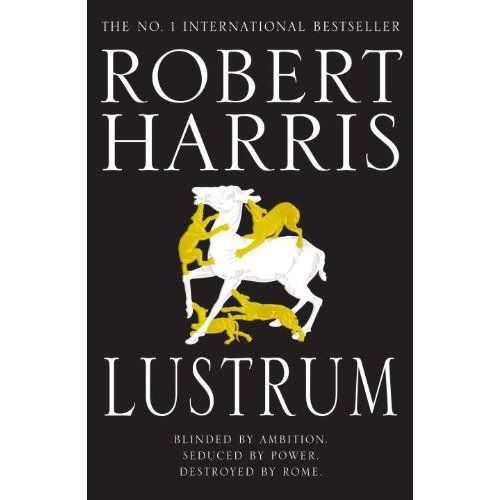
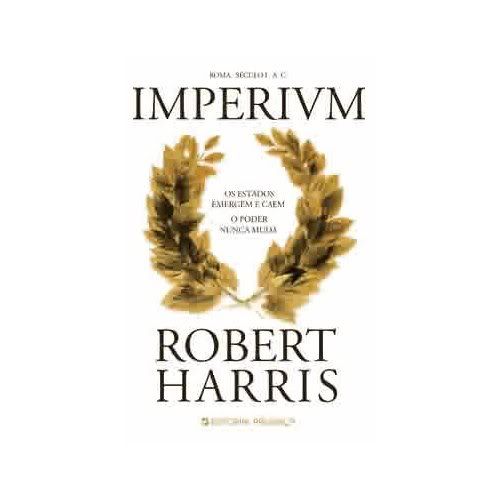
Review: Robert Harris, „Imperium” and „Lustrum” (a.k.a. “Conspirata”)

Synopsis

These books are two parts of a planned trilogy based on the life of Marcus Tullius Cicero, taken mostly from his own letters and transcripts of his speeches. The rise to power of that well-known self-made Roman senator and lawyer is told from the perspective of Tiro. He was Cicero’s loyal slave and amanuensis, the inventor of the first shorthand system which enabled him to accurately record every word the Senator uttered (or anybody conversing with him for that matter). We meet him in the twilight of his years (Tiro is said to have lived till one hundred, no mean feat in those times), composing his memoirs and acting as our humble narrator, knowing his days are counted and therefore he doesn’t have to be afraid of anyone anymore. The focus here is not on Tiro, though, who, as a slave, is reduced to being just a fly on the wall, but on the events which swirled around him and he happened to live in very interesting times; through his eyes we witness the final days of the Roman Republic full of dramatic events – the result of scheming and conniving of the best, the brightest and the richest Roman citizens to gain more power. Cicero’s court victory over the murderous tyrant Verres, despite him being supported by the aristocracy, using only the power of his oratory, was a show worth live tv transmission (pay-per-view of course, nothing less!). The victory opened Cicero the way to the highest position available in the ancient Roman Republic. It was also the beginning of his end. Sometimes when people finally reach those highest honours and posts they had strived after so badly they simply lose their focus as there’s nothing left to fight for. I think it was also the problems of Cicero – “Lustrum” is a downward ride as “Imperium” was an upward journey and the pace is truly similar to that of a good rollercoaster. It starts with an ugly murder of a young slave boy who apparently became a human sacrifice as the body had been strangely mutilated. Who killed him and what for? Cicero as the new Consul would like to solve this crime but it proves more difficult that he ever imagined, especially as he must fight a more demanding opponent than Verres – the psychopathic but likeable aristocrat, Lucius Sergius Catilina. Meanwhile we are shown the unstoppable accession to power of the ruthless but very clever Gaius Julius Caesar, financed and helped secretly by a general-cum- businessman, Marcus Licinius Crassus. Abroad, Rome is consolidating its massive empire with the help of another general, Gnaeus Pompeius the Great, who is a figure very respected by his soldiers but definitely lacks Caesar’s brains and insolence. A no-holds-barred struggle for power is brewing and there will be plenty of casualties. Will Cicero be able to defend his position and come unscathed? Who will he support? What effect will his decisions have on his family and friends?

What I liked:

Plenty. Even if you are familiar with the history of the ancient Rome and you know pretty well how the Republic ended you will be neither bored nor annoyed. The author is clearly confident that he's preaching to the choir : the narration is presented in such a non-condescending but captivating way that you are simply swept up by the current of events. People and their motives are unchangeable after all, so whether we see power-hungry politicians, ruthless businessmen, high-born psychopaths or vain generals we usually can relate. To put it shortly both books are well written, fast-paced and in parts so gripping that I would find myself reading yet another chapter long after I should have gone to sleep. Harris, unlike e.g. Dan Brown, truly excels in creating three-dimensional characters. The scenes set in the senate and court houses are worth the entry fee alone.

What I didn’t like:

The final gesture of Tiro, after being liberated by his master (I won’t tell you what it was as it would be a spoiler) was a bit too much soap-opera thing for me. I also would like to see more scenes with women playing the main role. Where’s the final part, by the way?

The final verdict:

These two books are highly recommendable - even if you are not into historical books you will be delighted!


.