
Showing posts with label recommending. Show all posts

Tuesday, 20 August 2013

A Passage to India by E. M. Forster

Synopsis:
It is India in the year 1924 or thereabouts. After a mysterious incident during a visit to the Marabar Caves, Dr Aziz is accused of assaulting Adele Quested, a young Englishwoman. As he’s brought to trial the fragile structure of Anglo-Indian relations collapses and the racism inherent to colonialism is exposed—a theme which still has powerful, dangerous realities today.


This is a biased review: I am too blinded by the beautiful language and awestruck by the reach of the story and its implications.

Dr Aziz is quite far from a likeable character. He is thoughtless, he has a high opinion of himself and definite opinions of others. He also copes with the English authority by the means of humour. He laughs at them and lets them laugh at him. Dr Aziz meets Mrs Moore in a mosque when he scolds her about keeping her shoes on. When it becomes clear that she’s not wearing any footwear, apologies are made and an honest dialogue begins. That discussion comes to an end when Dr Aziz has escorted Mrs Moore back to the Club into which Indians aren’t allowed.

Through Mrs Moore Dr Aziz meets Ms Quested—a newcomer to India like Mrs Moore—and ends up escorting them both to the Marabar Caves. It is at the caves where something happens.

Like so often in real life, even today, it’s never made perfectly clear what exactly happens at the caves. All that is known is that Ms Quested fled from the scene quite upset and that Dr Aziz is to blame. Or maybe not. He claims he’s innocent and Ms Quested isn’t quite sure herself what happened, but she’s the victim and beyond reproach. She’s a naïve young woman but more importantly she’s an Englishwoman and he’s an Indian.

Watching the events unfold was like watching a documentary from the year 2013. I’m serious, nothing’s changed in ninety years. When a white woman is attacked the dark man is to blame. He’s guilty until proven innocent and maybe not even then. The courts may let him go but that’s a failure on their part not evidence of his blamelessness.

It’s still true today that while individuals may bridge that gap between the races and become friends, society as a group almost never does. Old prejudices die hard.

While the legacy of colonialism is quite foreign to me, I could still identify with Adele Quested because she’s a woman. She’s someone who wants to see the best in people and ends up making a horrible mistake. She’s also the one whose word weighs least when it comes to the crime she’s the victim of. As soon as she’s uttered one accusatory word, the men take over. The Englishmen. They’ve arrested, put Dr Aziz on trial, and judged him before the first hit of the gavel. Dr Aziz is guilty and thus every Indian is. The English are better. Even the women but who listens to the women? Certainly not Dr Aziz who is furious to be accused by someone so ugly.

Contradictions. This book is full of contradictions, but so are people. I just wish we’d learned to know better by now.

Thursday, 8 August 2013

Thick as Thieves by Tali Spencer

Synopsis:
After Vorgell the barbarian fucks himself with a unicorn horn, he ends up in a cell with Maddog, a pretty young thief. It’s lust at first sight for Vorgell—but honestly, he can’t help it. Unicorn horn is a potent aphrodisiac, and now he can’t stop thinking about sex. Luckily, Madd is one male witch who knows how to put Vorgell’s new magical body to good use when he tricks Vorgell into a kiss that helps them escape.

Vorgell may desire sex in general—and Madd in particular—but Madd has no intention of being screwed by a man twice his size. He has problems of his own, including an enchanted collar that causes him to desire his most hated enemy. He wants that collar off as soon as possible, but that requires stealing a basilisk egg from the castle they just escaped.

Drawn together by lust and magic, the two men join forces and soon find themselves up to their necks in witches, wizards, and trouble. Vorgell and Madd might just be perfect for each other, but first they have to survive long enough to find out.

After reading the very first line of the blurb, I knew I had to read this book. If you haven’t read it yet, here’s why:

After Vorgell the barbarian fucks himself with a unicorn horn, he ends up in a cell with Maddog, a pretty young thief.

If that right there isn’t the hook that’s grabbed you, I don’t know what is. It promises a unicorn horn dildo, a barbarian, and a thief. What else could you possibly ask from a fantasy m/m story? Witches and Wizards? It has those too. Creative place names and adventures? Likewise. Witty one-liners and loveable characters? Done and done. You can also add adorable, deadly pets on the list. I’m not even going to complain about the female characters.

It’s true that the world-building has men in somewhat a disadvantage and that most women are hostile towards Madd in the beginning, but as the story progresses the reasons are revealed. Those reasons are real, based on characterisations and the story history, not flimsy deus ex machinas.

Everyone is flawed and no one is simply the best in anything. Even Vorgell has his difficulties. They’re average people by their own standards with individual fears and desires. They have limitations and rules they must follow. There’s death and suffering too. And significantly fewer inappropriate erections than you’d expect from a book with a sex magic inflicted cock. That’s another testament to a strong characterisation.

Don’t misunderstand me, there’s sex. There’s oral and anal, but in the end it’s not the driving force of the story. It’s a convenient set up. One that surprises you again and again with its implications. Or maybe that’s just me. I can be slow at times.

Be careful with this book. It pulls you under, makes you slightly uncomfortable—in the good way—and has you holding in your laughter. If you’re lucky you’re in a place where you don’t have to hold it in and you can make as much noise as you want. And no, I don’t think it’s just me.

I highly recommend you read Thick as Thieves.


Saturday, 20 July 2013

The Heiress Effect (Brothers Sinister #2) by Courtney Milan

Synopsis:
Miss Jane Fairfield can’t do anything right. When she’s in company, she always says the wrong thing—and rather too much of it. No matter how costly they are, her gowns fall on the unfortunate side of fashion. Even her immense dowry can’t save her from being an object of derision.

And that’s precisely what she wants. She’ll do anything, even risk humiliation, if it means she can stay unmarried and keep her sister safe.

Mr. Oliver Marshall has to do everything right. He’s the bastard son of a duke, raised in humble circumstances—and he intends to give voice and power to the common people. If he makes one false step, he’ll never get the chance to accomplish anything. He doesn’t need to come to the rescue of the wrong woman. He certainly doesn’t need to fall in love with her. But there’s something about the lovely, courageous Jane that he can’t resist…even though it could mean the ruin of them both.


Trust Milan to turn another historical romance cliché on its head. No, it’s not an inexplicable déjà vu, yes, I’m repeating myself again.

Jane Fairfield doesn’t want to get married. It’s not that she doesn’t want to fall in love and have a family, it’s that the family she has—her sister—is more precious. Having been neglected and starved for parental love and care, Emily and Jane are each other’s worlds. Well, there’s some bad literature involved too, a girl can’t avoid that not even in the 19th century. Or they would be if Emily’s guardian would let them. The Fairfield girls have little choice but to wait and count the days until Emily’s majority and freedom.

It’s just that a promise and Jane’s enormous fortune make achieving this goal a little bit difficult. Here’s where the mountains of lace come in. Jane was never brought up to be a proper lady and now she’s taking those liberties she has taught herself to the extreme to protect herself, her fortune, and her autonomy. That is to say she wears horridly tasteless gowns (some do like bright colours, even I, occasionally) and doesn’t shut up like a proper lady should (not—which, good for her—but is expected to). She’s smart and capable, but she’s also been coddled in a way. No one has taught her how to be ruthless. She’s about to learn.

Oliver is ambitious. He has everything Jane doesn’t: A loving family and a thorough education he means to use. He wants a career in politics (which makes me question his intellect and attractiveness to be quite honest) and he wants to change the world. He knows how to be ruthless, when to take a punch and when to walk away, and that has left its mark on him. Nope, we’re not talking about visible scars either, unless you count the freckles, which my mother does every summer just to annoy me.

Both Jane and Oliver are well off. They’re not starving and though they have their challenges, they’ve found ways to cope. Neither recognises that in this link or circumstances it’s them in danger of breaking. They both need saving before they lose themselves.

I admired how proactive Jane was. She didn’t stand still and wait someone to come rescue her, she faced the danger and rescued herself. It was a treat especially now that I’ve read theCarhart books. She was the one who found a solution for Oliver’s problem. She was the one who discovered the strength to play dirty. Jane recognised Oliver’s doubts and adapted but only to a degree her self-worth would let her. And in the end her choices forced Oliver to adapt.

As I saw Jane conquer one obstacle after another, I was left wondering whether there’d be left anything for Oliver to do. Sure he had the important task of negotiating a new law, but on a more personal level he appeared inert. I didn’t get it until I did. The flinching, it’s what I’ve learned to do. Not from fights, but talking. I simply don’t have the passion and strength to do it like I used to and I’ve learned to pick my moments. I understood the importance of Oliver reclaiming that part of himself. I also chalked it up to different tempers and theatrics. Partly.

The rest of it were the genre dictated expectations, which I’m also blaming for the epilogue. Too nice a bow for the story. Maybe that moment of absolutely happiness had been earned, but I think Jane and Oliver would have been better—more real—without it.

This being a romance novel I have my little gripes too. I’m definitely not a fan of the euphemisms even if it’s virginal Jane describing the scene. However, that doesn’t explain why Oliver would ever refer to his penis as his member (of parliament). And let’s not forget the slight ridiculousness of how their short-lived affair began. It should have been Jane who interrupted them, not the rain.

There’s also something that takes this book a step beyond the typical romance. Milan gives Emily a voice to show just how capable she is and to highlight another less talked of historical fact: Immigration. As surprised as I was to see the time taken to develop this side of the story, it fit well into the rest of the narration.

On a technical level, this is one of Milan’s successes. The text flows and plot is balanced. There weren’t any of those weak moments that plagued The Duchess War.

There weren’t any violent mood swings this time, only some deep laughs, but I loved it all the same.


Thursday, 18 July 2013

Mind Fuck by Manna Francis (The Administration #1)

Synopsis:
There are no bad guys or good guys. There are only better guys and worse guys. One of the worse guys is Val Toreth. In a world in which torture is a legitimate part of the investigative process, he works for the Investigation and Interrogation Division, where his colleagues can be more dangerous than the criminals he investigates. One of the better guys is Keir Warrick. His small corporation, SimTech, is developing a "sim" system that places users in a fully immersive virtual reality. A minnow in a murky and dangerous pond, he is only beginning to discover how many compromises may be required for success. 

Their home is the dark future dystopia of New London. A totalitarian bureaucracy controls the European Administration, sharing political power with the corporations. The government uses violence and the many divisions of the feared Department of Internal Security to maintain control and crush resistance. The corporations fight among themselves, using lethal force under the euphemism of "corporate sabotage," uniting only to resist attempts by the Administration to extend its influence over them. Toreth and Warrick are more natural enemies than allies. But mutual attraction and the fight for survival can create unlikely bonds

I thought about giving this book five stars.

As the days and weeks went by and I failed to write a proper review, I realised I’d made the right decision. Mind Fuck is a really good book but it’s not extraordinary.

In the dystopic future there’s the Administration. There aren’t really any nations, just regional Administrations and corporations that control people’s lives. This is a world where everything is monitored unless it’s not—to protect business secrets—and where torture is legalised.

That’s where Toreth works: In Investigation and Interrogation, I&I. He goes through mountains of paperwork, adjusts drug dosages and on an occasion handles the more precise tools of the trade. He also has irregular one-night stands under assumed names in hotel rooms he charges his employer for.

All in all, it’s a good life. Then he meets Warrick.

Just as Toreth has sold his life to the Administration, Warrick has tied himself to the corporations. He’s brilliant and just as emotionally challenged as Toreth is, albeit in his own way. These two men, they get under each other’s skin and can’t quite get rid of one another. Logic and life experience dictates that they must, but a convenient murder mystery ensures they can’t.

Mind Fuck is as light on the erotica and BDSM as it is on the world building. Still, I got the feeling everything had been thought through and that the author is asking the reader to trust her while she properly introduces the characters. Looking at the long list of The Administration series novellas and novels there’s a lot left to explore. Still, I wouldn’t recommend this to the fans of pure dystopia as much as to the fans of slow-burn m/m. The world and the predictable mystery only serve as a pale background to the characters.

And the characters are wonderful. They’re neither perfectly healthy, normal, or anyone I’d want to know in real life, but they are interesting. Their relationship is interesting. Their struggle to discern reality from the artificial and will to survive their circumstances is interesting. This story is interesting

If you don’t mind a narrative where the third person limited voice occasionally slips into first or that the story draggs from time to time, this is a book worth reading.

Tuesday, 9 July 2013

World War Z: An Oral History of the Zombie War by Max Brooks

Rameau's ramblings: Blodeuedd and I had a little discussion about this book and you can find it on her blog later today. 

Synopsis: 
It began with rumors from China about another pandemic. Then the cases started to multiply and what had looked like the stirrings of a criminal underclass, even the beginnings of a revolution, soon revealed itself to be much, much worse. Faced with a future of mindless, man-eating horror, humanity was forced to accept the logic of world government and face events that tested our sanity and our sense of reality.

Based on extensive interviews with survivors and key players in the 10-year fight-back against the horde, World War Z brings the very finest traditions of American journalism to bear on what is surely the most incredible story in the history of civilisation.

Max Brooks lives in New York City but is ready to move to a more remote and defensible location at a moment's notice. His Zombie Survival Guidewas adopted as a required text by all of the world's basic military training programs during the recent global conflict.


Zombies are not my thing. I don’t squee every time I find a decent novel about them nor do I queue to see the horror films about them. Slow-moving rotting flesh in a romance plot is definitely not my thing either.

So it’s a good thing that this book isn’t about zombies at all.

Excuse me what? You splutter.

Yes, you read that right, World War Z isn’t really about zombies. It’s about the world and people in it, namely Americans. No, the citizens of the United States of America would be more accurate. This is an American novel about Americans today, or rather about U.S. and its inhabitants seven or ten years ago. Things don’t change that much in a decade though, so it still applies.

The slow-moving rotting flesh is just an ugly mirror that produces a surprisingly clear image. It allows the characters to look back and explain in gory detail who they were before the Great Panic and how they’ve changed for the better. It allows a suburban mom to explain how she viewed some latinos clean and rational opposed to all the rest. It allows a child who grew up during the ten year zombie war to explain how her materialistic priorities have changed. It allows a jaded young man to explain how he learned to appreciate an outdated institution or how another like him found value in real life as opposed to the cyber reality he’d been hiding in. It allows the foot soldiers to explore in depth how rigid command structures can be a hindrance before they learn to adapt and become a strength.

And that same distorted mirror allows the reader see what the characters themselves fail to understand: How a victory and change can make some things worse even when it fixes other problems. It allows the author to outsource his and the nations greatest fears to other faraway places that they’ve always been afraid of. Or how else do you interpret what Russia becomes after the war?

Brooks takes the reader around world, China, South Africa, a few places in Europe, Australia, Canada, and allows those countries to take responsibility for some of the atrocities and failures that end up dooming and saving the world. Setting it all up in the U.S. would have ignored the realities of travel in the modern world and it would have made the story near claustrophobic. It’s a funny word to use in this context but it applies. The bigger the picture Brooks paints the more specific the message and the intended audience are.

Usually, I detest first person voice storytelling and a step below that are the stories with multiple first person voices mixed in together. Usually. But here it works. Brooks couldn’t possibly make each and every voice distinct enough to stand on their own, but he litters just enough specialised vocabulary to make it palatable. The format does the rest. Because each and every character is telling their part in a larger story, their voices can’t stand out too much. The story needs to be cohesive for the message to get through:

The more things change, the more they stay the same. Even through a zombie apocalypse.

Friday, 28 June 2013

Review: Glow (Sky Chasers #1) by Amy Kathleen Ryan

Synopsis:

What if you were bound for a new world, about to pledge your life to someone you'd been promised to since birth, and one unexpected violent attack made survival—not love—the issue?

Out in the murky nebula lurks an unseen enemy: the New Horizon. On its way to populate a distant planet in the wake of Earth's collapse, the ship's crew has been unable to conceive a generation to continue its mission. They need young girls desperately, or their zealous leader's efforts will fail. Onboard their sister ship, the Empyrean, the unsuspecting families don't know an attack is being mounted that could claim the most important among them...

Fifteen-year-old Waverly is part of the first generation to be successfully conceived in deep space; she was born on the Empyrean, and the large farming vessel is all she knows. Her concerns are those of any teenager—until Kieran Alden proposes to her. The handsome captain-to-be has everything Waverly could ever want in a husband, and with the pressure to start having children, everyone is sure he's the best choice. Except for Waverly, who wants more from life than marriage—and is secretly intrigued by the shy, darkly brilliant Seth.

But when the Empyrean faces sudden attack by their assumed allies, they quickly find out that the enemies aren't all from the outside.


This wasn’t an easy read for me. Not only did real life constraints make it difficult for me to find the time to read but the writing itself didn’t exactly suck me in. Ryan’s writing is efficient and it gets the point across but she isn’t a wordsmith like Laini Taylor is. She’s a plotter, and that’s a skill that means more to me than pretty words.

If you’ve read the blurb you know there are two space ships carrying the last vestiges of the human race to a faraway place and that there are two teenagers in the middle of it all. The blurb also promises a love story or a triangle, but it’s hardly mentioned after the set up. It’s the process of growing up in an unlikely situation and learning to take responsibility for one’s actions that dominates the story. That and survival.

I’m not going to talk about the science simply because I decided not to think about it too hard. I’d never been able to finish reading the book had tried. Not that there is much scientific detail to bog down the tragedy of humanity, but there was enough for me to consider it unlikely. That applies both to the space travel as well as to the fertility solution especially considering they were fleeing an environmental catastrophe… I said I wouldn’t talk about it and I won’t. Instead let me introduce you to the main characters.

On the plus column there’s Waverly, an anti-Mary Sue and a very regular sixteen year old girl at the cusp of adulthood. Because of the mission she’s expected to marry and procreate, but she has her doubts. In a way, what was done to her should’ve been a blessing for her and her desire to choose for herself had she actually been given the opportunity. Because she’s still a child she still needs her mother, but because she’s almost an adult she also learns to take care of herself and others, even if there are mistakes made along the way.

On the minus column there’s Kieran. He’s intolerable know-all who goes through a very difficult journey to realise that maybe he doesn’t know it all after all. He too learns from his mistakes even if he’s not ready to face the slippery slope he’s drifted on.

You can invert the columns if you like but you can’t change what dominates them both: Religion. Christianity. The folly of knowing God’s will and imposing it on others. Or simple ambition, thirst for power. And the rejection of it.

Glow reads like a carefully constructed adventure story with each point of view delivering only a sliver of the bigger picture. Both Waverly’s and Kieran’s chapters are subjective to their situation and viewpoint, but it’s the use of third limited that allows the reader enough distance to see through the (obvious) manipulation. Ryan doesn’t shy away from showing flaws and gaping holes in morality in absolutely everyone. Each character is only acting and reacting based on their own experiences. Except when they’re not.

Apart from Waverly, Kieran, and Anne Mather—and you can challenge me on Anne Mather—all other characters are accessories and subject to the whims of the plotter. For example, Ryan tries to justify Seth’s behaviour after the kidnapping in couple of different ways but I didn’t find those reasons completely believable. And unless he gets his own chapters in the following books, I fear he’s doomed to remain a pawn in Waberly and Kieran’s game and the object of their mutual desire.

Glow isn’t an easy read because of its subject matter and real moral dilemmas but it is a book that makes you think. I wasn’t completely sold on the delivery, but I applaud the message.

This recommendation comes with a warning: Glow is the first book of Sky Chasers series of which only first two have been published. The third is expected to be published in 2014.

Thursday, 27 June 2013

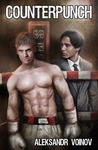
Rameau's Review Archive: Counterpunch (Belonging #2) by Aleksandr Voinov

Originally posted on Goodreads on Feburary 8th 2013.

Synopsis:
Fight like a man, or die like a slave.

Brooklyn Marshall used to be a policeman in London, with a wife and a promising future ahead of him. Then he accidentally killed a rioter whose father was a Member of Parliament and had him convicted of murder. To ease the burden on the overcrowded prison system, Brooklyn was sold into slavery rather than incarcerated. Now, he's the "Mean Machine", a boxer on the slave prizefighting circuit, pummelling other slaves for the entertainment of freemen and being rented out for the sexual service of his wealthier fans.

When Nathaniel Bishop purchases Brooklyn's services for a night, it seems like any other assignation. But the pair form an unexpected bond that grows into something more. Brooklyn hesitates to call it "love"—such things do not exist between freemen and slaves—but when Nathaniel reveals that he wants to help get Brooklyn's conviction overturned, he dares to hope. Then, an accident in the ring sends Brooklyn on the run, jeopardizing everything he has worked so hard to achieve and sending him into the most important fight of all—the fight for freedom.


Counterpunch (Belonging, #2)Counterpunch by Aleksandr Voinov

This review can also be found on Book Girl of Mur-y-Castell-blog.

Imagine a modern Britain where at least two or three decades ago the politicians gave up on trying to keep up with the ever-growing prison population, chucked the fourth article of the Universal Declaration of Human rights, and started to commute life sentences into slavery. Now people are both born and condemned to it. And it’s not just in Britain, it’s all around the world.

Brooklyn Marshall was born free and worked hard to build a good life for himself. Then a simple mistake, an accident, at the job took all that away from him. He was made into an example and his life was no longer his own. Now he boxes because it’s better than getting shot at in a war zone, and he fucks and is fucked because he is told to. He is used. He’s chattel that can talk.

”You haven’t resigned yourself to slavery yet, have you?”
“No. And I never will.”


It’s cruel to give hope to a such man, but that’s exactly what Nathaniel Bishop does.

I’m not a fan of romanticising slavery, and I’m not a fan of any relationship that’s based on a severe imbalance of power, but I’m always curious to see if the author can make it work. If those obstacles of differing wealth, social status, and culture can be overcome believably. Realistically. Even in urban fantasy.

It works here because Brooklyn has never accepted his status as anything less than a human being. It works because both Brooklyn and Nathaniel recognise how wrong their situation is, and because both are fighters in their own way.

Much of the story focuses on the boxing—again, something I know nothing about—and how it reflects Brooklyn’s growth as a character. He’ll never see any of the winnings, but the fighting he does is for himself. He’s broken and beaten both in the ring and out, and he is affected by it, but he’s also a survivor. What doesn’t kill him makes him stronger, and the final fights show this vividly.

If I hadn’t struggled with the beginning of the story—it was good but not amazing—the ending would have earned Counterpunch its fifth star. Voinov opted out of the fanciful and kept it realistic.

P.S. The story includes triggers for <spoiler>    rape    </spoiler>.


Tuesday, 28 May 2013

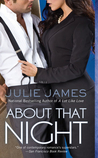
Rameau's Review Archive: About That Night (FBI/US Attorney #3) by Julie James

Originally posted on Goodreads May 4th 2012.


Synopsis:
He's Playing Games

Though Rylann Pierce tried to fight the sparks she felt for billionaire heir Kyle Rhodes the night they met, their sizzling chemistry was undeniable. But after being stood up on their first date, Rylann never expected to see him again. So when she finds herself face-to-face with Kyle in a courthouse nine years later, she's stunned. More troubling to the beautiful assistant U.S. attorney is that she's still wildly attracted to him.

But She's Making The Rules

Just released from prison, Kyle Rhodes isn't thrilled to be the star witness in a high-profile criminal case—but when Rylann comes knocking at his door, he finds she may be the one lawyer he can't say no to. Still as gorgeous and sharp-tongued as ever, she lays down the law: she doesn't mix business with pleasure. But Kyle won't give up on something he wants—and what he wants is the one woman he's never forgotten.

About That Night (FBI, # 3)About That Night by Julie James

This is the point where I say you either like how Julie James writes or you don't. I do think she writes better contemporary romance than most, but it's not ideal for me either. I have my pet peeves like over-repetition of certain jokes, the missed opportunities with familial interactions, and nipples. That's all I'm going to say about the sex scenes this time. Nipples.

The story starts slow with an in depth look at the events that took place nine years earlier. Even when the story jumps ahead to present date, it takes time for the couple to meet. Both Rylann's life after college is established, and the events from the previous book paraphrased to explain Kyle's current situation.

As per usual—she says with the voice of experience of reading three books of the same series—Julie James creates three dimensional characters with thought out motives and strong friendships. There's always more under the surface and this is emphasised with a character like Kyle Rhodes.

In A Lot Like Love Jordan Rhodes was said to have a recognisable face from the Chicago gossip columns, but it wasn't an all-pervading part of her daily life like it's for Josh Kyle—dammit Alicia. His mugshot and heir apparent status ensure that every stranger has an opinion on him. There's a public image he exudes, but excluding three people who have known him longer than a decade no one really knows the private side of him. So far that hasn't been a problem, and Josh Kyle actually prefers it that way.

Then Rylann Pierce walks into the courtroom and back into his life.

The fact that they almost had a date in college makes Rylann just curious enough to let herself bend the rules and divert from her twelve-year-plan. She's a good girl prosecutor who plays by the rules, but with Kyle she makes a few new rules. For Kyle, who is used to playing games, this is a novel experience. They play these power games to the point where it made me uncomfortable. I assume it was done to heighten the sexual tension, and it did, but it also made me realise that I didn't like Rylann very much. Not at that point at least.

Still, their behaviour was true to their characterisations and, like always with Julie James, that drove the plot. Sure, there were external obstacles too, but the biggest problems Rylann and Kyle had with their relationship, came from within. Rylann's need to plan ahead and exude a certain kind of image because of her work, and Kyle's need to turn his life around and let go of a few grudges dictated their interactions.

I especially like how Julie James' characters don't always get what they want. It doesn't matter whether or not an apology is justified or not, when they don't get it, they act like an adults and move on with their lives. They don't throw huge tantrums that artificially kick start a romantic comedy and drive the plot. There's something very real about them. So real, that I'm always disappointed when there's not enough room for one more scene of "meet the family."

Julie James needs to stop doing that.

She needs to stop creating stellar secondary characters like Nick's Italian mother, or Kyle's father Grey, or Rylann's busybody mother and not have them meet the significant other their child is dating. I was beyond disappointed that Nick's mother didn't suddenly turn up in Chicago to meet this girl his son had talked about, because I really, really wanted to read that scene. I know the author aims for realism, but dammit, this is a book:

Bend the rules a little and have the characters do something outrageous.

Or at least explain their motives a little better. While I'm not heartbroken that Kyle never got to meet Rylann's mother in this book, I would have liked to have those comments and phone calls explained a little better. As it stands, her mother's only function in this book was to guilt Rylann into wanting to stay away from Kyle. Sure, I understood Rylann's motives, but I never understood why her mother would call to talk about the Twitter Terrorist if she didn't suspect there was something going on between them. And I never got an answer for that.

I'd really like an answer to that. I'd really like to read in-between-novellas where Jordan is introduced to Nick's family, and Kyle has to win over Rylann's retired paralegal mother. I'm not above bribery either. Some good wine and chocolate should do the trick, don't you think?


Friday, 24 May 2013

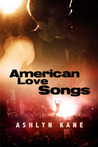
Rameau's Review Archive: American Love Songs by Ashlyn Kane

Originally posted on Goodreads September 2nd 2011.


Synopsis:
Jake Brenner has too many wild oats to sow to fall in love-or so he claims. Besides, he's much too busy with his band, the Wayward Sons, to go looking for romance. His reticence has nothing to do with his embarrassing crush on Chris, the band's lead singer and Jake's erstwhile best friend. But that was before enigmatic wanderer Parker McAvoy signed on as the band's new lead guitarist.He can only deny his attraction to sweet, dorky Parker for so long before the urge to do something about it becomes impossible to ignore. The trouble is, Parker knows all about Jake's philandering ways-and oh, yeah, he's not gay. Or so Jake thinks until a string of related events provides encouraging new insight. Can he convince Parker to overlook his colorful past and give him a chance? Or will this love song fade out before it even begins?(

American Love SongsAmerican Love Songs by Ashlyn Kane

I've read nearly a hundred books this year. Some of those have been decent, several I can call good, and a handful were really great. But there's been only one book that's lingered in my mind like this. Until now.

Jake Brenner is a twenty year old college drop out of his own volition. He chose music and the band, or more accurately, he chose Jimmy, his best friend, and Chris, his long time crush, over school. After a drunken mishap the band is forced to find a new guitarist and Jake a new roommate.

In walks Parker McAvoy, a mysterious musical genius, who finds a his place with them after a long drifting period. And he quickly finds his way into Jake's heart too.

I spent two days in a reading haze immersed in these boys' lives. I cried, I laughed, and I felt my heart tumble. The characters swept me along with them on this amazing journey from uncertainty and anonymity to certainty and fame. I watched these characters grow and accept change like too few people do.

Most of all, I enjoyed the writing. It didn't drag me down with false bravado, but carried me through the scenes and showed me their emotions effortlessly. The characters stayed true to themselves and their actions made sense, even Parker's whose motives weren't revealed until the end.

And you know how I'm always complaining about the annoying point of view changes usually between first person voice and third limited, well, it turns out it doesn't matter one bit when it's done right. From the beginning the story is scattered with Jake's blog entries and occasional emails, which feel like just extension to the dialogue. Jake's voice is clearest in his postings.

I read the ebook, but I'm still eyeing the hardcover. It's that good.


Wednesday, 22 May 2013

Rameau's Review Archive: A Lot Like Love (FBI/US Attorney #2) by Julie James

Originally published April 16th 2012.


Synopsis:
The FBI wants her cooperation.
As the daughter of a billionaire and the owner of the city's top wine store, Jordan Rhodes is invited to the most exclusive parties in Chicago. But there's only one party the FBI wants to crash: the charity fundraiser of a famous restaurateur, who also happens to launder money for the mob. In exchange for her brother's release from prison, Jordan is going to be there—with a date supplied by the Bureau.

Agent McCall just wants her.
As the top undercover agent in Chicago, Nick McCall has one rule: never get personal. This "date" with Jordan Rhodes is merely an assignment— one they're both determined to pull off even if they can't be together for five minutes before the sarcasm and sparks begin to fly. But when Nick's investigation is compromised, he and Jordan have no choice but to pretend they're a couple, and what starts out as a simple assignment begins to feel a lot like something more.


A Lot Like Love (FBI / US Attorney, #2)A Lot Like Love by Julie James

Julie James has fallen was pushed stepped down from the pedestal of my unreasonably high expectations. She is, after all, just a woman who writes better contemporary romance novels than most.
This time I knew what to expect. I knew to expect characters that are strong and coherent, and I knew to expect a story that won't surprise me with its twists and turns but will effectively carry through and take the pressure off the romance. I knew to expect something believable--or as believable as the romance genre is capable of offering.

I like how Julie James does her research and how it shows in the daily details of a lawyer or a wine merchant. I like how Jordan teaches Nick about wine, looking at it, and tasting it. What I would have liked even more, if the passion a person or a character feels for his or her trade had shone through the text. For example, when Jordan explains that a wine's age affects its hue, she fails to elaborate how it affects it. For someone who works, lives, and breathes the stuff, that little detail should be clear as day and slip out in everyday discussion whether it bores the none wine enthusiasts or not. I know that when I start explaining physics I won't stop talking and pointing out little details until someone shuts me up or until I reach the limits of my knowledge.

Then there are times when the author should know to shut up. Writing the same word or expression over and over is like repeating a joke after it stops being funny. It's something I can live with, but I doubt it will ever fully stop nagging at me.

I didn't notice this, until Alicia pointed it out to me, but James likes to describe clothing and she likes to do it by saying he wore or she wore a lot. So I can say, there are some perks to not caring about everyday fashion--or fashion at all. Except Crocs. Even I won't wear them.

As to something that didn't affect the plot, but could have, I'm asking:

Why does Nick tell absolutely everyone that he works undercover and why does he tell absolutely everything about those undercover works of his? Telling his family about working undercover is one thing, spoiler telling a random sex buddy is anotherspoiler. The woman's confusion over his last name would have been enough to tip off the private detective, because apparently that was her only function. I wonder how such a blabbermouth survived doing that job for so long.

It's been a while--few days--since I read this book, and I can't think of much more to say. Other than to thank Alicia for recommending it to me. If the next two books I read from Julie James are as good as this, I'll be adding another author on my favourite authors list.


Thursday, 16 May 2013

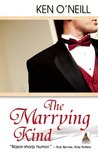
Rameau's Review Archive: The Marrying Kind by Ken O'Neill

Originally posted on Goodreads June 18th 2012.


Synopsis:
Wedding planner Adam More has an epiphany: He has devoted all his life’s energy to creating events that he and his partner Steven are forbidden by federal law for having for themselves. So Adam decides to make a change. Organizing a boycott of the wedding industry, Steven and Adam call on gay organists, hairdressers, cater-waiters, priests, and hairdressers everywhere to get out of the business and to stop going to weddings, too. In this screwball, romantic comedy both the movement they’ve begun and their relationship are put in jeopardy when Steven’s brother proposes to Adam’s sister and they must decide whether they’re attending or sending regrets. 


The Marrying KindThe Marrying Kind by Ken O'Neill

As I was browsing through NetGalley I happened on this book. I glanced at the cover, read the blurb, and thought maybe not. Then I looked at the author's name, and thought maybe yes.

A M/M romance written by a man? Definitely, yes.

Skimming through the blurb I thought this book would be more about Adam, the wedding planner who quits his job in protest until he can legally marry his partner Steven, but as it turns out it's not. It's more about Steven, the columnist for The Gay New York Times, with a Romanian family and more than his share of neuroses. He tells the story of how their wedding boycott started and how others embraced it. He shows how the wedding plans of their siblings created conflict not only between them and their families but between Adam and Steven and their cats too.

The Marrying Kind is written in first person limited there's only one way to win me as a reader over once that writing choice has been made: The narrator's voice. I'll either love it, tolerate it, or hate it. While I can't claim to be ready to drop down on one knee and profess my undying love, neither can I dismiss O'Neill's writing as merely tolerable.

Despite the slow start I found myself swept away even by the long paragraphs flashing back to Steven's childhood and other significant moments of his life that usually annoy me with all that telling going on. And then there were the moments of showing. I might have awed a couple of times, but I was usually giggling, cackling, or guffawing loud enough to scare the unsuspecting passes-by depending on the moment. Most of my status updates are direct quotes from those moments I once again scared the neighbours.

The book is filled with classical film references some of which I recognised and others didn't. Luckily, the author provides a short summary for the relevant parts. One thing the book isn't filled with is erotica. The plot doesn't dissolve into pure porn and there is exactly one reference to a sex scene and it's vague. That fact almost makes me want to give this book an extra star.

Though, I've shelved this book under romance, it's more than that. The story is set in New York in 2007 when gay marriage was yet not legal in the state. It's about fighting what's right and making your family see it. It's about the reality of a stable relationship and accepting your partner as is. It's about showing why equal rights should be equal.

I couldn't recommend this book more if I tried.

I received an Advanced Readers Copy of this book from the publisher through NetGalley.


Tuesday, 7 May 2013

Rameau's Review Archive: What the Librarian Did by Karina Bliss

Originally posted on Goodreads December 13th 2012.


Synopsis:
Is Rachel Robinson the only one on campus who doesn't know who Devin Freedman is? No big deal except that the bad-boy rock star gets a kick out of Rachel's refusal to worship at his feet. And that seems to have provoked his undivided attention. Devin, the guy who gave new meaning to the phrase "sex, drugs and rock 'n' roll." Devin, the guy who somehow becomes wedged between her and the past she's kept hidden for years. 

It's up to this librarian to find out firsthand just how "bad" he really is. Because her secret--and her growing feelings for a man who claims he's bent on redemption--depend on his turning out to be as good as he seems. Which is really, really good.


What the Librarian DidWhat the Librarian Did by Karina Bliss

This review can also be found on Book Girl of Mur-y-Castell-blog.

I may or may not have found my new favourite author.

There’s a reason Harlequin Superromances sell so well in Finland, better than Blaze or any other kinky ultra hot sex series or imprint. The impact of naked skin kind of evens out when you get used to seeing it regularly in the sauna. And we have those long winter nights and comfy blankets in our beds… anyway, it’s all about the story.

Here, two adults in their thirties meet at a point in their lives that isn’t particularly auspicious for romantic entanglements. One desperately wants a family but isn’t ready to commit to a man to have it, and another is trying to build a new start for his life. It’s a good thing then that they don’t know anything about each other and can discover together what the future holds for them. But as I said, the timing isn't the best possible and their past mistakes are about to catch up with them.

I made a list of all the things I loved about this book and it’s as disorganised as are my thoughts, still. I loved the wit and humour Bliss infuses her text with. Jokes are a delicate thing to write especially when the audience doesn’t necessarily share the cultural context with the author, but here:

”It wasn't that he had a five o'clock shadow at nine-thirty in the morning that screamed 'bad boy.' To Rachel's eyes, that simply made him scruffy.”


"Anyone could see she had a conscience. That must be painful for her."


”’I’m not offended. You're not my type, either.'
Perversely, he was piqued. 'Not a nerd, you mean?'
Her eyes narrowed. 'Not housebroken.’”


Look at that and tell me it’s not funny even without the context. I dare you.

I loved the fact that Rachel and Devin didn’t succumb to the insta-lust/love/attraction that’s a plague in modern romances. They were actually slightly antagonistic before building a tentative friendship with the option for more. Their romance was the slow burn kind with push and pull to keep them balanced. One gave the other took, and then they switched places. Truths were shared and actual smarts were displayed. I loved that both Rachel and Devin acted like adults. They weren’t perfect but they owned up to their mistakes and were determined to face the consequences.

One thing I absolutely hate in romance novels is the plot twist involving an artificial, prolonged misunderstanding. It was delightfully absent from this book and it all comes back to characters acting like real adults. Even in their most idiotic moments, they remained true to their characterisations instead of changing to fit the whims of the plot.

As for the reason why I now have a “can-I-has-a-Devin” shelf, let’s just say—without spoiling the book for everyone else—that the man knows the right things to say. (Yes, I’m aware that a woman wrote him.) He has brilliant scenes with Rachel and another character where he expresses his unwavering love, devotion, and trust in her. Once he’s in, he’s in. He’s made up his mind and he won’t let her insecurities drive him away, and he trusts her to figure it out eventually.

I’ll need to read that other book by Bliss I bought on the Harlequin Christmas sale. Then I’ll know if I’ll be adding another author on my list of favourites.


Friday, 3 May 2013

Rameau's Review Archive: Unveiled (Turner #1) by Courtney Milan

Rameau's ramblings: After reading Unclaimed and converting Anachronist into a romance reader, I had to hunt down everything Milan had ever published. So far. These days I savour her books instead of devouring them. 

Originally posted on Goodreads September 22nd 2011.

Synopsis:
Ash Turner has waited a lifetime to seek revenge on the man who ruined his family--and now the time for justice has arrived. At Parford Manor, he intends to take his place as the rightful heir to the dukedom and settle an old score with the current duke once and for all. But instead he finds himself drawn to a tempting beauty who has the power to undo all his dreams of vengeance....Lady Margaret knows she should despise the man who's stolen her fortune and her father's legacy--the man she's been ordered to spy on in the guise of a nurse. Yet the more she learns about the new duke, the less she can resist his smoldering appeal. Soon Margaret and Ash find themselves torn between old loyalties--and the tantalizing promise of passion....


Unveiled (Turner, #1)Unveiled by Courtney Milan

I'm in no shape to write as comprehensive review as I did for the sequel Unclaimed, mostly because I'm lazy and because this not being one of my few ARCs I don't feel obligated enough. But at the same time I feel like I'm not doing this book justice if I don't.

Courtney Milan can write a romance, again, in the best sense of the word. Her characters while highly sexual beings even in historical setting don't just abandon their morals and jump in the sack at the first opportunity. In fact, I'd be hard pressed to name another author who understands as clearly the need for seducing the mind as Milan does. It's all about showing why these two characters are right for each other and why they should choose each other above everyone else with Milan.

In here, Ash Turner is the epitome of as self-made man. He left home at the age of fourteen to make his fortune and ensure the future of his brothers, in doing so, he sacrificed his relationship with them. Now, it's his turn to exact vengeance on those who wronged him and his family when they were poor and in desperate need of help. But he doesn't know if he can have that revenge without damaging his tenuous connection with his brothers permanently.

Margaret Dalrymple is an innocent victim of Ash's revenge, collateral damage if you will, but she's prepared to fight back. Her only chance is to find some unforgivable flaw in the new Parford heir to reclaim her family's inheritance. The only problem, she finds herself falling for the last man whom she should ever fall in love with.

There are numerous reasons why these two should hate each other and why they should be bitter enemies to the end. There's also that tiny spark that if nurtured correctly can grow into an unquenchable blaze. And that's what Milan does. She introduces that tiny spark of chemistry and attraction and lets it grow into an unforgettable love affair without ever sacrificing the uniqueness of the characters.

I might even like Ash and Margaret more than I did Sir Mark and Jessica, but as a whole, the second Turner book was better paced. This one seemed to drag towards the end only to collect itself at the last minute and finish the race in top three.

Spoilers for Unveiled and Unclaimed both: <spoiler> As much as I enjoyed the Sir Mark seduce the debauched courtesan in Unclaimed, nothing in it came close to the sexiness of Margaret taking that key from Ash and locking them in his bedroom for the night before their planned wedding. </spoiler>


Still, I have a feeling I'm going to like Smite's story the best, he just sounds like my kind of man. Can't wait for Unraveled.

Thursday, 2 May 2013

Rameau's Review Archive: Unraveled (Turner #3) by Courtney Milan

Rameau's ramblings: What can I do to help kick off the Romance May? Give you another Milan review! Naturally.

Originally posted on Goodreads December 14th 2011.


Synopsis:
Smite Turner is renowned for his single-minded devotion to his duty as a magistrate. But behind his relentless focus lies not only a determination to do what is right, but the haunting secrets of his past—secrets that he is determined to hide, even if it means keeping everyone else at arm’s length. Until the day an irresistible woman shows up as a witness in his courtroom…

Miranda Darling isn’t in trouble…yet. But she’s close enough that when Turner threatens her with imprisonment if she puts one foot wrong, she knows she should run in the other direction. And yet no matter how forbidding the man seems on the outside, she can’t bring herself to leave. Instead, when he tries to push her away, she pushes right back—straight through his famous self-control, and into the heart of the passion that he has long hidden away…


Unraveled (Turner, #3)Unraveled by Courtney Milan

Having read Unveiled and Unclaimed both, I knew what I was getting myself in for. That's why this review is littered with comments about the anxious wait I was made to suffer until self-published Unraveled was released. You'd think the author would have the decency to write something bad to make it up to me, to make my part as reviewer easier, but no. Damn you Milan, how dare you make me love Smite Turner even more than I thought I would? And Miranda Darling and Ghost? How dare you!

Of the three Turner brothers Smite is the most scarred. His skin may be intact, but inside he carries the weight of the water that once nearly crushed and suffocated him. Inside he's an impenetrable fortress that stands alone under the storms of his nightmares. Inside he's cold, but far from dead.

Ghost, the puppy, may have started the thawing, but it takes a blazing sun like Miranda Darling for Smite to forget himself and break the barriers he's erected just to be able to function. For two decades he's spent simply existing, but when Miranda flattens him with few sharp remarks Smite finds himself wanting to live again.

She's naive yet worldly as only a child grown amidst actors can be. She's a survivor, but not hardened through and through. She has a sharp tongue and wicked mind, but she's also loyal and too trusting. She's a ray of sunshine that lights up the room, but will scorch if faced directly. Miranda is just the right woman to get under Smite Turner's skin.

What starts with a lie and on the grimy streets of Bristol, moves to shining marble halls and into a bedroom. While they are discovering new physical boundaries, an unexpected accord forms between the two lovers. Miranda finds herself attracted to a decent man and Smite opens up to her in a way he hasn't been able to do with anyone else.

I could quote the whole book and it would make more sense than this review so far.

What you need to know is that Smite is a diligent magistrate in Bristol with an unerring memory. He recognises Miranda and stops her from committing perjury, he also follows her to warn her not to try that particular trick in his court again. What Smite doesn't realise is that Miranda has her own set of problems and very little choice. She's bartered her life and skills to the Patron for personal protection for herself and the boy living with her.

Smite might be able to remove Miranda from the dirty and sooty streets, but he can't free her from her obligations. And here, Milan surprises positively. Instead of hiding her troubles and trying to deal with them by herself, Miranda faces Smite and confides in him risking everything now dear to her. Of course this doesn't stop Smite from reacting rather stupidly, but he has the baggage to excuse it.

Despite the slight feel of repetition in the beginning–which might be because I kept putting the book down and rereading to get where I'd left off–the text carried me through the story like a gentle way pushing me to the shore. The way Milan writes makes days feel like hours and weeks feel like years. By the time I finished reading the last chapter I couldn't believe how far both characters and their extended families had come. It felt like I had read the first pages a lifetime ago instead of few hours.

I know I'm forgetting something important–like the laughs–but for the life of me I can't think of anything else without spoiling the journey. This is the best I can do for a five star review and I know it's not nearly enough.

P.S. If anything, this story shows you how important a comma can be.


Monday, 29 April 2013

Review: A Short History of Nuclear Folly by Rudolph Herzog

Synopsis:
In the spirit of Dr. Strangelove and The Atomic Café, a blackly sardonic people’s history of atomic blunders and near-misses revealing the hushed-up and forgotten episodes in which the great powers gambled with catastrophe. Rudolph Herzog, the acclaimed author of Dead Funny, presents a devastating account of history’s most irresponsible uses of nuclear technology. From the rarely discussed nightmare of “Broken Arrows” (40 nuclear weapons lost during the Cold War) to “Operation Plowshare” (a proposal to use nuclear bombs for large engineering projects, such as a the construction of a second Panama Canal using 300 H-Bombs) . . . Herzog focuses in on long-forgotten nuclear projects that nearly led to disaster.

Translated by Jefferson Chase.


"The problem, both in the West and behind the Iron Curtain, was a lack of imagination. No one was able to picture the worst-case scenario."

That was fun. Slightly preachy, but it comes with the territory of stating the obvious about dire things that threaten life on earth. Also, the author—or translator—likes to use the word ironically quite a lot which makes things a lot less ironic. This could have been an intentional choice considering the subject matter.

Herzog starts with a short personal history and an explanation. This book isn’t about the most well known nuclear events in our history—Hiroshima and Nagasaki are mentioned in passing only—but about the lesser known chain(s) of events that led humanity to where we are now.

He talks about German scientists who were high currency in the nuclear game between superpowers before and after World War II. He talks about centrifuges, disasters and cleanups, the myth of tactical nuclear weapons, one man’s obsession, and nuclear tests in Australia as well as in Alaska. He talks about inhumane tests done in the name of medical science. The evolution of nuclear power and lost nuclear warheads are mentioned as well.

But what I found most fascinating weren’t the obvious problems with nuclear power—there’s waste, lots of it, and its half-life is 80 million years—or the ethical questions that come with it, nor was I particularly enthusiastic to read about the doomsday machines. No, it was the pacemakers.

Nuclear powered pacemakers. No need for battery changes!

Tiny problem is what happens after you’re dead. How do the authorities keep track of those plutonium batteries and do they end up in cemeteries or perhaps burning the back of an unfortunate orderly carrying a bin bag to trash. Oh, wait, that was the other interesting story. What happens when a company, a hospital acts responsibly but the government authorities do not? Four people die and hundreds suffer from radiation poisoning. And the death toll is relatively low thanks to an enterprising physicist.

I am somewhat familiar with the subject but people who hated sciences in school shouldn’t be afraid to read this book. There are a very few technical details and those that remain in the book are only there to further illustrate the historical context of each nuclear folly.

Because this book is more about the history and human stupidity when it comes to taking responsibility for scientific breakthroughs and how they're applied. This book is about the dangers of letting military prioritise between human lives, nature, and fleeting glory in battle. Or worse than that, not even a victory in an actual battle, just a show of strength.

To learn from your mistakes or the mistakes of others, you must first study history.