Thursday, 18 April 2013

Review: Nothing Lasts Forever (Die Hard #1) by Roderick Throp

Synopsis:
This bestseller was the basis for the blockbuster film "Die Hard" starring Bruce Willis. 

High atop a Los Angeles skyscraper, an office Christmas party turns into a deadly cage-match between a lone New York City cop and a gang of international terrorists. Every action fan knows it could only be the explosive big-screen blockbuster Die Hard. But before Bruce Willis blew away audiences as unstoppable hero John McClane, author Roderick Thorp knocked out thriller readers with the bestseller that started it all.

A dozen heavily armed terrorists have taken hostages, issued demands, and promised bloodshed all according to plan. But they haven't counted on a death-defying, one-man cavalry with no shoes, no backup, and no intention of going down easily. As hot-headed cops swarm outside, and cold-blooded killers wield machine guns and rocket launchers inside, the stage is set for the ultimate showdown between anti-hero and uber-villains. Merry Christmas to all, and to all a good fight to the death. Ho ho ho! 


I grew up watching action films with my Dad just as I grew up reading Harlequin novels with my Mum. Until I got older and broke out of the predetermined genre preferences, Bruce Willis, Arnold Schwarzenegger, Sylvester Stallone and Mel Gibson—before his descend to cray cray—were my childhood. Die Hard is one of those films I knew by heart and that has stood the test of time better than most. So, when I saw that the book that had inspired Die Hard was available on NetGalley I had to jump on it.

Nothing Lasts Forever was first published in 1979. Die Hard came out in 1988. The book focuses on Joseph Leland, a World War II veteran, retired cop, private detective, terrorism expert, and a security consultant, who just gave up flying his own place seven years earlier. Leland is divorced, widowed, and a grandfather of two. He never liked his son-in-law but has patched up his relationship with his daughter after he stopped drinking and is on his way to see her now. John McClane is a youngish married cop from New York on his way to see his estranged wife and two children for the Christmas. And he just happens to be afraid of flying. Both land in L.A., get a limo drive to a high rise and are in the middle of a phonecall when the shooting starts.

As I said, I knew the story going in. There wasn’t a slightest chance that Thorp might surprise me with a plot twist, brutality, or gore. What surprised me was how Thorp filled the pages between the action scenes. Where Bruce Willis fills the solitary scenes with muttering and talking to himself, Leland in the book recounts his personal history. He reminiscences the war as he maps out the empty floors between 32nd and 40th. He laments over his failed marriage, his slightly skewed priorities in life, and friends he’s lost in the war and since the war. And there’s no question of which war he’s talking about. These passages could have easily been mind-numbingly boring but they’re not. They give Leland the room to think and the reader the feeling of time passing. And unlike John McClane, Leland is markedly in pain. He’s weary, tired and struggling each step of the way.

For all the details that the filmmakers changed—characters, relationships, making the company a Japanese conglomerate instead of an American oil company called Klaxxon (I’ll give you a minute to let that sink in)—I was more surprised to see the things that they didn’t change. From bare feet to the safe full of money, from the people thrown out the building to the explosions aside from snapped necks and led poisonings, it’s all there.

This book really is the bare bones of the film.

The film improved on the pacing and mixed some things up, like the bazooka attack happening much earlier in the film than in the book, but it also took a few steps in the wrong direction. Die Hard is a sexist creation and I’m not just talking about the unnecessary scene with a bare-chested woman or the titty pictures plastered on a service tunnel wall. I’m talking about female terrorists. The book has several, the film has none.

The motives and over all causality in the book is much more complex than it is in the film. Aside from the brothers, what motivates the terrorists and Hans Gruber especially is pure greed where as in the book Little Tony the Red has ideological objections to Klaxxon’s dealings in Chile. As the book focuses on Leland alone, it’s natural that the film adds to the character gallery—all additions men—and deepens a characterisation or two, but I would argue that what Al Powell does in the end of the book is far more complicated than any sob story told over the radio could ever be—and possibly worth an essay of its own.

For all their similarities Die Hard and Nothing Lasts Forever are two different creations that work well in their own mediums despite their flaws.


I received a copy of this book from the publisher through NetGalley.

Wednesday, 17 April 2013

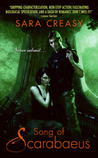
Rameau's Review Archive: Song of Scarabaeus (Scarabaeus #1) by Sara Creasy

Rameau's Ramblings: This was one of our Scoundrel reads for Blodeuedd's blog and thus doesn't only qualify as a second opinion but as a third.

Originally posted on Goodreads on February 14th 2013.


Synopsis:
Trained since childhood in advanced biocyph seed technology by the all-powerful Crib empire, Edie's mission is to terraform alien worlds while her masters bleed the outlawed Fringe populations dry. When renegade mercenaries kidnap Edie, she's not entirely sure it's a bad thing . . . until they leash her to a bodyguard, Finn—a former freedom fighter-turned-slave, beaten down but never broken. If Edie strays from Finn's side, he dies. If she doesn't cooperate, the pirates will kill them both.

But Edie's abilities far surpass anything her enemies imagine. And now, with Finn as her only ally as the merciless Crib closes in, she'll have to prove it or die on the site of her only failure . . . a world called Scarabaeus.

Cover art by Christian McGrath. 


Song of Scarabaeus (Scarabaeus, #1)Song of Scarabaeus by Sara Creasy


It’s really difficult for me to improve on what’s been said about this book already. Just go look at Anachronist’s or AH’s reviews and you can consider yourself fully informed.

For me, the difficulties in the beginning of the book weren’t due to the language fitting for science fiction. I could adjust well enough to cyphs, tecks and streams, but I objected to the undefined acronym jargon. Throw BRAT’s and CCU’s at me all you want but tell me what they mean—Biocyph Retroviral Automated Terraformer and Crib Colonial Unit respectively by the way. It’s one of the first Finnish lessons about analytic writing I remember from school: Define your acronyms. I imagine something similar has been taught to native English speakers around the globe.

I appreciate that Creasy was avoiding infodumping by revealing these critical details later within the story. I appreciated the full on immersion to the world-approach but I do think she took it a step too far with the acronyms. For everything else it worked just fine. The fresh angle on familiar scifi concepts such as terraforming and cyborgs as well as the limited third person voice from Edie’s point of view kept the story focused on the events and gave just enough clues about the other characters for me to fill in the rest. Active imagination does have its perks.

Being someone as close to anti-musical as it is possible for a human being to be, I loved Creasy likening coding to composing. Edie talks about making notes and creating harmonies like a true virtuoso would. It was just another aspect of interconnectedness this author utilised.

In her review, Anachronist mentions the episodic nature of the adventure. While I can see why she would, it didn’t bother me at all. It felt like the natural rhythm of someone who needs to rest between periods of extreme activity. She also mentions the romance being practically non-existent and it being a compliment, and I have to agree. What evolves between Edie and Finn feels organic and real, and the obstacles Creasy sets for them towards the end are enough to feed the UST (Unresolved Sexual Tension) hungry readers for a long time.


Tuesday, 16 April 2013

New Adult, Old Tricks

Teen and Young Adult Fiction
 (Photo credit: Blue Train Books)
Have you heard about that New Adult category of books, being created practically before our eyes? Other terms for it include: Upper YA, Crossover Fiction, and Mature YA. How did it start and what is it about? 

New-adult Fiction or post-adolescent literature was first proposed by St. Martin's Press in 2009. Allegedly St. Martin’s Press editors wanted to address the coming-of-age that also happens in a young person’s twenties.They wanted to consider stories about young adults who were still finding their way in building a life and figuring out what it exactly means. NA characters are often portrayed experiencing: college, living away from home for the first time, military deployment, apprenticeships, a first steady job, a first serious relationship, etc. Other common themes in NA are identity, sexuality, race, alcohol abuse, drug abuse, bullying, empowerment, familial struggles, loss of innocence, fear of failure, etc. - I suppose that list gets plots of most of the books, if not all of them, covered pretty thoroughly. Here you can find a list of most popular New Adult positions (fromGoodreads) and check just the first page, it is more than enough ;p.

Now you have to admit those topics aren’t exactly new so why publishers think we need a new category of books? That is the question and the answer is as old as the publishing business or perhaps even older – money.

 I still blame in the first place "Twilight", with the horribly skewed version of the alluring nectar of forbidden love it presented. I know, Twilight itself remains  firmly in the YA paranormal romance realm but it was a step toward the NA direction. Stephenie Meyer has achieved a lot, earned a lot and her mind-boggling success undoubtedly inspired other authors and the whole publishing world. For example an author I love to hate, hiding under the pen name of E.L. James, as her "50 Shades of Grey", a cheesy, kinky juggernaut, is so obviously modelled on Twilight. It spawned in turn "50 Shades"-themed bondage classes and single-handedly boosted the book industry (which should be nevertheless thoroughly ashamed of themselves). The book series once dominated the number one, two and three spots on the New York Times Bestseller List (New York Times, shame on you, your bestseller list doesn’t exist in my universe anymore). 50 Shades books are still not NA positions but the success of the series, like that of Twilight, definitely helped to create the NA phenomenon - it showed you can create a certain market niche and then make it brimful of curious readers. And line your pockets nicely in the process. It was too tempting not to try it.

So if you asked me what New Adult books are about I would say: in a nutshell it is about merging the former young adult themes with erotic fiction. In other words the publishers want to lure people who liked novels as children and teenagers, offering them something better-fitted to their more mature tastes. Buying and reading erotica? Some people would still consider it a social taboo. Buying and reading New Adult? Not a problem – it sounds almost posh, almost respectable, with that dashing, naughty flavor some appreciate so much, and it promises content that actually makes sense, a real plot in which those steamy moments are just inserted here and there like raisins in a bun. In fact, after having read some of New Adult positions I must admit I found these books a bit like the old Harlequin romances, just set in modern times, with younger characters, many of whom are in college, coming of age and often exploring their sexuality. Think Smut Fiction with some window dressing so it looks respectable and…kind of new, at least to me (I've never read those pesky Harlequin but I've heard STORIES).

Of course I am sure there will be plenty of fans and several book sellers who might disagree with such an assessment. They claim New Adult covers a wide range of themes and issues, not focusing solely on sex. That’s why some view New Adult fiction as only a category of literature—meaning, it gives readers general content expectations, but it does not dictate strict, genre-based criteria. Typically, a novel is considered NA if it encompasses the transition between adolescence—a life stage often depicted in Young Adult (YA) fiction—and true adulthood. The fact is that it rarely (if at all) avoids the description of sexual encounters so if you ask about the main difference between YA and NA here it is – the later features more hot scenes, often described in great detail and covering the whole gamut of preferences.

Let me also quote here the explanation offered by one of the NA authors, Cora Carmack, why this category/genre should exist at all. Carmack thinks we're only just now hearing the term "New Adult" because:

...the world is a very different place than it was when YA first became an accepted genre. It used to be that many people got jobs straight out of high school, and only some people went on to college. And usually those who did go to college were more financially and emotionally dependent. Now, it has become the norm to go to college, and for young adults to remain in contact or even dependent upon their parents for years after graduating high school. College is the new high school, and as such that "growing up" phase has been stretched to include a few extra awkward years.

Hmm… with all due respect that sounds like waffling to me. Authors have been writing about the transition from childhood to adulthood and those ‘extra awkward years’ like forever. Jane Austen, anybody? Some of her characters, like Anne Elliot from Persuasion, definitely prolonged their ‘forming years’ quite a bit. The Sorrows of Young Werther ? (damn that Goethe, he was good – have you noticed how he sneaked that ‘Young’ into his title?) Girl Interrupted? The Dangerous Liaisons? Maurice? Fanny Hill? Gosh, I can even quote here some stories straight from the Bible and they would most definitely qualify for being New Adult– for example the first part of the life of David who later became one of the most prominent kings of Israel. All of them share one basic feature: they present a newly emancipated person on the cusp of discovering themselves, where they fit into life, what allowances they will make, and how they relate to others. Unrequited love, forbidden love, friendship, committments, leaving your old family behind, real-life challenges - you get everything there as well.

Let's be honest and let me get to my point: those are marketing gurus who really need "New Adult" fiction to be a stand-alone category or genre, not readers. They want the millennials to believe it is a bespoke literature segment created to fit their unique needs. So what the content is hardly new and often presented in a very crude, sometimes even amazingly tacky voice? As long as you believe it is good and you are prepared to pay extra for the ‘novelty’ factor they are going to do cracking business.

Take into account the fact that this new category is intended to be marketed to mostly female readers ages 18 to 30. Quite coincidentally that particular age group is considered to be the most lucrative as it consists (but is not limited to) readers who are already active on the job market at least part-time so have a larger disposable income than, say, your average primary and secondary school student. They have money, they want to have fun and they don’t want to be limited in any way. Ready for harvest.

It reminds me of the term "teenager," which, crazy as it might seem now, didn't even exist until the mid-20th century. Today, teenagers are a consumer group worth about $200 billion. Youth became a sought-after commodity but it didn’t happen overnight, the whole process was rather an evolution than a revolution – it needed some generations to solidify. Today, with the digital publishing and the Internet connecting most of the world, it will be definitely something more dynamic.

Will marketers be able to pull the same trick with kinda-youth? It seems they're certainly going to try – compartmentalizing the market has never been a mistake so far. Before you go to your favourite library and shop for a New Adult novel ask yourself a question, though: what do I really need to read?

The idea of this essay was implanted in my silly brain by Bloddeued and Rameau helped me with the editing and supported me morally on Twitter - thank  you very much, girls, I owe you and you rock!


My sources:

Enhanced by Zemanta

Sunday, 14 April 2013

TV Series Discussion: House of Cards season one (chapters 1-13)

 photo ae334d5a-9e8e-4355-9b2d-a643fe91dd0d_zps50b1542a.jpg


A short synopsis and the cast list (from Wikipedia) so everybody knows what exactly we are talking about:

House of Cards is an American political drama series developed and produced by Beau Willimon. It is an adaptation of a previous BBC miniseries of the same name which is based on the novel by Michael Dobbs. The entire first season premiered on February 1, 2013, on the streaming service Netflix.

Main cast:


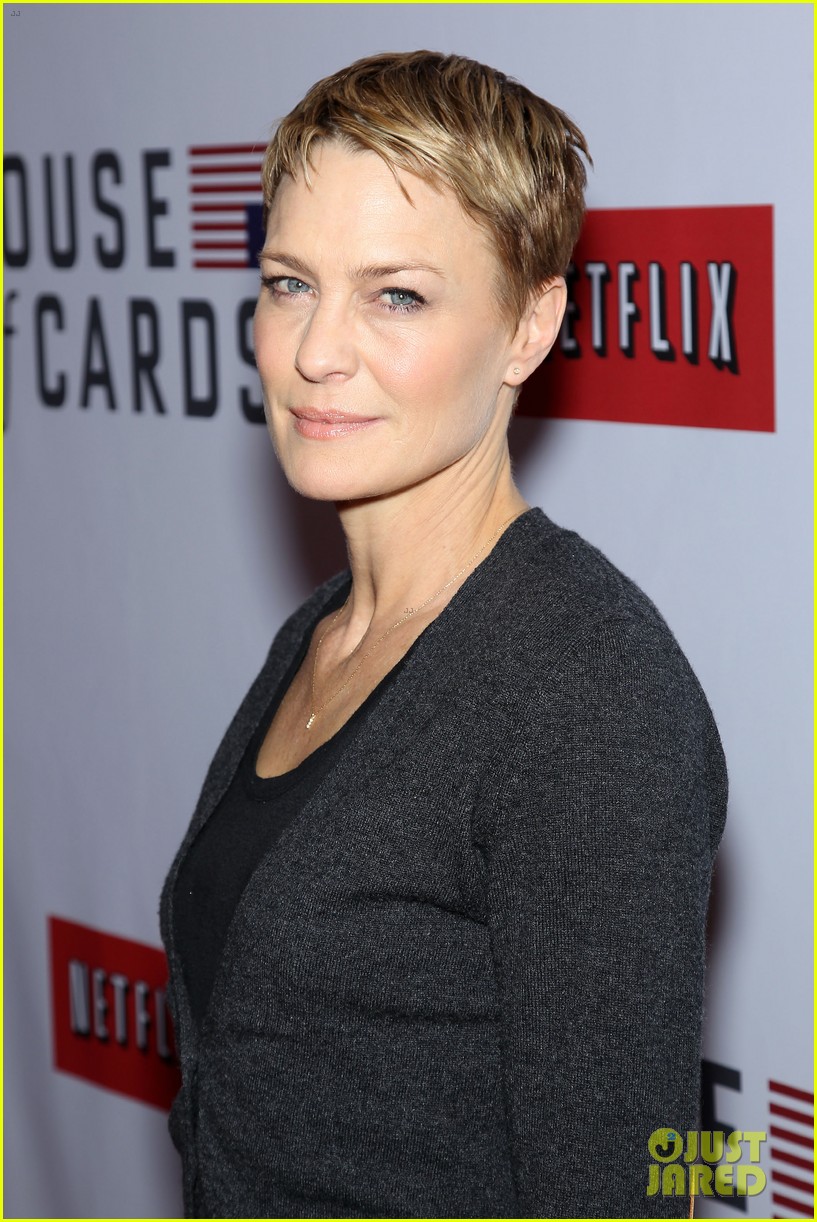
Kevin Spacey as U.S. Representative Francis "Frank" J. Underwood, a graduate of the fictional school "The Sentinel" (which is made to strongly resemble the real life school The Citadel, a military college) and Harvard Law School, a Democrat from South Carolina's 5th congressional district and the House Majority Whip. He often breaks the fourth wall to speak directly to the viewer. His name is derived from The Right Honourable Francis Urquhart MP, the protagonist of the BBC version and the novel version of House of Cards.

Robin Wright as Claire Underwood, Francis' wife. She runs the Clean Water Initiative, a non-profit that often gets mixed up in Frank's political scheming.

Kate Mara as Zoe Barnes, a reporter for The Washington Herald (later Slugline). Desperate for a break, she makes a deal with Frank for insider information.

Corey Stoll as U.S. Representative Peter Russo, a Democrat from Pennsylvania's 1st congressional district. Russo becomes loyal to Underwood after Underwood threatens to expose his alcohol and drug addiction.

Michael Kelly as Doug Stamper, Underwood's Chief of Staff, abettor and confidant.

Ana: Rameau, you introduced me to this series - where and when did you hear about it? What made you watch it?


Rameau: Rachel Maddow show. It was some time last year when I was watching the show for the 2012 election shenanigans and the commentary, when she mentioned Kevin Spacey’s remake of the 1990 British miniseries House of Cards coming out in early 2013. A curious being that I am, I researched the subject, found the books, and the original miniseries. Then I waited until the remake had come out and I waited a bit longer.


Ana: I see, so it wasn’t completely a spur-of-the-moment decision, like: ‘hey, there’s a new series about high -profile Washington politicians, let’s watch it!’ Because I have to admit I would never started the series if not for two things: Kevin Spacey and your recommendation. Now I think I definitely owe Rachel Maddow as well.
Who was your favourite character (and why Frank Underwood ;p) ?


Rameau: No, it wasn’t a spur-of-the-moment decision but the decision to watch the original, four part miniseries was. And you know me so well. I think I loved Frank Underwood because of how Kevin Spacey portrayed him. I loved his relationship with his wife—although I have my gripes too—and I loved the history they created for him. The character and the show reminded me of American Beauty in many ways and I can’t say that didn’t help to endear me to the character.

He is a kind of anti-hero though - a man who manipulates as he breathes and also somebody who perhaps never knew the meaning of the word ‘altruism’.

I’d go further than that. I’d say he’s closer to a villain than an anti-hero. He’s unapologetic and he gets what he wants and he wants power.

Still he can be your best bosom buddy - if it fits his goals at the moment.

Which would be villainous behaviour straight out of a Machiavellian handbook for politicians ;)

I was surprised how close and distant at the same time Frank was to Claire. On the one hand - sheesh, they say each other such things as the names of their extramarital interests, that was impressive. Nobody makes a row, nobody throws a fit of jealousy. On the other hand...when Claire needs Frank the most he just balks at helping her because it is not supporting his main objective. What do you think?

That’s the part I didn’t like of this incarnation of the show. In the BBC version it felt like Francis Urquhart’s wife was the brains behind the operation and he her hands, the puppet whose strings she pulled. Of course the length of that show didn’t allow them to develop her character fully and this could just be wishful thinking on my part, but I really wanted to see Claire being the kind of wife who truly is the master of the operation.

A Lady Macbeth, right?

Right. Instead they chose to develop her character in a different direction that takes her away from Frank and sets their desires and goals in a clashing course. In my version the non-profit would have been nothing more than a hobby for Claire and a convenient way to make connections outside the Congress.

How about you? What would you have changed about the show?

I would change Zoe Barnes. It really pissed me off that the one and only thinking female character (and I am speaking about the main cast here) was made into a journalistic prostitute. I did hope that her relationship with Frank would stay as it began. As it was, it seems a woman can make a career only if she has a man to support her (speaking in the most general terms).

I agree. It did stay the way it began in the BBC series but in that, Mattie Storin’s fate was quite different.

Then that boyfriend of hers was added and it made me even more confused - the series sometimes tended too much towards emotionally challenged YA drama.

It made me think they wanted to keep Kate Mara on the show but didn’t know what to do with her character. Probably because of what happened to Mattie.

What do you think of the little romance of Doug and that second prostitute, the one who doomed Russo? I did hope for something more here and got...nothing.

I hope they take it slow. I want to see it evolve, especially since she’s going to figure out what happened to Russo, but at the same time I’m afraid where they’ll take it next.

Do you think Frank will really become that vice-president or will his prize slip through his fingers again?

I hope he does. In the BBC series Urguhart did become the Prime Minister and I can’t really see what good it would do for Spacey and friends to repeat season one with having Frank start from scratch again. No. Underwood needs to rise and he needs to rise to the top before he falls.

If he falls.

I quite agree - failing again would bring a sense of anticlimax and it might be boring. Oh...we haven’t even touched the dialogue Frank leads with the viewer - a very personal dialogue. How did you feel about it?

I’m not a fan, but I understand why it’s done. He’s a villain and he needs to explain himself to the viewer because he never ever gets to explain all his motivations to anyone else. Which, wouldn’t be a problem had the writers handled his relationship with Claire differently.

If it showed anything clearly, it was the fact that Frank didn’t trust completely even his beloved prize wife. If you play Machiavelli, you are playing a game of solitaire.

True enough. I would have still preferred a power duo. Do you know what I find disappointing? The inescapable downfall after Claire finds out what really happened to Peter Russo.

You mean you are sure she will leave Frank if/when she finds out the truth? I don’t know. Perhaps. Still she seems to be such a cold-blooded, selfish woman. He might hold her on a very short leash.

No. Not leave him, but become utterly disillusioned, again, and start actively working against him. The more I think of this the more I think it goes against her characterisation. They’re going to try to turn her into a goody two-shoes.

Claire is definitely too weak to confront Frank and win. Another series without a single strong woman.

So are you in for the second season?

Right now I would say yes, I am. But give me a year and ask again. How about you?

It is a cautious yes as well. I like Kevin Spacey enough to give him a chance to say something more about those ugly politicians I love to hate. Perhaps it will pay off.

Enhanced by Zemanta

Saturday, 13 April 2013

Total Total Recall

I might have mentioned earlier—in my Nothing Lasts Forever review—that I grew up watching action films with my Dad. Skip ahead twenty years and I’m sitting in a dark movie theatre, baffled by the previews.

They’re remaking Total Recall.

They’re actually remaking Total Recall?

And with Colin Farrell?

What the actual fuck?

I was miffed. Utterly irked and exasperated. But I was also curious.

I didn’t go to see the remake in the theatre, but did eventually get the dvd. And if I’m going to suspend disbelief for two hours I might as well refresh my memory on the original film too.

Total Recall 1990

Arnold Schwarzenegger wakes up in bed with Sharon Stone, they fight and they make up. After there’s some bad news on their wall panel tv. Rebels are causing trouble on the Mars colony and Schwarzenegger wants to move there. Sharon Stone isn’t enthusiastic. Instead of going there for real, Schwarzenegger decides to take a memory implant trip at Rekall. Something goes wrong and the bloody trip to actual Mars—or to sandpit with a red lens—starts.

The original film is a wonderful mindfuck. It really is. It makes you question what makes a person and just how important those memories are to you, what’s the real you, and can science ever override what you know to be true to make you into something more convenient.

Of the two films, the 1990 version has the stronger script. Douglas Quaid’s—Schwarzenegger’s implanted personality—marriage to Lori is stronger and more real. I’m not just saying that because we get to see Sharon Stone in a nightie, but because whenever Lori speaks to Doug, he doubts himself and what he thinks is real.

Or he would if Schwarzenegger could act. Trying to be two different characters in one film is obviously too much to ask from him, although in the short recordings of Houser Schwarzenegger comes across quite convincing. Think of what the world would have been like had Schwarzenegger played the devilish villains instead of the wooden heroes.

Naturally, this being a Paul Verhoeven film, there’s gore too. The director of Robocop and Starship Troopers seems to relish in overabundant gunfights and blood spray covering pretty much everyone.

Total Recall 2012

The film starts with an explanation. I’m guessing the passing twenty years have lowered the audience’s average intelligence enough that the filmmakers need to provide written introduction for the film. Here’s a clue: It’s set in the dark, dystopic future on Earth.

Watching this overcrowded The Colony and the exploitative United Federation of Britain all I can think is: What happened to reaching for the stars? And that thought, that humans have given up on space travel, makes this vision of future all the more bleaker.

One of the reasons I was miffed about how the promotion for this film was handled, was that they didn’t even try to keep Lori’s motivations secret. Of course as I watched the film, I understood why—Beckinsale is playing an amalgam of Stone’s and Ironside’s roles—but I can’t help but feel some sort of affection for Stone’s duplicitous portrayal. Beckinsale’s part is simple in comparison despite the expanded role.

The same can be said about Biel. Her role is bigger in comparison to Rachel Ticotin’s Melina, but also superficial. Again, I’m blaming the script, because Biel is brilliant in the short <spoiler>identity swap</spoiler> scene at the very end.

As good an actor as Colin Farrell can be, he’s no match to the women. Neither is he good enough to create a distinction between Hauser and Quaid. He basically plays one character occasionally plagued with amnesiac identity crisis rather than a man who has changed and wants to stay as he is. You could say that he loses even to Schwarzenegger in this, even if his version of Quaid isn’t as panful to watch as the Terminator’s.

The 2012 version improves on the special effects and gadgets, and I’m guessing that’s the only reason for updating the film, because the script certainly isn’t it. Alien species have been replaced with robots—which also makes this film conveniently less bloody—but they’ve kept the three breasted woman. Australia has become Asian and has been relegated back to its historical colony status.

And worst of all are the stolen and defaced scenes. For example when Cohaagen’s troops try to convince Quaid that he’s still in the chair in Rekall and hallucinating, the dialogue sounds like it was cut from the original script, put through a shredder, and pasted on the the new script. The acting’s not much better either.


If you want to watch a film called Total Recall I recommend you watch the original 1990’s version with bad acting and all. You can imagine societal criticism in the comments about the price of air, and you can revel in the childlike imagination humanity used to have. You can still dream of reaching the stars.

Friday, 12 April 2013

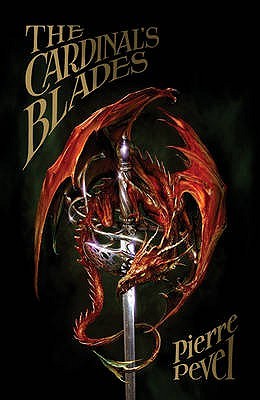
Review: Cardinal’s Blades by Pierre Pevel (Les Lames du Cardinal 01)

Book info:
Form: odf, e-book
Genre: Historical fantasy
Target audience: YA and adults who like such stories

Synopsis: 

Imagine France of Louis XIII as described by Alexandre Dumas – a land of flashing blades, swishing caps, duels, beauties and intrigues- but with real dragons, wyverns, drac thugs and dragonnets.

After a five year hiatus Cardinal Richelieu summons ex-captain La Fargue. Previously one of his most trusted tools, now  La Fargue is an ageing, embittered and disillusioned man, not especially keen to return to Richelieu’s service. Our Cardinal blackmails and threatens him because he needs La Fargue and his small unit of the best mercenaries in France, formerly known as Cardinal’s Blades, to return to service.

They have to stop the Spanish order of Black Claw. The Black Claw, consisting of half-dragon royalty and their descendants, wants to establish a kind of outpost in Paris and slowly gain the upper hand over the Kingdom. They are very secretive and cautious and officially France cannot afford a new enemy so the mission of the Blades might prove far more complex than it seems at first glance. Still La Fargue cannot fail – the life of his only daughter depends on his efforts. He gets mixed into the double and the triple game between Richelieu and vicomtesse de Malicorne, the head of the Black Claw residing in Paris. Will he be able to save his daughter and France from the evil dragons?

What I liked:

The mere idea of seventeen century Paris with Richelieu and musketeers appealed to me very much – it was fresh and original. Let me also add that the author built the fictional world with utmost care, describing the Parisian streets in a very vivid way and making me wish for a dragonnet pet instantly. The action’s pretty frenetic and if you like such books you will be more than satisfied – you’ve got swordfights a-plenty, rooftop battles and lots of visits to inns which end in a brawl, point-blank shootings and galloping horses.

I also liked the fact that, unlike maudlin heroines of Mr. Dumas, here women played an active role, fighting, plotting and thinking independently; although I didn’t see them as often as I wished I would, I was more or less satisfied with their performance.

Let me also add that the last scene was very promising - something which might incline me to read the second part of the series as well. Pével certainly knows how to throw in a dramatic revelation right at the end.

What I didn’t like:

I know it is a swashbuckling novel with the action being its raison d'etre but I sorely missed character building here, especially that there were some really promising heroes: like Saint-Lucq, or Agnes, the intrepid baroness or vicomtesse de Malicorne, a charmingly dangerous dragon in a skin of a beautiful woman.

Instead you get something like an extensive collection of character clichés -  a battle hardened captain with a secret; a dashing womanizer; a good humoured, hard drinking old soldier; a brooding half-breed assassin; a prodigal Spanish swordsman; a strong-willed token female thrown in for good measure so you don't drown in all this testosterone. The action jumps too abruptly from character to character so the readers lack time to bond with any of them. After a while they all seem two-dimensional, with an emphasis on cruelty and selfishness.

What’s more, in my humble opinion the author overused the ‘survival from death’ plot device, employing it so many times that it lost all its potential shocking value, making most of the fighting scenes downright silly after a while (when you are practically sure nobody will die, what's the point?).

Finally let me tell you that the English translator of this novel didn’t make a good job of it. There are too many mistakes - dangling participles litter every page, and pronouns referring to the wrong nouns can be found in almost every paragraph. I wasn’t impressed.

Overall if you like a plot that makes sense and relatable (or even distinguishable) characters, this is not a book for you. As far as I remember even in The Three Musketeers there was more characterization and depth.

Final verdict: 

I love sentient dragons in fiction - if I loved them a little bit less I would assess this novel much harsher. When it comes to the world building it really wasn’t bad but the lack of proper characterization spoiled it for me. I might pick the next part of the series to check whether it gets any better but I am not sure with what result.
Enhanced by Zemanta

Thursday, 11 April 2013

Rameau's Review Archive: Beautiful Disaster by Jamie McGuire

Rameau's ramblings: I went looking for the first negative review I wanted to post here and I could only think of one. There are many books I've read and hated but there are a very few reviews I'm almost proud of. This is one of them. 

Originally posted on Goodreads on August 26th 2012.


Synopsis:
Abby Abernathy is a good girl. She doesn’t drink or swear, and she has the appropriate number of cardigans in her wardrobe. Abby believes she has enough distance from the darkness of her past, but when she arrives at college with her best friend, her path to a new beginning is quickly challenged by Eastern University’s Walking One-Night Stand.

Travis Maddox, lean, cut, and covered in tattoos, is exactly what Abby wants—and needs—to avoid. He spends his nights winning money in a floating fight ring, and his days as the ultimate college campus charmer. Intrigued by Abby’s resistance to his appeal, Travis tricks her into his daily life with a simple bet. If he loses, he must remain abstinent for a month. If Abby loses, she must live in Travis’s apartment for the same amount of time. Either way, Travis has no idea that he has met his match.


Beautiful Disaster (Beautiful, #1)Beautiful Disaster by Jamie McGuire


This review can also be found on Book Girl of Mur-y-Castell-blog.

Sometimes you just have to... description
———


I feel dead inside. That’s what reading this book has done to me. I. feel. dead. inside.


Background information:
Earlier this year, I stumbled upon an incident—I lie, there were several—that inspired me to create such shelves as not-for-me and authors-behaving-badly and add this book with all the other books accredited to Jamie McGuire on them. This explains the first comment on this review thread.

I was angry and I rated the book poorly. Then I got over it and removed the rating, and for a while, forgot this book existed.

Ah, those were the happy days.

Then came summer and Simon & Schuster announced their massive brain fart of acquiring this novel and reprinting it. They made the choice to enhance their marketing campaign by allowing free review copies distributed through NetGalley. This was my one chance to read the novel for free and rate it in exchange for this simple tag:

I received an Advanced Readers Copy of this book from the publisher through NetGalley.

In this case, the Advanced Readers Copy means the superficially edited self-published version.


Actual review:
I hated it. Contrary to popular belief, I didn’t want to hate it. I don’t enjoy reading bad books for fun—I don’t like tormenting myself with bad literature—but neither do I start a book expecting to find something positive or other redeemable qualities. I don’t artificially skew my perception just so I can lie about what a good book this is.

It’s not.

Though McGuire seems incapable of using simple he said/she said dialogue tags, there were moments, bits of dialogue, and a set up most promising that in the hands of any other talented or even a competent author could have been solid gold. It could have been the the story of two flawed people falling in love and perhaps changing for the better even if not transforming utterly normal people instead of romanticised description of abuse and misogyny. There were things Travis said or did that in any other setting and context would have been touching, sweet, deliciously heart-rending—but this was Travis and those things were anything but.

“Coupled with the alcohol in my system, when he pulled my body against his, things came to mind that were anything but friendly.”


McGuire’s simplistic writing is readable, even likeable at times, but it’s also uneven. There are good bits and then there are horribly bad bits. There were times when I’d forget to stop and think what made sense and what didn’t, and I’d just plough through pages without even realising it. Then the only recollection I’d have was having felt something. If I wasn’t paying attention to what it made me feel, I would—could, possibly, perhaps—understand why some people would think this a good book.

But I didn’t just plough through the pages. I read them slowly, carefully taking notes and always thinking of what made sense and what didn’t—very little, as it turns out.

Can a story be character driven without characterisations?

Apart from Travis’ tattoos—those tattoos are mighty important since they define what he can study and what his future career is going to be—not a single character in this book is given a proper, layered, characterisation. Not all characters are given physical descriptions, even Shepley, who as Travis’ cousin-slash-roommate and America’s boyfriend is prominently portrayed secondary character, is never given a physical description. To this day I don’t have a clue as to what he looks like. I know Abby and America are both blonds, I know Travis is tattooed all over and has hazel eyes, I even have a vague impression of Parker, but other than that I do not know. It’s never revealed.

What I do know is that Shepley is the lapdog enabler. He exists to be America’s boyfriend and provide a link between Travis and Abby. He exists to among others to make excuses for Travis’ behaviour. He doesn’t have any other function in this story.

America-Alice is Abby’s best friend the Weathervane. Depending on the scene she’s either trying to keep Abby and Travis apart or trying to get them together. She’s always dreamt of her and Abby dating brothers or cousins, so they could become real family or something other. America exists to drive Abby around and to scold her either for resisting Travis or not resisting him enough.

Parker is the token third wheel, a secondary love interest option paper doll. He’s rich and a hardworking student, but ultimately he’s just another jerk and not a viable third corner of a triangle—and that honour he has to share with Jesse, the ex-boyfriend. Parker exists to flirt with Abby and to make Travis jealous when the mood strikes. He also exists to prompt a casual date rape scenario.

Finch is the token gay guy. He exists to provide Abby with alcohol and a shoulder to cry on whenever America is lip-locked with Shepley and too busy to notice.

Kara is the roommate who we never see. She exists to make a handful of accurate comments and remains the sole remotely likeable character in the book.

Abby giggles. She studies high school level biology in college and sucks at it. She apparently likes numbers but hardly ever talks about those classes. She has a dark, dark past that’s never talked about until it’s all that’s talked about. She likes to drink and plays a mean game of poker. All these details and I still don’t know what drives her. I don’t know what her inner passions are or how she thinks and the book is written from her perspective in the first person limited voice.

“This is hard for me, ya know. I feel like any second you’re going to figure out what a piece of shit I am and leave me. When you were dancing last night, I saw a dozen different guys watching you. You go to the bar, and I see you thank that guy for your drink. Then that douchebag on the dance floor grabs you.”


Travis prizefights for money. He’s a genius and he doesn’t need to study. Travis has a short temper, cocky attitude, a dead mother, four brothers and a father who taught him everything he knows about beating other people up. Travis has tattoos. Travis has a six pack—such a shame it’s not a twelve pack—and he’s never met a speed limit he couldn’t break. Drunk or sober.

“I wouldn’t have swung if I thought I could have hit you. You know that, right?”


Travis doesn’t hit Abby. He comes into the bathroom when she’s in the shower. He comes up with a bet to keep her in the house with her. He talks her into sleeping in the same bed as him, because he’s never brought a girl he’s fucked there. He forces her to change her clothes when she dresses up too sexy. He grabs her to keep her safe. He stalks her. He buys her a puppy to stop her from leaving. He scares her when she is in the car kissing another man. He trashes the house the morning after they have sex because she leaves and refuses to talk to him. He beats up several guys for simply touching her.

And she lets him.

”Travis’s behavior piqued their curiosity, and I subdued a smile at being the only girl they had seen him insist on sitting with.”


”It wasn’t Parker I was trying to impress. I wasn’t in a position to be insulted when Travis accused me of playing games, after all.”


Worse, she’s manipulating him right back. On one occasion Abby tells Travis to teach someone manners, and he beats the guy to a pulp. There aren’t any repercussions or a fallout. Several of these unprovoked attacks happen outside the illegal prizefighting circles with plenty of eyewitnesses around. Yet, Travis is never detained, arrested, or even confronted by his friends. They’re all making excuses for him.

Abby’s reactions to Travis’ behaviour make no sense. She’s either blaming herself or acting irrationally and manipulating the situation to her end. She’s playing with Travis just as much he’s playing with her as evidenced by the events of the night they first sleep together. She tells him he’s a virgin, he tells her he likes it rough, they have sex—one of the few times condoms were used—and in the morning, she leaves. He trashes the house. America the worst friend who ever lived, comes to get Abby to talk Travis down. Not to make sure that Abby is safe and sound and far away from the psycho as possible, but to fetch her to the house so she can talk to Travis and calm him. So she can understand him.

The abuse, the antifeminism, the misogyny, the casual slut shaming, rape threads, girl-on-girl hate, it’s all omnipresent. You can’t avoid it.

Character driven stories rely on one essential idea: That the main character learns something. That all the pain and heartache, all the adventures that they experience within the story enrich them as a human being and make them grow as a person. Not necessarily for the better, but simply more aware. On some level the characters do need to be conscious of their actions and choices they make in the end of the book in a way they weren’t at the start of it.

In this, Beautiful Disaster fails.

Travis does forsake all others but he isn’t any better taking into account Abby’s feelings in the end of the book than he is in the beginning of it. As for Abby, life is still a huge poker game she’ll bluff her way through like it was before she met Travis. Well, maybe not bluff, but she’s always had a talent of manipulating the cards in her favour.

Instead of bare boned characters who apparently learn nothing within the four hundred and twenty odd ebook pages, I could be talking about the overall plot of the book. Except, there isn’t one:

A girl goes to see a fight. A girl meets a boy. They skip time and become friends. They make a bet and end up living under the same roof. They dance around each other and a girl tries dating another guy. The boy gets jealous and they sleep together. The bet has ended and the girl leaves. Boy gets angry. Girl comes back. They fight and the girl tries to leave. The boy gets her a puppy to make her stay—

This isn’t a plot. This is a list of consecutive events describing a dysfunctional codependent relationship. Of course, we could call it a relationship drama, but we’d also have to redefine words relationship and drama. There’s no internal conflict. Nothing is addressed and nothing is learned. All obstacles are external ones and easily cast aside.

But this is a romance novel about two people finding love together, you say.

No. It’s not.

This is as mislabelled as a romance as it was mislabelled as a young adult novel. There is absolutely nothing romantic about this book. It’s the author’s ode to Edward Travis’ character. A controlling, abusive, stalker is in the centre of everything and the reader can’t escape him even when Abby is on a date with another man. The conversation always quickly returns to Travis and stays there.


By now the strikethroughs have become obvious; I’m bringing up the Twilight connection:

This book reads like a Twilight fanfiction or work heavily inspired by Twilight.

America behaves as bipolar as Alice, and Travis is set upon a pedestal and worshipped just like Edward was. Travis shares Edward’s penchant for speeding. Travis and Abby’s first date is in a restaurant where the waiter flirts with him and he starts questioning him over the food. The biology lessons and the absent parent figures. Abby likes to bite her lip almost as much as Kristen Steward in her portrayal of Bella Swan. Parker Hayes reads like a distorted Mike Newton. etc. etc.

There isn’t any proof that I’m aware of to show that this ever was posted and labelled as a Twilight fanfiction. I’m going to have to go with the “inspired” by Twilight theory and keep my opinions to myself…

It looks like I failed too.