Wednesday, 10 April 2013

Review: Pusing the Limits by Katie McGarry

Thank you, my fair Rameau, for lending me this one! You rock!

Book info:
Form: pdf e-book
Genre: YA romance (or New Adult but really I am yet to spot the difference)
Target audience: older YA.

Synopsis:

The last year of high school, somewhere in America. A girl meets a boy. She is called Echo, he is called Noah. Both have serious family issues but of different kind. He falls for her because she smells like cinnamon rolls. She falls for him because he is a very handsome, bad-boy stoner with...er... issues.  And a six-pack stomach. The crazy attraction between them refuses to go away although their friends are not impressed. Will they stay together? SPOILER: You bet

My impressions:

I rarely read YA novels nowadays. Why? The moment I start them the plot seems so strangely familiar, too familiar to be honest - after a page or two I am pretty sure I've read it before. Like one hundred times before. It holds no appeal as there are no real surprises or twists I wouldn't have predicted. Not nice or even downright boring. Pushing the Limits wasn't an exception to the rule.

Echo, is a high school student who went from a popular girl with a jock boyfriend to a gossiped-about outsider with "freaky" scars on her arms during one month. Noah is a boy who has lost his parents in a fire and cannot visit his younger brothers so he is revolting against the school rules and any rules at all. Both are attracted to each other because they are in fact very similar in their rejection of ugly reality. You don't have to be a genius to assume they will be an item at one point "against all odds" - especially that she is a very attractive girl and he is a very handsome young man. The main problem is not "what happen" but "how" and "when".

And here I wasn't impressed - the execution simply didn't work for me. It felt too overwrought, too obvious, too overwhelmingly angsty and dramatic to make me really engaged with the story. Almost spurious. While I was able to feel for both Echo and Noah occasionally, I didn't really connect with them.

The book is narrated by both of the main characters. First annoying feature: Noah’s and Echo’s voices were quite similar, very surprisingly so. The only thing really differentiating them: Noah’s dialogue was peppered with profanities. Well, perhaps it's just me but personally I found Noah's chapters also the silliest of all. He thought like a girl - I mean no teenage boy would speak/think like that. His repeated use of expressions like “siren”, "angel", “nymph” and “seductress” produced more snort-laughs than swoons from me and the constant reminder of how Echo smelled (cinnamon rolls) made me only annoyingly hungry (where's the nearest bakery, pronto?) but honestly, do tell me, do you know any REAL GIRL who smells like that without using any kind of perfume?

There are also many kinds of cliche secondary characters which have been featured in EVERY SINGLE ONE high school YA novel I've read so far: a douche bag hunky boyfriend (Luke), a false female friend who is also a bit of a meanie (Grace), a bunch of evil gossipers, Noah's 'bad company' consisting of heavily tattooed, marijuana-smoking misfits who still have a single savin g grace or two...I wasn't able to find even one inch of originality here.

Final verdict:

A decent story; still an instantly forgettable one. It was short and relatively readable but also nothing that can persuade me to read YA novels more often.


Tuesday, 9 April 2013

Rameau's Review Archive: Maurice by E. M. Forster

Rameau's ramblings: I mentioned in the introduction post that I would be bringing over my old reviews one or two a week. Today, I'm going to start with a brilliant book I read fell in love with last month. A five star review is always a good example on how to render me speechless. 

Originally published on Goodreads March 17th 2013.


Synopsis:
Set in the elegant Edwardian world of Cambridge undergraduate life, this story by a master novelist introduces us to Maurice Hall when he is fourteen. We follow him through public school and Cambridge, and on into his father's firm, Hill and Hall, Stock Brokers. In a highly structured society, Maurice is a conventional young man in almost every way, "stepping into the niche that England had prepared for him": except that he is homosexual.


Maurice Maurice by E.M. Forster

You know that moment you and start a book you’ve been wanting to read but haven’t. Maybe you’ve had trouble finding a copy of it or maybe all the hype around it has turned you off or maybe you’re not quite sure you’ll like the book simply because of who wrote it and when and why. And then you fall head over heels in love.

Yeah. That.

Whenever I read a classic, I prepare myself for the inevitable disappointment. In my experience, too many of the great works of literature only represent some form of change in the history of written words and the society that influenced them rather than being good books. If there is any true deeper meaning on the pages of a classic, it’s usually buried under too many decades or centuries of years passed for me to understand.

That wasn’t the case here. For every layer I discovered there were at least two I missed and there’s nothing I love better than subtle complexity, obvious to see for those who’d only look.

It wasn’t just the story describing and showing what life was like a hundred years ago for a young man, what it was like to fall in love and know it could cost him everything, it was the writing I fell in love with. The way Forster uses words to say exactly what he means to and more. How elegant it is.

Maurice was written on the cusp of The Great War and it tells a story of a world long since lost. It shows a young man growing up to take his place in society as he’s expected, and finding himself fundamentally queer in a time when homosexuality was still a crime in Britain. That law is the reason the manuscript remained unpublished for 57 years until after Forster’s death.

I wasn’t even recommended the book; it was the film I saw raved about. When I have the option, I usually prefer to read the book first and see the film second. Having now both read the book and seen the film, I have to say I prefer Forster’s words over the acting of James Wilby, Hugh Grant, and Rupert Graves. And I liked the casting despite Wilby being nothing like the Maurice I imagined until that last scene with Grant.

You’ll notice that I haven’t actually said anything about the story or the characters and that’s because it’s better if you go in blind without expectations. Skip the introductions, acknowledgements, notes on further reading, skip everything and read E. M. Forster’s own words. Read Maurice.


ETA: This blog is being featured at Book Bloggers International today - feel free to visit, say 'hi' and you'll make our day!

Monday, 8 April 2013

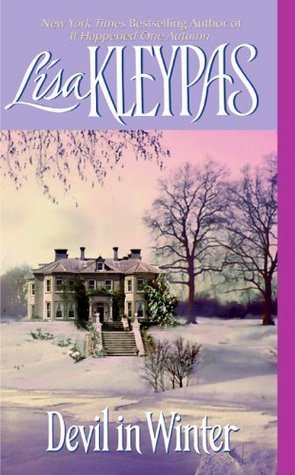
Review: Devil in Wnter by Lisa Kleypas

Synopsis: 

Sebastian St Vincent is a wicked, wicked man - he loves whoring, gambling, spending money on beautiful clothes and good food, whoring, ruining the reputation of weak women...yeah...have I mentioned whoring yet? However one day he finds himself penniless (his daddy loves spending too) and friendless (after he tried to kidnap and forcibly marry for money a rich American fiancee of his best buddy, with the blessing of that man's mother). He sits in front of his fireplace, Faustus-like, waiting for the devil to visit him and offer a deal, any deal at all, thinking about how sad, dowdy and grey the life will be without any money to spend. Will he be given an opportunity to find out whether he was right or wrong about life in poverty? UNFORTUNATELY NOT.

Where devil can't get in he will send a woman. There's a knock at the door and here enters another rich, unmarried heiress in the voluptuous form of Evie or Evangeline Jenner, a redhead beauty of very shy disposition and a pronounced stutter. Funnily enough so far the aforementioned stutter and disposition have been able to drive away hordes of gentlemen looking for a steady source of easy income a.k.a a rich wife. Not any longer. Evie makes Sebastian a proposition no spendthrift, idle rake could refuse - she will marry him and provide a living if he takes her from the clutches of her evil maternal uncles and allows her to attend to her dying father. After several seconds of a very deep, very strenuous calculations Sebastian agrees. They elope to Gretna Green, get married, go to bed and...no, no, I know right now you are dying to find out more but if I spoiled you I would have to kill you, right? So guess.

My very nasty impressions 
full of spoilers 
because no, 
I don't feel like reining in.
I feel like exploding.

Yes, the romantic fiction is not for me. I've tried, many times, to overcome my natural reluctance. You see, plenty of excellent book blogers which reviews I read and admire devour Ms Kelypas novels and lick their fingers afterwards. They tempt me to try such a dish as well and let's face it, I love being tempted. Sometimes I succumb and then, more often than not, a romance novel backfires and makes me...ill-disposed. Like terminally ill-disposed. In other words mad as hell.


First how come a supposedly shy girl all of a sudden finds enough courage to propose to a man who not only kidnapped one of her best friends not so long ago but also threatened to rape her and marry against her will? I mean here the girl being engaged to his best friend at that time. Well, it is not courage, it is stupidity pure and simple but wait, I know...Evie looked  into the fallen-angel eyes of her future husband and instantly knew that deep down he was a good, compassionate fellow who wouldn't kick a puppy even if that puppy bit his toe and vomited on his shoes. She simply knew, don't ask me how and why. Maybe it had something to do with the fact that Sebastian was an oh-so-hot-and-handsome-and-well-muscled-and-wicked male specimen that his mere appearance simply screamed at her: white hat in disguise, marry immediately.

On the other hand please, explain to me one thing: how a daugher of a man owning a gambling house, a second-rate establishment to boot, could qualify as a rich heiress, on par or even richer than a daugher of an American soap tycoon? It seems Ms. Kleypas mixed two different ideas: Victorian gambling houses in London and contemporary American casinos in Las Vegas. I would accept the fact that the dowry of Evie allowed her a comfortable, middle-class living any country squire or parson would enjoy and appreciate but it would be NOWHERE close enough to an aristocrat's idea of fortune.

Now let's progress to the famous and most acclaimed reformation of the rake. I was waiting and waiting and I have  to inform you it is a no-show. What's more, the rake himself disappeared in the process as well! The author wants me to believe that one day Sebastian is behaving like a tom cat in spring, screwing everything female  around, the next, after just one night with his wife, he agrees to abstain from sex for  three months just to make himself worthy of his lovely Evie and prove that yes, he can. It was absurdly fast and unsubstantiated and believe me those were the kindest words I managed to find. I wanted to read a book about the deadly clever, overly cerebral seducer who can make fish jump out of water if he wants to- not the tongue-tied, mundane, order-giving, bizarrely myopic person St. Vincent becomes. A former rake who cannot drag his own wife to bed although he is dying to do so - can it sound any lamer?

Then another absurd motion: an idle aristocrat all of a sudden can read ledgers and manage a business  better than its long-time owner and his associates. Excuse me? Has he graduated from an economics school all of a sudden? Has he magically downloaded several years of managerial experience Matrix-fashion? No? Ah, but ledgers and accountancy are just about numbers and if you are good with numbers, as Sebastian explains his surprised Evie he is, then you are practically an auditor and a manager born... right? WRONG. That is not all, my dear reader, it is just a tip of an iceberg!

In some sort of misguided attempt to even the playing field between St. Vincent and Evie, Kleypas totally emasculated her hero. He starts the book as an epitome of a male sexual predator - handsome, dangerous, skilled, selfish and ruthless. He promised so much - tension, sudden twists of action, clever scheming, perhaps even a bit of drama. However, apparently the author couldn't deliver. First he is made to stay celibate and then Kleypas makes him save his wife and get critically wounded in the process. So he has to lie abed like an underfed kitten. The wounding-the-hero trick is a truly hackish way of forcing intimacy between the hero and heroine. The real function of the wound is not to make them get closer but to render St. Vincent utterly WEAK and NOT INTERESTING ANY MORE. A hen-pecked hubby. His lovely wife, so deliciously shy at the beginning, now takes things into her inexperienced hands (no, I don't mean money here)...and the ex-sex fiend actually protests! Yes, he protests because, you know, he wants to keep his word and stay celibate!  It was the silliest scene of this horrible book, so out of character for both Evie and Sebastian that I almost dumped the whole novel. Almost. Then I decided to finish it and take my revenge in a form of a review.

Finally one more thing. I never understood why Evie's family made her attend all these balls and functions, have a season in other words, always a costly thing, if they only wanted her money. It lacked logic because either you want to marry a girl off and get rid of her (for a price of course) or you want to keep her close because she herself is or may be the source of a substantial income - you simply cannot do both. It seems the character of Evie has undergone a major change for the sake of making of her an 'interesting' heroine. It backfired, though and the logic was the first vicitim because if Evie's family really cared about her money so much they would have made her marry that downtrodden, fat cousin of hers far earlier and cashed in the check. And then they would get rid of the body.

BTW the cover art is highly misleading - I might like the colours and the landscape but I failed to understand how it possibly connects to the novel or reflects its content - it's really neither here nor there.

Final verdict:

I carped long and viciously about Devil in Winter - I bet nobody has any doubts what my final verdict is. Let me surprise you a bit and end my review staying how I would like this book to be written. More or less of course. So firstly: if you want to redeem a rake you should never ever emasculate him in the process. Secondly if your heroine is supposed to be a rich heiress her daddy should own a big fat empire not one measly gambling house - he might be a shadowy mafia boss but the empire must be tangible and real. Thirdly if the heroine wants to marry the rake you should justify their action in more than one way.

Sunday, 7 April 2013

An announcement - welcome Rameau, the new contributor on this blog!

I have a piece of very good news to announce !

Welcome Rameau, the new contributor and reviewer here!


 Now who is she? 

No, she is not a descendant of Jean-Philippe Rameau although it would be my first guess ;p.

She's a well-read Finnish girl. She's been active on Goodreads and she's written several guest posts for me here; now she also decided to cooperate with me on a more permanent manner (in fact I pestered her as long as it took to make up her mind ;p).

Let me just say that I am completely thrilled: her reviews are incredible - funny, intelligent and very incisive so I am sure she will make this place better and more vibrant!

What can you expect?

Expect changes, expect more awesome reviews and discussions, expect better tagging and a wider range of books presented here!!!I cannot wait!!!


Bridget/anachronist


The new girl chimes in.
First things first. Ana, we need talk about your propensity for exclamation marks. I think my ears are still ringing. I couldn't possibly be worth of six! And to reassure the current readers, your friends and fans: I'm not going to take over the world your blog. Ana will still be responsible for the day to day operations as I learn the ropes.

I've been reading and reviewing actively since early 2011. In two years, my tastes have evolved and I've become adept at saying very little with very many words. I like tagging books with ridiculous things such as inappropriate erections—which is how I wooed Ana by the way—and I appreciate honesty, which is why I must warn you.

I read a lot of library and secondhand books, as well as ebooks, which origins I've forgotten. That is to say I can't remember which books I've gotten as freebies from Amazon or Harlequin and which books I paid for in the ARe -50% rebate that is technically buy two get one free. But I always note when I've received an Advanced Readers Copy (ARC) or a review copy from the author. These days I only buy paper copies of the books I absolutely love and want to read again. I wish. My self control still needs work.

There'll be changes as Ana mentioned. I'll be importing my review archive one or two reviews at the time, and we'll be adding a meh icon to Ana's rating system. I couldn't possibly do without and she obliged me. Then there's the fact that we've read quite a many of the same books. From now on when this happens, we'll be tagging and labelling those reviews as second opinions and linking to the first for your comparison convenience.

My focus is on books, but Ana will still write brilliant and informative articles and film reviews.  

Now. Let's read. 

rameau

Edited by Ana to add one humble remark more: exclamation marks? Oh my friend, there's never enough of them when the news is good!!!!!

Friday, 5 April 2013

Two Movies Duel Review: Skyfall vs. Argo

Two Movies Duel Review

Skyfall vs. Argo

1. Presentation of the opponents (a.k.a synopsis):

Skyfall: Although his name is Bond, James Bond, and he still drinks his martini stirred not shaken, it doesn't mean he is in top form and infallible all the time. Yes, in this continuation of adventures of the most famous secret agent of Her Majesty the Queen, 007 is left in the serious lurch, mainly because his colleagues are less efficient than him and his boss is an insensitive, stubborn old lady.The movie kickstarts with an uproarious chase scene in Istambul during which James is wounded  by his glamorous partner, Eve, who was ordered by M to shoot their opponent, no matter what. As it wasn't a clear shot, she hurt Bond instead. Presumed dead, James hides in an exotic country and enjoys a well-earned respite in the arms of an anonymous exotic beauty and in a river of alcohol. Not for long, though. When he finds out that the MI6 headquarters in London have been attacked and nearly blown sky-high by a terrorizing computer hack of incredible reach he knows it's time to move. The upshot of this disaster is a request for M's  resignation from a higher-up bureaucrat played by Ralph Fiennes. "Like hell," is the short version of steely M's answer and it will be hell, no problem. At which point the presumed-dead Bond returns, a little worse for the wear after his partying sabbatical. M sets him loose despite his shakiness, shamelessly doctoring the results of his physical and psychological tests; the quest for a villain who knows too much begins. What secrets will be revealed this time?

Argo: 1979. Antonio J. Mendez, a Central Intelligence Agency officer, is tapped to help free six State Department employees stranded in Tehran. While revolutionary forces (or rather an angry mob) were overrunning the embassy and taking hostages, including the 52 men and women who were held for 444 days, five Americans fled undetected, joined later by the sixth one. Eventually, they made their way to safety, hiding at the Canadian ambassador’s house while the C.I.A., the State Department and the president struggled to find a way to ferry them home. Mr. Mendez, an unorthodox wizard of disguise, came up with the cover story for the six escapees that improbably stuck: they would pose as a Canadian movie crew, shooting one of these cheesy space operas. Set in, surprise, surprise, Iran, because there is no safer and better place on Earth, especially during a revolution, right? To make the movie idea work, Mendez flies to Los Angeles, where he brings in an old colleague, John Chambers a real makeup artist who received an honorary Oscar for “Planet of the Apes.” Next on board is a  producer, Lester Siegel who helps make the fake  science-fiction flick called “Argo,” look legit. Still it is Tony who has to actually travel to the very mouth of the lion and snatch the victims away, outwitting the enemy. Will he manage to do it on time?

2. Round one: reality check

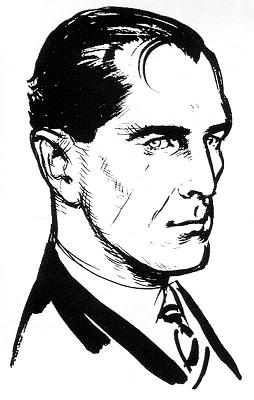
Skyfall: James Bond, a creation of Ian Fleming, has never been real, not to me anyway. How could he? The guy changes faces like girlfriends and girlfriends like tuxedos and other spying gadgets. At first he looked like this:

Ian Fleming's image of James Bond; commissione...
Ian Fleming's image of James Bond; commissioned to aid the Daily Express comic strip artists. (Photo credit: Wikipedia)
...and the rest is the silence. Can you really trust such a character? Nuh-huh. Can it be considered real? No way.

Argo: Antonio J. Mendez, on the other hand, was based on a real CIA officer so here he wins, hands down.

James: 0 points
Tony: 2 points

3. Round two - likeability factor

Skyfall features a Bond who has something to prove, and who could be damaged goods, physically and mentally, like any other mortal. He also is not exactly handsome - jug-eared and bandy-legged, definitely older and weary. Did it work? Yes, it did - I was impressed, James! What a change compared to the previous Bond movies full of agressive males in their primes! You are no longer fit but even at your lowest you were still capable of pulling off a very scary drinking trick involving a scorpion. Overall you become attractively human (though never humane) which really suited me fine.

Argo's character is based on a real hero so it should have been even better but somehow he wasn't. I admit Ben Afleck tried and tried to make his Tony three-dimensional and likeable. A bit of personal drama? Here you go, he and his wife are in separation and it is obvious he misses her rather badly. Not even a whiff of an office romance, no clubbing, just pure depression. A cute kid to make the soft-hearted ladies swoon? Not a problem, Tony has a little son and he loves him dearly, trying to relate to him even if they live apart (aww...a family guy!). Did it work? No. It sounded spurious and somehow, looking at the smooth, thoughtless face of Mr. Afleck, covered so becomingly with facial hair, I didn't care or liked his character.

James: 2 points
Tony: 1 point

4. Round three - visuals

Skyfal is hands down the most visually beautiful Bond movie I have ever seen. Usually such flicks are watched  just for action and fighting scenes, guns and babes. This one is different. From the opening in Istanbul to the final siege shootout in the Scottish Highlands, this film is a supremely enjoyable when it comes to the landscapes, presented. My favourites? Shanghai at night and the deep Scottish countryside in the mist. Incredible!

Argo's crew evidently had a lot of fun with the Chia Pet facial hair, oversize glasses, wide collars, fat ties and earth-toned threads - so did I while watching it! The movie takes us to Hollywood and to Iran. Hollywood is more or less well-known but Teheran shots were really interesting. Still nothing can match Scotland!

James: 2 points
Tony: 1 point

5. Round four: secondary characters

Skyfall: Say what you might but Dame Judi Dench stole the show, at least for me. Playing M, Bond's boss, she dominates every frame with her character, being 100% better and more interesting than any Bond girl and/or associate, featured so far. She is so irritating at the opening, so poignant and admirable at its end that she turns into a kind of fulcrum of the whole movie. A great performance!

Argo: There are plenty of secondary characters which were better/more likeable than the main hero. Which was kind of weird because well, aren't you supposed to support the lead the most? Instead you laugh and cheer John Chambers (played by John Goodman, breezy and reined in), a real makeup artist and a curmudgeonly Jewish producer, Lester Siegel (a wonderful Alan Arkin) - two Hollywood beasts who help make the fake project sound real and legit.

James: 2 points
Tony: 1.5 points

6. Roud five: the ending

Skyfall shows once again the wisdom of Godard's dictum that all you need to make a movie is a girl and a gun and once the girl is dead or married and the gun - shot the movie ends. Still I liked the ending far better than the antics connected to your common and garden James Bond movie.

Argo is a very optimistic thriller - in the end, this is a story about outwitting rather than killing the enemy, making it a homage to actual intelligence and an example of the same. Very uplifiting! Still the director didn't manage to avoid some cheesiness so my rating is lower a bit.

James: 2 points
Tony: 1.5 points

7. Duel results

James: 8 points
Tony: 7 points

James Bond prevailed but it was a close-run contest - in my opinion Skyfall was only marginally better and, mind you, it was pitted against a rather weak movie too. In fact both filcks can be described as  examples of decent cinematic workmanship but nothing special. In the case of an Oscar-winning movie it's criticizm, in the case of another James Bond installment it is a compliment - here I see the main difference.

What do you think? Have you seen any of these?  If yes, did you enjoy them?
Enhanced by Zemanta

Wednesday, 3 April 2013

Review: The Darkness That Comes Before by R. Scott Bakker

Book info:
Form: pdf e-book
Genre: epic fantasy/dark fantasy
Target audience: adults

Synopsis:

It is really a complex book, as hard to summarize as e.g. the ASOIAF saga of George R.R.Martin or Jordan's Wheel of Time  series. It is segmented into different parts, almost each of them following a different character and often set in a different country - overall not an easy, casual read.

 Drusas Achamian is a Mandate sorcerer, plagued by  terrible and bloody nightmares. It is the Mandate school's mission to fight against the mysterious Consult, an organization whose existence has not been seen in decades and which is evil. Achamian is commanded to uncover information about the plans of Maithanet, the Shriah of The Thousand Temples which is like the major religion of the region. Maithanet has recently declared the formation of a Holy War, a war that will take back the holy land of Shimeh and its aim will be to liberate their most sacret place, situated there. What Achamian discovers is a mystery that might potentially stain this newly-declared Holy War. His beloved, a whore from Sumna called Esmenet, gets involved into his spying activities and so she is propelled forward, right into the very middle of gathering armies and into the arms of another man, a knight and a high commander called Sarcellus. Will their love be strong enough to survive it?

Cnaiur is a Scylvendi barbarian, a survivor of the tremendous military defeat of his people at the hands of the martial prodigy, Ikurei Conphas. Soon, he meets Anasûrimbor Kellhus ,a 33 year-old Dûnyain monk and the son of Anasurimbor Moenghus. Moenghus was a man who, in the past, lead Cnaiur to revolting actions aimed at his father that still torture his soul. Kellhus recruits or rather mentally manipulates Cnaiur to be his guide through the lands of Earwa; they make their way to Momemn to join the forces gathering for the Holy War, both with the agenda of finding Anasurimbor Moenghus.

What I liked:

Firstly it is a massively epic fantasy novel based strongly on the Crusades and rooted in modern, philosophical discourse full of moral relativity. My inner geek loved every single historical and philosophical reference I could find and believe me, there were plenty of them, perhaps even too many. I suppose even if you dilluted this book you would get something highly original and memorable although not exactly nice.

 The world is so originally constructed and richly drawn that, let me repeat it once again, would fill several separate novels without any problem. What's more the narration was executed flawlessly - the style of writing, especially compared to many other fantasy positions, was on a high level. It was such a relief to read a story written by somebody who actually can tell a story beautifully even if the events constituting that story are rather ugly.

The main characters are complex and three-dimensional and conflicted to say the least of it. No, they are not easy to relate to or to like, you would hardly wish to befriend any of them but they are interesting to read about. You would be hard-pressed to find many redeeming qualities in Achamian, a man who condemns his beloved pupil, Inrau, and leaves behind a woman he loves although he knows she might face a destitute life or even starvation. Esmenet cheats on Achamian time and again knowing fully well that he suffers and suffering with him but she simply cannot break the 'whore' mould. And, of course she must eat. Kellhus, a lonely monk with a mission is a Christ-like figure (of course appropriately skewed to fit in)  but he murders and manipulates people around him like his dear daddy, never sparing a thought for those he doesn't need. He might be a great warrior with superhuman skills but he wouldn't recognize an act of altruism even if it bit his bottom. A bunch of sweeties, aren't they?

What I didn't like:

I don't have any problems with my memory but I admit I sometimes got lost among all those strange men, exotic names and places. Practically in every chapter you meet not one or two but several dozen new characters which might stop existing afer several pages or might reappear after a while. I do appreciate a creative, detailed world building but sometimes you can have too much of a good thing as well and I suppose this book was such a case, at least for me. After some time I didn't even try to remember all those people apart from the ones who, like Achamian or Esmenet, appeared often enough to become more or less memorable.

You deal here with a multiple POV narration and I am not exactly a fan of such a solution either. When the perspective jumps between several characters constantly I become frustrated. It is not completely bad when you deal with just two-three narrators but when their number is increased to 5-6 characters or more I get a headache and my reading progress slows down significantly.

Finally let me tell you that I can't get over how the book portrays women. There are two more or less important females in the main cast, one is a slave and a concubine called Serwe, the other, Esmenet, is a call girl. I found them both rather cynical and selfish. While Esmi could be clever, sympathetic and a bit more human from time to time, Serwe is a weak, blithering idiot. Just two women and several big armies of men - not a nice conclusion from my point of view. I know that it is in perfect accordance with the history of that era (11th century and later) but hey, fantasy is an area where you can change things, right?

Final verdict:

I never felt comfortable about this book which is a compliment of a kind. It's interesting, layered, and populated with bastards who murder other bastards, maybe better and maybe worse than themselves. It is a fantasy world with enough differences from the norm that I felt like I was discovering something new.Still if you ever get in the mood for an intelligent fantasy read with a philosophical bent this one will suit perfectly.

Monday, 1 April 2013

April from Tres Riches Heures du Duc de Berry


A lovely scene, one of my favourites. April signified the arrival of spring, hope and new life, a month traditionally represented by young women gathering flowers. It was a perfect time for a betrothal. Here Limbourg brothers respected this convention by showing us a lovely, green meadows, with the land  laid out before the castle like a garden. A small village is nestled against the walls of the castle to the right; two men in boats are fishing peacefully in the moat; to the right we can see a garden beginning to bloom with what might be fruit trees with white flowers and several bushes tied up against the wall in a horizontal espalier.

In the foreground two young, aristocratic ladies in relatively simple but lovely dresses are picking first flowers. Next to them a young couple, a bride and a bride groom, in their festive clothes are choosing a wedding ring which is laid out on a cushion as the lord and lady preside over the little ceremony. Behind them there is a young boy (a page?). The bride is dressed in a lovely mauve garment with darker, purple pattern, the color of violets which are also spring flowers; the bride groom has a red turban on his head and a magnificent cloak of royal blue with golden lillies. In the background stands Dourdan, one of the duke's many residences. 

Who is the happy couple?

I found the following explanation: the picture has a political meaning. We are witnessing the betrothal  of Charles d'Orleans and Bonne d'Armagnac, the daughter of Bernard d'Armagnac and the grand-daughter of the Duc de Berry which took place in 1410. This is a political alliance between two powerful families who were on opposite sides of the 100 Years War - thus we see here the promise of  peace, prosperity and happiness in both the natural and political worlds.

However I believe (and admit that it is simply a guess) that the man in the blue and gold coat might also represent the Duc de Berry himself. He was shown in a similar garment elsewhere (for example in the January miniature), and he commissioned the book. The Duc was married first, at the age of twenty, to Jeanne d’Armagnac, and after her death, to Jeanne de Boulogne, who survived him. At the time of this second union he was fifty and the bride was twelve - a huge age difference for us, but not one that would have shocked his contemporaries. So I would say this lovely scene might also show the engagement of the Duc de Berry and young Jeanne de Boulogne. What do you think?
Enhanced by Zemanta