


One case of witch hunt
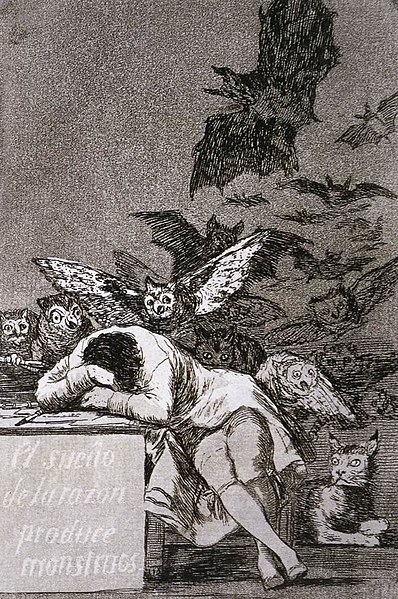
If somebody mentions Sweden, a beautiful Nordic country, what images appear in your mind? I instantly think: high standards of living, a bit cold climate, lovely landscapes, Vikings, ABBA, Ikea. These associations, even if correct nowadays, didn’t prepare me in any way for the story I’ve found not so long ago. It is known that historical facts can be a lot stranger and scarier than any spooky tales but this one exceeded my expectations. The series of events I am presenting here simply sent shivers down my spine.
Gertrud's confession came after another shepherd boy, Erik Eriksson (15 years old), had reported, that he had had a vision in the woods where he was sucked up in the air and saw Gertrud sit in Blockula with the children she had taken, among them his little sister. You should notice the fact that it was enough for young Erik to present his testimony once, but he was immediately given full credit by the priest of having revealed the whole affair. Once again nobody even tried to cross-check the boy’s story as they should.
Blockula (Blåkulla in modern Swedish), mentioned by the children, was a legendary meadow where the Devil held his Earthly court during a witches' Sabbat. This meadow could only be reached by a magical flight. It was described as "a delicate large Meadow, whereof you can see no end". Reading the description of Blockula I kept wondering what made serious people believe in such stories. Apparently they must have wanted rather badly to find a supernatural explanations to their ailments in the first place and their faith must have been approved and confirmed by some higher moral authorities, be them lay persons or clerical officials. No matter what their reasons were, the confession of Gertrud was the starting point of the famous "Mora witch trials" and Märet Jonsdotter became the first victim but not the only one – Gertrud, maybe forced to do so or maybe being simply on a roll, pointed out seven others. So began the real witch hunt in Sweden, a country where witch trials had previously been a rarity. Märet Jonsdotter was called to court to answer to the accusations. The witch trial started in September 1668.
The story about the children's stay in the Witches' Sabbath in Blockula spread rapidly, and everywhere children started to talk about it and make up other stories, setting the tongues wagging and pointing the fingers at people often from their closest family, mostly women. The stories spread across the parishes, and increased when the priests made the verdicts public by announcing them in church as a warning. Children’s confessions were very similar to the first ones and were to be a standard for the following witch trials of 1668-1676.Let’s quote one of them (from Sadducismus Triumphatus) :
"In Blockula, people partied as if at a wedding; they drank, ate, danced and had sex by the light of candles that were placed in vaginas while Satan sat under the table and laughed so that the whole room shook and the fire of hell poured up from a hole in the floor, where you could see the tormented souls in hell. You danced with your backs towards each other, as well as doing everything else backwards, married several people at the same time, and had sex with them and with Satan himself, and with his devils and demons, whose penises were cold and whose sperm was made of water and gave birth to frogs that were swept up from the floor with a broom and were made into butter. When you woke up afterwards, your body ached, the food you had eaten had vanished and made you hungry and the gifts you had received had turned to woodchip."
As you see in every age and epoch children knew more about sex and other forbidden practices than the adults wanted them to know. Strange thing, the kidnapped children, apart from Satan and his demons, also claimed to have seen angels. The angels role was far from precise - they pulled the Devil's food away from children's hands, cried tears as big as peas, and asked them to confess so the witches could be exterminated and send the message that one should not have to work on Thursdays, nor use shirts with frilled sleeves, and not have to sell tobacco above its fairest price. Apparently those were the woes of the day: lack of leisure time, frilled sleeves, not accessible to everyone, and high prices of tobacco. I just wonder why angels didn’t know about the hazards of smoking. I suppose it’s easy to guess why children so eagerly decided to include angels in their accounts. Their situation was rather dubious; they were not only victims of the witches but also their accomplices. They had sworn themselves to the Devil, eaten his food and had sex. To claim angelic help was believed to be a way for the children to point out that they had been innocent victims after all. In some cases it worked, in some – not. More problematic is finding the answer to the question why the court was never very interested in the angels; they asked the children, if the angels really did try to stop them from eating Satan's food, but they never enquired why they didn’t not stop them from doing worse, such as having sex with the demons. Perhaps it was a minor issue for the judges.
On the April 1, 1669, Märet Jonsdotter and another defendant, Widow Karin, were judged guilty against their own words. There was a problem, however. Swedish law forbade the execution of anyone who had not confessed their crime, no matter if they were found guilty or not. Neither of the women was willing to admit any guilt, and they continued to plead innocent, just as they had done from the day they were accused. Perhaps they had a hunch such a move could save their life or perhaps they were simply more stubborn than the others. This put the court in a dilemma - they decided upon a plan to solve this legal problem. Apparently they aim from the onset was not to find out the truth but to get the women to confess and make it possible to execute them.The priests were to persuade them to confess by using religious arguments; they were instructed to lie and tell them that they were to be executed whether they confessed or not. But if they confessed, they would receive holy communion, and thereby go straight to heaven. They were to be taken to the place of execution believing this, given the communion, and the execution would be conducted afterwards. This whole plan was put into effect and conducted just as described. At the place of execution, Märet and Karin were told that they could confess and receive communion, or deny all. Both chose to say no to communion and deny the charges. The frustrated authorities then had no choice but to escort Märet Jonsdotter and Karin back to prison. Gertrud Svensdotter, the girl who started the folly, and the siblings of Märet, also accused in this trial, were flogged and then released. The remaining people were acquitted, but the hysteria was hard to stop. Soon, 23 people was put on trial for abducting of children to Satan, and in 19 May 1669, eight people (seven women and one man) were executed as result of the process against Märet Jonsdotter. Throughout this time, she had remained in prison, exposed to continued religious persuasion from the priests to confess her sin. During four years imprisonment and attempts to brainwash her, she continued to declare her innocence and refused to confess. She never did confess. She was sentenced and executed all the same.
In 16 April 1672, despite her constant denial, Svea Hovrätt, the Swedish Court of Appeal, declared Märet guilty of sorcery due to all the incriminating testimonies, and the devil's mark on her finger; she was to be decapitated and burned. She was judged together with thirty four people; of them, four defendants, including three women, received a death sentence. Of the condemned, Märet Jonsdotter and a man named Pål Märet were the only ones who were executed without having confessed guilty; the rest all admitted guilt. There is not much known about the final execution apart from the fact that it happened.
The court declared that: "Her mere denial can not help her nor free her from the life sentence"; the same year, the court had noticed that several people accused had become aware that they would escape a death sentence if they maintained their innocence, and therefore, and one of the eight people executed for witch craft in Ovanåker in 1672 had been executed without a confession; from 1674, it was declared no longer necessary with a confession in the case of witch craft.
The witch hysteria continued to rage through the country until the execution of another woman in Stockholm in 1676. In 1677, to avoid any further witch trials, the government ordered the priests to declare, through the churches, that all witches had now been expelled from the country forever. Apparently finally everyone has just had enough of it.
As witch hunts occured also in plenty of other countries at that time you might wonder what were the reasons of such attrocities. Some historians say that witchcraft accusations were a social mechanism, resolving conflicts within any given community and providing an easy explanation of misfortunes happening to people in their daily life. This hysteria, however, seemed to me more horrible exactly because it explained nothing and it involved children as well as the weakest people from any given community - outcasts, women living alone like spinsters or widows, and solitary men. Scapegoats. It was enough a deranged or angry child testified against you and your life could turn into nightmare and terminate prematurely. Lately I've read the "Hunger Games" series by Suzanne Collins in which children and teenagers were turned into weapons and killers; the books were also pretty scary but there was at least that ugly, sadistic government which could be blamed for the children's fate as they were organizing and supporting the whole horrible "entertainment". Although in 17th century Sweden people must have supported witch hunts and certainly some priests had forced children to testify, I have noticed that there were also those boys and girls who cast suspicions and accused their family and friends out of their free will, simply for the heck of it. In some cases they were in turn accused, judged guilty and actually sentenced to death for committing perjury. Facts are always stranger than fiction - compare it to any average ghost story.
My sources:
Brian P. Levack, “The witch-hunt in early modern Europe”
William E. Burns, “Witch hunts in Europe and America: an encyclopedia”
William E. Burns, “Witch hunts in Europe and America: an encyclopedia”
Wikipedia: Sadducismus Triumphatus, Märet Jonsdotter, Blockula