
Showing posts with label werewolves. Show all posts

Monday, 25 March 2013

Review: Dirty Blood (Dirty Blood 01) by Heather Hildenbrandt

Book info:
Form: pdf
Genre: YA Urban Fantasy with Werewolves
Target audience: Twilight YA fans

EN GARDE!

Synopsis (from Goodreads):

I killed a girl last night. I did it with my bare hands and an old piece of pipe I found lying next to the dumpster. But that’s not the part that got me. The part that scared me, the part I can’t seem to wrap my head around and still has me reeling, was that when she charged me, her body shifted – and then she was a wolf. All snapping teeth and extended claws. But by the time I stood over her lifeless body, she was a girl again. That’s about the time I went into shock… And that was the moment he showed up.

Now, all I can do is accept the truths that are staring me in the face. One, Werewolves do exist. And Two, I was born to kill them.

HAHAHAHAHAHAHAHAHAHAHAHAHAHAHAHAHAHAHAHAHAHAHAHAHAHAHA
My impressions:

ENGAGEMENT
If you read the synopsis then you will know...nothing, literally nothing about this novel. What's more, you might be tricked into thinking it is a nice YA Urban Fantasy with werewolves. It is NOT. Before I reveal the whole ugly truth about this one let me put on my protective suit and I warn you: things will become dangerous from that point. If you are queasy, just avert your eyes and leave. Yes, there will be BLOOD.

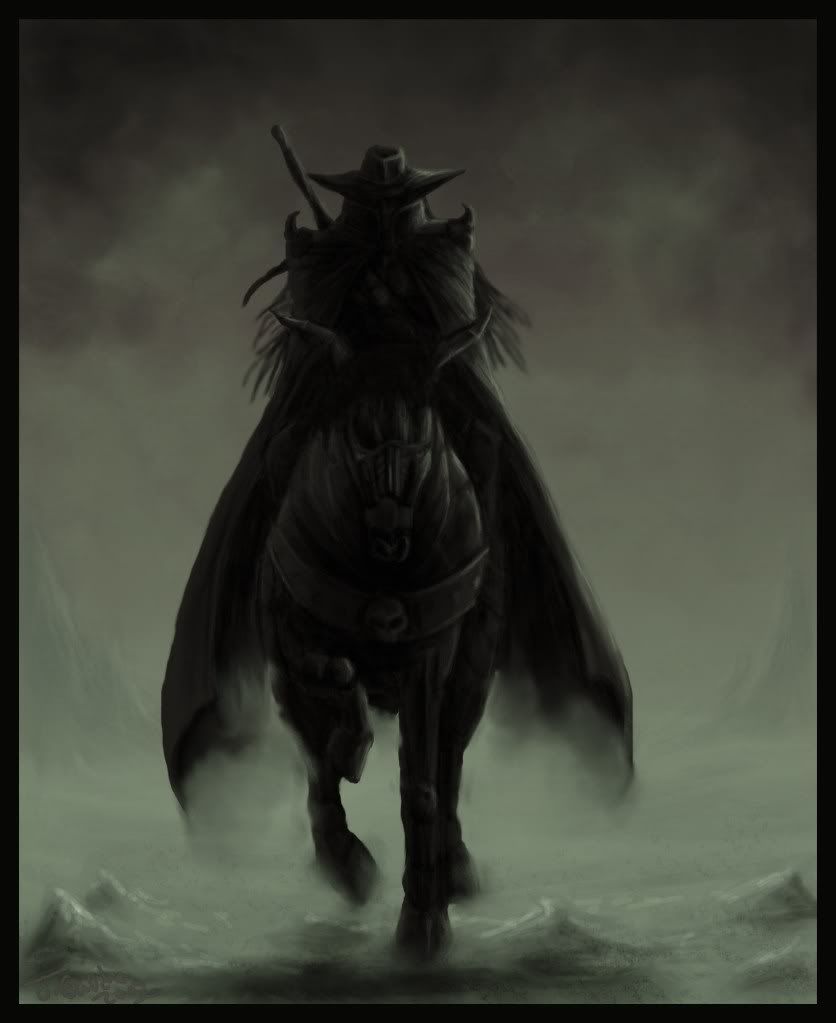
Now, protected by many charms, garlic and silver, with my faithful sword, cape and a hat, I can proceed. 

FIRST SLASH:
It is not a book about werewolves. It is a book about vampires masquerading as werewolves.Have you ever heard about a series featuring sparkling, vain, teenage, bloodsuckers, one of them called Edward Cullen? Yes, we are hunting that rainbow-coloured git again. Prepare yourself for a ferocious fight. He is the cunning one but I've dealt with him in the past so I know my enemy. Just follow my steps and you'll be safe.


SERIOUS FENCING TRICKS
 I got the inkling we might deal with him again when I read his description: brown hair, artlessly mussed up, brown eyes with golden sparks, muscled body, but one can never be sure in my profession, right? So I waited and then, after a very short time, I struck gold. He was stalking a girl, yes, once again, and her name was Tara. He went into her house several times completely unannounced - sometimes through the door, sometimes through the window. He never bothered to knock. He was a controlling ass...thingy. I was almost sure I got the sparkling idiot again but I had to be 100% certain. And yessssssss...finally the last proof. He could read minds and manipulate memories. It's him.

DIRTY FEINTS
So what that he claimed his name was Wes and he was a kind of werewolf this time? My word against his, right? He told that Tara girl (the main protagonist) his mind-reading abilities were on full display only during full moon but he was able to read her mind and influence it without any problems, right? I know Edward Cullen when I see him and let me repeat it once again: it WAS him. He drove a silver Aston Martin for heavens' sake! Do you still need any other argument? YOU DO? Verry well. 

Right after their second or third meeting Tara asks "How old are you?" and Wes replies "Nineteen". Tara then says "How long have you been nineteen?" Weirdly it sounds exactly like one of those Bella and Cullen sweet dialogues, don't  you think? Plus these other crappy promises: he is "protecting your virtue" honey, protecting all the time and referring to neutral ground as "switzerland". If you need more you simply don't qualify for this job.

COUP DE GRâCE
Having dispatched the ugly Cullen let me take care of the rest. The characters, ALL the characters were cardboard flat copies of different Twilight vampires (and let me say that those weren't exceptionally well-rounded to begin with). Apart from that the author seemed to be rather at loss how to make this novel logic and distinguishable. The main heroine is repeatedly lied to by: her mom, her grandma, her boyfriend, her would-be boyfriend Wes. They do it to protect her, a born Hunter, against other, 'bad' werewolves. Yes, instead letting her train as she was supposed to they endanger her life because it's their idea of 'protection'. Well, last time I looked knowledge was power, not ignorance and stupidity...


At the very beginning Tara kills a werewolf girl called Lilian. Yes, the girl attacked her for no reason and yes, Tara was just defending herself but she kills her nevertheless. What's her reaction and what other weres think ? First Wes/Cullen observes Tara as if she was a scientific experiment that backfired; Lilian's body is just something that he must get rid of. Then he makes Tara forget the whole incident for 'her own good' of course, and then we are told that it was practically ok. Although Lilian was one of those 'good', bunnies-hugging werewolves who want world peace and social benefits for everyone, her killing wasn't Tara's fault because she simply couldn't help herself. Lilian... *emphatic shrug* well...Lilian was a blonde and a traitor anyway. Or almost a traitor because nobody had any tangible proof of it at the time of her death. Well, she died so something must have been wrong with her, right? Apart from that only a baddie, Leo, mourns her, no big deal... Remember, Cullen doesn't do blondes, one more, one less, just a cannon fodder...


The last remark. I almost died of evil laughter when Wes announced to Tara that she was his destiny. DESTINY!!! That's what entitled him to enter her room unannounced whenever he wanted to, that's why he was drawn to her from the very ugly beginning, even though she killed a girl in cold blood right before his eyes. She was his destiny, it explains everything. For that sentence alone Cullen deserves a slow, painful death by sunrays, werewolf or not. If you've heard a sillier excuse to stalk anybody do let me know. I might write a book about them one day. You see, even vampire killers retire.
BURYING THE BODY or Final verdict:

It's time to go - I have things to do and vampires to kill. Just let me say this: the less I read such novels the more happy I am. You have been warned.
Enhanced by Zemanta

Saturday, 26 February 2011

Concise history with fangs - part two.


In the first part I presented briefly some ancient beliefs concerning vampires and werewolves - they came from Egypt, Middle East, Greece and Italy. Now let’s progress to more familiar eras and countries - those of Southern, Eastern and Northern Europe where  basic concepts and myths of vampires crystallized during Middle Ages and later periods. This second historical trip through ages and strange places will be a bit longer but I hope it will still remain interesting. The first part of my history with fangs can be found clicking here.

Part two 

From the Middle Ages to the 18th century
Misunderstood satanic beasts 

As time passed on and Christianity grew in popularity, the belief in a redemptive value of blood became common. Holy Communion, which includes drinking wine symbolizing Christ's blood and eating a wafer, symbolizing his flesh, was at times taken quite literally. Some people, confusing pagan beliefs with transubstantiation (meaning the literal presence of Christ's flesh and blood during Communion) took part in feasting on human flesh and drinking human blood. During the 11th Century, witches and doctors alike prescribed virgin blood to cure all illnesses. Also during this time, some corpses found intact all over Europe began a huge vampire scare. The belief came about that people who died without a chance to receive last rites or those who had committed suicide or had been excommunicated were destined to return to the earth as revenants. And feed on the rest of living population.

Various accounts of the discovery of vampires can be read in books such as The Diabolical Dictionary (Dictionnaire Infernal) by the Bishop of Cahors; the Courtiers Triflings (De Nugis Curialium) by Walter Map, and the History of England(Historia Rerum Anglicarum) written by William of Newburgh. The stories of William Map is in fact nothing else than a collection of anecdotes and trivia, containing court gossip and a little real history, written clearly in a satirical vein. The vampires he described arguably bear some resemblance to East European monsters so now we will move to the beautiful Slavonic and Nordic countries to meet their  vampires.

In Slavic lore, causes of vampirism were numerous, including being born with a caul, teeth or tail, being conceived on certain days. Also any "unnatural" death, excommunication, and improper burial rituals might create a vampire. Evidence that a vampire was active in a given locality included strange death cases of cattle, sheep, relatives or neighbours; an exhumed body being in a lifelike state with new growth of the fingernails or hair; a body swelled up; or blood on the mouth coupled with a ruddy complexion. 

Many Serbians believed that even having red hair could be a vampiric trait. Preventive measures included placing a crucifix in the coffin, placing blocks under the chin to prevent the body from eating the shroud, nailing clothes to coffin walls for the same reason, putting sawdust in the coffin (so that the vampire awakens in the evening and compelled to count every grain of sawdust, which occupies the entire evening, so he will die at dawn) or piercing the body with thorns or stakes. In the case of stakes, the general idea was to pierce through the vampire and into the ground below, pinning the body down. Certain people would bury those believed to be potential vampires with scythes above their necks, so the dead would decapitate themselves as they rose. Vampires, like other Slavic legendary monsters, were afraid of garlic and could be also destroyed by decapitation (the Kashubs placed the head between the body’s feet), burning, repeating the funeral 
service, sprinkling holy water on the body, or exorcism.

Members of the Nordic CouncilImage via Wikipedia

Scandinavian countries enjoyed their own vampires - the Old Norse draugr is another medieval example of an undead creature. A draugr or draug  was also known as aptrgangr (lit. "after-goer," or "one who walks after death"). The original Norse meaning of the word is "ghost", and in older literature one will find clear distinctions between sea-draug and land-draug. Water seemed to be their natural element as draugar (the plural form of "draug") were believed to live in the graves of dead Vikings, inhabiting the body of the dead. Views differ on whether the personality and soul of the dead person lingered in the draugr as well. As the graves of important men often contained a good amount of wealth, the draugr jealously guarded his treasures and if a thief came then he was his dinner (or supper).

Tales of vampiric entities were found among the ancient Romans and the Romanized inhabitants of eastern Europe, Romanians (known as Vlachs in historical context). Romanian tradition described a myriad of ways of creating a vampire - usually it meant people didn’t have the slightest idea how such a creature could be created but tried to “familiarize” themselves with the topic at hand. A person born with a caul, an extra nipple, a tail, or extra hair was doomed to become a vampire. The same fate applied to someone born too early, someone whose mother encountered a black cat crossing her path (imagine the fate of black kittens in such a community), and someone who was born out of wedlock. Others who became vampires were those who died an unnatural death or before baptism, the seventh child in any family (presuming all of his or her previous siblings were of the same sex), the child of a pregnant woman who avoided eating salt (sic!), and a person who was looked upon by a vampire or a witch. Moreover, being bitten by a vampire meant of course certain condemnation to a vampiric existence after death. 

Romanian vampires are called Strigoi, based on the ancient Greek term 'strip' for 'screech owl', which also came to mean demon or witch. There are different types of Strigoi. Live Strigoi are live witches who will become vampires after death. They have the ability to send out their souls at night to meet with other witches or with Strigoi, which are reanimated bodies that return to suck the blood of family, livestock, and neighbours. Other types of vampires in Romanian folklore include Moroi and Pricolici. 
The VampireImage via Wikipedia


To get rid of a vampire, one could hire a Dhampir (the son of a male vampire and his widow) or a Moroi to detect the vampire. To ward off vampires, Gypsies drove steel or iron needles into a corpse's heart and placed bits of steel in the mouth, over the eyes, ears and between the fingers at the time of burial. They also placed hawthorn in the corpse's sock or drove a hawthorn stake through the legs. Further measures included driving stakes into the grave, pouring boiling water over it, as well as decapitating or burning the corpse. The Varcolac, which is sometimes mentioned in Romanian folklore, was more closely related to a mythological wolf that could devour the sun and moon (similar to Skoll and Hati in Norse mythology), and hence later became connected with werewolves rather than vampires. (A person afflicted with lycanthropy could turn into a dog, pig, or wolf.) 

According to the late Serbian ethnologist Tatomir Vukanovic, Roma people in Kosovo believed that vampires were invisible to most people, but could be seen "by a twin brother and sister born on a Saturday who wear their drawers and shirts inside out." Likewise, a settlement could be protected from a vampire "by finding a twin brother and sister born on a Saturday and making them wear their shirts and drawers inside out. This pair could see the vampire out of doors at night, but immediately after it saw them it would have to flee, head over heels." 

Some believe that vampires may have the attributes of aliens thus some think they are not of Earth at all. They would rather be considered demons as the 13th century folklore may have suggested. 

The phenomenon of Vampirism continued through the Renaissance era only sporadically, but again grew to epidemic proportions in the 14th century, mainly in central European Regions of Prussia, Silesia and Bohemia (now Germany, Poland and the Czech Republic). The bubonic plague was thought to be the work of vampires (and once again it indicated that people didn’t understand neither the illness itself nor its causes so they blamed anything and everything). Panic and fear of infection led people to bury their dead without completely verifying that they were truly deceased. Small wonder so many encounters of vampires rising from their graves were reported during that time. A person buried alive would try to claw his way out of the grave and most likely would be discovered covered in blood from the wounds he had inflicted upon himself by doing so. This, of course, would label him or her as a vampire instantly and provide more scary stories to be repeated over and over again.

In the late 17th and at the beginning of the 18th century vampires originating in folklore were widely reported mainly from Eastern Europe. These tales formed the basis of the vampire legend that later entered Germany and England, where they were subsequently embellished and popularized. One of the earliest recordings of vampire activity came from the region of Istria in modern Croatia, in 1672. Local reports cited the local vampire Giure Grando of the village Khring near Tinjan as the cause of panic among the villagers. A former peasant, Guire died in 1656. However, local villagers claimed he returned from the dead and began drinking blood from the people and sexually harassing his widow. The village leader ordered a stake to be driven through his heart, but when the method failed to kill him, he was subsequently beheaded with better results.

During the 18th century, which was called the Age of Enlightenment, the belief in vampires increased
Le Vampire,engraving by R. de MoraineKilling a vampire via Wikipedia
dramatically, resulting in a mass hysteria. There was simply  a frenzy of vampire sightings in Eastern Europe, with frequent stakings and grave diggings to identify and kill the potential revenants; even government officials engaged in the hunting and staking of would-be vampires. The panic began with an outbreak of alleged vampire attacks in East Prussia in 1721 and in the Habsburg Monarchy from 1725 to 1734, which spread to other localities. Two famous vampire cases, the first to be officially recorded and investigated, involved the corpses of Peter Plogojowitz and Arnold Paole from Serbia. Plogojowitz was reported to have died at the age of 62, but allegedly returned after his death asking his son for food. When the son refused, he was found dead the following day. Plogojowitz supposedly returned and attacked some neighbours who died from loss of blood. In the second case, Paole, an ex-soldier turned farmer who allegedly was attacked by a vampire years before, died while haying. After his death, people began to die in the surrounding area and it was widely believed that Paole had returned to prey on the neighbours. 

The two incidents were well-documented: government officials examined the bodies, wrote case reports, and published books throughout Europe. The hysteria, commonly referred to as the "18th-Century Vampire Controversy", raged for a generation. The problem was exacerbated by rural epidemics of so-claimed vampire attacks, undoubtedly caused by the higher amount of superstition that was present in village communities. Although many scholars reported during this period that vampires did not exist, and attributed reports of vampire-sighting to premature burial or rabies, superstitious belief increased. In his Philosophical Dictionary, Voltaire wrote:

These vampires were corpses, who went out of their graves at night to suck the blood of the living, either at their throats or stomachs, after which they returned to their cemeteries. The persons so sucked waned, grew pale, and fell into consumption; while the sucking corpses grew fat, got rosy, and enjoyed an excellent appetite. It was in Poland, Hungary, Silesia, Moravia, Austria, and Lorraine, that the dead made this good cheer.

He was an educated philosopher, not a simple peasant, though. The controversy only ceased when Empress Maria Theresa of Austria sent her personal physician, Gerard van Swieten, to investigate the claims of vampiric entities. He concluded that vampires did not exist and the Empress passed laws prohibiting the opening of graves and desecration of bodies, sounding the end of the vampire epidemics. Despite this condemnation, the vampire lived on in artistic works and in local superstition.

Vampires were believed to be most active on the eve of two religious holidays, the Feast of St. George (Julian calendar, May 4-5 Gregorian calendar April 22-23) and the Feast of St. Andrew . (Julian calendar, November 23-24. Gregorian calendar, November 29-30). The Feast of St. George was a very important festival. Known as the Great Martyr, George was a widely-known and beloved Saint. Not only was he acknowledge as the patron of England, but many other countries as well. He was also the patron of horses, cattle, wolves, and all enemies of witches and vampires. It was on St. George's eve that vampires all the forces of evil were most exquisite. People would remain in their homes with continuous light throughout the night.They placed thorns across thresholds, painted crosses on their doors with tar, put thistles on windows, lit bonfires, and spread garlic everywhere they could. Throughout the night, prayers would be recited repeatedly and naked blades placed beneath their pillows. If the night went well without any occurrences , the saint's feast was celebrated with much exuberance that day. The thorns and garlic were then replaced by Roses and other flowers. 

The Feast of St. Andrew, accompanied with the Feast of St. George and Easter, was acknowledged as one of the most feared times of the year in Romania. St. Andrew  was the patron of wolves and donor of garlic. It was on St. Andrew's Eve, in certain parts of Romania, that the vampire was believed to be the most active and dangerous, the vampires was also believed to continue their activity throughout the winter and rest at epiphany (January). During these perilous times, it was considered wise to rub garlic on the doors and windows to protect families within the residence from any vampire attacks. Livestock was also at risk  so precautions were taken with them as well by rubbing them down with garlic. Just imagine the
Balaklava sights (2005-09-028)Image by Argenberg via Flickr
smell - if I was a vampire I would move out immediately.

In the next installment of my history I will present two prominent figures who, although certainly not affected by vampirism, became the templates for many modern vampires in popular culture. These two will be of course Vlad III, Prince of Wallachia (1431–1476), more commonly known as Vlad the Impaler or Dracula and Countess Elizabeth Báthory de Ecsed. I wanted to include their bios in this part (as they both lived in 15th century) but it proved to be impossible due to the excess of material.
 Sources:


Enhanced by Zemanta

Monday, 21 February 2011

Concise history with fangs - part one.

You must admit it - nowadays vampires and werewolves are practically everywhere. Books, movies, shops, pop culture, you name it. When it comes to books, though, I’ve noticed that many (really too many) authors don’t even bother with “when” and “what” – in short it seems they don’t try to find out (let alone present in their books) any historical background of these mythical creatures (of course there are also those who do their homework properly and believe it or not, it makes a world of difference to me, a humble reader). Pure imagination is good but I really wonder why some of them have adapted such a negligent stance. After all this is an interesting topic and research has never been easier than today – all you have to do is to sit in your room before your laptop or your PC and read and you might find plenty of food for your thoughts. Too simple? Ok, let’s make it even simpler then. Today I am starting my concise history with fangs. Its aim will be to show that vampires (and also werewolves) weren’t born yesterday and haven’t been created by either Stephanie Meyer or even Bram Stoker. They are truly ancient and fascinating. I hope you will enjoy this one - let's go on a historical trip through ages and continents!


Part one

Antiquity - godesses and monsters

Sumerian Terracotta relief, Lilith, 1950 BCE. ...Summerian terracota relief showing a blood-drinking monster with owls via Wikipedia
When did vampires begin? It seems as early as any human civilization, probably even earlier. The exact date of origin is unknown; but evidence of the vampire-related tales can be found in many places. For example in ancient Persia a vase was discovered depicting a man struggling with a huge creature which is trying to suck his blood. Similar evidence was found with the ancient Chaldeans in Mesopotamia, near the Tigris and the Euphrates rivers, and with Assyrian and Summerian writings on clay or stone tablets. The land of the Chaldeans is also called the "Ur of the Chaldeans," which was the original home of Abraham from the Bible. Here we meet the first real thing.

"Lilith" was a possible vampiric monster from the ancient Hebrew Bible and its later interpretations - old Hebrew texts removed from the Old Testament, known as Apocrypha. Although she is described in the book of Isaiah, her roots are more likely in Babylonian demonology . Lilith was a monster who roamed at night taking on the appearance of an owl. She would hunt, seeking to kill the weakest - newborn children and pregnant women. According to Jewish tradition Lilith was the wife of Adam before there was Adam and Eve, but she was demonized because she refused to obey Adam. One version of the story says that she left her husband due to his sexual ineptitude, becoming the Queen of Demons and Evil spirits. In modern terms and from a more liberated viewpoint, she demanded equal rights becoming almost a first feminist. Naturally, she was considered evil for such "radical" desires and became a vampire who eventually attacked the children of Adam and Eve - all their human descendants. Because Hebrew law absolutely forbade the eating of human flesh or the drinking of any type of blood, Lilith's blood drinking was described as exceptionally evil. To ward off attacks from Lilith, parents used to hang amulets from their child's cradle - this is in a way continued up to now, with different rattles adorning pushchairs and prams.
Lilith (1892) by John Collier in Southport Atk...Lilith with a snake by John Collier via Wikipedia


In the medieval text Alphabet of Ben Sira the story of Lilith is finished this way:


“Whenever I see you or your names or your forms in an amulet, I will have no power over that infant.' She also agreed to have one hundred of her children die every day. Accordingly, every day one hundred demons perish, and for the same reason, we write the angels' names on the amulets of young children. When Lilith sees their names, she remembers her oath, and the child recovers.”


The Ancient Egyptian goddess Sekhmet in one myth became full of bloodlust after slaughtering humans and was only sated after drinking alcohol colored as blood (other gods didn’t want her to kill all the humans so they decided to get her drunk and finish the folly). Still she was a goddess.

It was continued in the European civilizations - ancient Greece and Rome. There were numerous bloodthirsty Goddesses in both Roman and Greek mythology, known as Lamiae, Empusae and Striges. These names eventually evolved into the general terms for Witches, Demons and Vampires. The Vampires, though they did drink blood, were in fact goddesses not "living Dead" or “undead” people - disembodied divinities capable of taking on human appearances so that they might seduce their victims.

The ancient Greeks believed in the strigoe or lamiae, who were monsters who ate children and drank their blood. The first Lamia, (Greek: Λάμια) was human, though - the beautiful queen of Libya and the lover of Zeus, the Greek king of all gods; Zeus's wife, Hera, fought against her (Hera, being one seriously jealous wife, fought most of her husband’s lovers whenever she could find them as she could do nothing to her philandering husband). Lamia was driven insane, and she killed her own offspring. Then she was turned into a monster - half woman, half serpent. At night, it was said, she hunted other human children to kill as well. Myths variously describe Lamia's monstrous  appearance as a result of either Hera's wrath, the pain of grief, the madness that drove her to murder, or - in some rare versions - a natural result of being Hecate's daugter. Nothing is known about the creation of other Lamias or how they propagated. Apparently the name “Lamia” was popular among Greek courtesans (heteras).

Other tale, known by both the Greeks and Romans, concerns the wedding of a young man named Menippus. At the wedding a guest, who was a noted philosopher called Apollonius of Tyana, carefully observed the bride, who was said to be very beautiful but somehow strange. Apollonius finally accused the wife of being a vampire, and according to the story (as it was later told by a scholar named Philostratus in the first century A.D.) the wife confessed to vampirism. Allegedly she was planning to marry Menippus merely to have him handy as a source of fresh blood to drink. Talk about ultimate exploitation of a husband. Here we deal with the first myth about a human vampire.

Roman’s vampires were called Strix and apparently, were borrowed from the Greeks with one difference - they were male. The earliest recorded tale of the strix is from the lost Ornithologia of the Greek author Boios, which is partially preserved in Antoninus Liberalis's Metamorphoses. This tells the story of Polyphonte and her two sons Agrios and Oreios (their father being a wild bear), who were punished for their cannibalism, by being transformed into wild animals. Polyphonte became a strix (so an owl) "that cries by night, without food or drink, with head below and tips of feet above, a harbinger of war and civil strife to men”. Ovid tells the story of striges attacking the legendary king Procas in his cradle, and how they were warded off with arbutus (small trees or shrubs with red flaking bark and edible red berries) and placated with the meat of pigs, as an explanation for the custom of eating beans and bacon on the Kalends of June.

Romans and Greeks were also the first to write something about werewolves, monsters like vampires but able to change their shape. Herodotus in his Histories wrote that the Neuri, a tribe he places to the north-east of Scythia, were all transformed into wolves once every year for several days, and then changed back. In Greek mythology, the story of Lycaon provides one of the earliest examples of a werewolf legend. According to one version, Lycaon was transformed into a wolf as a result of eating human flesh; one of those who were present at periodical sacrifice on Mount Lycæon was said to suffer a similar fate.In Metamorphoses, the Roman poet Ovid described stories of men who roamed the woods of Arcadia in the form of wolves. The Roman scholar Pliny the Elder, relates two tales of lycanthropy. Quoting Euanthes he mentions a man who hung his clothes on an ash tree and swam across an Arcadian lake, transforming him into a wolf. On the condition that he attacked no human being for nine years, he would be free to swim back across the lake to resume human form. Pliny also quotes Agriopas regarding a tale of a man who was turned into a wolf after tasting the entrails of a human child.

More legends about vampires continued throughout all the world, including India, Malaysia, Polynesia and the lands of the Aztecs and Eskimos but, as it is a concise version of history, I won't repeat here every single one of them, just a few which seemed more original than the others.

According to the Aztecs, the offering of a young victims blood to the Gods ensured the fertilization of the earth. In India, tales of vetalas, ghoul-like beings that inhabit corpses, are found in old Sanskrit folklore. A prominent story tells of King Vikramaditya and his nightly quests to capture an elusive vetala. The vetala legends have been compiled in the book Baital Pachisi. The vetala is an undead creature, who like the bat associated with modern day vampirism, hangs upside down on trees found in cremation grounds and cemeteries. In ancient Nepal vampires may have existed as well - at least in legend. Some very old paintings (as old as 3000 B.C.) on the walls of caves depict blood drinking creatures; the Nepalese "Lord of Death" is shown holding a blood-filled goblet in the form of a human skull standing in a pool of blood. The most famous Indian deity associated with drinking blood is Kali, who has fangs, wears a garland of corpses or skulls and has four arms (picture above). Her temples are located near cremation grounds. She and the goddess Durga battled the demon Raktabija who could reproduce himself from each drop of blood spilled. Kali drank all his blood so none was spilled, thereby winning the battle and killing him. The hopping corpse is an equivalent of the vampire in Chinese tradition; however, it consumes the victim's life essence (chi or qi) rather than blood and it is called kiang shi.

I hope the first part wasn't too long; in the next one I will try to describe the development of stories about vampires and werewolves  from the Middle Ages to 18th century.

Sources:


Enhanced by Zemanta