
Showing posts with label fantasy fiction. Show all posts

Monday, 10 June 2013

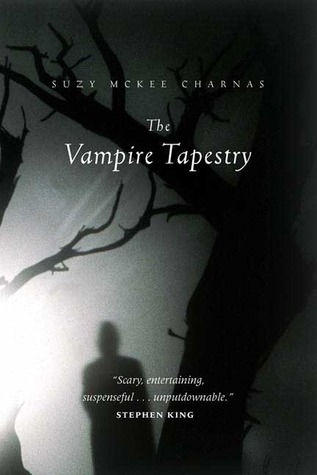
Review: The Vampire Tapestry by Suzy McKee Charnas

Book info:
Form: pdf format, e-book
Genre: contemporary fantasy with psychological elements
Target audience: adults

Synopsis:

Dr. Edward Weyland is an anthropology professor in the Cayslin Center for the Study of Man. Some people think he is an introverted, lonely scholar absorbed in great work; some say he has a secret sorrow too painful to share; others claim he is a charlatan or a genius working himself to death just to prove he can. Almost nobody guesses that he is a vampire.

One day Weylands attacks Katje de Groot, a maintenance worker who has suspected for some time he is not just a work-driven social scientist; as a result of their struggle he is almost mortally wounded. His life goes downwards from that point and reaches a low when he is found and abducted by a band of unscrupulous humans, led by a man called Roger. They feed him, helping to survive and heal, and they provide a shelter but only because they want to exploit him in the most profitable way they can think of. After a while Roger invites along a Satanist, Alan Reese, who wants Weyland to become his most prized MayDay sacrifice – the event which he intends to be recorded and broadcast, in other words sold. Weyland escapes in the last possible moment only because Mark, a 15-year-old nephew of Roger, employed by his uncle as a kind of caretaker, cannot bear the burden of observing anybody, even a vampire, being humiliated, condemned to death, and denied food for a longer period of time.

After that accident Weyland tries hard to rebuild his academic persona with the help of Floria Landauer, a middle-aged psychotherapist. Once again he is on the brink of revealing too much of himself to an intelligent, incisive and curious woman and he must flee. Will he be able to return to his old role or will he be killed? Or maybe he will go into the Sleep to wake up in new, different times?

My impressions:

This is a selection of episodes from a long life of an ultimate predator, a story mainly about the precarious survival – not about love, hate, fighting or caring about the others. It is divided into 5 parts novella-like which could be taken individually and read as short stories (in fact chapter 3 was originally published separately as The Unicorn Tapestry). The novel was very well-written and the author managed to capture that ‘otherness’ of a mind of an untamed beast who has to mimic his prey in order to succeed. I suppose the biggest asset of this story is the fact that Weyland as a character is nothing you expect. Forget about super-handsome, super-horny vampire hotties who sparkle and are as emotional as your average teenager when they aren’t busy stalking all the pretty girls in their area. Forget about haughty and proud vampire overlords who rule their covens swinging swords and other weapons of choice with deadly precision but deep down are like those white fluffy bunnies - in dire need for a company of a worthy female or two. Compared to Weyland these are not vampires, these are normal guys dressing up like children in a kindergarten. The Vampire Tapestry is, contrary to many paranormal romance books, an adult novel of impressive psychological insight and chilling horror.

In many reviews I’ve read that people didn’t like the main lead, found him boring or disgusting. I admit Weyland is easy to despise, even hate, especially if you, starting this novel, expected just a tortured human with fangs. Well, I would compare him to a great predator, a mountain lion, leopard or cheetah – plenty of people find these animals mesmerizingly pretty but what would they say if one of those big cats attacked their pet or even worse, somebody from their family? Weyland is presented and acts like a highly specialized predator. He can be pleasant and charming, he is nice to look at despite his age (he looks like a fit man is in his fifties). Yes, he exploits the softer aspects of human nature, like the need to congregate and communicate, the need of tenderness, understanding and love but he never empathizes – he can’t and he doesn’t want to.

 In the first part it becomes obvious that he is not beneath killing just to satisfy his selfish hunger. Of course he prefers not to leave a trail of bodies in his wake but if a push comes to shove, no problem. He even pretends to rape women in order to divert any unwanted attention from himself. On the other hand I found his behaviour, as repulsive as it was, completely logic and understandable – any successful predator needs to be ruthless in order to survive and Weyland’s prey is cunning and might be dangerous to him because in this story the vampires are hardly immortal or/and indestructible. What made it work for me was the fact that Ms.McKee managed to present a psychologically viable ‘alien’, down to his scorn for ‘cattle’ he must pamper and endure in his own best interest.

The best parts of the book? I loved the lecture Weyland presented in the first part, speaking about hypothetical vampires, enjoying the game he was playing with his ignorant audience, growing more at ease on the podium as he warmed to his subject because who doesn’t like speaking about themselves? Then, later, the description of Weyland attending an operatic performance of Tosca and being affected by the human art form he’d been scorning I found simply brilliant. It was really nicely done, showing that sometimes your environment can change you despite yourself – yes, if you gaze at the abyss the abyss will, at some point, gaze back.

One more thing – I truly enjoyed the diversity of secondary characters. They were normal, three-dimensional people, most of them middle-aged or older, some of them handsome, some of them ugly but none of them judged just because of their appearance and muscles. As real-life as they come.

Final verdict:

This was the first novel I’d read that presented vampires from an evolutionary position, and it didn’t disappoint. If you want to read a gritty story about an ultimate predator with human-like intelligence and completely inhuman set of mind, this is your book. Don’t expect any romance or hormone-induced drama. Don’t expect mighty warriors fighting against other warriors for the favours of stunning females. No bats or fangs. No swooning beauties or sparkles. Expect modern settings with a dash of supernatural. I admit the book left me rather pleasantly impressed. In fact if vampires existed at all, I bet they would be similar to Weyland.
Enhanced by Zemanta

Wednesday, 8 May 2013

Review: The Ritual (Theft and Sorcery 01) by Erica Dakin

 photo ae334d5a-9e8e-4355-9b2d-a643fe91dd0d_zps50b1542a.jpg
Book info: 
Form: pdf e-book 
Genre: paranormal romance, fantasy
Target audience: adults 


Synopsis:

It is a first person narration of Chiarin or Rin, a half-elf girl living in a world where cross-breeds are discriminated against, shunned and persecuted for what they are. She has a twin sister, Shaniel or Shani who is a sorceress. Magic is a rare gift but also a dangerous one, because coveted by elven aristocracy; once you get into their service they’ll never set you free. That’s why both girls have to hide and lead a hand-to-mouth existence.

One night Rin, a professional cutpurse, is robbed by another half-elf, a very handsome man called Zashter who has…an identical twin brother, Mior, and Mior happens to be…another sorcerer. Rin first avenges herself by causing the arrest of those two but soon her sister and her conscience make her regret that move so she breaks into the prison and set Zash and Mior free.

After carrying out her ambitious plan, all of a sudden, she offers to accompany those two complete strangers wherever they are going. Zash reluctantly agrees, apparently because he has a very dangerous and important mission to fulfill – obtaining  four powerful artifacts, one for every natural element, as required by his shadowy boss. He is a master thief, though; with the support of his brother’s magic he can manage without anybody’s help even the most ambitious endeavours. Being also very handsome, he can have a new lover in every town he visits. What does he really need both sisters for?

My impressions:

It is the first part of a paranormal romance series and I am not going to criticize it for that – it would be as stupid as complaining that lemons are yellow and sour. If you don’t feel like reading about pointy-eared hotties making out on every possible occasion don’t even look at the book, as simple as that. Still I am going to carp a bit because in my humble opinion it could have been a lot better.

I liked the idea – half-elves who live in a hostile world where they have only two possible career choices: either become slaves or criminals, sometimes both, but never independent adults with a normal life. Our characters chose what they chose and never looked back. Fine. Just why they had to be two pairs of identical twins with identical skills is beyond me. A bit of variety is always a nice thing but unfortunately variety is not this novel’s forte.

Then you have the world building which is so sketchy that almost borders a catastrophe. Rin more often than not focuses on her romantic feelings, rarely sparing some time for the surroundings or politics or anything at all. The easy way Zash agrees to take both sisters under his protection and provide some tutelage is fishy from the very start; however dear Rin remains in the dark for most of the novel, never even daring to confront her lover or ask him the simplest and most natural questions. She is so busy, kissing, stealing, dreaming and kissing again. It would be such a nice change to have an interesting, clever heroine who actually knows how to make use of those two gifts in practice, especially when confronted with a handsome stranger.

I don’t want to be overly cruel and dwell too long on obvious plot flaws: like the fact that a certain monastery, full of stupid, kinky monks and some browbeaten sex slaves, contains a well which water heals every disease and can bring you back to life; seriously, the author wants me to believe nobody has ever considered taking it over and enjoying an everlasting and extremely profitable trade, not to mention an instantaneous and full recovery? Really, nobody was interested enough to gather an army of professional soldiers and punish those hideous monks for their depravity, keeping in mind that the reward might be worth more than a kingdom plus you would get those delicious women to play with? Nobody? How very improbable…

Let me finish my musings in a positive way – I appreciate the fact that the book ended the way it did, without any of those ugly cliffhangers. Funnily enough it made me curious about the second part – curious enough to buy it when it is available and the mood strikes again.

Final verdict: 

Good idea, not really great execution. Don’t think too much while reading this book – the effects might be disastrous. However if you want something steamy and lowbrow easy to read, with elves, half-elves, magic and thieves, this novel might fit the bill. 

Friday, 10 February 2012

Review: Riyria Revelations series by Michael J. Sullivan, books 1-6 (or 1-3, Orbit edition)


The series has had two editions and, as it might be confusing, I am giving you the full list of the titles.
The first edition, published as six books by AMI and Ridan Publishing (these books are now out of print) consists of the following parts: 
  • The Crown Conspiracy,
  •  Avempartha, 
  • Nyphron Rising, 
  • The Emerald Storm, 
  • Wintertide, 
  •  Percepliquis, 

The Orbit version (most likely to be found in bookshops nowadays) consists of three books: 
  • Theft of Swords (1-2),  
  • Rise of Empire (3-4) 
  •  Heir of Novron (5-6)

Synopsis:

A classic fantasy story, full of great characters who have to save humanity and discover a lot about themselves in the process. You see? It must be a nice series if its summary can be included in one sentence!

What I liked:

A bunch of incredible baddies

I really mean ‘incredible’ here – three-dimensional, shadowy, complex and sometimes even funny. Take Sauly aka Maurice Saldur, the bishop and head of Nyphron Church in Melengar. He looks and often behaves like your average depiction of Gandalf from LOTR  but even the most vicious sea snake would envy him the poison. This man is capable of anything and I suppose his “benign granddad” looks were meticulously cultivated over the years.  The best bit – he thinks he is more or less ok. Well, as the old saying says prisons are full of innocent people. Sauly would never admit to any wrongdoing which shows that his conscience is non-existent.

The other specimen: Archibald Ballantyne Earl of Chadwick. I loved  sweet,  ambitious, cowardly Archie! Not only he was handsome and self-centered, he also managed to fall in love with only the proper girls – the most advantageous candidates at the moment. Every aristocratic father would be proud of him. The best bit - he seemed to be genuinely infatuated with his latest choice (not saying who, find out on your own) and he died as a result of his cheek. Really, who would invent a better way of getting rid of a baddie? Make him fall in love and get him killed because of that!

Finally Magnus the treacherous dwarf who almost got Royce killed twice – no mean feat – and then finally found out a bit about friendship and loyalty and redeemed himself.

How the series develops and ends

As you progress it becomes obvious this particular story was carefully planned from the beginning to the very end and maybe because of that  the author was able to end it on a high note. Fear not, the mysteries will make sense, questions will be answered, characters will receive their dues and loose ends will be tied up leaving you more or less satisfied. Actually each book reveals a little of the whole picture but only when you know everything it is possible to appreciate how it seamlessly works together. Well, you might actually regret the fact that the end came so quickly. Mind you the plot of  every of these six  books is fairly stand-alone – a truly difficult thing to achieve in a series.

 I complained in my review of the first book that the characterization was a bit lacking. I am happy to say it improved greatly in the next installments, especially when it comes to the pair of main protagonists, Hadrian and Royce. Well, especially Royce.

Female characters

I liked most of them with one exception (more about her in the third section of my review). Fantasy books often presents females following some well-worn templates. Usually we get a pretty princess, worth fighting for, a servant who is useful and faithful but not especially pretty, a witch who is devious and clever but not especially nice etc. Here every female character comes with an unsuspected twist.

Arista is a princess but she is also a witch who must learn more advanced ropes on her own; she is not especially pretty and she must go through a lot to reemerge as an independent woman. Yes, she still needs that male arm to rescue her from time to time and  give her more strength but, as far as princesses go, she remains independent - she thinks on her own, she plans her own future, she decides what is good and bad for her.  I really liked Arista from the beginning, even when she was just a lonely girl sitting in her high tower, wondering how to make lesser magic work.

Thrace/Modina starts as a simple village girl but then she transforms; it takes a lot of pain but she manages to turn into a compassionate leader. She might have lost her innocence and ingenuity on the way but I liked her strength and I found the whole transformation rather believable, especially for a fantasy book.

Amilia also starts low - as a scullery maid - but then she provides Modina a much-needed support in crucial moments. She  finds her knight in the shining armour in the process which was kind of sweet. She might be the weakest of those three, never exceeding her ‘friendly servant’ capacity, but still rather likeable. Overall not bad – I managed to say something good about three out of four female leads in this series! I can sometimes surprise myself!

Male protagonists:

Well, they are complicated as well, especially Royce who seems to be the most shadowy type, full of surprises, not all of them nice. It is sometimes difficult to call him 'protagonist' at all but it worked for me just fine. Hadrian provided a nice contrast to Royce, showing him that the better side of human nature still exist.

What I didn’t like:

The elves

For most of the series, like five books, elves are spoken about, hardly seen and not heard at all. Ok, there was one exception – a short scene between Royce and Ren, a half-breed which had been treated with kindness by the thief and found a way to show his gratitude in return.  Throughout the books I kept wondering why elves were such a dirty secret (while it was logically explained, you can understand it only at the very end). They are presented as a race of very intelligent beings who could live for a very long time, their culture was so sophisticated and still most humans had only harsh words for them or half-breeds. It was actually strange any half-breeds existed at all, taking all this negative attitude into consideration. 

Only in the last book we learn that elves can be brutal and murderous, that it’s either them or us and the future of mankind is endangered while they live. Well, pity because I would love to see them cooperate with humans – I am sure it could be arranged,  if not for those pure breeds then at least for those with mixed blood.  By the way the whole elf destruction routine felt  over the top – not only were they trying to kill literary every last human but their methods seemed a bit haphazard, especially keeping in mind how powerful they were supposed to be.

Gwendolyn DeLancy

The romantic interest of Royce is indeed my major complaint. She is a former prostitute and a successful businesswoman, owning Medford House (a brothel) and The Rose and Thorn Tavern.  Reading the books it seems Miss DeLancy’s main occupation is to take care of Royce whenever he happens to be close – our good Gwen predict his future, feeds and pampers him and sleeps with him (but it is only hinted in a very delicate way). She is so good and sweet that she becomes annoying after a short while. The fact that she is also a person who knows everything the best doesn't help either. You know, she has a gift of Sight and I hate those ‘know-it-all’ seer types. BTW how come Gwen was able to predict Royce’s future while her compatriot seer almost lost her life while being coerced to do the same thing?

Overall whenever I read a scene with Gwen, it always put me in a blood-thirsty mood. Call it a hunch but I never believed in Royce’s and her ‘happily ever after’, especially when she told him that she had already chosen names for their future children (sic!). As a result I couldn’t wait for her to die. She was simply too flimsy as a character and too cloyingly sweet as a woman not to mention the fact that we never saw her in the role of a 'madam' or a prostitute. The scene of her death was the only one which I read with interest as it showed another aspect of Royce’s dark personality. Finally this saintly whore (an oxymoron, I know, but I couldn't restrain myself) was put to a good use. A pity it came so late – if I had anything to say I would get rid of Gwen earlier and I would pair Royce with an elf or a half-breed. If I sound callous and unladylike well, I do admit I like dark fantasy.

Final verdict:

Despite my carping above I enjoyed this series very much and I would love to reread it after some time. I recommend it very strongly to fans of good, classic fantasy or just a good, consistent story. A warning: this series is highly addictive, buy or borrow all the books if possible or you will regret it later (like me).


Wednesday, 2 November 2011

Review: Fenrir (Craw trilogy 02) by M.D. Lachlan

Book info: 
Publisher: Gollancz (Pyr)
Book form: e-book (mobi format)
Target audience: adults
Genre: historical fiction, fantasy


Synopsis (with some inevitable spoilers concerning the first part, Wolfsangel):


This part is set up in times of Charles the Fat and more precisely, during the famous siege of Paris (886), which was attacked by several Viking armies. Count Eudes, the descendant of Robert the Strong who is ruling Paris, faces a very difficult problem. Either he surrenders his city, because the Vikings forces are clearly prevailing, or he gives his own sister, Aelis, to these filthy heathens.

If only a Viking king wanted to marry the girl it would be still more or less acceptable – after all a king is a king, even if he is a stinking pagan, and a Christian consort could convert her husband and his people in due time gaining universal recognition, maybe even a status of a saint. Rumour has it, though, that Aelis is to be killed – more precisely sacrificed to an unworthy false god called Odin. It is a horrible fate and one unacceptable for a noble woman and a sister of a leader of Christian Franks. On the other hand what is worse – condemning a whole city of people to death or slavery or condemning one girl? Troubled Eudes asks Jehan of St Germain, a blind, crippled monk declared a living saint, for advice.

However, soon enough the decision is taken from his hands in quite unpredictable manner. During a bold attack the Vikings enter the city and Aelis must flee for her life; following the instructions of a stranger who is supposedly a werewolf, she jumps into the Seine (as dirty as nowadays), gets lost in a forest, meets a greedy merchant called Leshii and disappears completely from her brother’s sight. Other forces are actively looking for her as well– an evil sorcerer Hugnin with his horrible but even more powerful sister Munin, a werewolf who saved her and that crippled monk, Jehan who was captured by Vikings and kept prisoner…after all even pagans understand that a living saint can be worth a lot of money both dead and alive. Aelis must head for the country of Rus near Ladoga where reigns Helgi, a prince who, allegedly, knows enough magic to save her. Will she manage to get there? Who will help her and why? What will she discover during her journey?

What I liked:

The sequel, like the first part, is a literary rendition of the cyclical myth of Fenrir, the wolf destined to kill Odin at Ragnorok and end the era of Norse deities for good. It also features the same set of main heroes. From almost the very beginning it becomes obvious that Aelis and Adisla (a peasant girl from the first part) are, more or less, the same person. Identifying Vali and Feileg, the twin brothers in love with her whose father is Loki himself, is not that easy. Of course both brothers were also given interesting parts but I won’t reveal their identities because it would be two major spoilers. Let me only say that their fates are closely intertwined, the idea was original and their identities –surprising. The author throws as many red herrings your way as it is only possible and he mostly succeeds in disorienting you, making this book different than Wolfsangel– no mean feat when the main characters are supposed to follow the same path for the second time.

Their path might be the same but their social role isn’t. I complained that in the first part Adisla seemed to me the weakest of the trio. Here the opposite is true – she is a really strong female lead who takes difficult decisions, can defend herself and is often the most aware of the course of action happening around her. Mainly because of Aelis I liked the second part better than the first, although it was grimmer - we get here definitely less sense of humour and those happy, cheerful ordinary life scenes are really few and far between.

Overall the characterization was really a strong point of this novel - each character develops as an individual, has their own flaws, and almost every one displays some degree of moral ambiguity - I loved that immensely. Even the nominal bad guys are not wholly bad. What’s more? I am happy to say that Loki reappears forwarding the action every time in a new direction but we see almost no witches (and good riddance to bad rubbish, I hated them).

What I didn’t like:

Sometimes the narration was overwhelming because of the amount of atrocities, described; I felt like having a really bad nightmare, one after which you wake up tired and drawn but grateful it’s over. Be warned - cannibalism, killings, murders, torture scenes are thrown at you one after another until the very end. Yes, they are used in context with the rest of the story and often play important role in the progression of the narrative, everything being logical and explained in a believable way but if you are not in a mood for such entertainment better steer clear of this book.

At the end no HEA is waiting for you either, although some might quarrel that a prospect of living again after being killed can be counted as such. However, how much is such a prospect worth when you are entangled in the same vicious cycle of running for your life, being turned into a monster, killing and being killed, most of it happening against your own will and for unknown purpose? I hope the final part will end up in a more positive way for Vali, Adisla and Feileg, no matter how they will be called and what they will become.

Finally it is hardly a flaw but I am also not sure this one is a stand-alone novel. Not really. In my opinion you would miss too many good analogies and most of rune magic. I do recommend reading Wolfsangel first. For those who like reading a series out of order – don’t do it this time.

Final verdict:

In my view, Fenrir lived up to the high expectations set by Wolfsangel. It is rare when it comes to sequels – the more I am pleased to admit it. The book still remains a rather violent mix of Norse magic and myths with some Christian elements added but if you are not put off by the high amount of violence you will enjoy it and you will, like me, wait for more.

Thursday, 27 October 2011

Review: Wolfsangel (Craw trilogy 01) by M.D. Lachlan

Book info:
Form: e-book, mobi format
Genre: fantasy fiction
Target audience: adults

Synopsis:

Authun a Viking king has a problem – he is childless. He is not just any king, mind you, he is Authun the Pitiless and his exploits are legendary. He must ensure his people will be led by somebody at least as good as him or better. In short his son. Acting on the prophecy of the witch queen Gullveig, he raids an Anglo-Saxon village looking for a promised infant. He finds twins instead, with their disfigured mother. One he keeps and names Vali; the other, Feileg, is kept by Gullveig herself to serve as her protector; the boy is sent to be schooled in the animalistic magic of the berserkers and wolf people. However, the prince and the wolf boy are entwined in the same web of destiny - over the years, the twins become pawns in the complex game of magical subterfuge that is the eternal war between Odin and Loki.


The tale moves forward. Vali is brought up in a peaceful village, leading a lifestyle which makes him value pursuits other than those expected of a son of Authun the Pitiless. He is known as Vali the Swordless for one thing and, to make it even worse, he falls for a simple peasant girl, Adisla, refusing to marry a princess designated to be his wife. In short Vali is a prince who doesn't want to play the role expected of him– he abhors fighting and he intends to lead a “normal” life (normal from our point of view of course). Unfortunately his fate will be a bit different.

The princess’s father, another local ruler, wants to get rid of Vali but he must do it in a very diplomatic way - the wrath of Authun can be deadly. He tricks the young prince (Vali is thirteen at that time but we are talking about a society in which a 35-year-old man is called old so, I suppose you can place Vali's age somewhere around 18) into bringing him a head of a werewolf or even better, capturing a live werewolf. Adisla’s life depends on it. Vali goes werewolf hunting and, quite unexpectedly even for himself, returns with his twin brother, Feileg, who, in the meantime, became a real beast of a man, hunting with his bare hands and teeth and living like a wild animal in the forest. Soon after Vali’s triumphal return Danes raid the village and, despite the heroic defense led by Vali, they manage to steal Adisla away. Vali finds out it was not an accident - they were looking specifically for the girl, even knew her name. What did they need a simple peasant girl for?

Vali, now an outlaw, with his faithful mentor and bodyguard, Braggi, and Feileg, who managed to fall in love with Adisla in no time, set out to rescue his beloved and find out more about the mysterious raid. He never imagines how the journey will change him.

What I liked:

This novel was a good page turner - it begins as a historical Viking story but soon it turns into a battle between ancient Gods and other magical powers, with a nice touch of horror along the way (nice meaning original, not pleasant - there are plenty of entertaining but brutal action scenes).  Fortunately the author didn’t forget to add some sense of humour to the mix, making it all more palatable.

The characterization of main characters was excellent, particularly that of Vali and later his twin wolf brother, Feileg. It was easy to feel empathy for these two, even when their actions were brutal and bloody. It added to a dark atmosphere, a pervasive bleakness against which the characters had to strive; it also fitted perfectly with the Viking setting. There was a constant sense of an oppressive destiny bearing down on Vali, but the reader is kept guessing as to exactly what that is until quite far into the story. Also I admit the rivalry and suspense around the twin brothers was well-played – even the love triangle with Adisla didn’t annoy me as much as such ugly plot tricks usually do.

What’s more, the whole world building and, more precisely, the depiction of the use of magic and the Norse Runes I found truly excellent. Lachlan stayed close to the shamanistic nature of Norse religion and  the effect was very powerful indeed. I am hardly a Norse mythology and culture expert so I might be mistaken but it somehow resonated right. I found the way that magic consumes and distorts those who use it particularly striking. For example the witch queen allegedly had enough power to kill her sisters without lifting her little finger and she could become a deity of a kind but she paid for it a horrible price – her body, seasoned to endure torture and hardship beyond belief, remained forever that of a child. You get nothing for nothing. Even the witches have to earn their magic in all manner of unspeakable ways, while the Gods do not bestride this novel as all-powerful beings — rather, they scheme and operate from behind the scenes, especially Loki, my all time favourite.

Speaking of Loki…I was very nicely surprised that, for a character who is barely present in the novel, he steals every scene he appears in. And very rightly so! I would love to see more of the Trickster God in subsequent novels! I loved his dialogues, like the one I am quoting below:


“You chose imperfection — what could be more perfect? You saw your imperfection was perfection and therefore remedied it by imposing an imperfection on yourself thereby becoming perfect again. The logic is imperfectly flawless.”

What I didn’t like:

Loki as depicted on an 18th century Icelandic ...Portrait of Loki via Wikipedia

Firstly, the character of Adisla, the main squeeze of two protagonists, was rather sketchy – I really was wondering what Vali and Feileg saw in that girl because neither her actions nor appearance justified sufficiently such deep feelings and everlasting devotion. She was kind and pretty, she swam like a seal, she was loyal but also a bit tame, especially compared to those two brothers.

Secondly I found it sometimes really hard to get into Lachlan's writing style. It was too detached for me, and too often leaned on telling rather than showing. At times it was more like reading a newspaper article than a novel. The lack of warmth and immediacy really stopped me from becoming invested in the book as much as the story was worth.

Finally the fact that the magic system, presented here, involved so many deaths (and, more particularly, the death of children) to make things work, made me a little uncomfortable. It is true that the magical context was well-explained and logical but still…it doesn’t change the fact that these Norse witches were icky sadistic psychopaths and some ‘exploits’ of Authun and his son made me nearly nauseatic.

Final verdict

I finished the book caring about the characters and wanting to know what happens next.  That is a good sign. Of course the book wasn’t flawless but, taking into account the fact that it is a debut novel, it really wasn’t bad. I am willing to continue this series. Overall, I would highly recommend this book to anyone who loves Norse mythology and Viking stories with a dash of supernatural.

Tuesday, 18 October 2011

Mini review - Overwinter: A Werewolf Tale by David Wellington


  • Paperback: 368 pages
  • Publisher: Three Rivers Press; Original edition (September 14, 2010)
  • Language: English
  • ISBN-10: 0307460797
  • ISBN-13: 978-0307460790
Genre: fantasy fiction, dystopia
Target audience: adults


Synopsis:

Powell and Cheyenne, a pair of werewolves from the first novel in this series, Frostbite, are trying to spend safely their first arctic winter still looking for a cure for their state. It happens somebody else is looking for them and that particular somebody means trouble big time. Her name is Lucie. She is a sadistic French werewolf girl who had bitten Powell some hundred years ago and now treats him as her husband. Having made a total mess of her latest Siberia hideout, she decided the ground under her dainty feet was too hot - she left for Cananda to find some backup. She joins her former lover and creation asking for Powell's protection. And killing a bar full of innocent people on her way just because she felt like it. As you can imagine Chey and Powell are less than thrilled – the attention of the local authorities and law enforcement is the last thing they want. Especially that Chey starts having some very worrying symptoms - apparently her wolf is becoming stronger than her human nature but if she allows the wolf prevail she will end up insane. The time for finding a cure is becoming short indeed.

Lucie is closely followed by Varkanin, an elderly but still hale and hearty Russian hunter who had shot her back in Siberia and whose family she destroyed -  in retalliation she murdered all of his three adult daughters. Varkanin is very motivated to find Lucie and make her pay for her sadism. He is also a formidable opponent, with his specnaz training and a lot of colloidal silver inside his body. Additionally he is given substantial support from the side of Preston Holness, a shadowy figure working for the Canadian government. Holness specializes in unsavoury deals the government needs but officially would abhor like using prohibited land mines, depleted uranium bullets or killing off a bunch of werewolves just because they operate in an area rich in oil a big oil company is interested in.

Will Powell find a cure? Will Lucie let him stay with Chey? Will Varkanin get his revenge and the oil company – its drilling towers? As usual there will be no easy solutions and no easy answers.

What I liked:

It was a gutsy story – as beautiful but also as cruel as the Arctic itself. There are a lot of deaths at the end, some of them very painful although still logical. I truly couldn’t have thought of a better end; I also couldn’t have written anything more depressing. If Powell and Chey were handed a HEA (happily ever after), so a little prairie house and one evening at the bowling alley a week as they planned at one point, I would threw this book away; on the other hand the way the book (and the series) ends, made me rather sad. Love does conquer all, even lycanthropy, but sometimes the price is high indeed, so high that you wonder whether it was worth it…ok, before I get maudlin let me progress with the rest of likes.

I liked the mythological spirit of muskrat (Dzo), accompanied by that of a polar bear and a dire wolf better this time. Their role in the book was more precisely outlined, more important and far more understandable than in the first installment. I also liked how the character of Varkanin was presented – a former specnaz soldier, a cruel hunter but also a deeply-wounded individual who lived just for his revenge. Creepy but so very true. Similar things can be said about Lucie - she is very pretty, very sweet sadist who also, once upon a time, was hurt and wasn't given any choice but to follow her fate. You feel sorry for her for 1/3 of the story and you hate her for the rest.

What I didn’t like:

It is not really a flaw because this book was very good; However, it made me very sad. I think you should be warned – don’t read it when you have a spell of autumn blues (or any other kind of blues). The ending will hardly put you in a better mood. Of course it was all good, logical and understandable but still...prepare a lot of chocolate and maybe even a highball.

Final verdict:


A very good, intelligent but definitely a very adult fantasy series with some violence and no easy issues. I recommend it but I am also aware that it might be not a pair of novels for everyone. If you crave for something to cheer you up and make you all warm and happy you might actually want to steer clear of it.