
Wednesday, 3 October 2012

Movie Review: Angel directed by François Ozon


Directed by François Ozon

Cast:
Angel Deverell – Romola Garai
Esme Howe- Nevinson - Michael Fassbender
Theo Gilbright (Angel’s publisher) Sam Neil
Nora Howe-Nevinson (sister of Esme) – Lucy Russell


Synopsis:
Angel (2007 film)
Angel (2007 film) (Photo credit: Wikipedia)
Once upon a time there was a girl with dark auburn curls, green eyes, clear, pale complexion and vivid imagination. She lived with her mother over their small grocery shop and her name was Angel.

Angel’s imagination was her biggest blessing and curse. On the one hand she was able to entertain herself by creating romantic stories about aristocratic ladies and some dashing fellows madly in love – mind you we are speaking here about the period before WWI so without the Internet and tv. On the other hand, instead of helping dutifully her frail, widowed mother the girl hated the shop and wasn’t interested in all the gritty reality around her – always a portent of doom . Her mother didn’t notice the danger – more often than not she acted as Angel’s servant, smoothing things out and carrying trays with supper or breakfast for the spoiled, sulking progeny. Mrs. Thatcher, the most famous shopkeeper’s daughter, should teach that girl a lesson or two about being proud of your station in life.

Several pink, frilly novels later Angel found a brave London publisher who asked for her manuscripts, read them carefully and decided to buy one of the books. The romance was selling surprisingly well so after the first she sold also the second and the third novel – a real series of successes. In no time Angel became a rich, fashionable authoress even though her work hardly deserved the fame and money. You see, in my humble opinion she had all the markings of a classic literary hack – she worshiped her own talent, she didn’t accept a word of criticism even concerning obvious mistakes like making one of her characters open a bottle of champagne with...a corkscrew. She became as bigheaded as your average celebrity bimbo in no time and tons of money she’s been earning fast didn’t help either .Then she fell in love with the idea of being in love and getting Mr. Right-and-Handsome. Dreary, dreary me.

As you might guess her choice was as unfortunate as her literary creations – a young, penniless amateur painter from impoverished gentry. He was called Esme and was very handsome but also notorious as a womaniser, gambler and drunk, with an enormous ego to match. Even his sister, Nora, a big fan of Angel’s novels and of Angel herself, warned her beloved authoress against him. In vain. Angel proposed (sic!) to him and married the man. Their union was a disaster mainly because Angel never stopped being selfish, treating Esme like a new, big pet. All was finished by his suicide after he returned, crippled for life, from the war. Small wonder – if I had to live in a big, pretentious sarcophagus of a house, full of false antiques straight from your average Dracula movie set, with Angel as my host,  I would hang myself as well. It was called ‘Paradise’, you know. The name alone beggs for troubles.

Ok, to cut a long synopsis short the movie ends with Angel dying of pneumonia because she, heavily depressed, went outside only in her nightie looking for her favourite white kitten. Foolish to the very end, our Angel was, and life, after all, is to some extent about the survival of the fittest.

My impressions:

I liked the fact that this movie was full of cats and Irish wolfhounds – they are lovely creatures. Some of Angel’s dresses weren’t bad as well (look at the movie poster above). And one scene was simply brilliant: Angel has just returned with her hubby from a honeymoon – among other countries they visited Greece . Trying to be a good sister-in-law she brought Nora a bottle containing water from the sacred spring in Delphi, allegedly supposed to give poetic vein to whoever drinks it. You see Nora was writing poems but without any success so it seemed to be a very nice gift, right? Now Angel asks Nora to wait a bit behind the door, takes the bottle out, drinks some of the precious liquid, then she replenishes the bottle from her washbasin, she asks poor Nora to come in and presents her with the bottle , grinning widely. Here, my dear, be a great poetess, it doesn't matter the contents are a bit artificial! It was precious! Still one scene cannot save the whole movie.

Nora pampering her favourite authoress - the things fans
do for love...

Overall this movie could have been called : 'Barbara Cartland: The Early Years'. Dismissive of others ('I quite like Shakespeare, except when he's trying to be funny'), Angel triumphs with such titles as 'On Violet Banks' - purple prose, nothing else. Even if she supports good ideas (she is a staunch pacifist) she expresses them in such a manner that it is really hard to agree with her at all. Actually when I come to think about it, Angel’s character construction was not that bad – she was even interesting because as flawed as, say, Scarlet O’Hara. There might be something sympathetic, as well as pathological, about someone who so persistently turns their back on the real world to inhabit one of their own creation. However if you meet such a person, no matter how lovely he or she is, run away in the opposite direction FAST and never look back. EVER.

Still, it was an average flick about one horrible author of horrible books who, despite an incredible and undeserved bout of good luck, managed to botch up her life and pretty much everything else. Very depressing. Almost like most of the scenes of this cheap production – apparently the budged was so dismally low that they couldn’t afford one single day of shooting in a decent location, relying on unconvincing back projection work, and then doctored it sometimes with comical results. The acting was almost as bad as the decorations, although Romola Garai, playing Angel, had some good moments (as described above).

"Angels belong in heaven, my dear so either learn
how to fly or  get off your
high horse."
"And you hide that big ear of yours!"
Mr. Michael Fassbender – I really commiserate, the things a decently-looking man is forced to do just to keep going his acting career... and the cameras were rather unflattering this time. Apart from your square Teutonic teeth (I have these myself, sigh, I know, nothing can be done) I managed to notice your really big and ugly ears. Yes ladies, don’t look too closely at the head of this gentleman, look ...elsewhere.

Mr. Sam Neill – getting old is not nice, getting old as an actor is doubly so and being cast in such rubbish movies...I hope you were paid well at least. Still, old or not, it would be nice to present to the audience more than one facial expression. Remember, you were paid for it.

What I found out:

Elizabeth Taylor wrote a novel? Really? Some people even call it a masterpiece. A ghost writer must have helped her but still...I hope the actual book is better than this adaptation. Actually I would like to read it.

Final verdict:

Perhaps charming but still a failure and a waste of time. It’s better to clean your flat instead. I watched it because Heidenkind dared me. I promise to do better next time. ;p

Enhanced by Zemanta

Sunday, 30 September 2012

Review: The Casual Vacancy by J.K. Rowling


Book info:
Kindle format
Genre: Contemporary fiction
Target audience: adults only 

Synopsis:

When Barry Fairbrother dies suddenly of aneurism in his early forties, leaving his family and a lot of unfinished issues behind, the town of Pagford is  in shock. He was a well-known  councilor and a coach of the local female rowing team. He was also a man with a mission. Who will fill his shoes? Will his death benefit his allies or his enemies?
Surprisingly there are more than one or two token candidates. Pagford, seemingly an English sleepy town like many others, with a cobbled market square and an ancient abbey, becomes a war zone and, like in every war, there will be casualties. Who will prevail? Is it important at all?

My impressions:

First of all let me state the obvious: hearing the name of J.K. Rowling you will immediately think ‘Harry Potter’ even if you haven’t read any of the books or haven’t seen the movies.  But HP series was finished some time ago and now Ms Rowling decided to branch out. I am far from criticizing her for that, let me just say it was a very bold move, rejecting a genre which made you famous, renowned and super-rich, trying something entirely new and different.  I grant it, she could afford that little experiment without breaking out into a financial sweat, a rare luxury among authors. My question is rather why it was done the way it was done when it could have been done almost any other way ?

My first surprise: the new book was still published under the name of J.K. Rowling. Let’s face it – whether the author likes it or not that name belongs firmly to Harry Potter. Using it to market a contemporary fiction novel for adults is like trying to sell e.g. BMW shoes or Manolo Blahnik computers.  Of course it has its short-term advantages:  plenty of people have bought the book out of sheer curiosity  (like me) or  loyalty so I suppose the publisher and the author will make nice, fat profit, no problem.  Still most of those casual readers will be confused and disenchanted at best,  getting not exactly what they have expected or used to expect. I suppose next time they won’t fall for the magic name alone.

The novel itself is a solid piece of writing, planned and executed decently well, but the topic isn’t either  fresh or  original, let alone ground-breaking.  I am not an especially well-read person in English literature and even I have read many similar position by Kate Atkinson or Sue Townsend; I can even add Agatha Christie to the bunch here, and  I must say their books were actually better – funnier, more edgy.  Do not expect in The Casual Vacancy  any magic, even of the metaphorical kind, or fireworks of humour and wisdom.  While reading it I didn’t feel that intense urge to find out what happened next, or to devour the book as soon as possible. It was a tepid story set in a banal, industrial-grey world;  after reading it I could shrug my shoulders and move on.  I related to  none of the characters, I didn’t hate anybody in particular, I am not curious what will happen to them in the near future. If I have to be honest I could live without meeting them at all.

I suppose I would be far more comfortable if the book was published under an alias.  Now it seems to me that Ms Rowling decided to minimize any risk and to capitalize shamelessly on her previous success, selling readers something which is supposedly connected to the HP series but in reality as far away from those books as it can only be. Only after the lecture of reviews or the book itself you see you have been conned.   Had this one been penned by a debut author, without all that glamour of a world-famous name,  it would have still been published but I am sure it would have also passed unnoticed and would have been forgotten soon.

By the way would it be such a bad idea to write something new (heck, even starting a new series) for adults but with fantasy elements included? Do only kids deserve a bit of fun? Taking into account how many mature readers have enjoyed the adventures of Harry and his friends, not to mention his enemies (yours truly among them) it seems like a completely rhetorical question, right?

Final verdict:

A decent novel about contemporary  Britain but nothing outstanding you must or should read or you miss out on an important book. Rowling has said pre-emptively: ‘ I'm a writer and I will write what I want to write.'  Ok, fine. I am a reader and I will read what I want to read. Not something like this one, though.


Silent Sunday


Friday, 28 September 2012

Mini Review: Mean by Renata F. Barcelos

Book info:
Form: pdf 
Length: 60 pages
Genre: psychological thriller
Target audience: adult

A copy of this novelette for reviewing purposes was sent to me free of charge by the author - thank you very much Renata!  That fact, of course,  didn't influence my review in any way.

Synopsis:

Because I am really feeling mean after the lecture let me start the synopsis like one of these jokes.

A nice girl with green eyes comes to a shrink. She knocks, enters and says: “Good evening. I want to kill somebody really worth killing but I’m still undecided. Would you mind my talking to you for a moment or two?”

Of course the shrink doesn’t mind it at all - it’s her job, after all, and she is paid handsomely for listening to different nutcases and wacky people. Is it really as safe as it seems to be, is she just a therapist? Is it possible such a nice girl really has a serious reason to kill anybody? Is she really so mean or is it just her sick imagination?

What I liked:

The idea behind this novelette was a very nice one - simple yet captivating. I truly enjoyed getting to know Cassandra and her horrible family. I was also immediately interested in the identity of her potential victim. I didn’t mind the first person narration much because  it helped creating an illusion the reader is actually a shrink. Some things Cassandra had been through sent a thrill down my spine and the more she told the more I wanted to know.

The best feature of this one was actually Cassandra herself – such a nice, intelligent girl with such a dark, twisted, narcissistic mind. She kept me wondering: was it because of her horrible childhood or was it because of her gene pool or maybe both ? Nurture or nature?  I  loved the ambiguity of her situation: she was not only a potential killer but also a victim; she was so self-centered and narcissistic she hardly noticed how much harm she was doing to herself. Still she remained perceptive enough to pursue a successful career and to plan a murder in a really clever way.

What I didn’t like:

Perhaps I have a dangerous mind but I guessed pretty quickly who Cassandra wanted to kill. Still I  didn’t know why till the very end so it didn't spoil my pleasure. An my main carping: this novelette would be far nicer if it was turned into a novel, with a richer characterization of the main lead and some other characters added in the background.

Final verdict:

A nice, short, intelligent read. Next time I  want a fully-fledged novel, though! Preferably with Cassie as a main character as well because her story is not over, is it? 

Wednesday, 26 September 2012

The Most Fascinating Libraries in the World 06 - The New Library of Alexandria

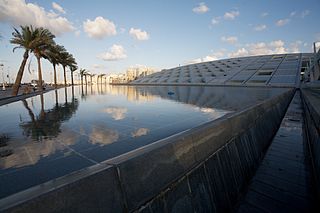
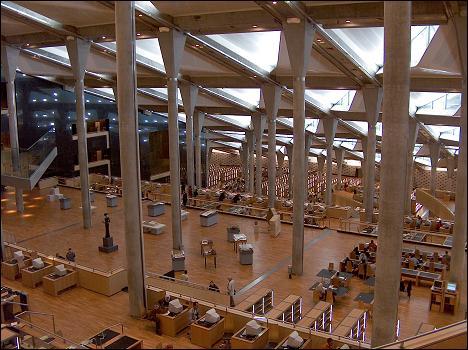
I visited a friend's blog one day and I was literary blown over by a picture of one of the most fascinating libraries around - Trinity College Library in Dublin, Ireland. It also gave me an idea of a series of posts about the best, the most beautiful, the strangest and the biggest libraries there are. The libraries that can make you drool, where you would be able to spend an indefinite period of time without noticing, where you would like to live and die till the end of the world (if they only served coffee and cake that is). Perhaps you can't visit them all but what is the Internet for? I'll try to illustrate my posts as well as it is only possible, providing, I hope, a nice tour for every visitor around. Enjoy!
English: The Bibliotheca Alexandrina as seen f...
English: The Bibliotheca Alexandrina as seen from behind a Statue of Poseidon mating with Athena. Alexandria, Egypt. (Photo credit: Wikipedia)


The Bibliotheca Alexandrina (English: Library of Alexandria; Arabic: مكتبة الإسكندرية‎ Maktabat al-Iskandarīyah)

The idea of reviving the old library, so famously destructed by fire in antiquity, dates back to 1974, when a committee set up by Alexandria University selected a plot of land for its new equivalent, between the campus and the seafront, close to where the ancient library once stood. The notion of recreating the ancient library was soon enthusiastically adopted by other individuals and agencies. One leading supporter of the project was former Egyptian President Hosni Mubarak; UNESCO was also quick to embrace the concept of endowing the Mediterranean region with a center of cultural and scientific excellence. A very generous check from Saddam Hussein (seven digits, no less) was allegedly cashed in just before the War in the Gulf.


An architectural design competition, organized by UNESCO in 1988 to choose a design worthy of the site and its heritage, was won by Snøhetta, a Norwegian architectural office, from among more than 1,400 entries.

The library has shelf space for eight million books, with the main reading room covering 70,000 m² on eleven cascading levels. The complex also houses a conference center; specialized libraries for maps, multimedia, the blind and visually impaired, young people, and for children; four museums; four art galleries for temporary exhibitions; 15 permanent exhibitions; a planetarium; and a manuscript restoration laboratory. The library's architecture is equally striking. The main reading room stands beneath a 32-meter-high glass-panelled roof, tilted out toward the sea like a sundial, and measuring some 160 m in diameter. The walls are of gray Aswan granite, carved with characters from 120 different human scripts.


The collections at the Bibliotheca Alexandrina were donated from all over the world. The Spanish donated documents that detailed their period of Moorish rule. The French also donated, giving the library documents dealing with the building of the Suez Canal.


The Bibliotheca Alexandrina is trilingual, containing books in Arabic, English and French. In 2010, the library received a generous donation of 500,000 books from the National Library of France, Bibliothèque nationale de France (BnF). The gift makes the Bibliotheca Alexandrina the sixth-largest 
Francophone library in the world.


What do you think? Do you think the modern interior suits here? By the way if you want to know who burnt the old Library of Alexandria I found a very nice article about it here.


Enhanced by Zemanta

Monday, 24 September 2012

A More Diverse Universe review - Fledgling by Octavia E. Butler


I'm participating in an event called A More Diverse Universe, hosted by Aarti at BookLust. I found out about it because of Heidenkind and her excellent blog called Truth Beauty Freedom and Books The event is meant to help promote people of color in speculative fiction, and will run for one week, from September 23rd to September 29. That's why  this intro is written in different colours as well. ;p

Because  we live in a world full of stupid idiosyncrasies somehow a person of color writing sci-fi or fantasy is less likely to be published than a white person writing about ethnic minorities. That's why A More Diverse Universe is an event focusing on books written by people of colour ONLY. In order to participade you had to choose such a book and review it.

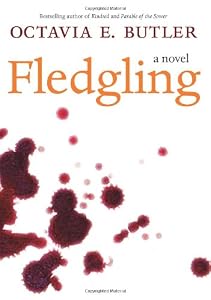
I chose Fledgling by Octavia E. Butler - I was fortunate enough to find that novel somehow and here is my review.
Cover of "Fledgling: A Novel"
Cover of Fledgling: A Novel

Synopsis:


A girl wakes up in the middle of nowhere. She’s suffered a major trauma – her body is badly burnt and her cranium has been broken in at least two places.  She doesn’t remember anything, not even her name,  she is blind and very hungry. The story is told in the first limited person so  you don’t know more than the  girl herself – a confused, mauled victim of something which looks like a fire or an arson and a grievous assault.

After some days the girl grows stronger and regains her sense of sight as she hunts and eats raw meat. The fact that she is recovering surprisingly fast, being able to catch and kill deer with her bare hands despite her injuries, is a very good hint she might be something more than a human child. Then she finds burned ruins of a settlement. She dresses in badly-fitting clothes left scattered around and she  goes out of the woods to look for help and company.

A car stops for her – it is driven by Wright Hamlin, a young construction worker who, seeing a lonely child on a road in mismatched clothes, decides to be a good Samaritan. The girl gets into his car but firmly refuses to be taken to a hospital or a police station. As Wright wants to take her there against her will anyway, the girl tries to get out of the running car and when she fails she bites his hand.  After the bite the girl takes control over her rescuer – he agrees not to drive to a hospital, he gives her more blood and a shelter even though he clearly has second thoughts whether it is rational or safe.  Now you are pretty sure you are dealing with a vampire child who will stop at nothing to find out who she is, who has attacked her and for what reasons.

What I liked:

The  world building. I’ve read plenty of vampire books – romances, thrillers, urban fantasy, crime stories, steampunk,  you name it –  this one was really, truly different than the rest and I mean it in a positive way. It was so original and imaginative that I would compare it to the books of Scott Orson Card. Vampires, called here Ina, are presented as a sentient race; they take human blood and have to have human symbionts to survive but they are hardly like humans and shouldn’t be judged by normal standards. The more you find out about them the more you can tollerate and understand  their customs and absorbe some disturbing scenes (see the next section below). It is definitely a novel with a science-fiction context.

The pace of narration was very quick and dynamic, maybe apart from the trial, described at the very end; anyway I’ve swallowed this book in two evenings and its plot kept me enthralled -  I stayed much longer than I wanted to and I  literally had to force myself to stop reading and drag myself to bed. It was addictive.

The main heroine, first named Renee by her rescuer and later called Shori, was as unique as the story itself – a dark-skinned vampire ( mind you the colour of her skin was actually an important advantage)  with a very strong character. She was very intelligent, brave, loyal and quick-witted despite the horrible circumstances which broke her childhood. Overall I liked her very much and I liked the fact that Ina females wielded so much power and were so important (I can't say more, it would be a spoiler).

What made me almost dump this one:

I admit I gagged when Wright and Shori went to bed and had sex for the first time. It was in the third or fourth chapter, right at the beginning.  Let me explain: she looked like a  small twelve-year-old, he was an adult guy, much bigger and allegedly physically stronger than her. Even if it seemed to be completely consensual  it stank to heaven of child abuse.  I had to stop, rewind a bit and think it over. Here is what allowed me to read on.

 Shori belonged evidently to a different species; nobody knew her real age (only later in the book an attentive reader can find out that this ‘child’ is over fifty and it wasn’t the first time she had sex) and she was clearly in control of the situation. A  girl who was able to catch and kill a deer with her bare hands and then eat the meat of her prey without using even the simplest tool had to be much stronger than any adult human so if she wanted to defend herself she would do it no problem. Still the thing that persuaded me the most and allowed me to continue reading at all  were her mind control skills.

Wright seemed to be completely smitten by Shori from the very beginning and remained right under her small, dark thumb all the time- although he kept calling her a jailbait (so he knew the danger of child molesting) he never refused her anything. If she told him to go outside and sleep in the open air he would do it without one ‘but’. If she told him to sleep with her fully clothed and never touch her, he would obey.  Shori dominated him from the very start; the fact that she was small and looked like a human child didn’t change it. It was disturbing and I felt I had to mention it in my review but the further I read the more understandable it became. 

What I didn't like:

I admit the book, although very intense, was also a bit too short - it didn't explain all the questions about the Ina I had in my head. Butler herself passed Fledgling off as a lark (I bet plenty of authors would give anything for such a lark) but I heard the novel is connected to her other works, continuing the theme raised explicitly in Parable of the Sower, that diversity is a biological imperative. Still I regret the author didn't continue this topic. I would love to see how Shori grew up. 

Final verdict:

It is the first but certainly not the last book by Octavia Butler I am going to read and, hopefully, review here. I truly enjoyed reading this story and getting to know its heroine.
Enhanced by Zemanta
Octavia Estelle Butler signing a copy of Fledg...
Octavia Estelle Butler signing a copy of Fledgling. (Photo credit: Wikipedia)

Check out the other stops on the A More Diverse Universe Blog Tour and celebrate POC authors in science fiction and fantasy!

Friday, 21 September 2012

Movie review: Bel Ami by Declan Donnellan and Nick Ormerod


Directed by Declan Donnellan and Nick Ormerod;
written by Rachel Bennette,
based on a novel by Guy de Maupassant under the same title 

Cast:
Robert Pattinson (Georges Duroy),
Uma Thurman (Madeleine Forestier),
Kristin Scott Thomas (Virginie Rousset),
Christina Ricci (Clotilde de Marelle),
Colm Meaney (Monsieur Rousset),
Philip Glenister (Charles Forestier),


Synopsis:

1890, the capital of France. Georges Duroy is a very handsome young man who, after serving a spell as a cavalry officer in Algeria, tries to make his fortune in Paris. As he is neither very bright nor educated, coming from an impoverished Normandy farming family, and he hardly knows anybody, he is living in abject poverty. One night, though, at a raucous can-can joint he meets Charles Forestier, an old army buddy who is an editor at La Vie Française, a powerful Parisian newspaper. Forestier out of pity gives him some money to buy a new set of clothes so he can come for dinner. After that dinner Charles’s beautiful wife, Madeleine, helps Georges get a job at the paper by writing his first article for him. She also gives him a very useful tip: “The most important people in Paris aren’t the men but their wives.” When she refuses to sleep with him, George seduces her married and more ethusiastic friend, Clotilde de Marelle, who purchases a “love nest” for them, freeing George from his roach-infested garret he’d hated so much. It’s Clotilde’s little daughter who nicknames George “Bel Ami,” loosely translated in this case to, ‘That Hot Wuss’ (officially ‘beautiful friend’in French).

When Charles Forestier dies from tuberculosis Georges instantly pounces on Madeleine and marries her. Madeleine doesn't love him but she appreciates his looks and bedroom skills. She uses him also to indulge her literary gifts that she, as a respectable woman, cannot openly showcase. Georges can't write one decent sentence, but he becomes the pliable instrument of his wife's ambitions. However it doesn’t mean he is completely idle – soon afterwards he zeros in on Virginie Rousset, the virtuous wife of the newspaper’s top editor, and seduces her in a church. After a single night with him, Virginie becomes a complete doormat, cooing instantly “my beautiful boy” to her transparently disgusted lover. Still it is not enough for more and more greedy Georges.

Ultimately he discovers that he's not respected and has been manipulated by his more intelligent wife. He arranges a divorce, catching her in flagranti with a politician, and then he devises a 'coolly efficient' revenge, which just happens to involve, surprise, surprise, seducing a fourth woman, the young daughter of Virginie with a dowry fit for a princess. She's young and fresh, if otherwise not very interesting, sort of like Georges himself, and she agrees to elope with him just because she knows her parents would oppose their match the most. That’s how Duroy ends up filthy rich, married to the most desirable heiress in Paris. A complete success, right? 

My impressions:

I admit I couldn’t decide whether I wanted to watch this movie at all. On the one hand there was Kristin Scott Thomas which I like and appreciate as an actress. On the other hand there was Robert Pattinson aka Edward Cullen, the sparkling wampire which I would love to forget, preferably for my lifetime. Finally I was tempted to borrow and see it, mainly because I have a thing or two for the 19th century, Guy de Maupassant novels and French literature in general. Sadly it proved to be a mistake. 

This movie is another proof that Robert Pattinson is a big black hole of talent. In his hands George is a naive and petulant opportunist, simultaneously devious and dumb. He is neither a fun villain nor a secret good guy, just an ornament- that’s why this movie, focusing entirely on the character of Bel Ami who should be portrayed as a direct descendant of the Vicomte de Valmont in “Les Liaisons Dangereuses,” but with an added layer of cruelty, felt senseless to me. Even with his pants down on top of Clotilde or coldly manhandling poor besotted Virginie George played by Pattinson was the dullest scoundrel imaginable. The effect was as if you were shown a stupid Hamlet or a wooden King Lear. In the scenes set in the beautiful villa he comes to share with Madeleine, I found myself focusing on the wallpaper, delicious bookcases and different knick-knacks behind him, which were equally beautiful, but far more interesting. Lowering your gaze and flashing a vampirish glare is not acting, it’s making faces. Stupid faces.

The movie also gives short shrift to the interesting collusion between the newspaper and the government in setting the stage for a secret North African invasion that will enrich them all. Although this is potentially juicy stuff, presented from Georges/Robert point of view it is as dry and tasteless as a shrunken piece of lemon left forgotten in the refrigerator. The script seems to be too sketchy and Pattinson simply lacks the recources to show any inner life of his character. As a result the movie is less a tale of intricate scheming and more one about a lucky airhead who fails upward just because he is so insanely good-looking. Well, actually watching Robert Pattinson I really wondered what all these women saw in his character. Bushy, dark eyebrows perchance?

Final verdict: 


"Bel Ami" is hardly the first screen adaptation of the Guy de Maupassant novel (there was also a 1947 version starring George Sanders) and certainly not one to be remembered as something special. In fact, the casting of an inexpressive pinup boy in the lead role is the most up-to-date thing about Bel Ami. Everything else is painfully conventional if not downright dull - definitely not enough to make this a contemporary rethink of a classic tale about a career of a male whore or even an entertaining movie. Pity.


Enhanced by Zemanta