Saturday, 13 April 2013

Total Total Recall

I might have mentioned earlier—in my Nothing Lasts Forever review—that I grew up watching action films with my Dad. Skip ahead twenty years and I’m sitting in a dark movie theatre, baffled by the previews.

They’re remaking Total Recall.

They’re actually remaking Total Recall?

And with Colin Farrell?

What the actual fuck?

I was miffed. Utterly irked and exasperated. But I was also curious.

I didn’t go to see the remake in the theatre, but did eventually get the dvd. And if I’m going to suspend disbelief for two hours I might as well refresh my memory on the original film too.

Total Recall 1990

Arnold Schwarzenegger wakes up in bed with Sharon Stone, they fight and they make up. After there’s some bad news on their wall panel tv. Rebels are causing trouble on the Mars colony and Schwarzenegger wants to move there. Sharon Stone isn’t enthusiastic. Instead of going there for real, Schwarzenegger decides to take a memory implant trip at Rekall. Something goes wrong and the bloody trip to actual Mars—or to sandpit with a red lens—starts.

The original film is a wonderful mindfuck. It really is. It makes you question what makes a person and just how important those memories are to you, what’s the real you, and can science ever override what you know to be true to make you into something more convenient.

Of the two films, the 1990 version has the stronger script. Douglas Quaid’s—Schwarzenegger’s implanted personality—marriage to Lori is stronger and more real. I’m not just saying that because we get to see Sharon Stone in a nightie, but because whenever Lori speaks to Doug, he doubts himself and what he thinks is real.

Or he would if Schwarzenegger could act. Trying to be two different characters in one film is obviously too much to ask from him, although in the short recordings of Houser Schwarzenegger comes across quite convincing. Think of what the world would have been like had Schwarzenegger played the devilish villains instead of the wooden heroes.

Naturally, this being a Paul Verhoeven film, there’s gore too. The director of Robocop and Starship Troopers seems to relish in overabundant gunfights and blood spray covering pretty much everyone.

Total Recall 2012

The film starts with an explanation. I’m guessing the passing twenty years have lowered the audience’s average intelligence enough that the filmmakers need to provide written introduction for the film. Here’s a clue: It’s set in the dark, dystopic future on Earth.

Watching this overcrowded The Colony and the exploitative United Federation of Britain all I can think is: What happened to reaching for the stars? And that thought, that humans have given up on space travel, makes this vision of future all the more bleaker.

One of the reasons I was miffed about how the promotion for this film was handled, was that they didn’t even try to keep Lori’s motivations secret. Of course as I watched the film, I understood why—Beckinsale is playing an amalgam of Stone’s and Ironside’s roles—but I can’t help but feel some sort of affection for Stone’s duplicitous portrayal. Beckinsale’s part is simple in comparison despite the expanded role.

The same can be said about Biel. Her role is bigger in comparison to Rachel Ticotin’s Melina, but also superficial. Again, I’m blaming the script, because Biel is brilliant in the short <spoiler>identity swap</spoiler> scene at the very end.

As good an actor as Colin Farrell can be, he’s no match to the women. Neither is he good enough to create a distinction between Hauser and Quaid. He basically plays one character occasionally plagued with amnesiac identity crisis rather than a man who has changed and wants to stay as he is. You could say that he loses even to Schwarzenegger in this, even if his version of Quaid isn’t as panful to watch as the Terminator’s.

The 2012 version improves on the special effects and gadgets, and I’m guessing that’s the only reason for updating the film, because the script certainly isn’t it. Alien species have been replaced with robots—which also makes this film conveniently less bloody—but they’ve kept the three breasted woman. Australia has become Asian and has been relegated back to its historical colony status.

And worst of all are the stolen and defaced scenes. For example when Cohaagen’s troops try to convince Quaid that he’s still in the chair in Rekall and hallucinating, the dialogue sounds like it was cut from the original script, put through a shredder, and pasted on the the new script. The acting’s not much better either.


If you want to watch a film called Total Recall I recommend you watch the original 1990’s version with bad acting and all. You can imagine societal criticism in the comments about the price of air, and you can revel in the childlike imagination humanity used to have. You can still dream of reaching the stars.

Friday, 12 April 2013

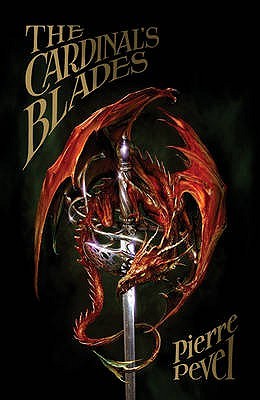
Review: Cardinal’s Blades by Pierre Pevel (Les Lames du Cardinal 01)

Book info:
Form: odf, e-book
Genre: Historical fantasy
Target audience: YA and adults who like such stories

Synopsis: 

Imagine France of Louis XIII as described by Alexandre Dumas – a land of flashing blades, swishing caps, duels, beauties and intrigues- but with real dragons, wyverns, drac thugs and dragonnets.

After a five year hiatus Cardinal Richelieu summons ex-captain La Fargue. Previously one of his most trusted tools, now  La Fargue is an ageing, embittered and disillusioned man, not especially keen to return to Richelieu’s service. Our Cardinal blackmails and threatens him because he needs La Fargue and his small unit of the best mercenaries in France, formerly known as Cardinal’s Blades, to return to service.

They have to stop the Spanish order of Black Claw. The Black Claw, consisting of half-dragon royalty and their descendants, wants to establish a kind of outpost in Paris and slowly gain the upper hand over the Kingdom. They are very secretive and cautious and officially France cannot afford a new enemy so the mission of the Blades might prove far more complex than it seems at first glance. Still La Fargue cannot fail – the life of his only daughter depends on his efforts. He gets mixed into the double and the triple game between Richelieu and vicomtesse de Malicorne, the head of the Black Claw residing in Paris. Will he be able to save his daughter and France from the evil dragons?

What I liked:

The mere idea of seventeen century Paris with Richelieu and musketeers appealed to me very much – it was fresh and original. Let me also add that the author built the fictional world with utmost care, describing the Parisian streets in a very vivid way and making me wish for a dragonnet pet instantly. The action’s pretty frenetic and if you like such books you will be more than satisfied – you’ve got swordfights a-plenty, rooftop battles and lots of visits to inns which end in a brawl, point-blank shootings and galloping horses.

I also liked the fact that, unlike maudlin heroines of Mr. Dumas, here women played an active role, fighting, plotting and thinking independently; although I didn’t see them as often as I wished I would, I was more or less satisfied with their performance.

Let me also add that the last scene was very promising - something which might incline me to read the second part of the series as well. Pével certainly knows how to throw in a dramatic revelation right at the end.

What I didn’t like:

I know it is a swashbuckling novel with the action being its raison d'etre but I sorely missed character building here, especially that there were some really promising heroes: like Saint-Lucq, or Agnes, the intrepid baroness or vicomtesse de Malicorne, a charmingly dangerous dragon in a skin of a beautiful woman.

Instead you get something like an extensive collection of character clichés -  a battle hardened captain with a secret; a dashing womanizer; a good humoured, hard drinking old soldier; a brooding half-breed assassin; a prodigal Spanish swordsman; a strong-willed token female thrown in for good measure so you don't drown in all this testosterone. The action jumps too abruptly from character to character so the readers lack time to bond with any of them. After a while they all seem two-dimensional, with an emphasis on cruelty and selfishness.

What’s more, in my humble opinion the author overused the ‘survival from death’ plot device, employing it so many times that it lost all its potential shocking value, making most of the fighting scenes downright silly after a while (when you are practically sure nobody will die, what's the point?).

Finally let me tell you that the English translator of this novel didn’t make a good job of it. There are too many mistakes - dangling participles litter every page, and pronouns referring to the wrong nouns can be found in almost every paragraph. I wasn’t impressed.

Overall if you like a plot that makes sense and relatable (or even distinguishable) characters, this is not a book for you. As far as I remember even in The Three Musketeers there was more characterization and depth.

Final verdict: 

I love sentient dragons in fiction - if I loved them a little bit less I would assess this novel much harsher. When it comes to the world building it really wasn’t bad but the lack of proper characterization spoiled it for me. I might pick the next part of the series to check whether it gets any better but I am not sure with what result.
Enhanced by Zemanta

Thursday, 11 April 2013

Rameau's Review Archive: Beautiful Disaster by Jamie McGuire

Rameau's ramblings: I went looking for the first negative review I wanted to post here and I could only think of one. There are many books I've read and hated but there are a very few reviews I'm almost proud of. This is one of them. 

Originally posted on Goodreads on August 26th 2012.


Synopsis:
Abby Abernathy is a good girl. She doesn’t drink or swear, and she has the appropriate number of cardigans in her wardrobe. Abby believes she has enough distance from the darkness of her past, but when she arrives at college with her best friend, her path to a new beginning is quickly challenged by Eastern University’s Walking One-Night Stand.

Travis Maddox, lean, cut, and covered in tattoos, is exactly what Abby wants—and needs—to avoid. He spends his nights winning money in a floating fight ring, and his days as the ultimate college campus charmer. Intrigued by Abby’s resistance to his appeal, Travis tricks her into his daily life with a simple bet. If he loses, he must remain abstinent for a month. If Abby loses, she must live in Travis’s apartment for the same amount of time. Either way, Travis has no idea that he has met his match.


Beautiful Disaster (Beautiful, #1)Beautiful Disaster by Jamie McGuire


This review can also be found on Book Girl of Mur-y-Castell-blog.

Sometimes you just have to... description
———


I feel dead inside. That’s what reading this book has done to me. I. feel. dead. inside.


Background information:
Earlier this year, I stumbled upon an incident—I lie, there were several—that inspired me to create such shelves as not-for-me and authors-behaving-badly and add this book with all the other books accredited to Jamie McGuire on them. This explains the first comment on this review thread.

I was angry and I rated the book poorly. Then I got over it and removed the rating, and for a while, forgot this book existed.

Ah, those were the happy days.

Then came summer and Simon & Schuster announced their massive brain fart of acquiring this novel and reprinting it. They made the choice to enhance their marketing campaign by allowing free review copies distributed through NetGalley. This was my one chance to read the novel for free and rate it in exchange for this simple tag:

I received an Advanced Readers Copy of this book from the publisher through NetGalley.

In this case, the Advanced Readers Copy means the superficially edited self-published version.


Actual review:
I hated it. Contrary to popular belief, I didn’t want to hate it. I don’t enjoy reading bad books for fun—I don’t like tormenting myself with bad literature—but neither do I start a book expecting to find something positive or other redeemable qualities. I don’t artificially skew my perception just so I can lie about what a good book this is.

It’s not.

Though McGuire seems incapable of using simple he said/she said dialogue tags, there were moments, bits of dialogue, and a set up most promising that in the hands of any other talented or even a competent author could have been solid gold. It could have been the the story of two flawed people falling in love and perhaps changing for the better even if not transforming utterly normal people instead of romanticised description of abuse and misogyny. There were things Travis said or did that in any other setting and context would have been touching, sweet, deliciously heart-rending—but this was Travis and those things were anything but.

“Coupled with the alcohol in my system, when he pulled my body against his, things came to mind that were anything but friendly.”


McGuire’s simplistic writing is readable, even likeable at times, but it’s also uneven. There are good bits and then there are horribly bad bits. There were times when I’d forget to stop and think what made sense and what didn’t, and I’d just plough through pages without even realising it. Then the only recollection I’d have was having felt something. If I wasn’t paying attention to what it made me feel, I would—could, possibly, perhaps—understand why some people would think this a good book.

But I didn’t just plough through the pages. I read them slowly, carefully taking notes and always thinking of what made sense and what didn’t—very little, as it turns out.

Can a story be character driven without characterisations?

Apart from Travis’ tattoos—those tattoos are mighty important since they define what he can study and what his future career is going to be—not a single character in this book is given a proper, layered, characterisation. Not all characters are given physical descriptions, even Shepley, who as Travis’ cousin-slash-roommate and America’s boyfriend is prominently portrayed secondary character, is never given a physical description. To this day I don’t have a clue as to what he looks like. I know Abby and America are both blonds, I know Travis is tattooed all over and has hazel eyes, I even have a vague impression of Parker, but other than that I do not know. It’s never revealed.

What I do know is that Shepley is the lapdog enabler. He exists to be America’s boyfriend and provide a link between Travis and Abby. He exists to among others to make excuses for Travis’ behaviour. He doesn’t have any other function in this story.

America-Alice is Abby’s best friend the Weathervane. Depending on the scene she’s either trying to keep Abby and Travis apart or trying to get them together. She’s always dreamt of her and Abby dating brothers or cousins, so they could become real family or something other. America exists to drive Abby around and to scold her either for resisting Travis or not resisting him enough.

Parker is the token third wheel, a secondary love interest option paper doll. He’s rich and a hardworking student, but ultimately he’s just another jerk and not a viable third corner of a triangle—and that honour he has to share with Jesse, the ex-boyfriend. Parker exists to flirt with Abby and to make Travis jealous when the mood strikes. He also exists to prompt a casual date rape scenario.

Finch is the token gay guy. He exists to provide Abby with alcohol and a shoulder to cry on whenever America is lip-locked with Shepley and too busy to notice.

Kara is the roommate who we never see. She exists to make a handful of accurate comments and remains the sole remotely likeable character in the book.

Abby giggles. She studies high school level biology in college and sucks at it. She apparently likes numbers but hardly ever talks about those classes. She has a dark, dark past that’s never talked about until it’s all that’s talked about. She likes to drink and plays a mean game of poker. All these details and I still don’t know what drives her. I don’t know what her inner passions are or how she thinks and the book is written from her perspective in the first person limited voice.

“This is hard for me, ya know. I feel like any second you’re going to figure out what a piece of shit I am and leave me. When you were dancing last night, I saw a dozen different guys watching you. You go to the bar, and I see you thank that guy for your drink. Then that douchebag on the dance floor grabs you.”


Travis prizefights for money. He’s a genius and he doesn’t need to study. Travis has a short temper, cocky attitude, a dead mother, four brothers and a father who taught him everything he knows about beating other people up. Travis has tattoos. Travis has a six pack—such a shame it’s not a twelve pack—and he’s never met a speed limit he couldn’t break. Drunk or sober.

“I wouldn’t have swung if I thought I could have hit you. You know that, right?”


Travis doesn’t hit Abby. He comes into the bathroom when she’s in the shower. He comes up with a bet to keep her in the house with her. He talks her into sleeping in the same bed as him, because he’s never brought a girl he’s fucked there. He forces her to change her clothes when she dresses up too sexy. He grabs her to keep her safe. He stalks her. He buys her a puppy to stop her from leaving. He scares her when she is in the car kissing another man. He trashes the house the morning after they have sex because she leaves and refuses to talk to him. He beats up several guys for simply touching her.

And she lets him.

”Travis’s behavior piqued their curiosity, and I subdued a smile at being the only girl they had seen him insist on sitting with.”


”It wasn’t Parker I was trying to impress. I wasn’t in a position to be insulted when Travis accused me of playing games, after all.”


Worse, she’s manipulating him right back. On one occasion Abby tells Travis to teach someone manners, and he beats the guy to a pulp. There aren’t any repercussions or a fallout. Several of these unprovoked attacks happen outside the illegal prizefighting circles with plenty of eyewitnesses around. Yet, Travis is never detained, arrested, or even confronted by his friends. They’re all making excuses for him.

Abby’s reactions to Travis’ behaviour make no sense. She’s either blaming herself or acting irrationally and manipulating the situation to her end. She’s playing with Travis just as much he’s playing with her as evidenced by the events of the night they first sleep together. She tells him he’s a virgin, he tells her he likes it rough, they have sex—one of the few times condoms were used—and in the morning, she leaves. He trashes the house. America the worst friend who ever lived, comes to get Abby to talk Travis down. Not to make sure that Abby is safe and sound and far away from the psycho as possible, but to fetch her to the house so she can talk to Travis and calm him. So she can understand him.

The abuse, the antifeminism, the misogyny, the casual slut shaming, rape threads, girl-on-girl hate, it’s all omnipresent. You can’t avoid it.

Character driven stories rely on one essential idea: That the main character learns something. That all the pain and heartache, all the adventures that they experience within the story enrich them as a human being and make them grow as a person. Not necessarily for the better, but simply more aware. On some level the characters do need to be conscious of their actions and choices they make in the end of the book in a way they weren’t at the start of it.

In this, Beautiful Disaster fails.

Travis does forsake all others but he isn’t any better taking into account Abby’s feelings in the end of the book than he is in the beginning of it. As for Abby, life is still a huge poker game she’ll bluff her way through like it was before she met Travis. Well, maybe not bluff, but she’s always had a talent of manipulating the cards in her favour.

Instead of bare boned characters who apparently learn nothing within the four hundred and twenty odd ebook pages, I could be talking about the overall plot of the book. Except, there isn’t one:

A girl goes to see a fight. A girl meets a boy. They skip time and become friends. They make a bet and end up living under the same roof. They dance around each other and a girl tries dating another guy. The boy gets jealous and they sleep together. The bet has ended and the girl leaves. Boy gets angry. Girl comes back. They fight and the girl tries to leave. The boy gets her a puppy to make her stay—

This isn’t a plot. This is a list of consecutive events describing a dysfunctional codependent relationship. Of course, we could call it a relationship drama, but we’d also have to redefine words relationship and drama. There’s no internal conflict. Nothing is addressed and nothing is learned. All obstacles are external ones and easily cast aside.

But this is a romance novel about two people finding love together, you say.

No. It’s not.

This is as mislabelled as a romance as it was mislabelled as a young adult novel. There is absolutely nothing romantic about this book. It’s the author’s ode to Edward Travis’ character. A controlling, abusive, stalker is in the centre of everything and the reader can’t escape him even when Abby is on a date with another man. The conversation always quickly returns to Travis and stays there.


By now the strikethroughs have become obvious; I’m bringing up the Twilight connection:

This book reads like a Twilight fanfiction or work heavily inspired by Twilight.

America behaves as bipolar as Alice, and Travis is set upon a pedestal and worshipped just like Edward was. Travis shares Edward’s penchant for speeding. Travis and Abby’s first date is in a restaurant where the waiter flirts with him and he starts questioning him over the food. The biology lessons and the absent parent figures. Abby likes to bite her lip almost as much as Kristen Steward in her portrayal of Bella Swan. Parker Hayes reads like a distorted Mike Newton. etc. etc.

There isn’t any proof that I’m aware of to show that this ever was posted and labelled as a Twilight fanfiction. I’m going to have to go with the “inspired” by Twilight theory and keep my opinions to myself…

It looks like I failed too.



Wednesday, 10 April 2013

Review: Pusing the Limits by Katie McGarry

Thank you, my fair Rameau, for lending me this one! You rock!

Book info:
Form: pdf e-book
Genre: YA romance (or New Adult but really I am yet to spot the difference)
Target audience: older YA.

Synopsis:

The last year of high school, somewhere in America. A girl meets a boy. She is called Echo, he is called Noah. Both have serious family issues but of different kind. He falls for her because she smells like cinnamon rolls. She falls for him because he is a very handsome, bad-boy stoner with...er... issues.  And a six-pack stomach. The crazy attraction between them refuses to go away although their friends are not impressed. Will they stay together? SPOILER: You bet

My impressions:

I rarely read YA novels nowadays. Why? The moment I start them the plot seems so strangely familiar, too familiar to be honest - after a page or two I am pretty sure I've read it before. Like one hundred times before. It holds no appeal as there are no real surprises or twists I wouldn't have predicted. Not nice or even downright boring. Pushing the Limits wasn't an exception to the rule.

Echo, is a high school student who went from a popular girl with a jock boyfriend to a gossiped-about outsider with "freaky" scars on her arms during one month. Noah is a boy who has lost his parents in a fire and cannot visit his younger brothers so he is revolting against the school rules and any rules at all. Both are attracted to each other because they are in fact very similar in their rejection of ugly reality. You don't have to be a genius to assume they will be an item at one point "against all odds" - especially that she is a very attractive girl and he is a very handsome young man. The main problem is not "what happen" but "how" and "when".

And here I wasn't impressed - the execution simply didn't work for me. It felt too overwrought, too obvious, too overwhelmingly angsty and dramatic to make me really engaged with the story. Almost spurious. While I was able to feel for both Echo and Noah occasionally, I didn't really connect with them.

The book is narrated by both of the main characters. First annoying feature: Noah’s and Echo’s voices were quite similar, very surprisingly so. The only thing really differentiating them: Noah’s dialogue was peppered with profanities. Well, perhaps it's just me but personally I found Noah's chapters also the silliest of all. He thought like a girl - I mean no teenage boy would speak/think like that. His repeated use of expressions like “siren”, "angel", “nymph” and “seductress” produced more snort-laughs than swoons from me and the constant reminder of how Echo smelled (cinnamon rolls) made me only annoyingly hungry (where's the nearest bakery, pronto?) but honestly, do tell me, do you know any REAL GIRL who smells like that without using any kind of perfume?

There are also many kinds of cliche secondary characters which have been featured in EVERY SINGLE ONE high school YA novel I've read so far: a douche bag hunky boyfriend (Luke), a false female friend who is also a bit of a meanie (Grace), a bunch of evil gossipers, Noah's 'bad company' consisting of heavily tattooed, marijuana-smoking misfits who still have a single savin g grace or two...I wasn't able to find even one inch of originality here.

Final verdict:

A decent story; still an instantly forgettable one. It was short and relatively readable but also nothing that can persuade me to read YA novels more often.


Tuesday, 9 April 2013

Rameau's Review Archive: Maurice by E. M. Forster

Rameau's ramblings: I mentioned in the introduction post that I would be bringing over my old reviews one or two a week. Today, I'm going to start with a brilliant book I read fell in love with last month. A five star review is always a good example on how to render me speechless. 

Originally published on Goodreads March 17th 2013.


Synopsis:
Set in the elegant Edwardian world of Cambridge undergraduate life, this story by a master novelist introduces us to Maurice Hall when he is fourteen. We follow him through public school and Cambridge, and on into his father's firm, Hill and Hall, Stock Brokers. In a highly structured society, Maurice is a conventional young man in almost every way, "stepping into the niche that England had prepared for him": except that he is homosexual.


Maurice Maurice by E.M. Forster

You know that moment you and start a book you’ve been wanting to read but haven’t. Maybe you’ve had trouble finding a copy of it or maybe all the hype around it has turned you off or maybe you’re not quite sure you’ll like the book simply because of who wrote it and when and why. And then you fall head over heels in love.

Yeah. That.

Whenever I read a classic, I prepare myself for the inevitable disappointment. In my experience, too many of the great works of literature only represent some form of change in the history of written words and the society that influenced them rather than being good books. If there is any true deeper meaning on the pages of a classic, it’s usually buried under too many decades or centuries of years passed for me to understand.

That wasn’t the case here. For every layer I discovered there were at least two I missed and there’s nothing I love better than subtle complexity, obvious to see for those who’d only look.

It wasn’t just the story describing and showing what life was like a hundred years ago for a young man, what it was like to fall in love and know it could cost him everything, it was the writing I fell in love with. The way Forster uses words to say exactly what he means to and more. How elegant it is.

Maurice was written on the cusp of The Great War and it tells a story of a world long since lost. It shows a young man growing up to take his place in society as he’s expected, and finding himself fundamentally queer in a time when homosexuality was still a crime in Britain. That law is the reason the manuscript remained unpublished for 57 years until after Forster’s death.

I wasn’t even recommended the book; it was the film I saw raved about. When I have the option, I usually prefer to read the book first and see the film second. Having now both read the book and seen the film, I have to say I prefer Forster’s words over the acting of James Wilby, Hugh Grant, and Rupert Graves. And I liked the casting despite Wilby being nothing like the Maurice I imagined until that last scene with Grant.

You’ll notice that I haven’t actually said anything about the story or the characters and that’s because it’s better if you go in blind without expectations. Skip the introductions, acknowledgements, notes on further reading, skip everything and read E. M. Forster’s own words. Read Maurice.


ETA: This blog is being featured at Book Bloggers International today - feel free to visit, say 'hi' and you'll make our day!

Monday, 8 April 2013

Review: Devil in Wnter by Lisa Kleypas

Synopsis: 

Sebastian St Vincent is a wicked, wicked man - he loves whoring, gambling, spending money on beautiful clothes and good food, whoring, ruining the reputation of weak women...yeah...have I mentioned whoring yet? However one day he finds himself penniless (his daddy loves spending too) and friendless (after he tried to kidnap and forcibly marry for money a rich American fiancee of his best buddy, with the blessing of that man's mother). He sits in front of his fireplace, Faustus-like, waiting for the devil to visit him and offer a deal, any deal at all, thinking about how sad, dowdy and grey the life will be without any money to spend. Will he be given an opportunity to find out whether he was right or wrong about life in poverty? UNFORTUNATELY NOT.

Where devil can't get in he will send a woman. There's a knock at the door and here enters another rich, unmarried heiress in the voluptuous form of Evie or Evangeline Jenner, a redhead beauty of very shy disposition and a pronounced stutter. Funnily enough so far the aforementioned stutter and disposition have been able to drive away hordes of gentlemen looking for a steady source of easy income a.k.a a rich wife. Not any longer. Evie makes Sebastian a proposition no spendthrift, idle rake could refuse - she will marry him and provide a living if he takes her from the clutches of her evil maternal uncles and allows her to attend to her dying father. After several seconds of a very deep, very strenuous calculations Sebastian agrees. They elope to Gretna Green, get married, go to bed and...no, no, I know right now you are dying to find out more but if I spoiled you I would have to kill you, right? So guess.

My very nasty impressions 
full of spoilers 
because no, 
I don't feel like reining in.
I feel like exploding.

Yes, the romantic fiction is not for me. I've tried, many times, to overcome my natural reluctance. You see, plenty of excellent book blogers which reviews I read and admire devour Ms Kelypas novels and lick their fingers afterwards. They tempt me to try such a dish as well and let's face it, I love being tempted. Sometimes I succumb and then, more often than not, a romance novel backfires and makes me...ill-disposed. Like terminally ill-disposed. In other words mad as hell.


First how come a supposedly shy girl all of a sudden finds enough courage to propose to a man who not only kidnapped one of her best friends not so long ago but also threatened to rape her and marry against her will? I mean here the girl being engaged to his best friend at that time. Well, it is not courage, it is stupidity pure and simple but wait, I know...Evie looked  into the fallen-angel eyes of her future husband and instantly knew that deep down he was a good, compassionate fellow who wouldn't kick a puppy even if that puppy bit his toe and vomited on his shoes. She simply knew, don't ask me how and why. Maybe it had something to do with the fact that Sebastian was an oh-so-hot-and-handsome-and-well-muscled-and-wicked male specimen that his mere appearance simply screamed at her: white hat in disguise, marry immediately.

On the other hand please, explain to me one thing: how a daugher of a man owning a gambling house, a second-rate establishment to boot, could qualify as a rich heiress, on par or even richer than a daugher of an American soap tycoon? It seems Ms. Kleypas mixed two different ideas: Victorian gambling houses in London and contemporary American casinos in Las Vegas. I would accept the fact that the dowry of Evie allowed her a comfortable, middle-class living any country squire or parson would enjoy and appreciate but it would be NOWHERE close enough to an aristocrat's idea of fortune.

Now let's progress to the famous and most acclaimed reformation of the rake. I was waiting and waiting and I have  to inform you it is a no-show. What's more, the rake himself disappeared in the process as well! The author wants me to believe that one day Sebastian is behaving like a tom cat in spring, screwing everything female  around, the next, after just one night with his wife, he agrees to abstain from sex for  three months just to make himself worthy of his lovely Evie and prove that yes, he can. It was absurdly fast and unsubstantiated and believe me those were the kindest words I managed to find. I wanted to read a book about the deadly clever, overly cerebral seducer who can make fish jump out of water if he wants to- not the tongue-tied, mundane, order-giving, bizarrely myopic person St. Vincent becomes. A former rake who cannot drag his own wife to bed although he is dying to do so - can it sound any lamer?

Then another absurd motion: an idle aristocrat all of a sudden can read ledgers and manage a business  better than its long-time owner and his associates. Excuse me? Has he graduated from an economics school all of a sudden? Has he magically downloaded several years of managerial experience Matrix-fashion? No? Ah, but ledgers and accountancy are just about numbers and if you are good with numbers, as Sebastian explains his surprised Evie he is, then you are practically an auditor and a manager born... right? WRONG. That is not all, my dear reader, it is just a tip of an iceberg!

In some sort of misguided attempt to even the playing field between St. Vincent and Evie, Kleypas totally emasculated her hero. He starts the book as an epitome of a male sexual predator - handsome, dangerous, skilled, selfish and ruthless. He promised so much - tension, sudden twists of action, clever scheming, perhaps even a bit of drama. However, apparently the author couldn't deliver. First he is made to stay celibate and then Kleypas makes him save his wife and get critically wounded in the process. So he has to lie abed like an underfed kitten. The wounding-the-hero trick is a truly hackish way of forcing intimacy between the hero and heroine. The real function of the wound is not to make them get closer but to render St. Vincent utterly WEAK and NOT INTERESTING ANY MORE. A hen-pecked hubby. His lovely wife, so deliciously shy at the beginning, now takes things into her inexperienced hands (no, I don't mean money here)...and the ex-sex fiend actually protests! Yes, he protests because, you know, he wants to keep his word and stay celibate!  It was the silliest scene of this horrible book, so out of character for both Evie and Sebastian that I almost dumped the whole novel. Almost. Then I decided to finish it and take my revenge in a form of a review.

Finally one more thing. I never understood why Evie's family made her attend all these balls and functions, have a season in other words, always a costly thing, if they only wanted her money. It lacked logic because either you want to marry a girl off and get rid of her (for a price of course) or you want to keep her close because she herself is or may be the source of a substantial income - you simply cannot do both. It seems the character of Evie has undergone a major change for the sake of making of her an 'interesting' heroine. It backfired, though and the logic was the first vicitim because if Evie's family really cared about her money so much they would have made her marry that downtrodden, fat cousin of hers far earlier and cashed in the check. And then they would get rid of the body.

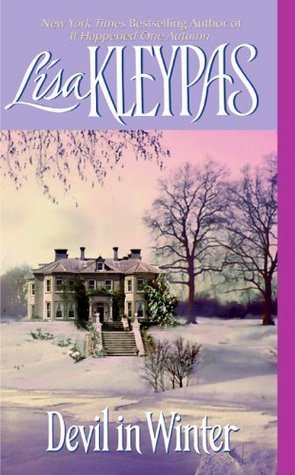
BTW the cover art is highly misleading - I might like the colours and the landscape but I failed to understand how it possibly connects to the novel or reflects its content - it's really neither here nor there.

Final verdict:

I carped long and viciously about Devil in Winter - I bet nobody has any doubts what my final verdict is. Let me surprise you a bit and end my review staying how I would like this book to be written. More or less of course. So firstly: if you want to redeem a rake you should never ever emasculate him in the process. Secondly if your heroine is supposed to be a rich heiress her daddy should own a big fat empire not one measly gambling house - he might be a shadowy mafia boss but the empire must be tangible and real. Thirdly if the heroine wants to marry the rake you should justify their action in more than one way.

Sunday, 7 April 2013

An announcement - welcome Rameau, the new contributor on this blog!

I have a piece of very good news to announce !

Welcome Rameau, the new contributor and reviewer here!


 Now who is she? 

No, she is not a descendant of Jean-Philippe Rameau although it would be my first guess ;p.

She's a well-read Finnish girl. She's been active on Goodreads and she's written several guest posts for me here; now she also decided to cooperate with me on a more permanent manner (in fact I pestered her as long as it took to make up her mind ;p).

Let me just say that I am completely thrilled: her reviews are incredible - funny, intelligent and very incisive so I am sure she will make this place better and more vibrant!

What can you expect?

Expect changes, expect more awesome reviews and discussions, expect better tagging and a wider range of books presented here!!!I cannot wait!!!


Bridget/anachronist


The new girl chimes in.
First things first. Ana, we need talk about your propensity for exclamation marks. I think my ears are still ringing. I couldn't possibly be worth of six! And to reassure the current readers, your friends and fans: I'm not going to take over the world your blog. Ana will still be responsible for the day to day operations as I learn the ropes.

I've been reading and reviewing actively since early 2011. In two years, my tastes have evolved and I've become adept at saying very little with very many words. I like tagging books with ridiculous things such as inappropriate erections—which is how I wooed Ana by the way—and I appreciate honesty, which is why I must warn you.

I read a lot of library and secondhand books, as well as ebooks, which origins I've forgotten. That is to say I can't remember which books I've gotten as freebies from Amazon or Harlequin and which books I paid for in the ARe -50% rebate that is technically buy two get one free. But I always note when I've received an Advanced Readers Copy (ARC) or a review copy from the author. These days I only buy paper copies of the books I absolutely love and want to read again. I wish. My self control still needs work.

There'll be changes as Ana mentioned. I'll be importing my review archive one or two reviews at the time, and we'll be adding a meh icon to Ana's rating system. I couldn't possibly do without and she obliged me. Then there's the fact that we've read quite a many of the same books. From now on when this happens, we'll be tagging and labelling those reviews as second opinions and linking to the first for your comparison convenience.

My focus is on books, but Ana will still write brilliant and informative articles and film reviews.  

Now. Let's read. 

rameau

Edited by Ana to add one humble remark more: exclamation marks? Oh my friend, there's never enough of them when the news is good!!!!!