Wednesday, 31 October 2012

Halloween


A cat strolling... is there a better symbol to mark the single night in the year when, according to old Celtic beliefs, spirits and the dead can cross over into the world of the living? No matter whether you celebrate it or not, have a wonderful day! And night!

Do you feel like reading a scary story? Here is a link to my old essay about witch hunt - enjoy!

Monday, 29 October 2012

Review: Enshadowed (Nevermore 02) by Kelly Creagh

Book info:
Form: pdf file
Genre Poe-related fantasy romance
Target audience: YA


Synopsis:

It is the sequel of Nevermore, reviewed by me not so long ago. If you haven’t read the first part and you are spoiler-sensitive, please omit this section.

Isobel returned home from ‘Poeland’ and had to destroy Varen’s notebook in order to break the link between that place and her reality. However she was tricked by Reynolds to believe Varen returned as well when in fact he got stuck there as a slave of Lilith, an ancient demoness. Now Isobel wants to do everything in her power to find her way back and help Varen return. Still, is she really up to the task?

Juggling cheerleader duties, the final year of her high school and her family, more and more worried, Isobel finds it hard to have one calm day or night. She is tortured by visions of Varen, she still meets Pinfeathers, one of the dreadful Nocs from Poeland, and her former boyfriend, Brad, is now just a life-weary cripple. A trip to a Baltimore’s cemetery where Poe was buried, seems to be her only chance. There, in the early morning hours of Poe's birthday, a mysterious stranger known only as the "Poe Toaster" will make his annual homage at the legendary poet's grave. Only the Poe Toaster holds the key to the way between worlds. Will she make it on time? Will she know how to fight the demonic Lilith? Will Varen be the same person she fell in love with?

What I liked:

You know the curse of the sequels? It is very difficult to write the second part of a series as good as the first one. Ms Creagh took a risk and wrote it differently. I admit it was brave of her.

The Poe-themed world building was still one of the highlights here, along with the further information about Lilith, provided by Isobel's best friend, Gwen. I also enjoyed a truly original take on the Nocs, demonic ghouls which can disperse into a mist but are quite fragile otherwise. The narrative reveals  many wonderful details about Varen and his dream world. And I was perfectly happy with the fact that Isobel’s family was still there, trying to understand and help her as much as they could and/or were allowed by Isobel herself.

What I didn’t like:

Unfortunately I must say a book almost without Varen was 100% worse than the first novel with him playing an active part. Also the fact that the story is still narrated by Isobel herself started to grate on my nerves as that girl too often had nothing interesting to say. Small wonder – you see, she doesn’t like reading.

And here I hit my main grievance: Isobel. Or rather her attitude towards life, Varen, her family, books and finding info therein. Overall her attitude, full stop.

Ok, she is depressed, she can’t confide in anybody apart from Gwen and even Gwen is not to be trusted with everything. However let me ask a simple question: why? Would it be such a big mistake to tell your family what you feel and why? Would it hurt to mention some alternate reality and the fact that your boyfriend might be imprisoned and tortured there? By the way Isobel’s obstinacy to see that her beloved might be at least partially guilty of anything was surprising. Let’s face it,  Varen failed to connect appropriately with humanity at large and hence  he actively sought the understanding companionship of a soul-sucking demoness, go figure! The problem here is not that he's being made to face the consequences of his actions, but rather that Isobel seems utterly blind to his being at fault at all. She wants to stop Lilith from ever hurting anyone ever again, but what if they, like Varen, want her to be summoned? What then!?

Now a bit about reading. Imagine that your boyfriend is imprisoned in a kind of alternate universe which is somehow connected to the works of a particular author. You love your boyfriend dearly and you would do anything to set him free; wouldn’t reading a bio of that author along with the majority (if not all) of his collected works be your absolute priority? Meanwhile Isobel never takes a book into her hand. Most of important information she gets because a) she was told b) somebody has read it to her (often Gwen) c) she overheard it, accidentally or not d) she dreamt about it. Really, is reading so difficult to swallow?

My last carping and a warning: this novel ends with a big cliffie: (a spoiler, highlight to read or skip) Isobel wakes up in an ICU and she observes her own failed resuscitation. Still the reader, like her, is not sure whether she really dies. Varen seems to be responsible for her fatal injuries – he was acting under Lilith’s compulsion. I hate clffies.

Final verdict:


I am a bit torn: on the one hand I would like to know how this story ends and whether there has been a method in this madness. On the other hand I’m afraid the third book might be a waste of time because nothing, literally NOT ONE SINGLE THING prepared Iso to deal with Lilith and her realm, the biggest obstacle being Isobel herself. I am not sure the author can come up with a trick good enough to sound believable or real.

"A word to the wise… cover your mirrors. 
That’s how they find you."


Enhanced by Zemanta

Review: Lord of Scoundrels (Scroundels 03) by Loretta Chase


Form: pdf file, e-book
Genre: regency historical romance
Target audience: adult women

Synopsis:

He is an inveterate rake with a lot of money. An ugly, dark beast with a big nose and big…everything else. Intimidating, admired and feared whenever he chooses to be.  She is a beauty and a proper lady but from an impoverished family. If he wants something he buys it immediately. She has a nose for business but she doesn’t necessarily want to get married. They fall in lust. He wants her but so far he’s been avoiding ladies like plague so he hardly knows what hit him. He ruins her reputation but not because he wanted to, as she thinks. She shots him. They marry. They fall in love. She learns about his by-blow. He is afraid he might lose her but it might be far more complicated than that. Will they stay together? Yes, they will. End of the story.

What I liked:

Overall I hate romances as a genre but I admit there are exceptions. Loretta Chase’s book is one of them. Why? First of all this author uses thorough characterization which always in my eyes constitutes a redeeming quality.You would think other romance writers should know it as well. Well, most of them don’t. Chase knows how to construct characters who break the standard romance novel stereotype which is another big advantage.

For example in this one you are presented the title Lord of Scoundrels not only as a ready-made, brutal rake extraordinaire but also as a lonely, rejected, ugly child who had to fight his way into other people’s hearts. A child who had to learn early how to mask his fear and weaknesses with brutality, laughter and disdain. Such a well-thought-out background, even if a bit simplistic and also a bit spurious, makes you warm even to a cold-blooded scoundrel, in other words a prime jackass material. You see, he’s been traumatized so you kind of understand Dain's sexist, obstinate view of women. Somebody has to be blamed.

Our heroine, Jessica Trent, is prepared very well to take control and tame the ‘Beast’ – she comes from a big family and has dealt with unruly boys all her life (once again the background presented by the author helps us understanding how come a proper miss knew such deft methods).

In fact the story begins when Jessica has to intervene in order to save her stupid brother, Bertie, from a complete ruin. That nitwit has got himself deep into debts trying to emulate the lifestyle of his idol, Sebastian Ballister the Marquess of Dain, the title scoundrel. If Bertie sinks, he will drag down his sister as well so our intrepid girl decides to confront the source of her brother’s idiocy. I was thoroughly enchanted by Jessica's refreshing and realistic acceptance of her attraction to Dain. These two quickly find a common tongue – their sparring is fun, with plenty of chemistry and sparks flying around. These two are more than a match for each other and their sense of humour suited me perfectly. Just not to sound groundless let me quote one excerpt here:

With the world securely in order, Dain was able to devote the leisurely bath time to editing his mental dictionary. He removed his wife from the general category labeled "Females" and gave her a section of her own. He made a note that she didn't find him revolting, and proposed several explanations: (a) bad eyesight and faulty hearing, (b)a defect in a portion of her otherwise sound intellect, (c) an inherited Trent eccentricity, or (d) an act of God. Since the Almighty had not done him a single act of kindness in at least twenty-five years, Dain thought it was about bloody time, but he thanked his Heavenly Father all the same, and promised to be as good as he was capable of being.”

Jess also provides a very nice definition of romance which suited me very well:

"In my dictionary, romance is not maudlin, treacly sentiment," she said. "It is a curry, spiced with excitement and humor and a healthy dollop of cynicism." She lowered her lashes. "I think you will eventually make a fine curry, Dain―with a few minor seasoning adjustments."

To sum this section up the beauty of this story is that long after I've closed the book, I still could remember those small episodes and funny dialogues - describing them in more detail here would be spoiling the story - that just seem so real, a feature usually non-existent in other romance novels.

What I didn’t like:

I admit the plot, construction-wise, was so-so: predictable, artificially divided into two parts (before and after the marriage), with some unnecessary complications (the icon) and redundant characters like Charity Graves, the mother of Dain’s illegitimate son. However I grant it, there was one good twist: (spoiler, highlight to read or skip) the heroine shooting her love interest to get him cornered and force him to make the right decision was unexpected.

Some descriptions of sex scenes made me smirk or even laugh out loud and not for a good reason. I don’t know, maybe this book just aged badly (it was released in 1995) or maybe it’s just me but I found them inadvertently funny instead of steamy with sentences like these:

"He trailed his tongue over one sleek eyebrow" (oh goodness, you will get some furballs my dear tomcat!)  or "Yes, Kill me, Jess. Do it again."
 Correct me if I am mistaken but I suppose you can die only once, unless you are James Bond…

I also admit that the use of a dialect (Phelps, one of Dain’s servant is responsible for it) sometimes made me to question my sanity and my own comprehension of the English languageHow would you understand such a beauty:

"Nuss give it to you when your ma run off, 'n you was sick some'at fierce from it"

There were also several annoying repetition in the text - for example after reading it you know, intimately, how both characters smell because the author took pains to tell you so every chapter or two using always the same set of words. Considering how relatively short the story is, it's not like I'd forget these details. A good edit could remove a lot of those repetitions or change them a bit so the narrative is more bearable.

Finally let me only register my profound surprise that such a whoring bastard like Sebastian Ballister the Marquess of Dain never caught any of these unpleasant diseases…

Final verdict:

It was a good read. Not earth shattering or steam-up-my-glasses but good. Still, all you, romance lovers, be warned: this praise comes from an unromantic girl. Lord of Scoundrels is a strange romance. It might not fit in your perception of the genre. It is also hardly a faultless book but those are rarities indeed.

Thursday, 25 October 2012

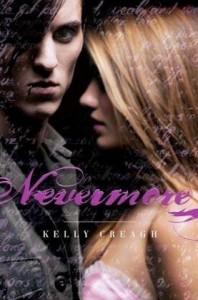
Review: Nevermore by Kelly Creagh


Book info:
Form: pdf file, e-book
Genre: Poe-inspired fantasy/romance
Target audience: YA

Synopsis: 


What can a blonde cheerleader extraordinaire and a Goth oddball wearing eyeliner have in common? They attend the same school and they’ve just paired for an English literature project by a mean professor. Neither Isobel Lanley nor Varen Nethers are exactly thrilled – he perceives her as a pink Barbie doll without brains, she thinks he drinks blood and sleeps in a coffin just to shock people and prove he can. Still both of them need a good grade and so they decide to work on that project and it starts their big adventure with Edgar Alan Poe and the world of dark fantasy resembling a bit the court of Unseelie, dark faeries from Irish mythology of the Daoine Sidhe.

Yes, they fall in love in-between – Isobel finds herself making excuses and lying just to be with Varen a little bit longer (unfortunately we don’t know what Varen thinks because the novel is narrated from Isobel’s POV). Steadily pulled away from her old circle of friends and a possessive football player of a boyfriend she ventures deeper and deeper into the dream world, seeing and talking to strange creature nobody can see or hear. She meets a man called Reynolds but is he real? Why does he look as if he jumped straight from another era? Will he help her to explore the mystery around Varen and his black notebook he carries whenever he goes?


What I liked:

Firstly let me say that the blurb didn’t make me warm up to this novel. Nevermore had the potential to be incredible, but also incredibly bad. First of all it is the first part of another YA series grrrr. Unfinished series to add (double grrrr but don’t let your dog hear you). Secondly a cheerleader girl is more often than not somebody I wouldn’t like to meet or read about – for plethora of reasons. Yes, plethora – one of these words your ordinary cheerleader from different YA stories would  confuse with a fancy, old musical instrument from France.  Still I, like most people in their right mind, love and appreciate poems and stories of Edgar Allan Poe and I have been informed that the male hero is a Goth kid who loves Poe to no end. What’s more I’ve been assured by my dear Heidenking in her great review that this book doesn’t feature any vampires, werewolves or angels, fallen or otherwise,  so I decided to give this one a chance.
Edgar Allan Poe
Cover of Edgar Allan Poe
yeah, chicks dig moustache

I have to admit I didn’t expect to be caught in the story as much as I did. I ended up reading the book in two sittings without noticing the passing hours. Why? Oh it is such a page-turner for YA and adult readers because the author cleverly and skillfully weaves many known facts about Poe’s life and mysterious death into the plot. She relates Poe’s works with the mysteries of a haunted ‘dreamland’ similar to the domain of elves from Jonathan Strange & Mr. Norrell by Suzanna Clarke (if you read and liked the magical aspect of that one you will enjoy Nevermore as well – different epoch, similar athmosphere) AND then she adds a well-know high school plot to it.

I’d also add the character setting to the number of advantages. Isobel is at first just your ordinary empty-headed cheerleader but then she shows her mettle confronting all the stereotypes and tropes – she starts reading Poe (ok, skimming more like, not being an avid reader and Poe not being a very easy author to read), she dares dump her boyfriend, she almost turns her entire life inside out just to find out more about Varen. 

I loved especially one short, funny scene when Isobel, visiting Varen’s house and looking at his childhood photo, discovers something truly shocking about him:

You're really a blond," she said, her tone just short of accusatory.

"And if you tell anyone, I will come to you in the night and smote your everlasting soul.” 

As her world begins to unravel around her, Isobel discovers that dreams, like words, hold more power than she ever imagined, and that the most frightening realities are those of the mind. Now she must find a way to reach Varen before he is consumed by the shadows of his own nightmares – a very ambitious task for a cheerleader or a teenage girl I suppose.

The best part is that neither Isobel nor Varen are perfect creatures, both are textured and layered. Ms. Creagh takes her time building these characters, starting with initial mutual dislike, and slowly peeling back the layers of their personalities. Varen is a classic young Severus Snape (a character from Harry Potter series) – a gifted boy, alienated at school and with an abusive parent to boot. He is also much more: he works in an ice-ream parlour, (yeah, actually selling ice-cream; can you imagine Snape doing that?) he dyes his hair and drives along in a vintage Jaguar (very cool!). Still, compared to intrepid Isobel, he seems too preoccupied with his reading, writing and Goth persona to be a truly active character; finally he falls into a not very manly category of damsel in distress (but I told you the author is playing with tropes and stereotypes, right?)

 What I didn’t like:

 Even though I'd looked forward to Isobel's exploration through the Poeland (I really couldn't restrain myself, 'Poeland' is so...right), but it turns out the progress of Isobel's learning more about Poe  is a rather rushy one, Isobel's own opinion on neither the author nor his works, is largely missing. We only got to see her read through The Masque of the Red Death then commented on it and there's no more mention of her opinion on Poe's works. I understand that she is not a reading type but I suppose if your fate and the fate of your beloved depends on information from books you should be far more committed to reading and finding stuff; still dear Isobel always acts as if she expected somebody to explain her everything (a fairy theory for dummies on Youtube,  not longer than 3 minutes, would definitely fit her better) and when nobody wants to do it she sulks. As a result she lands in that alternate reality, chased by ghouls and nocs (a kind of demons), completely unprepared and the fact that she actually manages to pull through comes as a major miracle.

Let me also carp about the role of adults. Unfortunately here the author decided to stick to the well-known patters. Although parents exist in this one, they are either too busy or completely out of touch with their kids and the reality for different reasons. As a result when the main lead has a problem she can talk to a friend or to her reflection in the mirror. I wish I read a book which author dared change that, showing a parent who not only cares but also knows how to show it and can actually impress their progeny with his/her knowledge.

My wishes for next parts.


I found Varen too vague a character to dominate the book (and I wish he DID dominate), there are so many things about him we don't know, e.g. his family's background, the reason why he had such a bad relationship with his dad, how he discovered Poe and became the way he was now, how he found a job in that bookstore and ice-cream parlour etc. After finishing Nevermore I'd very much love to learn more about him. Also some questions about Poeland simply beg for a creative answer – e.g why some people get trapped there and some can return to the land of living?

Final verdict:

Kelly Creagh's Nevermore is a very ambitious and interesting Young Adult novel which manages to bring  mystery and dark fantasy to life. Overall it is a worthy read not only for teen Poe's and/or Goth's fans. I'm looking forward to the sequel although, being spoiled and all, I know it is not as good as the first part. Maybe the third book will straighten things up nicely? I am definitely willing to give the author the benefit of the doubt.

A good idea for an alternative cover version

Enhanced by Zemanta

Monday, 22 October 2012

Review: The Girl in the Steel Corset by Kady Cross (Steampunk Chronicles #01)

Book info:
Form: pdf file
Genre: steampunk-flavoured romance/adventure
Target audience: YA

Synopsis:

1897, Victorian England.16-year-old Finley Jayne is convinced she’s a freak. No normal girl has a darker side that makes her capable of knocking out a full-grown man or throwing him across the room. Is that monster inside her an ally or her biggest enemy? How has she ended up like that?  Who knows. One thing is true – it is the only option left to Finley. Only Griffin King, a young peer of the realm, sees the magical darkness inside her as something good, something that means she’s special . . . that she’s one of “them”, a gang of freaks of nature or maybe people who’s just got to another evolution stage. Still difference is not always a good, acceptable thing especially when somebody equally gifted tries to use it to take over the whole country and maybe even the whole world.

What I liked:

It started like a YA novel full of great ideas, taken from different books. As Journey to the Centre of the Earth by Jules Verne and The Strange Case of Dr Jekyll and Mr Hyde by R.L. Stevenson are two of them (I read and liked them both) I decided to give it a try. Finley also seemed like a heroine with some spine – unfortunately she had to crash into Griffin King too soon and then her potential was somehow diminishing with every page. I was on board with the whole Jekyll/Hyde dichotomy and the battle for good and evil going on inside of her but it ended in no time.

Also the cover is very nice.

What I didn’t like:

My first carping is that, in my humble opinion, the author couldn’t decide how steampunky this novel should be. Ok, there are automatons, bionic people and other fantastic aether devices but they never get into the spotlight, not truly – that’s why I wouldn’t call this book ‘steampunk’, it just comes with a steampunk flavour. In real steampunk novels the love is always in the details– it’s not just about shoving in some wheels, engines and corsets, you have to create the entire world in all its depth and intricacies. Here random devices make appearances for no apparent reason as if the author was afraid she can bore her female readers with too many technical elements. Well, if you write about  kick-ass heroines and their female side-kicks who are also technical whizzes you surely must be aware such types exist in real life as well. So who is your real audience?

What’s more the scientific aspect hasn’t been researched well or rather it was mixed with the ordinary religious beliefs: correct me if I am mistaken but either there is a ‘spirit world’ with the souls of the departed (so human beings have a soul and there is God, Heaven, Hell etc) or there are just those particles of life, the Organites, found in the core of the Earth by Griffin’s father, which make it possible to cure all illnesses, enhance your natural talents and even resurrect freshly deceased if only applied in copious amounts by somebody skilled (so no soul is needed, right? No soul = no creator, just evolution). Either or. Meanwhile Ms Cross tries to sell us on both. Which is not exactly the best idea from my point of view.

My second remark: the plot and the narration style. The book was very predicable and a bit boring. The first crime the author committed is too much telling instead of showing. The next - a bland bunch of characters. A baddie starts as a big, strong, bogeyman and ends up a broken creature, almost hopelessly weak without any mechanical help. Finley’s little problem also is resolved with childish ease (I did expect it go far worse and somehow it didn’t); her dual nature seemed nothing else but a device which had to justify the fact she had two boyfriends. By the way if you have to have a duke in the book please, do your research, and call him something nice and probable, not Griffin King. ‘King’ sounds spurious even to teenage American readers and believe it or not, some of them know European history and peerage pretty well. I know, it might come as a surprise but still…

And here we hit my third major complaint: two love triangles would be bad enough in any YA book but here, additionally one element of the main triangle (Griffin-Finley-Jack), Jack Dandy was simply misconstrued. He was supposed to be that epitome of bad boy: dark, lean, handsome, ruthless, criminally-inclined, street-wise, mysterious, irresistible. Instead he was a sissy who danced around Finley like a well-trained circus poodle and never even dared to kiss her. We also weren’t told anything about his nefarious exploits which seemed a bit strange to me as well – such a big criminal mastermind and not even one juicy burglary? No fisticuffs? He seemed to exist just to mangle Queen’s English, buy Finley that gorgeous fancy dress and provide useful info to Griffin. Booooring.

Finally, imagine it or not, one of the major criminal mysteries (the identity of the killer of Felix, the rakish son of the employer of Finley, beaten to a pulp by her at the beginning because of a rape attempt) is left unresolved and even forgotten. No character mentions it, nobody wonders what happened to that obnoxious type and it seemed so important to all of them at first...

Final verdict:

I know it’s the first in a planned trilogy but on its own, “The Girl in the Steel Corset” felt like a novel half-done. I admit the ideas were great but it is also another example of a book which significant potential was sadly squandered. It was not the YA Steampunk entertainment I was hoping for and it made me definitely unwilling to continue the series.

Saturday, 20 October 2012

Friday, 19 October 2012

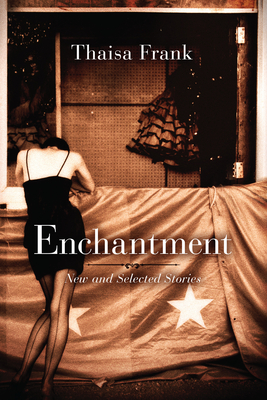
Mini Review: Enchantment by Thaisa Frank


This book was sent to me by Heidenkind/Tasha from Truth Beauty Freedom and Books blog - thank you very much!


My impressions

It is a collection of short stories. Their common themes seem to oscillate around alternate reality, magic, death, love in its many variations and a sense of belonging (or not belonging.) It would be really difficult to summarize all the stories here: some of them are very short (like two-three pages) some of them a bit longer and more substantial. Among the characters you can meet a vampire who tries to belong where he lives ("The Loneliness of the Midwestern Vampire") a circus performer with feet that can “see” ("The Girl With Feet That Could See") and the physicist Erwin Schrodinger ("Schrödinger in Exile"). These extraordinary characters often deal with quite ordinary problems, encountering profound mysteries where ordinary people see just daily drudgery.

My favourite stories were “Poland” about a poem which could change reality around you, "The Cat Lover” about cats and skin-changing abilities and the title story, “Enchantment” in which a lonely (but not living alone) woman orders a tiny enchanted man called Lars from the Wondrous Traveler website, falls in love with him, and then she has to choose between him and her husband.

Overall it was a nice collection – I liked the writing style of Ms Frank and the fact that her stories were enchanted without sounding spurious and humorous without being silly.

Reading short novellas seems to be similar to traveling by train – the landscape outside changes very quickly and even if you see something really interesting you can hardly stop and admire it for a longer period of time – there is a schedule to be followed and the next picture is waiting right at the corner. Alternatively if you see something not interesting it passes in no time. Still I prefer something more substantial like novels and I don't like trains very much.

Final verdict:

If you like short stories with supernatural elements and magical reality permeating ordinary life this book might fit your bill. I liked most of them but still some seemed too short to me. Which is a compliment of a kind.

Wednesday, 17 October 2012

The Most Fascinating Libraries of the World 07 - Library of Congress in Washington D.C.

I visited a friend's blog one day and I was literary blown over by a picture of one of the most fascinating libraries around - Trinity College Library in Dublin, Ireland. It also gave me an idea of a series of posts about the best, the most beautiful, the strangest and the biggest libraries there are. The libraries that can make you drool, where you would be able to spend an indefinite period of time without noticing, where you would like to live and die till the end of the world (if they only served coffee and cake that is). Perhaps you can't visit them all but what is the Internet for? I'll try to illustrate my posts as well as it is only possible, providing, I hope, a nice tour for every visitor around. Enjoy!

Library of Congress in Washington D.C.

The Library of Congress is the research library of the United States Congress, de facto national library of the United States of America, and the oldest federal cultural institution in the United States. Located in four buildings in Washington, D.C., as well as the Packard Campus in Culpeper, Virginia, it is the largest library in the world by shelf space and number of books. The head of the Library is the Librarian of Congress, currently James H. Billington.


The Library of Congress was instituted for Congress in 1800, and was housed in the United States Capitol for most of the 19th century. After much of the original collection had been destroyed during the War of 1812, Thomas Jefferson sold 6,487 books, his entire personal collection, to the library in 1815. One of the Library buildings, (presented above) is called Thomas Jefferson Building.


Northeast Pavilion. View of Mural and coffers ...
Northeast Pavilion. View of Mural and coffers in Ceiling dome. Library of Congress Thomas Jefferson Building, Washington, D.C. (Photo credit: Wikipedia)

The library is open to the general public for academic research and tourists. Only those who are issued a Reader Identification Card may enter the reading rooms and access the collection. The Reader Identification Card is available in the Madison building to persons who are at least 16 years of age upon presentation of a government issued picture identification (e.g. driver's license, state ID card or passport). However, only members of Congress, Supreme Court Justices, their staff, Library of Congress staff and certain other government officials may actually remove items from the library buildings. Members of the general public with Reader Identification Cards must use items from the library collection inside the reading rooms only; they are not allowed to remove library items from the reading rooms or the library buildings.


The Madison Building (above) is also home to the Mary Pickford Theater, the "motion picture and television reading room" of the Library of Congress. The theater hosts regular free screenings of classic and contemporary movies and television shows.

Main reading room
The Library of Congress has several halls with exhibits such as: The Bible Collection - A contrast between the Giant Bible of Mainz that marks the end of the handwritten book, and the Gutenberg Bible that heralds the explosion of knowledge from the printing press. Exploring the Early Americas - An examination of the drama of the encounters between Native Americans and Europeans, and the resulting changes caused by the meeting of the two worlds. The exhibition includes two extraordinary maps by Martin Waldseemüller created in 1507 and 1516, which depict a world enlarged by the presence of the Western Hemisphere. Creating the United States - Insights into how the nation's founding documents were forged and the role that imagination, vision, collaboration, and compromise played in the unprecedented formation of a self-governing country.

No, these girls are not in space, they are in the library...

Have you ever visited this place? Would you like to?


Official website: http://www.loc.gov/index.html
Enhanced by Zemanta

Sunday, 14 October 2012

Movie review: Dorian Gray directed by Oliver Parker


Release year: 2009
Script Toby Finlay based on the novel of Oscar Wilde
Cast:
Dorian Gray: Ben Barnes
Basil Hallward: Ben Chaplin
Lord Henry Wooton: Colin Firth
Sybil Vane: Rachel Hurd-Wood
Emily Wooton: Rebecca Hall
.


Synopsis (for those who haven’t read The Picture of Dorian Gray by Oscar Wilde):

Young, innocent and very handsome Dorian Gray arrives in London on a day in the late 19th century to take over his late grandfather's estate. Dorian  quickly meets and befriends Basil Hallward,  an artist who, smitten by his beauty, desires to paint his picture, and his fashionably cynical friend, Lord Henry Wooton, who starts teaching Dorian life-lessons in pleasure and self-gratification.

It seems with every move of the paintbrush on canvas Dorian’s newly-found vanity is growing. Finally it leads him to proclaim that he would trade his soul for the opportunity to remain young, virile and physically perfect all his life, to the very end – a deal the Devil is only too happy to make. Soon afterwards the portrait of Dorian becomes a kind of repository for all of  moral and physical ills that are afflicting its model. It must be removed and hidden in the cellar because it literally reeks of putrefaction, attracting flies and oozing strange pus. Yum-yum.

Still there is some hope – Dorian falls truly in love with a young, promising actress, Sibyl Vane, and proposes marriage to her. Lord Wooton, feeling his favourite prey is slipping out of his fingers, cleverly warns Dorian against tying the knot too early. He introduces him to some ‘clubs’ for lewd, rich ‘gentlemen’. Dorian cheats on Sybil, lies to her and misses her last performance, leaving her completely broken-hearted. The girl commits a suicide. After her death there is no reining in Dorian’s excesses – he smokes opium, enjoys the company of prostitutes of both sexes, engages in BDSM orgies, seduces young, rich virgins and their middle-aged mothers during the same night, all the time egged on by sly Wooton who wants to experience all those things but only vicariously. Still that lifestyle doesn’t bring Dorian any lasting happiness. One day Basil asks his former model to lend him the picture – he wants it to be the centre piece in a new exhibition of his work. Dorian first says ‘no’ and then, as Basil insists, he shows him the horribly changed portrait and murders him. After that crime life starts being unbearable to him.

Finally Dorian, completely bored with London, decides to go on a journey around the world. It lasts about two decades. When he returns all his friends, distinctly aged, with respectable grey hair, are shocked by his unchanged, youthful and fresh appearance. Lord Wooton’s daughter, Emily, now a young, modern, ‘emancipated’ woman, falls in love with Dorian but her father is horrified at the prospect of getting his former protégé and a brother-in-sin as a son-in-law. He decides to look for and reveal the secret of Dorian’s fresh, unblemished beauty…

My impressions:

As usually I was prepared to hate this adaptation. Instead I was pleasantly surprised – Toby Finlay’s screenplay features some clever plot inventions which made that movie actually fun, although not exactly close to the original. One thing is sure -Wilde’s gothic novel is served in a great atmosphere. The city of London is presented as a  hellhole full of smog, thieves, whores and shadowy establishments known as theaters, pubs and such. Dorian’s inherited house is vast, gloomy and rather ominous, not to mention that neglected cellar where his dear granddad used to beat little Dorian with a cane. Parker shows that not only does he have a deft hand when it comes to handling Wilde's dialogue, but he is very adept at developing a creepy atmosphere.

The main character is fashioned into a rock star of a sort – he is a looker (Ben Barnes was physically an excellent choice, really; he is prettier than some young actresses working by his side, just look at the poster, presented above), dresses with style and plays piano rather well, even giving a concert for charity (but pray, where was he taught? In the country? By whom?) Still his transformation from a young ingénue to a debauched murderer, a rake and a liar I found problematic a bit, too swift and psychologically improbable. First he is deeply in love, then he rejects poor Sybil without one substantial row, just because his older friend told him about some drawbacks of marriage. Overall I found it infuriating and unreal that Dorian never seriously questioned lord Wooton’s acute interest in his humble person, all that interference and suspicious tutoring in evil. Nobody is so trusting and so candid. After a while he was no more than a puppet, repeating parrot-fashion the words and ideas of his mentor.


"Look, my boy, it's going to rain..." no, these two
never talk about the weather. I wish they were.
Speaking of his lordship… Colin Firth still seems like a lovely man and he's a good actor, but in my opinion his sunny, open face is simply not suited to the role of a cad. He's much more convincing as the protective father in the second half of the film, when lord Wooton’s hypocrisy is fully revealed (yes, it’s perfectly ok to lead a young, impressionable man astray for your personal amusement but the moment that man gets interested in your own daughter you hit the roof – how dares he? How dares HE, the ugly, dirty, immoral swine which… I helped to create?). Actually it was one of the highlights of the film.
Let me also notice that this movie is full of sex scenes which are surprisingly unsexy; after a while you ask yourself what’s the appeal of a dissolute life…it is certainly not a beauty treatment.

"I was prettyyyy, oh so prettyyy,
I felt pretyyy and witty and bright..."


The ending I found quite dramatic but still the visual effects of the change the Dorian’s portrait underwent  were childish, straight from a cartoon, ill matching the somberness of the Faustian pact storyline.

Final verdict:

“Pleasure is different from happiness” - those words of wisdom which Dorian learned from experience sum up this movie rather well. I admit it was a pleasure to watch but it didn’t leave me completely happy – not really. Overall for an adaptation of a classic novel it wasn’t bad, maybe because I expected  it to be truly horrible and boring, but it also wasn’t brilliant. Somewhere in-between - which is a compliment.

.


Wednesday, 10 October 2012

Reviewing a classic: The Picture of Dorian Gray by Oscar Wilde


Oscar Wilde's only novel The Picture of Dorian Gray(1891) is a classic instance of the aestheticism of the late 19th century's English literature. The maxim of aestheticism "art for art's sake" is reflected in the opening of the novel, which specifies art's aim to "reveal the art and conceal the artist."For greater emphasis, Wilde defines the artist as free of ethical sympathies and morbidity. Even books are seen as only "well written" or "badly written" and not as moral or amoral. Following this prelude on art and beauty, Wilde weaves a plot that explores the issue to its core.

Synopsis:

Three main characters, Dorian Gray, Sir Henry Wotton and Basil Hallward are being introduced while lingering in the studio of Hallward, a painter. The painter has developed a sort of infatuation with the striking beauty of young Dorian and is completing a portrait that he feels is his best work to date. Amidst the final stages of the painting, Lord Wotton engages in conversation with the two, and imparts as much of his cynicism and seemingly shallow values as he can on the impressionable Gray. Being somewhat indoctrinated with Wotton’s idea of “beauty before all else”, Gray wishes that the painting of his likeness would age in his place, so he might retain the looks that have won him so much admiration and favor. This wish somehow comes true and it would become a great regret for Mr. Gray.

Over the coming chapters, Gray meets Sibyl Vane, a very young, beautiful and very poor Shakespearean actress. Though Sibyl only knows him as ”Prince Charming” the two of them seem to be madly in love and plan to run off together. The sweet, wholesome Sibyl discusses her engagement with her family. Because her mother is indebted to the theatre manager, Mr. Isaacs, for fifty pounds, she is against the marriage unless Dorian is wealthy; they do not know that he is. Sibyl's angry brother, James, is leaving for Australia, but he vows to kill Dorian if he wrongs his sister in any way. James also confronts his mother about gossip he has heard — that his mother and deceased father never married, which Mrs. Vane admits is true.
Oscar Wilde in New York
Oscar Wilde in New York (Photo credit: Wikipedia)

Unfortunately, Dorian invites his friends along to what will be Sibyl’s last performance before leaving to be with him and her focus on her own love produces a dismal portrayal of her role as Juliet. With his love of beauty, Dorian suddenly becomes disgusted with the girl and her poor performance and breaks her heart backstage that very night. Tragically, the loss is too much for Sibyl to bear and we find out very shortly after she was found dead later that night, presumably she committed suicide. Dorian awakes the next morning regretting his actions against Sibyl but is informed of her recent end by Lord Wotton. His despair is quickly averted by Wotton’s assurances that this was just a passing love and that beauty and pleasure should be his only pursuits. This would be Dorian’s last love and over the next 18 years he leads a hedonistic life guided by an unnamed novel (a yellow book) given to him by Wotton.

Later, though still not showing his age thanks to his wish for his portrait to bear the years and consequences of his actions, Dorian begins to realize that his life somehow has not been of the quality it should have been. Brought to a head by a visit from Basil, the painter, Dorian is shocked by the effects his lifestyle has had on the once beautiful portrait of his. In the process of unveiling it to Basil, Dorian comes to blame this on him, the originator of the work, and murders Basil in secret. Using blackmail against a former friend, he is able to cover up his act, and visits an opium den for relief from his guilt. While there, by chance a whore refers to him as “Prince Charming” which is overheard by James Vane (Sibyl’s brother). In a moment of irony, James is convinced not to kill Dorian by being asked to look at him in the light and assess whether the man who broke his sister’s heart 18 years ago could possibly appear so youngful and fresh. Effectively saved by the very curse that lead him down this path, Dorian lives on.

After returning to London, Dorian becomes paranoid that James is stalking him. He believes he saw him outside his window and later, while out in the country, discovers it was James who was accidentally shot by hunters. Believing he is safe now, Dorian sets out to turn over a new leaf and live a better life, his first act being to spare a local girl the heartbreak of being in love with him. Dorian hopes this new act of “mercy” will show in the portrait, a lessening of the horrible image it now bears. Much to his dismay, the image is even worse, causing to doubt his own motives in the act. Believing his only absolution would be public confession to his acts, including Basil’s murder, which he cannot bring himself to do, Dorian tries to destroy the reflection of his life, the painting. In an rage, he stabs a knife into the painting, but is discovered in the locked room with the knife in his heart and the painting returned to it’s original form. Dorian’s body is now withered and aged, and is only identified after careful examination.

My impressions:

Oscar Wilde’s The Picture of Dorian Gray is a thought-provoking novel that vacillates between ambling, seemingly directionless conversation and a riveting narrative thread. Oscar Wilde has created an amusing tale that does not end very happily but ends beautifully. Still the plot of The Picture of Dorian Gray, if seen apart from the wit and epigrams of Lord Henry is serious and, at times, even somber.

The Picture of Dorian Gray addresses more than one theme. The primary appeal of the subject of beauty, as it appears to eyes, is the main focus of the novel. Wilde reveals the tenderness of self-love, or narcissism, which sometimes fails to find an object outside itself. Dorian's beauty, unlike Basil's art and Lord Henry's social status, is more vulnerable to decay with time.

But it is not this weakness of beauty to age that brings the disaster upon our protagonist. It is the consciousness of the owner of beauty to his own wealth that triggers the boundless fear of perishing--fear that causes his doom. Unlike Lord Henry's ease about his rank, Dorian's angst about the ephemeral nature of his looks is shown as the true enemy of a person's self.

The philosophical boundaries of Oscar Wilde's The Picture of Dorian Gray are too deep to track to their ends. The novel addresses the issue of self-concept as portrayed in art. Further, it connects a person's emotional response to his/her own image. While Dorian remains young and beautiful, the mere sight of an aging picture of him is unbearably painful because it reminds him of his own weaknesses and fate. The portrait begins to transform itself into the image of his soul. Dorian Gray turns himself into a work of art by making a Faustian pact that ensures that he is endlessly desirable and always youthful. It is his heart that withers so no, it doesn’t bring him happiness.

Let me also state the obvious: Wilde’s command of the English language is almost unparalleled in recent literature. His prose is almost visibly sparkling with gems and gilded bric-a-brac; reading Dorian Gray is like watching an all-out, massively expensive period film. Just take a look at this, the second sentence:

From the corner of the divan of Persian saddle-bags on which he was lying, smoking, as was his custom, innumerable cigarettes, Lord Henry Wotton could just catch the gleam of the honey-sweet and honey-coloured blossoms of a laburnum, whose tremulous branches seemed hardly able to bear the burden of a beauty so flamelike as theirs; and now and then the fantastic shadows of birds in flight flitted across the long tussore-silk curtains that were stretched in front of the huge window, producing a kind of momentary Japanese effect, and making him think of those pallid, jade-faced painters of Tokyo who, through the medium of an art that is necessarily immobile, seek to convey the sense of swiftness and motion. (1.2)”

You might wonder whether it is still readable. Well, I was able to read my copy of the novel, about 260 pages long, in two evenings. Even though the story was written and set in a time when people drove around in horse-drawn carriages and used candles more often than light bulbs I didn’t find it dated. It is about sin and vanity, about friendship that fall by the wayside, about life choices and their consequences. These things never go out of fashion but plenty of contemporary artists and writers have problems with presenting them in an interesting way. In my humble opinion they should read Dorian Gray and take a leaf out of Mr. Wilde’s book.

Dorian destroys a lot of lives and one of the saddest parts of the book is when he murders his close friend, Basil Hallward, the only man Dorrian let see the grotesque portrait that once was a masterpiece – the picture of his true self. It proves how corrupt and how lonely Dorian has become. When, overcome with a sudden loathing for Basil and perhaps also for his own weaknesses and faults, Dorian sticks a knife in his friend’s neck he kind of sacrifices him in front of that painting, a monument to his own evilness. It was as breathtaking as if you witnessed somebody sacrificing their own humanity.

Final verdict:

A book definitely worth reading and rereading. Intelligent, funny, sparkling prose dealing with serious topics. Now pray, tell me, do you know of any good movie adaptations? 


Quotes: 

“The ugly and the stupid have the best of it in this world. They can sit at their ease and gape at the play.”

“An artist should create beautiful things, but should put nothing of his own life into them.”

The only way to get rid of a temptation is to yield to it. Resist it, and your soul grows sick with longing for the things it has forbidden to itself, with desire for what its monstrous laws have made monstrous (…)”


“You are a wonderful creation. You know more than you think you know, just as you know less than you want to know.”

“I hope that Dorian Gray will make this woman his wife, passionately adore her for six months, and then suddenly become fascinated by someone else. He would be a wonderful study.”

“My dear boy, no woman is a genius. Women are a decorative sex. They never have anything to say, but they say it charmingly. Women represent the triumph of matter over mind, just as men represent the triumph of mind over morals.” (haha!)
Enhanced by Zemanta

Sunday, 7 October 2012

Movie review: The Duchess directed by Saul Dibb

Cover of "The Duchess"
Cover of The Duchess

I dedicate this review to my friend, The Red Witch, who not only had her birthday this month but also was kind enough to make me write an essay about Georgiana Duchess of Devonshire some time ago - my best wishes, dear Witch, and thanks for your online visits and e-mails wich make me often smile!!!


Cast:
Georgiana Cavendish – Keira Knightley
Duke of Devonshire – Ralph Fiennes
Georgiana’s mother – Charlotte Rampling
Charles Gray – Dominic Cooper

Synopsis:

This period drama has been adapted from Amanda Foreman's best-selling novel, Georgiana, Duchess of Devonshire. It tries to document the romantic entanglements of Georgiana Cavendish, a consort to one of the most powerful men in England at that time and also a beautiful and clever woman who became a real celebrity of British high society at the end of 18th century.

William's first wife, Georgiana, Duchess of De...
 Georgiana, Duchess of Devonshire by Thomas Gainsborough, 1787, The Devonshire Collection (Photo credit: Wikipedia)
Georgiana’s mother marries her daughter off to the distant and self-absorbed Duke of Devonshire because she seeks higher status and  financial security for her family. Georgiana, just seventeen at that time, agrees without questioning; she is innocent, rather idealistic and has little knowledge of the requirements of a married life. Firstly and foremostly she thinks she will be able to make the Duke love her, like in these sweet romance novels – after all she has every chance to succeed, being young, pretty, intelligent and highly accomplished lady, right?  The brutal truth is that the Duke needs just a respectable ‘womb’ who will bear him a son and heir, not a wife, let alone a partner or a friend. He prefers the uncomplicated company of whores and his dogs. His new wife becomes bored and restless but parties, gossip and gambling seem to be the only entertainment available for ladies like herself. An ambitious woman, Georgiana tries to change that and make a difference.

 When she gets herself involved in the politics, supporting the Whigs, and produces just two measly daughters instead of a much-wanted heir, things in her marriage go even worse. Her husband distances himself  further and entertains casual lovers right under their roof and angry Georgiana’s nose. He invites one of his by-blows, a girl called Charlotte, to live with them permanently. Finally he seduces his wife’s guest and only female friend, Bess. Well, to tell the truth Bess didn’t need much seducing but still. Furious Georgiana decides enough is enough – she tries to make a deal with her husband - she will tolerate his affairs and lovers but she wants to find herself a lover too. Here she hits a snag, though. While the Duke’s conduct is condoned and glossed over, her infidelity, if not tacitly approved by him, might put her in a very vulnerable position. The Duke of course doesn’t approve, why should he? He threatens he will ruin her and those close to her as well. He doesn’t want to be known as another cuckolded husband and he has nothing to lose. What will Georgiana choose – her uncaring husband and children or her ambitious lover, Charles Gray?

My impressions:

This movie was good but it could have been brilliant; that fact seems to be my main complaint, something I cannot get over, silly me, maybe because I like history too much. You see, the real life of Georgiana Cavendish is such a great movie material. Still I  have an impression Saul Dibb didn’t manage to shoulder the weight of it and explore its full possibilities. In fact the more you know about Lady Georgiana’s life story the more you find this movie insipid and shallow. Sure, it is just an adaptation. Still I  refuse to be reconciled with that fact. NO WAY. Prepare yourself – the rest is a long rant and a history lesson. I know, I am weird - if you don't feel like reading my ramblings, proceed immediately to the final verdict below. 

First the good points - I agree, the cast was great. Keira Knightley is gorgeous (providing she doesn’t flash one of her stupid monkey smiles) and here, as Georgiana, she fits the bill perfectly well. Ralph Fiennes has always been good as a baddie and as the Duke he doesn’t disappoint either – his character is such a horrible, cruel idiot that, after one particularly nasty scene (spoiler, highlight to read: he raped his wife just because he got angry with her and he needed that damn heir pretty badly) I, a very calm person, wanted to knock him down and beat black and blue. Charlotte Rampling as an overly ambitious aristocratic mother managed to dominate in a positive way every scene she appeared in. Also the outfits, hats and hairdos of Georgiana were a joy to the eye.

However, the life of the main heroine was botched up and bowdlerized to a significant extend (yes, the ramblings begin for real, run for cover).

Firstly the director glossed over the fact that Georgiana, like her dear hubby, was a gambler and all her life ran up debts that always exceeded the generous four-thousand pounds annual pin money given her by the duke. Dibb made her a drunk instead. Well, I might be wrong but I suppose her gambling was a far bigger problem - it is a historical fact that she tried and failed to reform from that vice many times. Once Georgiana tallied debts of three-thousand pounds ($297,000 in today's money) and she had to beg her parents for a loan. Money issues remained the source of tension in their marriage till the very end.

It also was forgotten in the movie that, a century before her time, Georgiana led a really modern, door-to-door campaign in the Westminster election of 1784 and was credited with bringing Fox and Lord Hood’s victory. As you can imagine her "canvassing" was highly unorthodox and it resulted in a flagrant rumors and political cartoons that implied she exchanged sexual favors--as well as money--for votes. Too juicy for a movie? I doubt it.

Also Georgiana’s private life, as shown in the movie, differed greatly from the life of the real Duchess. As you remember her first duty was to give birth to an heir and she tried her best. Unfortunately a number of miscarriages strained her marriage from the very beginning - the duke was growing more and more impatient and dissatisfied with his wife. After all these were her staggering gambling debts that sucked up all his money, and he was unable to mortgage his estates until he had a son (that reason behind his fathering-the-heir frenzy was not mentioned by the director at all) . As the Duchess failed to get pregnant for a long time, she, her husband and their common friend, Bess, tried to find a solution to this problem. Georgiana and Bess (but notably without the Duke) decided to travel to Paris in 1789. As soon as they arrived, voila- Georgiana found herself expecting.

Such a miracle pregnancy aroused plenty of gossip that the child was in fact another love child of Bess (who had some sons of previous marriage) and the Duke. It was certainly not an entirely unfounded accusation – after all such an important pregnancy is an odd time to pleasure tripping in France, especially without the modern comforts and a doctor in tow. Georgiana, having had so many miscarriages before (of course not mentioned in the movie), would certainly avoid any additional risk. What’s more, France was in political unrest and hardly the place for a pregnant woman to be traveling safely. Fortunately for all interested parties there were no DNA tests available at that time.
Still nothing of those controversies was shown in the movie and, according to its director, Georgiana never set her foot in Paris! Too tight budget? Then why bother at all?

Portrait of Georgiana Spencer, Duchess of Devo...
Portrait of Georgiana Spencer, Duchess of Devonshire (Photo credit: Wikipedia)
The love affair with Charles Gray was portrayed differently as well. In the movie it lasted just one season (yes, like some Austen heroines Georgiana went to Bath to meet with him in 'secret') and was ended by Georgiana’s pregnancy and ensued complications: the Duke made his wife break the relationship, go to the country and give the infant away to the family of her husband right after the birth.  Well, it wasn’t exactly like that.

 When Georgiana became pregnant by Charles Grey she was forced to leave her children and travel to France again to deliver the baby girl, Eliza. The girl  was born less than two years after Georgiana's son and raised by Gray's parents as her own father’s sister.  Apparently her pregnancy was rather difficult – convinced she would die in childbirth, Georgiana even wrote a moving letter to her baby son, saying goodbye just in case.

During her long absence, Georgiana missed her children dreadfully, and despite that she was very much in love with Grey, who was seven years her junior (also something not exactly prominent in the movie, Grey was in fact a kind of toy boy), she agreed to renounce him in order to return to her children. Still, it was more than two years before the duke relented and actually allowed her to return, not like in the film, a matter of days.

The Georgiana who returned after her exile was a changed woman. She finally settled down and spent many hours at home nursing her gout-ridden husban; the relationship between them obviously softened because she suffered another miscarriage at this time.  Still the director omitted that change as well. Watching the movie you might wonder why that proud, intelligent, ambitious woman forgave her husband at all because he did nothing more than blackmailing her into obedience and then looking sheepish (I did it? I did it? Really? But she doesn’t really mind, does she?).

Georgiana, Duchess of Devonshire, with Lady El...
Georgiana, Duchess of Devonshire, with Lady Elizabeth Foster (Photo credit: Wikipedia)
Final verdict:

If you know nothing about Georgiana's life it might be an interesting costume drama – not exactly nice or entertaining but interesting nevertheless. You know, all these costumes… If you like the real history, though, it’s better to read a book it was based on, otherwise you might end up like me, rather frustrated than entertained.

ETA: here you can find the link to my old essay about
Georgiana - A Portrait of a Lady with a Goldfish

Enhanced by Zemanta