



Saturday, 20 October 2012

Friday, 19 October 2012
Mini Review: Enchantment by Thaisa Frank
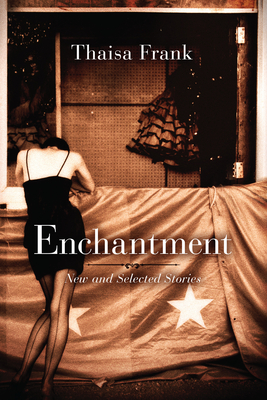
This book was sent to me by Heidenkind/Tasha from Truth Beauty Freedom and Books blog - thank you very much!
My impressions
It is a collection of short stories. Their common themes seem to oscillate around alternate reality, magic, death, love in its many variations and a sense of belonging (or not belonging.) It would be really difficult to summarize all the stories here: some of them are very short (like two-three pages) some of them a bit longer and more substantial. Among the characters you can meet a vampire who tries to belong where he lives ("The Loneliness of the Midwestern Vampire") a circus performer with feet that can “see” ("The Girl With Feet That Could See") and the physicist Erwin Schrodinger ("Schrödinger in Exile"). These extraordinary characters often deal with quite ordinary problems, encountering profound mysteries where ordinary people see just daily drudgery.
My favourite stories were “Poland” about a poem which could change reality around you, "The Cat Lover” about cats and skin-changing abilities and the title story, “Enchantment” in which a lonely (but not living alone) woman orders a tiny enchanted man called Lars from the Wondrous Traveler website, falls in love with him, and then she has to choose between him and her husband.
Overall it was a nice collection – I liked the writing style of Ms Frank and the fact that her stories were enchanted without sounding spurious and humorous without being silly.
Reading short novellas seems to be similar to traveling by train – the landscape outside changes very quickly and even if you see something really interesting you can hardly stop and admire it for a longer period of time – there is a schedule to be followed and the next picture is waiting right at the corner. Alternatively if you see something not interesting it passes in no time. Still I prefer something more substantial like novels and I don't like trains very much.
Final verdict:
If you like short stories with supernatural elements and magical reality permeating ordinary life this book might fit your bill. I liked most of them but still some seemed too short to me. Which is a compliment of a kind.
Wednesday, 17 October 2012
The Most Fascinating Libraries of the World 07 - Library of Congress in Washington D.C.
I visited a friend's blog one day and I was literary blown over by a picture of one of the most fascinating libraries around - Trinity College Library in Dublin, Ireland. It also gave me an idea of a series of posts about the best, the most beautiful, the strangest and the biggest libraries there are. The libraries that can make you drool, where you would be able to spend an indefinite period of time without noticing, where you would like to live and die till the end of the world (if they only served coffee and cake that is). Perhaps you can't visit them all but what is the Internet for? I'll try to illustrate my posts as well as it is only possible, providing, I hope, a nice tour for every visitor around. Enjoy!
Library of Congress in Washington D.C.


 |
| Northeast Pavilion. View of Mural and coffers in Ceiling dome. Library of Congress Thomas Jefferson Building, Washington, D.C. (Photo credit: Wikipedia) |

 |
| Main reading room |
The Library of Congress has several halls with exhibits such as: The Bible Collection - A contrast between the Giant Bible of Mainz that marks the end of the handwritten book, and the Gutenberg Bible that heralds the explosion of knowledge from the printing press. Exploring the Early Americas - An examination of the drama of the encounters between Native Americans and Europeans, and the resulting changes caused by the meeting of the two worlds. The exhibition includes two extraordinary maps by Martin Waldseemüller created in 1507 and 1516, which depict a world enlarged by the presence of the Western Hemisphere. Creating the United States - Insights into how the nation's founding documents were forged and the role that imagination, vision, collaboration, and compromise played in the unprecedented formation of a self-governing country.

 |
| No, these girls are not in space, they are in the library... |

Have you ever visited this place? Would you like to?
Official website: http://www.loc.gov/index.html

Sunday, 14 October 2012
Movie review: Dorian Gray directed by Oliver Parker

Release year: 2009
Script Toby
Finlay based on the novel of Oscar Wilde
Cast:
Dorian Gray: Ben Barnes
Basil Hallward: Ben
Chaplin
Lord Henry Wooton:
Colin Firth
Sybil Vane: Rachel
Hurd-Wood
Emily Wooton: Rebecca
Hall
.
Synopsis
(for those who haven’t read The Picture of Dorian Gray by Oscar Wilde):
Young,
innocent and very handsome Dorian Gray arrives in
London on a day in the late 19th century to take over his late grandfather's
estate. Dorian quickly meets and
befriends Basil Hallward, an artist
who, smitten by his beauty, desires to paint his picture, and his fashionably
cynical friend, Lord Henry Wooton, who starts teaching Dorian life-lessons in
pleasure and self-gratification.
It
seems with every move of the paintbrush on canvas Dorian’s newly-found vanity
is growing. Finally it leads him to proclaim that he would trade his soul for
the opportunity to remain young, virile and physically perfect all his life, to
the very end – a deal the Devil is only too happy to make. Soon afterwards the
portrait of Dorian becomes a kind of repository for all of moral and physical ills that are afflicting
its model. It must be removed and hidden in the cellar because it literally
reeks of putrefaction, attracting flies and oozing strange pus. Yum-yum.
Still
there is some hope – Dorian falls truly in love with a young, promising
actress, Sibyl Vane, and proposes marriage to her. Lord Wooton, feeling his
favourite prey is slipping out of his fingers, cleverly warns Dorian against
tying the knot too early. He introduces him to some ‘clubs’ for lewd, rich
‘gentlemen’. Dorian cheats on Sybil, lies to her and misses her last
performance, leaving her completely broken-hearted. The girl commits a suicide.
After her death there is no reining in Dorian’s excesses – he smokes opium,
enjoys the company of prostitutes of both sexes, engages in BDSM orgies,
seduces young, rich virgins and their middle-aged mothers during the same
night, all the time egged on by sly Wooton who wants to experience all those
things but only vicariously. Still that lifestyle doesn’t bring Dorian any
lasting happiness. One
day Basil asks his former model to lend him the picture – he wants it to be the
centre piece in a new exhibition of his work. Dorian first says ‘no’ and then,
as Basil insists, he shows him the horribly changed portrait and murders him.
After that crime life starts being unbearable to him.
Finally Dorian, completely bored with London, decides to go
on a journey around the world. It lasts about two decades. When he returns all
his friends, distinctly aged, with respectable grey hair, are shocked by his unchanged, youthful
and fresh appearance. Lord Wooton’s daughter, Emily, now a young, modern,
‘emancipated’ woman, falls in love with Dorian but her father is horrified at
the prospect of getting his former protégé and a brother-in-sin as a
son-in-law. He decides to look for and reveal the secret of Dorian’s fresh,
unblemished beauty…
My
impressions:
As usually
I was prepared to hate this adaptation. Instead I was pleasantly surprised –
Toby Finlay’s screenplay features some clever plot inventions which made that
movie actually fun, although not exactly close to the original. One thing is
sure -Wilde’s gothic novel is served in a great atmosphere. The city of London
is presented as a hellhole full of
smog, thieves, whores and shadowy establishments known as theaters, pubs and
such. Dorian’s inherited house is vast, gloomy and rather ominous, not to
mention that neglected cellar where his dear granddad used to beat little
Dorian with a cane. Parker shows that not only does
he have a deft hand when it comes to handling Wilde's dialogue, but he is very
adept at developing a creepy atmosphere.
The
main character is fashioned into a rock star of a sort – he is a looker (Ben
Barnes was physically an excellent choice, really; he is prettier than some
young actresses working by his side, just look at the poster, presented above), dresses with style and plays piano rather
well, even giving a concert for charity (but pray, where was he taught? In the country?
By whom?) Still his transformation from a young ingénue to a debauched
murderer, a rake and a liar I found problematic a bit, too swift and
psychologically improbable. First he is deeply in love, then he rejects poor
Sybil without one substantial row, just because his older friend told him about
some drawbacks of marriage. Overall I found it infuriating and unreal that
Dorian never seriously questioned lord Wooton’s acute interest in his humble person, all
that interference and suspicious tutoring in evil. Nobody is so trusting and so
candid. After a while he was no more than a puppet, repeating parrot-fashion
the words and ideas of his mentor.
| "Look, my boy, it's going to rain..." no, these two never talk about the weather. I wish they were. |
Speaking
of his lordship… Colin Firth still seems like a lovely man and he's a good actor, but
in my opinion his sunny, open face is simply not suited to the role of a cad.
He's much more convincing as the protective father in the second half of the
film, when lord Wooton’s hypocrisy is fully revealed (yes, it’s perfectly ok to
lead a young, impressionable man astray for your personal amusement but the
moment that man gets interested in your own daughter you hit the roof – how
dares he? How dares HE, the ugly, dirty, immoral swine which… I helped to
create?). Actually it was one of the highlights of the film.
Let
me also notice that this movie is full of sex scenes which are surprisingly
unsexy; after a while you ask yourself what’s the appeal of a dissolute life…it is certainly not a beauty treatment.
| "I was prettyyyy, oh so prettyyy, I felt pretyyy and witty and bright..." |
The ending I found quite
dramatic but still the visual effects of the change the Dorian’s portrait
underwent were childish, straight from
a cartoon, ill matching the somberness of the Faustian pact storyline.
Final verdict:
“Pleasure is different
from happiness” - those words of wisdom which Dorian learned from experience
sum up this movie rather well. I admit it was a pleasure to watch but it didn’t
leave me completely happy – not really. Overall for an adaptation of a classic
novel it wasn’t bad, maybe because I expected it to be truly horrible and boring,
but it also wasn’t brilliant. Somewhere in-between - which is a compliment.
.
Wednesday, 10 October 2012
Reviewing a classic: The Picture of Dorian Gray by Oscar Wilde

Synopsis:
Three main characters, Dorian Gray, Sir Henry Wotton and Basil Hallward are being introduced while lingering in the studio of Hallward, a painter. The painter has developed a sort of infatuation with the striking beauty of young Dorian and is completing a portrait that he feels is his best work to date. Amidst the final stages of the painting, Lord Wotton engages in conversation with the two, and imparts as much of his cynicism and seemingly shallow values as he can on the impressionable Gray. Being somewhat indoctrinated with Wotton’s idea of “beauty before all else”, Gray wishes that the painting of his likeness would age in his place, so he might retain the looks that have won him so much admiration and favor. This wish somehow comes true and it would become a great regret for Mr. Gray.
Over the coming chapters, Gray meets Sibyl Vane, a very young, beautiful and very poor Shakespearean actress. Though Sibyl only knows him as ”Prince Charming” the two of them seem to be madly in love and plan to run off together. The sweet, wholesome Sibyl discusses her engagement with her family. Because her mother is indebted to the theatre manager, Mr. Isaacs, for fifty pounds, she is against the marriage unless Dorian is wealthy; they do not know that he is. Sibyl's angry brother, James, is leaving for Australia, but he vows to kill Dorian if he wrongs his sister in any way. James also confronts his mother about gossip he has heard — that his mother and deceased father never married, which Mrs. Vane admits is true.
 |
| Oscar Wilde in New York (Photo credit: Wikipedia) |
Unfortunately, Dorian invites his friends along to what will be Sibyl’s last performance before leaving to be with him and her focus on her own love produces a dismal portrayal of her role as Juliet. With his love of beauty, Dorian suddenly becomes disgusted with the girl and her poor performance and breaks her heart backstage that very night. Tragically, the loss is too much for Sibyl to bear and we find out very shortly after she was found dead later that night, presumably she committed suicide. Dorian awakes the next morning regretting his actions against Sibyl but is informed of her recent end by Lord Wotton. His despair is quickly averted by Wotton’s assurances that this was just a passing love and that beauty and pleasure should be his only pursuits. This would be Dorian’s last love and over the next 18 years he leads a hedonistic life guided by an unnamed novel (a yellow book) given to him by Wotton.
Later, though still not showing his age thanks to his wish for his portrait to bear the years and consequences of his actions, Dorian begins to realize that his life somehow has not been of the quality it should have been. Brought to a head by a visit from Basil, the painter, Dorian is shocked by the effects his lifestyle has had on the once beautiful portrait of his. In the process of unveiling it to Basil, Dorian comes to blame this on him, the originator of the work, and murders Basil in secret. Using blackmail against a former friend, he is able to cover up his act, and visits an opium den for relief from his guilt. While there, by chance a whore refers to him as “Prince Charming” which is overheard by James Vane (Sibyl’s brother). In a moment of irony, James is convinced not to kill Dorian by being asked to look at him in the light and assess whether the man who broke his sister’s heart 18 years ago could possibly appear so youngful and fresh. Effectively saved by the very curse that lead him down this path, Dorian lives on.
After returning to London, Dorian becomes paranoid that James is stalking him. He believes he saw him outside his window and later, while out in the country, discovers it was James who was accidentally shot by hunters. Believing he is safe now, Dorian sets out to turn over a new leaf and live a better life, his first act being to spare a local girl the heartbreak of being in love with him. Dorian hopes this new act of “mercy” will show in the portrait, a lessening of the horrible image it now bears. Much to his dismay, the image is even worse, causing to doubt his own motives in the act. Believing his only absolution would be public confession to his acts, including Basil’s murder, which he cannot bring himself to do, Dorian tries to destroy the reflection of his life, the painting. In an rage, he stabs a knife into the painting, but is discovered in the locked room with the knife in his heart and the painting returned to it’s original form. Dorian’s body is now withered and aged, and is only identified after careful examination.
My impressions:
Oscar Wilde’s The Picture of Dorian Gray is a thought-provoking novel that vacillates between ambling, seemingly directionless conversation and a riveting narrative thread. Oscar Wilde has created an amusing tale that does not end very happily but ends beautifully. Still the plot of The Picture of Dorian Gray, if seen apart from the wit and epigrams of Lord Henry is serious and, at times, even somber.
The Picture of Dorian Gray addresses more than one theme. The primary appeal of the subject of beauty, as it appears to eyes, is the main focus of the novel. Wilde reveals the tenderness of self-love, or narcissism, which sometimes fails to find an object outside itself. Dorian's beauty, unlike Basil's art and Lord Henry's social status, is more vulnerable to decay with time.
But it is not this weakness of beauty to age that brings the disaster upon our protagonist. It is the consciousness of the owner of beauty to his own wealth that triggers the boundless fear of perishing--fear that causes his doom. Unlike Lord Henry's ease about his rank, Dorian's angst about the ephemeral nature of his looks is shown as the true enemy of a person's self.
The philosophical boundaries of Oscar Wilde's The Picture of Dorian Gray are too deep to track to their ends. The novel addresses the issue of self-concept as portrayed in art. Further, it connects a person's emotional response to his/her own image. While Dorian remains young and beautiful, the mere sight of an aging picture of him is unbearably painful because it reminds him of his own weaknesses and fate. The portrait begins to transform itself into the image of his soul. Dorian Gray turns himself into a work of art by making a Faustian pact that ensures that he is endlessly desirable and always youthful. It is his heart that withers so no, it doesn’t bring him happiness.
Let me also state the obvious: Wilde’s command of the English language is almost unparalleled in recent literature. His prose is almost visibly sparkling with gems and gilded bric-a-brac; reading Dorian Gray is like watching an all-out, massively expensive period film. Just take a look at this, the second sentence:
”From the corner of the divan of Persian saddle-bags on which he was lying, smoking, as was his custom, innumerable cigarettes, Lord Henry Wotton could just catch the gleam of the honey-sweet and honey-coloured blossoms of a laburnum, whose tremulous branches seemed hardly able to bear the burden of a beauty so flamelike as theirs; and now and then the fantastic shadows of birds in flight flitted across the long tussore-silk curtains that were stretched in front of the huge window, producing a kind of momentary Japanese effect, and making him think of those pallid, jade-faced painters of Tokyo who, through the medium of an art that is necessarily immobile, seek to convey the sense of swiftness and motion. (1.2)”
You might wonder whether it is still readable. Well, I was able to read my copy of the novel, about 260 pages long, in two evenings. Even though the story was written and set in a time when people drove around in horse-drawn carriages and used candles more often than light bulbs I didn’t find it dated. It is about sin and vanity, about friendship that fall by the wayside, about life choices and their consequences. These things never go out of fashion but plenty of contemporary artists and writers have problems with presenting them in an interesting way. In my humble opinion they should read Dorian Gray and take a leaf out of Mr. Wilde’s book.
Dorian destroys a lot of lives and one of the saddest parts of the book is when he murders his close friend, Basil Hallward, the only man Dorrian let see the grotesque portrait that once was a masterpiece – the picture of his true self. It proves how corrupt and how lonely Dorian has become. When, overcome with a sudden loathing for Basil and perhaps also for his own weaknesses and faults, Dorian sticks a knife in his friend’s neck he kind of sacrifices him in front of that painting, a monument to his own evilness. It was as breathtaking as if you witnessed somebody sacrificing their own humanity.
Final verdict:
A book definitely worth reading and rereading. Intelligent, funny, sparkling prose dealing with serious topics. Now pray, tell me, do you know of any good movie adaptations?
Quotes:
“The ugly and the stupid have the best of it in this world. They can sit at their ease and gape at the play.”
“An artist should create beautiful things, but should put nothing of his own life into them.”
“The only way to get rid of a temptation is to yield to it. Resist it, and your soul grows sick with longing for the things it has forbidden to itself, with desire for what its monstrous laws have made monstrous (…)”
“You are a wonderful creation. You know more than you think you know, just as you know less than you want to know.”
“I hope that Dorian Gray will make this woman his wife, passionately adore her for six months, and then suddenly become fascinated by someone else. He would be a wonderful study.”
“My dear boy, no woman is a genius. Women are a decorative sex. They never have anything to say, but they say it charmingly. Women represent the triumph of matter over mind, just as men represent the triumph of mind over morals.” (haha!)

Sunday, 7 October 2012
Movie review: The Duchess directed by Saul Dibb
 |
| Cover of The Duchess |
I dedicate this review to my friend, The Red Witch, who not only had her birthday this month but also was kind enough to make me write an essay about Georgiana Duchess of Devonshire some time ago - my best wishes, dear Witch, and thanks for your online visits and e-mails wich make me often smile!!!
Cast:
Georgiana
Cavendish – Keira Knightley
Duke of
Devonshire – Ralph Fiennes
Georgiana’s
mother – Charlotte Rampling
Charles
Gray – Dominic Cooper
Synopsis:
This
period drama has been adapted from Amanda Foreman's best-selling novel,
Georgiana, Duchess of Devonshire. It tries to document the romantic
entanglements of Georgiana Cavendish, a consort to one of the most powerful men
in England at that time and also a beautiful and clever woman who became a real
celebrity of British high society at the end of 18th century.
 |
| Georgiana, Duchess of Devonshire by Thomas Gainsborough, 1787, The Devonshire Collection (Photo credit: Wikipedia) |
When she gets herself involved in the
politics, supporting the Whigs, and produces just two measly daughters
instead of a much-wanted heir, things in her marriage go even worse. Her
husband distances himself further and
entertains casual lovers right under their roof and angry Georgiana’s nose. He
invites one of his by-blows, a girl called Charlotte, to live with them
permanently. Finally he seduces his wife’s guest and only female friend, Bess.
Well, to tell the truth Bess didn’t need much seducing but still. Furious
Georgiana decides enough is enough – she tries to make a deal with her husband
- she will tolerate his affairs and lovers but she wants to find herself a
lover too. Here she hits a snag, though. While the Duke’s conduct is condoned
and glossed over, her infidelity, if not tacitly approved by him, might put her in a very
vulnerable position. The Duke of course doesn’t approve, why should he? He threatens he will ruin her and those close to her
as well. He doesn’t want to be
known as another cuckolded husband and he has nothing to lose. What will
Georgiana choose – her uncaring husband and children or her ambitious lover,
Charles Gray?
My
impressions:
This movie
was good but it could have been brilliant; that fact seems to be my main
complaint, something I cannot get over, silly me, maybe because I like history
too much. You see, the real life of Georgiana Cavendish is such a great movie
material. Still I have an impression
Saul Dibb didn’t manage to shoulder the weight of it and explore its full
possibilities. In fact the more you know about Lady Georgiana’s life story the
more you find this movie insipid and shallow. Sure, it is just an adaptation.
Still I refuse to be reconciled with
that fact. NO WAY. Prepare yourself – the rest is a long rant and a history
lesson. I know, I am weird - if you don't feel like reading my ramblings, proceed immediately to the final verdict below.
First the
good points - I agree, the cast was great. Keira Knightley is gorgeous
(providing she doesn’t flash one of her stupid monkey smiles) and here, as
Georgiana, she fits the bill perfectly well. Ralph Fiennes has always been good
as a baddie and as the Duke he doesn’t disappoint either – his character is such a horrible,
cruel idiot that, after one particularly nasty scene (spoiler, highlight to read: he raped his wife just
because he got angry with her and he needed that damn heir pretty badly) I, a very calm person, wanted to knock him down and beat black and blue. Charlotte Rampling as an
overly ambitious aristocratic mother managed to dominate in a positive way
every scene she appeared in. Also the outfits, hats and hairdos of Georgiana
were a joy to the eye.
However,
the life of the main heroine was botched up and bowdlerized to a significant
extend (yes, the ramblings begin for real, run for cover).
Firstly the
director glossed over the fact that Georgiana, like her dear hubby, was a
gambler and all her life ran up debts that always exceeded the generous
four-thousand pounds annual pin money given her by the duke. Dibb made her a
drunk instead. Well, I might be wrong but I suppose her gambling was a far
bigger problem - it is a historical fact that she tried and failed to reform from that vice many times. Once
Georgiana tallied debts of three-thousand pounds ($297,000 in today's money)
and she had to beg her parents for a loan. Money issues remained the source of
tension in their marriage till the very end.
It also was
forgotten in the movie that, a century before her
time, Georgiana led a really modern, door-to-door campaign in the Westminster
election of 1784 and was credited with bringing Fox and Lord Hood’s victory. As
you can imagine her "canvassing" was highly unorthodox and it
resulted in a flagrant rumors and political cartoons that implied she exchanged
sexual favors--as well as money--for votes. Too juicy for a movie? I doubt it.
Also
Georgiana’s private life, as shown in the movie, differed greatly from the life
of the real Duchess. As you remember her first duty was to give birth to an
heir and she tried her best. Unfortunately a number of miscarriages strained
her marriage from the very beginning - the duke was growing more and more
impatient and dissatisfied with his wife. After all these were her staggering
gambling debts that sucked up all his money, and he was unable to mortgage his
estates until he had a son (that reason behind his fathering-the-heir frenzy
was not mentioned by the director at all) . As the Duchess failed to get
pregnant for a long time, she, her husband and their common friend, Bess, tried
to find a solution to this problem. Georgiana and Bess (but notably without the
Duke) decided to travel to Paris in 1789. As soon as they arrived, voila-
Georgiana found herself expecting.
Such
a miracle pregnancy aroused plenty of gossip that the child was in fact another
love child of Bess (who had some sons of previous marriage) and the Duke. It
was certainly not an entirely unfounded accusation – after all such an important
pregnancy is an odd time to pleasure tripping in France, especially without the
modern comforts and a doctor in tow. Georgiana, having had so many miscarriages
before (of course not mentioned in the movie), would certainly avoid any additional risk. What’s more, France was in
political unrest and hardly the place for a pregnant woman to be traveling
safely. Fortunately for all interested parties there were no DNA tests
available at that time.
Still
nothing of those controversies was shown in the movie and, according to its
director, Georgiana never set her foot in Paris! Too tight budget? Then why
bother at all?
 |
| Portrait of Georgiana Spencer, Duchess of Devonshire (Photo credit: Wikipedia) |
When Georgiana became pregnant by Charles
Grey she was forced to leave her children and travel to France again to deliver
the baby girl, Eliza. The girl was born less than two years after
Georgiana's son and raised by Gray's parents as her own father’s sister. Apparently her pregnancy was rather
difficult – convinced she would die in childbirth, Georgiana even wrote a
moving letter to her baby son, saying goodbye just in case.
During
her long absence, Georgiana missed her children dreadfully, and despite that
she was very much in love with Grey, who was seven years her junior (also
something not exactly prominent in the movie, Grey was in fact a kind of toy
boy), she agreed to renounce him in order to return to her children. Still, it
was more than two years before the duke relented and actually allowed her to
return, not like in the film, a matter of days.
The
Georgiana who returned after her exile was a changed woman. She finally settled down and spent many
hours at home nursing her gout-ridden husban; the relationship between
them obviously softened because she suffered another miscarriage at this
time. Still the director omitted that change
as well. Watching the movie you might wonder why that proud, intelligent,
ambitious woman forgave her husband at all because he did nothing more than blackmailing her into obedience and then looking sheepish (I did it? I did it?
Really? But she doesn’t really mind, does she?).
 |
| Georgiana, Duchess of Devonshire, with Lady Elizabeth Foster (Photo credit: Wikipedia) |
If you know
nothing about Georgiana's life it might be an interesting
costume drama – not exactly nice or entertaining but interesting nevertheless.
You know, all these costumes… If you like the real history, though, it’s better
to read a book it was based on, otherwise you might end up like me, rather
frustrated than entertained.
ETA: here you can find the link to my old essay about
Georgiana - A Portrait of a Lady with a Goldfish

Friday, 5 October 2012
Men Are from Mars, Women Are from Venus - a practical example
I republish here an e-mail message sent to my by The Red Witch (thanks!) As I haven't written anything funny for some time I thought to include it on my blog, especially as it is connected closely to writing books.
Here's a prime example of "Men Are From Mars, Women Are From Venus" dichotomy. It's offered by an English professor from the University of Colorado as an actual class assignment:
-------------------------------------
A Creative Writing professor told his class one day, "Today we will experiment with a new form called the 'tandem story'. The
process is simple. Each person will pair off with the person sitting next to his or her desk."
"As homework tonight, one of you will write the first paragraph of a short story. You will e-mail your partner that paragraph and send another copy to me. The partner will read the first paragraph and then add another paragraph to the story and send it back, also sending another copy to me. The first person will then add a third paragraph, and so on back-and-forth."
"Remember to re-read what has been written each time in order to keep the story coherent. There is to be absolutely NO talking outside of the e-mails and anything you wish to say must be written in the e-mail. The story is over when both agree a conclusion has been reached."
The following was actually turned in by two of his English students:
Rebecca (PINK)
Bill (BLUE).
THE STORY:
(first paragraph by Rebecca)
At first, Laurie couldn't decide which kind of tea she wanted. The chamomile, which used to be her favorite for lazy evenings at home, now reminded her too much of Carl, who once said, in happier times, that he liked chamomile. But she felt she must now, at all costs, keep her mind off Carl. His possessiveness was suffocating, and if she thought about him too much her asthma started acting up again. So chamomile was out of the question.
(second paragraph by Bill)
Meanwhile, Advance Sergeant Carl Harris, leader of the attack squadron now in orbit over Skylon 4, had more important things to think about than the neuroses of an air-headed asthmatic bimbo named Laurie with whom he had spent one sweaty night over a year ago."A.S. Harris to Geostation 17," he said into his transgalactic communicator. "Polar orbit established. No sign of resistance so far.." But before he could sign off a bluish particle beam flashed out of nowhere and blasted a hole through his ship's cargo bay. The jolt from the direct hit sent him flying out of his seat and across the cockpit.
(Rebecca)
He bumped his head and died almost immediately, but not before he felt one last pang of regret for psychically brutalizing the one woman who had ever had feelings for him. Soon afterwards, Earth stopped its pointless hostilities towards the peaceful farmers of Skylon 4. "Congress Passes Law Permanently Abolishing War and Space Travel," Laurie read in her newspaper one morning. The news simultaneously excited her and bored her. She stared out the window, dreaming of her youth, when the days had passed unhurriedly and carefree, with no newspaper to read, no television to distract her from her sense of innocent wonder at all the beautiful things around her. "Why must one lose one's innocence to become a woman?" she pondered wistfully.
(Bill)
Little did she know, but she had less than 10 seconds to live. Thousands of miles above the city, the Anu'udrian mothership launched the first of its lithium fusion missiles. The dimwitted wimpy peaceniks who pushed the Unilateral Aerospace disarmament Treaty through the Congress had left Earth a defenseless target for the hostile alien empires who were determined to destroy the human race. Within two hours after the passage of the treaty, the Anu'udrian ships were on course for Earth - and they carried enough firepower to pulverize the entire planet. With no one to stop them, they swiftly initiated their diabolical plan. The first lithium fusion missile entered the atmosphere unimpeded. Seconds later, even the President, secure underwater in his top-secret mobile submarine headquarters, felt the massive explosion which vaporized all life on earth's surface - even poor, stupid Laurie.
(Rebecca)
This is absurd. I refuse to continue this mockery of literature. My writing partner is a violent, chauvinistic semi-literate adolescent.
(Bill)
Yeah? Well, my writing partner is a self-centered tedious neurotic whose attempts at writing are the literary equivalent of Valium. "Oh, shall I have chamomile tea? Or shall I have some other sort of F--KING TEA??? Oh no, what am I to do? I'm such an air headed bimbo. I guess I've read too many Danielle Steele novels!"
(Rebecca) A$$h@le.
(Bill) B*tch!
(Rebecca)
F*** YOU - YOU NEANDERTHAL!!
(Bill)
In your dreams, Ho. Go drink some tea.
(TEACHER)
A+ I really liked this one!
Subscribe to:
Posts (Atom)