Monday, 18 June 2012

Review: Tinker, Tailor, Soldier Spy by John le Carre

Book info:
Book form: e-pub file
Genre: spy thriller with some philosophy
Target audience: adults

A quote to give you some idea what you are dealing with:

“'It is the perfect fix: you see that, don't you, Toby, really?' Smiley remarked in a quiet, rather distant way. 'Assuming it is a fix. It makes everyone wrong who's right: Connie Sachs, Jerry Westerby... Jim Prideaux... even Control. Silences the doubters before they've even spoken out... the permutations are infinite, once you've brought off the basic lie. Moscow Centre must be allowed to think she has an important Circus source; Whitehall on no account must get wind of the same notion. Take it to its logical conclusion and Gerald would have us strangling our own children in their beds.”

Not understanding anything? Don’t worry, you are in a good company…

Synopsis:

This is the first book of the Karla Trilogy by former British intelligence officer "John le Carre'" (David John Moore Cornwell), featuring the ex-spy George Smiley. At first glance he is your average older guy who simply doesn’t know what to do with his retirement. Smiley has not retired with dignity, mind you, but rather has been fired for backing the wrong man. The head of MI5, called simply Circus, a spy so elusive that people only knew him as "Control," went out in a blaze of tragedy, and Smiley's career was one of the casualties. The same things happen all the time in every bigger company. Control was trying to find a mole. He failed and the Circus has been reorganized. So who watches the watchmen? Somebody has to. George Smiley seems to fit the bill as he has nothing to lose, doesn’t he?

All of a sudden he is given a pretext to return - he is asked to investigate the identity of the “mole” . He is helped by Peter Guillam, an active spy and, as we follow those two we learn a lot about the MI5 history and inner workings. It is a world of lies, scandals, espionage, double or even triple agents but hardly a glamorized fairy tale James Bond style. Mistrust and paranoia is as natural as snow in the Arctic, office politics are indistinguishable from international espionage and even your closest friend might prove to be your deadliest enemy. And vice versa. I really don’t feel like presenting all the twists and turns of the plot – just rest assure the book is densely twisted and consists of many puzzles – see the quote above.

What I liked:

The book was very original indeed – however you must know that Tinker Tailor Soldier Spy is not a novel for fans of the real literature of action. Instead, this is a book for people interested in less known but far more accurate facts concerning the spying job - a job like many other dirty, dangerous and difficult occupations, just with a higher risk factor.

As far as spies go, George Smiley is very far removed from James Bond and Jason Bourne. He is an averagely looking man past his prime and his glamorous wife, Ann, has cheated on him many times (guess why. I liked this description of him:

“For a space, that was how Smiley stood: a fat, barefooted spy, as Ann would say, deceived in love and impotent in hate, clutching a gun in one hand, a bit of string in the other, as he waited in the darkness.”

It’s true, George Smiley is not even jealous or complaining a lot anymore – after all you shouldn’t demand too much from people. We're invited to consider what's going on inside his head -- and he's still a master spy who knows pretty well that you can buy or ‘seduce’ anyone, it’s only a matter of using the right leverage. Sometimes you fail but if you are good at it you will be successful most of the time.

After a while I thought that the world of spies and secret agents was merely an excuse for an unsparing examination of human betrayal in its many forms. Romantic, marital, parental, institutional and governmental structures all corrode from the vanity and ambition of the protagonists. Friendship is not possible as characters tenuously holding on to their probity are the ones most used and discarded. A bleak world, fit for times when everything seems relative.

It also seems to me this book was written to be a counter point to the James Bond films. Instead of rocket packs and laser wrist watches, it is a realistic portrayal of espionage as a business conducted mainly by middle aged bureaucrats in dusty ministry offices. The tone is melancholic and philosophical – it is not your ordinary “spy thriller” for sure.

Finally the character of Jim Prideaux I found very nicely constructed and quite intriguing, though his inner life, contrary to that of Smiley’s, remains a mystery and yes, he and Ann cheated on poor George as well.

What I didn’t like:

I can be considered shallow now but there were places in this book which made me annoyed. It is simple, from time to time I wanted some action – you know, these car chases, sword-play, karate, parachute-jumping,  maybe some poison or such. In other words, I wanted a story that actually had a certain aim – going there, destroying this or killing that. I waited in vain - it is simply not that book. You should read it as if you tried to solve a puzzle, in peace and quiet, not hurrying to the finish. Sometimes I admit I lacked the necessary patience – I kept forgetting who plays what role and who cooperates with whom against the evil mole. A bit disconcerting, don’t you think? Oh well…still it is a minor quibble.

Final verdict:

Definitely a novel worth your attention but a) if you expect a real thriller you might be disappointed; b) if you think it qualifies as entertaining “light reading” e.g. for a day on a beach or a long journey think again; c) if you don’t like solving complex puzzles while reading you might find the plot hard to follow. Still it rings true and that fact is worth far more than James Bond’s fireworks or Jason Bourne’s kicks.

Thursday, 14 June 2012

The Most Fascinating Libraries of the World 02 - British Museum King's Library

I've visited a friend's blog recently and I was literary blown over by a picture of one of the most fascinating libraries around - Trinity College Library in Dublin, Ireland. It also gave me an idea of a series of posts about the best, the most beautiful, the strangest and the biggest libraries there are. The libraries that can make you drool, where you would be able to spend an indefinite period of time without noticing, where you would like to live and die till the end of the world (if they only served coffee and cake that is). Perhaps you can't visit them all but what is the Internet for? I'll try to illustrate my posts as well as it is only possible, providing, I hope, a nice tour for every visitor around. Enjoy!

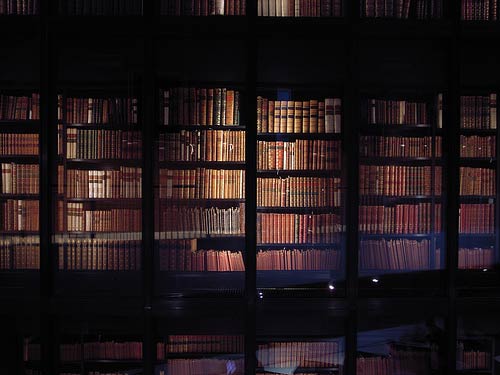
The second venue, presented by me in this series, is the King's Library, known also as the King George III library, currently a part of the British Museum in London. 

Yes, it is not a library sensu stricto as you most certainly can't borrow any books here and I admit I am biased - I visited that once and I was completely enchanted! Let me show you why:


The King's Library was a royal collection of books created by King George III and donated to the nation. A gallery, named after the collection, was built at the British Museum in 1827 to house them. It is the oldest room in the Museum and now home to the permanent exhibition Enlightenment: Discovering the world in the eighteenth century. The exhibition is worth visiting but the library itself is...simply mouthwatering.


The King's Library, a collection of over 60,000 books, was formed by King George III (1760–1820) and given to the nation in 1823 by his son King George IV (who needs old daddy's books?).

When the library was donated there was not enough space to house it in the original British Museum building. This led to the construction of today’s quadrangle building, designed by the architect Sir Robert Smirke (1781–1867).


Originally, it was not intended to be a public room. There were two entrances, one at either end of the room, and 12 reading desks to be used by the library assistants. The central section of the room was meant to consist of 12 columns made from Aberdeen granite. The first four were bought, and are still in place, but the cost of polishing them was so expensive that no more were purchased.


You might wonder what these different sculptures, pottery, globes and mineral samples do in a library. It's all about fashion. During the eighteenth century many wealthy men aspired to  show that they were 'gentlemen'. Their libraries contained not only books, but also artefacts, especially coins and medals. These objects were considered as historical and material evidence that could be interpreted in the light of knowledge from the books in the libraries. George III had these ambitions for his own library as well (apparently in those times even the king felt an urge to prove that he was a gentleman - I approve) and had the money to create one that could cover all areas of knowledge.
 That's why his library contained a large collection of porcelain, bones and fossils, coins and medals. These artifacts were arranged in sequences that related them to the chronologies of written histories.

Have you visited it? Would you like to visit? 


Source: http://www.britishmuseum.org/about_us/the_museums_story/kings_library.aspx

Wednesday, 13 June 2012

Review: Chasing Midnight (Roaring Twenties series 01) by Susan Krinard


Book info:
Book format: paperback, borrowed from my local library
Genre: historical paranormal romance
Target audience: older YA and adults

Synopsis:

Allegra Chase was turned into a vampire by her father’s close friend. It was her only chance to live to the full and have some fun. As a teenager she fell ill (something sounding like a progressive muscular dystrophy) and, abandoned by her posh friends, boyfriend and even her mother, she was left to wait for her death in an empty house with only one servant. Small wonder that, being given the second chance, she took it without regrets and never looked back. Small wonder she doesn’t want to swear allegiance to anybody – be it a vampire, a human or a werewolf, even if it means she is an oddball in New York, considered a traitor or a dissenter. Who cares when you can hound Greenwich Village with your bohemian friends in tow, having the time of your life?

Griffin Durant’s parents and siblings, a whole family of werewolves, were killed by a fire when he was just 14. He was able to save only his little sister, Gemma. Then he was drafted and the First World War left his psyche horribly scarred even though he survived. Now Griffin, a wealthy bachelor living in Long Island NY, wants nothing more than forgetting who and what he is. He steers clear of the local pack or, in fact, any supernatural creatures and tries to find his sister a nice, respectable human husband. However a teenage girl during Roaring Twenties is able to stir trouble as efficiently as any of her contemporary peers – Gemma clearly doesn’t share the narrow outlook of her conservative older brother. She doesn't see a point.


Allegra and Griffin meet and have to cooperate because their friends get into serious trouble. Soon enough it becomes obvious that the disappearance of Margot De Luca, a friend of Allegra and a daughter of a local mafia boss and Malcolm Owen, a poor playwright and her beloved, is a part of a larger scheme of a truly sinister character. What will take to discover who really stands behind it?

What I liked:

At first I thought it was just another vampire novel with a kick-ass heroine but set at the beginning of the 20th century (that’s why the subtitle). After all vampire fiction is as common as muck nowadays. This one was a bit different, though.

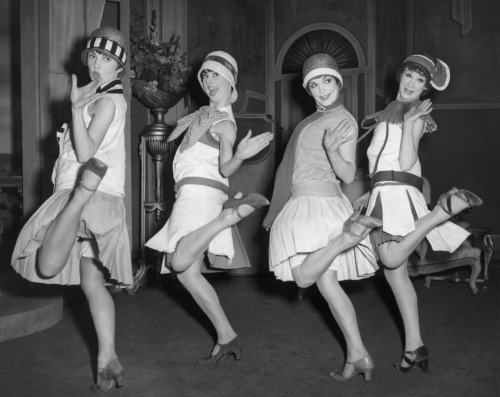
Maybe it was because of the period. Roaring Twenties in the USA (but not only of course) were the era of jazz, prohibition and mafia, the time of flappers, a "new breed" of young Western women who wore short skirts, excessive makeup, bobbed their hair, listened to jazz, drove automobiles (imagine that!) smoked, had casual sex and generally flaunted their disdain for what was then considered acceptable behavior. Allegra is such a flapper even if for slightly different reasons – she finds it an excellent way to express her love for freedom. Yes, she frequents speakeasies ( establishments that illegally sells alcoholic beverages), has a bunch of bohemian human friends and seduces men but only in order to drink their blood. This novel proves that a vampiress doesn’t have to wear black leather, wield a catana (or another sharp weapon) to be considered a kick-ass heroine. The strength of Allegra lies in her psychological make-up – she can think and she uses her brain, she is altruistic up to a point, she knows what she wants and she doesn’t hesitate to get it. Overall the vampires and werewolves of New York fit that period perfectly, bootlegging, fighting among themselves for supremacy, not unlike in any good mafia, or dreaming about the ultimate supremacy.

Psychological veracity was another feature I really appreciated. Allegra and Griffin are dynamic characters. They fall in love almost at first sight but it takes time before they are able to overcome their own limitations and prejudices. Griffin is shocked by Allegra’s free manners and independence, not to mention the fact that werewolves despise vampires. Allegra cannot believe Griffin wants to suppress his natural instincts of a predator and expects the same from his sister. It takes them long to see that they are really very much alike, even longer to trust each other at all. They don’t jump to bed instantly, their relationship rings true and is a pleasure to follow – in my opinion it was a real highlight of the story. I liked little Gemma and her clumsy attempts to imitate Allegra as well, it was a good move to make her play a bigger role than that of a supporting damsel in distress.

The world building was ok – perhaps not very original or especially prominent but still interesting enough to add to the story.

What I didn’t like:

I admit the plot had its weaknesses, especially at the end. In my opinion everything is resolved far too slickly during one bloody showdown; then main leads and their friends get their orange blossom- scented HEA, bad people kill each other, summertime and the livin’ is easy…at least in Long Island.

I was especially surprised when the elders of the pack, who had an excellent opportunity to fleece poor Griffin, willingly reduced their claim by half because…they feared too much money might have a degenerative effect on the werewolves. Excuse me? You are a bunch of brutal mafiosos and all of a sudden there are no greedy people among you? Have you had an epiphany of a sort? It would be far better if Griffin, a rich, clever businessman after all, found a legal loophole or drove a really hard bargain and snatched a part of his money back. But he, poor puppy, was too busy being in love or saving his beloved Allegra and the pack had to take pity on him…a bit too good to be true, don’t you think? Especially that he and the pack were hardly on friendly terms…

That's how Allegra might
look like...indomitable!


I am also not a fan of the cover art. Seriously, the book is about Roaring Twenties, such a colourful period, and instead of flappers dancing charleston or mafia boys shooting each other they put just a blue face with amber eyes and a were in the background...I would never pick it up just because of the cover. Look how many nice, period-related pics I was able to find in a matter of minutes! I think each of them would be better than the original cover!

Final verdict:

It was a really nice surprise – I liked this book better than I thought I would. It was far more intelligent than your ordinary vampires-and-werewolves story and the setting won me over. I recommend it to people who like their  paranormal romance with  historical flavour, some nice backstory and a HEA guaranteed! BTW there are two more books of this series but it seems each of them features a different set of characters so I suppose you can easily read them as stand-alones. I am definitely going to try at least one more!

Monday, 11 June 2012

Review: Child of the Mist (These Highland Hills 01) by Kathleen Morgan


Format: Kindle e-book
Genre: pseudo-historical romance
Target audience: hard to say; officially Christian fiction fans, YA and adults but I would rather say nobody who likes intelligent books. 


Why I read it?

Recently I’ve bought myself a new stainless steel coffee  press. A shiny and expensive one. Similar to this:

I am very happy with my new acquisition. However, it means  I am broke till the end of the month
 – if I get any new books they will be freebies or borrowed or (very unlikely) won. This one is the first of freebies I found on Amazon.com and ‘bought’ out of sheer desperation. Was it a success or a failure? Allegedly you can find good freebie books around, right? RIGHT?

Synopsis:

Harsh Scottish highlands, 1565.

Anne MacGregor is a born healer but some people call her a witch and avoid her at all cost (until they or somebody from their family gets ill of course).  Niall Campbell, a seasoned warrior and the next clan leader, is mourning his young wife who has died during childbirth. Their clans are enemies – they are stealing the cattle from each other, killing people and destroying their chances of survival. Normal borderlands' cheer. Finally Anne's father thinks it cannot continue this way. In order to prevent the worst Anne is handfasted to Niall (handfasting is an ancient Celtic ceremony, a kind of temporary or permanent betrothal or wedding) although she despises him and he claims he is nor ready for another wife. Well, who cares. The welfare of your people, stupid!

Meanwhile there is a traitor in the Campbell clan who would gladly see Naill and Anne dead. While Niall wrestles with his suspicions about a hidden enemy in his clan, Anne's actions do not go unnoticed. Will they start cooperating in time to prevent the murderer? Maybe but only after they bore the readers to death.

What I liked:

I didn’t pay for this one. It was a breeze to read (or rather to leaf through - it was a DNF) so I didn’t lose much time either. Oh and the cover is nice - I like Scotland's landscapes!

What I didn’t like:

Oh dear. Oh dear. Quick, help me. Where is my devil outfit? Here it is – a bit dusty and worse for wear but still fully functional. Let me start then without further delay.

The plot: it was WEAK, childish, predictable and so utterly cliché that I hardly suppressed laughter. Or rather a burst of evil laugh. Nothing, and I mean LITTERALY nothing, was able to surprise me in this book. You can safely assume the main heroine will come unscathed from every predicament, you can bet the male lead will vanquish his enemies sooner or later and you will be perfectly right every single time. ALWAYS. But…where’s the tension? Where’s the interest and the excitement? Where are those scenes which urge you to read on even though you should have stopped long time ago? The answer, I regret to inform you, is : there are no such things. Still, in the Amazon product description you can find such phrase as ‘thrilling suspense’. Suspense, my horns. Perhaps suspenders but still only those boring ones your granddad would wear every day and never wash. Any claim that this book is ‘thrilling’ is nothing but a shameless lie, one of many buzzwords used by marketing specialist to sell you a crappy product. ‘Sleep-inducing’ would be far more appropriate.

The interaction between Anne and Niall consist of one constant love quarrel which drags and drags and gets on your nerves and drags further on. They  act and think like two moody teenagers but they kiss, sure they do, kissing is one of their fav pastimes as Niall is a good kisser and our prissy, chaste Anne loves that despite herself. The result is a romance based on mutual lust which nevertheless is supposed to remain superficially chaste: a weird combination which I presume doesn’t satisfy either any sensible Christian fiction fan or any ‘normal’ romance reader (and I am neither so…). It remains me of one of these ‘recycled’ virgins – people who have their marriage officially annulled by the Catholic church no matter whether it has been consumed or not. Quite a leap of faith, don't you think?

Of course there is a third man to their party, Iain Campbell, who fancies Anne instantly and cannot get over it (rolleyes) no matter what. I can’t remember how many times in my reviews I’ve emphasized the fact that I hate love triangles with a virulent, sulphur-scented hatred. This one was not only bad, it was also completely unbelievable and tepid to the extreme.

 The identity of the main baddie became transparent very early on; still the author wants me to believe poor Niall, a braw clever Scotsman, has been as lost as a child in the mist (pun intended) till the very end and his brilliant fiancée fared just slightly better (but half of the time she is too sulky to reveal the truth). I really regretted she survived her burning – she deserved it more than anyone. In fact Anne is a perfect example of a ‘too-stupid-to-live’ female lead. How many times does it take to be almost killed before you learn, my lady?

The novel is written in a very juvenile style. I would compare it to a work of not especially bright high school sophomore who is dreaming of being an author of one of these steamy erotica novels (rrrrawr!) but she is unable to pluck up her courage to write one really good sex scene because she is a Christian (miserere mei Deus!) and she wants to keep it DECENT. As a result she is like FOREVER running in circles and never getting to the point. Adorable - a perfect torture device.

Finally…it is supposed to be a historical novel. Ehem…the author makes her characters speak in  fictitious Scottish  (“verra well, my wee bonny lass, verra well! Just give me a bairn every year and I’ll be verra happy!” “Mayhap, just mayhap m'lord!”) but she forgets to change their way of thinking and sometimes their vocabulary as well. I laughed a lot when, after a skirmish, Anne is examining her beloved Niall (he was wounded) and announces: "the arrow didn't damage any vital organs..." Vital organs? ER or Doctor House anybody? But wait, it is supposed to be 16th century Scotland, right? 

Houston, we have a problem...

Final verdict:

I suppose this book was born as a steamy romance and then it's undergone some bowdlerization and was masqueraded as a Christian fiction novel in order to suit the market needs. Woohoo – the idea straight from hell!  Now seriously: it was bad – very bad indeed. A perfect example of a book that shouldn’t have existed. In order to detoxicate my system I found a nice scientific paper: Numerical solution of seven-order Sawada-Kotara equations by homotopy perturbation method by M. Ghasemi , A. Azizi and M. Fardi. Solitary-wave solution...hmmm. Now I will be all right.


Thursday, 7 June 2012

The Most Fascinating Libraries of the World 01 - Trinity College Library in Dublin

I've visited a friend's blog recently and I was literary blown over by a picture of one of the most fascinating libraries around - Trinity College Library in Dublin, Ireland. It also gave me an idea of a series of posts about the best, the most beautiful, the strangest and the biggest libraries there are. The libraries that can make you drool, where you would be able to spend an indefinite period of time without noticing, where you would like to live and die till the end of the world (if they only served coffee and cake). Perhaps you can't visit them all  but what is the Internet for? I'll try to illustrate my posts as well as it is only possible, providing, I hope, a nice tour for every visitor around. Enjoy!

Let me start with the library which provided the very idea - 
Trinity College Library in Dublin.


 It is the largest library in Ireland and, as a "copyright library", it has legal deposit rights for material published in the Republic of Ireland; it is also the only Irish library to hold such rights for the United Kingdom.The Library proper occupies several buildings, four of which are on the campus of Trinity College itself and another at St. James's Hospital, Dublin.The Library’s history dates back to the establishment of the College in 1592.


What do you reckon? Worth visiting? ;)
More info can be found on site of the library: http://www.tcd.ie/Library/

Tuesday, 5 June 2012

Review: Phantom by Jo Nesbo (Harry Hole 09)

Book info:
Form: Kindle format
Genre: thriller, crime mystery
Target audience: adults


"My name's Harry and I come from Hong Kong. Where is she?"

The man arched an eyebrow. "The Harry?"

"Since it has been one of Norway's least trendy names for the last fifty years, we can probably assume it is."


Synopsis:

After three years of more or less quiet and healthy life Harry Hole returns to Oslo from his exile in Hong-Kong. Of course  he starts having a lot of trouble immediately. Is it bad? Not necessarily – he loves it all: issues, being miserable, chasing after criminals, fighting his own demons and flesh-and-blood opponents as well, deduction and crime-solving, more issues, being more miserable, drinking Jim Beam… 

Anyway his main problem this time revolves around the premature and rather violent death of a young drug dealer and addict called Gusto Hanssen. He was shot – a crime like many others, the local cops don't care a fig about such victims. The problem is that Gusto was a partner in crime and a close friend of Oleg, the son of Harry's most serious love interest, Rakel. Oleg, now aged 18 and a drug fiend himself, is remanded in custody, accused of murdering his associate; the outlook for him is rather bleak as DNA tests show clearly he was present at the crime scene. That’s why Harry, although no longer a young, energetic police officer, wants to investigate that murder, apparently already solved, so much. He thinks he owes Oleg for not being there for him all those years. After all Harry has always been a kind of father-figure to the boy and he doesn’t feel like deserting him and his mother in dire straits. Soon Harry finds the whole case a real challenge – he is overwhelmed with the number of possible suspects; he needs more evidence and evidence is scarce. Is somebody actively hindering his investigation?

Before he faces the truth Harry will have to unravel the current drug-scene to find out who is the man with the nick of ‘Phantom’ both Gusto and Oleg were working for. He’ll find out there is a new synthetic drug around, called "violin", similar to heroin but far more potent, playing hellish havoc with Oslo's junkie population. His investigation will reveal police and local-government corruption and (nothing new, really) it will become increasingly dangerous to all interested parties. Will Hole outsmart his opponents and survive once again?

What I liked:

First let me tell you that I have read all Harry Hole novels available so far (here you can find all Nesbo's books in order if you are curious) and it seems to me ‘Phantom’ is one of the best, if not the best, of all. It is a great mix – an interesting detective story with acute social commentary on the downside of drug abuse and the clash between new wealth and old values. Even if you don’t live in Norway (I don’t) you can relate. Mind you the author never gets sentimental which is great.

Nesbo adopts an interesting handful of P.O.V.s, presenting not only Gusto's dying thoughts along with Harry's real-time hectic investigation but also some insight into the thoughts of a female rat (sic!). In fact the rat opens the whole novel and then resurfaces at the beginning of each of the novel's five sections. I am not sure a rat can think as coherently and clearly as it was written here but it was a nice, original idea anyway, adding to already a very dynamic narrative. And it was fun.

I'm usually not a person who can pick spot-on the identity of a murderer in a decent whodunit (I think I am too stupid or too lazy or both) so small wonder I missed nearly every clue and certainly did not see the ending coming (one big twist, believe me!). Still it was one heck of a ride, rollercoaster as usual, nothing less, which I enjoyed immensely. Be warned: this book is a compulsive page-turner, reading from time to time like Jason Bourne’s adventures.

However the biggest asset of this series is, in my humble opinion, the psychological veracity and dynamics of both baddies and protagonists. All of them are flawed, all of them have good and bad days, ups and downs, almost like in real life. The baddies tend to be smart, charming and handsome, you can’t help pitying some of them and our lonely ex-detective has to perform top notch to outsmart them in time. Harry also changes as he is plagued by bad memories and different ‘ghosts’ because, let’s face it, his ‘job’ is not easy and hardly ever done. It's only too normal that he breaks down regularly (who wouldn’t), drinking or taking drugs. It is also a reason why it is great to start reading about him from the very beginning although Phantom, like other parts featuring Hole, can be easily a stand-alone book. Still it is so very nice to find some of the plot themes from the previous books coming together.

What I didn’t like:

I admit the book was a tiny little bit overwritten. I was especially surprised that dying took poor Gusto so long. He was an addict on forced withdrawal, mortally wounded because shot more than once from a very close distance, lying in a horrible junkie den, bleeding heavily...and he actually managed to tell his part of the story to the very end in a lucid way. This was probably the weakest part of this book although I did see the point of Gusto’s narrative. Oh well, it is just a fictional story, isn’t it? Still a brave, motivated editor, not afraid of cutting out this or that, could have made this a tighter, more edgy novel.

My second complaint concerns Harry himself. Sometimes he acts as if he was immortal and he knew it (and his enemies not, ha ha, let surprise the b******ds one more time!). Unlike ordinary, mortal folk he doesn’t care much about his own health and safety: he goes to meetings with a possibly deadly outcome almost unprepared, he hardly ever eats or sleeps. After a while it starts being a bit silly. In ‘Phantom’ our brave ex-detective sews up his own partially cut throat and chin using a simple, non-sterilized needle and a black thread (don’t try that at home) and, instead of visiting a friendly doctor or at least a voluptuous nurse soon afterwards to have it done properly, he goes out to dig out a corpse from a grave. Hey mister, have you ever heard of sepsis? Oh, sorry, you are immortal, I forgot…Then he turns off half of the city’s power supply instantly and mind you, he does it with just one single phone call. A regular Superman, don’t you think? I almost crooned ‘my hero!’ I wish I could solve such mundane (and far less complicated) problems as a mistake in an invoice or an outstanding payment that way - one phone call and it is done. No such luck so far.

Finally I am not a big fan of the cover art - it seems too bland and generic. Not hearing anything about the book itself I would hardly glance at it and move on.

Final verdict:

Despite  minor shortcomings I liked this novel very much. Still I must warn you the author left deliberately some significant loose ends (it is, in fact, a steep, sharp cliffie, sharper than rat’s teeth, be warned). It is really hard to predict where Harry’s going from here but if there is a new book available next year, I am going to preorder it for sure. Just for the heck of it let me predict how the series will end. In other words…

How to kill Harry Hole?

It is really simple. No need of guns, sophisticated torture devices, madmen or poison. In fact the more obstacles you throw his way, the stronger Harry is. However, try keeping him satisfied and happy in a fluffy-warm, fully functional family straight from a soap opera for three months and he will wilt by the excess of happiness like a plant exposed too long to direct sunlight. He might kick the bucked even sooner, let’s say after a mere month, if his beloved Rakel and Oleg join him there - it’s enough Oleg whispers ‘dad’ every day and Rakel hugs him tightly. ;)

Monday, 4 June 2012

Musical Monday 4th of June


Welcome to Musical Monday! 

How many songs you know combine great music with intelligent, sensible lyrics which can teach something even the most obtuse student? I might be wrong but in my humble opinon the number is definitely finite. However I am happy to present this week one of such rare songs by Florence and the Machine. It should be called "My Chemical Romance" but its official title is 'Strangeness and  Charm' - and that's the only flaw. Even sworn, die-hard humanists might start loving science after listening to it! Enjoy!


Hydrogen in our veins, it cannot hold itself, my blood is burning
And the pressure in our bodies, that echoes up above, it is exploding
And our particles that burn, it is all because they yearn for each other
And although we stick together, it seems that we are estranging one another

So, Feel it on me love
Feel it on me love
Feel it on me love
(Strangeness and Charm)

See it on me love
See it on me love
See it on me love
(Strangeness and Charm)

And atom to atom oh can you feel it on me love and
A pattern to pattern oh can you see it on me love
Atom to atom oh what's the matter with me love

Strangeness and Charm

The static from your arms, it is a catalyst
You're a chemical that burns, there is nothing like this
It's the purest element, but it's so volatile
An equation heaven sent, a drug for angels

Strangeness and Charm

Feel it on me love
Feel it on me love
Feel it on me love
(Strangeness and Charm)

See it on me love
See it on me love
See it on me love
(Strangeness and Charm)
[ Lyrics from: http://www.lyricsmode.com/lyrics/f/florence_and_the_machine/strangeness_and_charm.html ]
And atom to atom oh can you feel it on me love and
A pattern to pattern oh can you see it on me love
Atom to atom oh what's the matter with me love

Strangeness and Charm

The static from your arms, it is a catalyst
You're a chemical that burns, there is nothing like this
It's the purest element, but it's so volatile
An equation heaven sent, a drug for angels

Strangeness and Charm
Yeahhhhh so, Jump
Strangeness and Charm
Yeahhhhh so, Jump
Strangeness and Charm
Yeahhhhh so, Jump
Strangeness and Charm 
Yeahhhhh, oh yeah
Strangeness and Charm

The static from your arms, it is a catalyst
You're a chemical that burns, there is nothing like this
It's the purest element, but it's so volatile
An equation heaven sent, a drug for angels

Feel it on me love
Feel it on me love
Feel it on me love
(Strangeness and Charm)

See it on me love
See it on me love
See it on me love
(Strangeness and Charm)

Feel it on me love
Feel it on me love
Feel it on me love
(Strangeness and Charm)

See it on me love
See it on me love
See it on me love
(Strangeness and Charm)

Oh, Oh, Down, Down down down
Ha
---
Now something about hydrogen, just to prove how educational these lyrics really are:


Hydrogen is found all throughout the universe. It is very flammable and is also found in most life forms, especially plants. We consume daily doses of hydrogen through water and food.
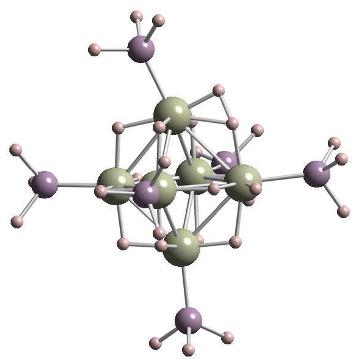
It is the first element in Group 1 of the periodic table. Ordinary hydrogen gas is made up of diatomic molecules (H2) that react with oxygen to form water (H2O) and hydrogen peroxide (H2O2), usually as a result of combustion. A jet of hydrogen burns in air with a very hot blue flame. The flame produced by a mixture of oxygen and hydrogen gases (as in the oxyhydrogen blowpipe) is extremely hot and is used in welding and to melt quartz and certain glasses. Hydrogen gas must be used with caution because it is highly flammable; it forms easily ignited explosive mixtures with oxygen or with air (because of the oxygen in the air). At high temperatures hydrogen is a chemically active mixture of monohydrogen (atomic hydrogen) and the normal diatomic hydrogen.
Hydrogen has a great affinity for oxygen and is a powerful reducing agent.

It is theoretically possible for hydrogen to exhibit the properties of a metal, such as electrical conductivity. Although researchers have been able to squeeze hydrogen into liquid and crystalline solid states through applications of intense heat, cold, and pressure, the metallic form eluded them until 1996. By compressing liquid hydrogen to nearly 2 million atmospheres pressure and a temperature of 4,400K, a team at the Lawrence Livermore National Laboratory created metallic hydrogen for a millionth of a second. While there is no practical application for the accomplishment, proof of the existence of a metallic form of hydrogen may have implications for theories of how Jupiter's magnetic field is produced.


How easier it is to remember all this info having the song lyrics in mind...

My source: http://www.infoplease.com/ce6/sci/A0858720.html#ixzz1wS1kKGMu