


Saturday, 14 April 2012

Thursday, 12 April 2012
Mini review: Cry Wolf (Alpha and Omega series 01) by Patricia Briggs
Book info:

Form: e-book pdf format
Genre: Urban Fantasy with some romance in it
Target audience: adults
Synopsis:
Anna was
turned into a werewolf against her will and her life
has become nightmarish ever since. She had to stop her beloved music studies.
Her new pack’s Alpha made of her a sex slave - available to anybody at his every whim. Small wonder Anna tried to
commit suicide. Still it is hard to kill yourself when you are one strong
werewolf. Her status in the pack has never been fully explained to her – she is
an Omega, so allegedly on the bottom of the pole, but she is hardly submissive.
Other werewolves are drawn to her but they’ve never cared enough to protect her
from the brutish Alpha or her sadistic boyfriend.
Finally, when some young weres start to disappear Anna has had enough. She is the only pack member who decides to contact Bran, an uber-wolf, whose status of Marrok and supreme powers allow to supervise all American packs around. Marrok sends his younger son, Charles Cornick, to deal with the situation and kill who needs killing. Charles is a very powerful, old werewolf, his father’s executioner and second in command. He insists that not only is Anna his mate, but she is also a rare and valued creature every Alpha would kill to have in their pack. Anna's newfound inner strength and calming presence will prove invaluable as she and Charles go on the hunt in search of a rogue werewolf- a creature bound in magic so dark that it could threaten all of the pack.
Finally, when some young weres start to disappear Anna has had enough. She is the only pack member who decides to contact Bran, an uber-wolf, whose status of Marrok and supreme powers allow to supervise all American packs around. Marrok sends his younger son, Charles Cornick, to deal with the situation and kill who needs killing. Charles is a very powerful, old werewolf, his father’s executioner and second in command. He insists that not only is Anna his mate, but she is also a rare and valued creature every Alpha would kill to have in their pack. Anna's newfound inner strength and calming presence will prove invaluable as she and Charles go on the hunt in search of a rogue werewolf- a creature bound in magic so dark that it could threaten all of the pack.
What I liked:
Now I see why this
series (and the related Mercy Thompson one) sticks out from other UF books in a
positive way. The author is simply not afraid to take difficult decisions and
risks. How many other UF novels feature a main heroine who’s been repeatedly
raped by the members of her own pack? How many other male leads border insanity
because they’ve been forced to kill other werewolves against their nature by their not-so-evil father? I am properly awed and I do appreciate such original moves.
Please do not stop!
The second great point:
the happy couple must work on their relationship. It seems so simple and so
natural but in fiction is anything but; in too many books he and she just court
(shortly) and they go to bed and their efforts to make sparkles fly are limited
to that act. How very unrealistic.
Finally the secondary characters. They are flawed, they are great, they are funny and a real joy to get acquainted with. Bran Cornick, find yourself another mate asap!
What I didn’t like:
My carping as usual is
stemming from the fact that both Anna and Charles are so divinely
beautiful/handsome. Honestly why people don’t queue and beg to be turned into
werewolves if it means almost eternal youth and health? Why don’t they pay
astronomical sums of money for the privilege? Why oh why? Just use your
imagination, dear vampires and werewolves, capitalize on your potential...;p
and don’t tell me it is a secret, such secrets always resurface, look at the
elves…
Oh and the cover. I am not impressed. Is it a wolf or a fox? And this girl's face...pouting and somehow funny!
Final verdict:
I liked this Ms. Brigg’s
book well enough to continue reading her novels. Mercy Thompson, you are next.
Tuesday, 10 April 2012
Review: Devil’s Punch (Corine Solomon #04) by Ann Aguirre
Book info:

Form: e-book, Kindle format
Genre: Urban fantasy with some romantic elements
Target audience: adults
Synopsis:
It is the fourth part
of a series – you can read it as a stand-alone (there is plenty of info from previous books mentioned in the plot) but still you’ll
be missing many details so I don't recommend starting with this one.
Chance has moved to
Mexico to be with Corine Solomon, his ex-girlfriend. Although their
relationship is progressing slowly toward the right direction they simply lack
enough time to make it work. Soon after they settled down and bought some
furniture Corine gets a
note saying that her best friend, Shannon, might have been captured. Being a
practitioner of arcane arts Corine knows immediately that something paranormal
must be involved – after all touching any object she can ‘see’ its history and
the stories behind the people who handled it so she can ‘read’ much more than
just ink on paper. She also knows that when demons are involved there is hardly
anybody else she can turn to.
Shannon, an
orphan girl and a very special friend, is also somebody who has been suffering
because one of Corine’s spells went wrong; that’s why our witch is prepared to
put everything on hold to save her. She even drags along Chance and Butch, the
wonderful chihuahua which understand American English and can communicate using
Scrabble tiles. The rescue mission will take them straight to Sheol (a Hebrew
name for Hell) where Corine will have to deal with thousands of demons and
demon-like entities, especially one very old, very angry queen. And rule them
or perish. Is she going to return alive? How much will it cost her personally?
What will she discover this time about her family and her lover?
What I
liked:
Corine
Solomon is a friend every boy and girl would like to have by their side when
the chips are seriously down. She is truly unstoppable. Would you go to Hell to
save your best buddy? Honestly, would you? Plenty of people would balk at the very idea
but not Corrie. She is so motivated that she can persuade Chance to follow and she befriends her demonic guide, Greydusk, who joins her side. I enjoyed the fact that such an aspect of Corine's personality was so emphasised here – a loyal friend to the very end,
that’s my girl.
Her
character changed radically as well but it was explained and justified in a
logical way. I admit the influence of a certain demonic queen was something
Corine and Chance needed the most, maybe especially Chance who, in previous
novels, treated his ex-girlfriend in a slightly condescending manner, getting
on my nerves from time to time. Seriously dude, if you are so supreme, beautiful and great
why are you still hanging around? Anyway here Chance gets to know another Corine and it serves him right.
The setting
of this installment is rather different from the previous three books as it
takes place mostly in Sheol, where demons dwell and rule. I found the
world building rather original although from time to time I got strange flashes
from the old Dune film (1984, no less, directed by David Lynch), as if the author watched it while writing. Well, such a
radical change of scenery is a very bold move and I praise Ms. Aguirre for not
being afraid of taking such a risk. However, I would be more than ok if the
book showed us a bit more of Mexican/ Tex-Mex lifestyle.
What I
didn’t like:
After a
while (like in the second half of the book, maybe even a tad earlier) I felt as
if I was reading a screenplay for a computer game – I mean too many things
happening too fast to be registered properly, the ending being mostly about who
would be able to kill their opponent more quickly and escape. Or not.. The
situation with the demons deteriorated very quickly but no surprises here, you
deal with bad, big devious devils after all, not a bunch of fluffy bunnies.
However, I would prefer a closer look at Sheol and its castes so more halcyon
days for Corine and her team, more bonding and planning, more fun.
Also most
of secondary characters from the previous parts were either completely absent
(Kel) or just hovered on the outskirts of the main plot (Jesse). I know,
Greydusk was one fine demonic specimen and queen Ninlil was simply devilicious
but somehow I felt they couldn’t make up for all these absentees. Not really.
My ramblings concerning the future of this
series (please highlight and read only if you don’t mind major spoilers, have
read the book or you like ramblings too much for your own good).
The ending
was a big surprise – Chance’s sacrificial suicide was really a punch in the
gut. Ok, ding-dong-dell, the main male lead is dead. What can be done in the
next installment? There are basically two ways of dealing with such a
situation.
First: the
author resurrects Chance. I could see the foreshadowing of such a move-
Chance’s last words promise Corine he wouldn’t leave her even after death.
Chance was a demi-god, the son of a Japanese luck deity so I wouldn’t
be surprised if there were different rules concerning such beings, like a
second go at life. Of course after meeting the right conditions and providing an appropriate payment I suppose -
it must be logical and coherent with the rest of the story and so far you got
nothing for nothing here, like in real world.
There have been fictional
characters’ resurrections which fell flat to say the least of it- one of them
was committed by Chloe Neil in her Chicagoland Vampires series (Ethan the
vampire was revived by a failed/incomplete spell after spending two solid
months in an urn in the form of dust; mind you he emerged as a fully functional,
sentient being, even capable of taking to bed his beloved Merit – nuh-huh, not buying it, sorry). To sum up: in my humble opinion
it can be done in a satisfactorily way but I would recommend proceeding with
caution.
Second:
Chance is hovering around as a ghost or he is born in a
different body. Hmm…I admit the second option would be very interesting indeed
but I suppose it would exclude any sexual relationship between Corine and the
new reincarnated Chance. No one would dare to make your heroine a baby
snatcher. That’s why I am willing to place my bet on solution number one.
We’ll see next year (hopefully).
Final
verdict.
The next
part of this series, Agave Kiss, will be released in March 2013. I hope it will
make Devil’s Punch more understandable, explaining several issues in a good way
and bringing all the good stuff from previous installments back. I believe Ms.
Aguirre is up to the task.
Saturday, 7 April 2012

Friday, 6 April 2012
Review: The Lighthouse Keeper (Fyrvaktaren in the original version) by Camilla Läckberg
I had wanted to read something written by Camilla Läckberg for some time and finally I found one of her novels in the sales – as I
needed some entertainment in
hospital I decided this one would do ; p - it is always good to know that some people have it worse than you. To my utter surprise afterwards I found out there is no English translation
available yet – even on Amazon.com all I could find was an audiobook in…Danish.
Go figure. Still there are novels by Läckberg published in English and other languages as well so
I decided to write a review anyway – you can get a taste of her style and then
you might want to read her other books. Or not.

Book info:
Form: paperback, 494 pages
Target audience: adults
Genre: crime mystery
Synopsis (from the site of the author )
Police inspector Patrik Hedström has just returned to work after a lengthy sick leave. He has tried to have a good rest, while also looking after his wife Erica and their prematurely born twins. He barely has time to step inside the office before he is thrown into a new investigation. A man has been found murdered in his flat, shot through the back of his head. The victim is Mats Sverin, the local council’s financial director, a thoroughly friendly and well-liked person. Nobody has a bad word to say about him. Together with his colleagues, Patrik begins to map out Mats’s entire life, which contains more secrets than anyone could ever have suspected.
Why was he in such a rush to leave Gothenburg to return to his home town of Fjällbacka? What part did he play in the project involving the old bath hotel being transformed into a spa? And is it pure coincidence that Mats’s childhood sweetheart Annie has also returned? They have not been in touch for several years, but now she and her son are living on the island of Gråskär outside of Fjällbacka – a place where her family has resided for generations. Even Gråskär has its share of secrets and is a place that has always been surrounded by sinister rumours. They say that the island is haunted by the dead and that they have something to tell the living…
What I liked:
First of all Ms Läckberg mixes one storyline from the past with a few from the present. The storyline from the past takes place on a small, isolated island called Gråskär not far from Fjällbacka. According to the legend people who die on that tiny island with a lighthouse never really leave it. Plenty of characters will have to (or will want to) visit Gråskär during the narration – who will stay there forever?
I liked the past storyline even better than the present ones – it had a great atmosphere of doom and gloom, with a dash of supernatural perfectly balanced with the harsh reality. The failed marriage of Emelie was such a great illustration of the famous saying: ‘be careful what you wish for…’ Its ending was something that left me a bit puzzled but, taking everything into account, perhaps it wasn’t such a strange outcome. I’m not sure how long I would suffer such a treatment Emelie got from her husband (24 hours? less?), small wonder she went…mad (?).
Of course you might argue that those were different times ( and you would be perfectly right - 19th century, no laughing matter when it comes to women's independence) but Lackberg shows in her book that even nowadays a lot of women feel they have to put up with abuse and violence no matter what. The criminal mystery happening in the present times was skillfully executed but I liked the most these everyday life details the author added to her narration here and there. They made the novel somehow more scary than any amount of gore or violence. One thing is sure: the author knows how to describe loneliness, despair and a sense of loss. Sometimes some tiny things like a cup of freshly brewed coffee who is left untouched because there was nobody to drink it sent real shivers down my spine. Overall the book ended in a really heartrending way.
Finally I appreciated the occasional humorous remarks, especially when the author zinged her own partner (but in a very sympathetic way)! The translator provided enough info in the footnotes to make it understandable even for foreign readers – thank you very much, dear translator!
The cover is great. I love the colours.
What I didn’t like:
Female characters; almost all of them (maybe apart from Viviane but she is not the main lead so we meet her just from time to time) were presented as victims who need rescuing, not survivors most women really are. It sounded a bit anachronistic. Also this book is not for people who want to improve their mood reading something cheerful and sweet. Like in real life a lot of bad things happen here sometimes without any reason – innocent people get murdered, different villains get away with their ugly deeds and children die prematurely in a car accident. If you are ok with such a bleak/realistic outlook, your inner Goth/pessimist will feel satisfied with this story. Just prepare some chocolate and one of these fluffy, cheesy, pinkish romances with improbable HEAs beforehand in case you feel overwhelmed by a bout of depression.
Final verdict:
A very nice, original crime mystery with some paranormal/psychological elements (but without vampires or werewolves) that enriches the whole whodunit aspect. If you feel you daily horror quota haven't been met lately do read this one.
I would like to thank rameau and Blodeuedd for their help in translating the title from Swedish.
Wednesday, 4 April 2012
Review: The Dragon’s Harp by Rachael Pruitt (Era of Dragon’s: The Lost Tales of Gwenhwyfar series #01)
This book was provided by the author's publisher via my lady Blodeuedd's excellent blog in return for an honest review. I haven't been compensated for writing the said review in any way and the fact that the book came free of charge didn't influence me either.

Book info:
Format: e-book, Kindle
Genre: historical fantasy
Target audience: older YA and adults
Synopsis:
The novel is set in northern Wales during the 5th century CE and its narration follows the coming of age of a young Ordovici princess of Dinas Emrys, Gwenhwyfar. It is the first person narration – elderly Gwen tells the story of her life to a serving girl. Yes, she is the future wife of Arthur and Merlin/Emrys is actually her uncle but she is also a small, unruly, stubborn girl, much loved and surrounded by her family. She grows up in very uncertain times so soon enough must face harsh reality of war, plunder, murders, rape and betrayal. Will she find her inner strength to fight for her integrity and for those she loves? Will she dare to develop her unusual gifts to oppose dark, greedy druids and witches? Will Merlin, forever busy abroad, allegedly tutoring an important young princeling in the South, finally find time to help her?
What I liked:
Firstly and foremostly I loved the fact that the author really, truly did her homework concerning the period she wrote about. Mind you she did it with passion and it was felt. The narration rang true, the life of little Gwenhwyfar seemed as historically correct as it was only possible - I couldn’t help smiling e.g. when I stumbled on the Chi Ro symbol early Christians used most likely instead of a crucifix or a cross. 5th century Wales is presented as a real place, without idealizing the living conditions or problems its inhabitants faced. I am a sucker for good historical fiction, firmly based on the remnants and relicts from the appropriate era and here it was clear Ms Pruitt is a real history junkie who digs deep and is creative with her findings! It was a pleasure!
I liked the red dragon, called Cymry (guess why such name was given to it ;p) which I suppose is a nice symbol of the magical aspect of the book. It wasn’t overdone but impressive enough, more like a natural magic than something flashy and loud. Bad druids and good druids seemed a very sensible idea –after all nobody said Julius Caesar, who gave them a very bad opinion in bulk writing his memoirs, was the most objective source of knowledge. They were his enemies and he was clearly afraid of them.
I liked how Celtic women were made almost as powerful as their husbands if not actually more dangerous than any warrior. Gwen, just a child and then a teen, is presented as a kick-ass princess, not some whimpering bimbo or a shallow twit whose flirtatious was led to the destruction of Camelot.; her Grandma, Rhiannon, is actually even better! Also Sari, a slave girl from an Arabic country turned seer, and Hrwych, Gwen’s nurse and friend, were a very nice addition!
Now something about the baddies: they were really good as well, both men and women who, in the end, happened to be one big ‘loving’ family! The main villain, Maelgwyn, Gwen’s other uncle, is handsome and rotten to the core – what a bliss!! – but his daughter is actually even better (or rather worse) a piece of art, nothing less, and of course as cute as a button! I am looking forward to meeting them again! Mind you it is a novel written clearly with a more mature audience in mind – not a fairy tale for children. There is one especially disturbing scene of an attempted rape (the victim being a minor) and then the would-be rapist is punished in a really ugly, brutal way – consider yourself warned.
Finally the cover art is lovely! Those red curls and this dagger!
What I didn’t like:
At first I couldn’t relate to Gwen. Not really. Only later, when she stopped behaving like a spoiled brat I warmed to her a bit. I think Lleu, her father’s ward and her main squeeze in this part, was a far more interesting, although secondary character. Well, it might change. I started reading this novel not being aware that it is a beginning of a series – there will be four more books or so I found out! Now I want more! Is there any justice? None!
Final verdict:
A charming story, very unlike any novel based on Arthurian cycle I’ve read so far. I only hope the whole series will be as original and entertaining till the very end. Writing all five parts on the same high level – that’s a real challenge! I recommend it to readers who like Arthurian cycle stories but told in a more contemporary and historical way, without completely inadequate knights in shining armours and damsels in distress and a heavy dress (thus the distress I suppose).
Sunday, 1 April 2012
The Wonderful World of Happily Ever After
April Fool's Day deserves a special treat so here you go - I am pround and happy to host today Blodeuedd and present our discussion about HEA in literature and in real life. Enjoy!

Blodeuedd reviews books (everything from HR, PNR to fantasy and historical fiction) on Book Girl of Mur-y-Castell. She is a sucker for a happy ending and has a weak spot for Jane Austen variations. Even if fantasy is her one true love, and the one love where the happy ending can be thrown out of the window (but don’t tell anyone ;)
Blodeuedd reviews books (everything from HR, PNR to fantasy and historical fiction) on Book Girl of Mur-y-Castell. She is a sucker for a happy ending and has a weak spot for Jane Austen variations. Even if fantasy is her one true love, and the one love where the happy ending can be thrown out of the window (but don’t tell anyone ;)

 Anachronist (yes, that's me) is just helping Blodeuedd in a capacity of a poltergeist while she is not busy writing her own blog (Books As Portable Pieces of Thoughts, I know, the name is far too long but somehow it seemed a good idea back then). She is a cynic when it comes to romantic endings but, after all,some balance must be kept or the Sun will fall from the sky ;)

Weclome to the Wonderful World of Happily Ever After
by Blodeuedd and Anachronist
B: Now where to start? I love HEAs, how can you not love them. The prince gets the poor servant girl and the list continues …
A: Courtesan would be better than the servant girl you know...far more outlandish so to speak.
B: I actually took that away cos I fear my own ….
A: Prejudice?
B. Yeah, prejudice, came into play. Come on! A duke should never marry a courtesan! Oh I am a horrrible HEA lover.
A: HEA shouldn’t be limited, you know, and there are plenty of books about whores getting a nice HEA, male or female, no matter.
B. Now who is teaching who here? I knew that there is as big HEA lover inside you.
A: Not at all, just making a pertinent remark. You can edit that later ;) *snickering*
B. Edit, nah, this stays as it is, it’s perfect.
A: I hate HEAs all the same and nah, it is not perfect without at least two edits ;p
B: Back to the courtesan, I do love when the whore lives happily ever after, but that little voice inside of me tells that he can never take his whore to town cos the TON would laugh their asses off.
A: Ton or not people tend to be sensible - if you marry a whore you get no connections, usually no money and no political clout so why bother? You just keep paying her or him and get what you want anyway ;)
B. No, no! That is horrible. He should marry his whore, he should not care about what others thing if he truly is in love. He should live in a little cottage with her and cast his title aside

A: LOLOLOLOLOL dear me, you know there was just one king who actually more or less followed your instructions, my lady. He was called Edward, he married Mrs Simpson, an American divorcee, and the rest is the silence. Nobody else dared be as stupid as him. Still they didn’t live in a cottage.
B: Then I blame the Swedes, I learnt of the history of King Erik and Karin Månsdotter in school. The King married a soldier’s daughter...of course that ended badly too. They were put in prison by his brothers and then he was poisoned and she spent the rest of her life in Finland. Still he married for love *coughs lust it was surely lust but who cares*

 King Erik XIV and Karin Månsdotter (and someone who is not happy at all)
B. True, it always ends badly. Now I am sad, where are the HEAs?!
B: Oh you are wicked ;) But bad books, oh no, you mean awesome books! A book should have a HEA. Everything should end with kisses and roses and no one should care about the ton or anything else. I love them, and I will always love them. But in real life, yeah, no HEAs, I did not go for the guy with the fancy car who would take me away. I went where my heart told me to go...still that is a HEA.
A: I think you hit the nail on its head. A good HEA - yes, such a thing exist - should be close to reality, so no princes, no roses but it doesn’t exclude happiness either. Just a different form of happiness I suppose.
B. But I love princes! Still you are right, I would love other sorts of romances, books where the Maid finds love with the valet and raises 6 kids in a cottage. It does not always have to be dukes and princes.
A: Ah, you love also these little cottages, don’t you? I suppose a big fat castle would be fine as well but...not for a maid. In other words, unless a maid transforms itself into a princess she is 100% better off with that valet in a simple hut. The transformation process - here lies the main difficulty. Some authors tend to forget that it takes a lot of pain and effort, it is a hell of give-and-take so you must lose something in order to gain something else and you are never sure if that ‘something else’ will be actually better.
B. *interrupts and forgets what that her point was*.
A: I just wanted to say that I am becoming a bit too verbose so back right to you :)
B: I think we have a lovely post right here. But I will say, we do love HEAs and no suffering and all that, because we want the fantasy. We do not want to know about the struggle cos we all struggle in real life. So for once it is nice to sink down and read a book where everything works out and no one is worried about money, or if they can take home their whore for dinner ;)
A: That’s rather an acute remark you know. We do want the impossible even if we are aware it is just a pie in the sky...
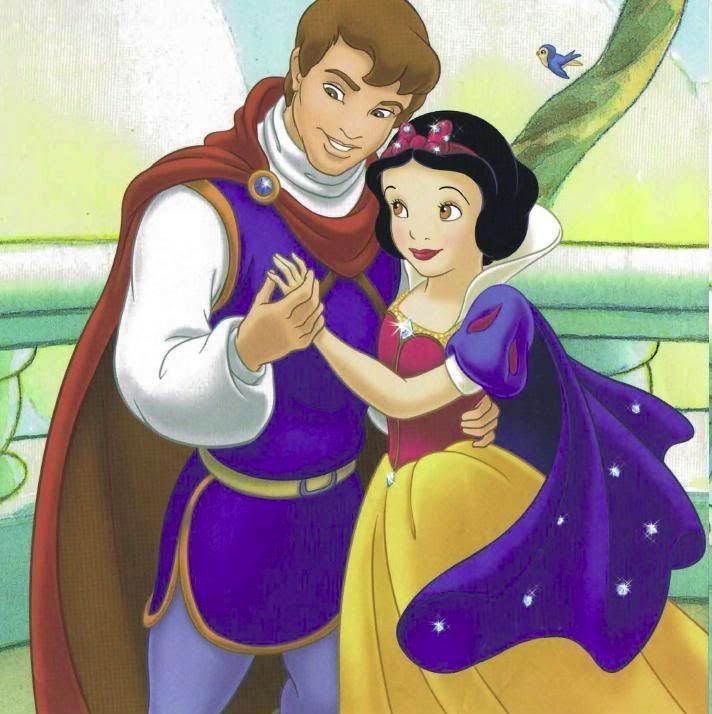
A: This guy is a bit overweight...I bet he doesn’t wash his teeth...and you know him how long exactly? You...don’t know him at all? Yeah...the best of luck, my princess! Mwuahahahahahaha!
Subscribe to:
Posts (Atom)