Monday, 16 January 2012

Musical Monday 16 of January


Welcome to Musical Monday! 

This particular song (?) saved me more than once from the deepest despair, especially while reading a bad book. Enjoy! 


German Text

Der Hölle Rache kocht in meinem Herzen,
Tod und Verzweiflung flammet um mich her!
Fühlt nicht durch dich Sarastro
Todesschmerzen,
So bist du meine Tochter nimmermehr.
Verstossen sei auf ewig,
Verlassen sei auf ewig,
Zertrümmert sei'n auf ewig
Alle Bande der Natur
Wenn nicht durch dich!
Sarastro wird erblassen!
Hört, Rachegötter,
Hört der Mutter Schwur!

English Translation of "Der Hölle Rache"

The vengeance of Hell boils in my heart,
Death and despair flame about me!
If Sarastro does not through you feel
The pain of death,
Then you will be my daughter nevermore.
Disowned may you be forever,
Abandoned may you be forever,
Destroyed be forever
All the bonds of nature,
If not through you
Sarastro becomes pale! (as death)
Hear, Gods of Revenge,
Hear a mother's oath!


Have you ever seen this opera live? Or on tv? What's your opinion if so?

Saturday, 14 January 2012

Mini Review: The Quickie by James Patterson and Michael Ledwidge

Book info:


Form: e-book, pdf format
Genre: Detective story, crime mystery
Target audience: adults


Synopsis:

Lauren Stillwell, a homicide detective from New York, is happily married to a handsome finance advisor, Paul. One day she decides to surprise her husband, visiting him at work during lunchtime. She sees Paul going out with an unknown, tall, slim blonde. They enter a posh St Regis hotel and Lauren is left rethinking her marriage and her life from quite a new perspective – that of a cheated, ageing wife. She comes to some fateful conclusions. One of them is that Paul has stopped caring about her some time ago and she, being very busy, hardly noticed. The second one is that she needs some mood-boosting entertainment. Like a quickie or rather a one-night stand.

The same evening Lauren pretends she has missed her plane and invites a handsome bike-riding colleague from other department, Scott Thayer, to have a late dinner with her. Scott, calling himself the most eligible bachelor on the whole NYPD, has been flirting with Lauren at work for some time now, apparently rather smitten by the older woman’s looks and not ashamed of showing his admiration. Although Lauren hesitates till the last possible moment, the evening ends up with them both going to bed at his friends’ flat. However, when Lauren’s husband appears outside, things get complicated. Lauren watches both men having a fight on the street and disappearing after a while in Paul’s Toyota.

Next day Scott’s battered body is found in a Bronx fountain. The whole NY homicide department is looking for the culprit and Lauren is made the main investigator. What cheer. For starters she finds out that ‘the most eligible bachelor’ was married and had three kids, one of them barely an infant. Then she finds his gun and his badge in her garden shed. Everything indicates that Paul knew about their flirt and killed Scott in a fit of righteous jealousy. Why doesn’t he want to admit it, lying to his wife through his teeth all the time?

Lauren feels very bad about her role and the whole situation, especially after visiting the young widow and witnessing her grief. She is so depressed that she thinks about telling the truth to her partner, exposing Paul and herself, ending her career in shame, perhaps even committing suicide. Then her investigation takes quite a turn - she finds a huge stash of banknotes hidden in Scott’s locker and a DVD glued underneath his desk at his house, labeled ‘insurance’ – it seems that Scott, the raising star of the Anti-Drug Task Force, had more than one secret to hide…Lauren takes another fateful decision – to stand by her husband and cover for him to the bitter end, no matter what. Will she succeed? Will she ever manage to talk to him about the whole event at all? Will the truth set her free in any sense?

What I liked:

Although at first glance this book might seem just another novel about cops and thugs I admit it was very well-executed. The pace of narration kept you waiting for more but the heroine and the readers were given some breathers from time to time. Overall it was very pleasant to read. Lauren was a great character – funny, stubborn and definitely kick-ass, although she didn’t wield any katana and never donned leather pants. She simply never lacked the backbone, even when she was utterly disgusted with herself.

I liked the most the fact that neither Lauren nor her hubby and coworkers were without flaws and the reality around them changed constantly, like in a kaleidoscope. It proves that you don’t need all the supernatural background to make a book riveting. The ending was  satisfying although bitter-sweet and the amount of things Lauren discovered during her investigation I found really mind boggling. Not bad.

What I didn’t like:

Well, after reading such a book you will really think twice before trusting any man. Not exactly a cheerful or sensible conclusion but in my present state of mind one that, I admit, might save you a lot of trouble and pain. Some twists did seem a bit outlandish but overall I have no major complaints.

I don't like the cover, though. It would be more appropriate for erotica stuff and I think is misleading a potential customer.

Final verdict:

It is not a classic whodunit and not a classic cop novel either. I enjoyed it very much and I recommend it to fans of both genres and also those who would like to try something different

Friday, 13 January 2012

How reality is always stranger than fiction...

I have had a very bad week and, as a result, my blogging activity was rather limited. The reality got to me big time, leaving me more depressed, angry and befuddled than usually. I know I also have been acting rather weird, sometimes overreacting, sometimes not reacting at all. After clearing my head a bit and thinking the whole issue over time and again I decided my guests here deserve at least some rudimentary explanation. It won't hurt any of the interested parties (no one knows English) and it might help me tackle the whole issue. It will be rather personal. If you are already bored - feel free to leave this site, I will understand.

First a bit of a backstory just in case. In my country young people finishing their secondary education (it concerns only those who decide to take the equivalent of British A levels called the maturity examination or matura) have a ball organized for them by their school. It usually takes place about 100 days before the exam, in the middle of the carnival season. Such balls have had a long tradition - they are also treated as a kind of coming-of-age celebration. I think they are similar to American Senior Prom balls or formal dances held before school-leaving exams. Anyway, my cousin attended such a ball this year. It didn't end well.

In short, when the ball finished she went with her boyfriend to his house, driven there by his brother, a designated driver. They were supposed to take her home but  she allegedly agreed to stop by and have a drink or two. After the drinks she was raped by both of them. That's of course her side of the story. In order to be fair I also phoned the b****** in question to find out more. He ( let's call him an ex-boyfriend for the clarity's sake) claimed that yes, they had sex, but my cousin was a willing participant and even the initiator, not a victim. Very convincing, especially that it was her first time and my cousin is not that  mouthy teen girl who loves breaking rules (expecially if her parents forbid her to do so). Both her ex-bf and his bro are older, more experienced guys. Perhaps my cousin did make a mistake or two but I am sure she didn't deserve that. A real ordeal, however, started when she returned home (on foot, neither of men bothered to give her a lift).

As soon as my aunt called me I talked to my cousin on the phone. She was so depressed it was hard to get  one word out of her so I decided to go to the village they live and speak with her in person. My cousin  was very downcast, crying all the time, very afraid, very humiliated and completely at loss what to do next.
When I asked my uncle whether he had gone to the police he told me that they weren't planning to press charges because...there was no point. It made me first surprised and then completely mad. It turned out, after the initial shock, my aunt and uncle started to blame my cousin for all of this. In their opinion she behaved badly, made them the laughing stock of the village. Did she have to wear such a short red dress? Did she have to wear those black stilettos with red soles? Did she have to wear so much make-up like a common whore? Apart from that she should have returned straight home, what was she thinking, getting into a car with two older men... I admit, here they finally said something sensible but when I reminded them that they knew who she had gone to the ball with and they approved I was told to mind my business.

After a while I got sick, literally nauseatic, listening to such drivel - and they were completely serious. When I tried to defend my cousin, indicating that first and foremost she is a very young and very scared victim of a sex crime, in need of professional help, not reproach, they asked me to shut up or leave, using rather foul language. I left. Since then I've been communicating with my cousin only via Skype and mails as her mobile phone has been confiscated by her parents - their idea of a punishment. No, she hasn't got an appointment with a gynaecologist or a doctor, and of course she is not going to have any kind of psychological therapy any time soon. On the other hand, although she undoubtedly got the main blast, as a result I was also affected - her parents have given me the honorific title of the black sheep. It turned out I somehow share the blame.

You see, I made her long chandelier earrings. It was me who helped her to choose and buy the said devilish red dress and those horrible shoes straight from a brothel; yes, I booked her a visit at a beauty salon (something unheard-of in the village where she lives)  to have a nice, professional make-up applied for the occasion; yes, I found a nice hairdresser to give her a special hairdo. I knew she was looking forward to that ball. I tried to help. Instead, at least according to my aunt and uncle, I doomed her. I know they are wrong but still I feel bitter as their accusations hurt like hell. It also hurts that my hands are tied.

My cousin is officially a consenting adult. Being 18+ she should have gone to the police herself or accompanied by her parents. Without charging that a***** of her ex-bf with a rape she basically admits there was no foul play, more or less confirming his version of events. Add to that the fact that his brother, who took an active part in the rape, started spreading false gossip about my cousin and she lives in a small, close-knit community where you can learn on the grapevine pretty much everything, and you get a recipe for a disaster. The outcome is such: both criminals are free and they walk with their heads kept high (according to them it shows they have a clean conscience). Their victim is highly traumatized and unsure what will happen to her for a change. A pregnancy? An STD? (she told me none of the perpetrators bothered with a condom - they told her she should have bought it herself if she really cared). Will she be able to pass her exams and study at all? What about her psychological condition?

I do hope she will find her inner strength. I told her to contact me if she decides to visit a doctor or a shrink or just feels like chatting at all. Meanwhile I am suffering the torments of somebody who meant well and now is being punished for it. The worst thing is that you can't help anybody if the victim refuses your services because he/she is too afraid to face the truth. That's the beginning and the end of my woes. Thanks for reading till the very end.

Monday, 9 January 2012

Musical Monday, 9 of January

Welcome to Musical Monday! 

It happened I had some very sad news today - that's why my chosen song won't be nice and funny although still very good, at least in my humble opinion.


"Luka"

My name is Luka
I live on the second floor
I live upstairs from you
Yes I think you've seen me before

If you hear something late at night
Some kind of trouble. some kind of fight
Just don't ask me what it was

I think it's because I'm clumsy
I try not to talk too loud
Maybe it's because I'm crazy
I try not to act too proud

They only hit until you cry
After that you don't ask why
You just don't argue anymore

Yes I think I'm okay
I walked into the door again
Well, if you ask that's what I'll say
And it's not your business anyway
I guess I'd like to be alone
With nothing broken, nothing thrown

Just don't ask me how I am [X3]

My name is Luka
I live on the second floor
I live upstairs from you
Yes I think you've seen me before

If you hear something late at night
Some kind of trouble, some kind of fight
Just don't ask me what it was

And they only hit until you cry
After that, you don't ask why
You just don't argue anymore

Thursday, 5 January 2012

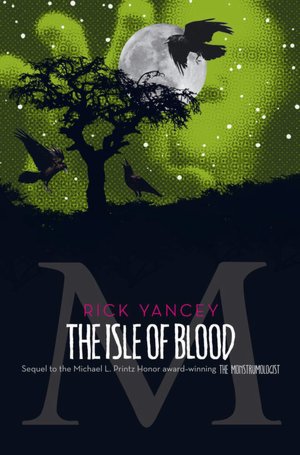
Review: The Isle of Blood (The Monstrumologist #3) by Rick Yancey

Book info:
Form: e-book, Kindle format
Target audience: allegedly YA but I would say adult (more about it in my review)
Genre: horror, adventure, psychological


Synopsis:

Pellinore Warthrop is sent from England a very strange object, called a ‘nidus’ or nest. Allegedly it is made by one of the most unique monsters on earth, a kind of a dragon called Typhoeus Magnificum, aka the "Holy Grail of Monstrumology", a creature so elusive nobody has seen it dead or alive yet. Its nest is also very toxic to humans – a mere touch and you are infected. Small wonder the unwilling courier who brought it to the doctor falls ill and has to be killed. As you can guess it was not a normal illness and it is highly contagious. Before he dies he attacks poor Will and the boy loses his index finger – well, better that than  lose your sanity and life, right?

Doctor Warthrop, definitely shaken by the fact that he had to chop off his faithful apprentice’s finger with a butcher’s knife to save him, this time decides to go to London with somebody else. It happens a perfect companion presents itself as if conjured out of thin air – his name is Thomas Arkwright, he reveres Warthrop as the biggest monstrumologist alive, he knows pretty much about monsters, he is young, fit and eager. Frantic Will is left behind with von Helrung’s niece and her family. It seems he has finally a chance to enjoy a normal life but the situation is unacceptable to him from the very start. Will looks for a way to join his doctor because he clearly thinks he doesn’t belong anywhere but by his side.

Soon enough, unable to rest and fueled by the logical reasoning Warthrop has thaught him, Will finds out that Arkwright is most probably not the man he claimed to be. Then a message comes from England, announcing Warthrop’s death…and Arkwright returns alone, with a clearly made-up story of Pellinore’s demise. After an interrogation session no real agent would be ashamed of, Von Helrung, Will and another monstrumologist, called Torrance form a rescue team and go to London to investigate. What will they find? Monsters, as usual, but what monsters? Will’s journey will take him even further, to Socotra, the Isle of Blood, where human beings are used to make nests and blood rains from the sky. Will his loyalty, bravery and humanity pass the ultimate test?

What I liked:

Forget the "Young Adult" categorization as in this case it is very misleading. I am an adult female reader who doesn’t like most of YA fiction and I loved these books, finding them definitely more suited for older audience. Rick Yancey's Monstrumologist series is one of the masterpieces but, like such books, it defies pigeonholing. Let me only tell you that it should appeal to anyone who loves great storytelling and is not too squeamish when it comes to gory details. I loved the monsters populating these books and I couldn’t avert my eyes even when bits and pieces of human bodies flied around in the form of a blood rain.

There is one more thing. Reading the third part of this series I had a very strange feeling because every wish I expressed after previous parts came true. After the second part I wanted to see Jack/John Kearns/Cory again and here you go, Kearns is back in a peripheral but vital role as a prankster and hunter extraordinaire. I wanted to have more female characters and we get the intrepid Mrs Bates, who dares to sing Will lullabies, and her daughter Lilly, who dares to kiss him and gives him her photo. I enjoyed the philosophical undercurrents and here we get more of it as well. It was as if the author communicated with me beforehand. Weird, to say the least of it. I’ve never enjoyed such a phenomenon before.

The character of Will is in the main focus of the third part. The relations between him and his master have never been more complex. Will finally understands why his services are so “indispensable” to Warthrop; their mutual bond is one of the most compelling dynamics I’ve found in contemporary books.

The boy has grown up and I don’t mean only physical development. He thinks and plans on his own. He can stand up to the doctor and anyone else, taking independent, sometimes very difficult decisions. Of course at some levels he still remains a child – a child feeling very lonely and bereft to add – but he can overcome his weaknesses. The writer uses different adults in the story to give us impressions of what Will Henry might become, depending on his choices. Will he be like Mr. Bates, a successful financier and a proper gentleman with his little, happy family? Will he be one of the cold, calculating monster hunters who delight in the game of killing more than anything else? Will he be one of the scholars working behind the scenes and hoarding over the treasures of the monstrumologist secret society? Finally, will he become a ruthless monster like Kearns or a more humane monster like Warthrop?

The Isle of Blood, just like the other Monstrumologist novels, begins with the frame of Yancey editing a collection of folios written by the real Will Henry about his adventures. But this time, the investigation becomes more personal than ever - our tenacious narrator digs deeper into Will Henry's life and tries to figure out exactly who and what he was. There are scenes that will shock the reader that are made even more powerful as they are seen through Will's ever observant but so youthful eyes.

Let me also say how much I  appreciated the fact that Arthur Conan Doyle and especially Arthur Rimbaud were among the secondary characters of this book!

What I didn’t like:
SocotraSocotra via Wikipedia

???

Final verdict:

There is not a dull sentence to be found in any one of the three novels but if you prefer maudlin teen romance novels, stay away; this series is not for you. Where is the fourth part btw? I know the author has planned it and I will preorder it asap. Can a reader pay a bigger compliment than begging for more?
"We are hunters all. We are, all of us, monstrumologists". I quite agree - I've just bagged some great books...

Some quotes to share the joy:

""Miss Marks, you see, makes her living by... entertaining young, and not so young, sailors...or any other members of the armed forces, or civilians, who enjoy...being entertained by ladies who...entertain." He cleared his throat." (isn't Warthrop, discussing the oldest profession with his young apprentice, a sweetie?)

""What did I learn, sir?" The breeze was delicious upon my face. I could smell the sea. "I learned a poet doesn't stop being a poet simply because he stops writing poetry.""


"I don't know if you are a spiritual man but - "
"Not often," said the monstrumologist, urging Conan Doyle toward the lobby doors. "Hardly ever. No - just once. I was three or four and my mother caught me deep in a conversation with God." He shrugged. "I have no memory of it. God might."


Enhanced by Zemanta

Tuesday, 3 January 2012

Review: The Curse of the Wendigo by Rick Yancey (The Monstrumologist #2)

Book info:


Form: PDF format, e-book
Genre: YA horror
Target audience: older YA and adults


Synopsis:

It is no longer possible to escape men. Farewell to the monsters, farewell to the saints. Farewell to pride. All that is left is men.
Jean Paul Sartre

What monster is the most dangerous of all? The one you are sure doesn’t exist. Dr. Pellinore Warthrop, one of few American monstrumologists, and his young assistant, Will Henry, are going to find out that much to their cost.

When Muriel Chanler darkens the door of Warthrop’s humble abode at 425 Harrington Lane Will is instantly smitten with her great looks. Soon enough he learns that this beautiful, sophisticated lady used to be his poor doctor’s fiancée and now she is the wife of his best friend. Ok, his ex-best friend. Muriel asks Warthrop to rescue her husband, who, allegedly, has been captured by a Wendigo or Outico in Canadian wilderness. Wendigo is a mythical creature which, according to the local Indian tribes, starves even as it gorges itself and it eats only human flesh. Although Dr. Warthrop considers the Wendigo to be as fictitious as vampires and zombies, he relents and performs the rescue—only to see the man he used to know as John Chanler transformed beyond recognition into a monster. Is he really becoming a Wendigo, though? If so, can the doctor and Will Henry hunt down the ultimate predator, who, like the legendary vampire, is neither living nor dead, and whose hunger for human flesh is never satisfied?

Meanwhile the small and exclusive world of monstrumology is thrown into disarray by one Abram von Helrung, the former mentor of Warthrop, who intends to drop a kind of bomb-shell in his annual address to the gathered experts at the monstrumology congress in New York. Warthrop feels torn between the old friendship and loyalty towards his ex-master and his own conscience and beliefs…will the case of John Chanler help or hinder his chances of persuading the fellow monstrumologists that Wendigo doesn’t exist?

What I liked:

Quite a lot. Firstly let me assure you that the second installment is indeed better than the first, especially plot-wise. It is a very rare occurrence but, as you see, fully possible. The pace of the narration is far more exciting and the real action starts when usually other adventure stories wrap up – after the seemingly successful rescue of John Chanler.

Secondly the character of Pellinore Warthrop underwent a major development and transformation here, exploding like a firework. We see more glimpses from his younger years. He was a clumsy teacher’s pet. He used to have a girlfriend. His best friend used to play pranks on him. He wanted to be a poet (sic!). He wanted to commit a suicide. Oh dear, what a chest of treasure! Small wonder Will becomes more and more attached to him! Warthrop remains easily the most intriguing character in this part and it can be reflected by an interesting debate between Will Henry and a new friend of his, a girl called Lilly - if Will, who, as he claims, sees himself as Oliver Twist, does that put his mentor in the role of Twist's kindly benefactor, Mr Brownlow, or the dastardly Jew, Fagin?

Do you remember my carping about the all male cast of The Monstrumologist? It changed too and for the better! Here, you have the enchanting Muriel whose relationship with the monstrumologist makes him look so much more human. You have Lilly, a girl slightly older than Will but as cheeky as you would wish (or not), whom I found a delightful juxtaposition with our young assistant. I do hope that she will feature in future installments of Will's story. Other great secondary characters abound: Von Helrung (the monstrumologist's mentor), John Chanler, Sergent Hawk. All of them fully-fledged and well-rounded. Well done!

What’s more? Yancey's writing is brilliant and the stories he tells in this series are spellbinding. I especially appreciate the recurring philosophical undercurrent, as different characters are asking difficult questions about love, life, death, faith and the rights of women, answering them sometimes in a very funny sometimes in a very macabre way. An example in a form of two quotes:

“You don’t understand, Dr. Warthrop. These people are savages. A man who boasts of killing his own people—boasts of it! Kills them to save them! Tell me what sort of person does that?”
“Well, Sergeant, the God of the Bible leaps immediately to mind. But I shan’t argue the point.”


"They were not so different in the end, the place where he was lost and the place where he was found. They differed only in their topography. The wilderness and the slum were but two faces of the same desolation. The gray land of soul-crushing nothingness in the slum was as bereft of hope as the burned-out snow-packed brûlé of the forest. The denizens of the slums were stalked by the same hunger, preyed upon by predators no less savage than their woodland counterparts. The immigrants lived in squalid tenements, crowded into rooms not much larger than a closet, and their lives were mean and short."


Also the fact that the author was able to describe the living conditions of 19th century New Yorkers – both the haves and the have-nots – shows that he has made a lot of research concerning the setting of the book and the appropriate era – a round of applause!

What I didn’t like:

I still feel keenly the lack of Mr. Richard Cory aka Jack Kearns, the baddie from the previous part and my favourite…oh well, you can’t have everything, can you? But you can certainly dream…perhaps in the third part?

Warning:

It is allegedly a YA position but let me tell you that this book is more gory than the first installment. I might even say this time the horror hit me on a much deeper level because it was slightly less substantial although still as bloody as hell. I suppose some readers might struggle with the vivid descriptions of different atrocities committed by the Wendigo; children and women are involved. If you happened to read the ASOIAF series by George Martin and never flinched you would be ok. Anyway you know what to expect.

Final verdict:

You don't need to read "The Monstrumologist" in order to enjoy "The Curse of the Wendigo"; it stands alone quite well. That said, if you enjoyed the first one, you WILL HAVE TO read the second one and the third installment as well. "The Curse of the Wendigo" is still a dark and twisted gore-fest of a book for older teens and adults but also a fascinating journey into human souls…let me only say I have already bought the third part – I am so totally hooked!

Sunday, 1 January 2012

A mandala of all plots or why everything repeats itself in fiction


Not so long ago some Internet friends discussed a fantasy book on Twitter. They mentioned that other readers have criticized it for being roughly the same as other books of this genre. It made me think of a problem of repeatability in literature. Is it really a problem though?

Let’s face it – there is nothing new under the sun (nihil novi sub solum) and no author, no matter how they strain their imaginative powers, can claim they've used an original idea. Not really. How they use it is quite another story, though and that's why writing and reading still make sense.

Ok., so how many plots available are there? Is their number somehow limited?


I’ve always favoured the theory about seven basic plots. It is short, elegant and somehow compelling. However, its versions differ. 

An IPL (Internet Public Library) list includes just these fairly expansive and universal plot concepts:

  • man/woman vs nature
  • man/woman vs man/woman
  • man/woman vs the environment
  • man/woman vs machines/technology
  • man/woman vs the supernatural
  • man/woman vs self
  • man/woman vs God/religion

You can find the other version described in “The Seven Basic Plots – Why We Tell Stories” by Christopher Booker. According to that author the seven basic plots are: overcoming the monster; rags to riches; the quest; voyage and return; comedy; tragedy; rebirth. Christopher Booker establishes the endurance of these plots in works ranging from the Bible and Greek drama through 19th-century opera to the latest Hollywood films.

There are plenty of other lists, some of them pretty old, other quite contemporary and the numbers of plots vary greatly too. I will try to present some of them very shortly. To tell you the truth I think not all of them deserve a full description anyway.

Sixty-nine. Attributed to Rudyard Kipling by Ronald Tobias . Tobias doesn’t explain what the 69 plots were. Perhaps it was a wise decision.

Thirty-six. Attributed to Carlo Gozzi and reprised by Georges Polti in The Thirty-Six Dramatic Situations (1917). Polti states stating that there are precisely 36 emotions, which are, in his opinion, tied to the 36 situations. Nonetheless, many of his story lines unquestionably are timeless locomotives of plot, for example, Situation III, Crime Pursued by Vengeance (Hamlet anyone?) 0r Situation XV, Murderous Adultery, which pretty much sums up Fatal Attraction.

Twenty. From 20 Master Plots (And How to Build Them) by Ronald Tobias (1993). Tobias doesn't claim these are the only plots, merely 20 the most serviceable ones.

Three. From The Basic Patterns of Plot by William Foster-Harris (1959). Not one to be distracted by unnecessary detail, F-H divines three basic plots: (1) happy ending, (2) unhappy ending, and (3) the "literary" plot, "in which the whole plot is done backwards [and] the story winds up in futility and unhappiness."

Two. Of course plots can always be broken down to simply comedy- and tragedy-based, as Shakespeare did. In tragedies, everybody dies; and, in comedies, at least the protagonist lives. So simple it makes you wonder why bother with other classifications at all…

Two again. Also Tobias, mentioned before several times, concedes that his 20 plots boil down to 2, "plots of the body" and "plots of the mind." Plots of the body are your action flicks, full of sound and fury, not necessarily signifying anything. Plots of the mind are more cerebral and often involve "searching for some kind of meaning". Hmmm, sometimes I get the feeling no meaning is found throughout the whole book…

One. All stories can be summed up as Exposition/Rising Action/Climax/Falling Action/Denouement or to simplify it even further, Stuff Happens, although even at this level of generality we seem to have left out Proust.


If we talk about “one plot fits all”, what about the monomyth , also known as the hero’s journey? It is a basic pattern found in many narratives from around the world. Campbell allegedly borrowed the term from Joyce’s Finnegans Wake.

In a monomyth, the hero begins in the ordinary world, and receives a call to enter an unknown world of strange powers and events. The hero who accepts the call must face tasks and trials, either alone or with assistance. In the most intense versions of the narrative, the hero must survive a severe challenge, often with help. If the hero survives, he may achieve a great gift or "boon." The hero must then decide whether to return to the ordinary world with this boon. If the hero does decide to return, he or she often faces challenges on the return journey. If the hero returns successfully, the boon or gift may be used to improve the world. The stories of Osiris, Prometheus, Moses, Buddha, for example, follow this structure closely.

Campbell describes 17 stages or steps along this journey. These 17 stages may be organized in a number of ways, including division into three sections: Departure (sometimes called Separation), Initiation, and Return. "Departure" deals with the hero's adventure prior to the quest; "Initiation" deals with the hero's many adventures along the way; and "Return" deals with the hero's return home with knowledge and powers acquired on the journey.


Departure 

The Call to Adventure
The hero starts off in a mundane situation of normality from which some information is received that acts as a call to head off into the unknown.

 
Refusal of the Call
Often when the call is given, the future hero first refuses to heed it. This may be from a sense of duty or obligation, fear, insecurity, a sense of inadequacy, or any of a range of reasons that work to hold the person in his or her current circumstances. 

Supernatural Aid
Once the hero has committed to the quest, consciously or unconsciously, his or her guide and magical helper appears, or becomes known. More often than not, this supernatural mentor will present the hero with one or more talismans or artifacts that will aid them later in their quest. 

The Crossing of the First Threshold 
This is the point where the person actually crosses into the field of adventure, leaving the known limits of his or her world and venturing into an unknown, often dangerous realm where the rules and limits are not known. 

Belly of The Whale
The belly of the whale, a biblical metaphor, represents the final separation from the hero's known world and self. By entering this stage, the person shows willingness to undergo a major metamorphosis.


Initiation

The Road of Trials
The road of trials is a series of tests, tasks, or ordeals that the person must undergo to begin the transformation. Often the person fails one or more of these tests, which often occur in threes. 

The Meeting With the Goddess
This is the point when the person experiences a love that has the power and significance of the all-powerful, all encompassing, unconditional love that a fortunate infant may experience with his or her mother. This is a very important step in the process and is often represented by the person finding the other person that he or she loves most completely. 

Woman as Temptress
In this step, the hero faces those temptations that may lead him or her to abandon or stray from his or her quest, which does not necessarily have to be represented by a woman. Woman is a metaphor for the physical or material temptations of life, since the hero-knight was often tempted by lust from his spiritual journey. 

Atonement with the Father
In this step the person must confront and be initiated by whatever holds the ultimate power in his or her life. In many myths and stories this is the father, or a father figure who has life and death power. This is the center point of the journey. Although this step is most frequently symbolized by an encounter with a male entity, it does not have to be a male; just someone or thing with incredible power.
 
Apotheosis
When someone dies a physical death, or dies to the self to live in spirit, he or she moves beyond the pairs of opposites to a state of divine knowledge, love, compassion and bliss. A more mundane way of looking at this step is that it is a period of rest, peace and fulfillment before the hero begins the return. 

The Ultimate Boon
The ultimate boon is the achievement of the goal of the quest. It is what the person went on the journey to get. All the previous steps serve to prepare and purify the person for this step, since in many myths the boon is something transcendent like the elixir of life itself, or a plant that supplies immortality, or the holy grail.


Return

Refusal of the Return
Having found bliss and enlightenment in the other world, the hero may not want to return to the ordinary world to bestow the boon onto his fellow man. Why should he/she? 

The Magic Flight
Sometimes the hero must escape with the boon, if it is something that the gods have been jealously guarding.
 
Rescue from Without
Just as the hero may need guides and assistants to set out on the quest, he or she must have powerful guides and rescuers to bring them back to everyday life, especially if the person has been wounded or weakened by the experience. 

The Crossing of the Return Threshold
The trick in returning is to retain the wisdom gained on the quest, to integrate that wisdom into a human life, and then maybe figure out how to share the wisdom with the rest of the world. This is usually extremely difficult.
 
Master of Two Worlds
This step is usually represented by a transcendental hero like Jesus or Buddha. For a human hero, it may mean achieving a balance between the material and spiritual. The person has become comfortable and competent in both the inner and outer worlds.
 
Freedom to Live
Mastery leads to freedom from the fear of death, which in turn is the freedom to live. This is sometimes referred to as living in the moment, neither anticipating the future nor regretting the past. 


As usual, when somebody thinks of a theory, plenty of sharks…I mean critics try to take the shine off it and earn a decent living by publishing their negative opinions. Accordingly scholars have questioned the very validity of the monomyth, its usefulness as a tool for critical investigation and interpretation of narrative, and its male bias. Donald J. Consentino remarks, "It is just as important to stress differences as similarities, to avoid creating a (Joseph) Campbell soup of myths that loses all local flavor." Marta Weigle rejects the idea of a "monomyth" in which women appear only exceptionally, and then as indistinguishable from men. Others have found the categories Campbell works with so vague as to be meaningless, and lacking the support required of scholarly argument. Right…

You can start wondering of course whether any taxonomy can encompass everything in literature, and secondly, there is no theory that would tell you anything beyond the obvious. A more useful approach would be to focus on what works today. By this light it seems to me that the most useful divide is: Everybody Gets Killed (or at least the hero[ine] does, e.g., Hamlet, Thelma & Louise, Romeo and Juliet, American Beauty, etc.) versus Only the Bad Guys Get Killed (the collected works of Spielberg, Lucas, Peter Jackson et al.). The former can be called a realistic apporach as it leaves you thinking life sucks and you are more or less right, whereas the latter is an optimistically pink approach as it  has everybody walking out of the cinema with one big smile (or one big smirk). Naturally any avid reader can come up with numerous subdivisions, such as the one exemplified by Disney animated fairy tales, i.e., The Bad Guy Gets Killed but by Accident Only so The Good Guy Has Still A Pair of Clean Hands. In the odd case no one gets killed, but this is mostly in works by sensitive lady writers that seldom earn back the advance and which books' cover art usually includes people's bodies without  heads. Indicating what their potential readers/buyers might be missing as well...


Now add to it the sizable genre of stories that may be characterized as The Protagonist(s) Angle to Get One Another in the Bedroom ASAP and we begin to get a pretty firm handle on the situation. My point is, never mind the 36, 20, 7, or whatever basic plots--take out sex, violence, and death and you lose 90 + percent of literature right there. Not the worst part, mind you.


Sources:

Enhanced by Zemanta