Saturday, 8 October 2011

A brief history of alchemy - part three

Page from alchemic treatise of Ramon LlullA page from alchemy treatise of Raymond Lully via Wikipedia
People behind alchemy from antiquity to 14th century


There have been many prominent alchemists across the world and throughout ages. I don’t doubt the life of every single one of them could be a basis of a fat, big novel. I know at least several hundred books have been written about the most famous of them. I don’t intend to write an essay as long as a book so I will present just several of alchemists from different countries and the description of their lives and deed will be rather short.

Alchemy always seemed related closely to religion; maybe because of that the common people rather feared its practitioners as adepts of secret arts and partakers of dangerous knowledge. The term “occult” often heard with the connection to alchemy is a classic example of that lack of understanding. Whereas the correct definition is: hidden from the eye of the understanding, secret, concealed, unknown (from the Latin word occultus  meaning clandestine, hidden, secret) plenty of people would add “satanistic” or “devilish” or at least “unchristian” to it. Christian authorities have generally regarded occultism as heretical whenever they met this term. It should be observed, however, that those who were object of these fears didn’t always resent them, at times even encouraging such misunderstandings to increase their own sense of power and perhaps also their security. Offending a magician can be, after all, a risky business, better to be avoided.

The art of alchemy went downhill during Roman times, along with a general decay of Greek learning. After A.D. 100 virtually nothing new was added, and there was a rising tendency to turn to ever-more mystical interpretations of the earlier writers.The first important worker in Greek-Egyptian khemeia that we know by name was Bolos of Mendes (c.200 B.C.), a town in the Nile delta. In his writings, he used the name Democritus so that he is referred to as "Bolos-Democritus" or sometimes as the "pseudo-Democritus".
Bolos devoted himself to what became one of the great problems of khemeia, the changing of one metal into another and, particularly, the changing of lead or iron into gold (transmutation). Bolos, in his writings, apparently gave the details of techniques of making gold, but this may not actually have represented fakery. It is possible to alloy copper with the metal zinc, for instance, to form brass, which has the yellow color of gold. It is quite likely that the preparation of gold-colored metal would be the equivalent, to some of the ancient workers, of forming gold itself.


Finally I found out how come the Roman emperor Diocletian was so set against alchemy. The reason was prosaic – he believed in one aspect of it. Many chemists throughout the centuries have striven to find the technique for producing gold. Some, however, undoubtedly found it much easier and far more profitable merely to pretend to find the technique and to trade on the power and reputation this gave them. This sort of fakery continued right on into modern times. Diocletian perhaps thought that there is no smoke without fire and he feared that the adepts of alchemy might successfully produce cheap gold and swamp the markets with it, destroying the already shaky economy of the declining Empire. All alchemical scriptures were destroyed to make it impossible.

The other problem was that, with the later rising tide of Christianity, such “pagan knowledge” was frowned upon to say the least of it. For example the Alexandrian Museum and Library were badly damaged as a result of Christian riots after A.D. 400. The art of alchemy being a discipline for few and with its close relationship to the ancient Egyptian religion, was simply undefendable and had to virtually go underground. Or elsewhere.

 From a book written by Edward Chalmers Werner, a late member of the Chinese Government's Historiological Bureau in Peking comes this quotation from old Chinese records: "Chang Tao-Ling, the first Taoist pope, was born in A.D. 35 in the reign of the Emperor Kuang Wu Ti of the Hari dynasty. His birthplace is variously given as T'ien-mu Shan, Lin-an-Hsien in Chekiang, Feng-yang Fu in Anhui, and even in the "Eye of Heaven Mountain." He devoted himself wholly to study and meditation, declining all offers to enter the service of the state. He preferred to take up his abode in the mountains of Western China where he persevered in the study of alchemy and in cultivating the virtues of purity and mental abstraction. From the hands of the alchemist Lao Tzu, he received supernaturally a mystical treatise, by following the instructions in which he was successful in his match for the Elixir of Life."

In the seventh century, however, the Arabs came on the scene. When their conquering armies took over vast areas of western Asia and northern Africa they also invaded Egypt (A.D. 641) and after quick victories occupied the land; over the next years they inflicted the same fate on all Persia. That’s why the preservation and extension of Greek-Egyptian alchemy were for five centuries (until A.D. 1100) in the hands of the Arabs. Traces of this period remain in the number of chemical terms that are derived from Arabic: alembic, alkali, alcohol, carboy, naphtha, zircon, and others.


Geber
The best of Arabic alchemy came at the start of the period of their domination. Thus, the most capable and renowned of the Muslim alchemists was Jabir ibn-Hayyan or Abou Moussah Djfar-Al Sell (c.760-c.815), who was known to Europeans, centuries later, as “Geber". He lived at the time when the Arabic empire (under Haroun-al-Raschid of Arabian Nights fame) was at the height of its glory. His writings were numerous and his style was relatively straightforward compared to other alchemists but still…from his style of writing we derive the word “gibberish”. Many of the books bearing his name may have been written by later alchemists and attributed to him and it seems only three remain to posterity: The Sum of the Perfect Magistery, The Investigation of Perfection, and his Testament. He described ammonium chloride and showed how to prepare white lead. He distilled vinegar to obtain strong acetic acid, which had been the strongest acid known to the ancients. He was the first to mention such important compounds as corrosive sublimate, red oxide of mercury and nitrate of silver.


Al Rhases
About the same time, Al Rhases, another Arabian alchemist, became famous for his practical displays in the art of transmutation of base metals into gold. Al Rhazes wrote a number of treatises, the most important of which became known as Liber Secretorum Bubacaris, in the western world, and was regarded as a foundation work for centuries. Rhases started the process of disconnecting the science and empiricism from archaic formulas and numerology, in an attempt to study physical processes outside the confines of divine will. Although Rhases still incorporated many of the overall concepts and the archaic and esoteric language of earlier alchemists, he studied substances and compounds in isolation and divined their natures, rather than trying to fit them into elegant theories and sweeping generalizations.


This included trying to fit the substances into groups and classifications according to their properties. In his book, Sirr al-asrar book, he listed the ingredients as follows.
  1. Earthly Substances:
  2. The Spirits: Mercury, sulphur, arsenic sulphate, ammonia
  3. The Bodies: Gold, silver, copper, iron, lead, tin
  4. The Stones: Iron pyrites, iron oxide, zinc oxide, malachite, turquoise, arsenic oxide, lead sulphate, gypsum, glass
  5. The Vitriols: Black, alum, green, red, yellow, white
  6. Borax
  7. The Salts
  8. Vegetable Substances:
    • Rarely used and believed to be the domain of physicians
  9. Animal Substances: Hair, brain, bile, blood, milk, urine, eggs, horn, shell
In addition, Razes pointed out that many other substances could be derived from these basics, including lead oxide, verdigris, caustic soda, copper oxide, cinnabar (mercury (II) sulphide), and zinc oxide.
Razes was meticulous in his documentation, and listed the apparatus that he used for his research. Again, most of these, such as crucibles, alembics and a range of distillation equipment as well as various furnaces and smelting equipment. Certainly, His ‘Book of Secrets’ bears a remarkable resemblance to a modern laboratory manual in the way it lays out and collates the datIn the tenth century the Arabs enjoyed the reputation of having the most learned scientists of his age - another great alchemist of that century, Avicenna, whose real name was Ebu Cinna can be another proof of their domination. Born at Bokara in 980 A.D., he was, however, the last of the Egyptian alchemical philosophers of note.


During the 13th century a lot of changes occurred as the balance of power began to shift from the Islamic world to a Europe emerging from the Dark Ages and displaying the first glimmerings of the Renaissance. Great minds, such as Roger Bacon and Robert Grosseteste, were heavily influenced by Classical texts obtained from Byzantium as the Crusades enveloped the Eastern Mediterranean, but an increasing amount of material traveled from Andalusia. Spain was then the most developed country, a real melting pot of new and old theories. Europeans learned that the Arabs possessed books of great learning which had been translated from the Greek originals - the works of Aristotle, for instance - as well as their own productions, such as the works of Avicenna. They decided to put that knowledge to good use.


Of the thirteenth-century literature, a work called Tesero was attributed to Alphonso, the King of Castile, in 1272. William de Loris wrote Le Roman de Rose in 1282, assisted by Jean de Meung, who also wrote The Remonstrance of Nature to the Wandering Alchemist and The Reply of the Alchemist to Nature. Peter d'Apona, born near Padua in 1250, wrote several books on Hermetic sciences and was accused by the Inquisition of possessing seven spirits (each enclosed in a crystal vessel) who taught him the seven liberal arts and sciences. He died upon the rack.


A page from a manuscript with the portrait
of Villanova
Among other famous names appearing about this period is that of Arnold de Villeneuve or Villanova, whose most famous work is found in theTheatrum Chemicum. He studied medicine in Paris but was also a theologian and an alchemist. Like his friend, Peter d'Apona, he was accused of obtaining his knowledge from the devil and was charged by many different people with magical practices. Although he did not himself fall into the hands of the Inquisition, his books were condemned to be burnt in Tarragona by that body on account of their heretical content. Villanova's crime was that he maintained that works of faith and charity are more acceptable in the eyes of God than the Sacrificial Mass of the Church!


The authority of Albertus Magnus (1234-1314) is undoubtedly to be respected, since he renounced all material advantages to devote the greater part of a long life to the study of alchemical philosophy in the seclusion of a cloister. When Albertus died, his fame descended to his "sainted pupil" Aquinas, who in his Thesaurus Alchimae, speaks openly of the successes of Albertus and himself in the art of transmutation.

Raymond Lully (or Ramon Lull) is one of the medieval alchemists about whose life there is so much conflicting evidence that it is practically certain that his name was used as a cover by at least one other adept either at the same or a later period. The enormous output of writings attributed to Lully (they total about 486 treatises on a variety of subjects ranging from grammar and rhetoric to medicine and theology) also seems to suggest that his name became a popular pseudonym. Lully was born in Majorca about the year 1235, and after a somewhat dissolute youth, he was induced, apparently by the tragic termination of an unsuccessful love affair, to turn his thoughts to religion. He became imbued with a burning desire to spread the Hermetic teachings among the followers of Mohammed, and to this end devoted years to the study of Mohammedan writings, the better to refute the Moslem teachings. He traveled widely, not only in Europe, but in Asia and Africa, where his religious zeal nearly cost him his life on more than one occasion. Lully is said to have become acquainted with Arnold de Villanova and the Universal Science somewhat late in life, when his study of alchemy and the discovery of the Philosophers' Stone increased his former fame as a zealous Christian.


According to one story, his reputation eventually reached John Cremer, Abbot of Westminster at the time. After working at alchemy for thirty years, Cremer had still failed to achieve his aim, the Philosopher's Stone. Cremer therefore sought out Lully in Italy, and having gained his confidence, persuaded him to come to England, where he introduced him to King Edward II. Lully, being a great champion of Christendom, agreed to transmute base metals into gold on the condition that Edward carry on the Crusades with the money. He was given a room in the Tower of London for his work, and it is estimated that he transmuted 50,000 pounds worth of gold. After a time, however, Edward became avaricious, and to compel Lully to carry on the work of transmutation, made him prisoner. However, with Cremer's aid, Lully was able to escape from the Tower and return to the Continent. Records state that he lived to be one hundred and fifty years of age and was eventually killed by the Saracens in Asia. At that age he is reputed to have been able to run and jump like a young man.

In England, the first known alchemist was Roger Bacon, who was a scholar of outstanding attainment. Born in Somersetshire in 1214, he made extraordinary progress even in his boyhood studies, and on reaching the required age joined the Franciscan Order. After graduating Oxford, he moved to Paris where he studied medicine and mathematics. On his return to England, he applied himself to the study of philosophy and languages with such success that he wrote grammars of the Latin, Greek, and Hebrew tongues.

Although Bacon has been described as a physician rather than an alchemist, we are indebted to him for many scientific discoveries. He was almost the only astronomer of his time, and in this capacity rectified the Julian calendar which, although submitted to Pope Clement IV in 1267, was not put into practice until a later papacy. He was responsible also for the physical analysis of convex glasses and lenses, the invention of spectacles and achromatic lenses, and for the theory of the telescope. As a student of chemistry, he called attention to the chemical role played by air in combustion, and having carefully studied the properties of saltpeter, taught its purification by dissolution in water and by crystallization.

Indeed, from his letters we learn that Bacon anticipated most of the achievements of modern science. He maintained that vessels might be constructed that would be capable of navigation without manual rowers, and which under the direction of a single man, could travel through the water at a speed hitherto undreamed of. He also predicted that it would be possible to construct cars that could be set in motion with amazing speeds ("independently of horses and other animals") and also flying machines that would beat the air with artificial wings.


It is scarcely surprising that in the atmosphere of superstition and ignorance that reigned in Europe during the Middle Ages, Bacon's achievements were attributed to his communication with devils. His fame spread through western Europe not as a savant but as a great magician. His great services to humanity were met with censure, not gratitude, and to the Church his teachings seemed particularly pernicious. The Church took her place as one of his foremost adversaries, and even the friars of his own order refused his writings a place in their library. His persecutions culminated in 1279 in imprisonment and a forced repentance of his labors in the cause of art and science.


Among his many writings, there are two or three works on alchemy, from which it is quite evident that not only did he study and practice the science but that he obtained his final objective, the Philosopher's Stone. Doubtless during his lifetime, his persecutions led him to conceal carefully his practice of the Hermetic art and to consider the revelation of such matters unfit for the uninitiated. "Truth," he wrote, "ought not to be shown to every ribald person, for then it would become most vile that which, in the hand of a philosopher, is the most precious of all things."

During the fourteenth century, the science of alchemy fell into grave disrepute, for the alchemists' claim to transmute metals offered great possibilities to any rogue with sufficient plausibility and lack of scruple to exploit the credulity or greed of his fellowmen. In fact, there proved to be no lack either of charlatans or victims. Rich merchants and others greedy for quick gain were induced to entrust to the alleged alchemists gold, silver, and precious stones in the hope of getting them multiplied, and Acts of Parliament were passed in England and Pope's Bulls issued over Christendom to forbid the practice of alchemy on pain of death. (Although Pope John XXII is said to have practiced the art himself and to have enriched the Vatican treasury by this means.) Before long, even the most earnest alchemists were disbelieved. For example, there lived about this time the two Isaacs Hollandus (a father and son), who were Dutch adepts and wrote De Triplici Ordinari Exiliris et Lapidis Theoria and Mineralia Opera Sue de Lapide Philosophico. The details of their operations on metals are the most explicit that had ever been given, yet, because of their very lucidity, their work was widely discounted. It seemed to simple to be true. Yet the simplicity, not any occult gibberish, was the key to the future. In the next part I will try to present the achievements of modern alchemists and their meaning for science.


Sources:

http://occult-advances.org/greatwork.shtml
http://www.purplehell.com/riddletools/alchemy.htm
Enhanced by Zemanta

Friday, 7 October 2011

Friday Flash Fiction

Amy C at Romance Book Wyrm and Dottie atTink's Place have come up with the idea for a Monday Morning Flash Fiction challenge. Each Monday a new picture prompt will be posted and if you choose to participate - you publish your Fiction Flash  on Friday - 350 words, give or take. Below you can find the picture posted last Monday:


My first thought was: a nice creepy town. My second thought was: a nice creepy, old cemetery. Anyway I continue the misadventures of Mark, lord Dreane and his daughter, not to mention Lara the vampiress...


"Lara let him go at once!"

Mark never heard lord Dreane speaking in such a booming voice. Lara shuddered a bit but her hold on him, or rather mild strangling, never eased, not even a bit.

"He is mine! I made a claim, he shared willingly. You can't make me do it!!"

Lord Dreane moved menacingly towards them. Mark felt he had to choose the side.

"My lord I'm resigning from my job. I want to stay with her!" he said, adding silently 'like forever'.

"You stupid fool, do you know what it means?"

Mark's wide grin must have been pretty disconcerting because Lord Dreane went from angry to furious in no time.

"She will suck you dry you dimwit! She will feed on you until you are dead or until she turns you into the same creature she is and you will have no say in it, none whatever! Do you really want such a fate? A fate worse than death, damn it?!"

Mark was nodding his head forcefully time and again. He really didn't understand all that fuss but he knew one thing: he felt good only in Lara's arms, the closer the better. He'd never felt so good before and he longed for more. Lara stroked his head and practically purred with contentment, making Lord Dreane simply livid and losing his steam. Finally his shouts turned into wild sutter and even that ceased after a while. Lara inclined her head in a mocking salute.

"It seems his lordship said it all and didn't manage to make the impression he wanted. Now my turn. Mark I want you to stay with me permanently. I will care for you and you will obey me. Do you agree my sweet boy?"

Mark's eyes turned dreamy.

"Yes Lara. I mean yes my lady. Whatever you ask."

"Bend your neck and let me drink from you before his lordship's eyes. Show you really mean it."

Mark did as he was told without any hesitation. Lara kissed his neck, then punctured it and drank a bit, just to prove her point. Lord Dreane groaned in despair. Mark groaned with pleasure. Both of them looked at the vampiress and she basked in their attention.

"Now I suppose it's time to leave this house. Mark, we are going home," she said smiling. He was all for going home with her.

"Where to?"

"There's such a nice little cemetery not far from here. You will like it - quiet and cosy. The caretaker knows me and the needs of my minions so there will be no problem with a right accomodation for you."

Mark felt as if a bucketfull of icy water was poured on him. One word and the spell was broken.

"Your...minions?"

He stopped smiling and actually frowned. Dreane looked up hopefully. Lara shrugged and clapped her hands twice. Four young men entered the dungeons. Mark eyed them warily. Something like jealousy was bubbling inside him, cold and unpleasant.

"Why haven't you told me about them earlier?" he asked roughly.

"Well, my dear, I didn't have to, did I ? Be sure, though, I always like a fresh addition to my harem the best," answered Lara sweetly. "I am sure all five of you will get on like a house on fire. Everybody, this is Mark. Mark, I give you from left to right: Cosmo, Henri, John and Elias. We are one happy family, everybody on an equal footing, with his own tomb to sleep and the same share of my everyday attention."

Mark looked at four men in front of him and they glared back, clearly nonplussed by his presence as much as he was nonplussed by theirs.

"Boys where are your manners?" chided Lara, breaking the uncomfortable silence.

"Hi Mark," said the first of them and others followed glumly. Mark didn't answer. Lord Dreane moved closer to him and took his hand. He secretly put  a piece of paper inside. Mark hid the paper in his pocket instantly. Nobody noticed. Lara was being suddenly in a hurry - she led them all from the dungeons and outside the building very quickly with lord Dreane following close behind.

"Say your farewell Mark, we are off in a minute," she said in a husky voice.

Mark bowed and lord Dreane just shaked his head morosely. Both felt they had disappointed each other somehow and there was really nothing left to say.

If Mark wondered how they would get to the cemetery that was soon explained. Two of four Lara's companions had been already transformed into vampires which meant they could fly. Each of them was strong enough to take another companion on his back. It left Lara and Mark paired together. She smiled but he wasn't so sure about her charms anymore. The flight was short and the landing - precise, right in the middle of a large cemetery full of big, stone tombs. Lara certainly felt at home here and she was expected - an elderly caretaker with a mouth full of rotten teeth approached her and was busy kissing her hands. Lara gave him a throaty, sensual laugh. Her other men were dispersing fast, not really looking at each other. Mark took the slip of paper which had been handed to him by lord Dreane out of his pocket. The message was short and simple.

"As soon as you get there run like hell. Take the widest alley and head north. I will wait by the gates.  D."

Wednesday, 5 October 2011

Review: Unclaimed by Courtney Milan

Book info:
Form: e-book, Kindle format
Genre: historical romance
Target audience: adults


Synopsis:

Sir Mark Turner is a twenty-eight-year-old Victorian male virgin and not ashamed of it. He has published The Practical Gentleman’s Guide to Chastity (yeah!), and has been knighted because young, sweet, innocent queen Victoria liked his book. Unfortunately the popularity of the Guide backfired; the author has been copied country-wide in the most brainless manner and became far more popular than he would ever wish to be. As he is also rich and his brother is a duke he has become a celebrity and every aspect of his private life is featured in newspapers. Every Victorian matron simply salivates at the mere thought of having him as a son-in-law, not to mention an army of Victorian misses stalking him with their chaperones, perfecting that famous pincer movement. What a pity Sir Mark cannot be actually bought at auction and leashed like a cute little puppy, saving a lot of time and bother. Have I mentioned that he is also handsome? Poor guy. He should have kept his chastity business private for his own good.

Tired to death by constant adulations of London’s beau monde, Mark decides to leave the capital for his family town, Shepton Mallet, a true backwater in any sense. Unfortunately his enemies don’t sleep and he does have a lot of secret enemies – all these men with ugly, black hearts, jealous of his popularity with women, sinful individuals who prefer drinking, whoring and gambling to good deeds, prayers and, of course, chastity. One of them, called Mr.Weston, decides to strike back, not unlike Lord Vader and his dark empire. That’s why our innocent lamb of a man is followed to Shepton Mallet by one Jessica Farleigh – a courtesan of significant disrepute posing as a rich, scrumptious widow. She was hired by Mr. Weston, to seduce Sir Mark and defame him publicly. Many other professional ladies had tried and failed before. However, our beautiful Jessica is very skilled (Weston knows it pretty well, being her former client) but also very motivated – she wants to end her shameful and not exactly secure life and she was promised a small fortune, 1,500 pounds, if she manages to drag Mark into bed and present his ring as the proof.

Will she be able to seduce such a paramount of male virtues, though? What will happen if he seduces her instead? Both sides seem to have too much to lose but romantic fiction, unlike real life, is full of surprises…

What I liked:

Let me first tell you that Ms Courtney Milan is a very intelligent romance writer. Yes, I know, a rare phenomenon indeed so even more appreciated when stumbled upon.

First of all, her book has a truly viable, solid plot – a plot which can actually interest you and amuse per se, not making you just turn pages jumping from one hot scene to another, as only too often is the case of many romance novels. The seduction of a man who officially brags of his chastity and means every bit of it is, after all, nothing trivial, even for a professional working girl. Sir Mark is not exactly a young boy and he must constantly watch his back, thinking not only about his own reputation but also about that of the family of his brother. Or so everybody assumes. Not to mention the fact that he is spoiled a bit by all that female attention.

As we read on, the author draws some surprisingly complex psychological portraits of the main leads, really adding a lot to the story. Sir Mark is perhaps technically a virgin but he is hardly innocent. He has known poverty and despair, he has lived insecure life of a street urchin, even if for a short period of time. He can feel temptation when a young beautiful ‘widow’ in completely wet dress is seeking a shelter in his quarters and one scene makes it obvious that, when lacking sinful female company, he’s been practising the most common form of male self-gratification ;-).  What’s more, we are given a good psychological explanation of his chastity fixation and the attitude toward fallen women – something seldom touched by authors of pink literature.

The authoress also tried to explain in a believable way why Jessica is not a typical courtesan (so a lewd, cynical, mercenary and ruthless woman). She was born a vicar’s daughter and now she yearns for independence and security, seeing no future for herself in her trade. I must admit she reminded me a bit of Lydia, the youngest of Bennett sisters from Pride and Prejudice ( but with more brains and luck). If Darcy hadn’t managed to force Wickham to marry Lydia, she would undoubtedly have ended like poor Jessica or rather much worse - probably enjoying herself for some time but still landing frimly in the gutter. I rather liked Jessica, mainly because she was honest with herself. She and Sir Mark are like the Red Queen (or rather a Scarlet Queen like the Scarlet Letter) and the White King (those terms are from alchemy, sorry, I couldn’t help myself).

What’s more, I found in this novel a very good, although short, study of how success can ruin your life – I really liked the negative ramifications of Sir Mark’s popularity and the portraits of his epigones sketched with a great sense of humour. Generally Ms. Milan's sense of humour made even pinkier fragments of this book palatable and forgivable.

Finally I must mention one delightful scene at the end of the book – a duel between dastardly Weston and…well, find for yourself, I won’t spoil you. Let me just add it was a really original idea.

What I didn’t like:

The novel still remains an adult fairy tale of Cinderella’s proportions, where a penniless courtesan with a golden heart gets her HEA with a noble prince charming against all odds. Even the Queen attends their wedding (why not some angelic choirs as well for that matter? Let’s paint the town red, etc. etc. I would definitely add some angels and maybe also a demon or two ;-) After all we are dealing here with a reformed courtesan) .

Also it seems that the authoress went sometimes too far trying to make our heroine more and more sympathetic. Jessica, having been debauched at a tender age of fourteen (I know, horrible) and then abandoned by her first lover, would have been most likely a completely deranged individual as an adult, even with that older French courtesan friend, Amalie, as her guide and support. You know that saying: as the twig is bent, the tree’s inclined. I also resented the fact that we never met Amalie in person – the authoress killed her promptly somewhere in the middle of the book giving Jessica one more reason to look for another friend but also facilitating her narration job a little.

Also in normal life somebody like sir Mark would have never married a woman of disrepute, even if this woman changed her ways and he really fancied her. The best scenario - he would have kept her as his steady mistress in a second establishment as it was often done in those times by rich, responsible and very moral gentlemen.

I could have listed many other excellently anachronistic negative points but what for? These books are read and written for pure enjoyment and this one has already exceeded my expectations by some light years. Yes, I know, finally I grasped it. Thick-witted, aren’t I? End of criticism then. No, wait, there's some more. I officially hate Harlequin covers. That’s unchangeable.

Final verdict:

If you feel like reading pink fluffy romances from time to time (not a sin, just a recreational activity of some merit), go for Courtney Milan. She will provide far more than just empty titillation and a cover featuring two skimpily clad and often faceless bodies. I admit I was seduced by this one. Perhaps it means I am going to the dogs but as I've always liked dogs it is not a huge problem I suppose.

Welcome to Shepton Mallet signShepton Mallet really exits - via Wikipedia


Tuesday, 4 October 2011

Mini review: The Gift of Illusion by Richard Brown

Book info:
Book from: pdf file, e-book,
Genre: paranormal thriller, crime story
Target audience: adults


This book was provided by Melissa (BaT) who got it from the author in return for an honest review. Honest it will be. First the short summary, though.


Synopsis (from Goodreads):

An ancient evil has returned to continue the study it began over a century ago, and it's looking for volunteers. Isaac Winters is the perfect test subject. He's a detective with a damaged past, and something to prove.

On the night of his wife's murder sixteen years ago, which left him a single father, Isaac thought he had seen the worst mankind had to offer.

Until now.

It moves like a virus from person to person, carefully selecting its next host, and leaving a trail of incinerated bodies in its wake. There are no witnesses and no evidence except for a small statue of some unknown figure. Accompanied by a partner short on experience, Isaac must uncover and defeat this faceless villain before it takes from him the greatest reminder of his dead wife and his greatest treasure. Their daughter.

What I liked:

It is a paranormal thriller along the likes of Stephen King and Dean Koontz. I admit the author has a gift for description and the opening scenes are a good example of that - the apparent murder of a young girl by fire, and the subsequent death of her mother and her father send Detective Isaac Winters and his reluctant partner Daniel Simmons into a world of confusion and doubt. The whole premise makes me wonder how twisted of a mind the writer that wrote this book must have. I know, I know, not my problem. I did like the way the climax of the story broke out of the pattern I'd been expecting.

What I didn’t like:

I had a lot of trouble getting into this book. While I found the idea interesting it was basically another case of a good novel ruined by poor editing. There is more to telling a good story than just having a good idea. The book is definitely copy edited only - free from typos, misspelled words and grammar mistakes, but with some major issues outside of that.

For example the main character, although presented as an experienced investigator, makes assumptions without evidence and then shares those with a witness; he also pockets evidence from a crime scene as a kind of souvenir, and repeatedly puts his completely bare hands all over before the scene has been investigated by the forensics team. I guess in a normal world he would be sacked instantly for messing up in the most unprofessional way and hindering the investigation. Any cop would say you that much. Apart from that I must say I didn't like Isaac. This is a bigger deal for me than it sounds; I'm a very character-driven reader, and a main character I really like will get me over a lot of other difficulties. Isaac was simply not the right guy.

What’s more…there are a few instances of foul language which made me squirm but nothing too extreme or very annoying. The largest issue of this novel, in my very humble opinion, is the use of the narrative voice. In the first two chapters there are at least three different points of view used. It hardly makes the reading easy; usually a writer would pick one style and stick with it for the clarity’s sake. I suppose the book would have worked best in a close third person narrative.

The main villain of the story left me wanting more. I do like well-fleshed baddies and it is clear Richard Brown created just a rough sketch of a really evil psychopath with potential. I really could have done with the bigger picture, adding some more explanations, back story and depth instead of gory detail. Also the ending was a little rushed for me – it was definitely too abrupt and open-ended.

Finally, despite the fact the book is written for an adult reader, I would still want to warn you that this novel is not something for people with a weak stomach. There are scenes so graphic and gruesome inside I had to skim the text because I really thought I might be as sick as a dog. These include macabre descriptions of carving human bodies and even some scenes of necrophilia (I did manage to avoid reading them in full after glimpsing the idea). Brown has created a villain so depraved that it literally churns the stomach. The question is whether you want to meet him at all.

Final verdict:

I wasn't blown away by this one, although it had some good moments. I never quite understood what "The Gift" really was about. Even the ending left me feeling flat if not slightly disgusted. Perhaps I lack imagination.

Monday, 3 October 2011

Harder, Better, Faster, Stronger Award is mine!


I've been nominated for the Harder, Better, Faster Stronger Award by dear Blodeuedd, Book Girl of Mur-y-Castell and in Gini Koch's own words-it  was created to honor those whose blogs who exemplify the qualities Katherine “Kitty” Katt has -- those who always stay cutting edge, who always find the fun, the funny, and the cool, and who are always one step ahead of the competition. I am not entirely sure I deserve this award - lately I've been feeling not exactly well...but I am honoured anyway and I did review one Gini Koch novel featuring Kitty Katt so... I accept. Uff, that was hard! ;)

After accepting there is a mission to accomplish and here are the details:


    Slap the graphic on your blog. DONE.
    Give link props to the person who gave you the award (keep the hard, best, fast and strong on your side!). DONE.
    Spread the awesome and nominate five (5) other bloggers who you think exemplify what it means to be cool, fun and cutting edge. It's always a problem but I decided to put up my socks and deliver. My nominees are below.
    Let the recipients know they’ve won this honor on their blogs. Will do. Actually done ;)
    My nominations go to:


Last but not least, shoot Gini Koch an email at gini@ginikoch.com and let her know you’re the best of the best of the best, sir! (put “Harder, Better, Faster, Stronger” in the subject line!) by sharing that you’ve been nominated and telling her which other bloggers you nominated, and she’ll enter you into the “Harder, Better, Faster, Stronger” Contest. Find out more details and what the loot is at http://www.ginikoch.com/winstuff.htm. Ok, will do that as well.

Sunday, 2 October 2011

New poem of the month is published!


Hi everybody,

We are having a spell of incredibly good weather right now so the poem of the month this time will be...well...beautiful. Its author is not my favourite poet but this is one of his poems which I like very much. Go to my poem-of-the-month page, read it and tell me what you think!
Btw I did use the same picture for the second time - I find it fits that particular poem very well. 

Saturday, 1 October 2011

A brief history of alchemy- part two

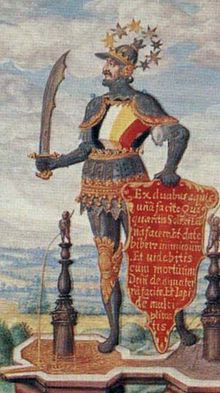
A knight representing the Great Work
(look at his colourful breastplate)
Alchemy 101 or a crash course for curious and busy J

In the first part, posted last week, I presented the origins of alchemy; now the time has come for the real nitty-gritty. First, I would want to warn you – alchemy is a topic in which you can easily drown for days, if not months and there are different reasons why, some of them explained below. That's why I was able only to brush against the most basic notions. My main aim was to keep the whole part relatively short and readable. However, if you want to find more info about anything particular, please, just follow links, provided in sources below the essay or google the term. 

Alchemical symbols 

Alchemical manuscripts and books are often richly illustrated, showing many symbolic figures with obscure meanings. Alchemy used symbols figuratively and allegorically, not just to represent an idea but to extend it and reveal its wider implications. For example, there is a considerable use of animal symbolism, the green lion, the black toad, the double headed-eagle, the serpent seizing its tail - various human figures, the old dying king, the white queen, the knight - as well as stylised forms of apparatus in which these figures interact. There are, of course, also simple signs used to notate various alchemical substances and processes, but the symbolism used in alchemy went much further than the mere use of special signs.

It is important to realize that there is no such a thing as a fixed, rigid alchemical language or system of symbols. The problem is that different alchemists used the same symbol in different ways, and even within the same work an individual symbol can have many meanings. Although there are core 'meanings' to some symbols, their significance must be read from the context in which they appear. This can make the study of alchemical symbolism a frustrating experience for those who expect only fixed meanings for different symbols. Instead we must go along with the individual alchemists, read their texts, try to enter into their view of the world, and beware importing or projecting our own perceptions of their symbols or rushing to a quick judgment of their meaning. Symbols must be seen as part of the whole emblem, not as isolated elements.

To make things even more difficult alchemists made use not only of chemical symbols, but also for a great deal of Roman and Greek mythology. They combined many concepts into a language that would express what they experienced. They created images, and used myths and allegories. The emblem sequences show the evolving alchemical process as a drama, a theatre of symbols, and one must sense the underlying process in order to understand the symbolic sequence. In this way alchemical figures are allegorical, and indeed we often find alchemists using complex allegories to explain their processes.

Here are some symbols, most often met in alchemical texts:

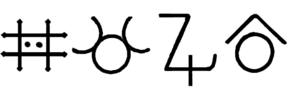
Various alchemical symbols for zincFour different alchemical symbols for just one element, zinc, via Wikipedia How not to get lost?


Alchemical goals


Why people used these symbols and what do they want to achieve? Basically they saw their flaws and wanted to get better. On the most primitive level they were poor and wanted to become rich but for most of disciples of this art alchemy was about a search to understand nature, the cosmos, man. Religious and scientific principles were not separated as it is done now, into different scientific branches, because in past ages people realized that everything is connected. Some people say that laboratory alchemy was only kind of early chemistry and they are right to a certain extent. By trial and effort alchemists did find new chemical substances and created several chemical processes but true laboratory alchemy starts where matter gets manipulated beyond mere chemical reactions. Transmutation into gold, for example, is believed to be possible, but not by mere chemistry (scientists of course would tell you it is utter rubbish from their point of view). Those who have accomplished it, and verified by those present, were very few. An alchemist who was able to produce gold from other metals, was considered an advanced spiritual being who had achieved spiritual transformation first. Without spiritual insight into the hidden energies of nature, laboratory alchemy is a waste of time.


Philosophical alchemists are only interested in the spiritual side of the Great Work because hermetic or philosophic alchemy is about the transformation of oneself. That is only possible if one understands the true nature of oneself, and the firm understanding that one is in essence a divine being. Man as he is born is the product of Nature. However man can improve himself to become more than Nature. He is able to manifest his true divine potential, by transmuting his common, every day nature into the full divine nature that he really is (and so becoming a kind of living philosopher’s stone). There are many ways to do this. Over the course of history people in different cultures have stumbled on different practices to accomplish this.

Roughly the process of that spiritual and personal transmutation is described as the Great Work of Alchemy or magnum opus. It is a series of four stages represented by colors.
§                    nigredo, a blackening or melanosis
§                    albedo, a whitening or leucosis
§                    citrinitas, a yellowing or xanthosis (sometimes omitted altogether)
§                    rubedo, a reddening, purpling, or iosis

An Alchemical Laboratory, from The Story of Al...Alchemical laboratory via Wikipedia
These colors were gradually replaced by the four elements: earth, water, fire, and air with their qualities of hot, cold, dry, and moist which corresponded to the three colors black, white, and red.

The blackness, often rendered as a black dragon, symbolized the initial state of chaos, the prime matter. Out of this prime mater came everything. On this rest the theory of the conjunction, union, of things, such as the union of opposites, or male and female. Within this union of metals there was the assumption that the based metal dies and the more precious one was resurrected. Or it was thought to come back as a thing of many colors, sometimes described as a peacock's tail. Eventually this hypothesis led to the adoption of the color of white which was considered to contain all colors.

 Here the first main goal of the process was reached, the metal had changed to its silver or moon state, which many alchemists considered the final goal; but it was not, because the metal still has to be elevated to its gold or sun state. The albedo is, allegorically speaking, the daybreak, but not until the rebedo is reached there can be true sunrise; this is the extra step required. Originally the transition from albedo to rebedo was accomplished by citrinitas, a stage which was later omitted. This was done in a very high, intense fire. The red and white are the King and Queen who, at this stage, celebrate their "chemical wedding."

The alchemical process was described originally as the process of the transmutation of metals, which branched out in various directions. The broadest description of this process is the best because no two alchemists would give you the same description. For a philosophical alchemist, though, the essence of the Great Work is plain and simple: the purification of your awareness. The alchemical images show that the Great Work is a personal and spiritual process, and not just laboratory chemistry. The basis of all spiritual practices is the elimination of unwanted  emotions and thoughts. Without this any practice will fail.

 Some alchemical manuscripts mention twelve operations of the Great Work, although they are not always given in the same order or name. These twelve operations are sometimes compared with the twelve signs of the Zodiac, the Zodiac being used as a symbol for the progression of the Great Work. They were also connected to the Twelve Labours of the Hercules or twelve Apostles.


Here is an example of twelve operations in the hermetic sense, just to give you an idea about the terminology the alchemists used. The description is taken from the 18th century Dom Pernety's Dictionnaire mytho-hermétique. No, don’t try these at home, in your kitchen, or even in the garage. J


Calcination: in chemical alchemy it meant intense heating (as with inorganic materials) to a high temperature but without fusion in order to drive off volatile matter or to effect changes (as oxidation or pulverization). What remains is a fine, dry powder. The fire or calcinations is a purging whitening fire. The example of such a process: the heating of limestone Ca CO3 or slaked lime Ca(OH)2 to produce quicklime CaO, calx vita. When water is added quicklime can generate heat. In philosophical alchemy it means often the reduction of the bodies to their first principles without destruction of their seed virtues.


Coagulation: it is a cooling process which turns a liquid into a solid, the inseparable union of the fixed and the volatile into one mass that is so fixed that it can withstand the most violent fire, and that it can communicate its fixedness to the metals that it transforms. Some texts (The Turba Philosophorum) give a recipe for coagulation: “ Take quicksilver, coagulate in the body of magnesia in lead or in suphur which does not burn. If mercury is amalgamated with another metal, the amalgam solidifies.” Easy and clear, isn’t it? ;)


Fixation: fixating the volatile is an ongoing process that starts from the moment of Blackness throughout Whiteness, and with Redness fixation has attained its maximum degree.


Dissolution: the reduction of a body to its primal matter, or elemental principles.


 Digestion: almost all the operations can be reduced to the term digestion, because this is what happens during the entire time in the vase. Digestion is basically a term used to make a tincture.


Distillation: when the matter ascends it will fix the volatile afterwards. It is a continuous circulation.


Sublimation: Purification of the matter by means of dissolution and reduction to its principles. It is a purification and making more subtle of all terrestrial and heterogeneous parts, and giving them a perfection from which they were deprived, or rather to release the chains that kept them in prison and prevented them from growing.


Separation: the effect of the dissolution of the body by its solvent. This separation happens when the matter becomes black; then the separation of the elements begin. That blackness changes into vapor; this is the earth that becomes water. That water condenses and falls back onto the earth, and makes it white; that whiteness is the air. After whiteness redness comes, that is air that becomes fire. This separation is not different from the dissolution of the body and the coagulation the spirit.


Incineration: action where more and more mercury is added to the matter which is becoming sulfur, be it to multiply it, be it to make the perfect elixir.


Fermentation: Which the Philosophers call properly fermentation, is the elixir operation. It does not suffice to complete the big work, to push the work to the red color. The projection will be in vain if the stone is not fermented. The work at the red color phase is a sulfur or a very subtle earth, very warm and dry from this sulfur it is necessary to create a second one, that next will be able to be multiplied into infinity. This sulfur multiplies itself from the same matter of which it has been created, by adding a small part of the first one, and fermenting this all with the red or white yeast, according to the intention of the Artist.


Multiplication: operation of the Great Work during which the powder of projection is being multiplied, be it in quality, or quantity into infinity according to the liking of the Artist. It consists in redoing the already done operation but with more exalted and perfected substances, and not with the previous rough materials.


Projection: The Hermetic Philosophers call their projection powder, a powder which is the result of their Art, that they project in very small quantity onto the imperfect metals in fusion, by means of which they get transmuted in gold or silver, according to the degree of its perfection. One needs to know that in the projection the entire metal on which one projects the powder, will not transmute completely in silver or gold, if the powder was not well purified before it was thrown in the mix.


Alchemical symbols of different elements


 Finally the last symbol I would like to describe: the peacock’s tail. It is a later addition to the alchemical symbols. The colours of the tail manifest themselves on the matter during the operations of the philosopher’s stone. Usually the  peacock's tail stage is placed after the raven (Blackness, first stage), and before the swan (Whiteness, second stage). The third (or the fourth) stage of Redness is represented by the phoenix.


I hope it wasn't too long or too complicated. In the next part I will present shortly some famous alchemists and their work.


Sources:

http://occult-advances.org/greatwork.shtml
http://www.purplehell.com/riddletools/alchemy.htm

Enhanced by Zemanta