

Monday, 25 October 2010

A truly scary story - one case of witch hunt

One case of witch hunt
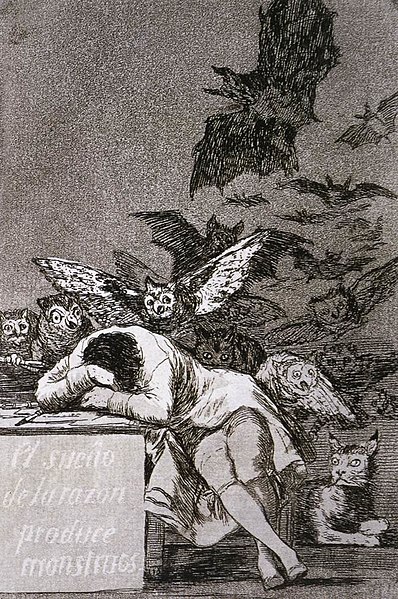


If somebody mentions Sweden, a beautiful Nordic country, what images appear in your mind? I instantly think: high standards of living, a bit cold climate, lovely landscapes, Vikings, ABBA, Ikea. These associations, even if correct nowadays, didn’t prepare me in any way for the story I’ve found not so long ago. It is known that historical facts can be a lot stranger and scarier than any spooky tales but this one exceeded my expectations. The series of events I am presenting  here simply sent shivers down my spine.

It was started like an avalanche, by one small lie stemming from hurt teenage pride. Of course the ground had to be prepared beforehand and I suppose some people just had been waiting for this small spark all along. Too harsh winter, too little food, some unknown diseases and even bad weather might have contributed to the whole atmosphere. In the autumn of 1667, a little shepherd boy, Mats Nilsson, claimed to have seen a girl walking on the water. The girl's name was Gertrud Svendsdotter. The boy had tended the herd of sheep with this same girl, they had had a fight; apparently the girl had beaten the boy up. She was twelve years old. Now, what would you do if your son or younger brother told you such a thing about one of his schoolmates? Probably you would laugh him off or even punish for being such a incurable little liar. The boy’s parents, though, took him to a priest named Lars Elvius and the priest believed in his story. Gertrud Svendsdotter was interrogated by the priest afterwards. Perhaps Lars was a bit too thrilled to discover a supernatural activity among his parishioners and perhaps he was just afraid of evil and wanted to make sure he wasn't dealing with a witch. After long talks with him scared Gertrud finally confessed that while she lived with her parents in Lillhärdal, a neighbour's maid had taken her to the Devil. The name of the maid was Märet Jonsdotter.

Gertrud's confession came after another shepherd boy, Erik Eriksson (15 years old), had reported, that he had had a vision in the woods where he was sucked up in the air and saw Gertrud sit in Blockula with the children she had taken, among them his little sister. You should notice the fact that it was enough for young Erik  to present his testimony once, but he was immediately given full credit by the priest of having revealed the whole affair. Once again nobody even tried to cross-check the boy’s story as they should.

Blockula (Blåkulla in modern Swedish), mentioned by the children, was a legendary meadow where the Devil held his Earthly court during a witches' Sabbat. This meadow could only be reached by a magical flight. It was described as "a delicate large Meadow, whereof you can see no end". Reading the description of Blockula I kept wondering what made serious people believe in such stories. Apparently they must have wanted rather badly to find a supernatural explanations to their ailments in the first place and their faith must have been approved and confirmed by some higher moral authorities, be them lay persons or clerical officials. No matter what their reasons were, the confession of Gertrud was the starting point of the famous "Mora witch trials" and Märet Jonsdotter became the first victim  but not the only one – Gertrud, maybe forced to do so or maybe being simply on a roll, pointed out seven others. So began the real witch hunt in Sweden, a country where witch trials had previously been a rarity. Märet Jonsdotter was called to court to answer to the accusations. The witch trial started in September 1668.

 The story about the children's stay in the Witches' Sabbath in Blockula spread rapidly, and everywhere children started to talk about it and make up other stories, setting the tongues wagging and pointing the fingers at people often from their closest family, mostly women. The stories spread across the parishes, and increased when the priests made the verdicts public by announcing them in church as a warning. Children’s confessions were very similar to the first ones and were to be a standard for the following witch trials of 1668-1676.Let’s quote one of them (from Sadducismus Triumphatus) :

"In Blockula, people partied as if at a wedding; they drank, ate, danced and had sex by the light of candles that were placed in vaginas while Satan sat under the table and laughed so that the whole room shook and the fire of hell poured up from a hole in the floor, where you could see the tormented souls in hell. You danced with your backs towards each other, as well as doing everything else backwards, married several people at the same time, and had sex with them and with Satan himself, and with his devils and demons, whose penises were cold and whose sperm was made of water and gave birth to frogs that were swept up from the floor with a broom and were made into butter. When you woke up afterwards, your body ached, the food you had eaten had vanished and made you hungry and the gifts you had received had turned to woodchip."
As you see in every age and epoch children knew more about sex and other forbidden practices than the adults wanted them to know. Strange thing, the kidnapped children, apart from Satan and his demons, also claimed to have seen angels. The angels role was far from precise - they pulled the Devil's food away from children's hands, cried tears as big as peas, and asked them to confess so the witches could be exterminated and send the message that one should not have to work on Thursdays, nor use shirts with frilled sleeves, and not have to sell tobacco above its fairest price. Apparently those were the woes of the day: lack of leisure time, frilled sleeves, not accessible to everyone, and high prices of tobacco. I just wonder why angels didn’t know about the hazards of smoking. 

I suppose it’s easy to guess why children so eagerly decided to include angels in their accounts. Their situation was rather dubious; they were not only victims of the witches but also their accomplices. They had sworn themselves to the Devil, eaten his food and had sex. To claim angelic help was believed to be a way for the children to point out that they had been innocent victims after all. In some cases it worked, in some – not. More problematic is finding the answer to the question why the court was never very interested in the angels; they asked the children, if the angels really did try to stop them from eating Satan's food, but they never enquired why they didn’t not stop them from doing worse, such as having sex with the demons. Perhaps it was a minor issue for the judges.

On the April 1, 1669, Märet Jonsdotter and another defendant, Widow Karin, were judged guilty against their own words. There was a problem, however. Swedish law forbade the execution of anyone who had not confessed their crime, no matter if they were found guilty or not. Neither of the women was willing to admit any guilt, and they continued to plead innocent, just as they had done from the day they were accused. Perhaps they had a hunch such a move could save their life or perhaps they were simply more stubborn than the others. This put the court in a dilemma - they decided upon a plan to solve this legal problem. Apparently they aim from the onset was not to find out the truth but to get the women to confess and make it possible to execute them.The priests were to persuade them to confess by using religious arguments; they were instructed to lie and tell them that they were to be executed whether they confessed or not. But if they confessed, they would receive holy communion, and thereby go straight to heaven. They were to be taken to the place of execution believing this, given the communion, and the execution would be conducted afterwards. This whole plan was put into effect and conducted just as described. At the place of execution, Märet and Karin were told that they could confess and receive communion, or deny all. Both chose to say no to communion and deny the charges. The frustrated authorities then had no choice but to escort Märet Jonsdotter and Karin back to prison. Gertrud Svensdotter, the girl who started the folly, and the siblings of Märet, also accused in this trial, were flogged and then released. The remaining people were acquitted, but the hysteria was hard to stop. Soon, 23 people was put on trial for abducting of children to Satan, and in 19 May 1669, eight people (seven women and one man) were executed as result of the process against Märet Jonsdotter. Throughout this time, she had remained in prison, exposed to continued religious persuasion from the priests to confess her sin. During four years imprisonment and attempts to brainwash her, she continued to declare her innocence and refused to confess. She never did confess. She was sentenced and executed all the same.

In 16 April 1672, despite her constant denial, Svea Hovrätt, the Swedish Court of Appeal, declared Märet guilty of sorcery due to all the incriminating testimonies, and the devil's mark on her finger; she was to be decapitated and burned. She was judged together with thirty four people; of them, four defendants, including three women, received a death sentence. Of the condemned, Märet Jonsdotter and a man named Pål Märet were the only ones who were executed without having confessed guilty; the rest all admitted guilt. There is not much known about the final execution apart from the fact that it happened.
The court declared that: "Her mere denial can not help her nor free her from the life sentence"; the same year, the court had noticed that several people accused had become aware that they would escape a death sentence if they maintained their innocence, and therefore, and one of the eight people executed for witch craft in Ovanåker in 1672 had been executed without a confession; from 1674, it was declared no longer necessary with a confession in the case of witch craft.

The witch hysteria continued to rage through the country until the execution of another woman in Stockholm in 1676. In 1677, to avoid any further witch trials, the government ordered the priests to declare, through the churches, that all witches had now been expelled from the country forever. Apparently finally everyone has just had enough of it. 


As witch hunts occured also in plenty of other countries at that time you might wonder what were the reasons of such attrocities. Some historians say that witchcraft accusations were a social mechanism,  resolving conflicts within any given community and providing an easy explanation of misfortunes happening to people in their daily life. This hysteria, however, seemed to me more horrible exactly because it explained nothing and it  involved children as well as the weakest people from any given community -  outcasts, women living alone like spinsters or widows, and solitary men. Scapegoats. It was enough a deranged or angry child testified against you and your life could turn into nightmare and terminate prematurely. Lately I've read the "Hunger Games" series by Suzanne Collins in which children and teenagers were turned into weapons and killers; the books were also pretty scary but there was at least that ugly, sadistic government which could be blamed for the children's  fate as they were organizing and supporting the whole horrible "entertainment". Although in 17th century Sweden people must have supported witch hunts and certainly some priests had forced children to testify, I have noticed that there were also those boys and girls who cast suspicions and accused their family and friends out of their free will, simply for the heck of it. In some cases they were in turn accused, judged guilty and actually sentenced to death for committing perjury. Facts are always stranger than fiction -  compare it to any average ghost story.


My sources:
Brian P. Levack, “The witch-hunt in early modern Europe” 
William E. Burns, “Witch hunts in Europe and America: an encyclopedia” 
Wikipedia: Sadducismus Triumphatus, Märet Jonsdotter, Blockula


Saturday, 23 October 2010

Silent Sunday

Wednesday, 20 October 2010

Reviewing a classic - Bleak House by Charles Dickens

Reviewing a classic - Bleak House by Charles Dickens
Cover of serial, Image via Wikipedia

Introduction

Bleak House was the ninth novel by Charles Dickens, published in twenty installments. Small wonder - it is really a monster of a book. It is also the only Dickens’s novel in which the story is partly told by one of female leads and then complemented by an omniscient narrator. The synopsis of such a long, multi-layered story is really a challenge – I am sure that Dickens would have loved those soap operas which drag on interminably and are understood just by a handful of devoted fans - so please forgive me if I omit anything important. I also decided to use a bit of the appropriate Wikipedia’s summary. The task was simply too big to be handled on my own especially that I lacked time so I needed help very badly.

 Synopsis:

First we meet Esther Summerson, a shy good-looking girl raised by Miss Barbary. When Miss Barbary dies, the Chancery lawyer takes charge of Esther's future on the instruction of his client, John Jarndyce. Jarndyce becomes Esther's guardian, and after attending school in Reading for six years, she goes to live with him at Bleak House, along with his wards, Richard Carstone and Ada Clare. Esther is to be Ada's companion. Esther does not realize that Miss Barbary is her aunt, thinking of her only as her godmother. It is a known trick of Mr. Dickens – as readers we know far much about the characters than the characters themselves. Esther soon befriends both Ada and Richard, who are cousins. They are named beneficiaries in one of the wills at issue in Jarndyce and Jarndyce; their guardian is a beneficiary under another will, and in some obscure way the two wills conflict. Apparently the long-running litigation provides jobs for half the lawyers in London and the other half has plenty of entertainment for free. Richard and Ada are created for each other – they soon fall in love, but though Mr. Jarndyce does not oppose the match, he does stipulate that Richard (who suffers from inconstancy of character) must first choose a profession. When Richard mentions the prospect of benefiting from the resolution of Jarndyce and Jarndyce, John Jarndyce asks him never to put faith in what he calls "the family curse".

Sir Leicester Dedlock and young, beautiful Honoria, Lady Dedlock, live at Chesney Wold, a very fine estate. Lady Dedlock is one of few female characters with some backbone. Her past is rather unsavoury, though. She used to have a lover, Captain Hawdon, before her marriage. She also gave birth to an illegitimate child -Esther Summerson – but she thinks the child is dead. It is one big secret. Lady Dedlock lives in a state of constant boredom; I suppose her mannerism was nothing else than classic depression – after all Captain Hawdon was the love of her life and he left her.It happens that Lady Dedlock is also a beneficiary under one of the wills in Jarndyce and Jarndyce. Early in the book, while talking to her solicitor, Tulkinghorn, she recognizes the handwriting on the copy of an affidavit. The sight affects her so much that she almost faints, which the solicitor notes and thinks important enough to investigate. He guesses that Lady Dedlock has focused on the affidavit's handwriting a bit to intensely and wants to trace the copyist. He discovers that the copyist was a drug fiend known only as "Nemo" and that he has recently died. The only person to identify him is a street-sweeper, a poor homeless boy named Jo. Lady Dedlock wants to find out the copyist too so she disguises herself rather badly as her French maid and she pays Jo to take her to Nemo's grave. Tulkinghorn begins to watch her every move, even enlisting the aid of Hortense, the maid who hates s her secretly. Hortense and Tulkinghorn will soon discover the truth about Lady Dedlock's past. After a desperate confrontation with the lawyer, Lady Dedlock flees her home, leaving a note to her husband apologizing for her conduct. Tulkinghorn dismisses Hortense who is no longer of any use to him. Hortense kills Tulkinghorn and seeks to frame Lady Dedlock for his murder. On discovering his lawyer's death and his wife's flight, Sir Leicester suffers a catastrophic stroke but manages to communicate that he forgives his wife and wants her to return to him. After all she was twenty years younger and pretty.

A little earlier Esther happens to meet her mother at a church service and has a conversation with her afterwards at Chesney Wold - though, at first, neither woman recognizes each other. Later, Lady Dedlock realises that her only child is not dead. She waits to confront Esther with this knowledge until Esther has survived a bout with smallpox. The illness disfigures Esther pernamently. Though they are happy at being reunited, Lady Dedlock tells Esther that they must never recognize their connection again.
Although Esther has recovered her health, her beauty is supposedly ruined. She finds that Richard, having tried and failed at several professions, has ignored his guardian's advice and is wasting all his resources in trying to push Jarndyce and Jarndyce to a conclusion (in his and Ada's favour). What’s more, he has broken with his guardian, under the influence of his lawyer. In the process of becoming an active litigant, Richard has lost all his money and is breaking his health. In further defiance of John Jarndyce, he and Ada have secretly married, and Ada is carrying Richard's child. Esther experiences her own quiet romance when Dr. Woodcourt, who knew her before her illness, returns from his mission and continues to seek her company despite her disfigurement. Unfortunately, Esther has already agreed to marry her guardian, John Jarndyce.
Inspector Bucket, who up to now has investigated several matters on the periphery of Jarndyce and Jarndyce, accepts the commission of the stricken Sir Leicester to find Lady Dedlock. He suspects Lady Dedlock, even after he arrests George Rouncewell (the only other person known to be with Tulkinghorn on the night of the murder, and known to have quarrelled with the lawyer repeatedly). Nonetheless, Bucket pursues the charge given to him by Sir Leicester and ultimately calls on Esther to assist in the search for Lady Dedlock. By this point, Bucket has cleared Lady Dedlock's name by discovering Hortense's guilt, but she has no way to know this, and, wandering London in cold and bitter weather, she ultimately dies at the cemetery where her former lover Captain Hawdon (Nemo) is buried. Esther and Bucket find her there.

Developments in Jarndyce and Jarndyce seem to take a turn for the better when a later will is discovered which revokes all previous wills and leaves the bulk of the estate to Richard and Ada. At the same time, John Jarndyce releases Esther from their engagement and she and Dr. Woodcourt become engaged. They go to Chancery to find Richard and to discover what news there might be of the lawsuit's resolution. To their horror, they discover that the new will is given no chance to resolve Jarndyce and Jarndyce, for the costs of litigation have consumed the estate, and as there is nothing left to litigate, the case melts away. After hearing this, Richard collapses, and Dr Woodcourt determines that he is in the last stages of tuberculosis. Richard apologizes to John Jarndyce and dies, leaving Ada alone with their child, a boy whom she names Richard. Jarndyce takes in Ada and the child. Esther and Woodcourt marry and live in Yorkshire, in a house which Jarndyce gives to them. In time, they have two daughters. Ugh. The end.

What I liked:

Some descriptions of the 19th century London were incredible. I also enjoyed the well-deserved criticism of Chancery institution. You can notice at once that Dickens's assault on the flaws of the British judiciary system was based in part on his own experiences as a law clerk, and in part on his experiences as a Chancery litigant seeking to enforce his copyright on his earlier books. Lady Dedlock and her scheming French maid, Hortense have always been my favourite characters. They are intrepid ladies although Hortense is a rogue and her ladyship is so obsessed that she cares for nothing but her former lover.

Plenty of secondary characters, like Jo and Charley deserved to play a greater role in the book.

What I didn’t like:

The book is definitely too long and too complex – I don’t doubt any contemporary editor would divide it into a series and perhaps  put to death many subplots and many characters for the sake of clarity as well. He/she would be absolutely right.

Esther's portion of the narrative is an interesting case study of the Victorian ideal of feminine modesty but interesting not always means good. If you appreciate all these resolute, kick-ass, funny heroines and you compare poor disfigured Esther with them you can describe her only as bland. Other females like Ada and Caddy Jellyby are equally insipid although Caddy at least married her chosen man and rebelled against a silly mother and Ada did manage to marry the worst candidate for a husband she could find. I don’t know, perhaps Victorians liked to get maudlin over a book and Dickens used their propensity to better the sales.

I also didn’t favour many male characters – especially stupid, pigheaded Richard Carstone with weak constitution and no brain to speak of. He married weak Ada and almost ruined her life – how very mature. His death was his only saving grace and it came too late. Also John Jarndyce seemed too kind-hearted and indulgent to be considered a well-rounded character. People who are apparently without vices make me shudder – one can’t help but wonder what they hide so well behind their nice façade.

The final verdict:

I will certainly return to some parts of this very long book; some of them I will omit for sure as they deserve nothing more than oblivion.

Signature of Charles DickensImage via Wikipedia
Enhanced by Zemanta

Tuesday, 19 October 2010

Wishful Wednesday, 20 October

Wishful Wednesday, 20 October

The meme is hosted by Brooke Bluestocking Guide.


 Welcome to Wishful Wednesday!

Today I wish I could grab a quite unusual book - "Hope in Patience" written by Beth Fehlbaum. The book is unusual because of  its topic - it deals with very serious (and sad) matters happening unfortunately to some young people nowadays. Here is an excellent summary, wrote by Larwal the Librarian (her full review of this book you can find clicking here):

Booktalk:
Finally out of her step-father's house where she suffered through years of sexual abuse at his hands, Ashley is adjusting to life in Patience, Texas. In Patience she has a father, a real father, who wants to protect her, a step-mother who doesn't see her as "the competition," a little brother who
will play his video games so loudly that he entire house shakes, and a therapist who refuses to let her wallow in her past. Basically, she has a chance at a normal life. But with the coming trial against her step-father, her own flashbacks, and a seriously misguided rumor mill threatening to drag her down, Ashley may never be able to focus on the "normal" problems she should be worrying about at her age: her last place status on the cross-country team, a group project with one of the most uncooperative group members ever, and whether or not a certain boy can look past everything else going on in Ashley's life and just like her.


Monday, 18 October 2010

Review: Christine : SOE Agent & Churchill's Favourite Spy by Madeleine Masson

Synopsis


Sometimes watching a thriller or a James Bond movie you might start to wonder whether supermen and/or superwomen exist in real life. With the greatest pleasure I can say that yes, sometimes they do but still their existence is full of problems. The book I am going to review here presents such a rare creature. She was an exceptional woman and her career, although secret for most of her life, was truly extraordinary. Her name was Krystyna Skarbek but she was more widely known by her British alias, Christine Granville.

She was born in 1915 and grew up in newly-created Poland. Her father, the Polish Count Jerzy Skarbek, died when she was a child; her mother was a rich heiress of a Jewish banker. You might wonder why a count married a Jewish heiress. As it is not a fairy tale no romance was involved. He did it for filthy lucre - leading a riotous life, count Skarbek used to spend money like water and his family had already been impoverished. Now you might ask for a change why a rich girl wanted to marry a roisterer with a title although she wasn’t in love with him. Apparently that marriage was her ticket to truly aristocratic milieu – generally European Jews wanted to assimilate rather badly at that time and some of them were not beneath selling their daughters off for a pretty name and a title.

Krystyna, their second child, grew up an unmanageable tomboy; she was even expelled from a private Swiss finishing school for it. After the death of Jerzy, Krystyna had to work – by that time her mother’s dowry would have dwindled into almost nothing. Although her health deteriorated because of bad working conditions she still enjoyed life. She adored skiing and she met her second husband on a ski run (the first husband was a major mistake and they divorced very quickly). It should be added that men were quite simply mesmerized by beautiful young countess; she was that type of woman who could pick and choose among offers in practically every circumstances. It was one of her assets but also the thing that cost her life. And like James Bond, fidelity was never her strong suit.

Life started to be dangerously interesting after the WWII broke out. Christine and her husband came to London after the Nazis invaded Poland. The British wartime espionage organization, the Special Operations Executive, was just gearing up, and Christine volunteered her services. She had a lot to offer – she spoke Polish, German and French fluently, she knew well the occupied countries and most of the skiing instructors on the mountainous Hungarian border. She decided to travel to Budapest and go from there to occupied Poland by crossing over the dangerous Tatra Mountains on skis. Skeptical at first, the SOE eventually agreed to support her plan. Christine was a strong-willed woman and an excellent skier; accompanied by one former member of the Polish Olympic ski team, she made it over the mountains several times and began engaging in undercover reconnaissance and recruitment. The fact that each time she endangered her life seemed to have no effect on her. Being a highly efficient agent she organized several astounding escapes from Poland in the winter of 1939-40. She could not persuade her mother to come, though; apparently the countess thought her rank and age would protect her. Unfortunately the Nazis made few exception; countess Skarbek, as a Jewess, was relocated to the Warsaw ghetto and murdered later in a concentration camp. I suppose it stimulated Christine even more to fight the Nazis in her own way.

During her career as a spy she evaded capture by the Germans multiple times. I don’t want to describe all these brushes with certain death in detail, let me mention just two I considered the most remarkable.
Once she was stopped by two German soldiers at a border crossing and lifted her arms to reveal two live grenades, pins already pulled. The Germans fled; Christine pitched the grenades and dashed across the border. She was the first woman to be dropped into France from Algiers—landing in the Vercors in 1944 as “Pauline Armand,” she performed with tremendous valour. Among other exploits she saved the life of Francis Cammaerts, the man who headed up the behind-the-lines S.O.E operations in southern France, in a truly flamboyant style. In 1944 Cammaerts and two of his colleagues were captured and imprisoned by the Gestapo. Christine talked her way into the jail by pretending to be Cammaerts’ wife, then bluffed the German officer in charge into thinking that she was also the niece of the British Field Marshall Bernard Montgomery; that the British were only hours away; and that the commandant could either wait to be slaughtered or hand over Cammaerts in exchange for a large bribe and make a run for it. He accepted her offer and believed her without second thoughts! Small wonder some people were so jealous of her many successes and decorations that they started spreading rumours that Christine was actually a double agent. These aspersions cost her and her partner, another Polish spy, even a temporary suspension of spying assignments.
Vesper LyndImage via Wikipedia
Movie version of Christine, Vesper Lynd

Really difficult times four our heroine come when the war was over, though. Christine, coping so well during the war, now experienced great difficulties in getting her bearings. She was no longer a useful agent and a soldier, she was a mere emigrant and, like thousands of her compatriots, she was left by the British to her own devices and the situation was far from rosy. She had left her diplomat hubby, she didn’t exactly have any profession and didn’t know English well. What’s more, she hated office work and repetitively declined any cushion office positions her friends managed to find for her. After a short spell in London, during which she tried and ditched different jobs, i.e. as a shop assistant in Harrods (imagine that!) she opted to work as a stewardess with P&O until something cropped up. It never did. She was murdered by an obsessed, mentally retarded male admirer outside the Kensington hotel where she temporarily resided in 1952.
Only after her death her life started to excite the wider public as some new facts were uncovered by sensational newspapers, mainly considering her colourful private life. Allegedly after the war Ian Fleming, a famous author of James Bond novels, had an affair with Christine. They split up very soon but her war achievements and personality made a huge impression on him. Fleming supposedly told a close friend that Christine “literally shone with all the qualities and splendors of a fictitious character”. It’s now generally assumed that Christine was Fleming’s inspiration for the first Bond girl, Vesper Lynd. One of the arguments is that “Vesperale” was Christine’s nickname when she was a child, because (just like Vesper Lynd) she was born during an evening thunderstorm (and “vesper” means "evening" or "evening star" in Latin). Moreover, Fleming’s description of Vesper is similar to that of Christine, both physically (dark hair, dark eyes, wide mouth, no make-up) and in terms of her personality (“She was thoughtful and full of consideration without being slavish and without compromising her arrogant spirit…She would surrender herself avidly, he thought, and greedily enjoy all the intimacies of the bed without ever allowing herself to be possessed.”From Ian Fleming’s first James Bond novel, Casino Royale.”


Krystyna SkarbekImage via Wikipedia
Christine relaxing

What I liked:

The remarkable life story of Christine Granville, one of the most successful women agents of the Second World War, is simply riveting. Ms Masson tried very hard to get all the facts right, interviewing Christine’s relatives, friends and war-time collaborators. The authoress sounds very credible as she met the Countess briefly on a P&O cruise ship after WW2 in person and was instantly impressed by that strange, professional stewardess who attended her. When she heard about the tragic murder of Christine she decided to write a biography and it took her several years to gather all the information necessary. I do appreciate her dedication and diligence as many people close to Christine, disgusted by the articles featured in sensational press, didn’t want to talk anymore. I also liked the fact that our heroine was presented as a well-rounded character with her flaws and assets. The part about Ian Fleming was added later (the book was published the first time in 1975) and I loved that connection because during World War II Fleming was actually just a spy supervisor. I suppose Christine hands-on experience must have been invaluable to him - as personal assistant to the British Director of Naval Intelligence, he saw combat only once, when he and his boss watched from afar as Canadian and British troops carried out an assault at Dieppe. What a pity we will never know what other James Bond adventures were based on Christine’s military career.

What I didn’t like:

To be absolutely honest I think some parts of this book ought to be written in a less passive style; after all its heroine was anything but passive and boredom was her greatest enemy. I do admit there were pages which I couldn’t call exciting to say the least of it. I understand that it is a biography and rendering facts as they really were should be the most important task of any biographer but nobody said a factual book must be a dull affair.

The final verdict:

If you are fond of real-life kick-ass heroines do read this book. The story of Christine might be sad but it has one major advantage over fantasy bios - it rings so true. I loved it.


Enhanced by Zemanta

Sunday, 17 October 2010

Silent Sunday

Photobucket

Friday, 15 October 2010

How do you like the new colour theme?

It's getting colder and colder so the days of open windows and blue skies are over, at least for some time. How do you like the new chocolate-theme look of my blog? Do you feel a bit warmer? I certainly hope so!